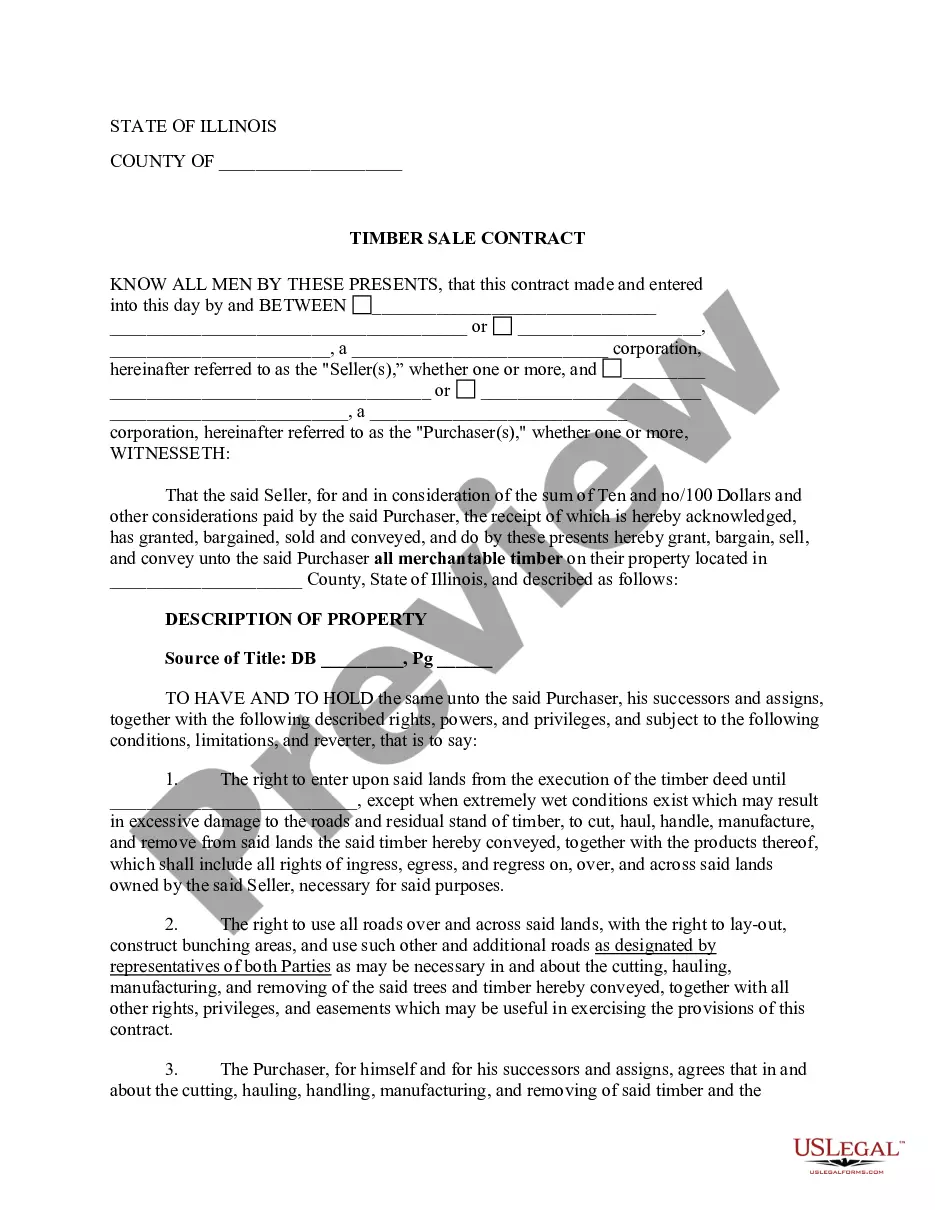
West Virginia Warranty Deed to Child Reserving a Life Estate in the Parents
What this document covers
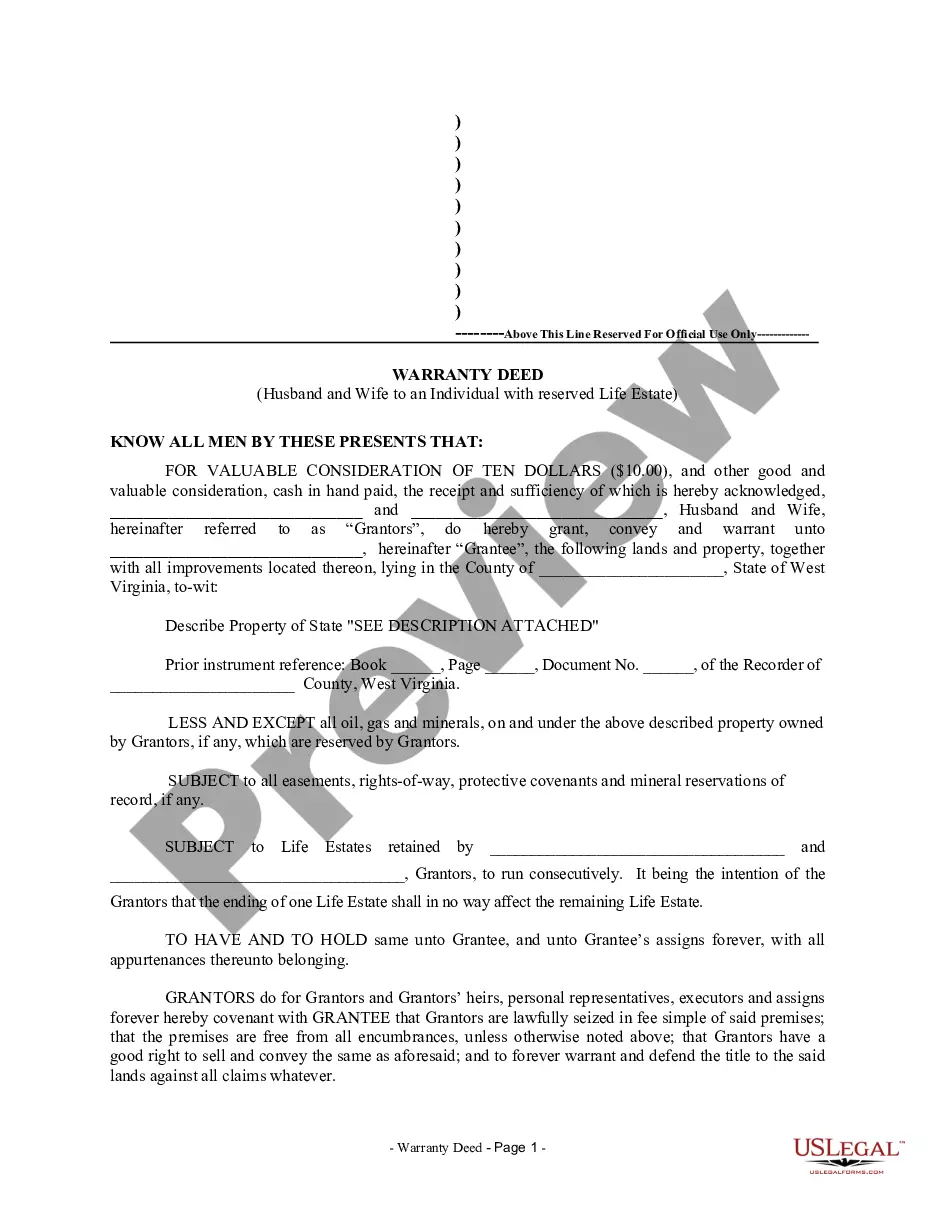
This Warranty Deed to Child Reserving a Life Estate in the Parents is a legal document that enables parents to transfer property ownership to their child while retaining a life estate. This means that the parents maintain the right to use and benefit from the property until their death. This form is unique as it combines the elements of a warranty deed with the reservation of a life estate, ensuring that the parents have continued access to their property for the remainder of their lives.
What’s included in this form
- Identification of the grantors (parents) and the grantee (child).
- Legal description of the property being transferred.
- Reservation of a life estate allowing the grantors to occupy the property during their lifetime.
- Covenants ensuring the property is free from encumbrances.
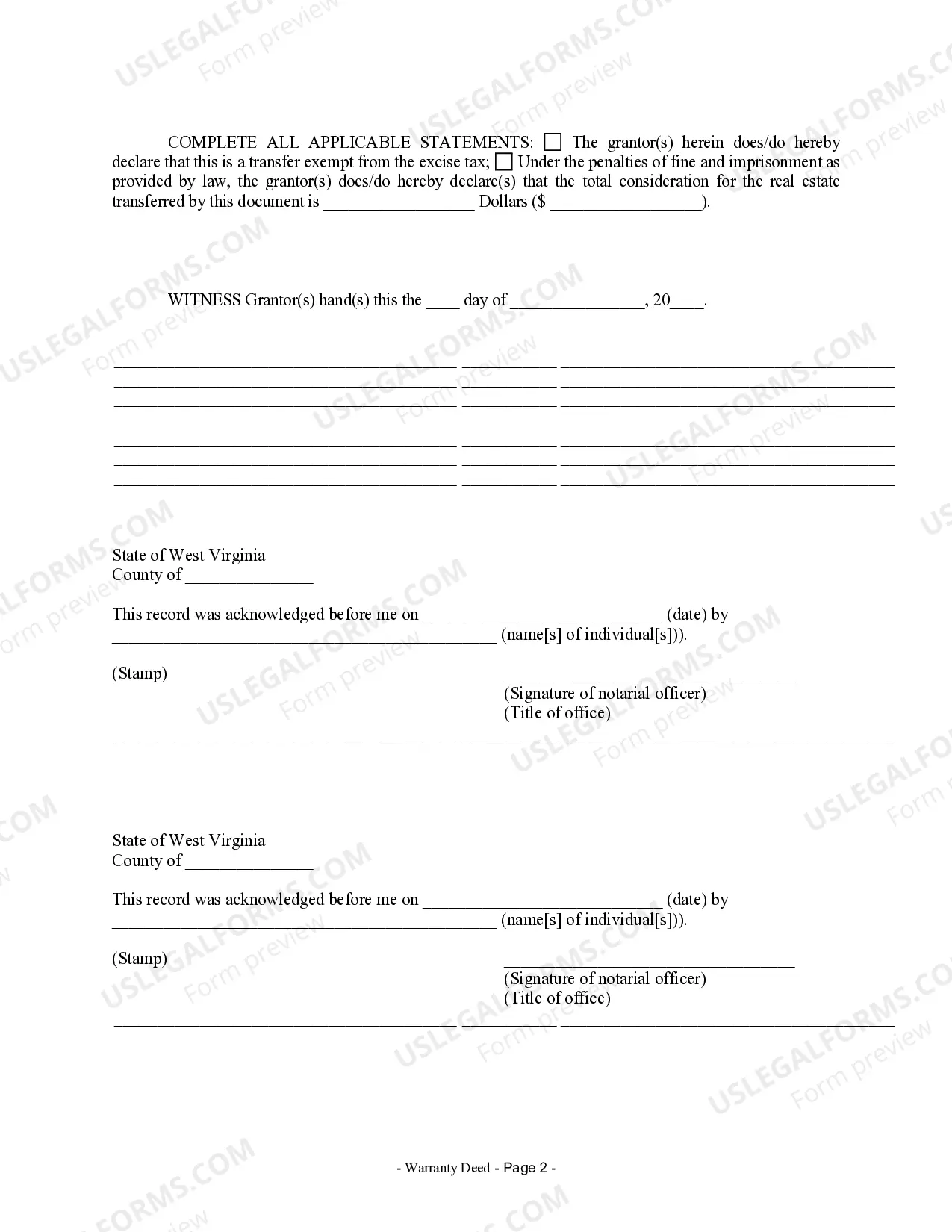
- Notarization section for official acknowledgment.
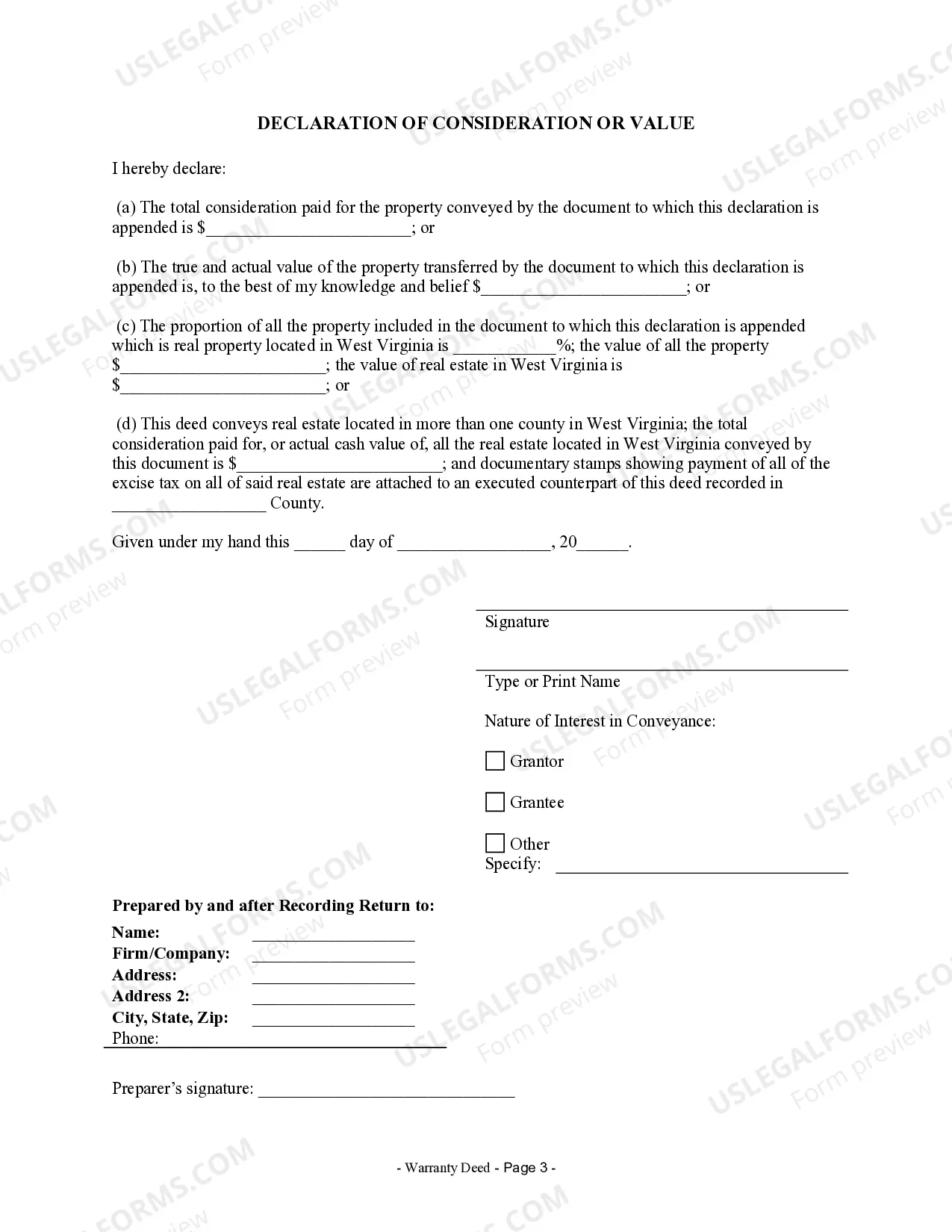
- Declaration of consideration or value for the property.

When this form is needed
This form should be used when parents wish to transfer real estate to their child while retaining the right to live in or use the property during their lifetime. This arrangement can help in estate planning, ensuring that the property passes to the child without the need for probate while allowing parents to maintain a quality of life in their home.
Who this form is for
- Parents who own real estate and want to transfer ownership to their child.
- Individuals seeking to retain the right to use property while transferring it to another party.
- Families involved in estate planning and property ownership arrangements.
How to prepare this document
- Identify the grantors (the parents) and the grantee (the child).
- Provide a complete legal description of the property being transferred.
- Indicate the reservation of life estate for the parents on the property.
- Fill in the consideration amount being paid for the property.
- Have the grantors sign the form in the presence of a notary public.
- Ensure all necessary fields are completed, including any additional declarations regarding the value of the property.
Does this form need to be notarized?
Notarization is required for this form to take effect. Our online notarization service, powered by Notarize, lets you verify and sign documents remotely through an encrypted video session, available 24/7.
Get your form ready online
Our built-in tools help you complete, sign, share, and store your documents in one place.
Make edits, fill in missing information, and update formatting in US Legal Forms—just like you would in MS Word.
Download a copy, print it, send it by email, or mail it via USPS—whatever works best for your next step.
Sign and collect signatures with our SignNow integration. Send to multiple recipients, set reminders, and more. Go Premium to unlock E-Sign.
If this form requires notarization, complete it online through a secure video call—no need to meet a notary in person or wait for an appointment.
We protect your documents and personal data by following strict security and privacy standards.

Make edits, fill in missing information, and update formatting in US Legal Forms—just like you would in MS Word.

Download a copy, print it, send it by email, or mail it via USPS—whatever works best for your next step.

Sign and collect signatures with our SignNow integration. Send to multiple recipients, set reminders, and more. Go Premium to unlock E-Sign.

If this form requires notarization, complete it online through a secure video call—no need to meet a notary in person or wait for an appointment.

We protect your documents and personal data by following strict security and privacy standards.
Typical mistakes to avoid
- Failing to provide a complete and accurate property description.
- Not including the reservation of life estate clause.
- Omitting the signatures of the grantors or not having the document notarized.
- Leaving fields such as consideration or declarations incomplete.
Benefits of using this form online
- Convenient access to legal forms from anywhere.
- Editable templates allow for personalized preparation before printing.
- Documents drafted by licensed attorneys ensure legal reliability.
Legal use & context
- This warranty deed ensures that the transfer of property adheres to legal standards.
- Reserving a life estate can have potential tax implications and should be used carefully as part of estate planning.
- Legal enforceability depends on proper execution and adherence to state laws governing property transfers.
What to keep in mind
- The Warranty Deed to Child Reserving a Life Estate ensures property transfer while allowing parents to retain usage rights.
- Correctly completing the form is crucial to avoid legal issues later on.
- Using this form can simplify the estate planning process and help avoid probate.
Looking for another form?
Form popularity
FAQ
When a person dies, beneficiaries might learn that the decedent made a deed that conflicts with the specific wording in his will. Generally, a deed will override the will. However, which legal document prevails also depends on state property laws and whether the state has adopted the Uniform Probate Code.
The person holding the life estate -- the life tenant -- possesses the property during his or her life. The other owner -- the remainderman -- has a current ownership interest but cannot take possession until the death of the life estate holder.
A life estate deed involves the transfer of ownership from your name to someone else. Although you are no longer the owner of the property, you have the legal right to reside in the property for as long as you live.
A life estate deed permits the property owner to have full use of their property until their death, at which point the ownership of the property is automatically transferred to the beneficiary.
A life estate deed allows you to transfer property while reserving an interest during your lifetime or during the lifetime of someone else. Once the person who holds the life estate passes away, the Grantee fully owns the property.
A life estate gives a person the right to live on or use property during the life estate owner's lifetime or until his or her death. Someone else is the full owner of the property. The person only has an ownership interest in the property as long as he or she is alive.
The two types of life estates are the conventional and the legal life estate. the grantee, the life tenant. Following the termination of the estate, rights pass to a remainderman or revert to the previous owner.
Reservation of the present interest allows the owner to retain ownership for a period of time measured by the life of one or more individuals, by a term of years, or by a combination of the two.