Wisconsin Last Will and Testament for Married person with Adult Children
What is this form?
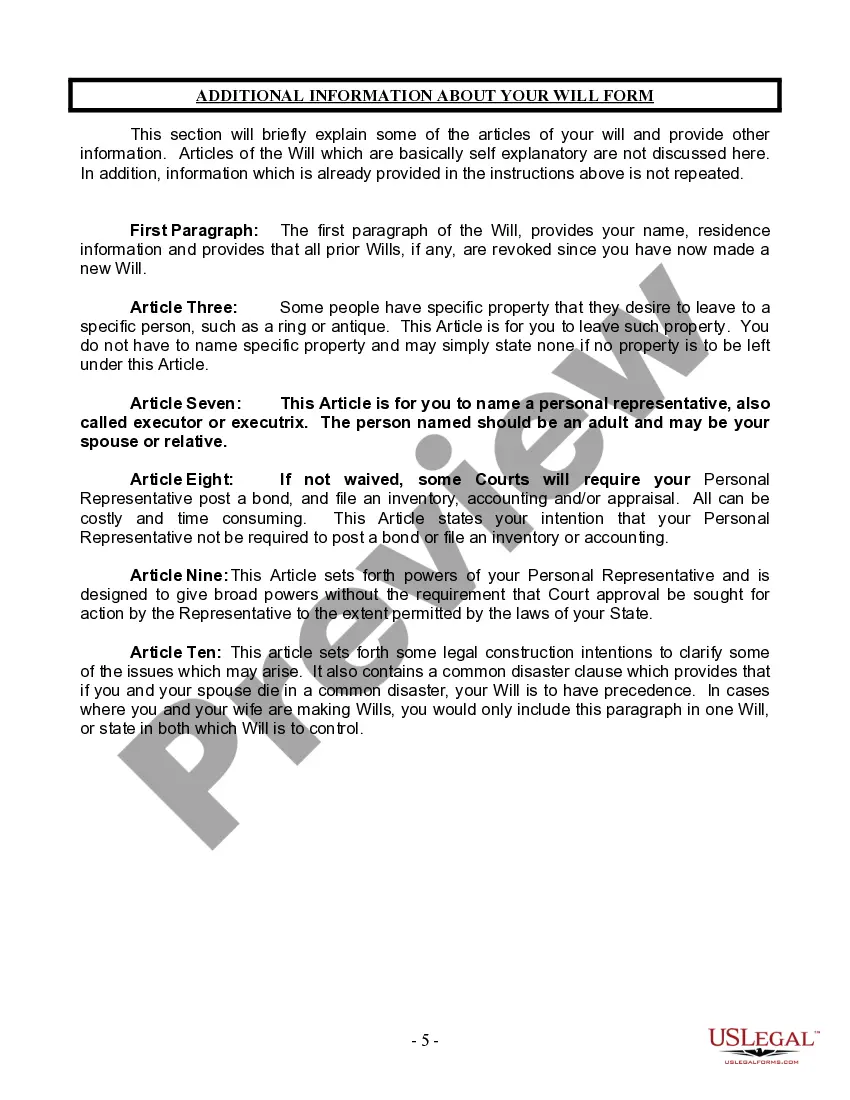
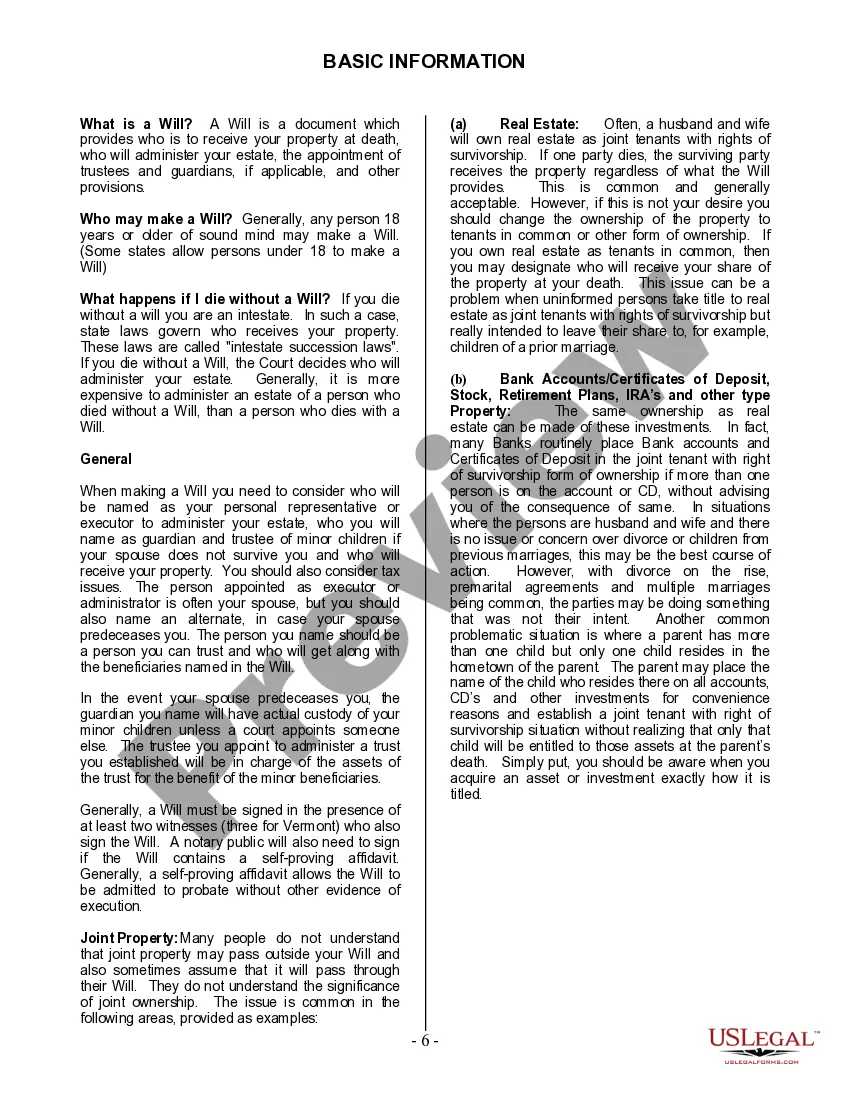
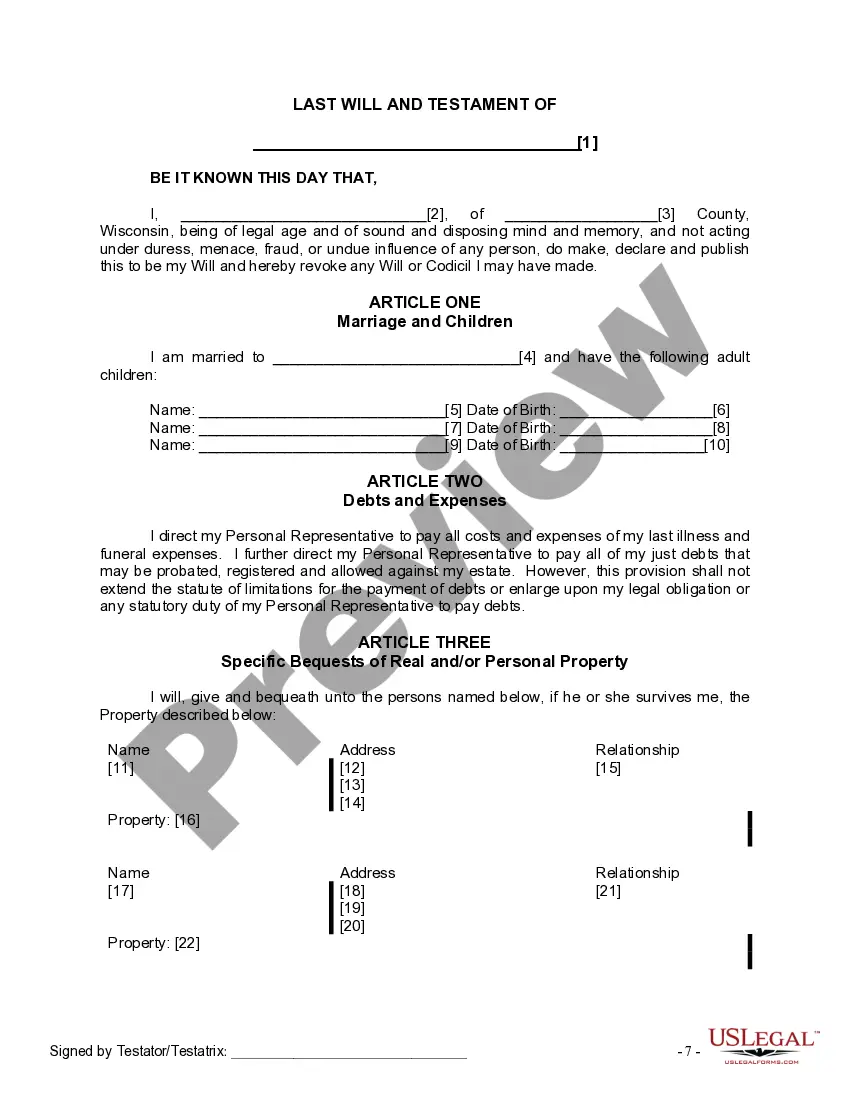
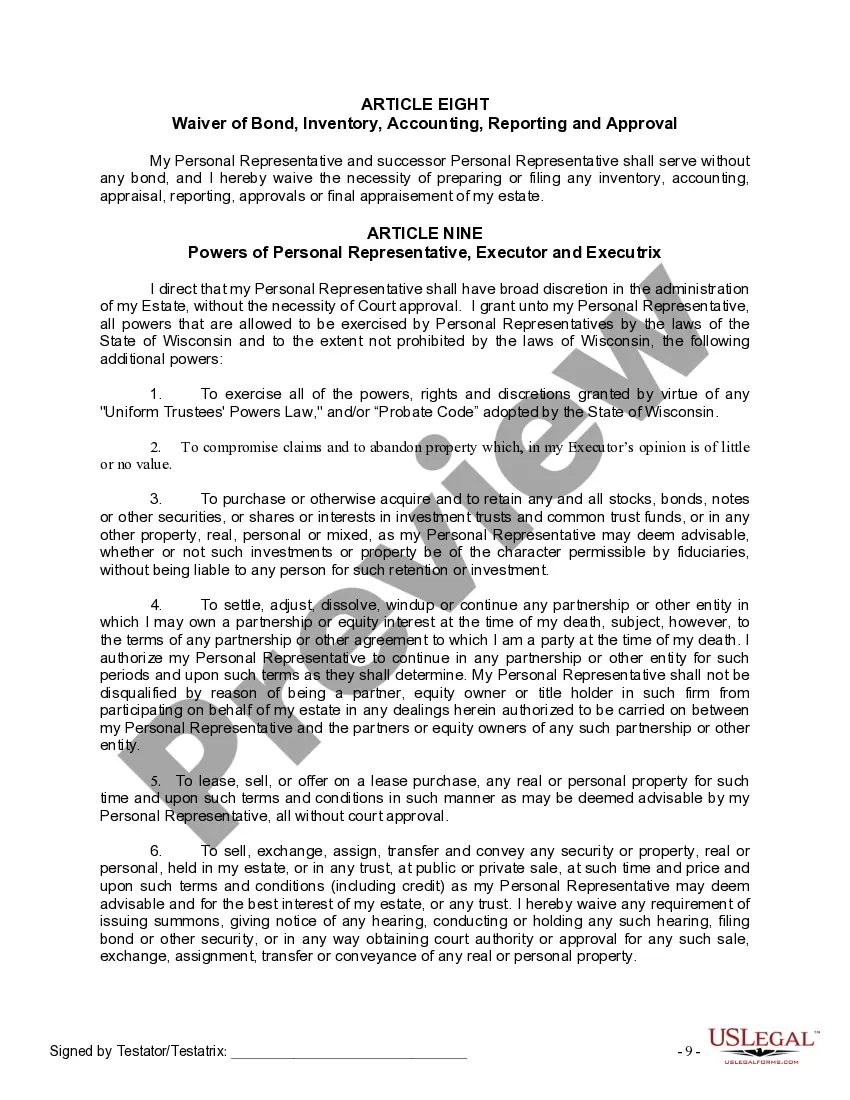
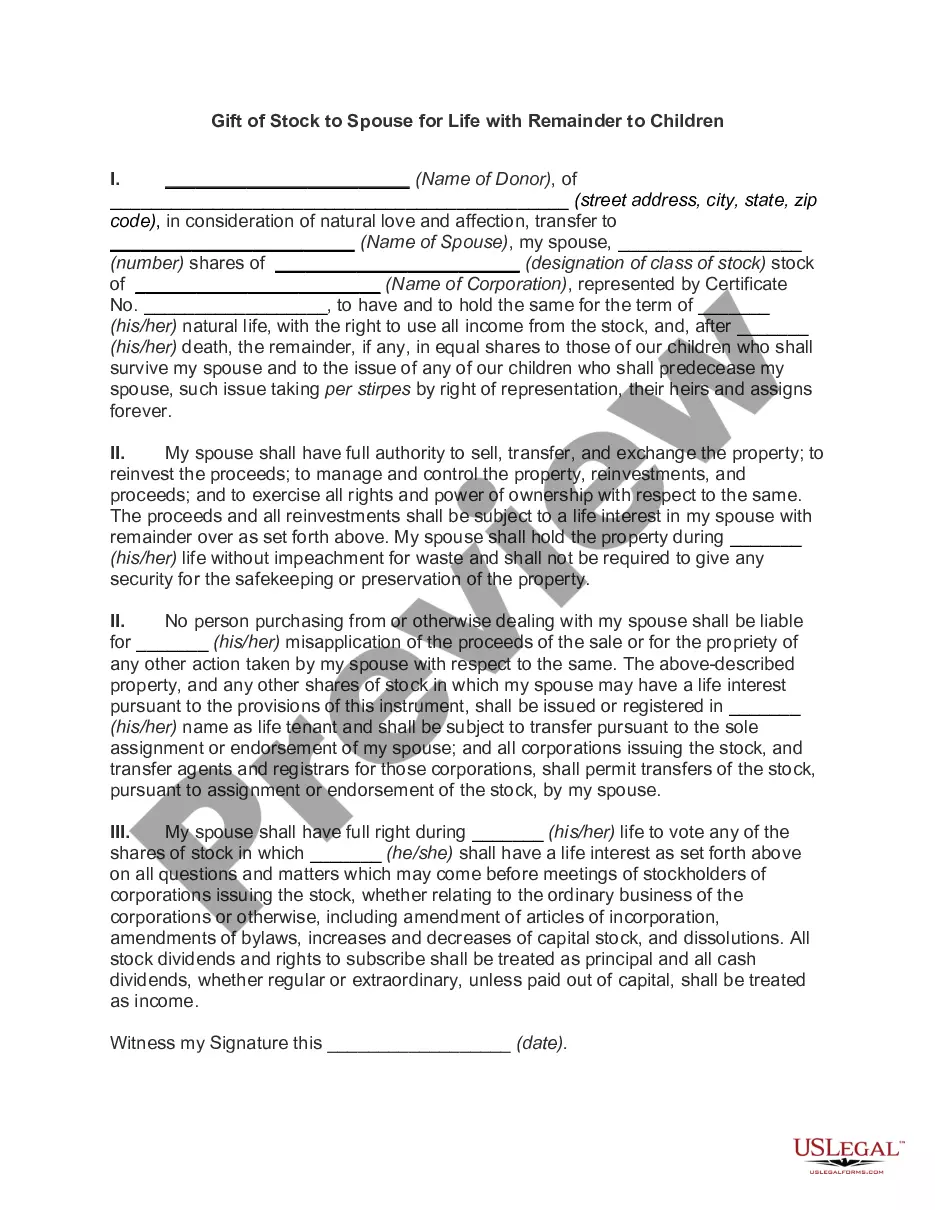
This Last Will and Testament is specifically designed for a married individual with adult children. Its purpose is to outline how your assets and properties will be distributed after your death. It includes provisions for appointing a personal representative (executor), designating beneficiaries, and providing for your spouse and children, ensuring that your final wishes are legally documented and honored. This form differs from other wills by specifically addressing situations of those who are married and have adult children, making it suitable for your unique family structure.
Main sections of this form
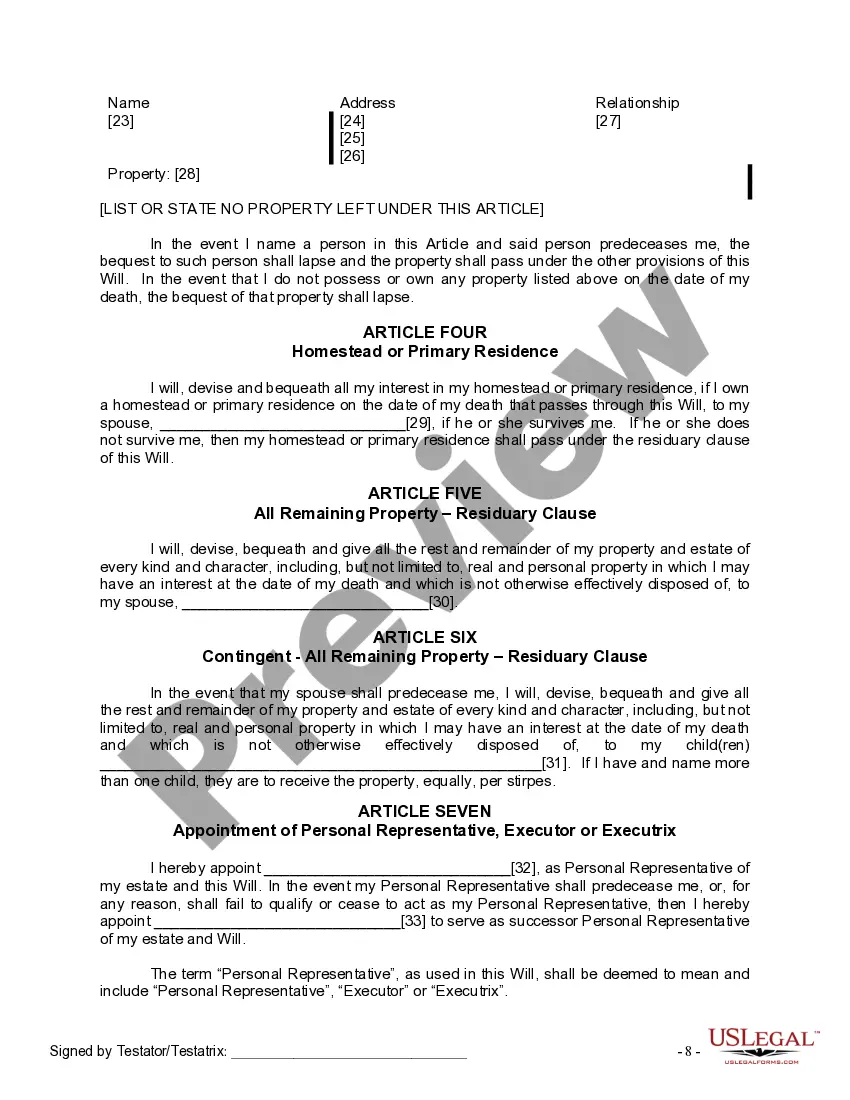
- Appointment of a personal representative or executor to manage the estate.
- Designation of beneficiaries, including provisions for your spouse and adult children.
- Specific bequests of property to chosen individuals.
- Terms for handling the estate's debts and expenses.
- Clauses for the distribution of remaining property after specific bequests.
- Provisions for a common disaster clause, ensuring clarity in conflicting situations.






When to use this form
This form should be used if you are a married person with adult children and want to ensure that your assets are distributed according to your wishes upon death. It is particularly useful in circumstances such as setting up a clear estate plan for your family, preparing for potential disputes among heirs, or ensuring your spouse and children are adequately provided for after your passing.
Who should use this form
- Married individuals with adult children who wish to outline their final wishes.
- Individuals seeking to designate an executor to manage their estate after death.
- Those who want to make specific bequests to family members or friends.
- Anyone looking to clarify asset distribution to prevent disputes among beneficiaries.
Steps to complete this form
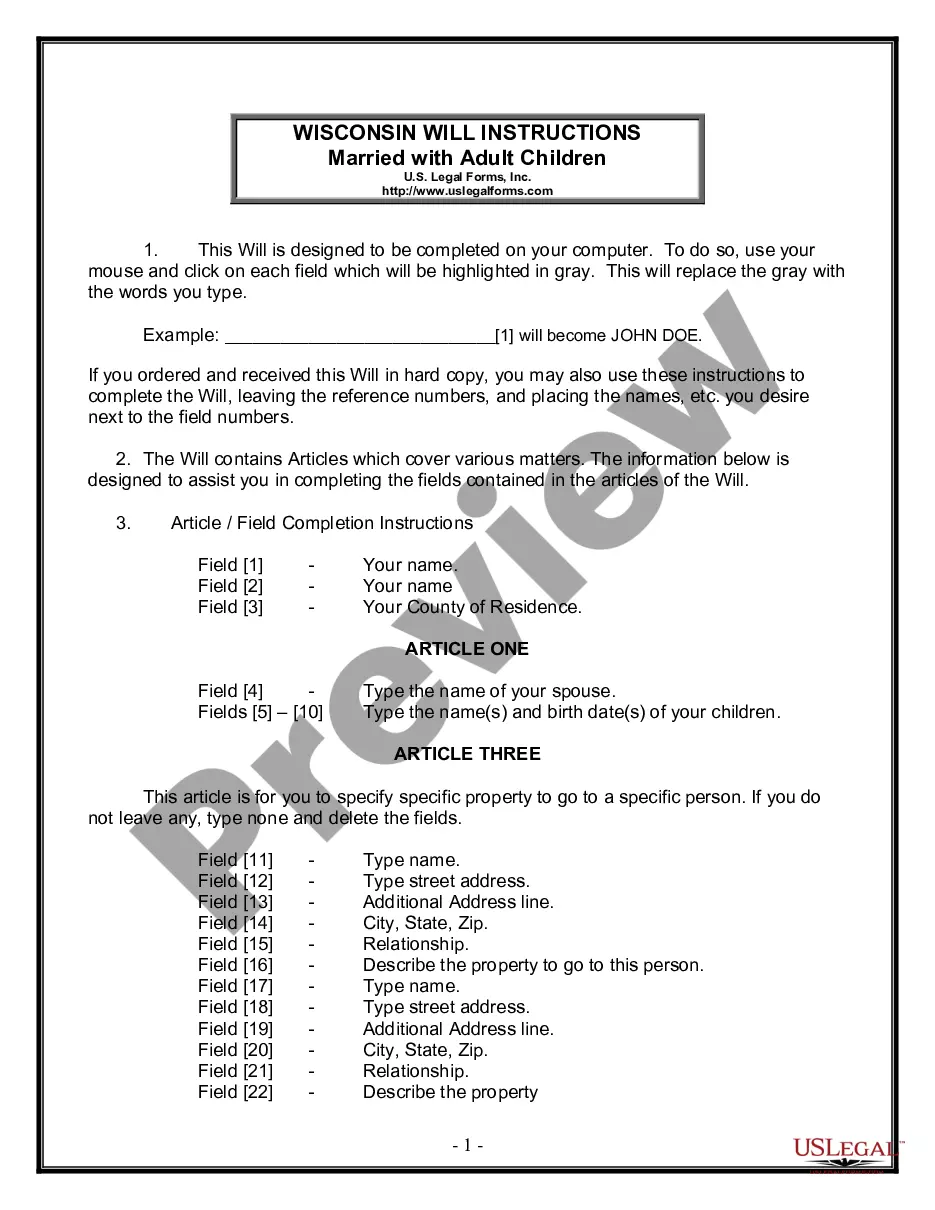
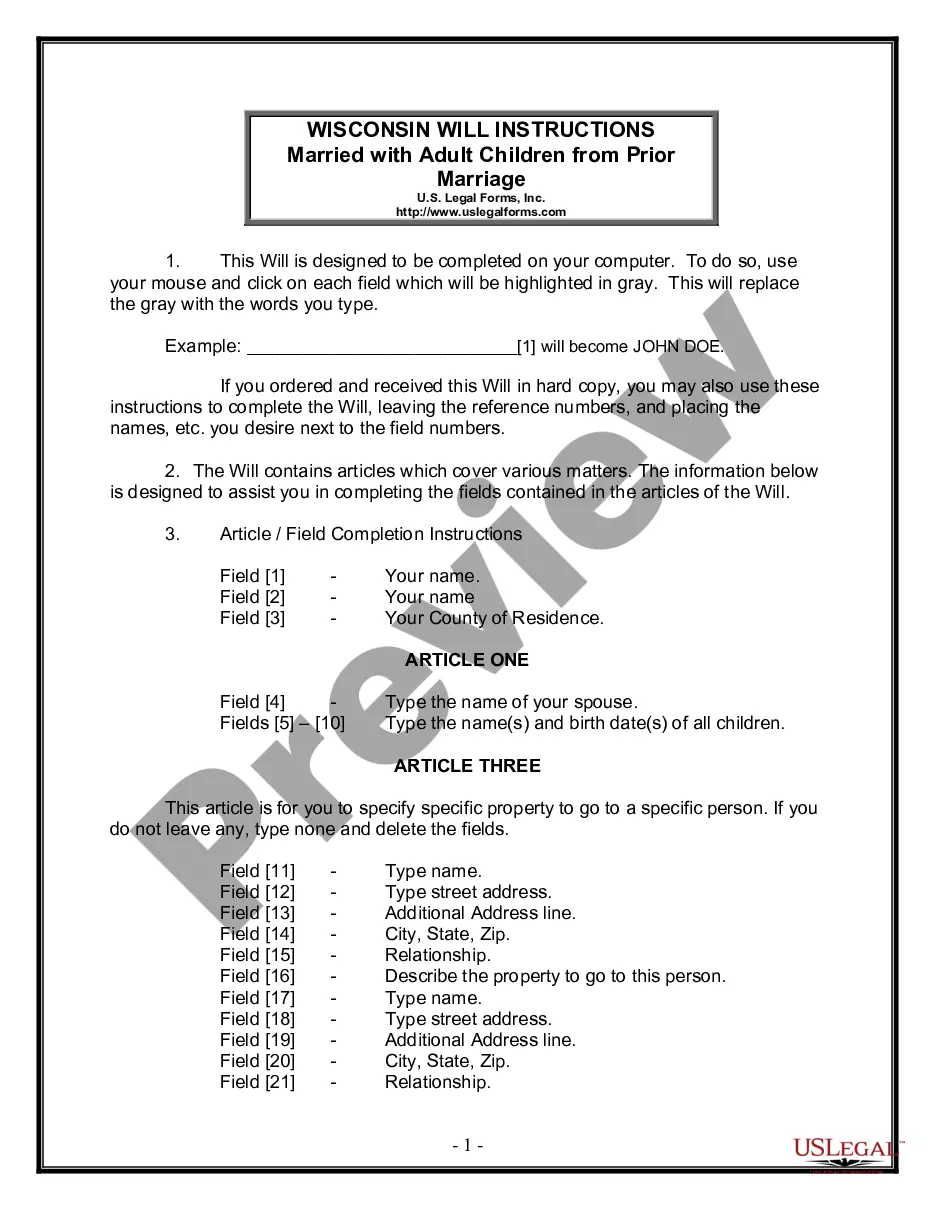
- Identify the parties involved by entering your name and the names of your spouse and children.
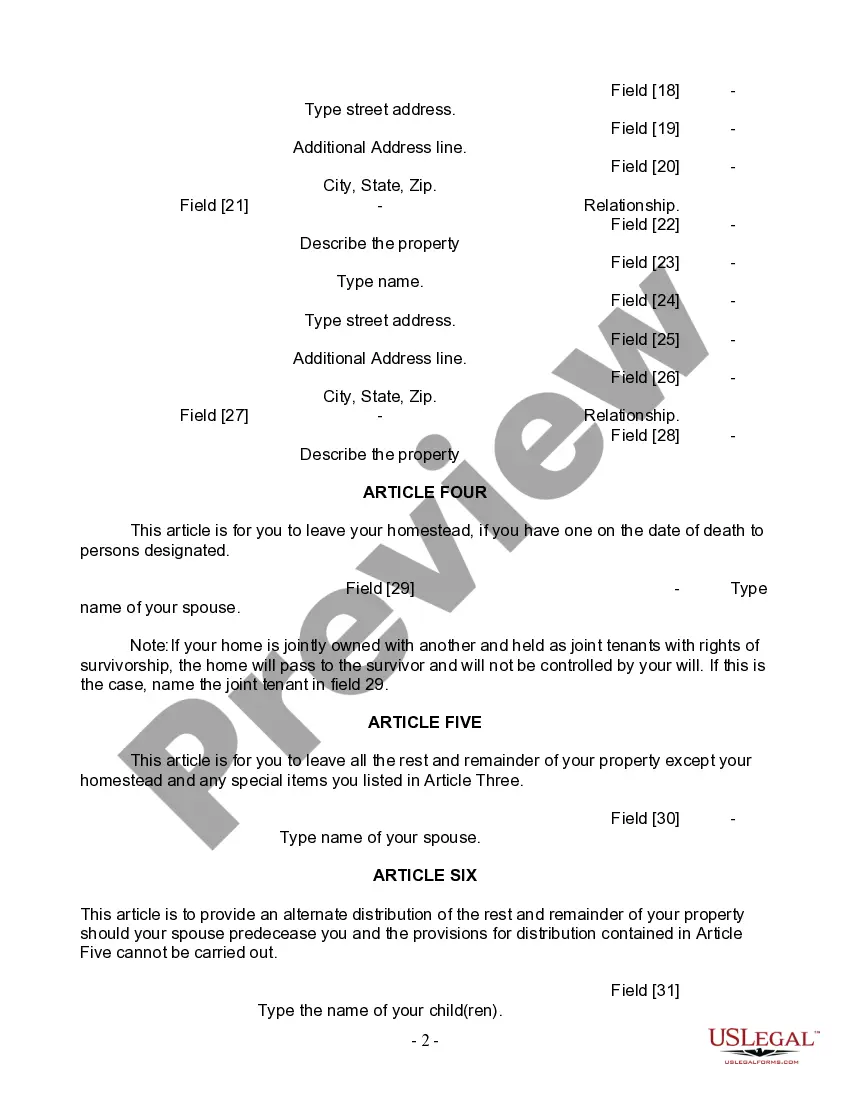
- Complete the sections regarding specific bequests, indicating any property you wish to designate for specific individuals.
- Appoint a personal representative who will be responsible for managing your estate.
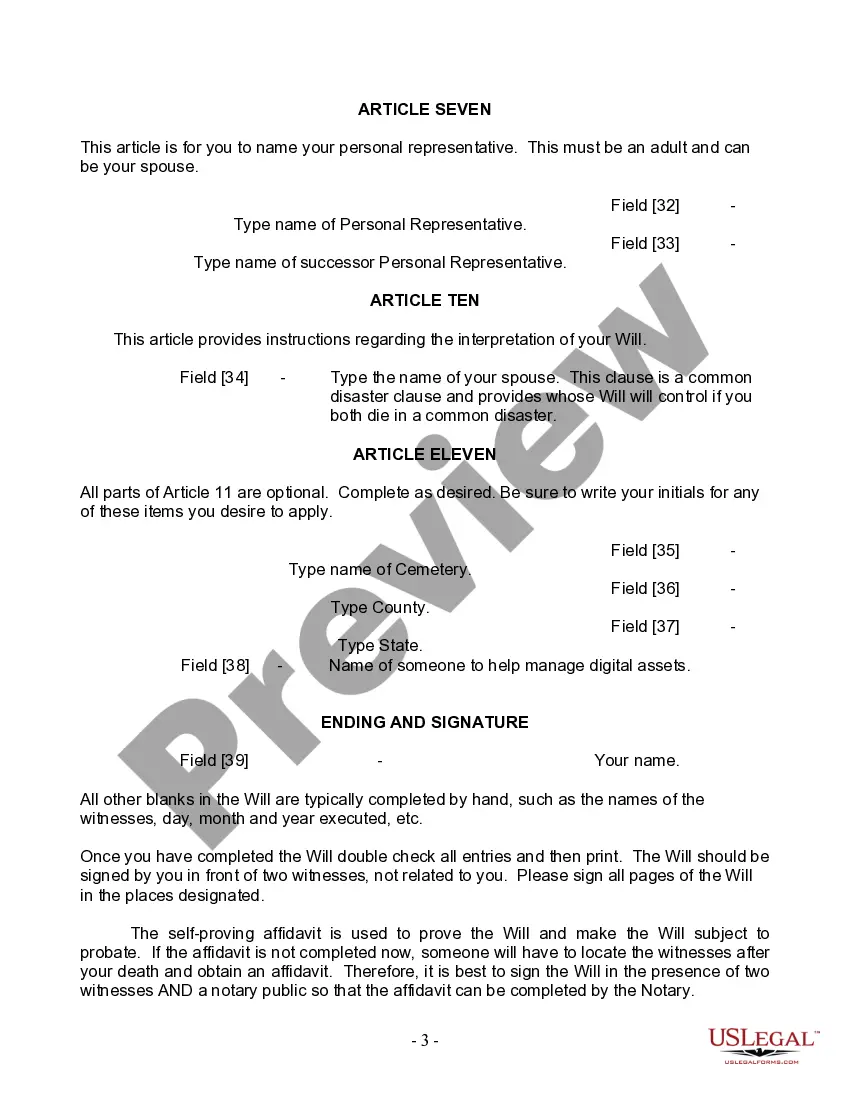
- Sign the document in the presence of two witnesses who are not related to you or named in the will.
- If your state requires, have the will notarized to ensure its validity and facilitate the probate process.
- Store the completed will in a safe place and consider sharing a copy with your personal representative.
Notarization guidance
This document requires notarization to meet legal standards. US Legal Forms provides secure online notarization powered by Notarize, allowing you to complete the process through a verified video call, available 24/7.
Get your form ready online
Our built-in tools help you complete, sign, share, and store your documents in one place.
Make edits, fill in missing information, and update formatting in US Legal Forms—just like you would in MS Word.
Download a copy, print it, send it by email, or mail it via USPS—whatever works best for your next step.
Sign and collect signatures with our SignNow integration. Send to multiple recipients, set reminders, and more. Go Premium to unlock E-Sign.
If this form requires notarization, complete it online through a secure video call—no need to meet a notary in person or wait for an appointment.
We protect your documents and personal data by following strict security and privacy standards.

Make edits, fill in missing information, and update formatting in US Legal Forms—just like you would in MS Word.

Download a copy, print it, send it by email, or mail it via USPS—whatever works best for your next step.

Sign and collect signatures with our SignNow integration. Send to multiple recipients, set reminders, and more. Go Premium to unlock E-Sign.

If this form requires notarization, complete it online through a secure video call—no need to meet a notary in person or wait for an appointment.

We protect your documents and personal data by following strict security and privacy standards.
Common mistakes to avoid
- Failing to sign the will in the presence of required witnesses.
- Not including a self-proving affidavit if your state requires it.
- Omitting to appoint a backup personal representative.
- Neglecting to update the will following significant life events such as divorce or the death of a beneficiary.
Why use this form online
- Convenience of filling out the form digitally from home.
- Ability to make changes and edit the document easily before finalizing.
- Access to guidelines and instructions to help you complete the form accurately.
- Quick download option that allows you to start and finish on your schedule.
Looking for another form?




Form popularity
FAQ
Lack of due execution Along with the testator, the will must contain the signature or thumb impression of two witnesses, witnessing that the will belongs to the testator. If any if these is not present, there is a lack of due execution in the will and the same can be challenged in the court of law.
A witness or the married partner of a witness cannot benefit from a will. If a witness is a beneficiary (or the married partner or civil partner of a beneficiary), the will is still valid but the beneficiary will not be able to inherit under the will.
Fraud or Undue Influence A nonfamily caregiver forcing the testator to leave them an inheritance. A family member getting the testator to sign a will by pretending it is just a general legal document that needs a signature.
The following people are disqualified from inheriting under a will: a person or his/her spouse who writes a will or any part thereof on behalf of the testator; and a person or his/her spouse who signs the will on instruction of the testator or as a witness.
In order for a will to be valid, Wisconsin law requires that it be written. There are some states that allow holographic wills, which are handwritten and signed without witnesses present.In Wisconsin, you must sign a will in the conscious presence of two witnesses in order for the will to be valid.
No. An executor of a will cannot take everything unless they are the will's sole beneficiary.As a fiduciary, the executor has a legal duty to act in the beneficiaries and estate's best interests and distribute the assets according to the will.
There are certain types of property that legally cannot be included in a person's will. Depending on state laws, these may include: Any Property that is Co-Owned with Someone Else Through Joint-Tenancy: Married couples typically own the marital home in joint tenancy.Property being held in a living trust.
Notarizing your will is good practice and beneficial in the probate process. Notarize your will! It makes the probate process much easier to handle. Make your will self-proving means the court will accept it without further verification from the witnesses who signed it.
No, in Wisconsin, you do not need to notarize your will to make it legal. However, Wisconsin allows you to make your will "self-proving" and you'll need to go to a notary if you want to do that. A self-proving will speeds up probate because the court can accept the will without contacting the witnesses who signed it.