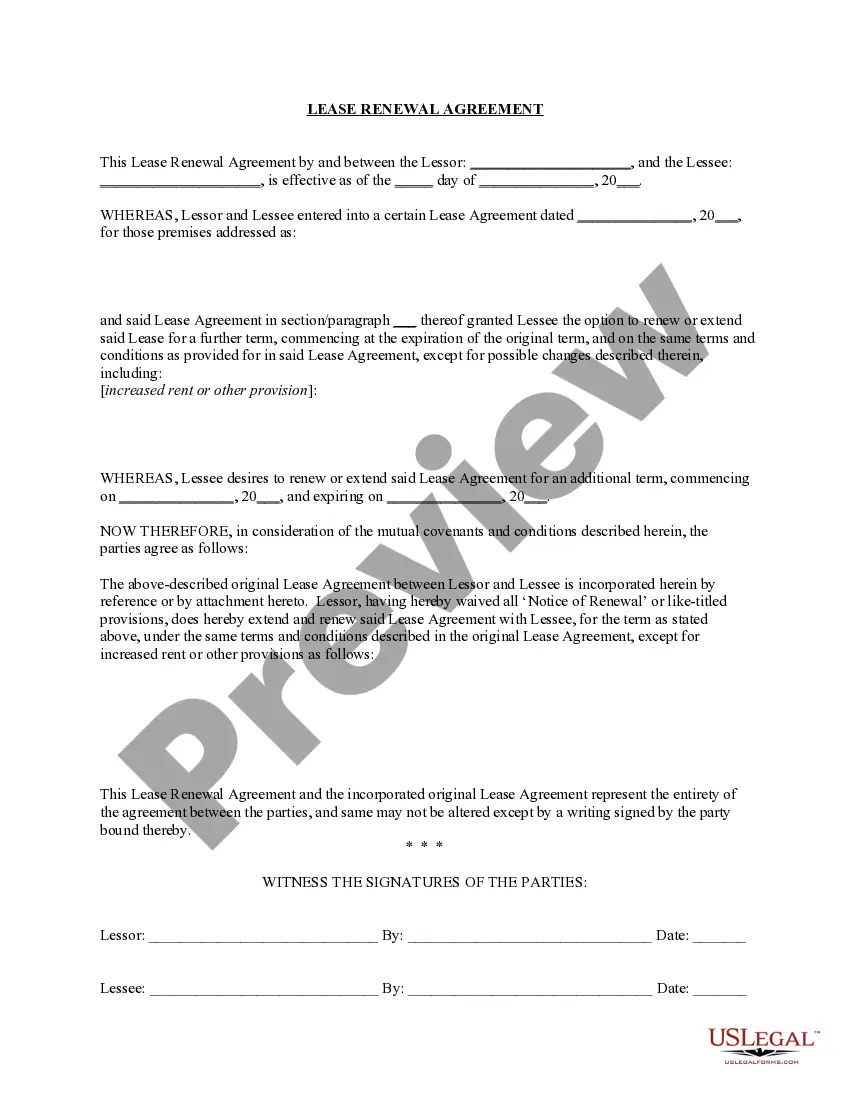
Wisconsin Residential Lease Renewal Agreement
About this form
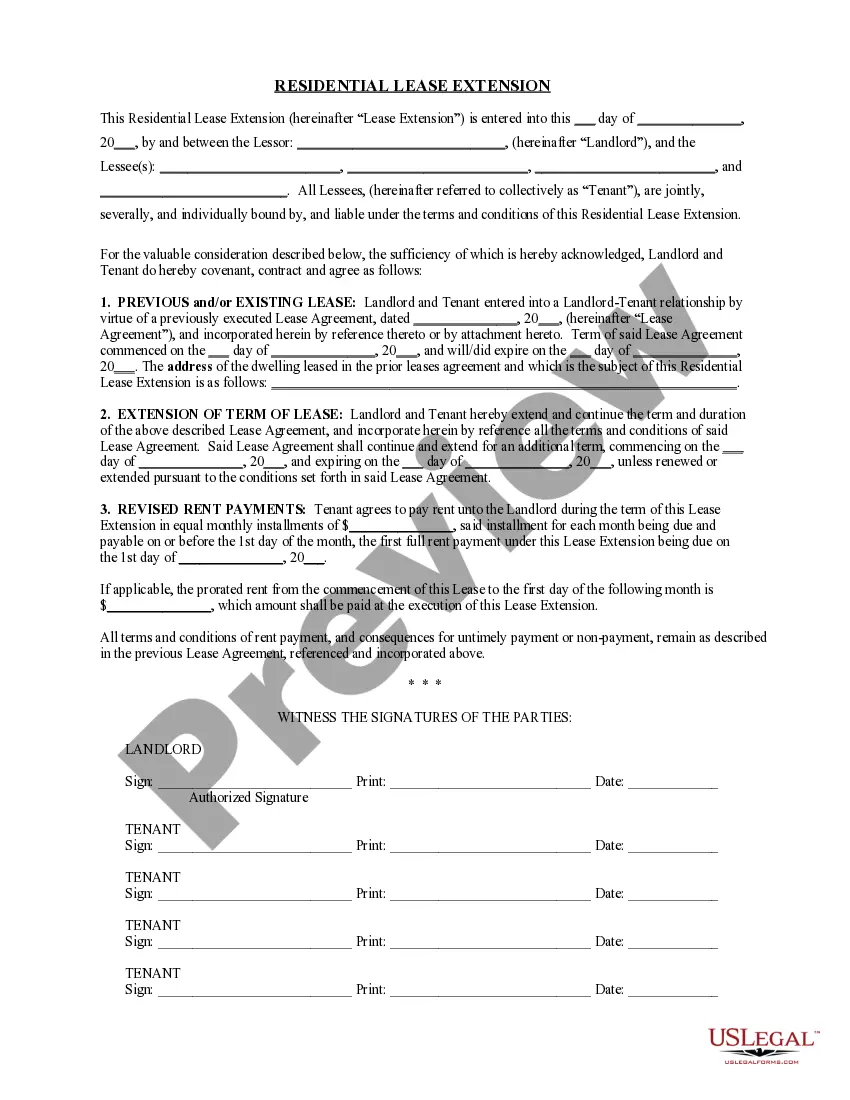
The Residential Lease Renewal Agreement is a legal document that formalizes the extension of an existing lease. It serves as a renewal agreement between a landlord (lessor) and a tenant (lessee), allowing them to continue their rental relationship for another term. This form may include modifications to the original lease and is tailored to comply with state statutory law, distinguishing it from new lease agreements or other renewal options.
Main sections of this form
- Parties involved: Names of the lessor and lessee.
- Effective date: Date when the renewal agreement becomes valid.
- Original lease date: Reference to the initial lease agreement.
- Property details: Description of the leased premises.
- Signatures of both parties: Required signatures to validate the agreement.
When to use this document
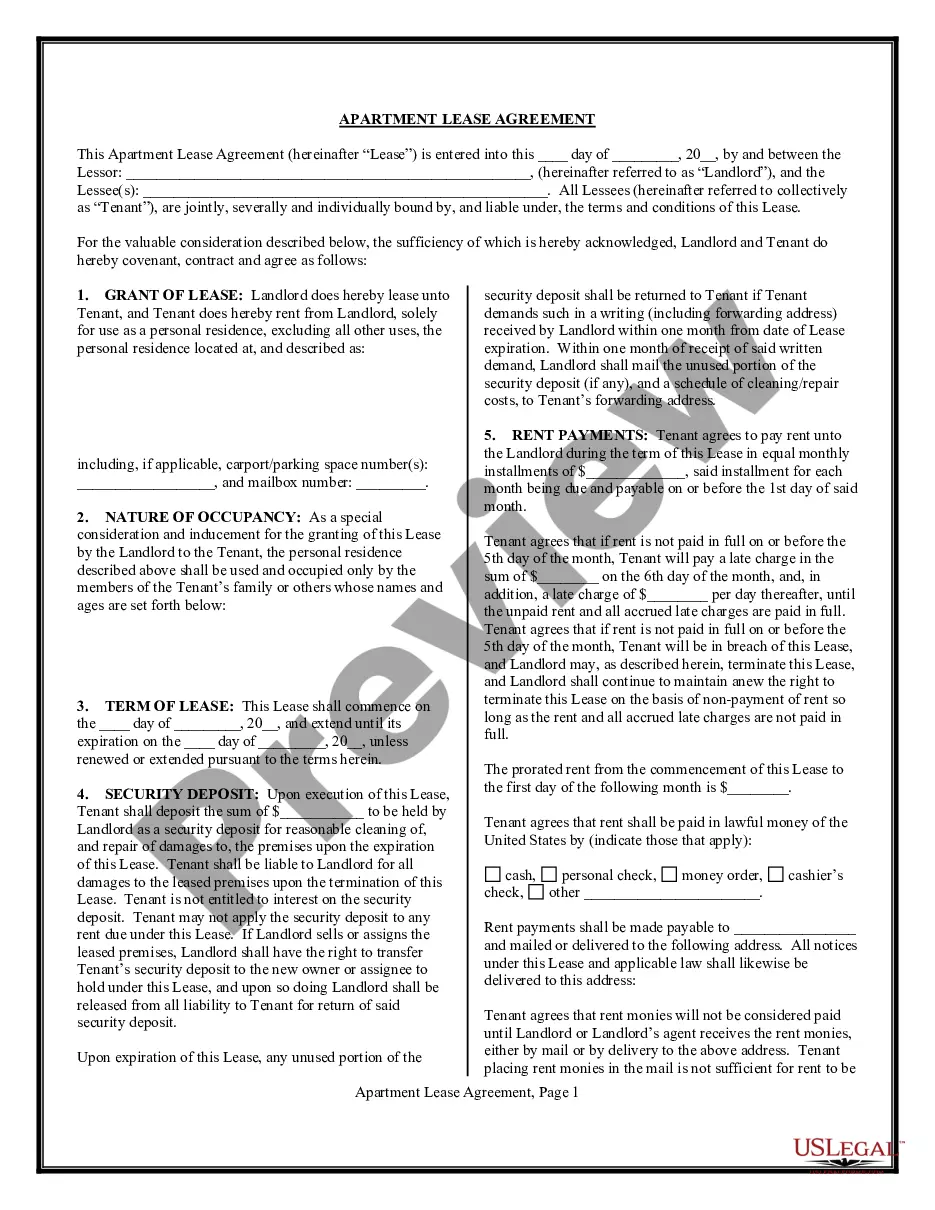
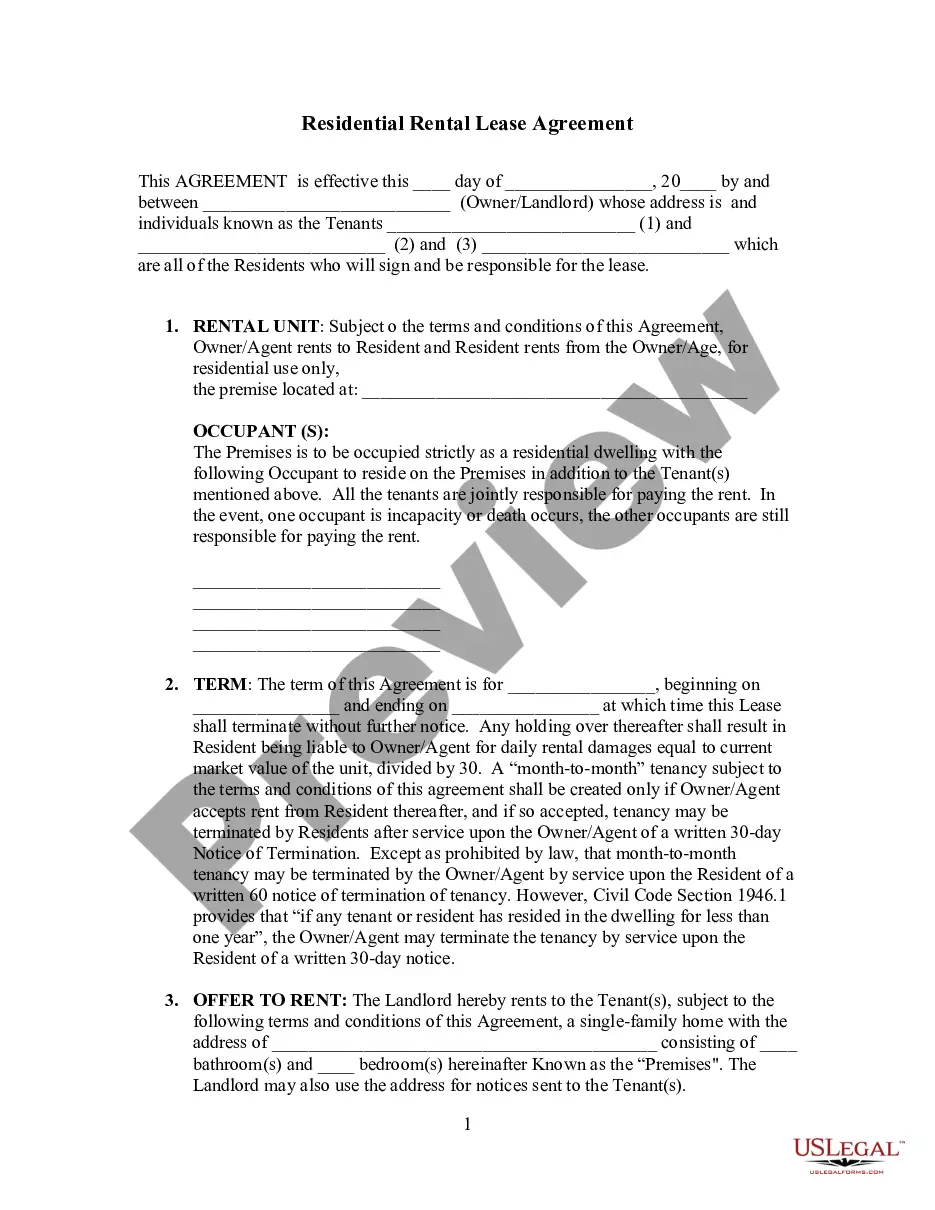
This form should be used when a tenant and landlord wish to renew an existing lease agreement. It is applicable in situations where both parties agree to continue their tenancy with or without modifications to the lease terms. It can also be used when the original lease is nearing expiration and the parties want to set new terms for the continuation of occupancy.
Who can use this document
- Landlords seeking to extend existing lease agreements.
- Tenants looking to remain in their rental property beyond the original lease term.
- Real estate professionals managing residential properties.
How to prepare this document
- Identify the parties: Fill in the names of the lessor and lessee.
- Specify the property: Include the address and details of the leased premises.
- Enter dates: Provide the effective date and the original lease date.
- Include any modifications: Note any changes to the terms of the original lease.
- Gather signatures: Have both parties sign and date the document to validate the renewal.
Notarization requirements for this form
Notarization is not commonly needed for this form. However, certain documents or local rules may make it necessary. Our notarization service, powered by Notarize, allows you to finalize it securely online anytime, day or night.
Get your form ready online
Our built-in tools help you complete, sign, share, and store your documents in one place.
Make edits, fill in missing information, and update formatting in US Legal Forms—just like you would in MS Word.
Download a copy, print it, send it by email, or mail it via USPS—whatever works best for your next step.
Sign and collect signatures with our SignNow integration. Send to multiple recipients, set reminders, and more. Go Premium to unlock E-Sign.
If this form requires notarization, complete it online through a secure video call—no need to meet a notary in person or wait for an appointment.
We protect your documents and personal data by following strict security and privacy standards.

Make edits, fill in missing information, and update formatting in US Legal Forms—just like you would in MS Word.

Download a copy, print it, send it by email, or mail it via USPS—whatever works best for your next step.

Sign and collect signatures with our SignNow integration. Send to multiple recipients, set reminders, and more. Go Premium to unlock E-Sign.

If this form requires notarization, complete it online through a secure video call—no need to meet a notary in person or wait for an appointment.

We protect your documents and personal data by following strict security and privacy standards.
Avoid these common issues
- Failing to specify any modifications to the lease terms.
- Not having both parties sign and date the agreement.
- Leaving out important details about the property or lease dates.
- Using an outdated version of the lease agreement.
Benefits of using this form online
- Convenience of instant download and access from anywhere.
- Editability allows users to customize the agreement to their specific needs.
- Prepared by licensed attorneys, ensuring reliability and legal compliance.
Looking for another form?


Form popularity
FAQ
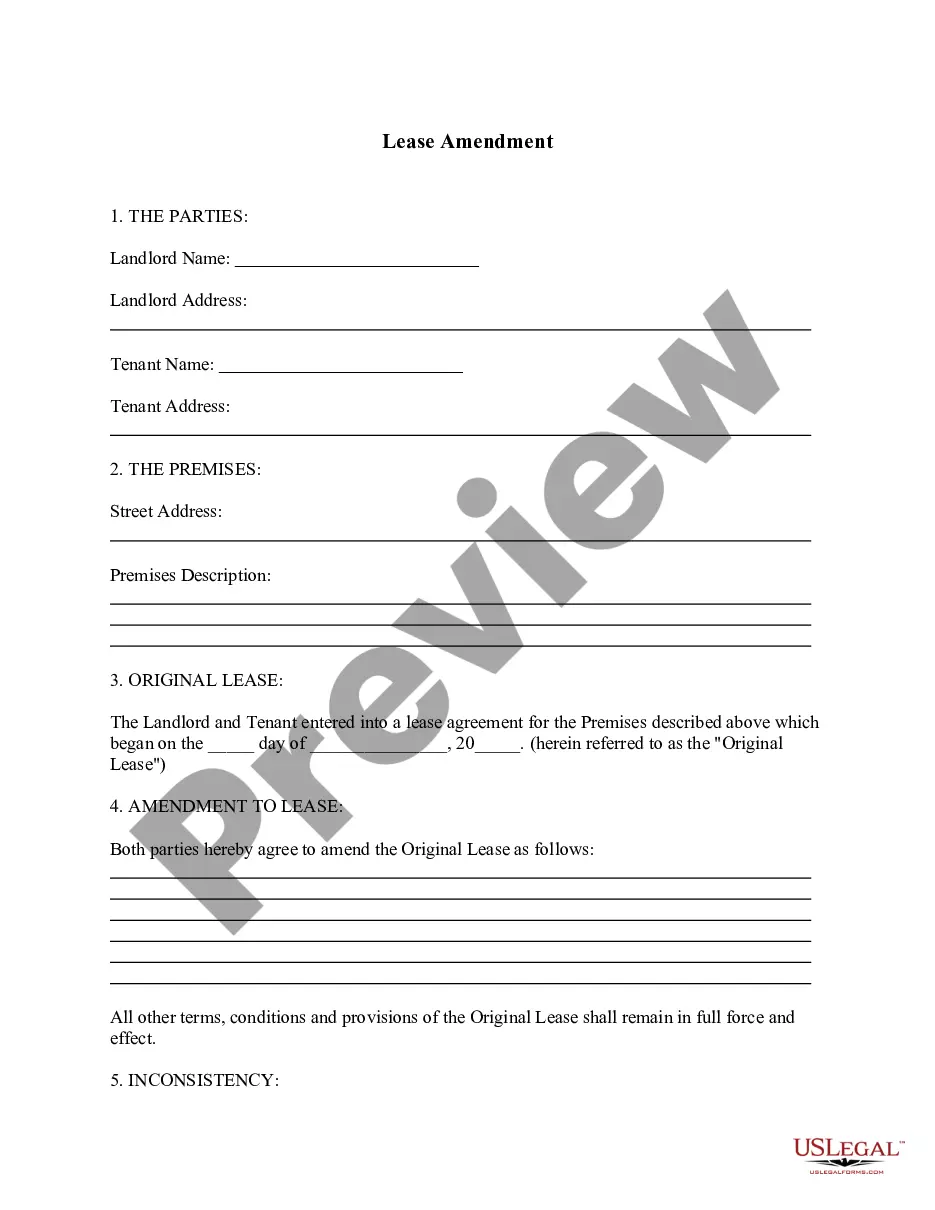
When creating your Lease Amendment, you'll want to include information such as: the names of the landlord(s) and the tenant(s); the effective date of the original lease; the date of the lease amendment; the address and nature of the leased property; whether the original lease was recorded with the county; which
Adding an Addendum An addendum must include the basic elements of any landlord/tenant agreement. You should include the date, the address of the rental property and the names of each party just as you would in the original lease.
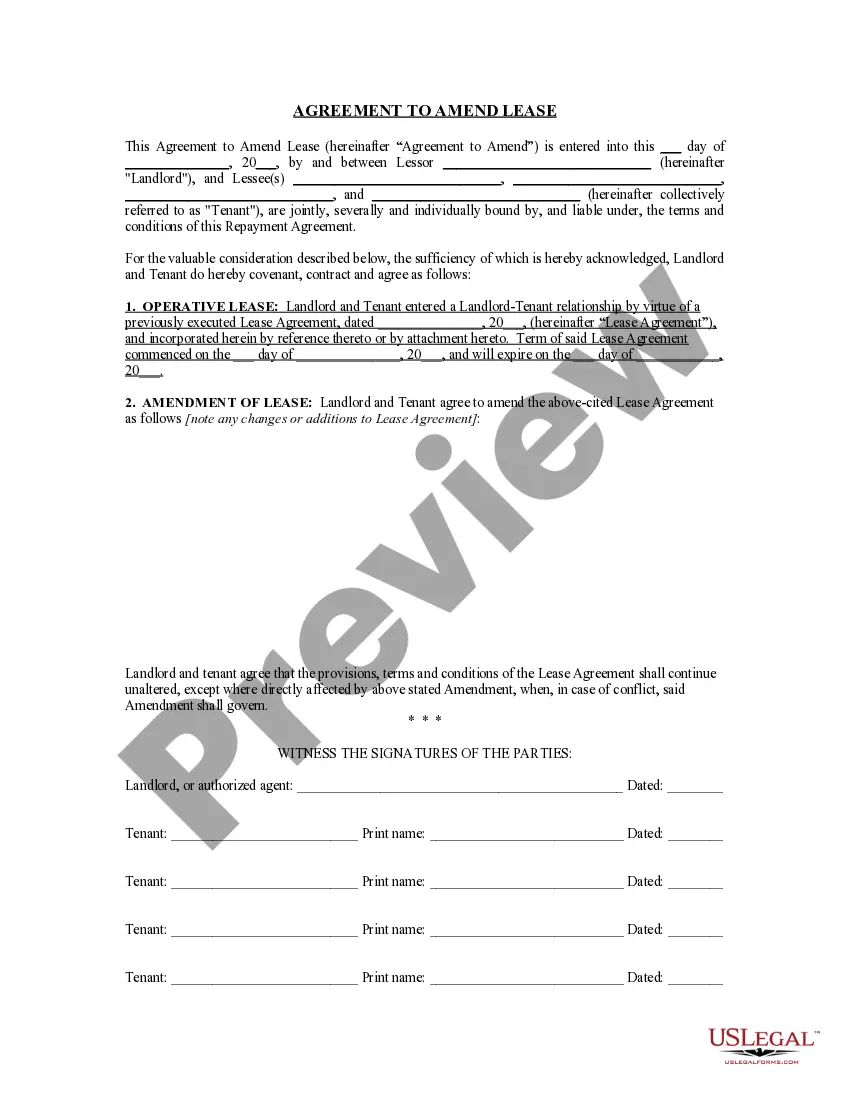
A lease addendum allows a landlord or tenant to make changes to a current residential or commercial lease agreement.Once both parties agree and sign, the addendum should be added to the original lease.
An addendum must include the basic elements of any landlord/tenant agreement. You should include the date, the address of the rental property and the names of each party just as you would in the original lease.
When a landlord and tenant sign a lease agreement it forms a legally binding contract. The lease cannot be altered except through another written agreement signed by both parties unless the original lease specifically gives a party the power to change something on their own.
A Lease Amendment is a handy tool for both landlords and tenants, making it simple for both parties to document an agreement to modify the terms of the original lease. Essentially, it allows you to change certain terms, while leaving the rest of the lease intact and in full effect.
As a landlord, you have many rights that allow you to manage your rental property effectively and efficiently.Collecting rent deposits and payments, as well as any deposits or payments associated with pets, parking, and/or added amenities. Entering the tenant's unit with notice or due to an emergency. Evicting tenants.
If you are a leaseholder, you cannot change the lease terms without agreeing such change with your landlord. The reason for this is that as the lease is a contract between two parties, the leaseholder and the landlord, both parties must agree to change (referred to also as variation) of the terms of the lease.