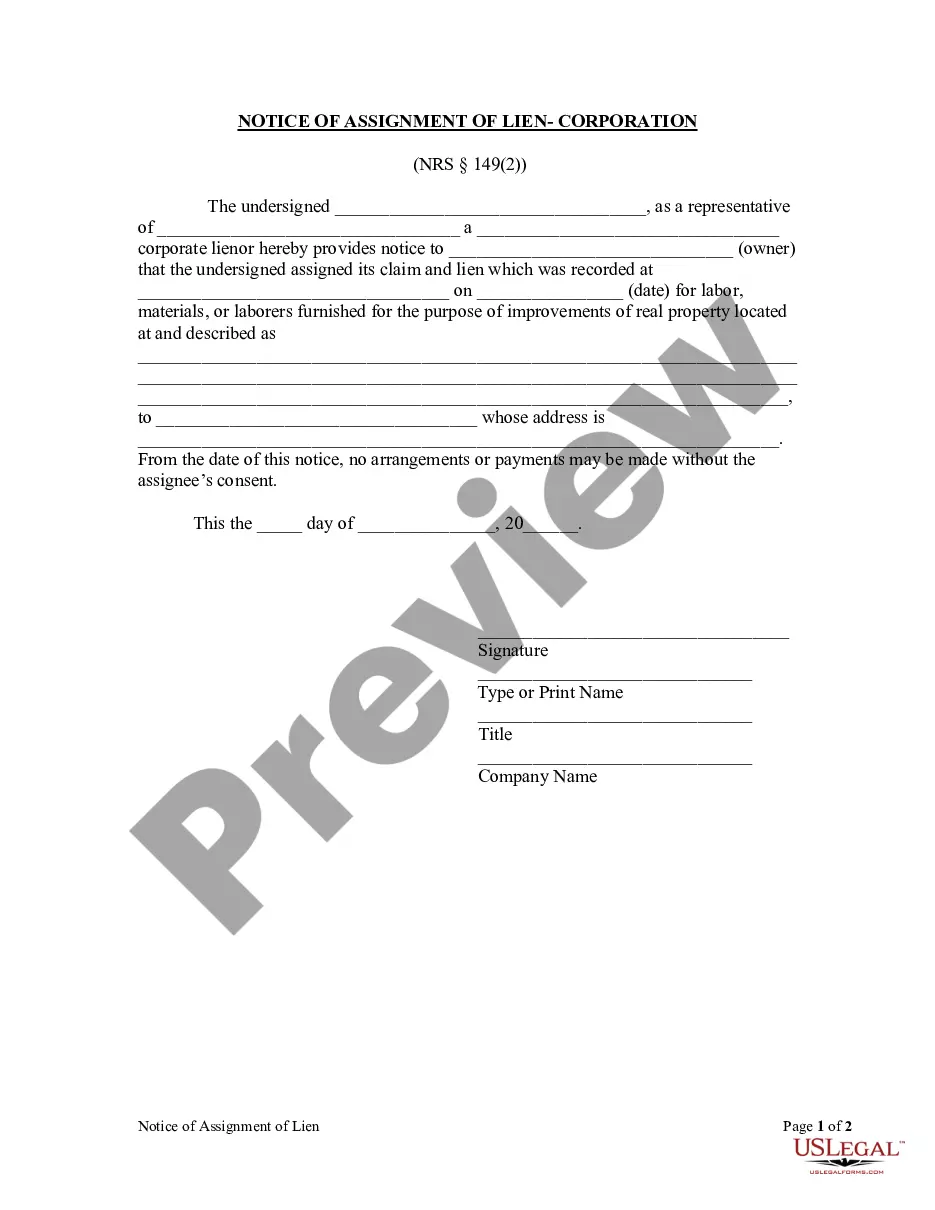
Wisconsin Letter from Tenant to Landlord containing Notice to landlord to cease retaliatory decrease in services
Understanding this form
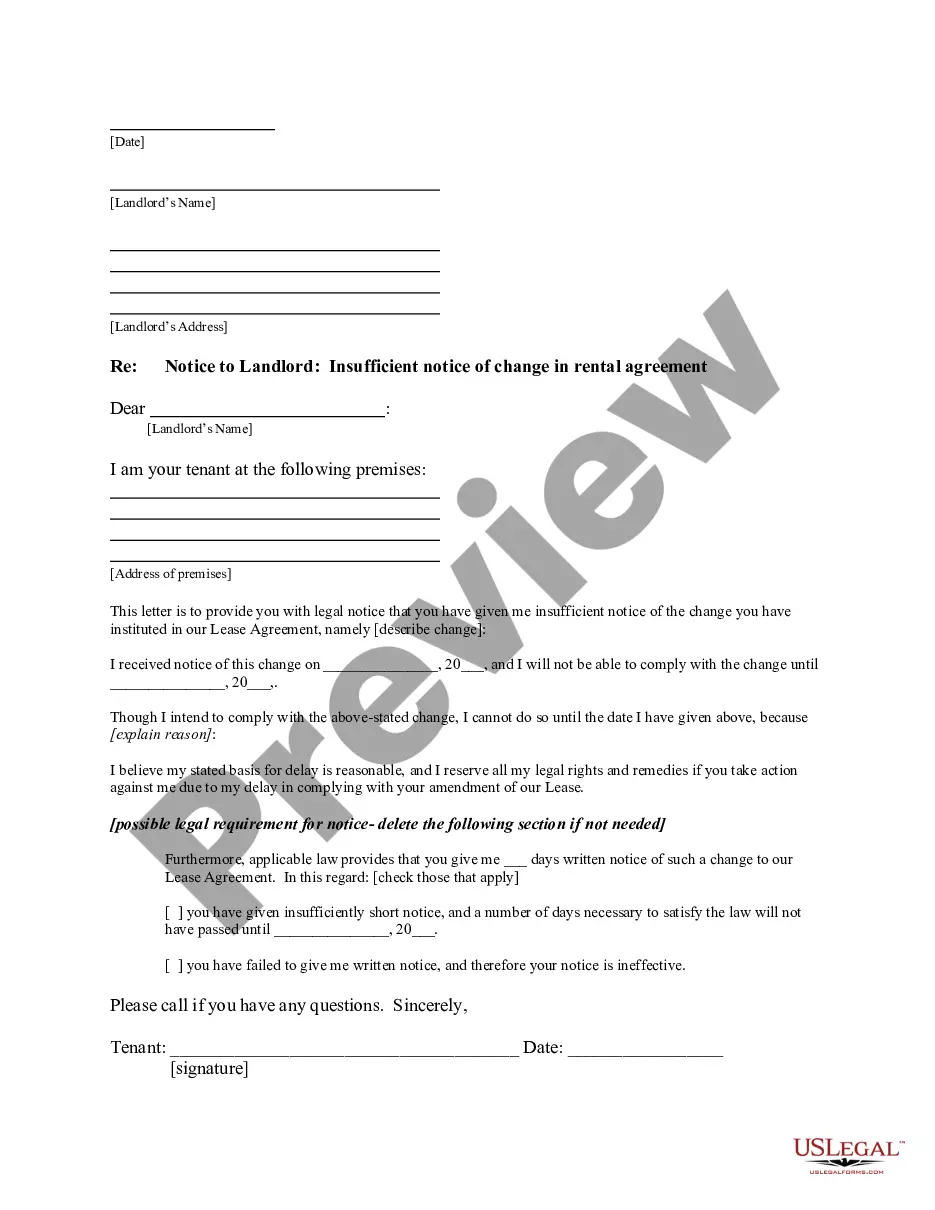
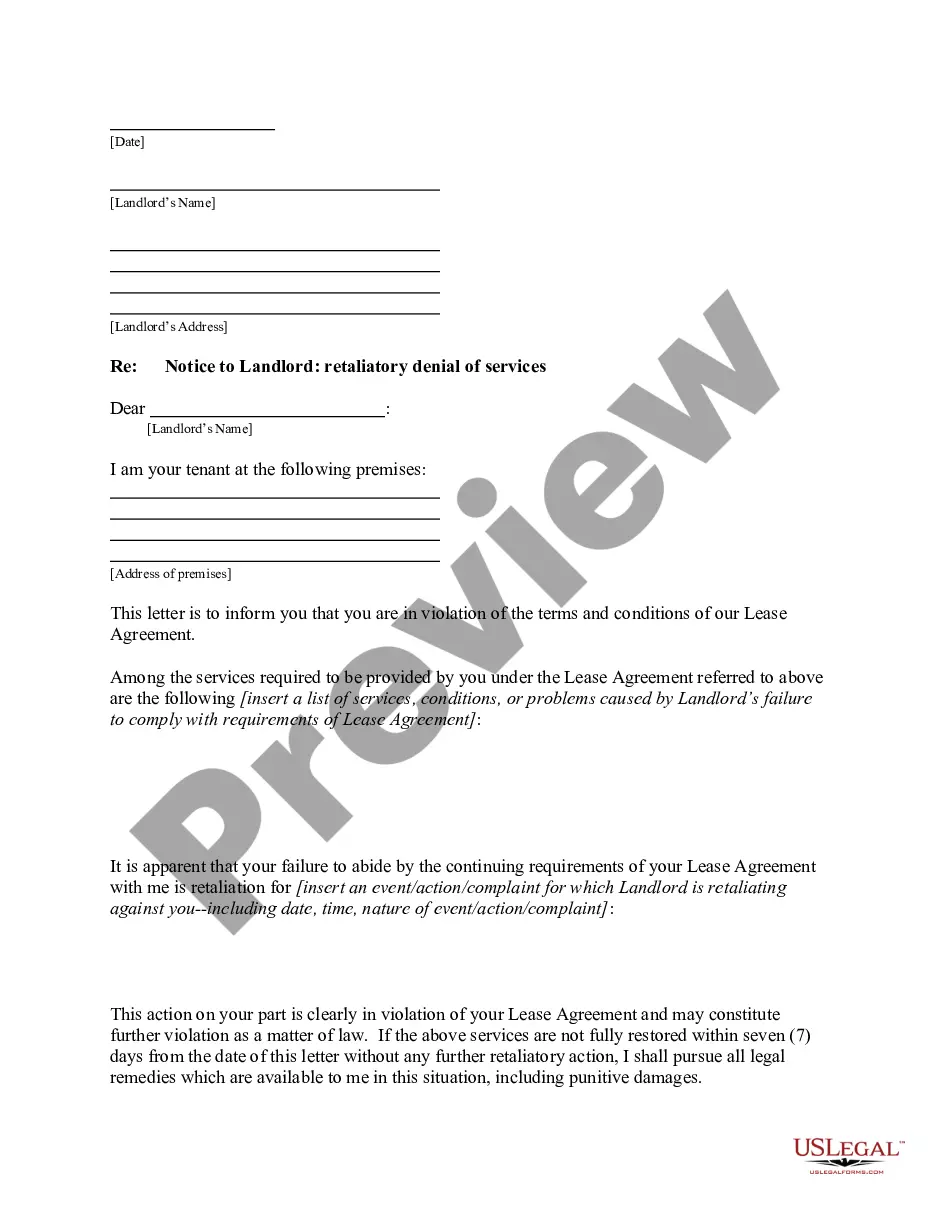
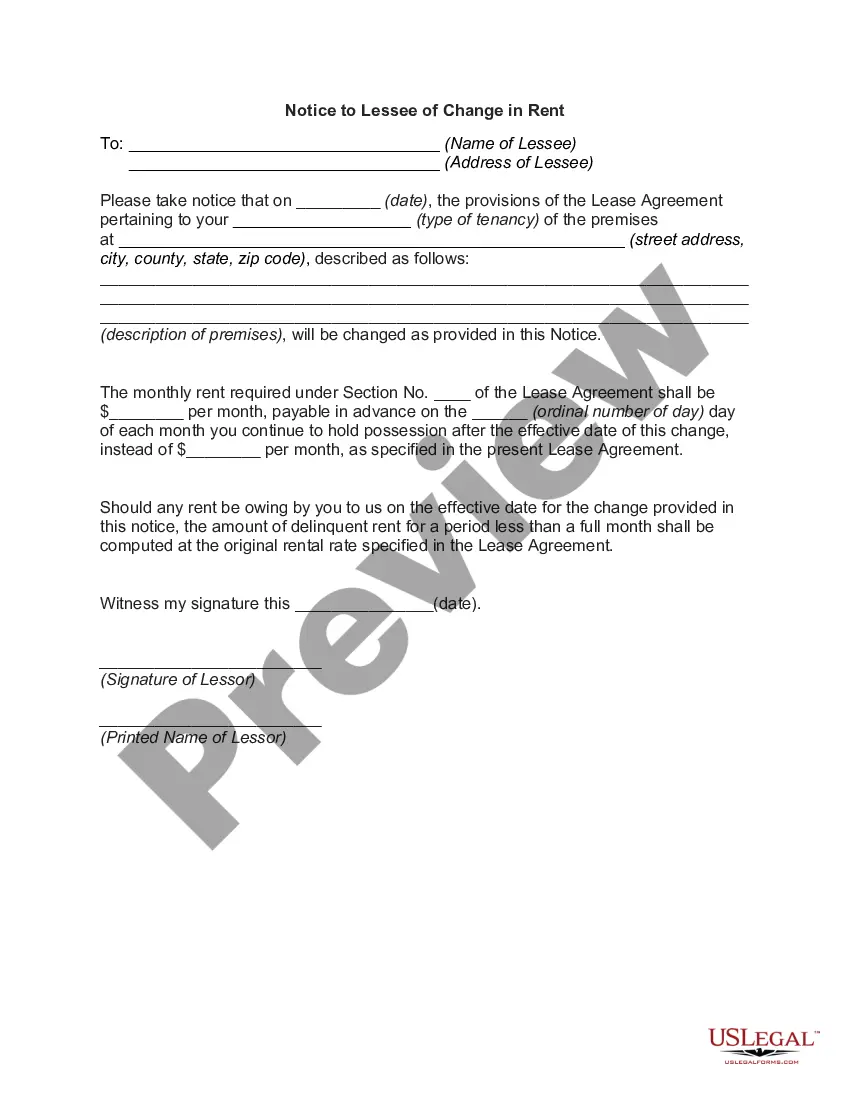
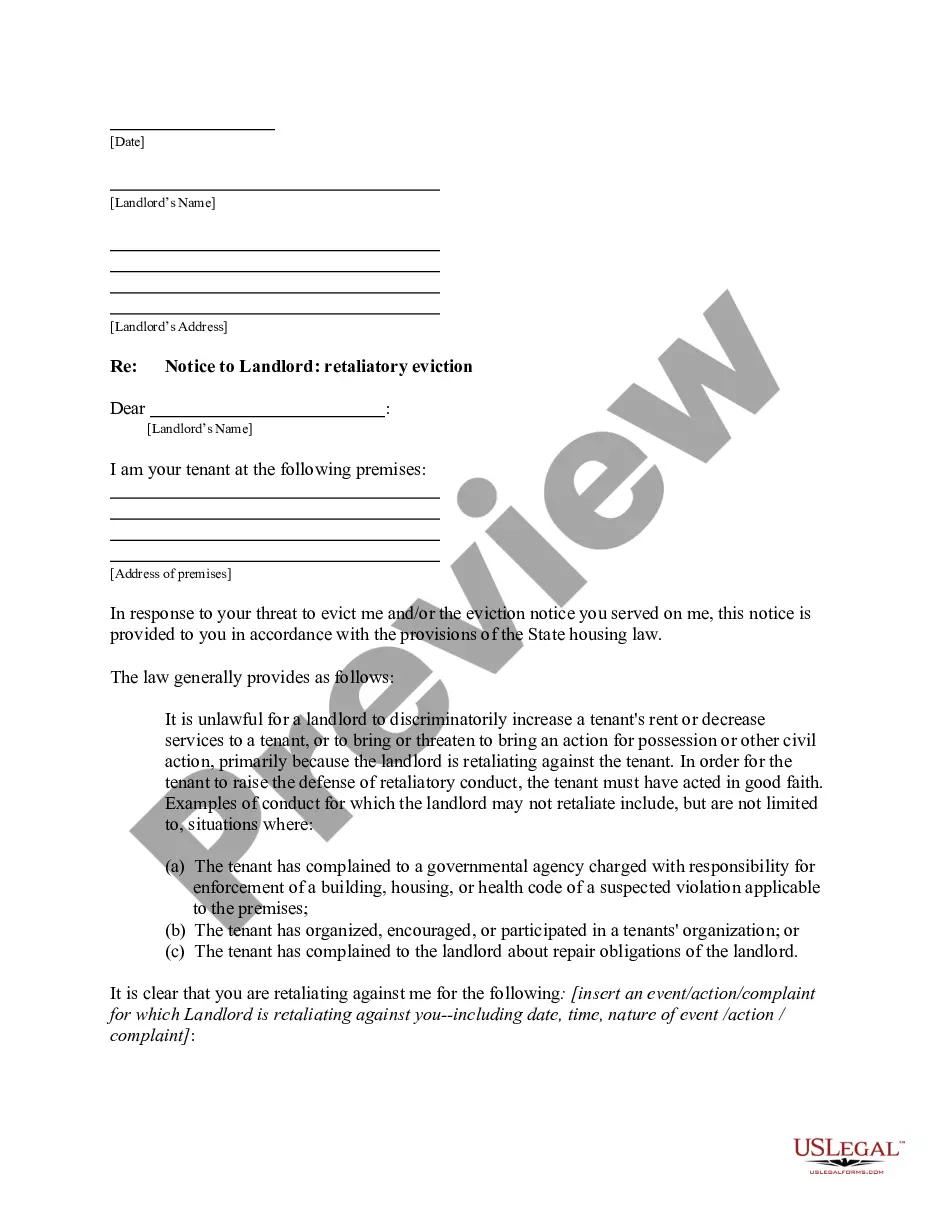
This letter from Tenant to Landlord serves as a formal notice instructing the landlord to cease any retaliatory decrease in services. It addresses claims of service denial due to previous actions taken by the tenant, asserting that such retaliatory behavior breaches the lease agreement and could violate local laws. This form is distinct as it specifically concatenates tenant rights and landlord obligations concerning retaliatory actions.
Key components of this form
- Identification of the Tenant and Landlord.
- A detailed list of services that the landlord is obligated to provide under the lease agreement.
- Specific allegations regarding the decrease in services and retaliatory actions.
- A request for the landlord to cease these actions and rectify the situation.
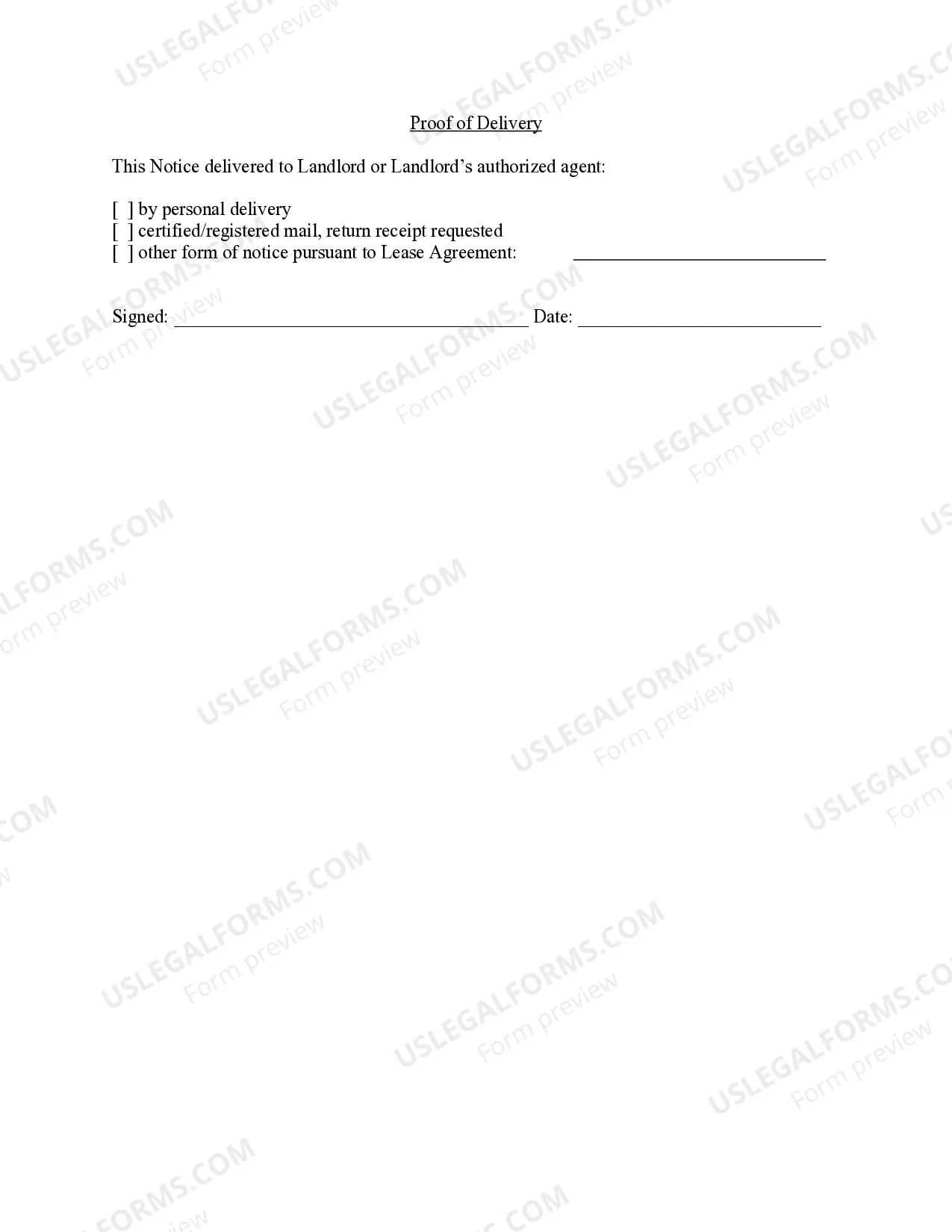
- Proof of delivery options for sending the notice to the landlord.


When to use this form
This form is used when a tenant believes that their landlord is retaliating against them by reducing services provided as part of the lease agreement. It is particularly applicable after a tenant has raised concerns about the property, reported a violation, or taken legal action against the landlord and subsequently experienced a decrease in essential services.
Intended users of this form
- Tenants who feel their landlord has retaliated by decreasing services.
- Individuals under a lease agreement who need to formally address service complaints.
- Renters seeking to protect their rights and ensure compliance with local housing laws.
Instructions for completing this form
- Identify the parties by filling in the names and addresses of the Tenant and Landlord.
- List the specific services that the landlord is failing to provide.
- Document the conditions or issues caused by the landlord's actions.
- Write a clear request for the landlord to rectify their actions.
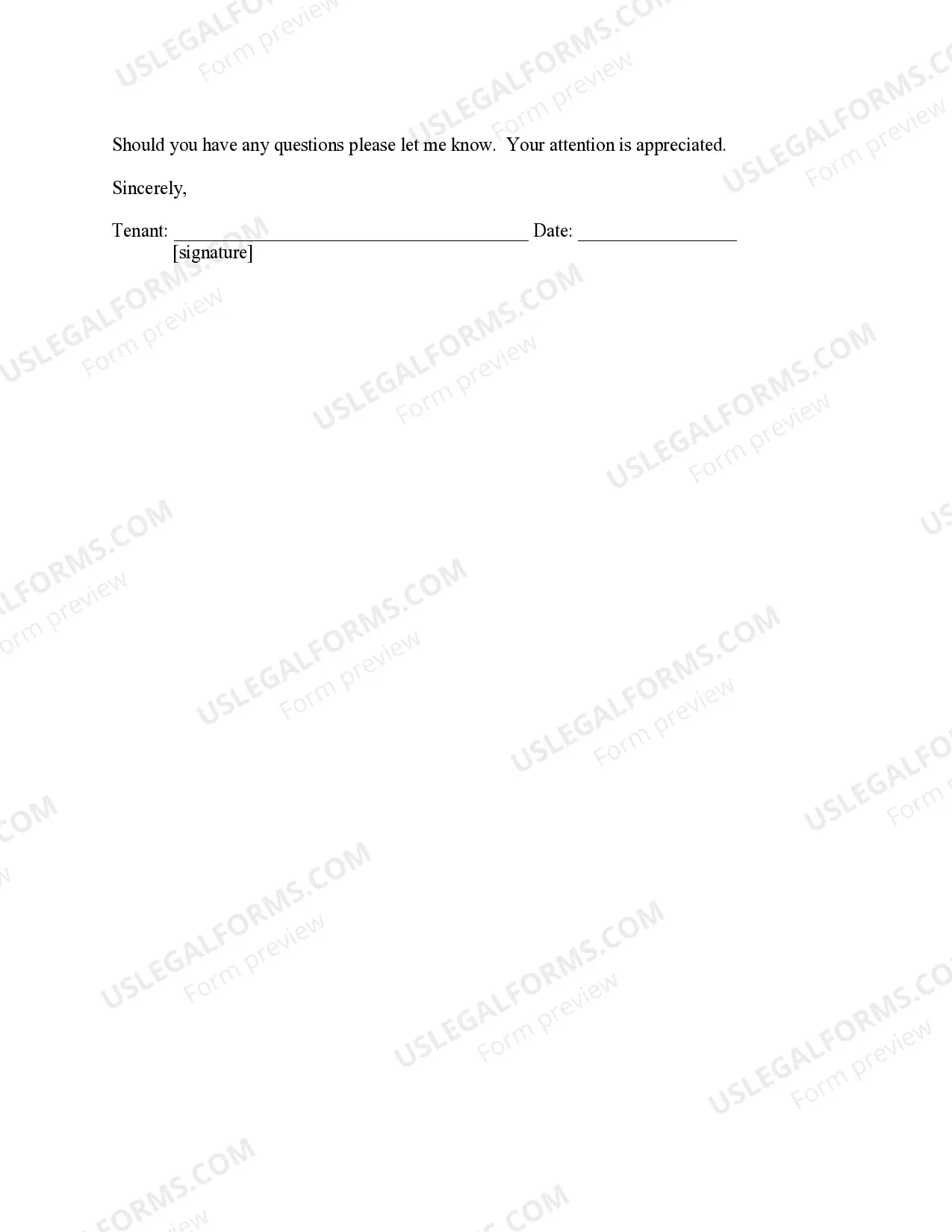
- Sign and date the letter for authenticity.
- Choose and complete a proof of delivery method to ensure the notice is received.
Does this form need to be notarized?
Notarization is generally not required for this form. However, certain states or situations might demand it. You can complete notarization online through US Legal Forms, powered by Notarize, using a verified video call available anytime.
Get your form ready online
Our built-in tools help you complete, sign, share, and store your documents in one place.
Make edits, fill in missing information, and update formatting in US Legal Forms—just like you would in MS Word.
Download a copy, print it, send it by email, or mail it via USPS—whatever works best for your next step.
Sign and collect signatures with our SignNow integration. Send to multiple recipients, set reminders, and more. Go Premium to unlock E-Sign.
If this form requires notarization, complete it online through a secure video call—no need to meet a notary in person or wait for an appointment.
We protect your documents and personal data by following strict security and privacy standards.

Make edits, fill in missing information, and update formatting in US Legal Forms—just like you would in MS Word.

Download a copy, print it, send it by email, or mail it via USPS—whatever works best for your next step.

Sign and collect signatures with our SignNow integration. Send to multiple recipients, set reminders, and more. Go Premium to unlock E-Sign.

If this form requires notarization, complete it online through a secure video call—no need to meet a notary in person or wait for an appointment.

We protect your documents and personal data by following strict security and privacy standards.
Common mistakes
- Failing to include all necessary service details, which can weaken the notice.
- Not properly addressing the landlord or using incorrect spelling of names.
- Omitting the request for corrective action, which is the form's primary purpose.
- Not keeping a copy of the letter for personal records.
Benefits of using this form online
- Convenient access from anywhere, allowing you to complete it at your pace.
- Editable templates ensure you can customize the form to suit your particular situation.
- Reliable guidance drafted by licensed attorneys, ensuring legal compliance.
Looking for another form?




Form popularity
FAQ
You can send your letter by email if your tenancy agreement says you can. You should say something like: I am giving 1 month's notice to end my tenancy, as required by law. I will be leaving the property on (date xxxxx).
When writing to your landlord, be specific in describing the problems you are having. Do not exaggerate or under-emphasize the extent of the problem. The landlord may show this letter to a judge if your problem is ever litigated.
If your landlord breaches the warranty of habitability or the warranty of quiet enjoyment, you may be able to sue her to recover monetary damages.In some states, such as California and Arizona, you may be able to seek emotional distress damages if the landlord's actions were particularly egregious.
If you are renting by the month, the landlord may terminate the rental agreement by giving you a written termination notice at least 28 days before the next rent due date. You must use the same procedure in notifying the landlord of your intent to terminate the rental agreement, Wis.
The landlord had a duty to reasonably maintain the property; The landlord knew or should have known of the dangerous condition; The landlord breached their duty by failing to repair/fix the dangerous condition;
Dear (Name of landlord or manager), This letter constitutes my written (number of days' notice that you need to give based on your lease agreement)-day notice that I will be moving out of my apartment on (date), the end of my current lease. I am leaving because (new job, rent increase, etc.)
If you're seeking damages for emotional distress caused by a landlord's discrimination, or punitive damages for especially blatant and intentional discrimination, a lawsuit may well be your best bet. Understand what's involved in suing your landlord. You may file a lawsuit in either federal or state court.
Today's Date. Landlord's Name. Property Address and Unit Number. State Your Desire to Move Out of the Apartment. Include Desired Move-Out Date. That You Expect the Return of Your Security Deposit Under State Law. A Forwarding Address Where Your Security Deposit Can Be Sent.
State who you are and why you need a rental. Mention where you found their ad and how you can afford the rental. Offer to provide references (work/volunteer/housing office) Include some highlighting feature from the original ad so that when you receive a response you can remember which rental you are talking about (ex.