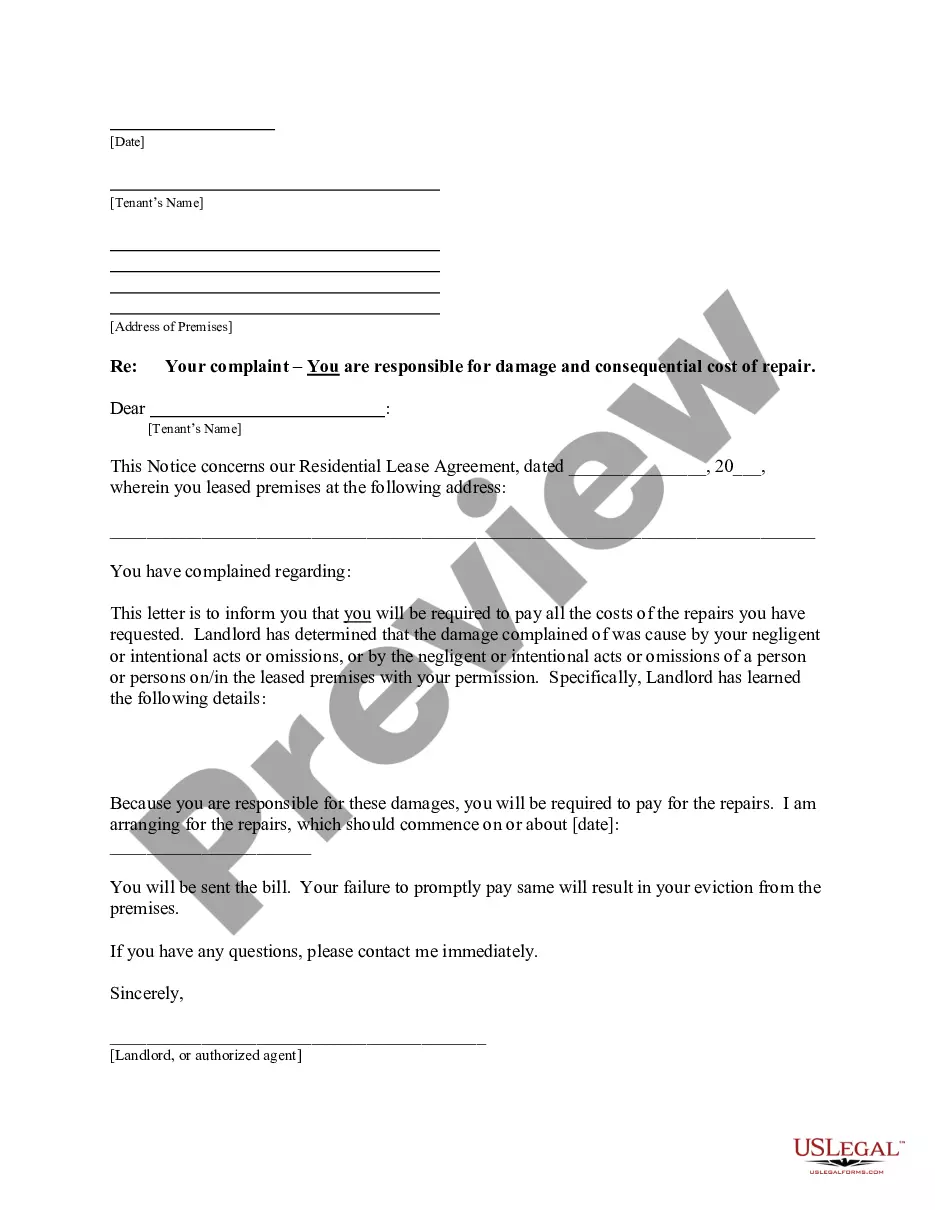
Wisconsin Letter from Landlord to Tenant where Tenant Complaint was caused by the deliberate or negligent act of Tenant or Tenant's guest
Understanding this form
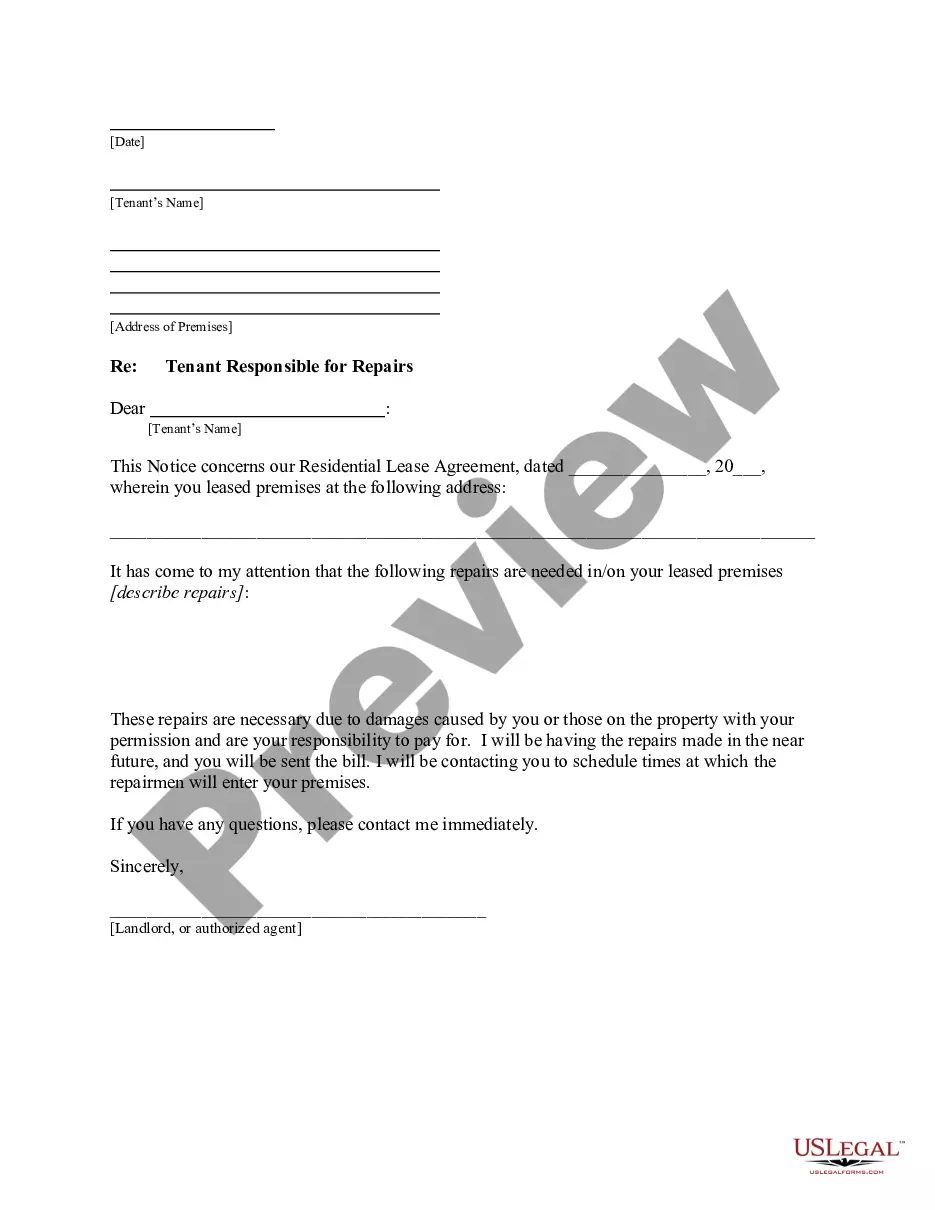
This letter from landlord to tenant addresses a tenant's request for repairs. It specifically relates to situations where the landlord determines that the damage was caused by the tenant's negligent or intentional actions or those of their guests. This form is essential for landlords looking to formally communicate the refusal to cover repair costs in such circumstances, which differentiates it from standard repair requests that do not involve fault or negligence.
Key parts of this document
- Identification of the landlord and tenant involved.
- A statement regarding the tenant's request for repairs.
- Explanation of how the damages were caused by the tenant or their guests.
- Information on how to contact the landlord for questions.
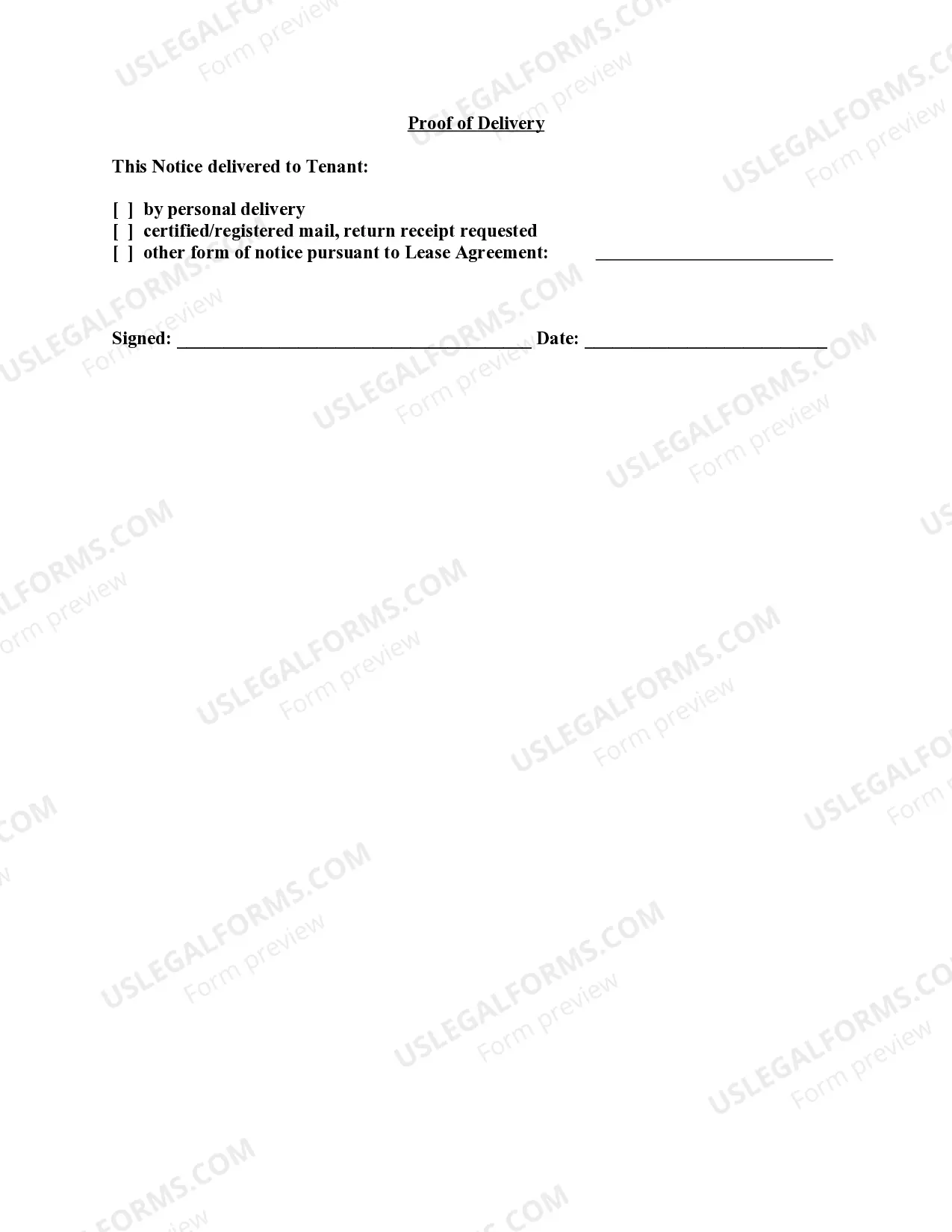
- Proof of delivery method selected for the notice.



When to use this form
This form is used when a tenant has requested repairs that the landlord believes were caused by the tenant's intentional actions or negligence. It is appropriate in scenarios where there is a clear distinction between normal wear and tear versus damage caused by the tenant or their guests, allowing landlords to assert their positions in a formal manner.
Who needs this form
- Landlords who have identified damage caused by tenants or their guests.
- Property managers acting on behalf of landlords.
- Landlords who want to formally document their refusal to pay for repairs due to tenant negligence.
How to prepare this document
- Identify the parties involved, including tenant's full name and landlord's information.
- Detail the specific damages the tenant is requesting repairs for.
- Clearly state how the damage was caused by the tenant or their guests.
- Include a personal contact method for any questions from the tenant.
- Select the method of proof for delivery, such as personal delivery or certified mail.
Does this form need to be notarized?
Notarization is generally not required for this form. However, certain states or situations might demand it. You can complete notarization online through US Legal Forms, powered by Notarize, using a verified video call available anytime.
Get your form ready online
Our built-in tools help you complete, sign, share, and store your documents in one place.
Make edits, fill in missing information, and update formatting in US Legal Forms—just like you would in MS Word.
Download a copy, print it, send it by email, or mail it via USPS—whatever works best for your next step.
Sign and collect signatures with our SignNow integration. Send to multiple recipients, set reminders, and more. Go Premium to unlock E-Sign.
If this form requires notarization, complete it online through a secure video call—no need to meet a notary in person or wait for an appointment.
We protect your documents and personal data by following strict security and privacy standards.

Make edits, fill in missing information, and update formatting in US Legal Forms—just like you would in MS Word.

Download a copy, print it, send it by email, or mail it via USPS—whatever works best for your next step.

Sign and collect signatures with our SignNow integration. Send to multiple recipients, set reminders, and more. Go Premium to unlock E-Sign.

If this form requires notarization, complete it online through a secure video call—no need to meet a notary in person or wait for an appointment.

We protect your documents and personal data by following strict security and privacy standards.
Avoid these common issues
- Failing to provide clear evidence of how the damage occurred.
- Not properly identifying all parties involved.
- Using vague language that can lead to misunderstandings.
Advantages of online completion
- Easy access to professionally drafted templates.
- Convenient editing options to customize the form to specific needs.
- Fast downloading and immediate documentation.
Looking for another form?
Form popularity
FAQ
It is a reasonable expectation for rental tenants to expect their landlord and/or agents to fulfil their duty of care. As the tenant, if you sustain serious injuries as a result of the landlord's negligence, you may have a public liability injury claim.
Uninhabitable conditions can include dangerous ones, such as holes in the floor, unsafe or exposed wiring, or non-working air conditioning in dangerously hot summer months. Gross infestations of roaches, fleas or other pests are also uninhabitable conditions.
If your tenant damages your rental property, your landlord insurance may cover that damage, depending on your policy and the type and extent of the damage. There are three types of tenant damage: accidental, intentional and normal wear and tear. Accidental damage Sometimes covered by landlord insurance.
The act appoints a rental officer to enforce the act, provide the public with information, and resolve disputes between landlords and tenants who have entered into residential tenancy agreements. Decisions by the rental officer have the same force as a Supreme Court order.
Damage to the Property: A landlord can sue a tenant if the tenant has caused damage to the property.To Recover Lost Rent From an Illegal Move Out: If the tenant moved out before their lease was actually up, you can take them to court to recover the rent they owed for the remaining time on their lease.
The landlord had a duty to reasonably maintain the property; The landlord knew or should have known of the dangerous condition; The landlord breached their duty by failing to repair/fix the dangerous condition;
In most cases when a rental property is damaged, you have the right to keep all or part of the security deposit to offset the repair costs. But again, security deposits are heavily regulated by the landlord-tenant laws in your location.
When damages or issues affect a rental unit's liveability, it is the landlord's responsibility to fix these damages at no cost to the tenant. Landlords are also responsible for repairing (and sometimes replacing) damaged items or appliances that are in the lease agreement.
Landlord Rights When Tenant Destroys PropertyIf the tenant is evicted or already abandoned the property the landlord can deduct money from the security deposit. If the damages exceed the funds in the security deposit the landlord can sue the tenant in small claims court.