Wisconsin Letter from Tenant to Landlord containing Notice to Cease Unjustified Nonacceptance of Rent
About this form
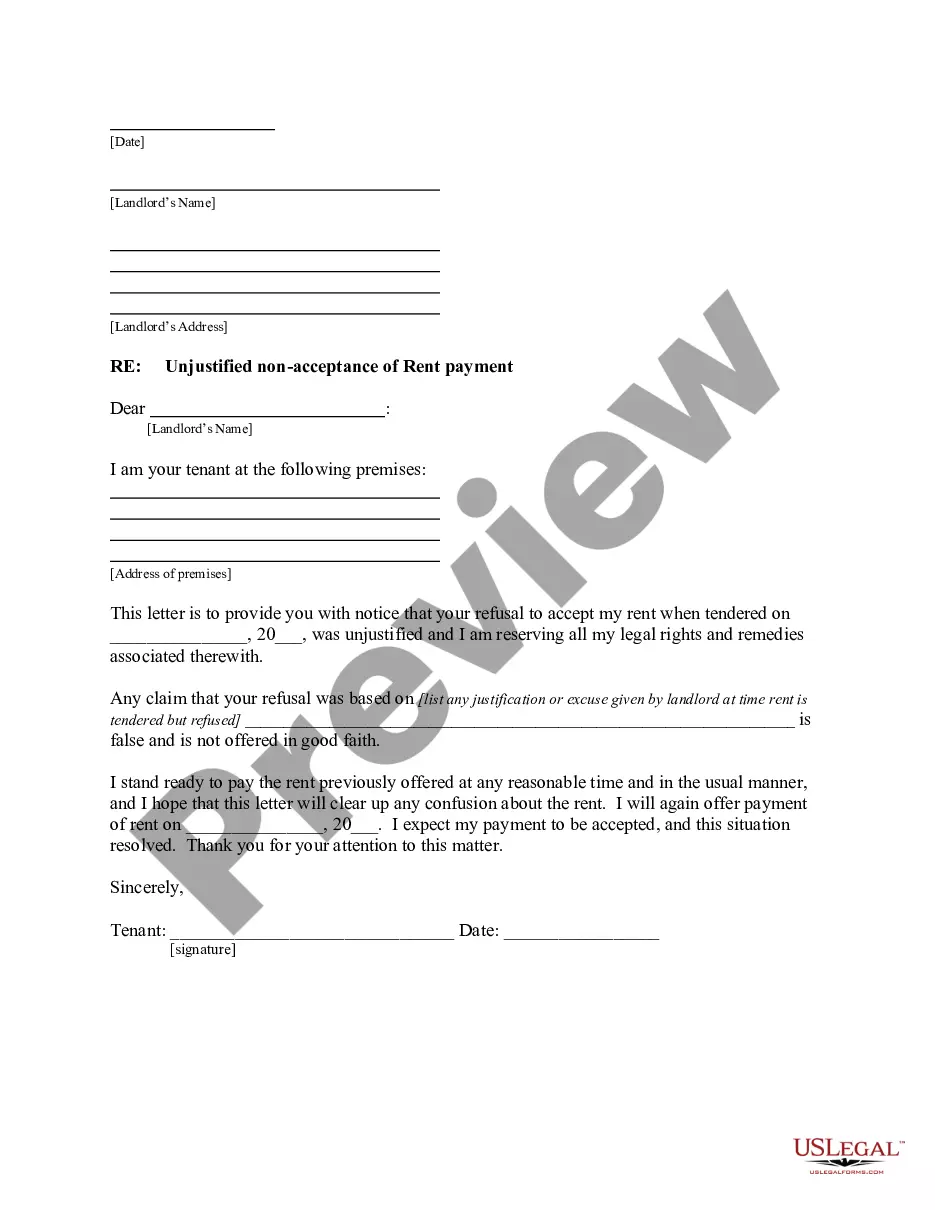
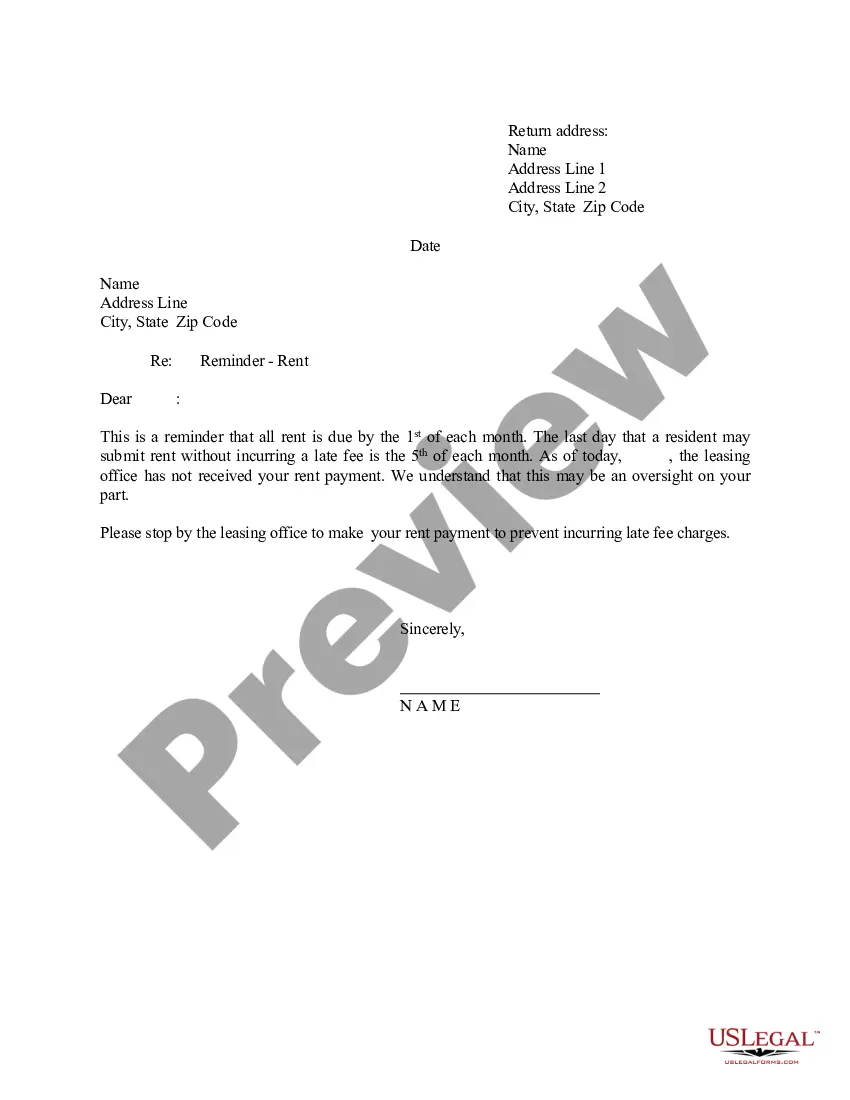
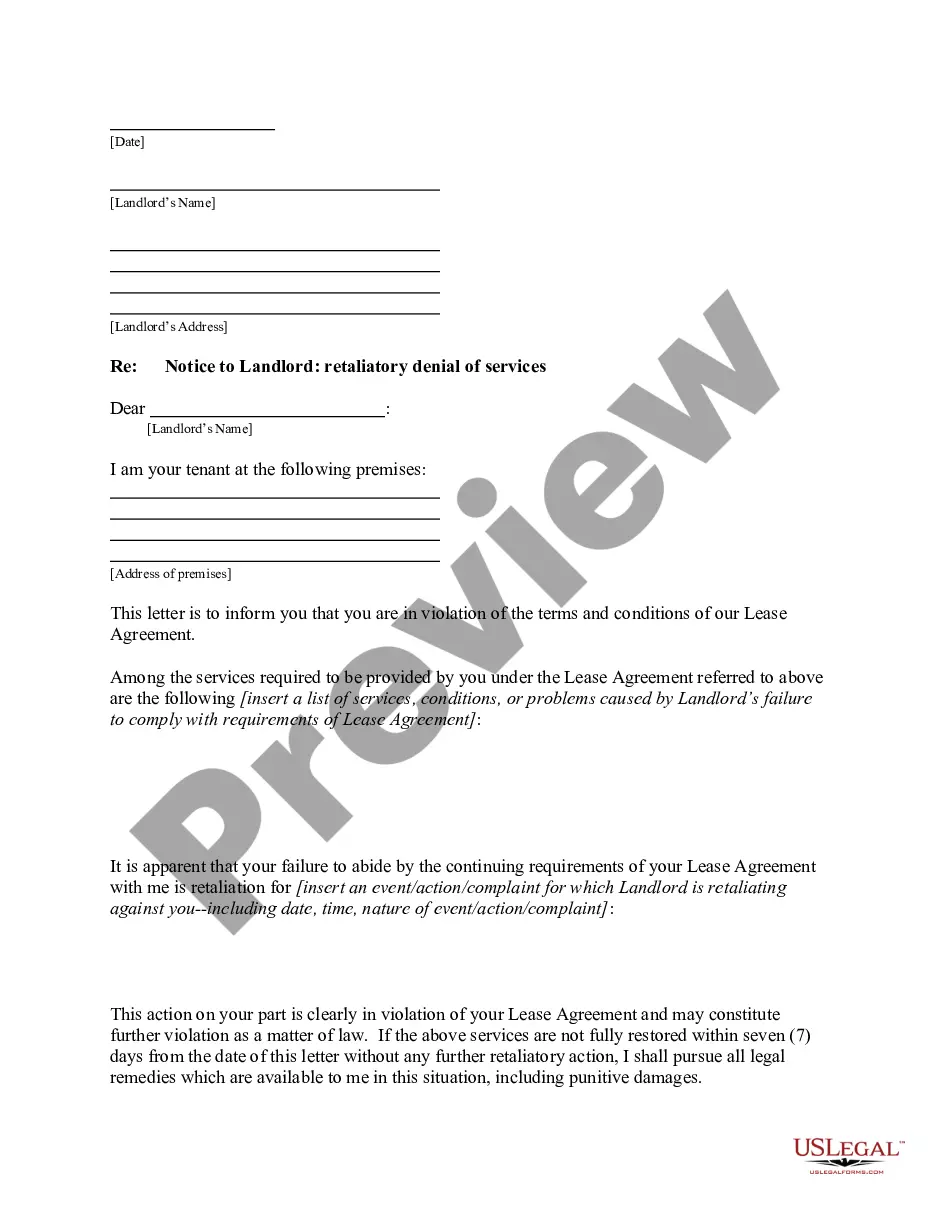
This Letter from Tenant to Landlord containing Notice to Cease Unjustified Nonacceptance of Rent is a formal communication from a tenant to their landlord. It asserts that the landlord's refusal to accept rent is unjustified and informs the landlord that the tenant is reserving their legal rights. This form provides a clear record of the tenant's position and can help prevent further disputes regarding rent payments.
What’s included in this form
- Claim of unjustified refusal: The tenant specifies the landlord's reasons for refusing rent.
- Offer to pay: The tenant states their willingness to pay the rent at a reasonable time.
- Request for resolution: The tenant asks for a resolution and expects acceptance of the rent payment.
- Signature and date: The tenant must sign and date the letter to validate it.
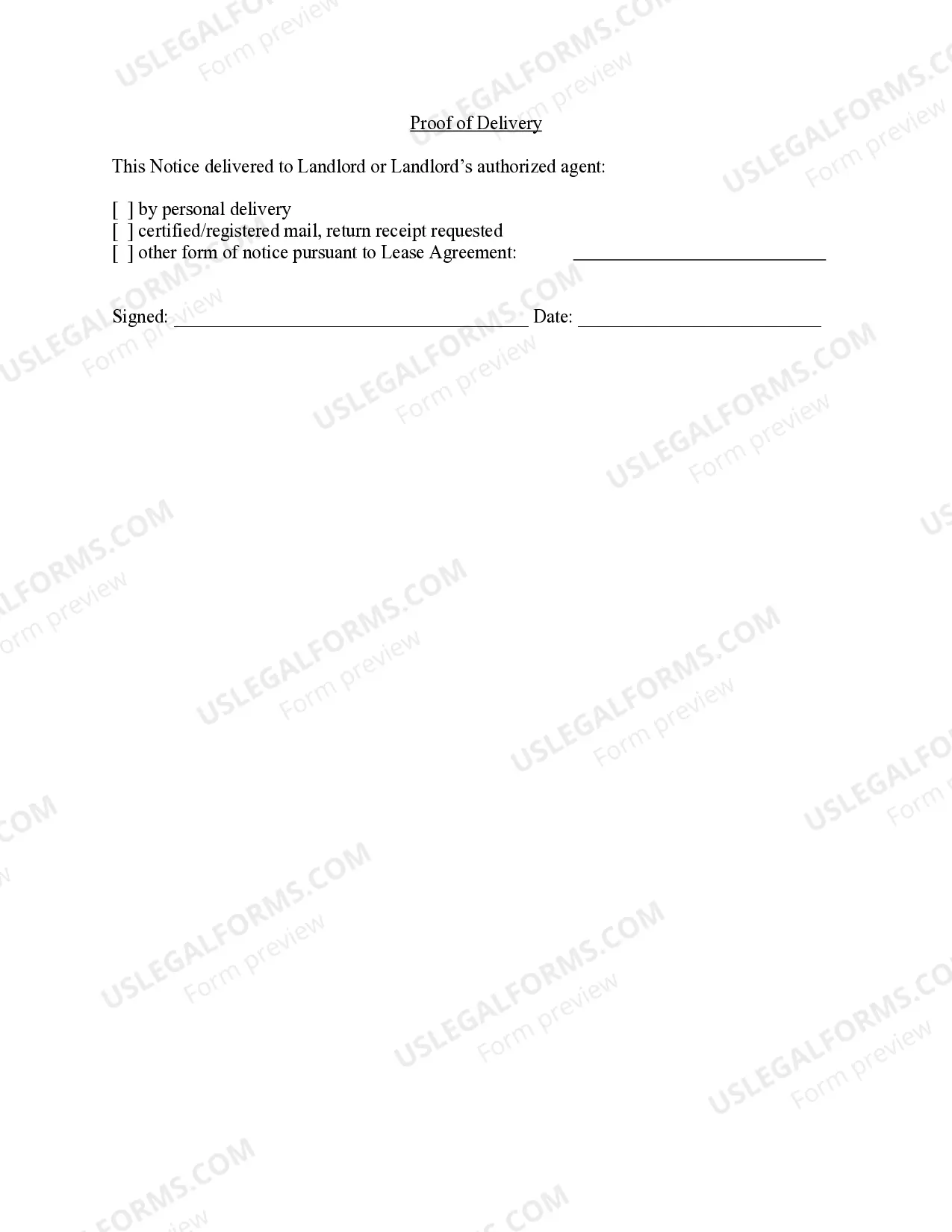
- Proof of delivery: A section to confirm delivery to the landlord or their authorized agent.


When to use this form
Intended users of this form
- Tenants who have experienced unjustified rent refusals by their landlord.
- Individuals looking to assert their rights regarding lease agreements.
- Anyone seeking to formally communicate with their landlord about payment disputes.
How to prepare this document
- Identify the reasons provided by the landlord for refusing rent.
- Indicate your willingness to pay the rent at a reasonable time.
- Enter the date you plan to offer payment again.
- Include your signature and date at the bottom of the letter.
- Deliver the notice to the landlord or their authorized agent and confirm delivery.
Is notarization required?
This form usually doesn’t need to be notarized. However, local laws or specific transactions may require it. Our online notarization service, powered by Notarize, lets you complete it remotely through a secure video session, available 24/7.
Get your form ready online
Our built-in tools help you complete, sign, share, and store your documents in one place.
Make edits, fill in missing information, and update formatting in US Legal Forms—just like you would in MS Word.
Download a copy, print it, send it by email, or mail it via USPS—whatever works best for your next step.
Sign and collect signatures with our SignNow integration. Send to multiple recipients, set reminders, and more. Go Premium to unlock E-Sign.
If this form requires notarization, complete it online through a secure video call—no need to meet a notary in person or wait for an appointment.
We protect your documents and personal data by following strict security and privacy standards.

Make edits, fill in missing information, and update formatting in US Legal Forms—just like you would in MS Word.

Download a copy, print it, send it by email, or mail it via USPS—whatever works best for your next step.

Sign and collect signatures with our SignNow integration. Send to multiple recipients, set reminders, and more. Go Premium to unlock E-Sign.

If this form requires notarization, complete it online through a secure video call—no need to meet a notary in person or wait for an appointment.

We protect your documents and personal data by following strict security and privacy standards.
Typical mistakes to avoid
- Failing to clearly specify the landlord's reasons for refusing rent.
- Not including a specific date to offer payment again.
- Omitting the signature and date, which are necessary for validity.
- Not confirming the delivery of the notice to the landlord.
Why use this form online
- Easy to access and download from anywhere.
- Editable format allows for personalization to fit your situation.
- Reliable and drafted by licensed attorneys to meet legal standards.
Main things to remember
- The form addresses the issue of unjustified nonacceptance of rent by a landlord.
- It serves as a protective measure for tenants, helping document their intentions.
- Proper completion can prevent further disputes and clarify positions for both parties.
Looking for another form?

Form popularity
FAQ
Once the eviction is filed in small claims court, it takes 20 years between 2-10 years to get this removed from CCAP, a public website where all court records in Wisconsin can be easily accessed by anyone.
In Wisconsin, tenants are legally able to withhold rent. The tenant may withhold rent for failure to provide essential services, including, but not limited to: The landlord failing to repair.
Landlords are prohibited from harassing or retaliating against tenants who exercise their legal rights. In Wisconsin, the landlord must not terminate, refuse to renew a lease, or fine a tenant for complaining to the landlord regarding the deposit, complaining to a government agency, or exercising a legal right.
The landlord can enter at reasonable times to inspect the premises, make repairs, or show the premises to prospective tenants. The landlord usually must give 12 hours notice before entry, unless immediate entry is necessary to preserve or protect the premises, such as in case of a fire or a burst water pipe.
In Wisconsin, a landlord can evict a tenant for a variety of reasons, such as tenant nonpayment of rent or violation of rental or lease agreement term. Depending on the circumstances, a tenant facing an eviction may have the legal grounds, or a defense, to challenge the eviction.
Wisconsin landlords must provide at least 12 hours' notice before entering a property. This notice requirement does not apply in the case of emergencies.
In Wisconsin, a landlord can evict a tenant for a variety of reasons, such as tenant nonpayment of rent or violation of rental or lease agreement term. Depending on the circumstances, a tenant facing an eviction may have the legal grounds, or a defense, to challenge the eviction.
Eviction Process for No Lease / End of Lease In the state of Wisconsin, if tenants hold over, or stay in the rental unit after the rental term has expired, then the landlord must give tenants notice before evicting them. This can include tenants without a written lease and week-to-week and month-to-month tenants.
The Tenant Doesn't Make Enough Income. The Tenant Smokes. The Tenant Has a Pet. The Tenant's Income Isn't Verified. The Tenant Has Been Convicted of a Crime. The Tenant Does Not Have Rental History. The Tenant Has a History of Damaging Property and Not Paying Rent. The Tenant Provides False Information.