Nebraska Property Statement - Adult Children
What this document covers
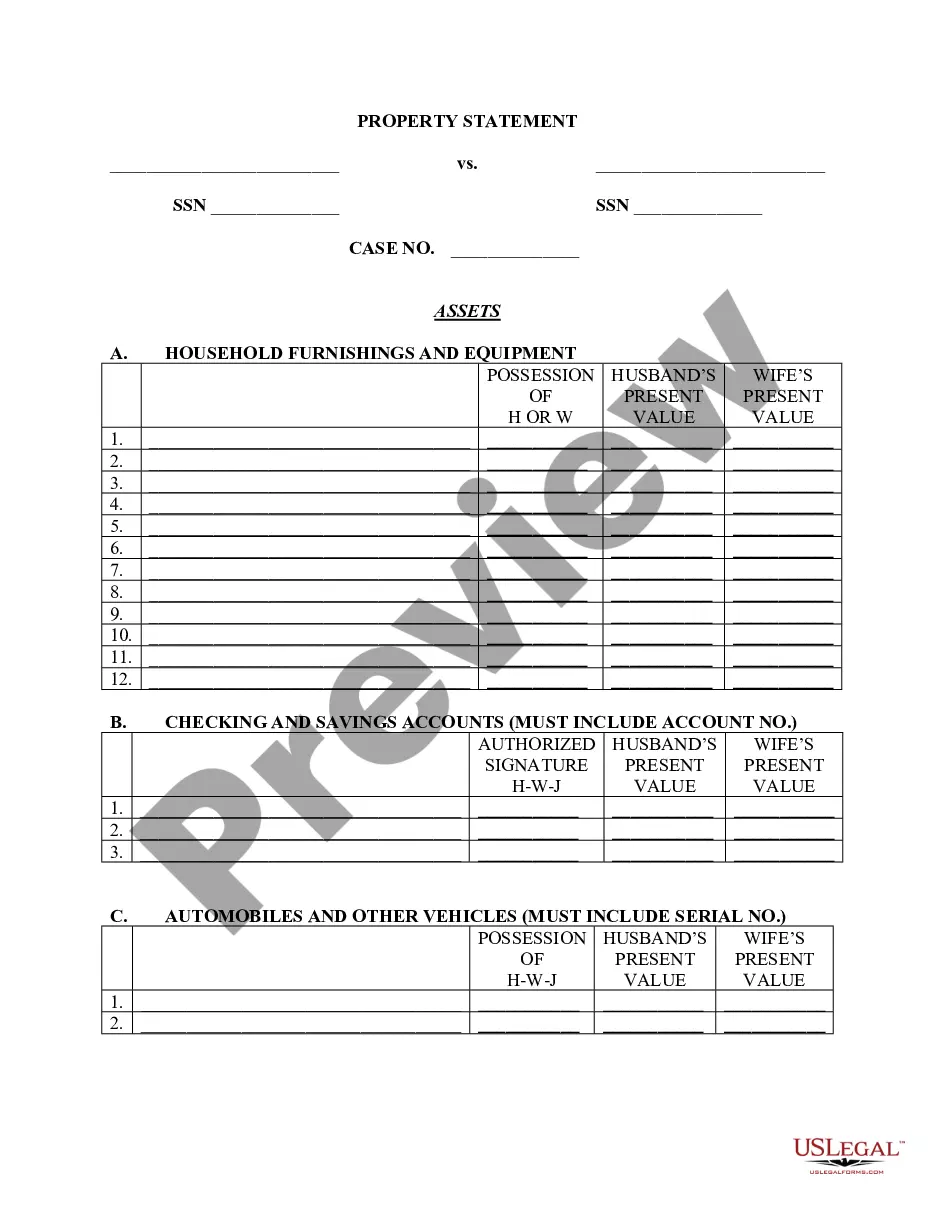
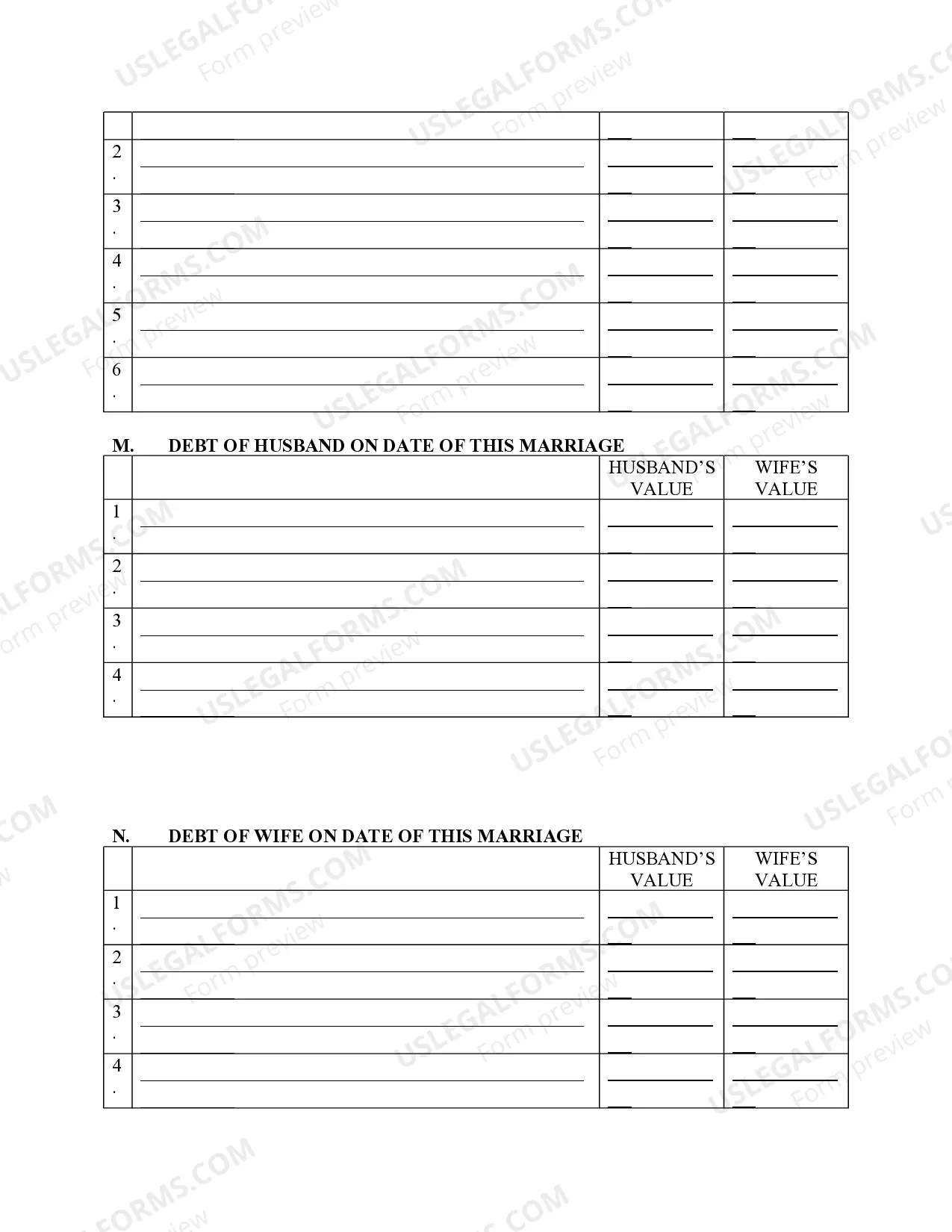
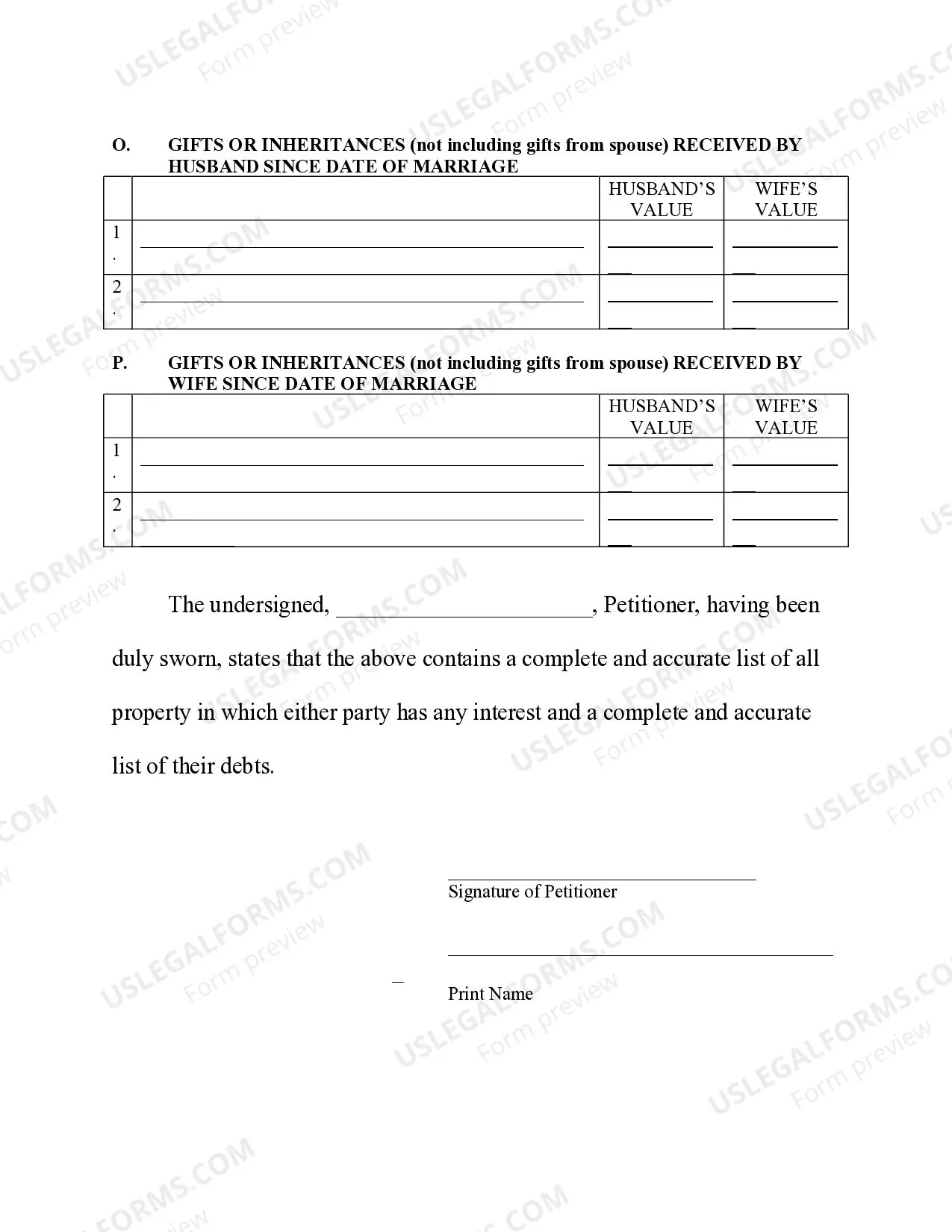
A Property Statement - Adult Children is a legal document used in divorce proceedings. It helps a party disclose all property in their possession, which will be considered marital property. This particular form is specific to situations where the children born from the marriage are adults, distinguishing it from other property statements that may involve minor children.
Main sections of this form
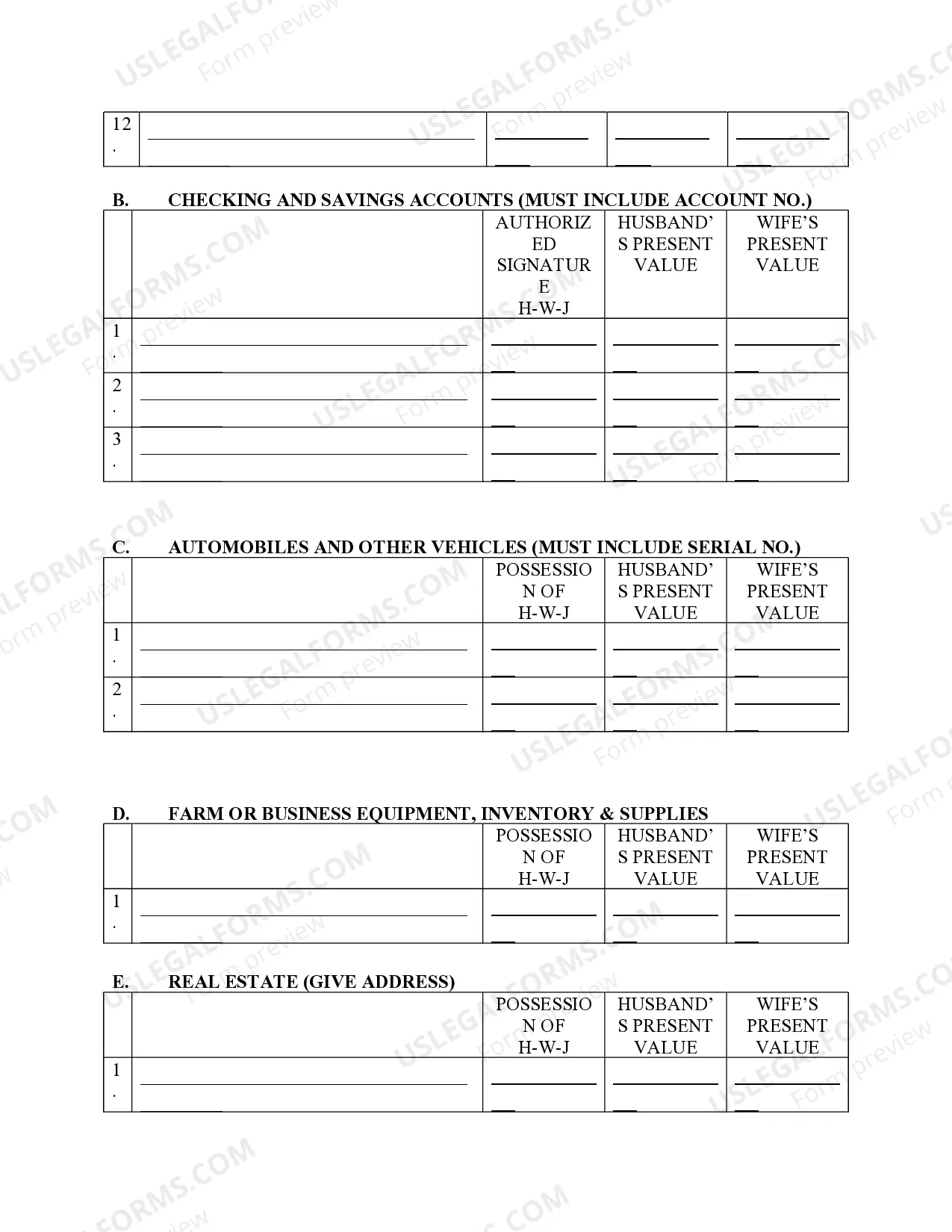
- Assets section for household furnishings, equipment, and vehicles
- Accounts section for checking and savings accounts, requiring account numbers
- Real estate section requiring addresses of all properties owned
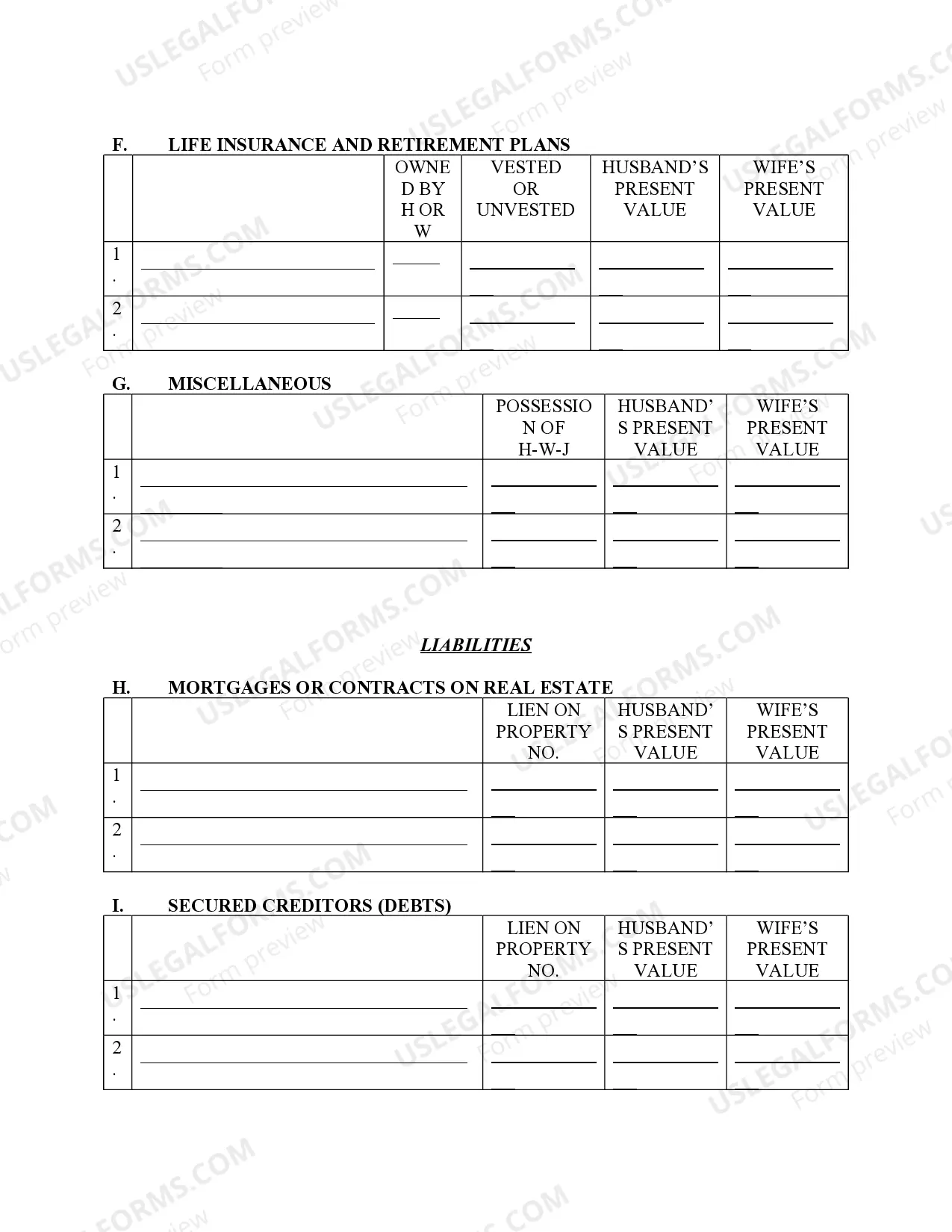
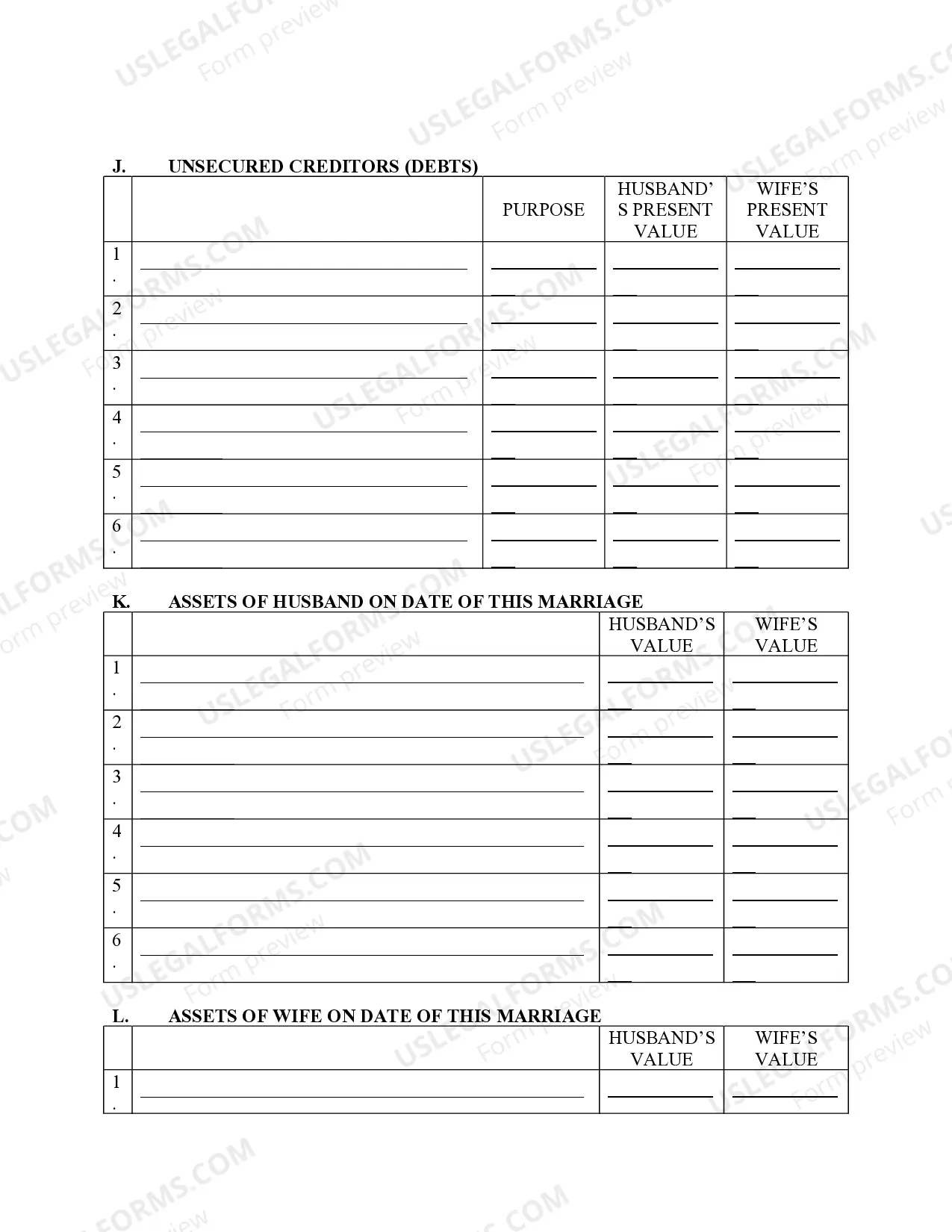
- Liabilities section to list mortgages, secured, and unsecured debts
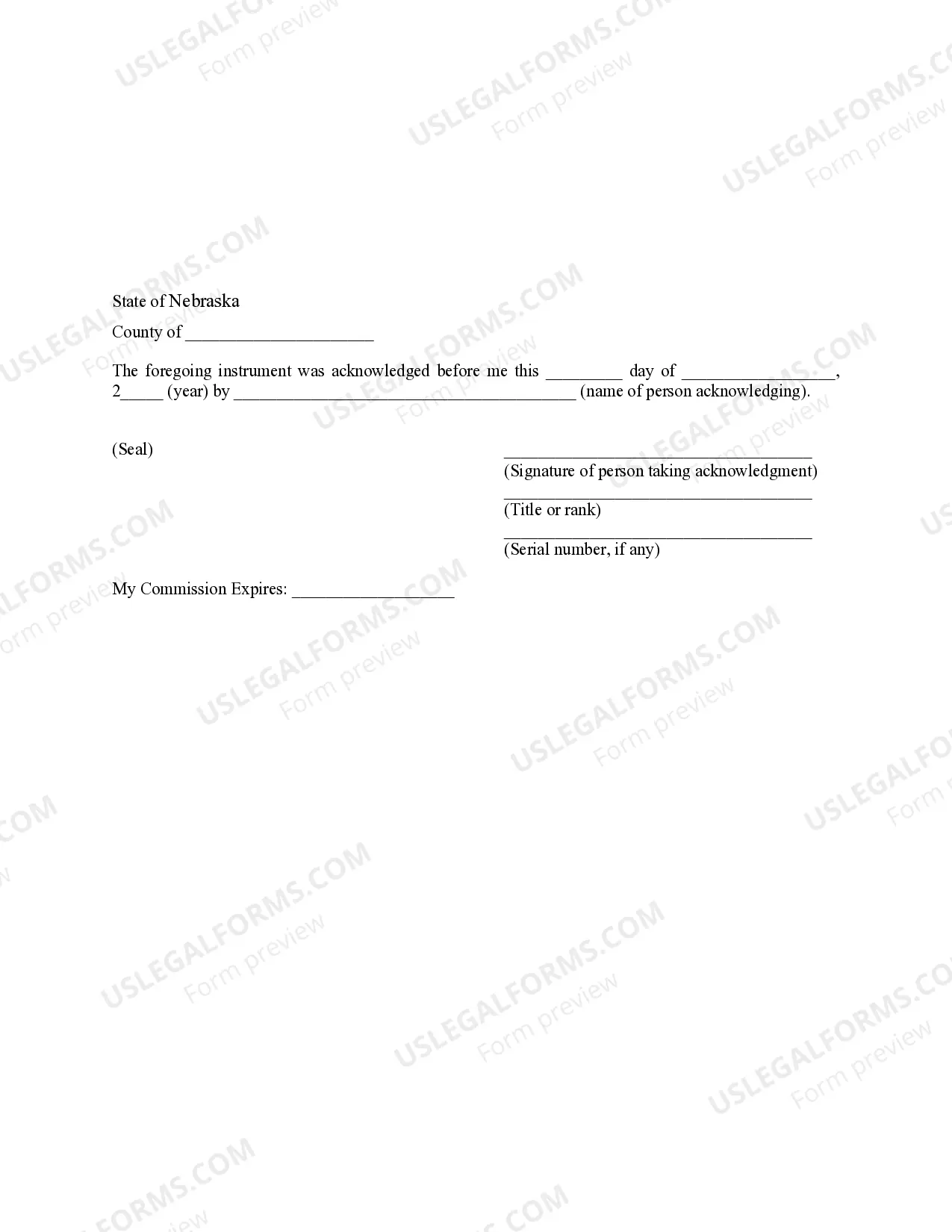
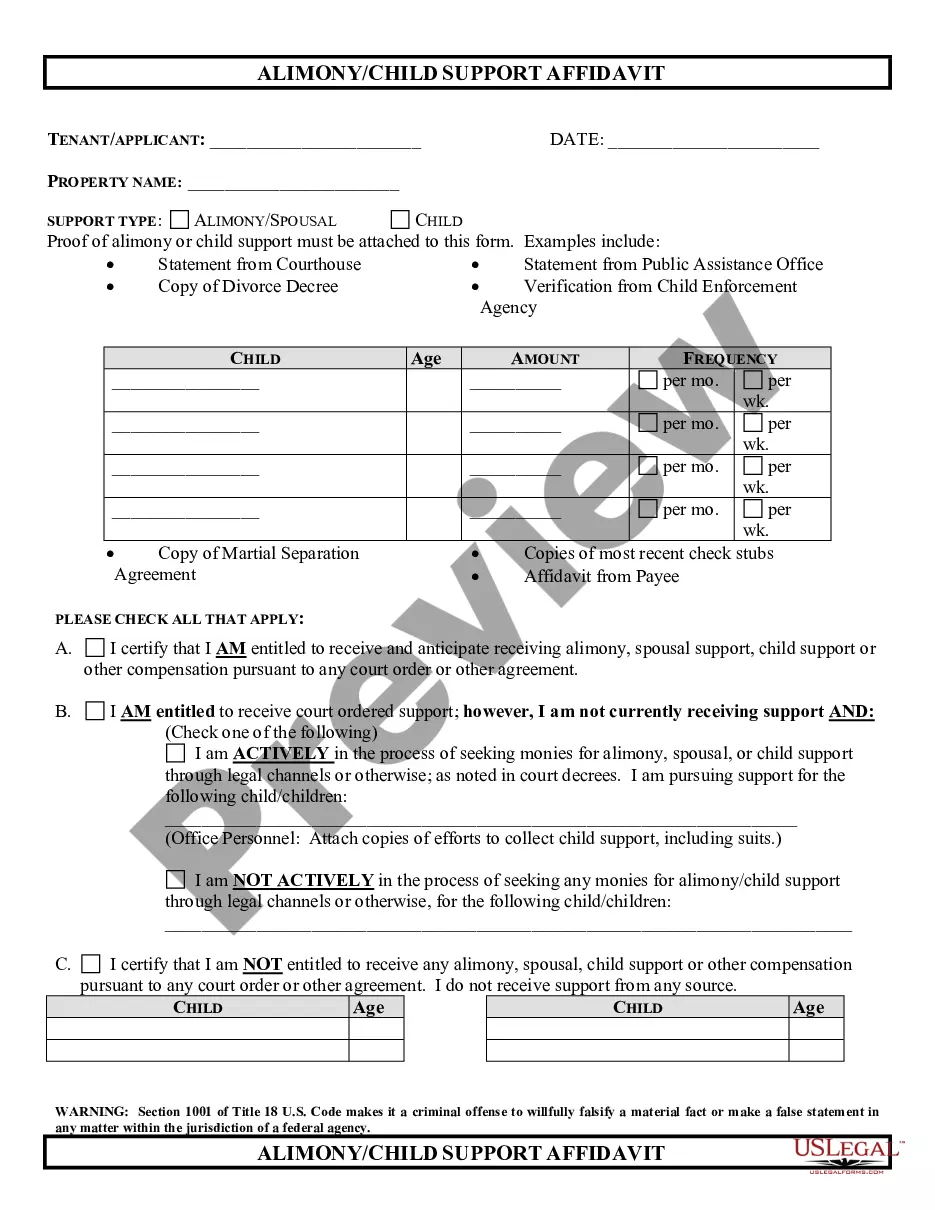
- Declaration section for signatures and notary public information

Common use cases
This form is necessary when a party in a divorce wants to formally declare all assets and liabilities. Use it to ensure a transparent approach to property division, especially if you have adult children and need to clarify the status and value of your possessions at the time of the divorce.
Who this form is for
- Individuals involved in a divorce where children born from the marriage are adults
- Parties looking to outline and disclose marital property accurately
- Anyone needing to document their financial situation as part of divorce proceedings
Completing this form step by step
- Identify and list your assets, including household items and vehicles, along with their values.
- Calculate any liabilities, such as mortgages and debts, and note their amounts.
- Gather relevant account numbers for banking information to include in the form.
- Provide your declaration, ensuring accuracy in the information presented.
- Sign the form and have it notarized to validate its contents.
Is notarization required?
Yes, this form must be notarized to be legally valid. US Legal Forms offers integrated online notarization services, allowing you to securely connect with a notary via video call and complete the process without traveling.
Get your form ready online
Our built-in tools help you complete, sign, share, and store your documents in one place.
Make edits, fill in missing information, and update formatting in US Legal Forms—just like you would in MS Word.
Download a copy, print it, send it by email, or mail it via USPS—whatever works best for your next step.
Sign and collect signatures with our SignNow integration. Send to multiple recipients, set reminders, and more. Go Premium to unlock E-Sign.
If this form requires notarization, complete it online through a secure video call—no need to meet a notary in person or wait for an appointment.
We protect your documents and personal data by following strict security and privacy standards.

Make edits, fill in missing information, and update formatting in US Legal Forms—just like you would in MS Word.

Download a copy, print it, send it by email, or mail it via USPS—whatever works best for your next step.

Sign and collect signatures with our SignNow integration. Send to multiple recipients, set reminders, and more. Go Premium to unlock E-Sign.

If this form requires notarization, complete it online through a secure video call—no need to meet a notary in person or wait for an appointment.

We protect your documents and personal data by following strict security and privacy standards.
Common mistakes
- Failing to include all property and debts, which can lead to legal complications.
- Neglecting to provide accurate values for assets and liabilities.
- Omitting required signatures or not getting the form notarized when necessary.
Advantages of online completion
- Convenience of downloading and filling out the form at your own pace.
- Editability allows for changes before finalizing your disclosure.
- Access to professionally drafted templates ensures compliance with legal standards.
Summary of main points
- The Property Statement - Adult Children is crucial for disclosing marital property during a divorce.
- Use the form carefully to ensure all assets and liabilities are accurately reported.
- Notarization is required for validation, so plan accordingly.
Looking for another form?
Form popularity
FAQ
There is a time limit set by the Family Law Act 1975 in relation to parties bringing claims for a division of property following the end of a relationship. In the case of a marriage each party has 12 months from the date of a divorce to file a claim with the court.
Under former law, in Nebraska, a divorce becomes final six months after it is entered; during this six-month waiting period, the matrimonial tie between the parties is not dissolved.
Because California law views both spouses as one party rather than two, marital assets and debts are split 50/50 between the couple, unless they can agree on another arrangement.
No, Nebraska is not a 50/50 community property state.Equity distribution is based on each spouse's individual contribution to the marriage and earning potential following the divorce to determine a fair distribution of marital property between the two parties.
The duration of payments is determined by a judge in Nebraska family court. Alimony length is usually based on length of marriage - one commonly used standard for alimony duration is that 1 year of alimony is paid every three years of marriage (however, this is not always the case in every state or with every judge).
Nebraska is an equitable distribution state, meaning that the marital property will be split between the spouses in a way that is just and reasonable.The court is only involved in the property division when the spouses can't resolve their property division on their own.
Often separated couples are able to reach an agreement between themselves regarding what should happen with their family finances.However, there is no time limit in respect of making a financial claim from one ex-spouse to another, even after the final order of the divorce (decree absolute) has been granted.
If it is equitable and reasonable, the court could give you 90% of the marital property and leave your spouse with the other 10%. Although that's possible, most of the time the court will award a spouse one-third to one-half of the marital property to achieve an equitable result.
How do I find Nebraska Divorce Records? Divorce Records in Nebraska are maintained by the Department of Health & Human Services (DHHS) and a request for a Divorce Record must be submitted to the Vital Records Office of the DHHS. Requests can be submitted by mail or in-person.