Wisconsin Assignment of Contract for Deed by Seller
What is this form?
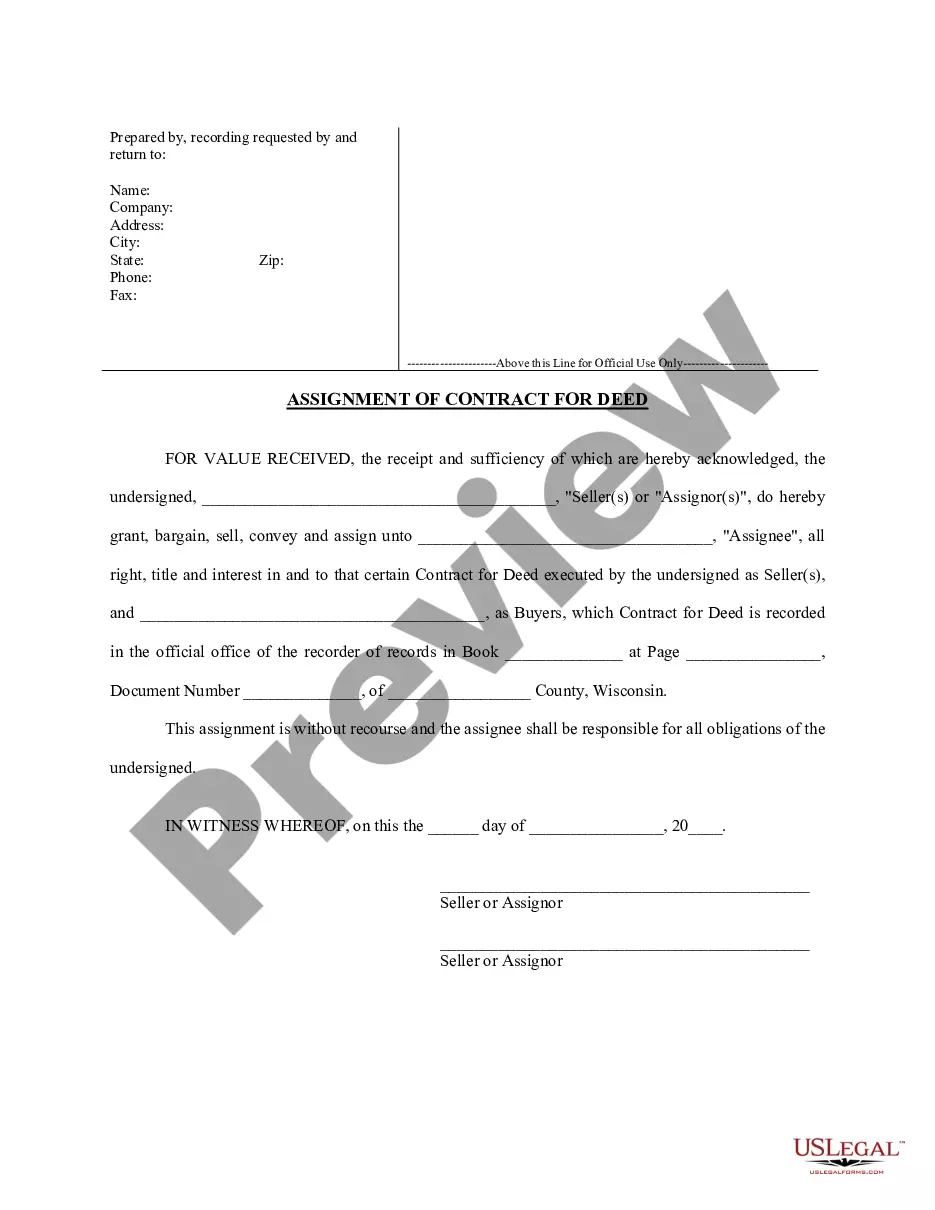
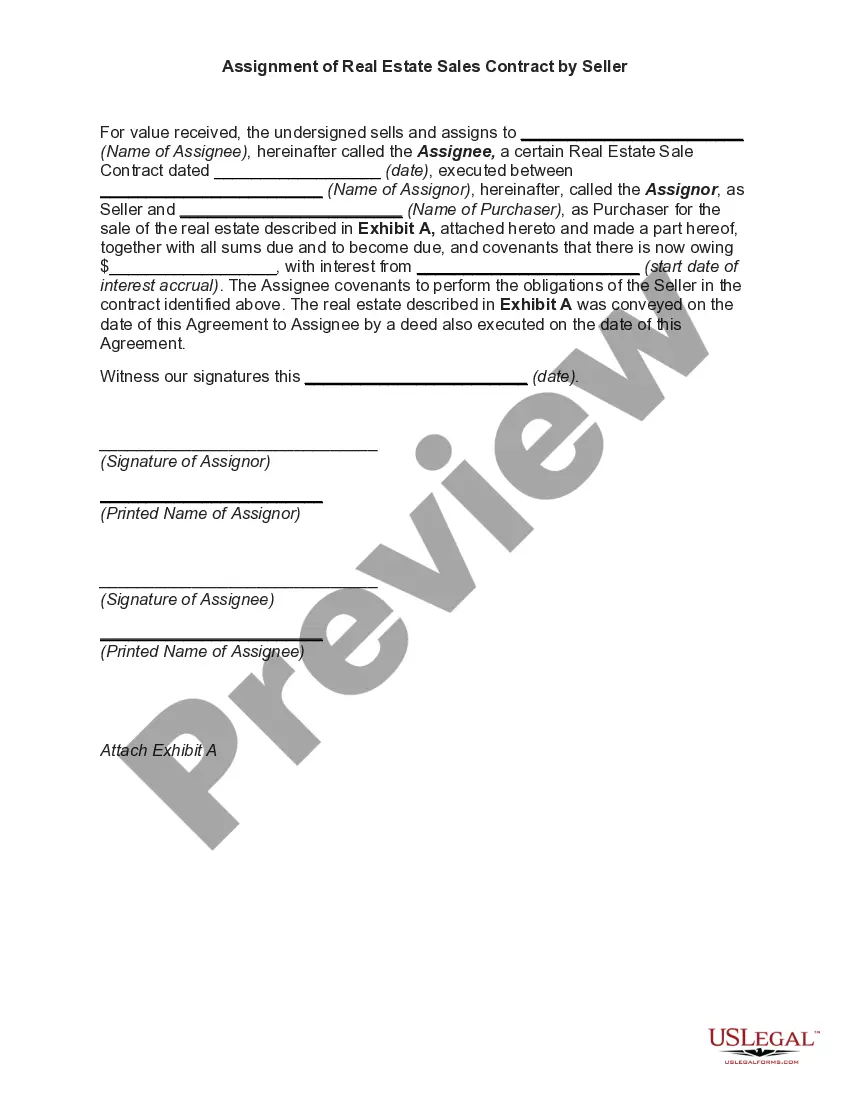
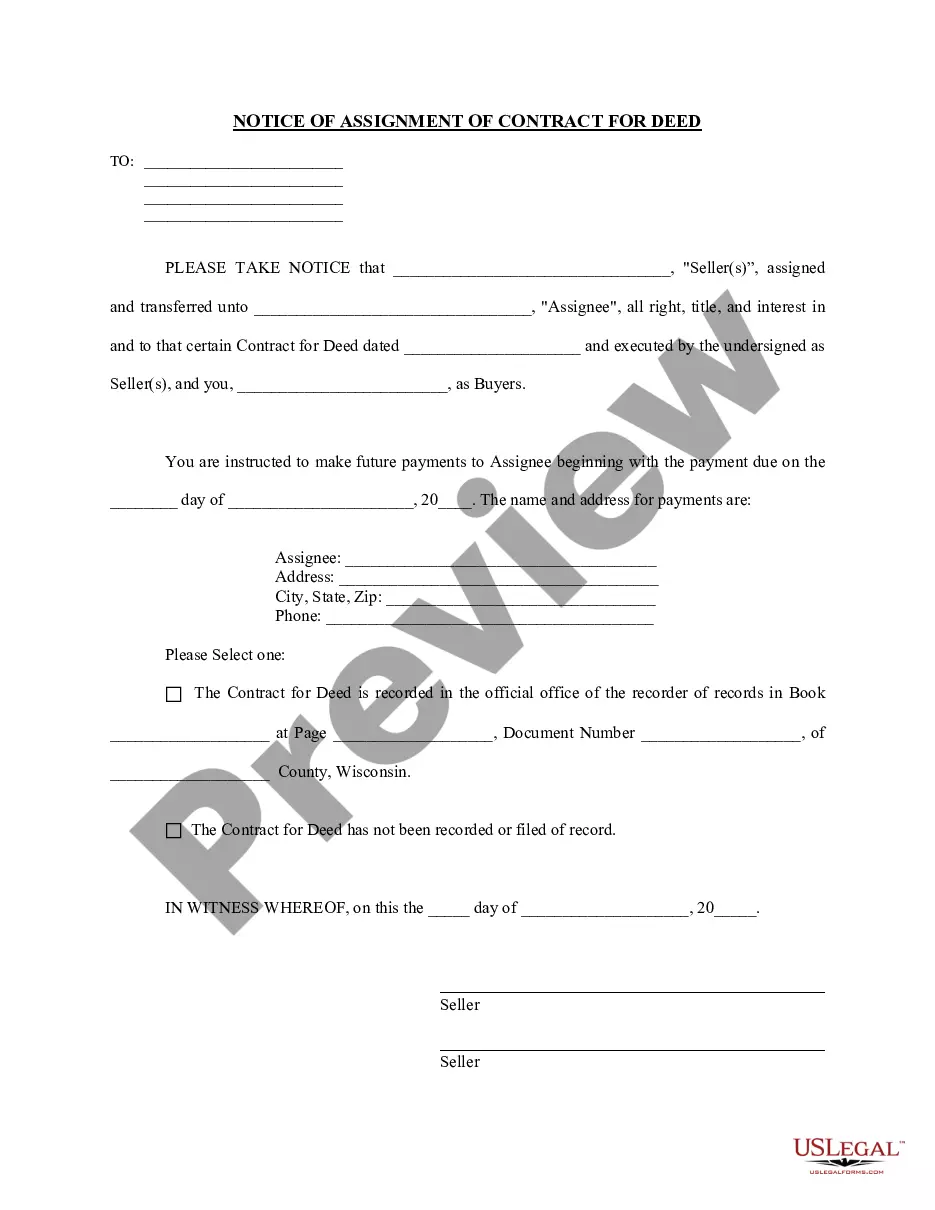
The Assignment of Contract for Deed by Seller is a legal document that allows a seller, who has entered into a contract for deed, to transfer that contract to a third party. This form facilitates the selling of the contract, typically in exchange for a reduced cash payment. The assignee, who takes over the contract, will receive future payments from the purchaser, stepping into the seller's role. This form is distinct from a general assignment agreement as it specifically pertains to contracts for deed.
Main sections of this form
- Identification of the seller and the assignee involved in the transaction.
- Specification of the contract for deed being assigned.
- Conditions regarding the transfer and any responsibilities of the assignee.
- Signature block for the seller to execute the assignment.
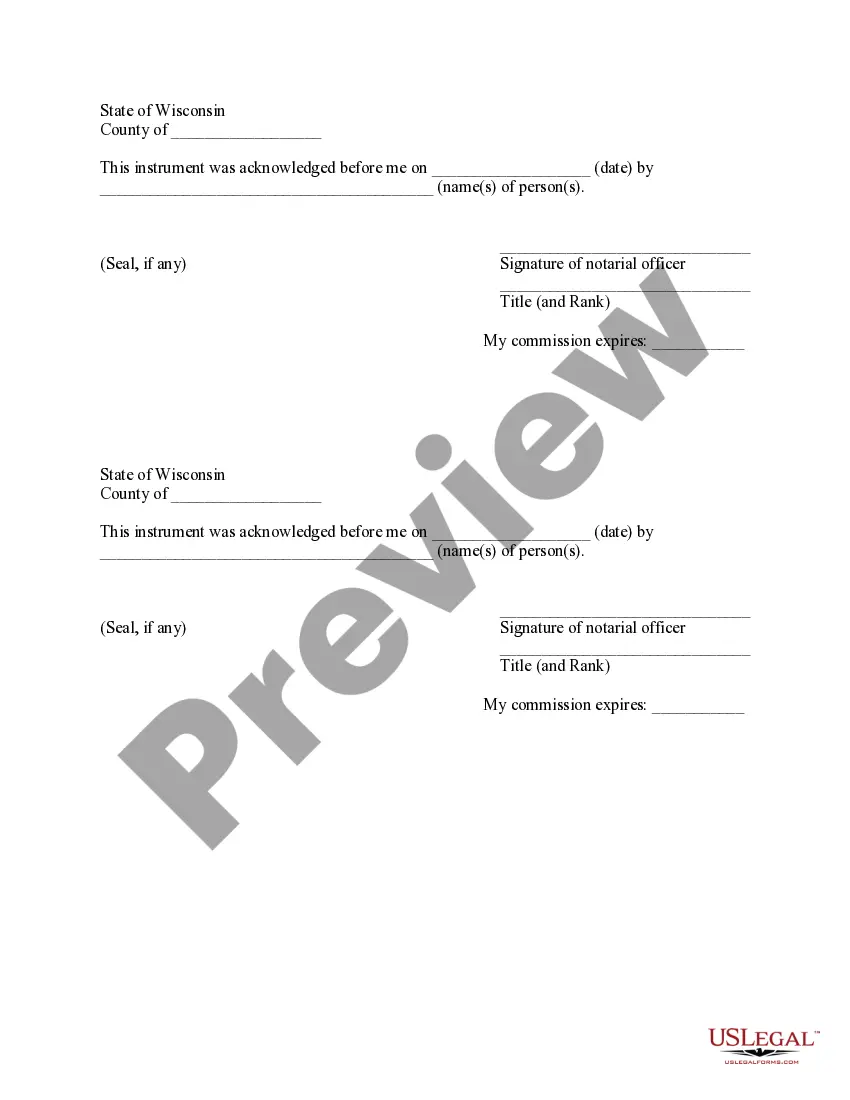
- Notarization section to validate the document if necessary.
Situations where this form applies
This form is typically utilized when a seller wishes to assign their rights and obligations under a contract for deed to another party. It may be used in scenarios where the seller needs immediate cash and is willing to sell the contract for a discount. This assignment is also relevant when the seller is unable or unwilling to fulfill the terms of the original contract but wants to ensure that the purchaser still receives their property rights.
Intended users of this form
This form is intended for:
- Sellers of a property who have signed a contract for deed.
- Assignees looking to take over the obligations and rights under the existing contract.
- Real estate agents or attorneys assisting clients in transferring property contracts.
Completing this form step by step
- Identify the seller and the assignee in the appropriate sections.
- Clearly specify the contract for deed being assigned.
- Enter the date of the assignment in the designated field.
- Ensure the seller provides their signature to validate the assignment.
- If necessary, arrange for notarization of the document to enhance its legal effectiveness.
Notarization requirements for this form
This form does not typically require notarization unless specified by local law. However, notarization can add an additional layer of validation to the document.
Get your form ready online
Our built-in tools help you complete, sign, share, and store your documents in one place.
Make edits, fill in missing information, and update formatting in US Legal Forms—just like you would in MS Word.
Download a copy, print it, send it by email, or mail it via USPS—whatever works best for your next step.
Sign and collect signatures with our SignNow integration. Send to multiple recipients, set reminders, and more. Go Premium to unlock E-Sign.
If this form requires notarization, complete it online through a secure video call—no need to meet a notary in person or wait for an appointment.
We protect your documents and personal data by following strict security and privacy standards.

Make edits, fill in missing information, and update formatting in US Legal Forms—just like you would in MS Word.

Download a copy, print it, send it by email, or mail it via USPS—whatever works best for your next step.

Sign and collect signatures with our SignNow integration. Send to multiple recipients, set reminders, and more. Go Premium to unlock E-Sign.

If this form requires notarization, complete it online through a secure video call—no need to meet a notary in person or wait for an appointment.

We protect your documents and personal data by following strict security and privacy standards.
Common mistakes
- Failing to clearly identify all parties involved in the assignment.
- Not specifying the exact contract for deed being assigned.
- Omitting the date of the assignment.
- Neglecting to obtain a notarization if required by local laws.
Why use this form online
- Immediate access to legal forms that are easy to download and complete.
- Editable templates allow customization to fit specific needs.
- Reliable and accurate forms drafted by licensed attorneys.
- Convenience of completing forms from any location without needing to visit a law office.
- The assignment of contract for deed is legally binding once executed by both parties.
- It transfers rights but does not absolve the seller from responsibilities if not entirely stated.
- State laws may vary; always check local laws for enforceability and specific requirements.
What to keep in mind
- The Assignment of Contract for Deed by Seller facilitates the transfer of property rights.
- The form protects the seller from future obligations after the assignment.
- Completion of the form must be done carefully to avoid common mistakes.
- State-specific requirements must be adhered to for validity.
Looking for another form?
Form popularity
FAQ
Contract for Deed Seller Financing. A contract for deed is used by some sellers who finance the sale of their homes. Seller's Ownership Liability. Buyer Default Risk. Seller Performance. Property Liens Could Hinder Purchase.
A contract for deed is an agreement for buying property without going to a mortgage lender. The buyer agrees to pay the seller monthly payments, and the deed is turned over to the buyer when all payments have been made.
Contact a Real Estate Attorney A Wisconsin attorney will be able to prepare the deed to meet recording requirements for the state.
A contract for deed is a legal agreement for the sale of property in which a buyer takes possession and makes payments directly to the seller, but the seller holds the title until the full payment is made.
The buyer must record the contract for deed with the county recorder where the land is located within four months after the contract is signed. Contracts for deed must provide the legal name of the buyer and the buyer's address.
A disadvantage to the seller is that a contract for deed is frequently characterized by a low down payment and the purchase price is paid in installments instead of one lump sum.The legal fees and time frame for this process will be more extensive than a standard Power of Sale foreclosure.
A contract for deed is a legal agreement for the sale of property in which a buyer takes possession and makes payments directly to the seller, but the seller holds the title until the full payment is made.
An assignment of contract occurs when one party to an existing contract (the "assignor") hands off the contract's obligations and benefits to another party (the "assignee"). Ideally, the assignor wants the assignee to step into his shoes and assume all of his contractual obligations and rights.
Usually the contract requires the buyer to make payments over time with interest payable on the unpaid balance. Once a buyer pays all of the payments called for under the contract, the owner transfers to the buyer a deed to the property.