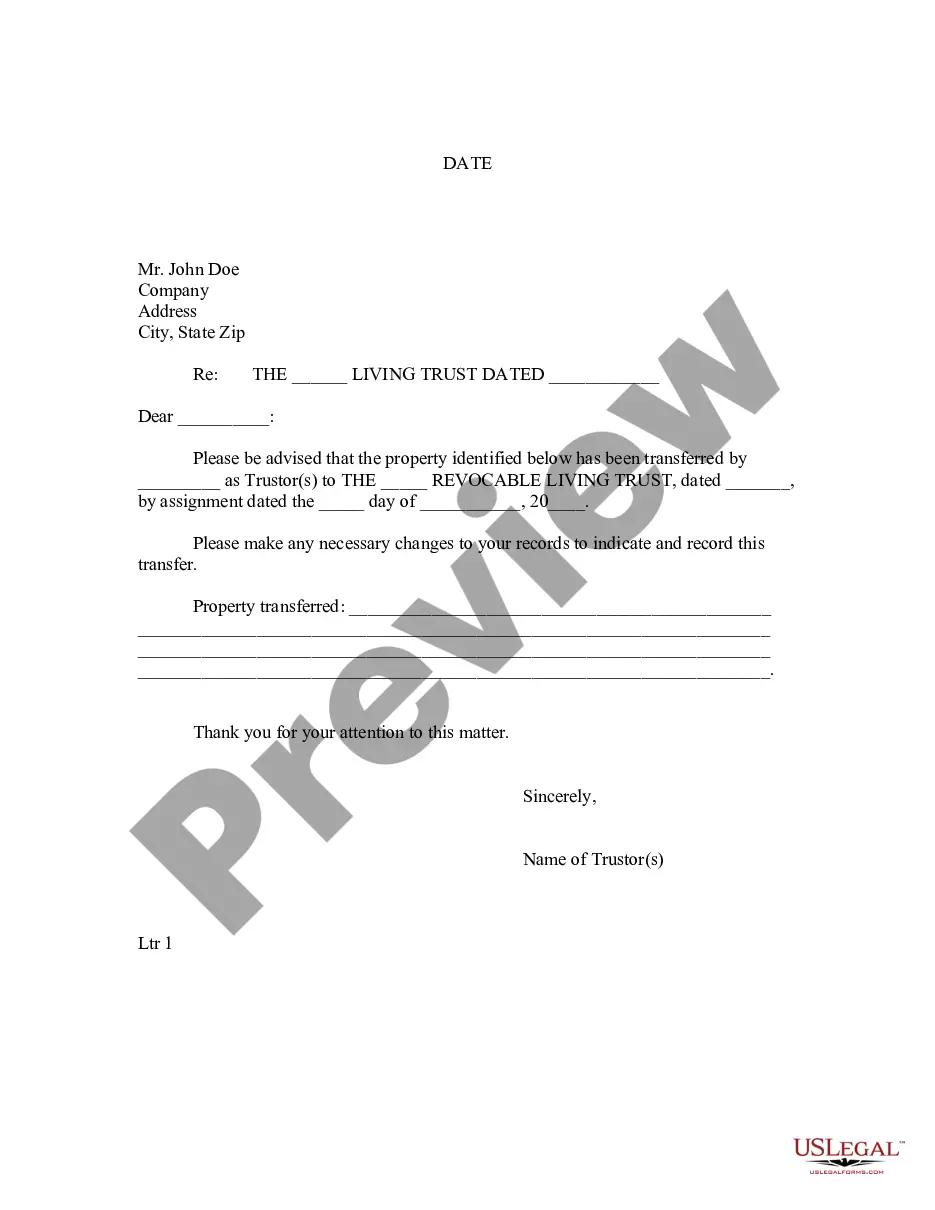
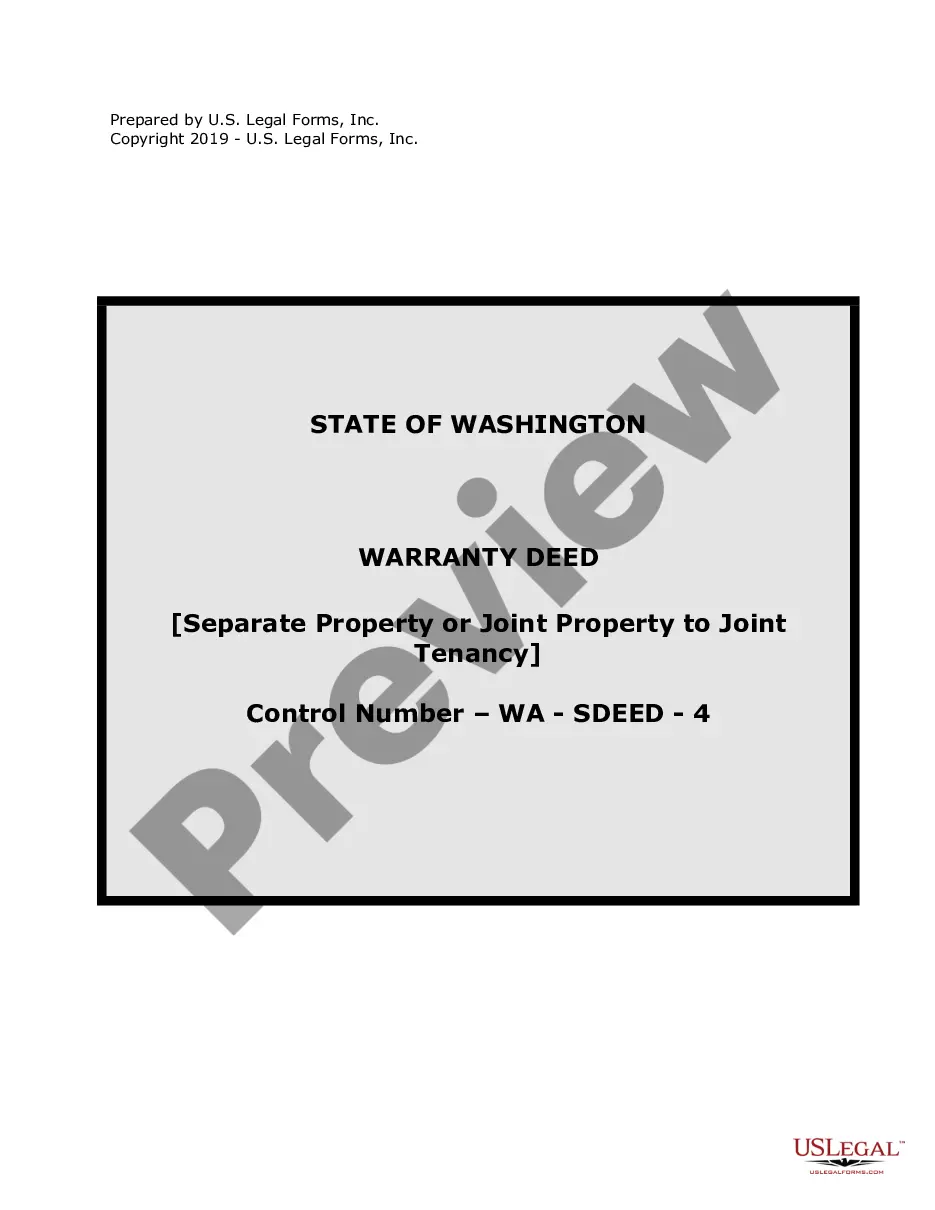
Washington Warranty Deed for Separate Property of one Spouse to both as Joint Tenants
Overview of this form
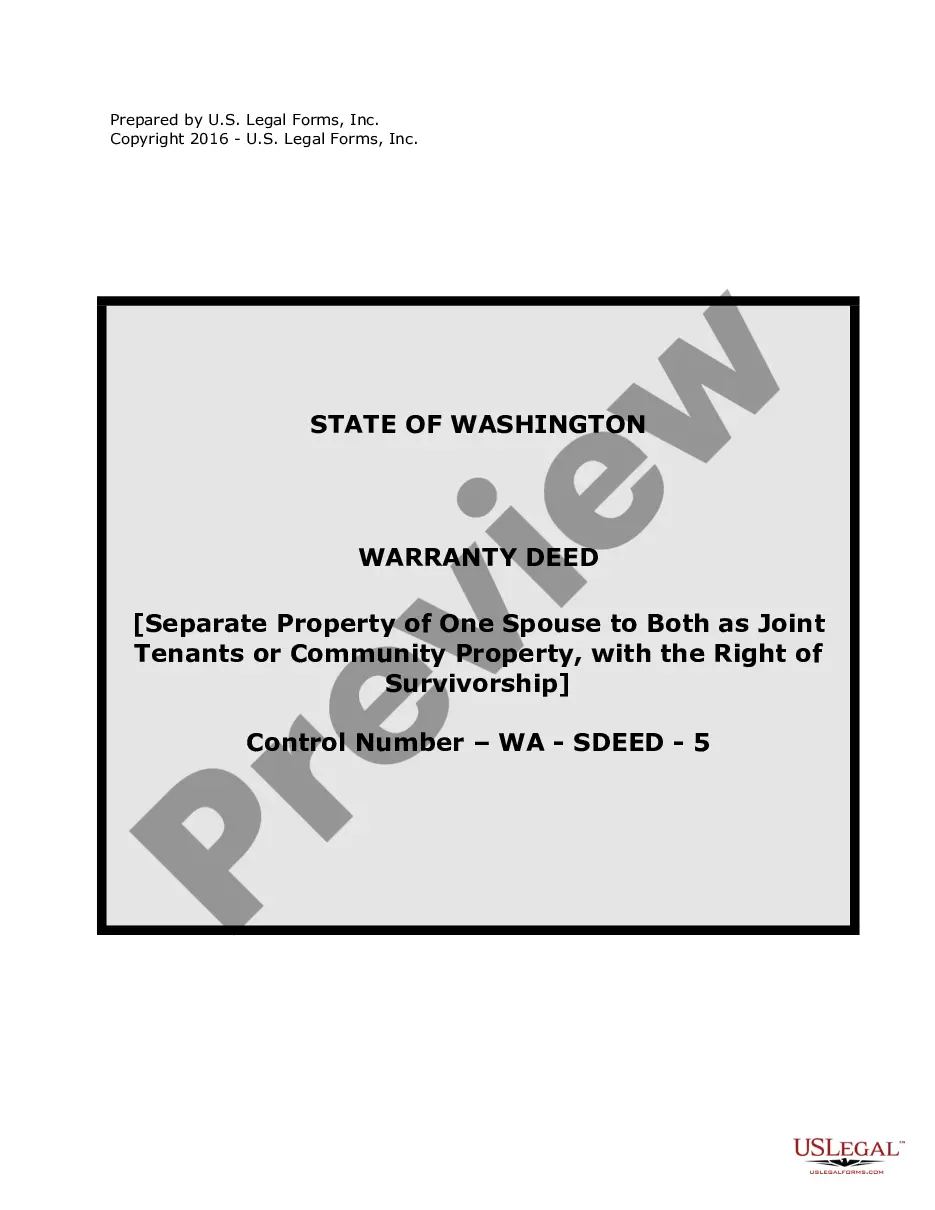
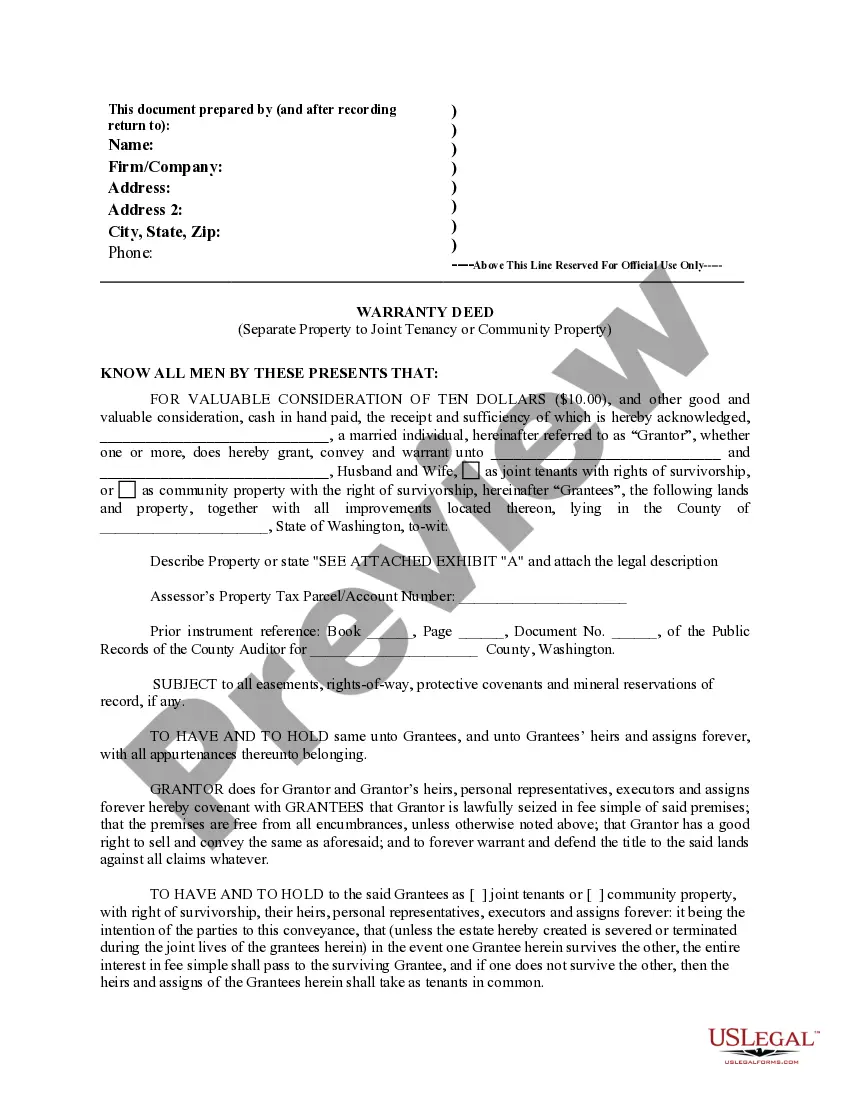
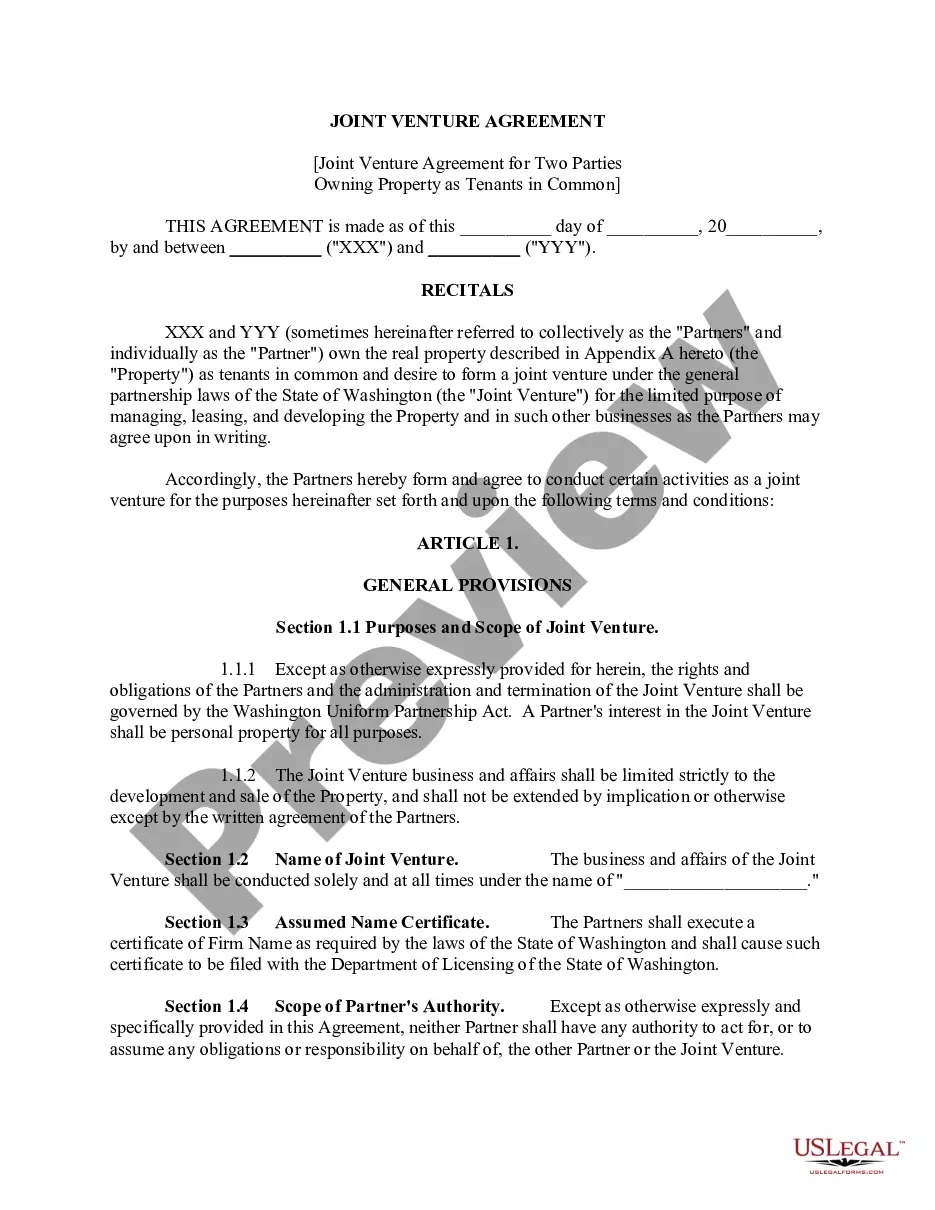
This Warranty Deed allows a spouse to transfer their separate property to themselves and their partner as joint tenants. This legal document establishes equal ownership rights, and it includes the right of survivorship, ensuring that if one spouse passes away, the surviving spouse automatically inherits the entire property. This differs from a standard deed by specifically addressing the ownership structure between spouses.
Main sections of this form
- Grantor and grantee information: details about the individual transferring the property and the recipients.
- Legal description of the property: an accurate description that identifies the specific property being transferred.
- Covenant: an assurance from the grantor regarding the legal status of the property and freedom from encumbrances.
- Designation of ownership type: specifies whether the property is held as joint tenants or community property.
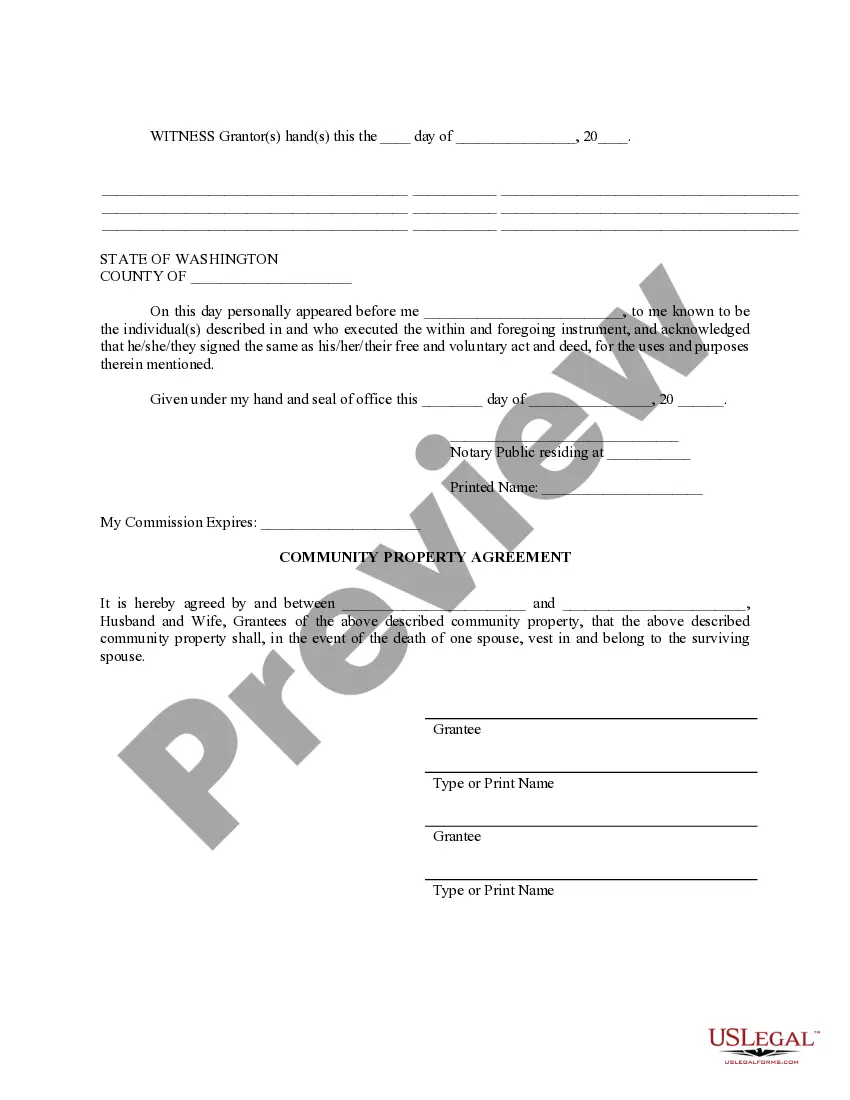
- Notarization requirements: indicates the need for notarization to validate the deed.


When this form is needed
This form is useful when a married couple wishes to officially document their ownership of property as joint tenants. This is particularly important if one spouse originally purchased the property individually but now wants to ensure that both partners share ownership rights and that the property passes directly to the surviving spouse upon death, avoiding probate.
Who this form is for
- Married couples who wish to change the title of property into joint ownership.
- Individuals seeking to ensure that property is automatically transferred to a surviving spouse upon death.
- Spouses looking to simplify estate planning and avoid probate complications.
Instructions for completing this form
- Identify the parties: enter the names of both the grantor and grantees in the designated fields.
- Describe the property: provide the legal description of the property to be transferred.
- Specify the ownership type: indicate whether the property is held as joint tenants or community property.
- Include prior instrument references: list any associated documents or deeds relevant to the property.
- Sign and notarize: both parties must sign the document in the presence of a notary public for it to be legally binding.
Does this document require notarization?
This form needs to be notarized to ensure legal validity. US Legal Forms provides secure online notarization powered by Notarize, allowing you to complete the process through a verified video call, available anytime.
Get your form ready online
Our built-in tools help you complete, sign, share, and store your documents in one place.
Make edits, fill in missing information, and update formatting in US Legal Forms—just like you would in MS Word.
Download a copy, print it, send it by email, or mail it via USPS—whatever works best for your next step.
Sign and collect signatures with our SignNow integration. Send to multiple recipients, set reminders, and more. Go Premium to unlock E-Sign.
If this form requires notarization, complete it online through a secure video call—no need to meet a notary in person or wait for an appointment.
We protect your documents and personal data by following strict security and privacy standards.

Make edits, fill in missing information, and update formatting in US Legal Forms—just like you would in MS Word.

Download a copy, print it, send it by email, or mail it via USPS—whatever works best for your next step.

Sign and collect signatures with our SignNow integration. Send to multiple recipients, set reminders, and more. Go Premium to unlock E-Sign.

If this form requires notarization, complete it online through a secure video call—no need to meet a notary in person or wait for an appointment.

We protect your documents and personal data by following strict security and privacy standards.
Mistakes to watch out for
- Not including a complete and accurate property description.
- Failing to notarize the document, leading to legal challenges.
- Leaving out prior references or related legal documents that may impact ownership.
- Not specifying the correct ownership type, which might affect future claims or transfers.
Advantages of online completion
- Convenient access to a legally vetted document that you can download and complete at home.
- Easy editing capabilities to personalize the document as needed.
- Reliability from a source that ensures compliance with state laws.
Quick recap
- The Warranty Deed transfers property from one spouse to both as equal owners.
- It ensures survivorship rights, simplifying estate management.
- Notarization of this deed is mandatory for legal validity.
- Complete accuracy in all fields is crucial to prevent future disputes.
Looking for another form?
Form popularity
FAQ
Typically, the lender will provide you with a copy of the deed of trust after the closing. The original warranty deeds are often mailed to the grantee after they are recorded. These are your original copies and should be kept in a safe place, such as a fireproof lockbox or a safe deposit box at a financial institution.
In California, most married couples hold real property (such as land and buildings) as joint tenants with right of survivorship.For instance, many married couples share real property as joint tenants. This way, upon the death of a spouse, the surviving spouse will own 100% share of the property.
If you look at the registered title to your own jointly owned property and the text isn't shown on it, you own it as joint tenants. If it is there, you own it as tenants-in-common.
For example, joint tenants must all take title simultaneously from the same deed while tenants in common can come into ownership at different times. Another difference is that joint tenants all own equal shares of the property, proportionate to the number of joint tenants involved.
With a Survivorship Deed in place, when one of the parties in a joint tenancy dies, the other party (or parties) takes over the deceased party's interest in the property instead of it passing to the deceased's heirs or beneficiaries.
What Is the Difference Between a Warranty Deed & a Survivorship Deed?A warranty deed is the most comprehensive and provides the most guarantees. Survivorship isn't so much a deed as a title. It's a way to co-own property where, upon the death of one owner, ownership automatically passes to the survivor.
In estate law, joint tenancy is a special form of ownership by two or more persons of the same property. The individuals, who are called joint tenants, share equal ownership of the property and have the equal, undivided right to keep or dispose of the property. Joint tenancy creates a Right of Survivorship.
A Married Man/Woman, as His/Her Sole and Separate Property: When a married man or woman wishes to acquire title as their sole and separate property, the spouse must consent and relinquish all right, title and interest in the property by deed or other written agreement.
One of the main differences between the two types of shared ownership is what happens to the property when one of the owners dies. When a property is owned by joint tenants with survivorship, the interest of a deceased owner automatically gets transferred to the remaining surviving owners.