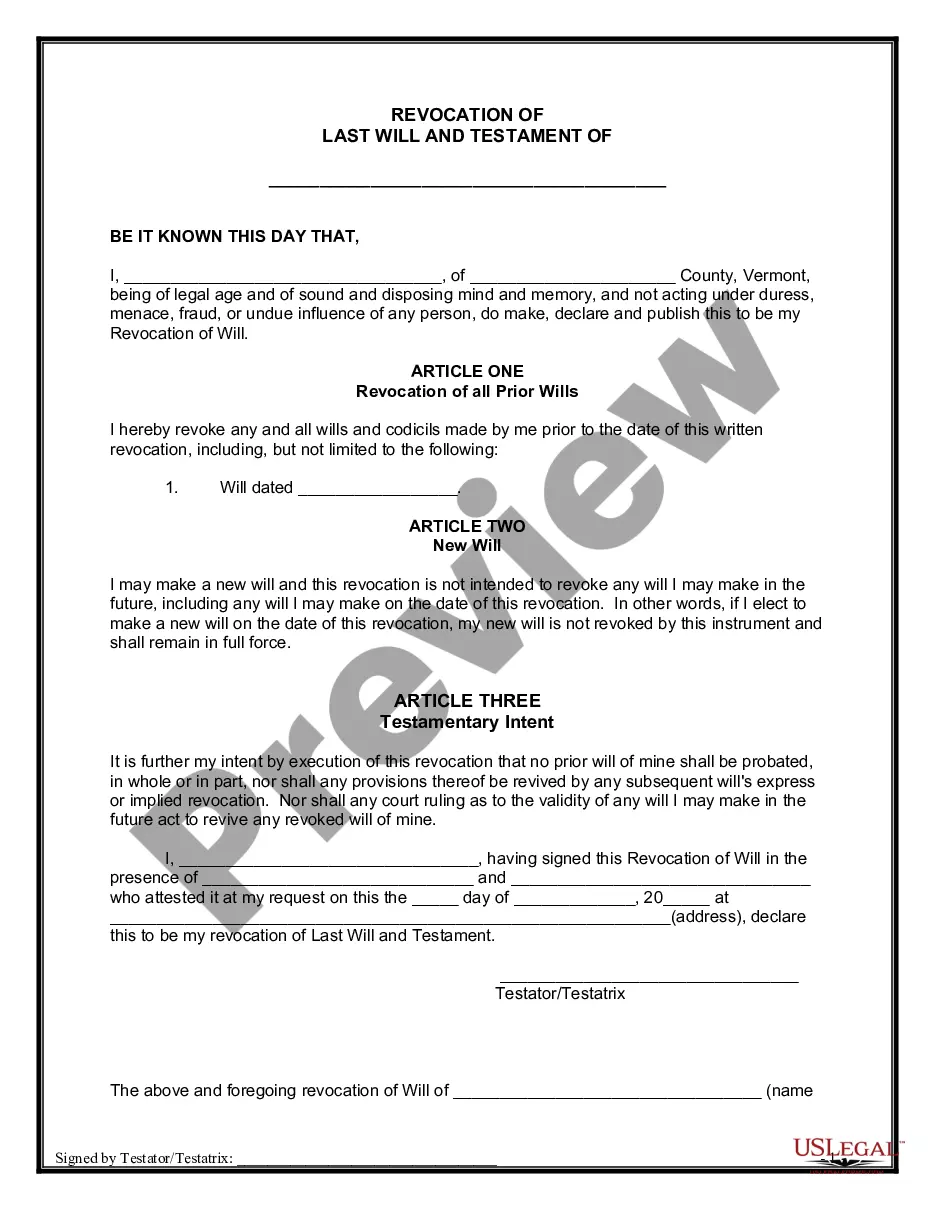
Washington Mental Health Advance Directive - Statutory form
Overview of this form
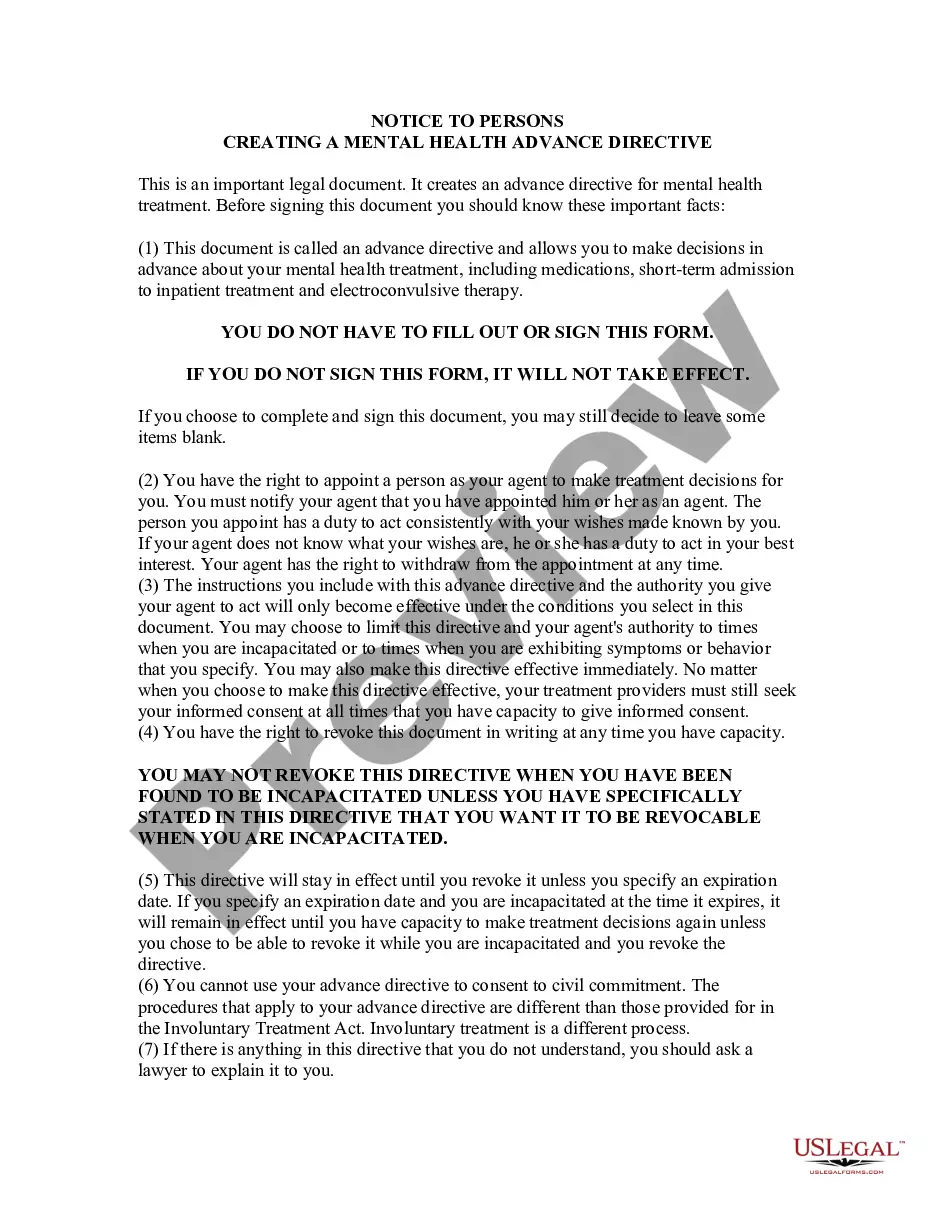
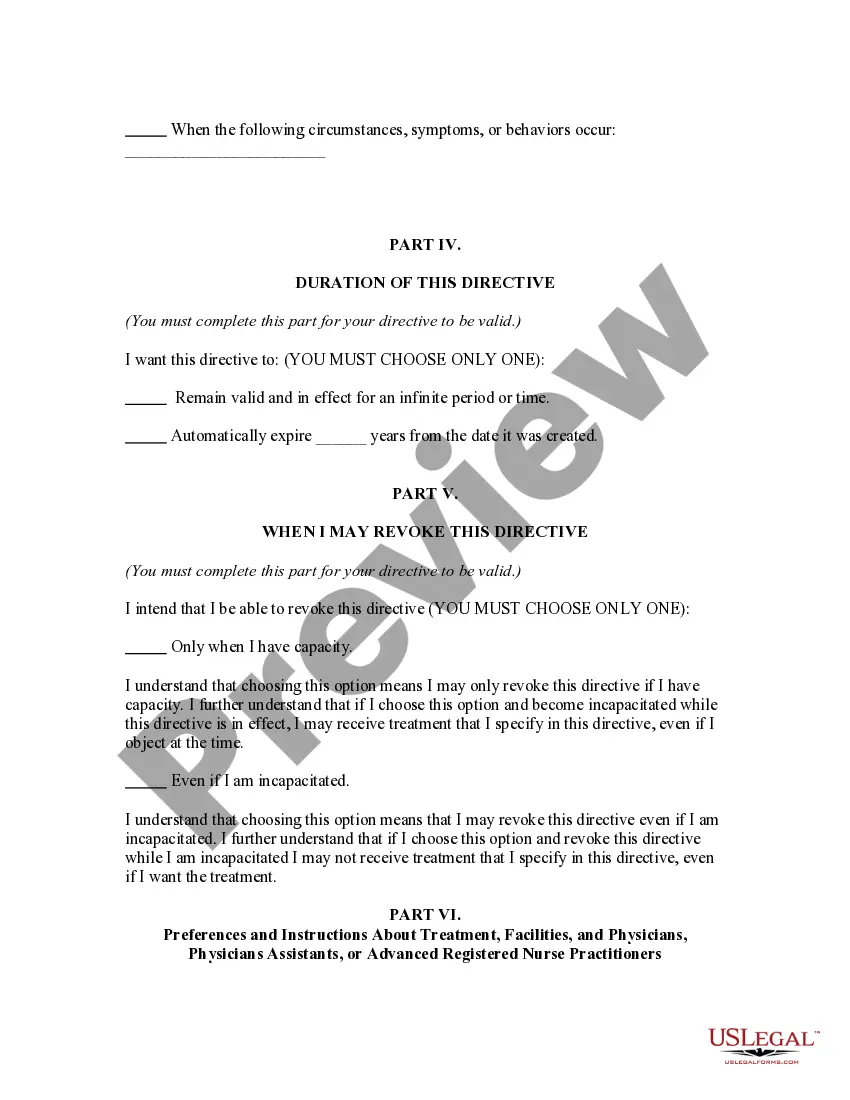
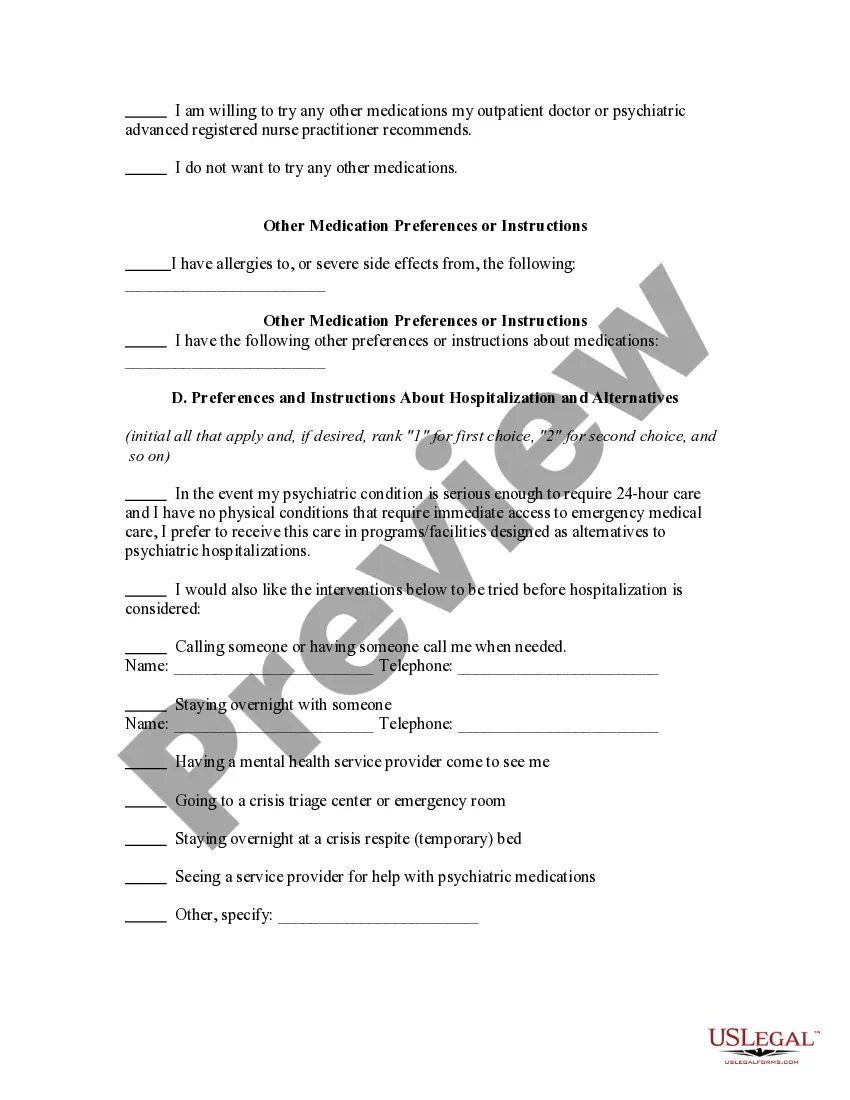
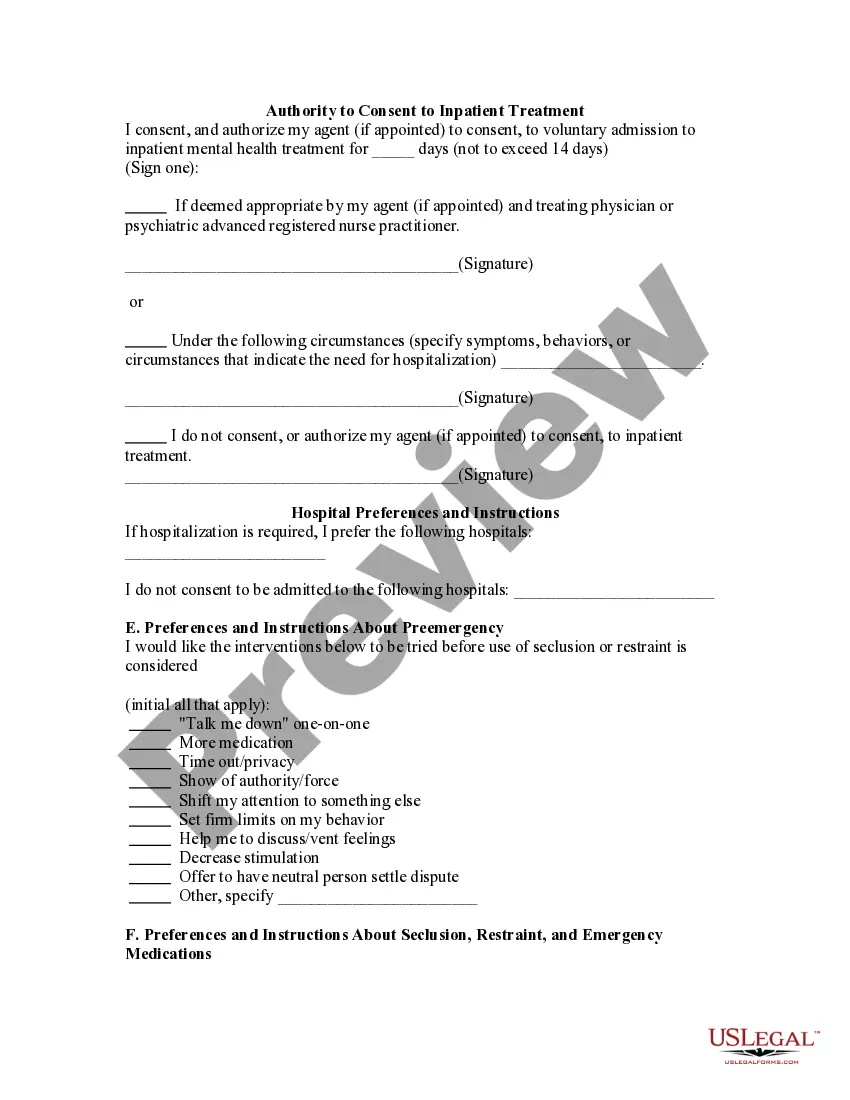
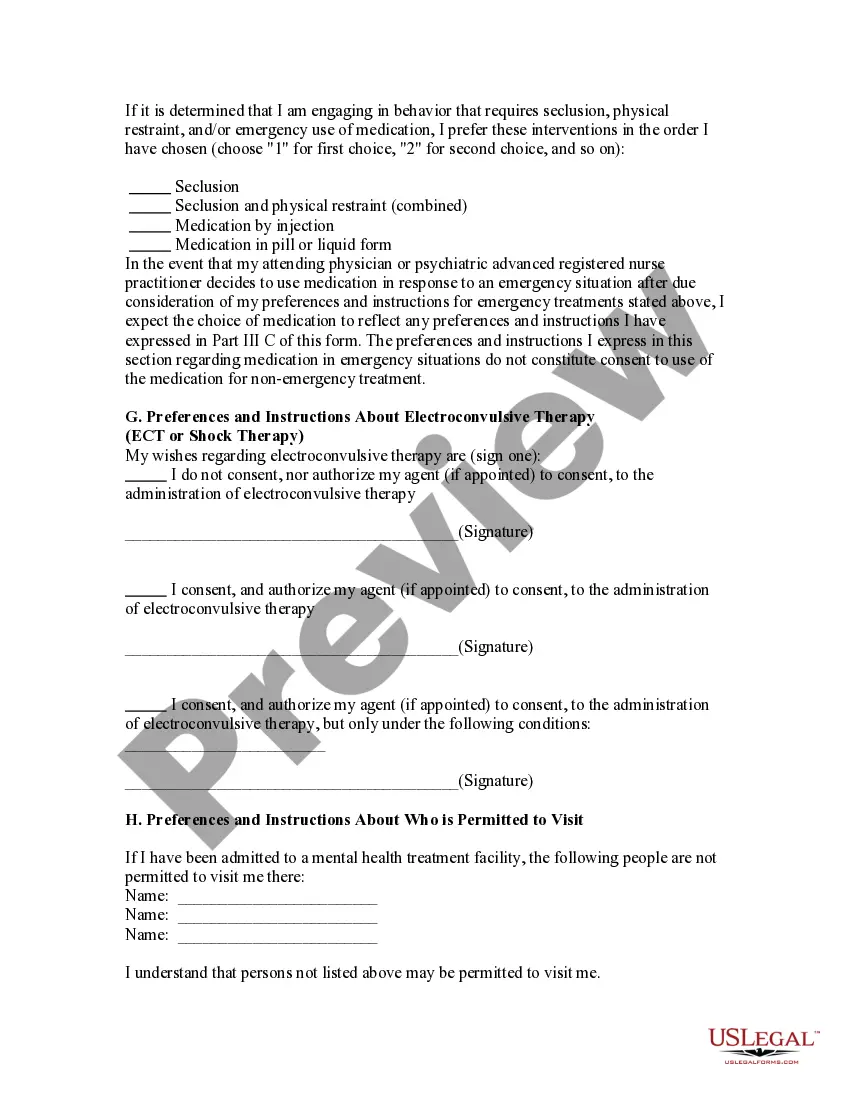
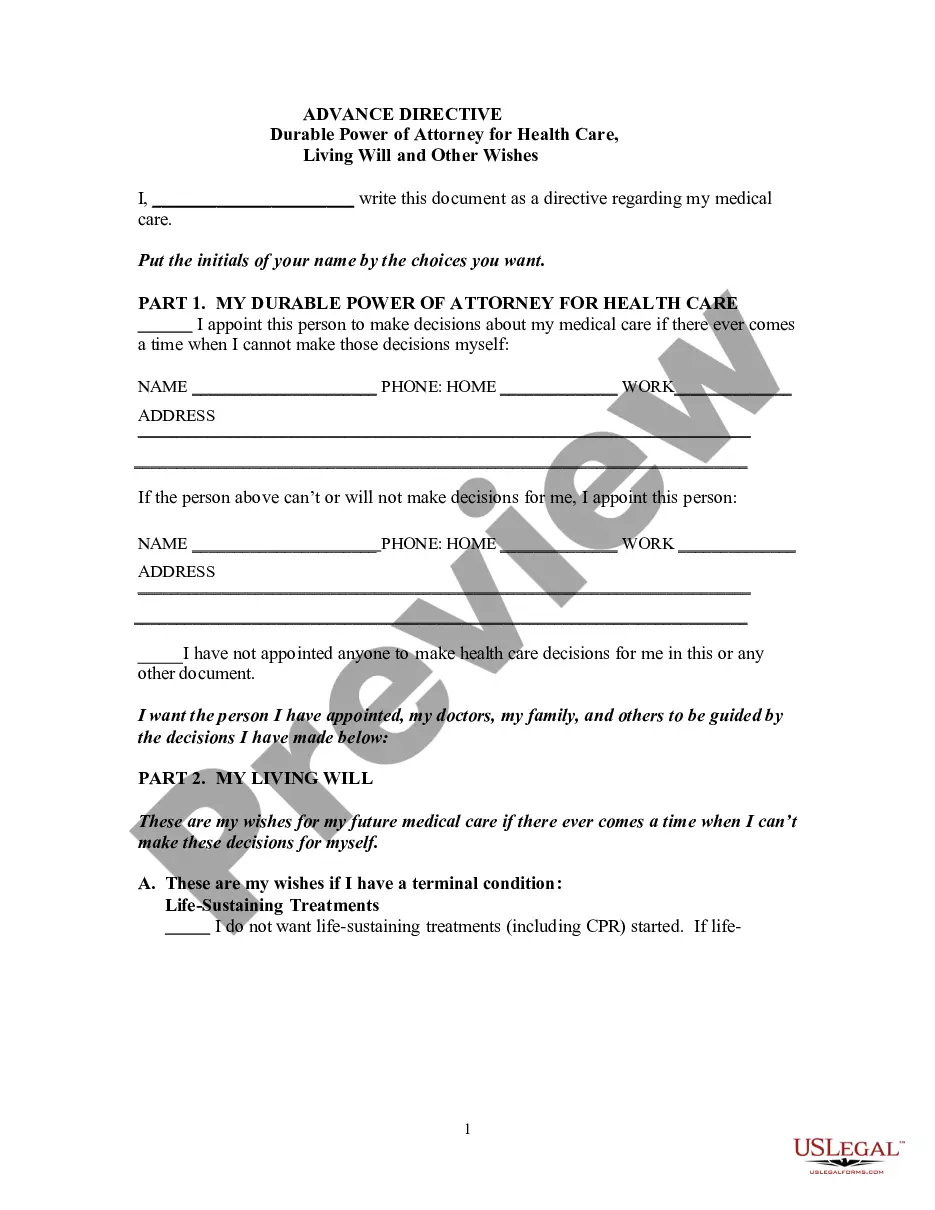
The Mental Health Advance Directive is a legal document that allows individuals to outline their preferences for mental health treatment in advance. This directive becomes effective if the individual is unable to express their wishes regarding mental health care. Unlike other medical directives, this form specifically addresses mental health treatment options such as medications, inpatient admissions, and electroconvulsive therapy, ensuring that your personalized choices are honored in times of incapacity.
Key parts of this document
- Statement of Intent: Confirms the individual's desire to create an advance directive for mental health treatment.
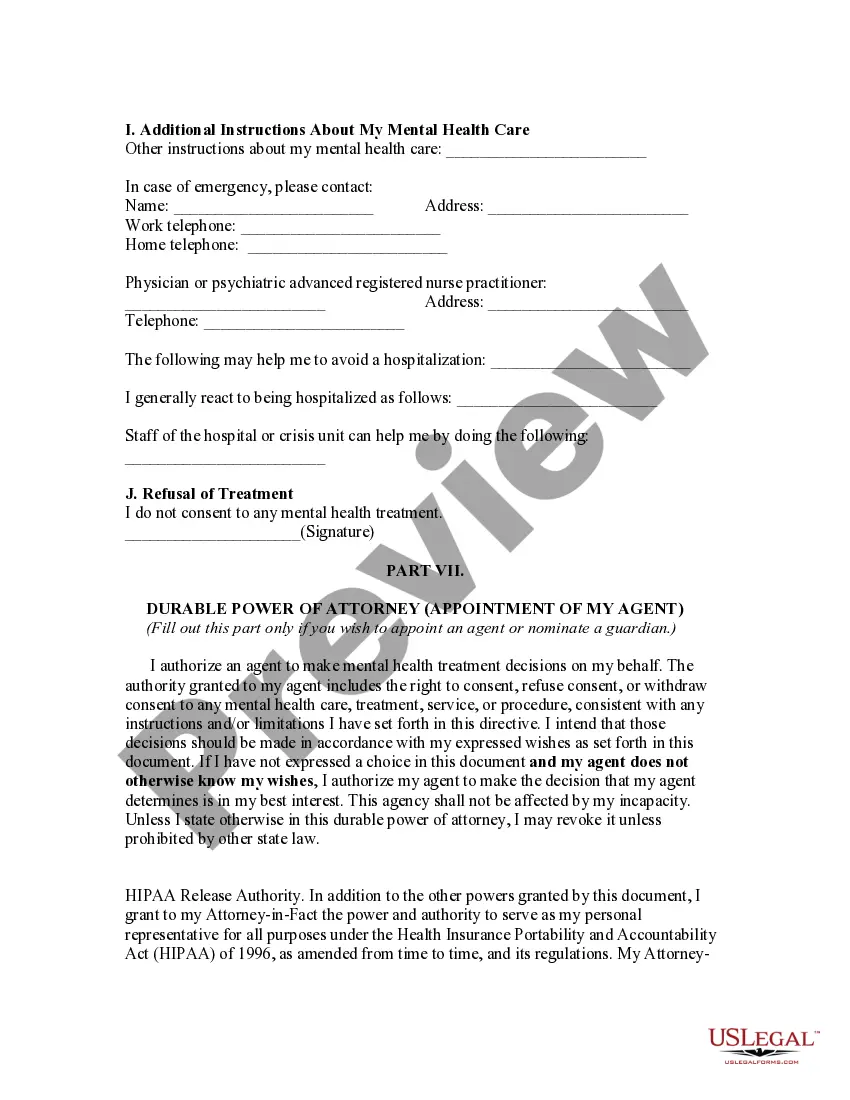
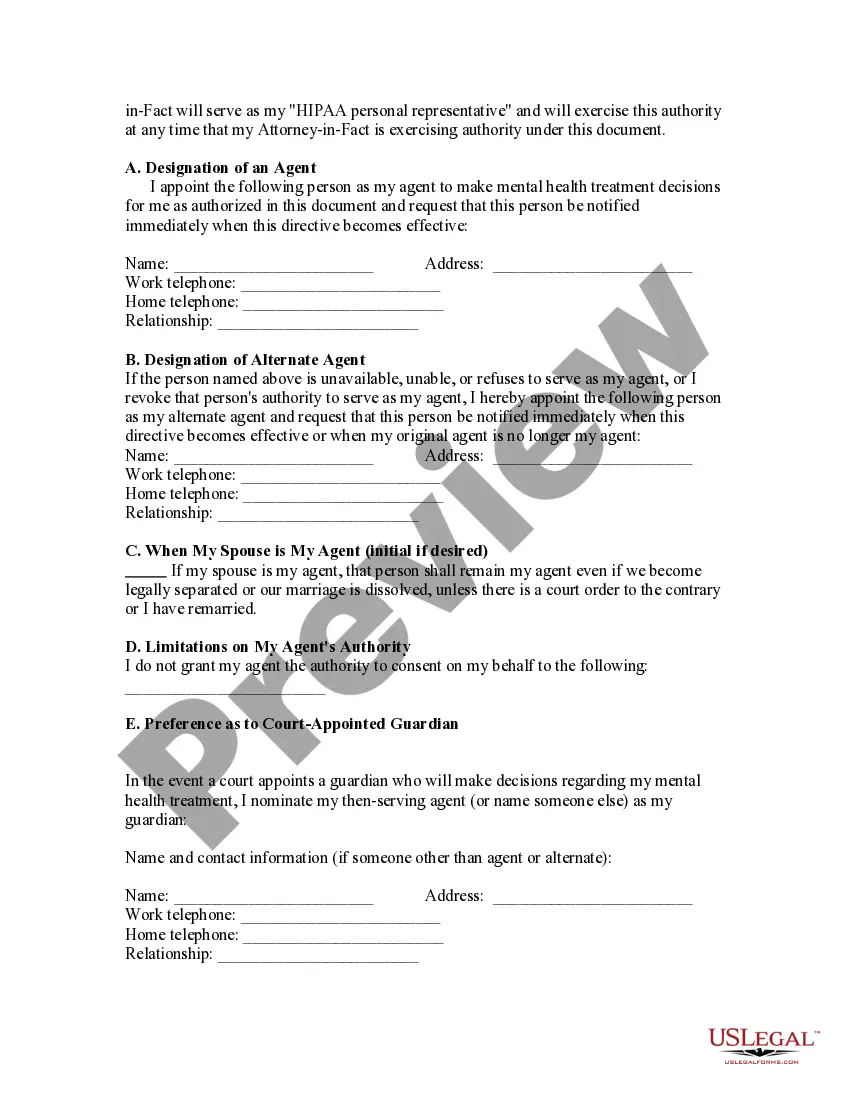
- Agent Appointment: Allows the individual to appoint a trusted person to make treatment decisions on their behalf.
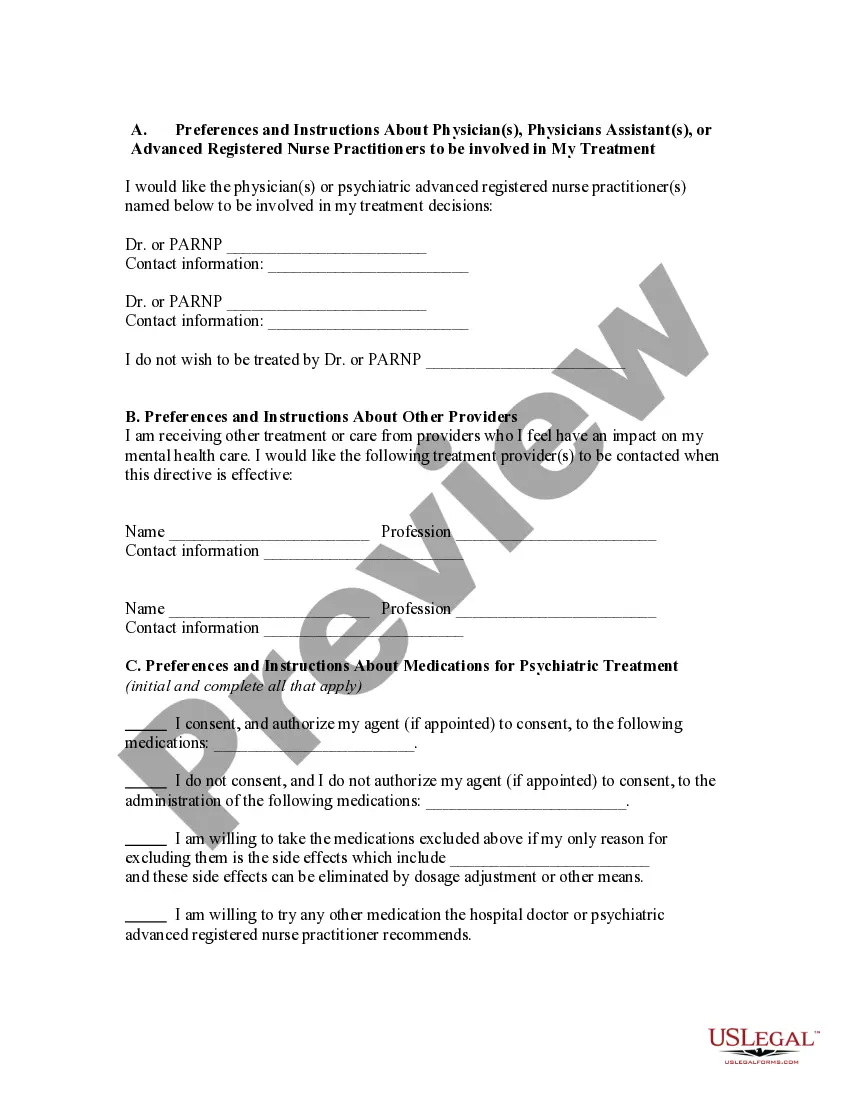
- Treatment Preferences: Specifies preferred treatment providers, medications, and hospitalization options.
- Emergency Contact: Provides contact information for assistance during emergencies.
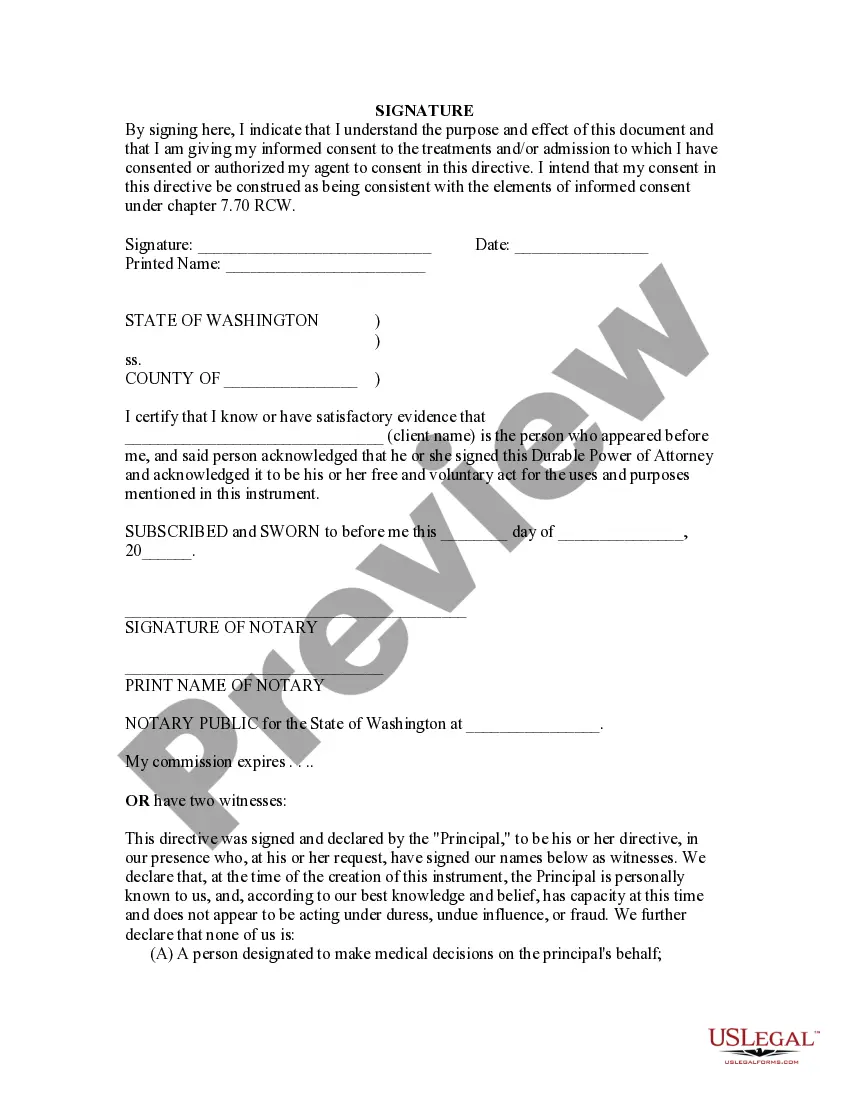
- Signature Requirements: Indicates necessary signatures from the individual and witnesses to validate the directive.


When to use this form
This Mental Health Advance Directive should be used when you want to ensure your treatment preferences are respected in the event that you become unable to communicate your wishes. It is particularly useful in scenarios where you may experience severe mental health challenges, undergo hospitalization, or wish to specify alternative treatment approaches ahead of time.
Who should use this form
- Adults who have been diagnosed with a mental health condition.
- Individuals who wish to plan their mental health treatment in advance.
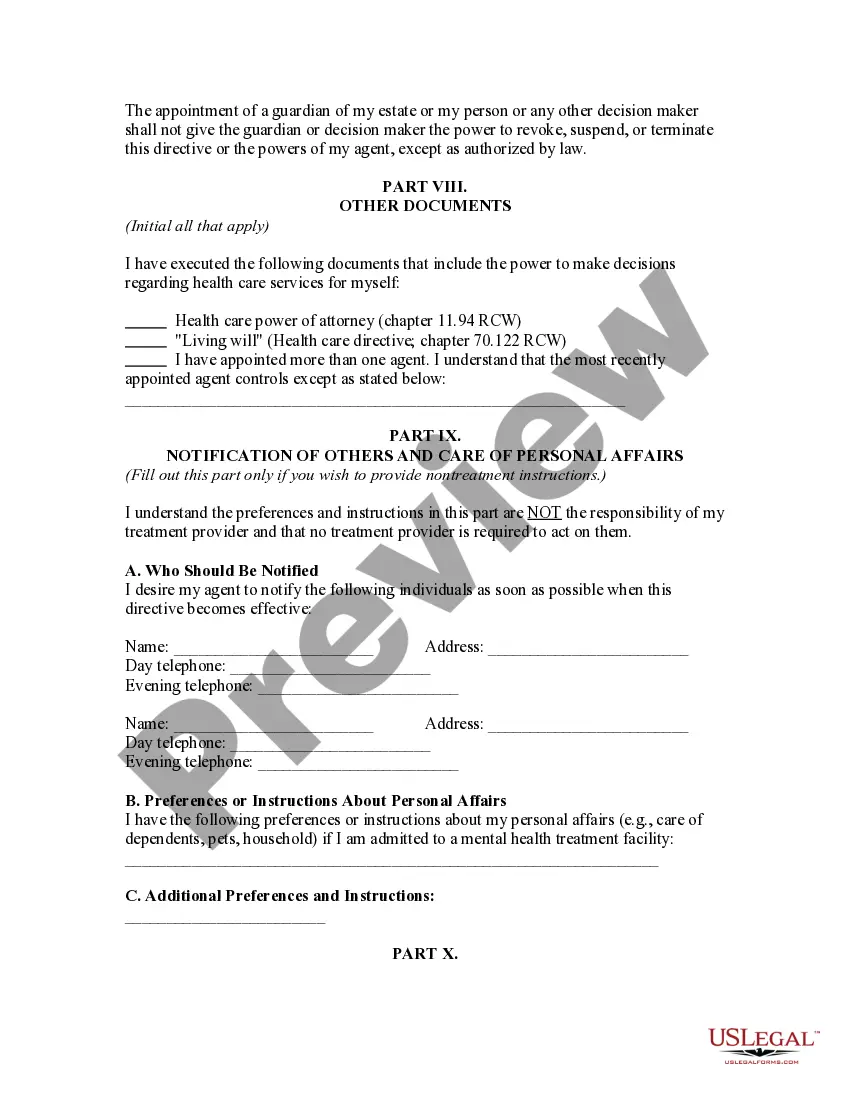
- People who want to designate a trusted person as their agent for treatment decisions.
- Anyone seeking to ensure their preferences regarding mental health care are documented legally.
Completing this form step by step
- Identify and declare your intent to create a Mental Health Advance Directive.
- Appoint an agent by providing their contact information and notifying them of your appointment.
- Specify your treatment preferences, including preferred providers and treatment types.
- Sign the document in the presence of at least two witnesses to validate the directive.
- Store the completed document in a safe place and share copies with your appointed agent and healthcare providers.
Is notarization required?
This form usually doesn’t need to be notarized. However, local laws or specific transactions may require it. Our online notarization service, powered by Notarize, lets you complete it remotely through a secure video session, available 24/7.
Get your form ready online
Our built-in tools help you complete, sign, share, and store your documents in one place.
Make edits, fill in missing information, and update formatting in US Legal Forms—just like you would in MS Word.
Download a copy, print it, send it by email, or mail it via USPS—whatever works best for your next step.
Sign and collect signatures with our SignNow integration. Send to multiple recipients, set reminders, and more. Go Premium to unlock E-Sign.
If this form requires notarization, complete it online through a secure video call—no need to meet a notary in person or wait for an appointment.
We protect your documents and personal data by following strict security and privacy standards.

Make edits, fill in missing information, and update formatting in US Legal Forms—just like you would in MS Word.

Download a copy, print it, send it by email, or mail it via USPS—whatever works best for your next step.

Sign and collect signatures with our SignNow integration. Send to multiple recipients, set reminders, and more. Go Premium to unlock E-Sign.

If this form requires notarization, complete it online through a secure video call—no need to meet a notary in person or wait for an appointment.

We protect your documents and personal data by following strict security and privacy standards.
Common mistakes to avoid
- Failing to clearly specify treatment preferences or agent information.
- Not signing the document in front of required witnesses, which can invalidate it.
- Leaving significant sections blank, leading to uncertainty about treatment choices.
- Not informing the appointed agent about their responsibilities and wishes.
Benefits of completing this form online
- Convenient access to legal templates wherever and whenever you need them.
- Editable formats that allow you to customize your directive according to your preferences.
- Reliable legal information crafted by licensed attorneys, providing peace of mind.
Quick recap
- The Mental Health Advance Directive empowers you to dictate your mental health treatment preferences.
- You can appoint a trusted individual to make decisions about your care if you are unable to do so.
- This document becomes effective only under specified conditions related to your capacity.
Looking for another form?
Form popularity
FAQ
The living will. Durable power of attorney for health care/Medical power of attorney. POLST (Physician Orders for Life-Sustaining Treatment) Do not resuscitate (DNR) orders. Organ and tissue donation.
The health care directive must be signed by you and witnessed by two people or acknowledged by a notary public. The health care directive allows people who clearly do not want their lives artificially prolonged under the above conditions to make their wishes known.
Health Care Directive Must be signed by two witnesses or notarized. Neither of your witnesses nor the notary may be your health care agent. If you choose to have the document witnessed, at least one of the witnesses may not be a health care provider or an employee of a provider directly attending to you.
No, in Washington, you do not need to notarize your will to make it legal. However, Washington allows you to make your will "self-proving" and you'll need to go to a notary if you want to do that. A self-proving will speeds up probate because the court can accept the will without contacting the witnesses who signed it.
As long as you can still make your own decisions, your advance directive won't be used. You can change or cancel it at any time. Your health care agent will only make choices for you if you can't or don't want to decide for yourself.
Step 1: Decide your wishes. The first step is to think through and write down how you want to be treated when you have a mental health crisis or are hospitalized. Step 2: Find your health care agent. Step 3: Write your advance directive. Step 4: Give out copies of your psychiatric advance directive.
2. Your spouse, de facto or same sex partner Person with whom you have a close and continuing relationship. Person who currently provides support to you or did before you entered residential care.
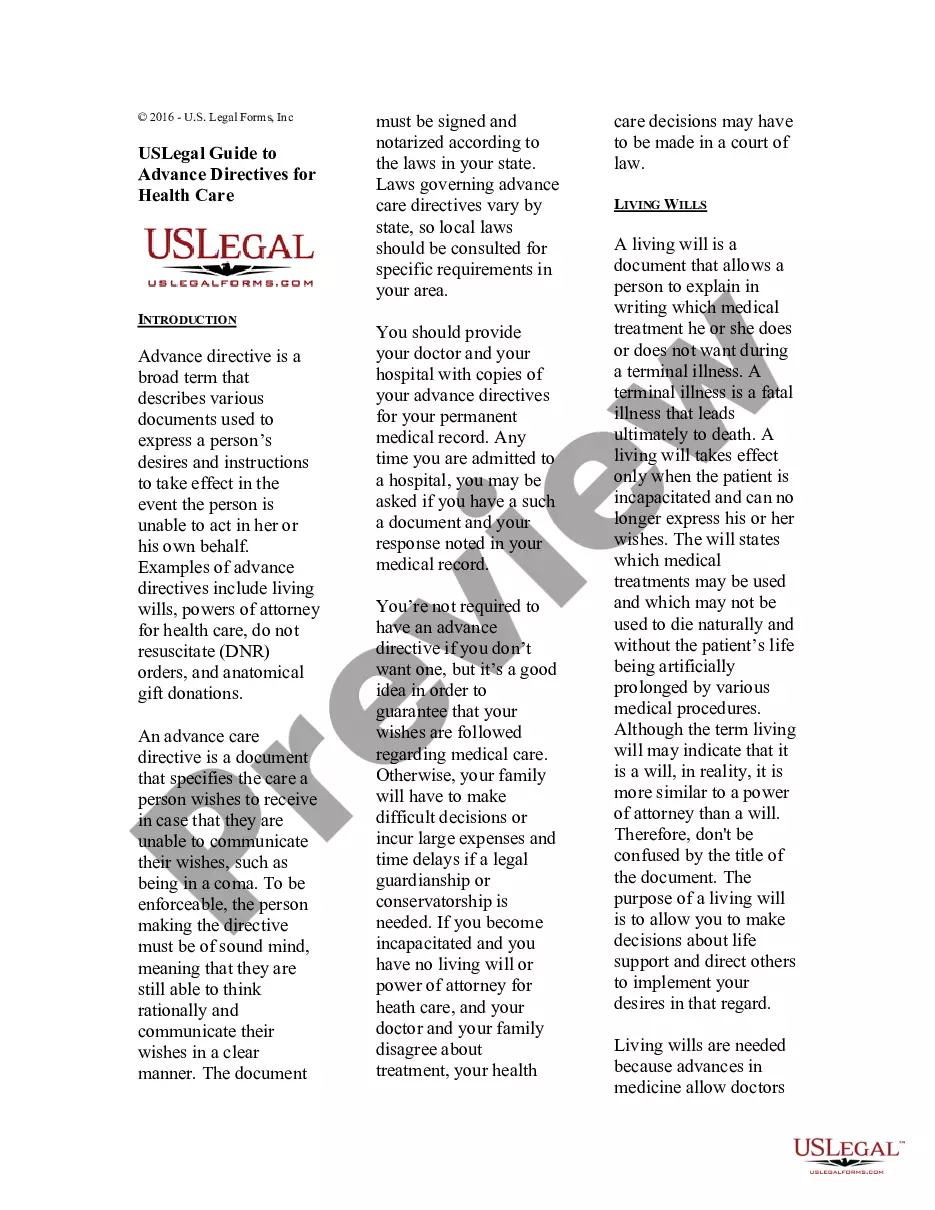
An advance directive is a set of instructions someone prepares in advance of ill health that determines his healthcare wishes. A living will is one type of advance directive that becomes effective when a person is terminally ill.