Washington Assumption Agreement of Deed of Trust and Release of Original Mortgagors
About this form
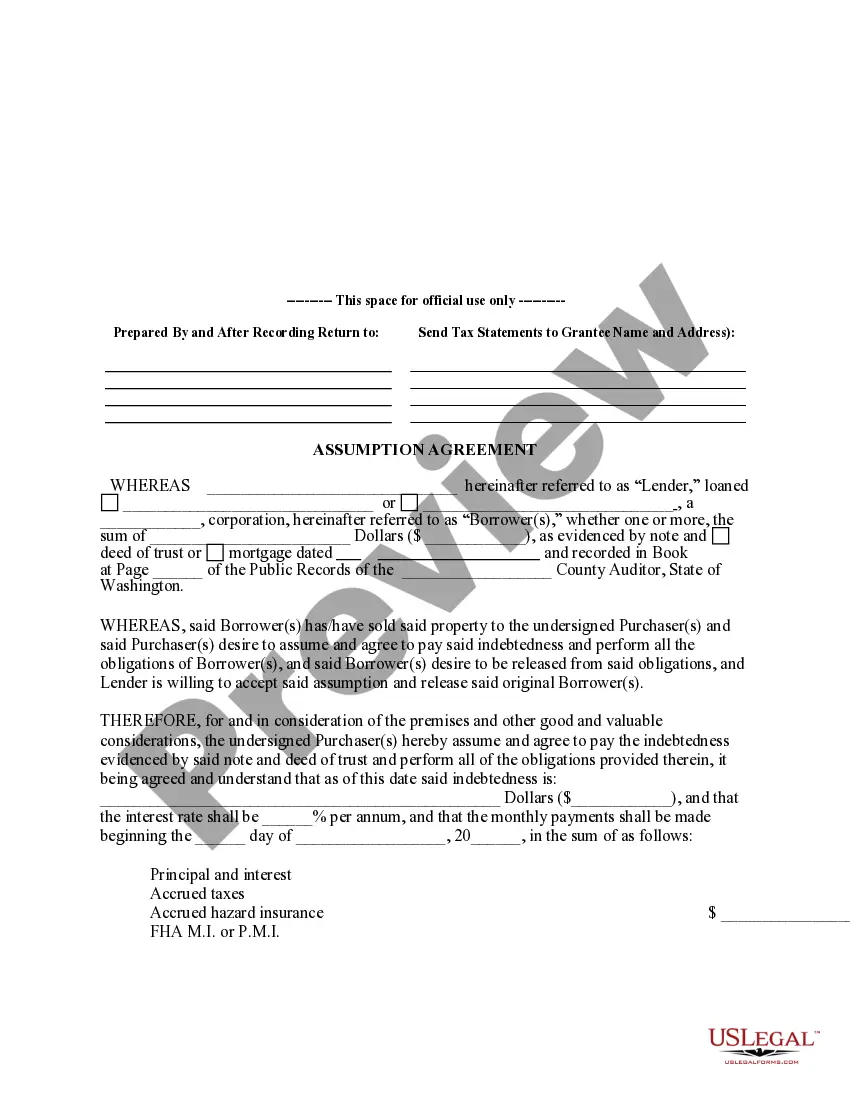
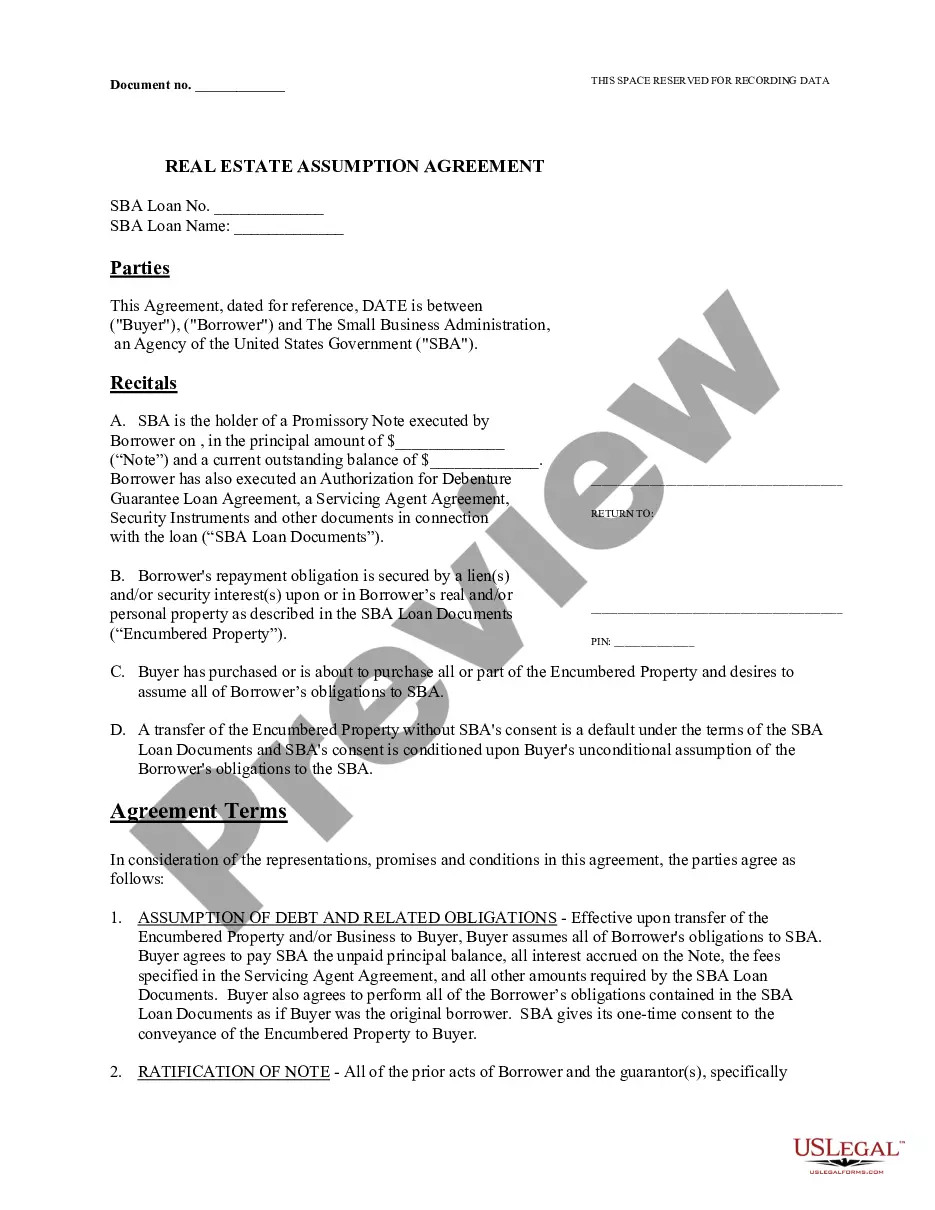
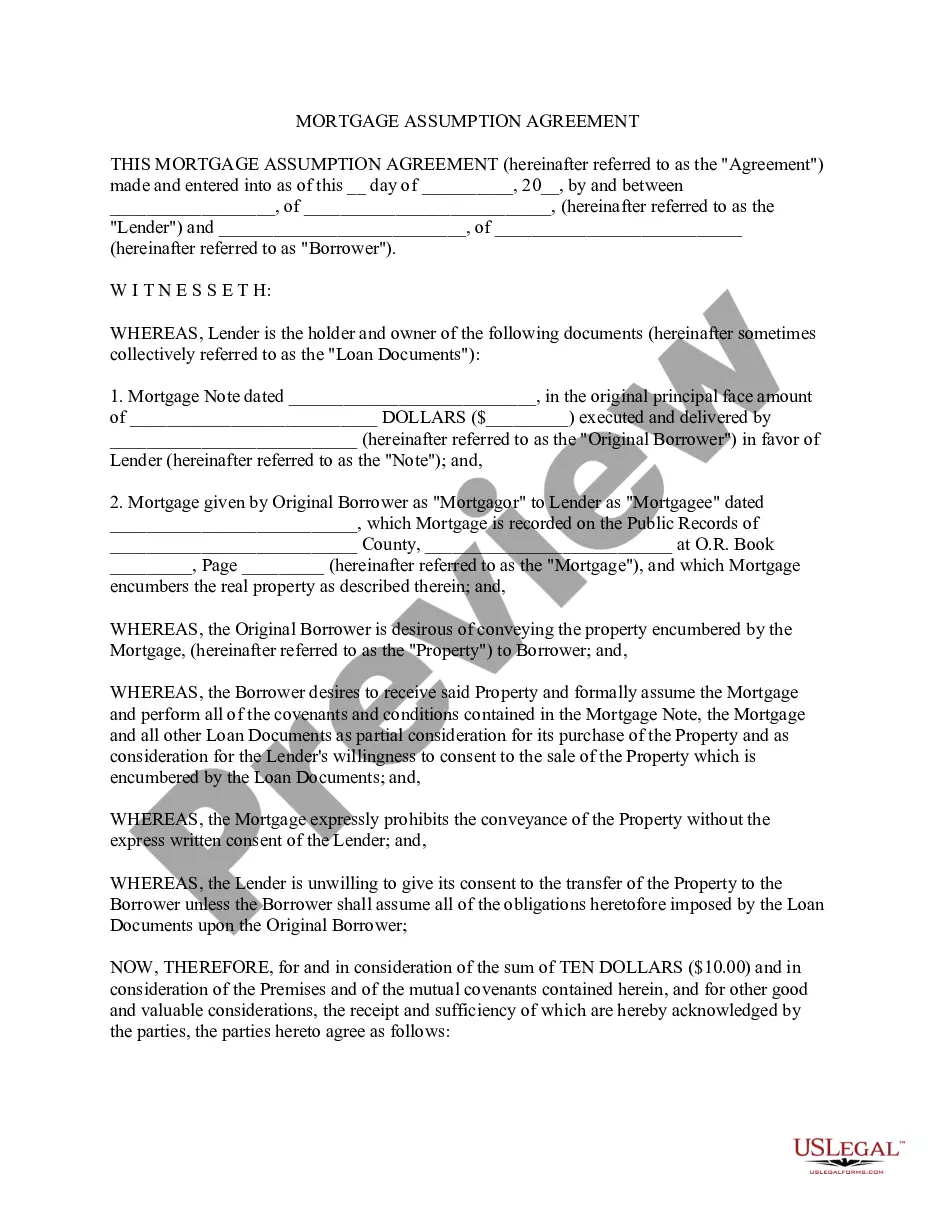
The Assumption Agreement of Deed of Trust and Release of Original Mortgagors is a legal document that allows new purchasers of a property to assume the existing mortgage obligations from the original mortgagors. This form also ensures that the lender releases the original mortgagors from any further liability on the loan. It is specifically tailored to facilitate the seamless transition of mortgage responsibilities and differs from standard mortgage agreements by explicitly detailing the assumption of debt by the new owners.
Main sections of this form
- Identification of the new purchasers (assume the mortgage).
- Detailed statement of the amount owed on the mortgage.
- Specifications of the interest rate and monthly payment obligations.
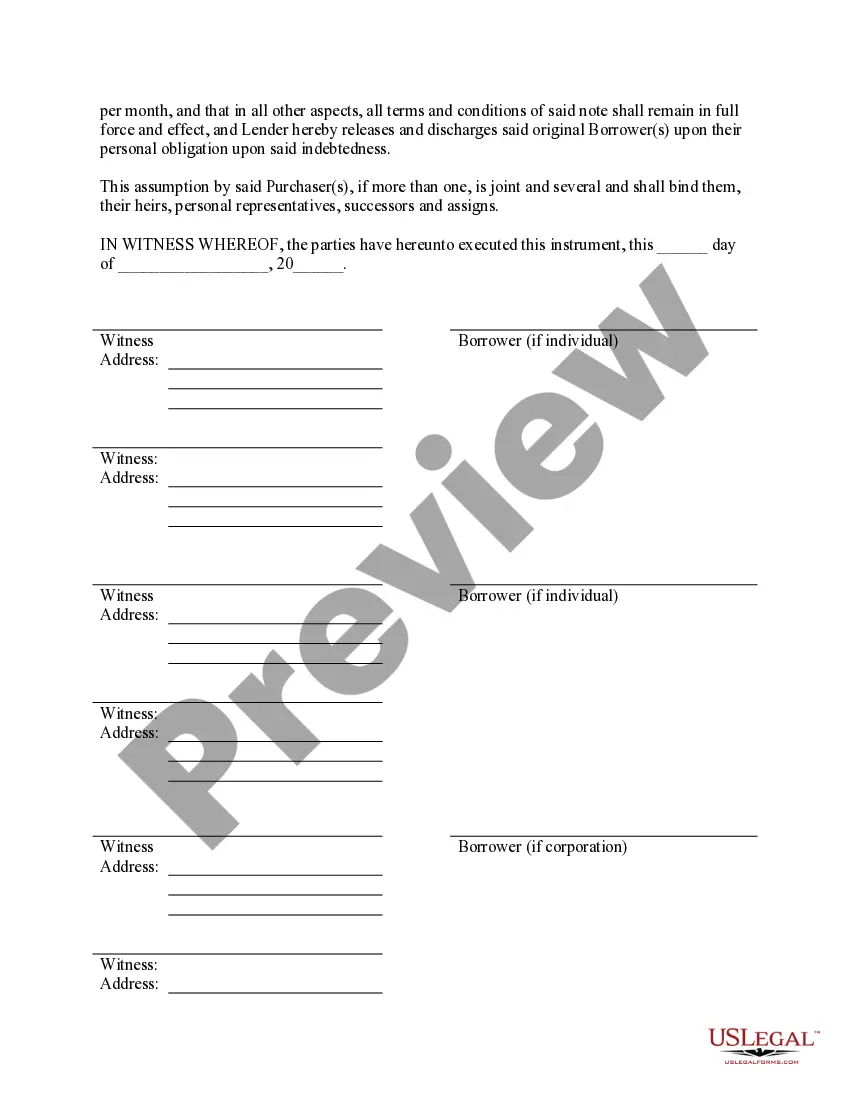
- Release clause for original mortgagors from future loan liability.
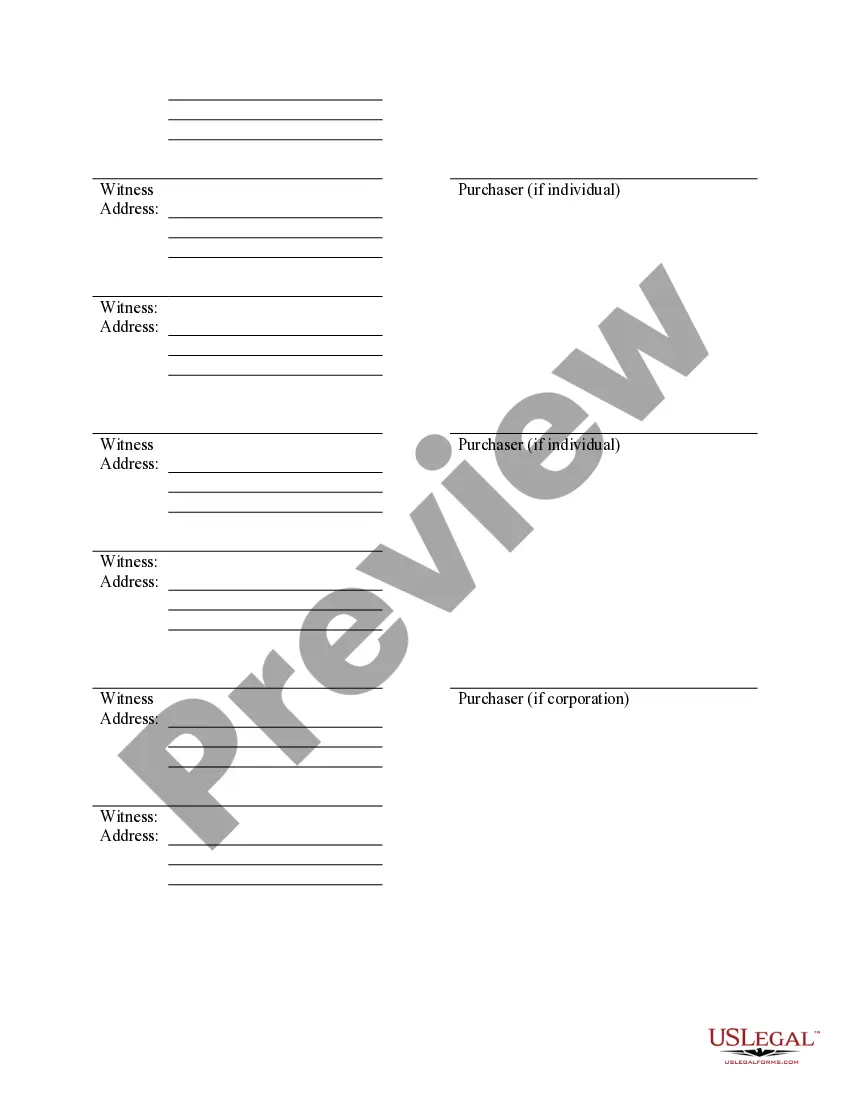
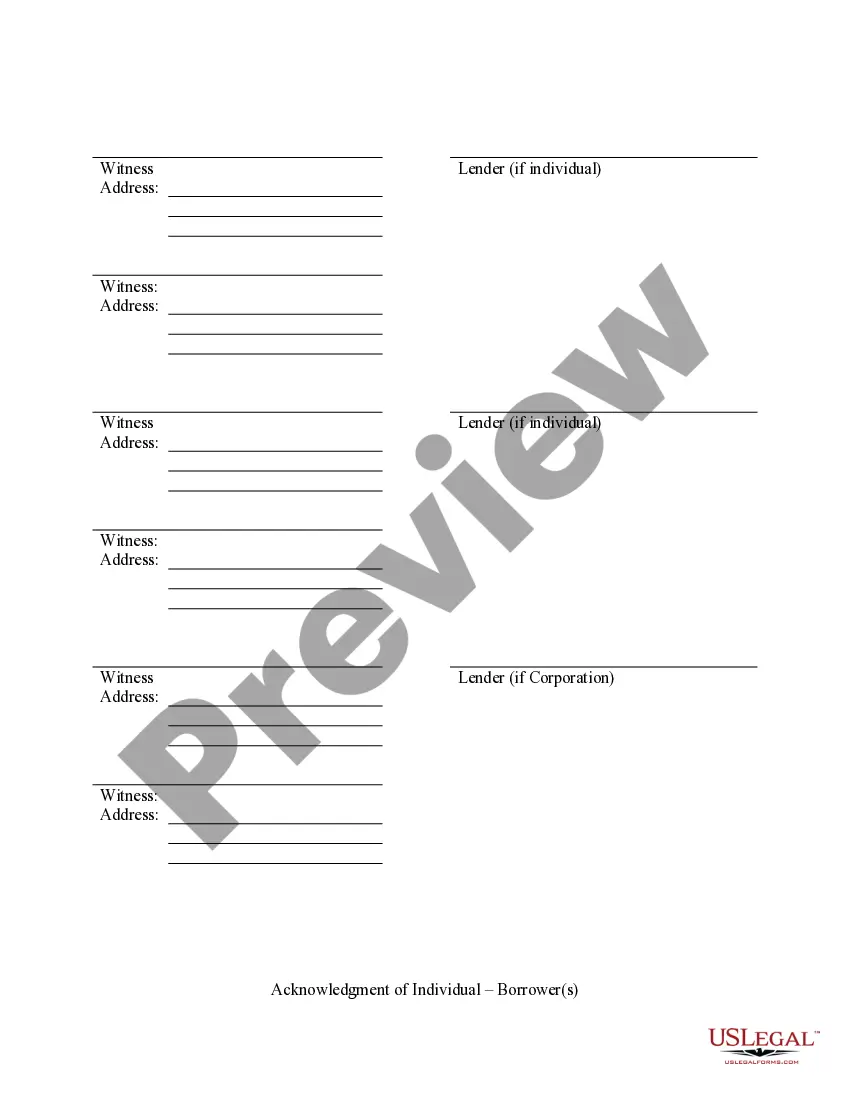
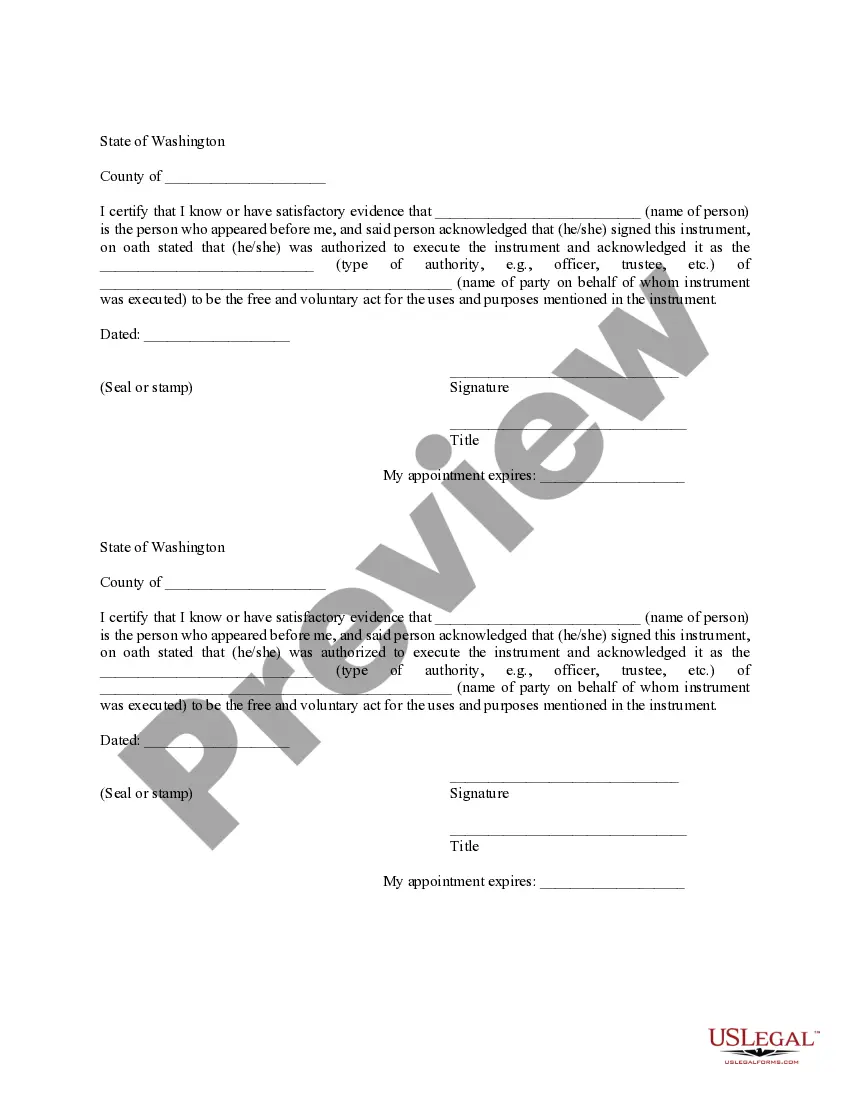
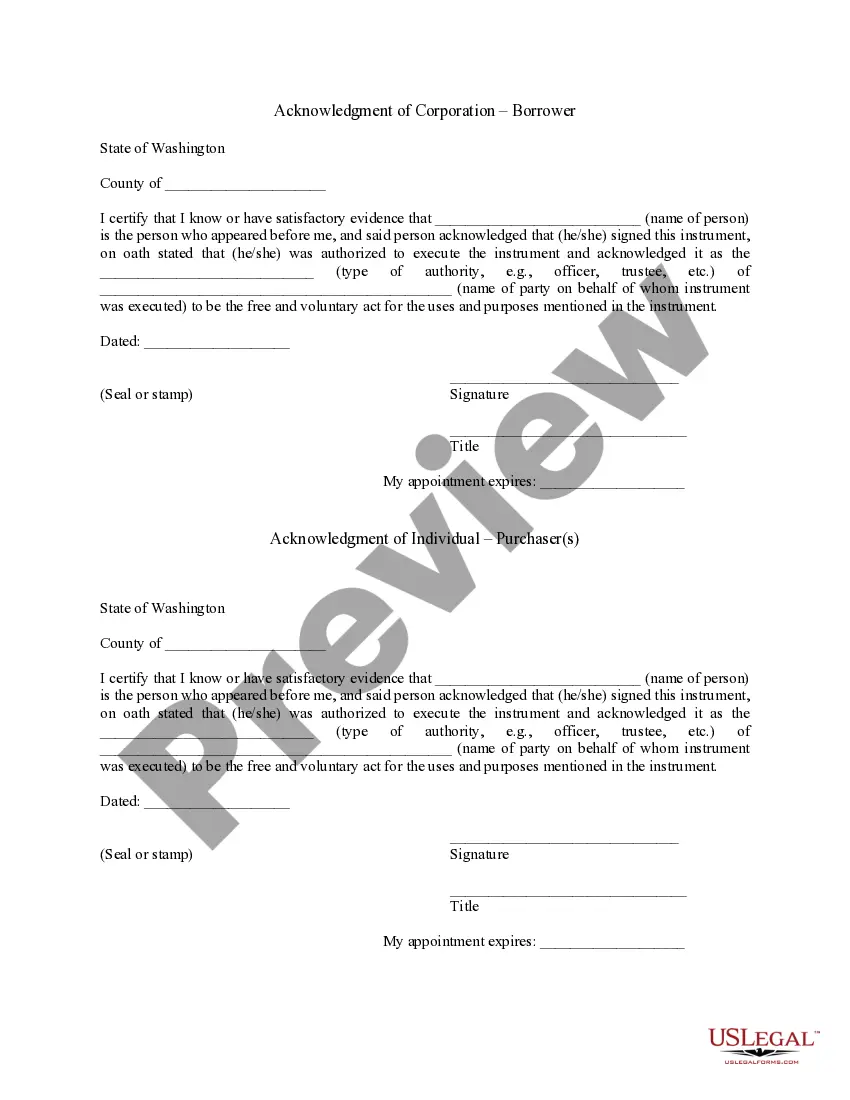
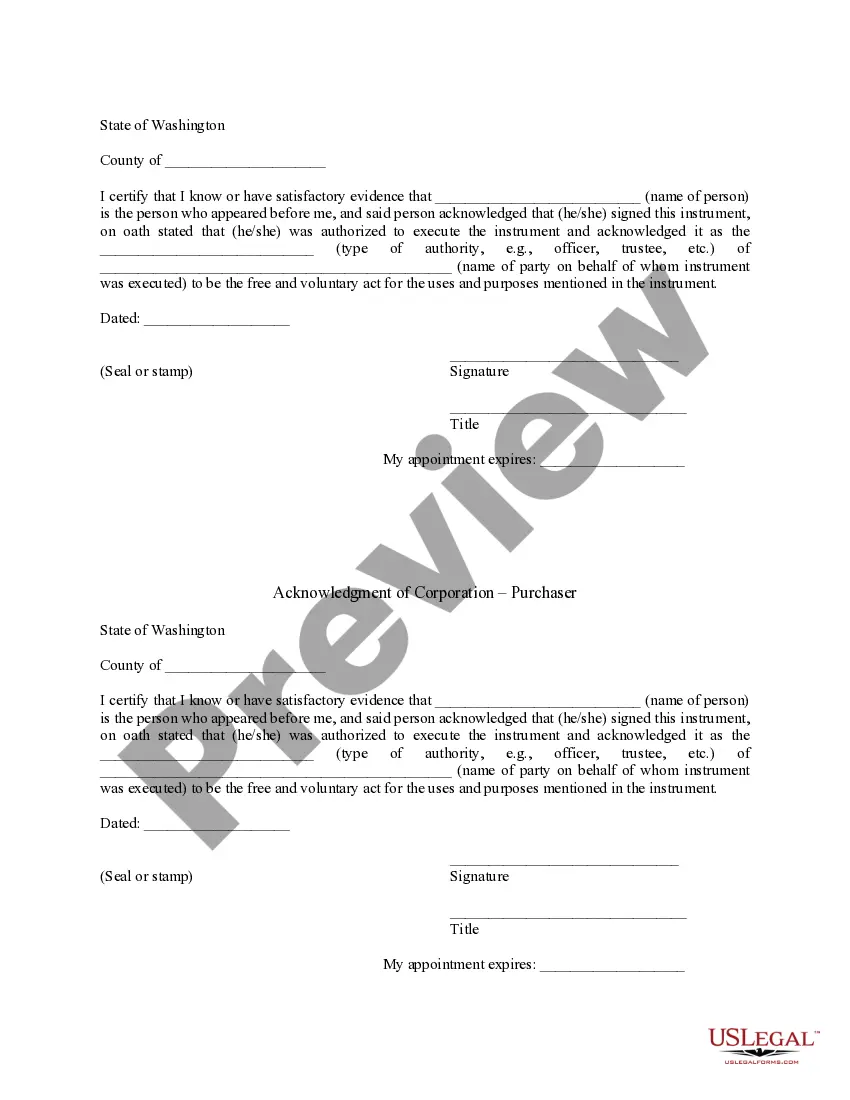
- Signature lines for all parties involved, including notarial acknowledgments.

When this form is needed
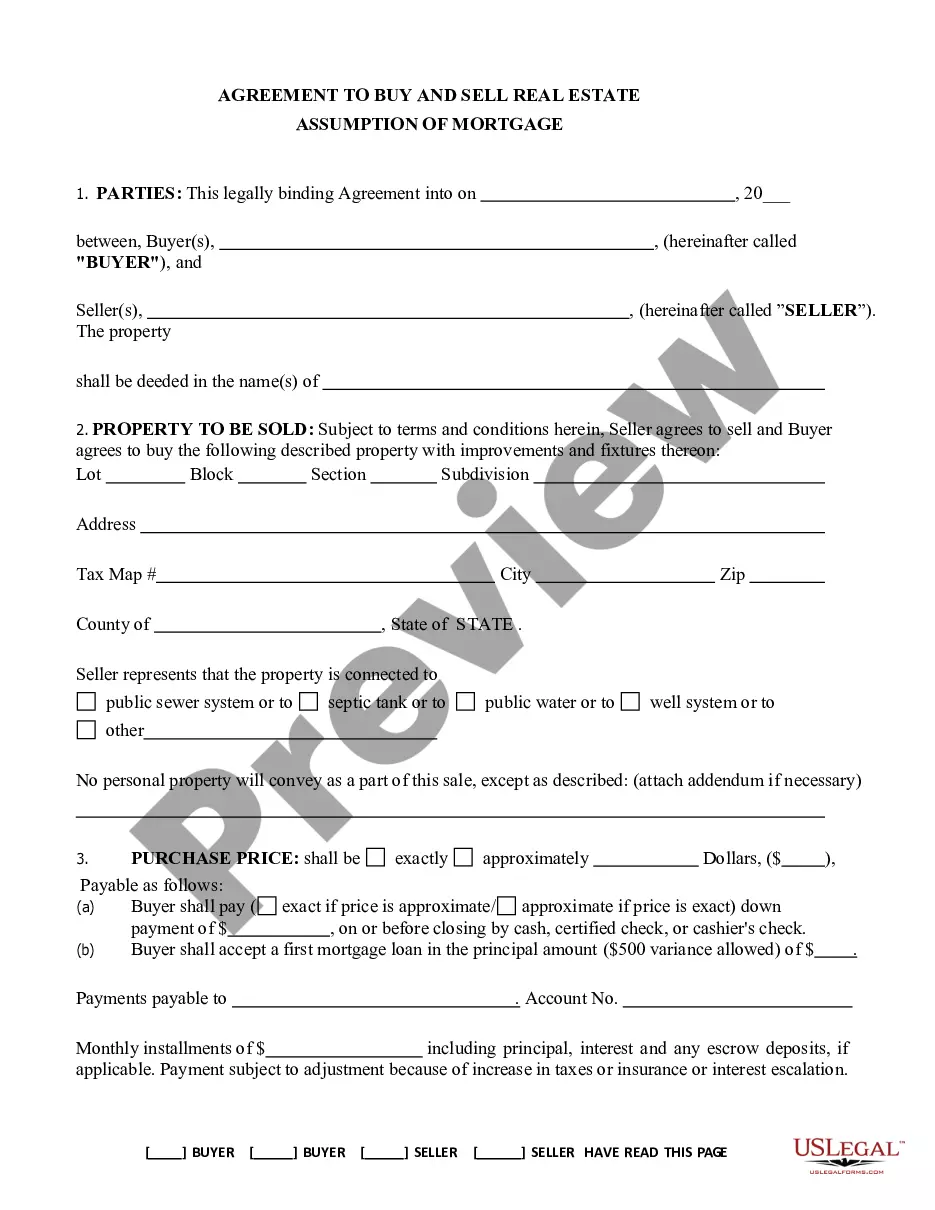
This form is typically used in real estate transactions where a buyer takes over an existing mortgage from a seller. If you are purchasing a property and wish to assume responsibility for its existing loans, or if you are a seller seeking to release yourself from mortgage obligations, this Assumption Agreement is crucial to ensure a clear and legally binding transfer of responsibility.
Intended users of this form
- New purchasers of a property who are assuming a mortgage.
- Original mortgagors looking to transfer their mortgage liability to a new buyer.
- Lenders who need formal documentation of the assumption of debt.
Steps to complete this form
- Identify all parties involved, including buyers, sellers, and the lender.
- Enter the total amount of indebtedness to be assumed.
- Specify the interest rate and calculate the monthly payment amounts.
- Ensure that all parties sign the document in the appropriate sections.
- Have the document notarized to validate its execution as required.
Is notarization required?
Yes, this form must be notarized to be legally valid. Notarization provides an additional layer of authenticity and trustworthiness to the document, ensuring that the signatures are legitimate and that the agreement is enforceable. US Legal Forms offers integrated online notarization services, allowing you to complete the process via secure video call without the need for travel.
Get your form ready online
Our built-in tools help you complete, sign, share, and store your documents in one place.
Make edits, fill in missing information, and update formatting in US Legal Forms—just like you would in MS Word.
Download a copy, print it, send it by email, or mail it via USPS—whatever works best for your next step.
Sign and collect signatures with our SignNow integration. Send to multiple recipients, set reminders, and more. Go Premium to unlock E-Sign.
If this form requires notarization, complete it online through a secure video call—no need to meet a notary in person or wait for an appointment.
We protect your documents and personal data by following strict security and privacy standards.

Make edits, fill in missing information, and update formatting in US Legal Forms—just like you would in MS Word.

Download a copy, print it, send it by email, or mail it via USPS—whatever works best for your next step.

Sign and collect signatures with our SignNow integration. Send to multiple recipients, set reminders, and more. Go Premium to unlock E-Sign.

If this form requires notarization, complete it online through a secure video call—no need to meet a notary in person or wait for an appointment.

We protect your documents and personal data by following strict security and privacy standards.
Common mistakes to avoid
- Failing to properly identify all parties involved in the assumption.
- Neglecting to include the correct amount of outstanding loan balance.
- Overlooking signatures or notarial requirements.
Benefits of using this form online
- Convenient access to the latest legal forms drafted by licensed attorneys.
- Edit and customize the form fields to fit your specific situation.
- Download and print the form at your convenience.
Summary of main points
- This form legally transfers mortgage responsibility from the original borrower to the new purchaser.
- Proper execution, including notarization, is essential for validity.
- Utilizing this form can simplify property transactions that involve mortgage assumptions.
Looking for another form?
Form popularity
FAQ
A trust deedalso known as a deed of trustis a document sometimes used in real estate transactions in the U.S. It is a document that comes into play when one party has taken out a loan from another party to purchase a property.
The deed of trust to secure assumption is a document that names the spouse who did not receive the house as the beneficiary. The deed of trust lays out the terms of the parties' agreement for enforcement if the spouse receiving the house defaults on the mortgage.
In financed real estate transactions, trust deeds transfer the legal title of a property to a third partysuch as a bank, escrow company, or title companyto hold until the borrower repays their debt to the lender. Trust deeds are used in place of mortgages in several states.
Typically in a residential settlement, the signers of the Note and the Deed of Trust are the same, but this is not always the case. The Note itself has virtually nothing to do with the property.The Deed of Trust is the document that grants the lender the rights to take the property if the loan is not repaid.
A Deed of Trust is essentially an agreement between a lender and a borrower to give the property to a neutral third party who will serve as a trustee. The trustee holds the property until the borrower pays off the debt.
If there's a deed of trust on a property, the lender can sell the property and pay off the loan. Whether your loan falls under the mortgage or deed of trust definition, you'll need to get approval from the lender before you sell your home for less than you owe.
A deed of assumption is a single deed that includes both the language of a general warranty or other deed along with the acknowledgement that the buyer is taking over the mortgage on the property.
A deed of trust includes most of the same information as a mortgage, including:A legal description of the property that's used as security or collateral for the mortgage. The names of parties: trustee, trustor, and beneficiary. The inception and maturity dates of the loan.
A warranty deed guarantees that: The grantor is the rightful owner of the property and has the legal right to transfer the title.The title would withstand third-party claims to ownership of the property. The grantor will do anything to ensure the grantee's title to the property.