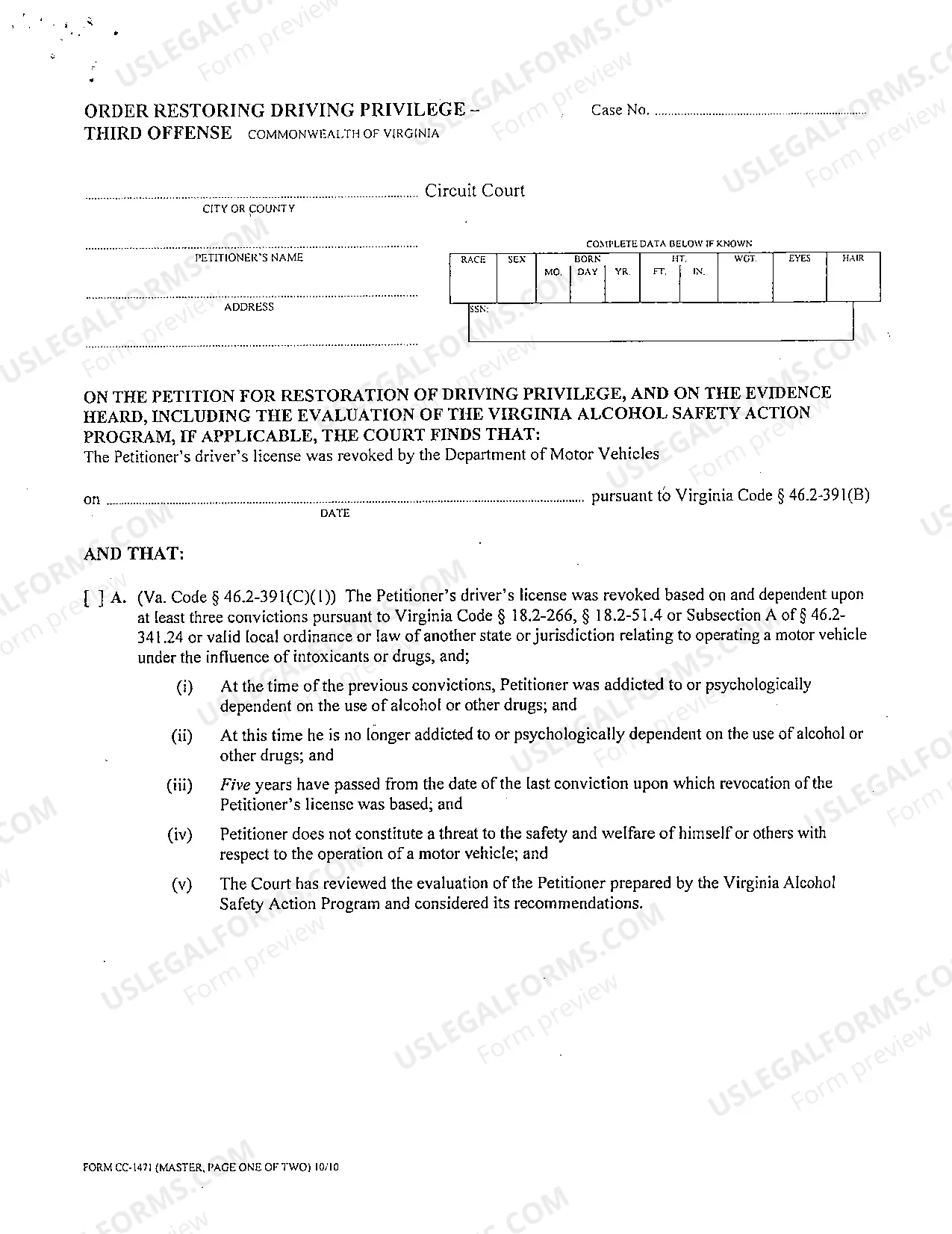
Washington Letter from Landlord to Tenant as Notice to Tenant of Tenant's Disturbance of Neighbors' Peaceful Enjoyment to Remedy or Lease Terminates
Overview of this form
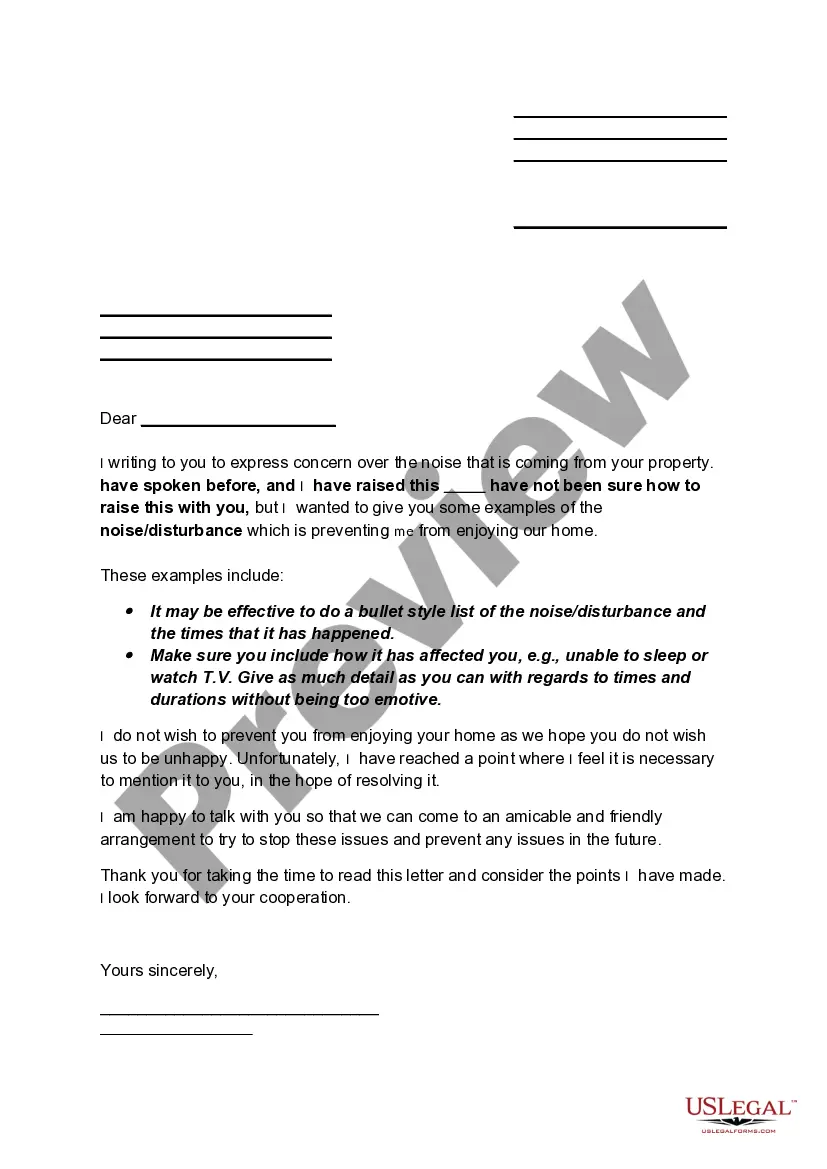
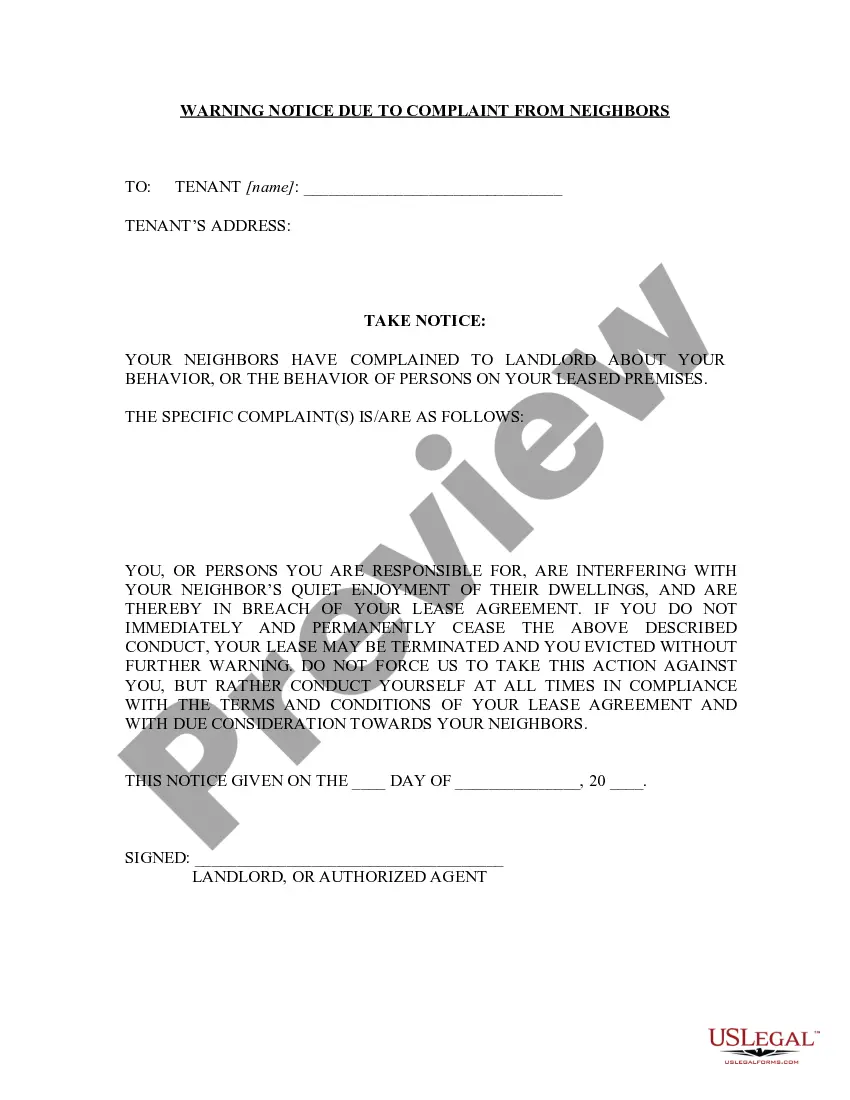
This form is a notice from the landlord to the tenant, informing them of their breaches related to disturbing their neighbors' peaceful enjoyment. It serves as a formal communication that addresses issues of tenant conduct, urging them to remedy the situation or risk lease termination. The form is essential for landlords aiming to maintain a harmonious living environment, and it underscores the importance of quiet enjoyment in rental agreements.
Main sections of this form
- Identification of the landlord and tenant involved.
- Description of the disturbances caused by the tenant, family, or guests.
- Request for the tenant to address the issues cited in the notice.
- Statement informing the tenant of potential lease termination if issues are not resolved.
- Signature line for the landlord or authorized agent for verification.
- Proof of delivery method, such as personal delivery or certified mail.


When to use this document
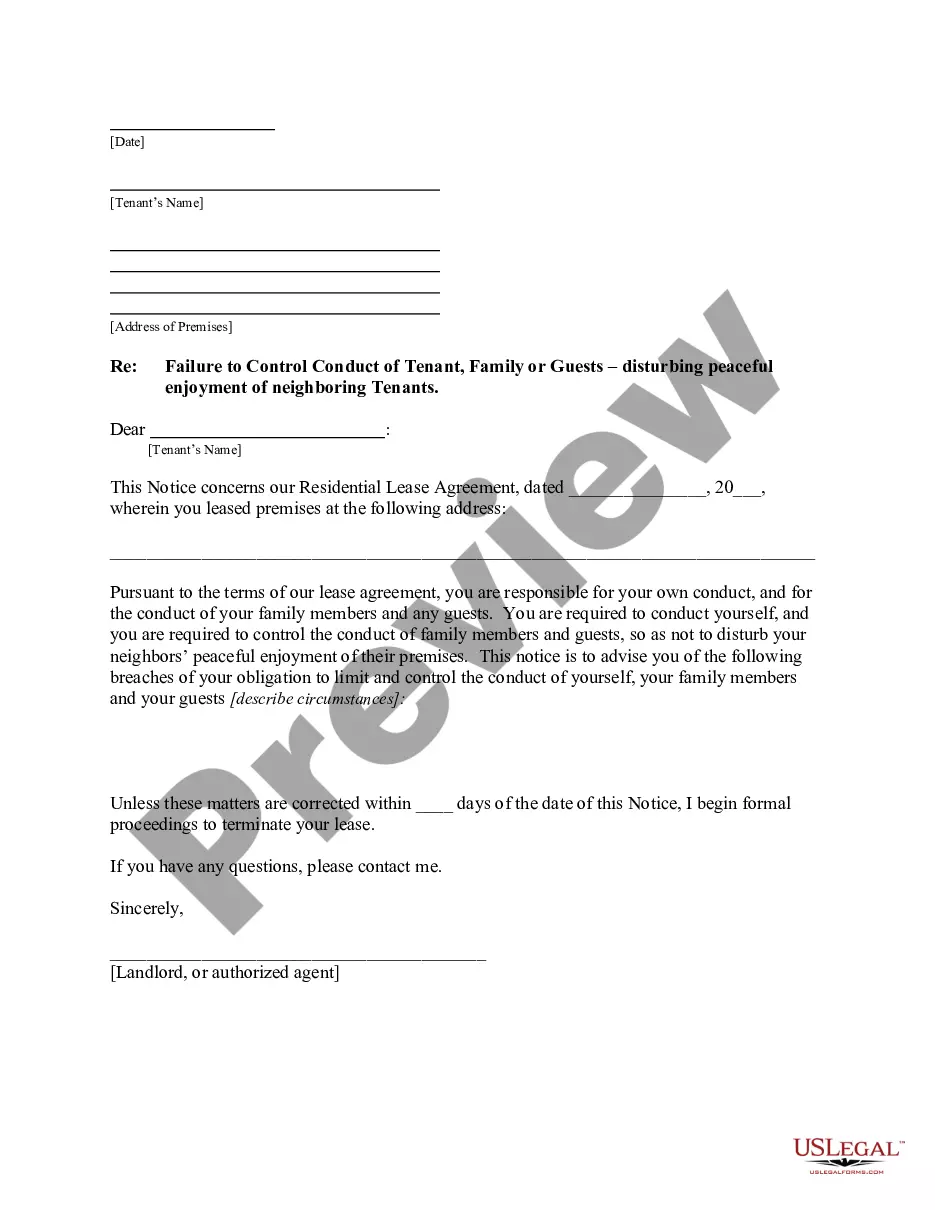
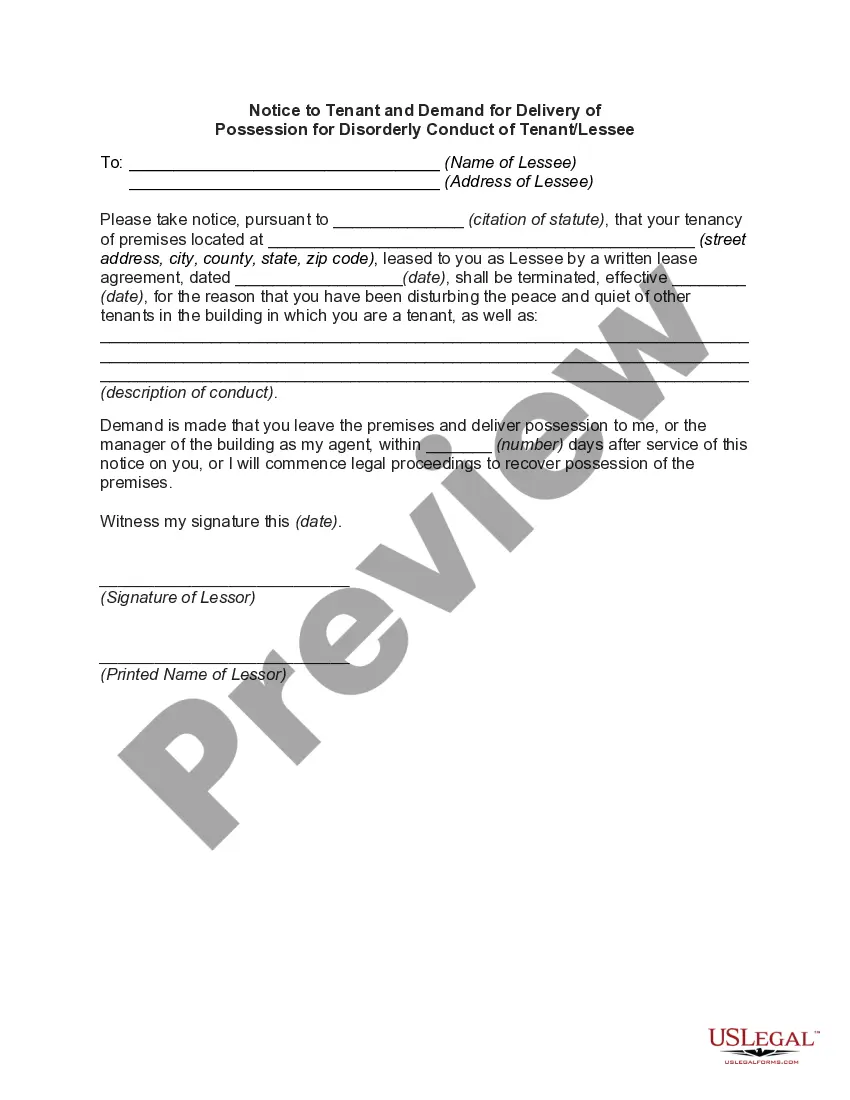
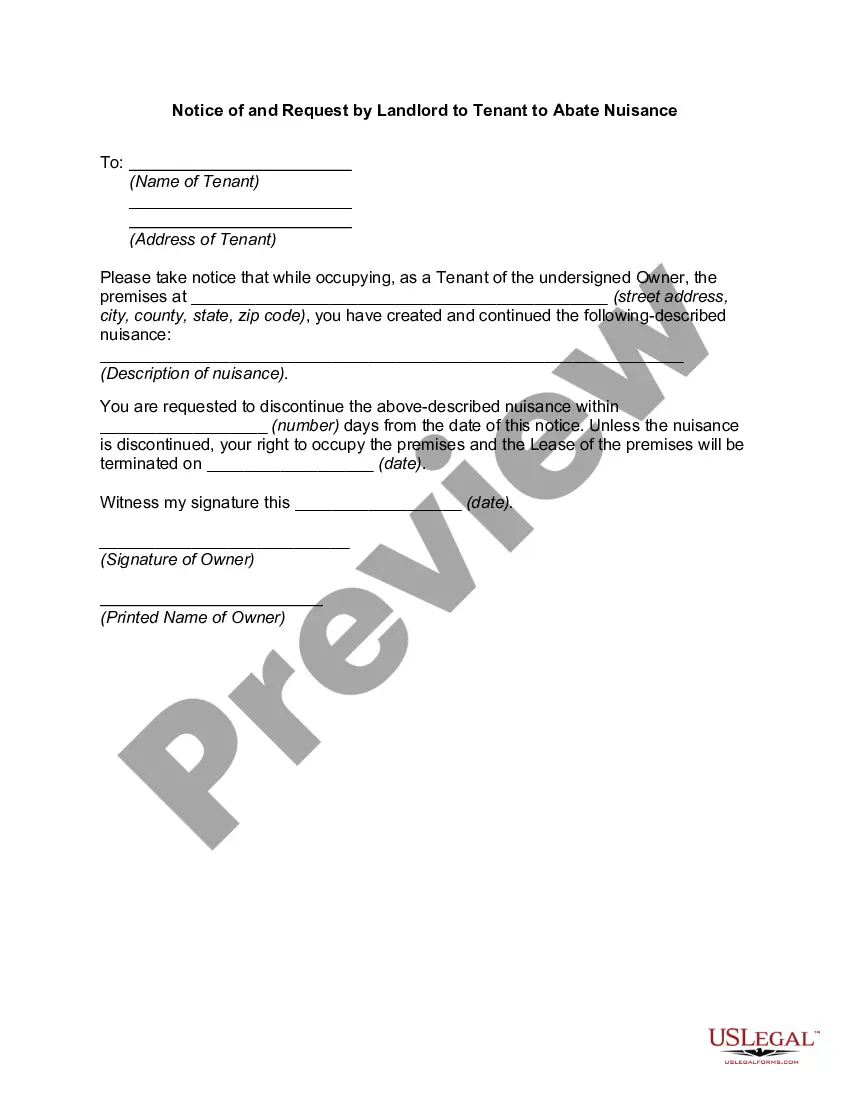
This form should be used when a tenant's behavior is negatively impacting the peaceful enjoyment of neighbors. Common scenarios include excessive noise, disruptive parties, or other breaches of conduct that violate the terms of the lease. It allows the landlord to formally document the issue and take necessary actions to resolve it, ensuring that all tenants can enjoy their residences without undue interference.
Who needs this form
This form is intended for:
- Landlords who need to address tenant disturbances affecting neighbors.
- Property managers acting on behalf of landlords for maintaining peace in rental properties.
- Tenants who may be unaware of their conduct's impact and wish to rectify the situation before further action is taken.
How to prepare this document
- Identify and enter the names of the landlord and tenant.
- Clearly describe the disturbances and the dates or incidents that have occurred.
- Include a request for the tenant to remedy the situation.
- Indicate the implications of failing to address the breaches, including potential lease termination.
- Sign and date the notice to validate it.
- Choose and document the delivery method to ensure proper notification.
Notarization guidance
Notarization is generally not required for this form. However, certain states or situations might demand it. You can complete notarization online through US Legal Forms, powered by Notarize, using a verified video call available anytime.
Get your form ready online
Our built-in tools help you complete, sign, share, and store your documents in one place.
Make edits, fill in missing information, and update formatting in US Legal Forms—just like you would in MS Word.
Download a copy, print it, send it by email, or mail it via USPS—whatever works best for your next step.
Sign and collect signatures with our SignNow integration. Send to multiple recipients, set reminders, and more. Go Premium to unlock E-Sign.
If this form requires notarization, complete it online through a secure video call—no need to meet a notary in person or wait for an appointment.
We protect your documents and personal data by following strict security and privacy standards.

Make edits, fill in missing information, and update formatting in US Legal Forms—just like you would in MS Word.

Download a copy, print it, send it by email, or mail it via USPS—whatever works best for your next step.

Sign and collect signatures with our SignNow integration. Send to multiple recipients, set reminders, and more. Go Premium to unlock E-Sign.

If this form requires notarization, complete it online through a secure video call—no need to meet a notary in person or wait for an appointment.

We protect your documents and personal data by following strict security and privacy standards.
Avoid these common issues
- Failing to specify the disturbances clearly, which can lead to confusion.
- Not documenting the delivery method, which may affect enforceability.
- Neglecting to give adequate time for the tenant to respond or remedy the situation.
- Using vague language that does not adhere to local landlord-tenant laws.
- Not keeping a copy of the notice for records.
Benefits of completing this form online
- Convenient downloading and printing options make it easy to use.
- Editable templates allow customization to fit specific situations accurately.
- Access to professionally drafted forms ensures legal compliance and effectiveness.
- Fast and efficient process to address tenant issues without delays.
Legal use & context
- This notice serves as a formal warning, allowing tenants a chance to remedy their behavior before lease termination.
- Landlords must ensure compliance with local laws regarding notices and tenant rights.
- Failure to follow proper procedures could lead to disputes or claims of wrongful eviction.
Looking for another form?
Form popularity
FAQ
A lease is automatically void when it is against the law, such as a lease for an illegal purpose. In other circumstances, like fraud or duress, a lease can be declared void at the request of one party but not the other.
Paying the rent - One way or another, if you walk away from your lease and no one else rents the apartment then you will owe the landlord this money.Your landlord will typically collect this rent at the expiration of your lease.
If you break a lease and stop paying rent, your landlord might decide to take legal action against you. Your landlord can file a civil lawsuit to make you pay off the lease balance. If the judge rules against you, you will have to pay out your debt. Lowered credit score.
A termination of tenancy is different than an eviction. A termination is the landlord ending the rental agreement and asking the tenant to vacate the rental unit. An eviction is the actual court process and lawsuit to have a tenant removed from the property if they fail to leave.
In some circumstances, a tenant can break a fixed-term agreement early without penalty. A tenant can give 14 days' written notice to end an agreement early without penalty if: they have accepted an offer of social housing (e.g. from DCJ Housing)
Give the landlord/agent a written termination notice and vacate move out and return the keys according to your notice, and/or. apply to the NSW Civil & Administrative Tribunal (NCAT) for a termination order.
How Breaking a Lease Can Hurt Your Credit. If you pay all outstanding charges before moving, including any back rent and fees, breaking a lease won't hurt your credit score. However, breaking a lease can damage your credit if it results in unpaid debt.
When a lease ends, a tenant may choose to move, continue to pay rent as a month-to-month tenant, or sign a new lease. If a tenant continues to pay rent after a lease ends, in most states the terms of the expired lease carry over into a month-to-month tenancy.