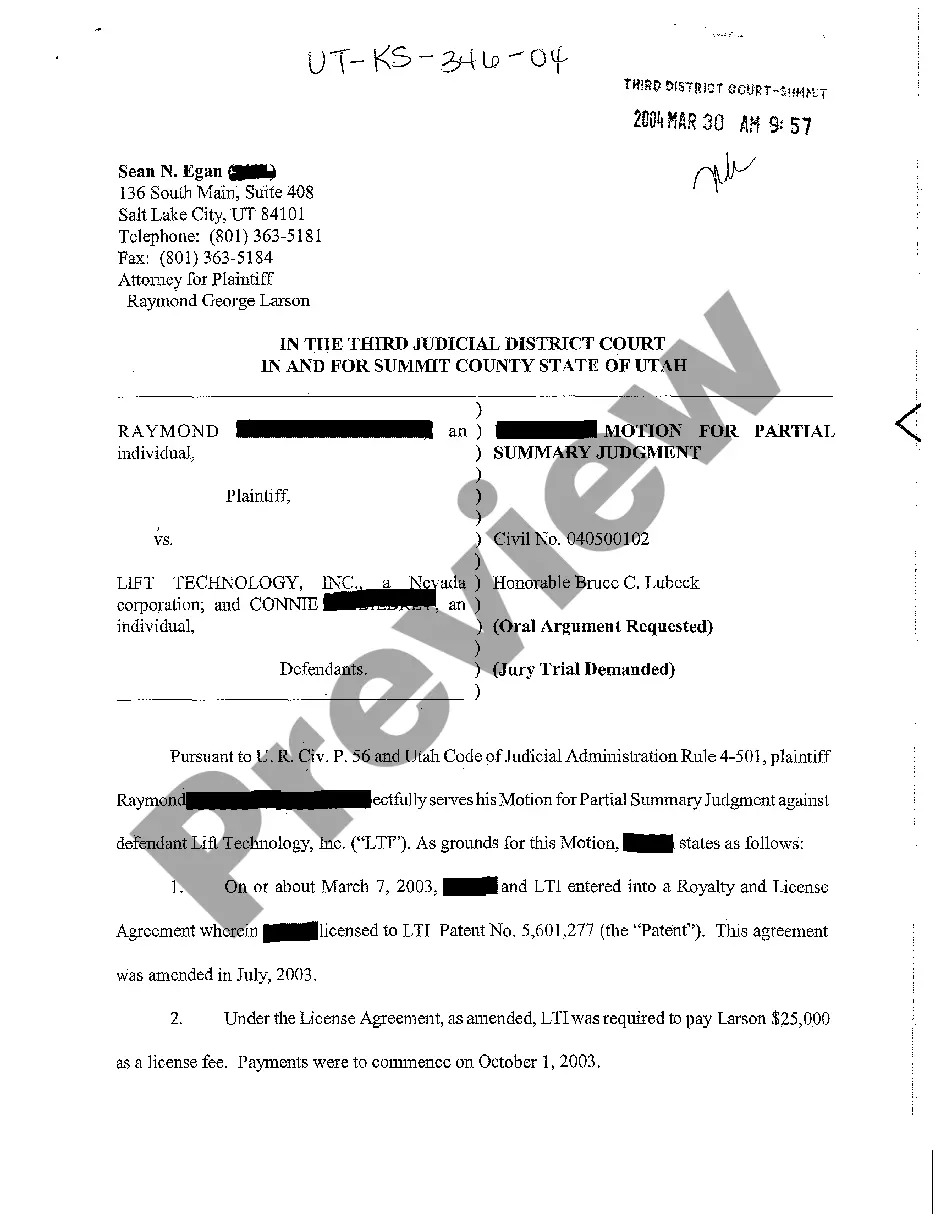
Washington Quitclaim Deed from Husband and Wife to an Individual
What is this form?
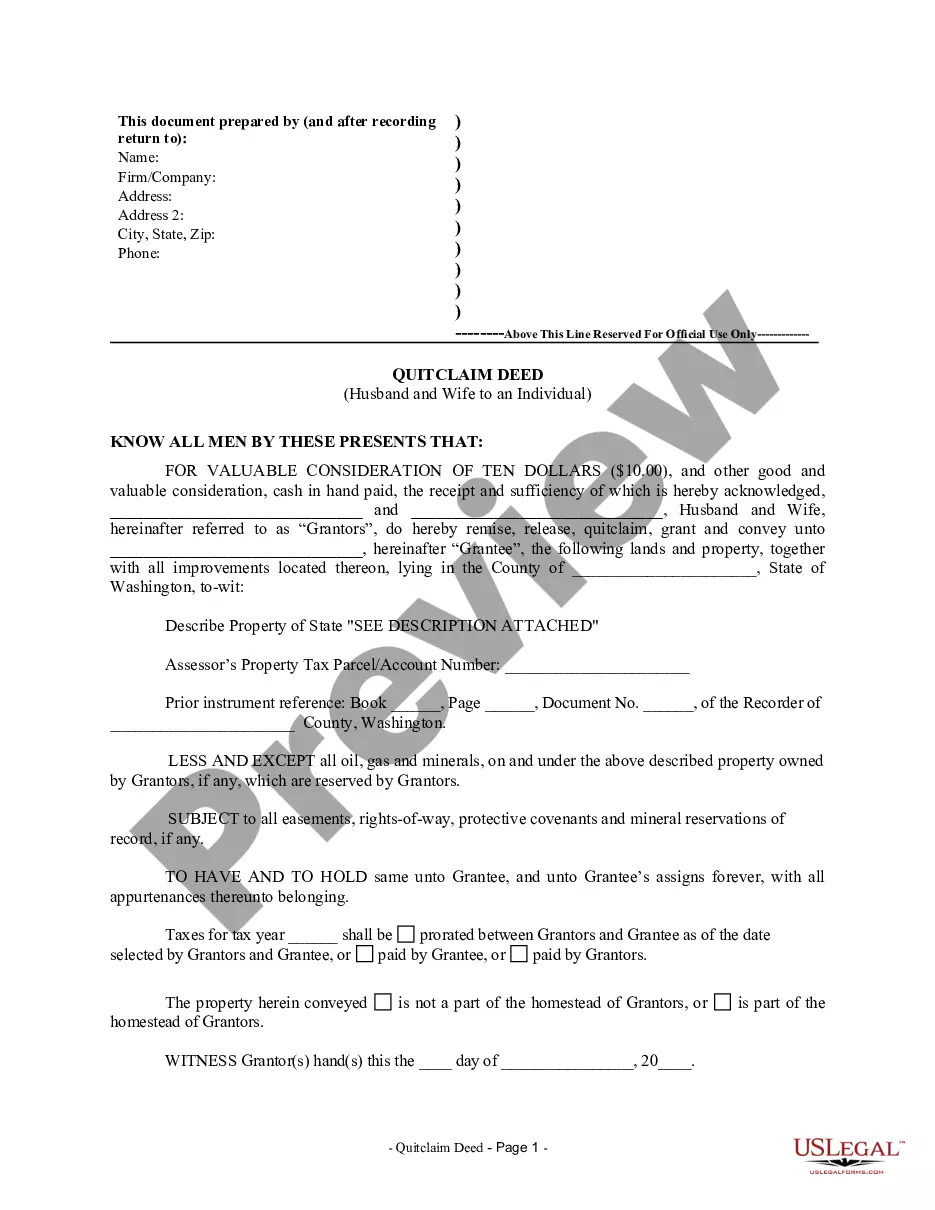
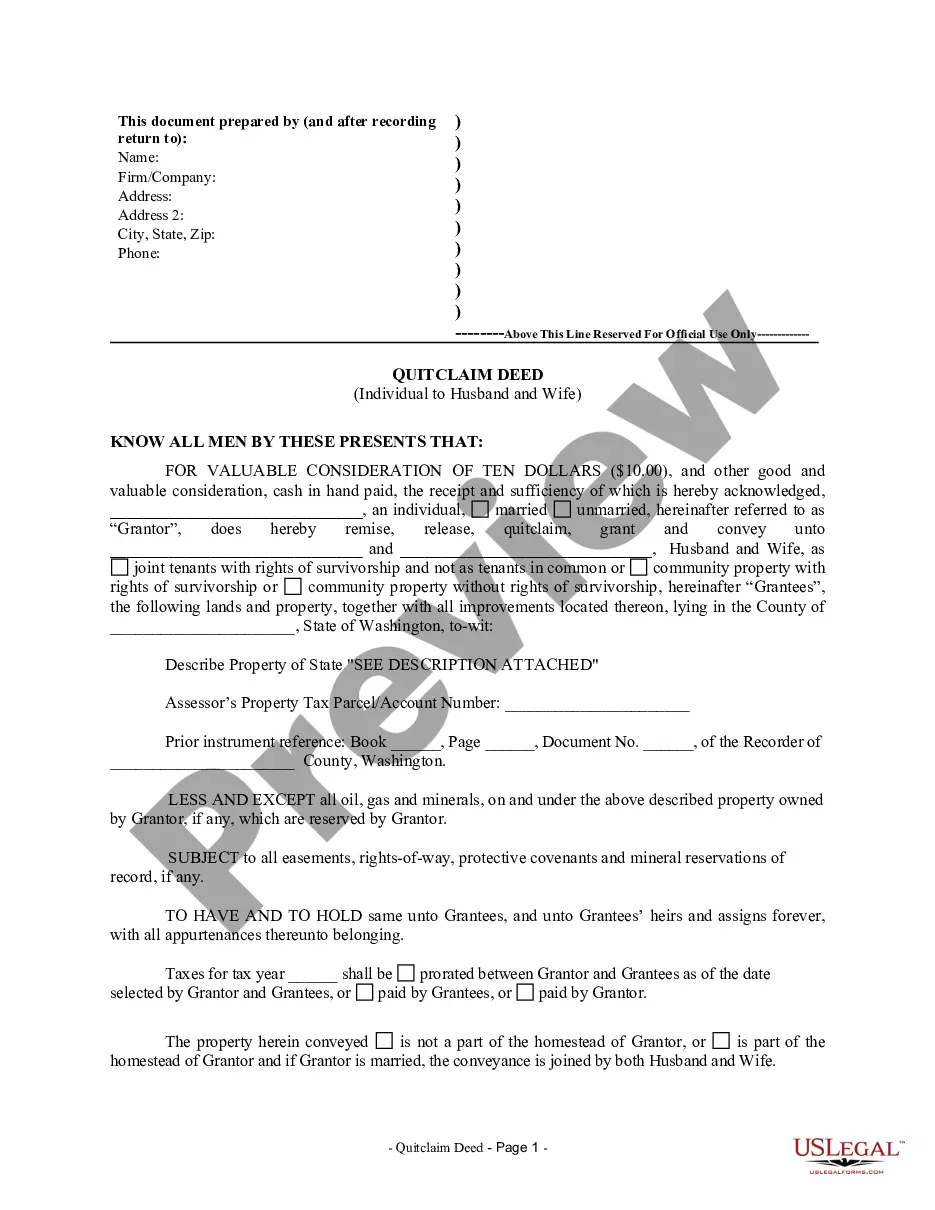
This form is a Quitclaim Deed from Husband and Wife to an Individual. It enables the transfer of property ownership from a married couple (the grantors) to a single individual (the grantee). Unlike other deeds, a quitclaim deed does not guarantee that the grantors hold clear title to the property, thus it is primarily used in straightforward property transfers, often between family members or acquaintances.
Key components of this form
- Description of the property being conveyed, including tax parcel/account number.
- Reservation clause that excludes any oil, gas, and minerals owned by the grantors.
- Clauses related to existing easements and rights-of-way.
- Provisions regarding tax responsibilities for the property transfer.
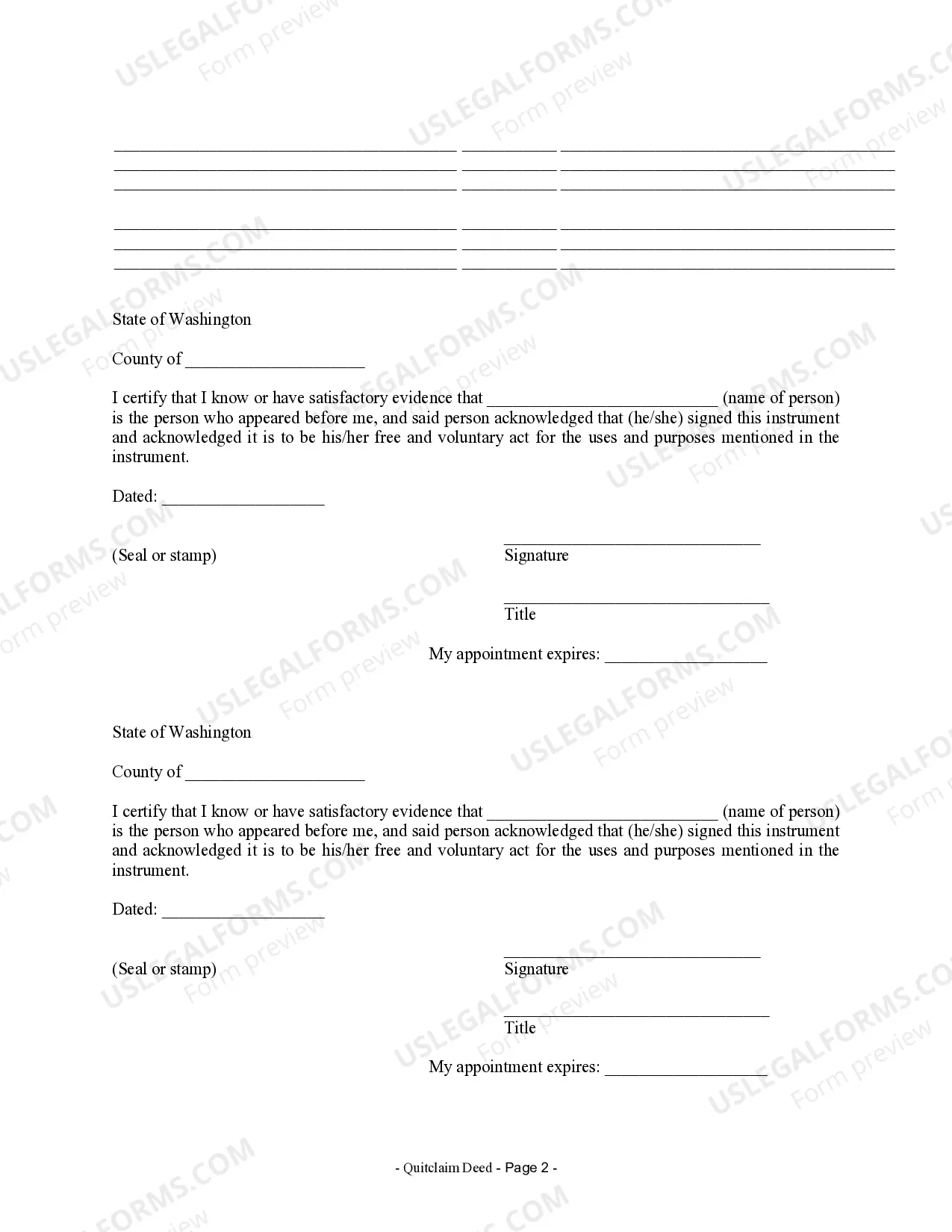
- Spaces for the grantors' signatures and a notary acknowledgment.




Situations where this form applies
This form is suitable for situations where a husband and wife wish to transfer property ownership to an individual without making warranties about the title. Common scenarios include gifting property to a family member, resolving estate matters, or when a couple is dissolving a joint ownership arrangement.
Intended users of this form
- Married couples transferring property among themselves or to others.
- Individuals looking to accept property with no guarantee of title.
- People involved in informal property arrangements who do not require a warranty deed.
Steps to complete this form
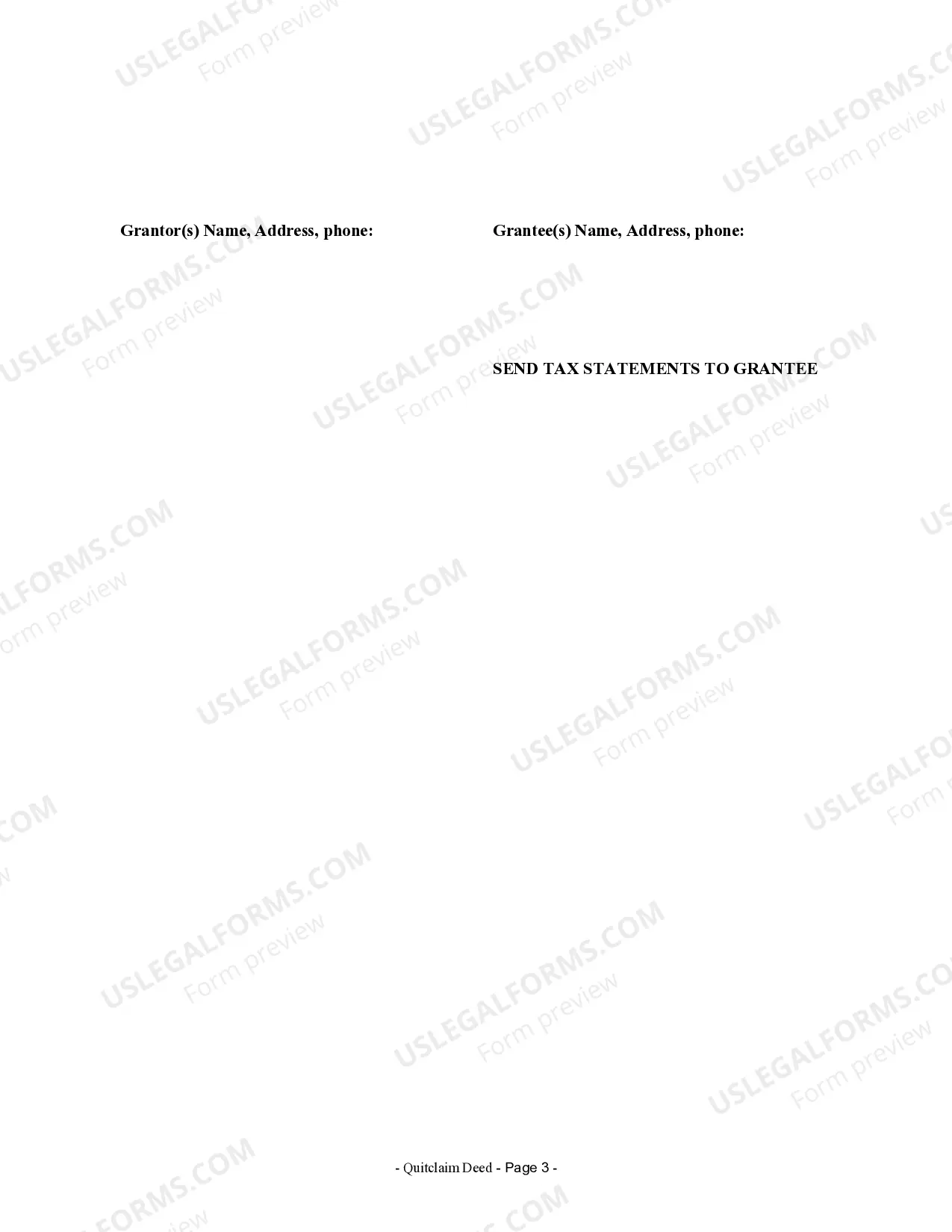
- Identify the parties: Fill in the names of the husband and wife as grantors and the individual as the grantee.
- Specify the property: Provide a complete description of the property, including the tax parcel/account number.
- Input prior instrument reference: Include details of the document where the property was originally recorded.
- Indicate tax responsibilities: Decide who will handle taxes for the year of transfer and include it in the form.
- Obtain signatures: Ensure both grantors sign the deed, followed by a notary acknowledgment to validate the transfer.
Notarization guidance
This form needs to be notarized to ensure legal validity. US Legal Forms provides secure online notarization powered by Notarize, allowing you to complete the process through a verified video call, available anytime.
Get your form ready online
Our built-in tools help you complete, sign, share, and store your documents in one place.
Make edits, fill in missing information, and update formatting in US Legal Forms—just like you would in MS Word.
Download a copy, print it, send it by email, or mail it via USPS—whatever works best for your next step.
Sign and collect signatures with our SignNow integration. Send to multiple recipients, set reminders, and more. Go Premium to unlock E-Sign.
If this form requires notarization, complete it online through a secure video call—no need to meet a notary in person or wait for an appointment.
We protect your documents and personal data by following strict security and privacy standards.

Make edits, fill in missing information, and update formatting in US Legal Forms—just like you would in MS Word.

Download a copy, print it, send it by email, or mail it via USPS—whatever works best for your next step.

Sign and collect signatures with our SignNow integration. Send to multiple recipients, set reminders, and more. Go Premium to unlock E-Sign.

If this form requires notarization, complete it online through a secure video call—no need to meet a notary in person or wait for an appointment.

We protect your documents and personal data by following strict security and privacy standards.
Typical mistakes to avoid
- Failing to include complete property descriptions.
- Not obtaining a notarization if required by local laws.
- Forgetting to specify tax responsibilities between parties.
- Not including a reservation clause for oil, gas, and minerals if applicable.
- Leaving out the prior instrument reference details.
Why use this form online
- Convenient access to professionally drafted templates.
- Editability allows for easy customization to meet your specific situation.
- Reliability backed by licensed attorneys ensuring compliance with applicable laws.
What to keep in mind
- A quitclaim deed transfers property without guaranteeing clear title.
- It is useful for marital property transfers and family gifts.
- Correctly completing and notarizing the form is essential for legality.
- State-specific nuances are important to ensure compliance.
Looking for another form?
Form popularity
FAQ
A person who signs a quitclaim deed to transfer property they do not own results in no title at all being transferred since there is no actual ownership interest. The quitclaim deed only transfers the type of title you own.
A quitclaim deed is dangerous if you don't know anything about the person giving you the property. You should be sure that a person actually has rights to a property before signing it over with a quitclaim deed.
If the quitclaim deed requires the signature of all co-owners, the deed is invalid unless all co-owners have signed it and the deed is then delivered to the grantee.If one individual owns real estate and desires to add a co-owner such as a spouse, a quitclaim deed might be used.
Once you sign a quitclaim deed and it has been filed and recorded with the County Clerks Office, the title has been officially transferred and cannot be easily reversed. In order to reverse this type of transfer, it would require your spouse to cooperate and assist in adding your name back to the title.
Unlike a general warranty deed, there's no guarantee made as to the ownership. There's no title search completed and no title insurance issued. Lenders wouldn't accept a quitclaim deed being used to purchase a property.
The Washington quit claim deed form gives the new owner whatever interest the current owner has in the property when the deed is signed and delivered. It makes no promises about whether the current owner has clear title to the property.
Transfer property quickly and easily using this simple legal form. You can use a quitclaim deed to:transfer property you own by yourself into co-ownership with someone else. change the way owners hold title to the property.
To use a Quitclaim Deed to add someone to a property deed or title, you would need to create a Quitclaim Deed and list all of the current owners in the grantor section. In the grantee section, you would list all of the current owners as well as the person you would like to add.
Quitclaim deeds are most often used to transfer property between family members.Examples include when an owner gets married and wants to add a spouse's name to the title or deed, or when the owners divorce and one spouse's name is removed from the title or deed.