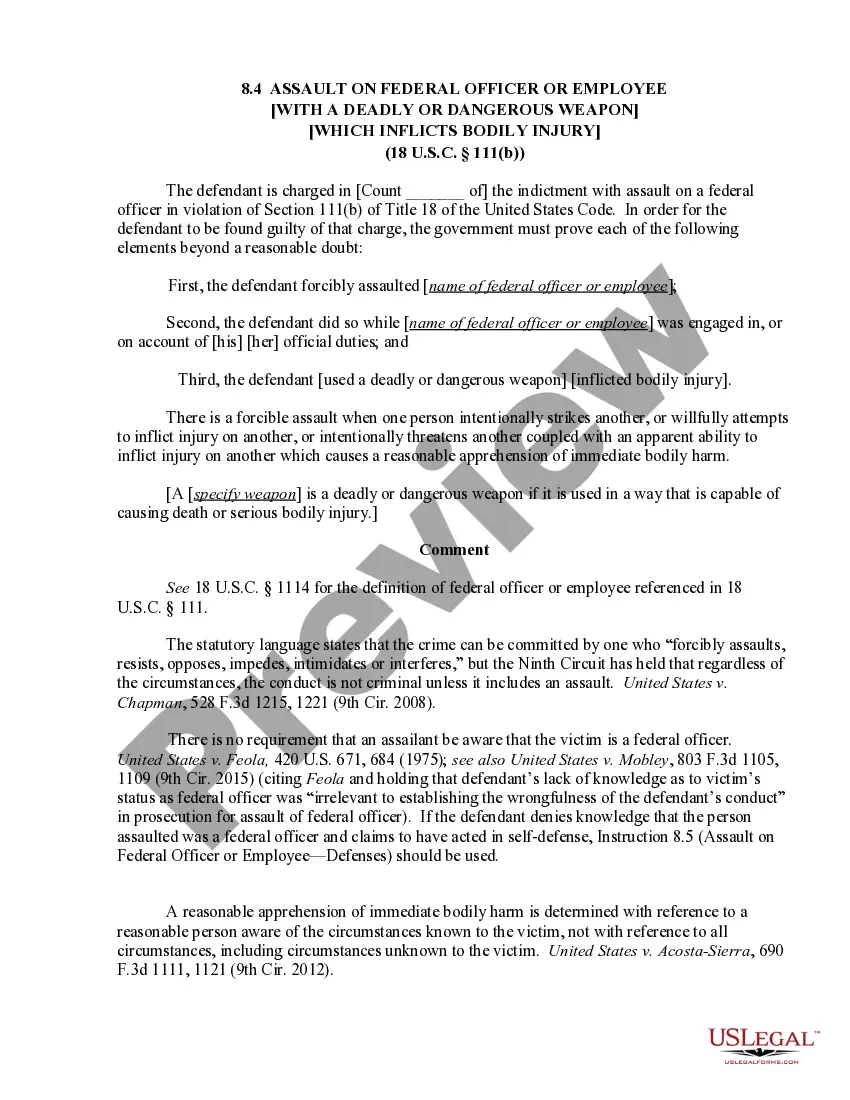
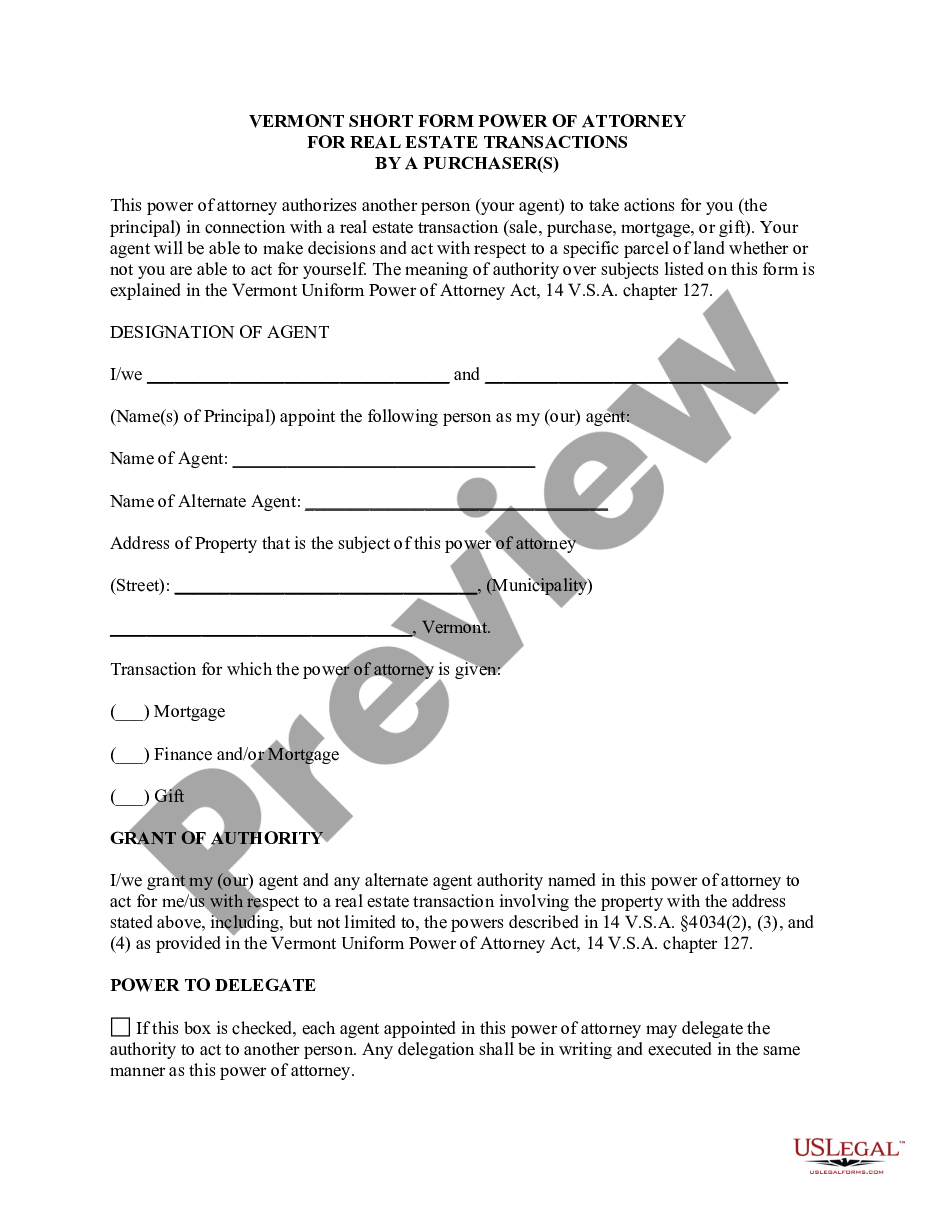
Vermont Special or Limited Power of Attorney for Real Estate Purchase Transaction by Purchaser
About this form
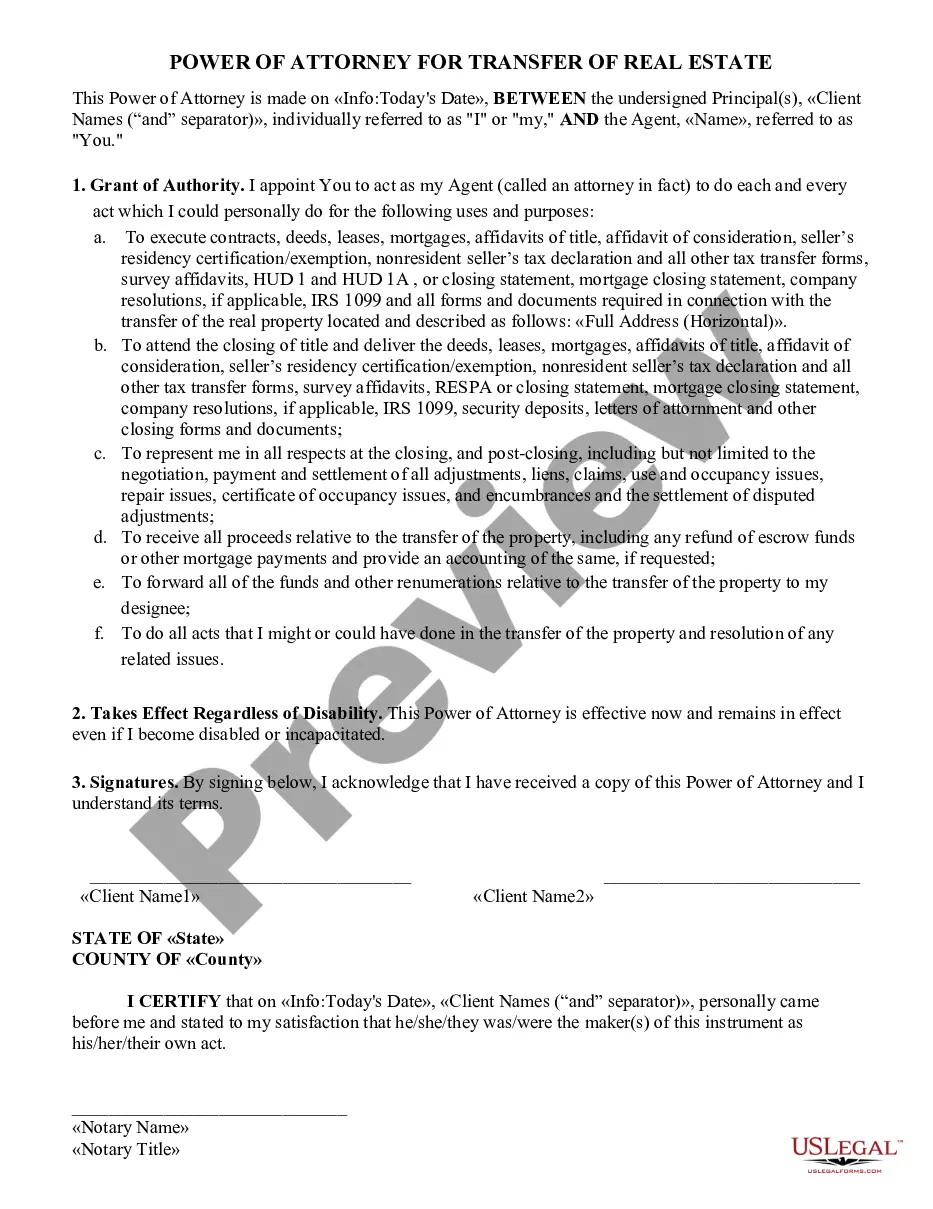
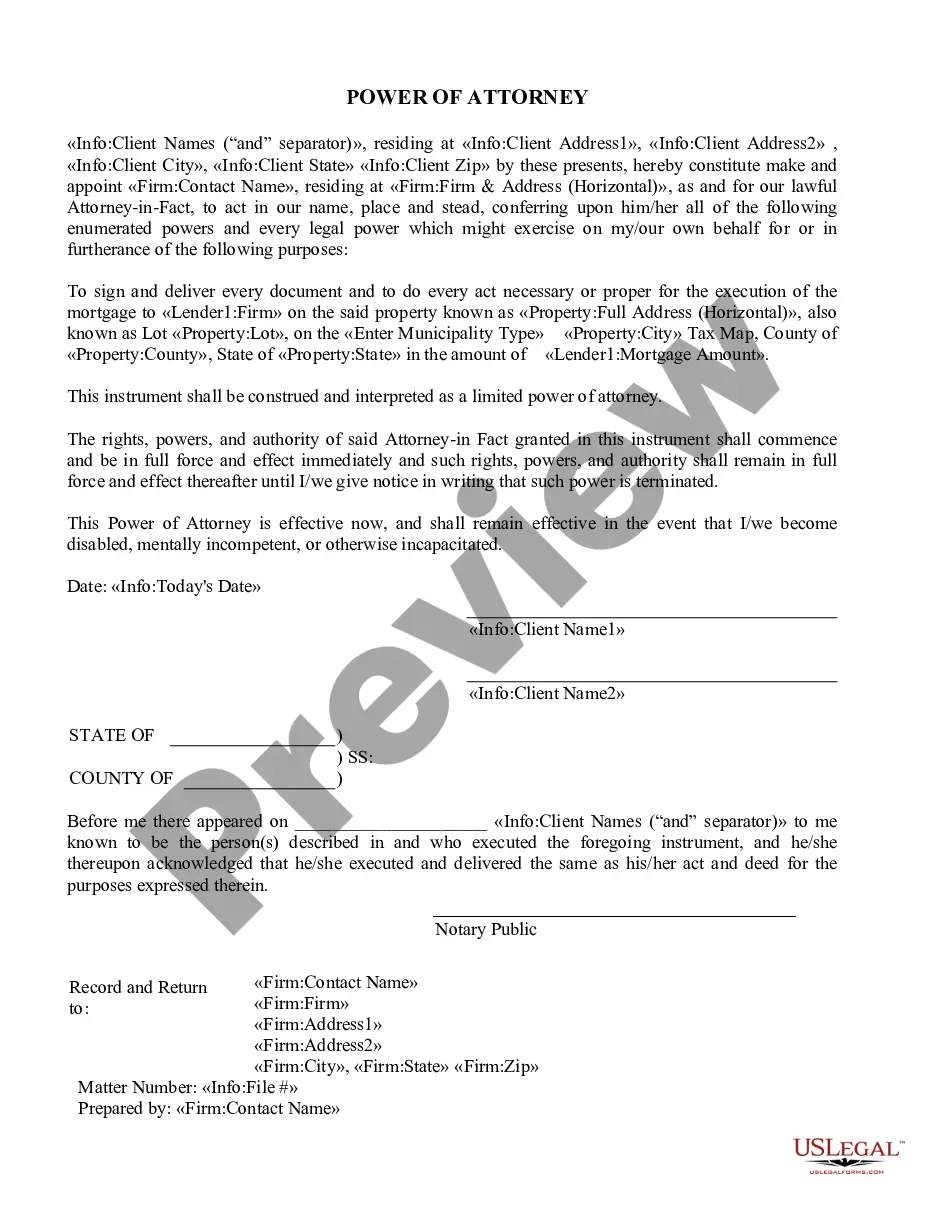
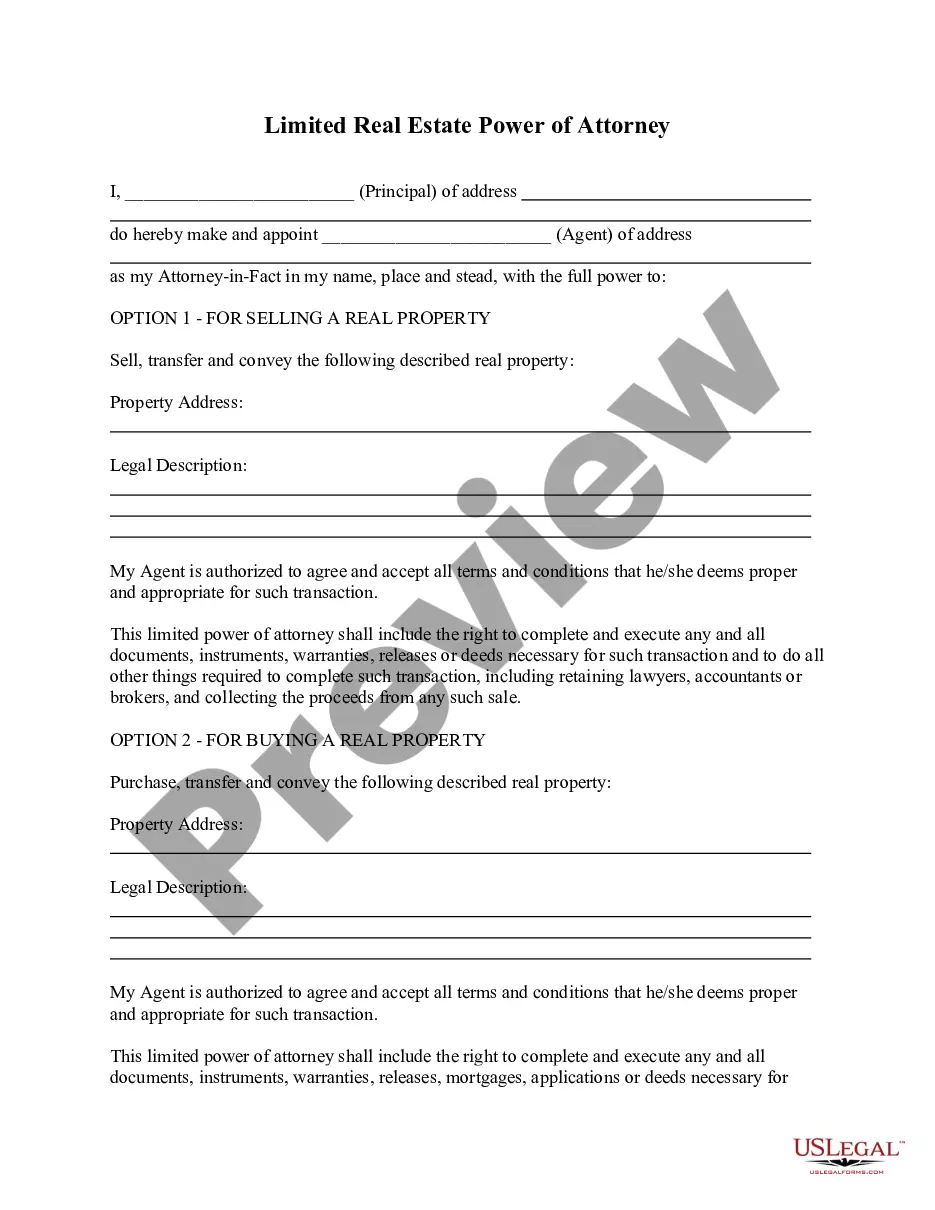
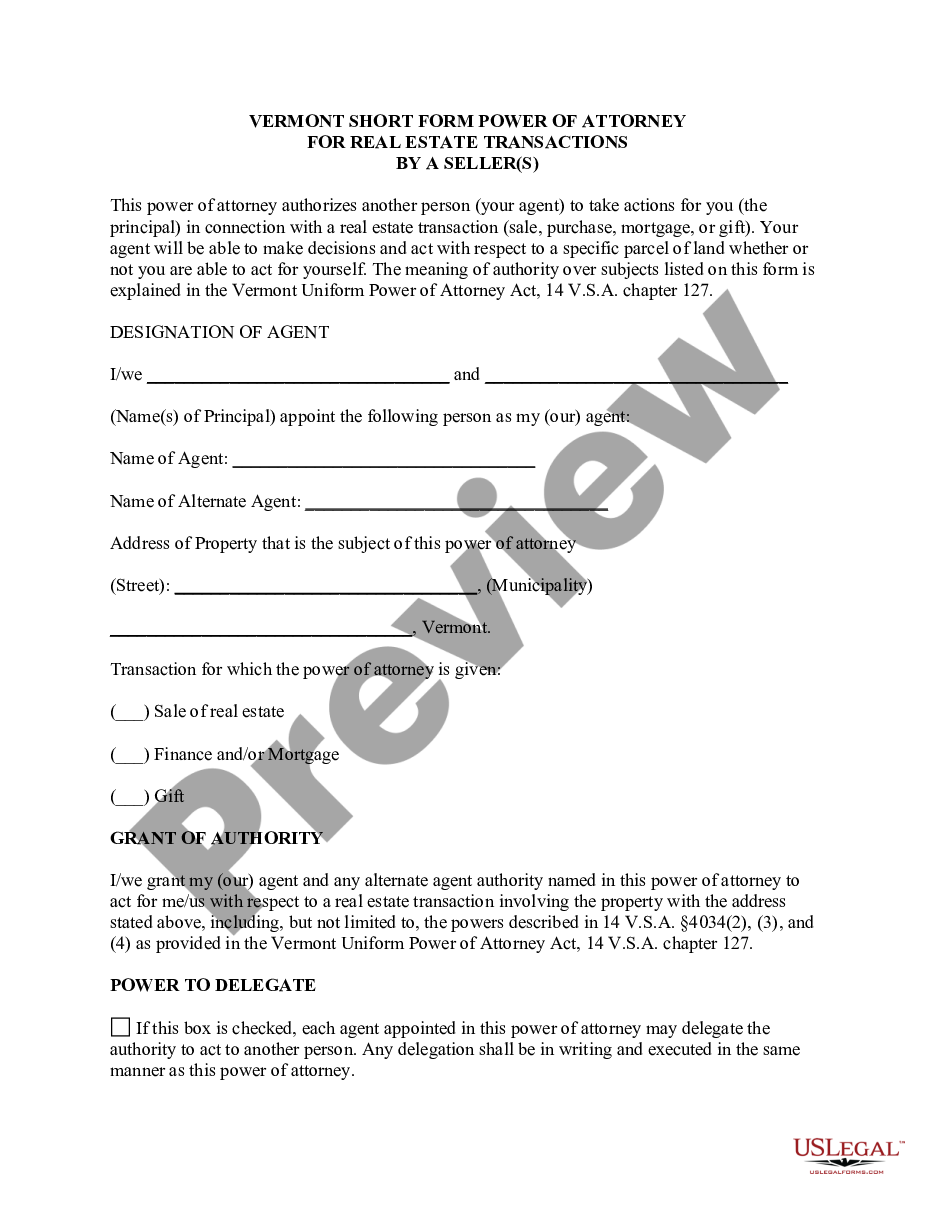
This Special Power of Attorney for Real Estate Purchase Transaction form allows a Purchaser to appoint an attorney-in-fact to manage all aspects of a real estate purchase. This legal document is specifically designed for property transactions, granting the agent the authority to sign all necessary documents, including loan agreements and closing documents. Unlike a general power of attorney, this form is tailored to real estate purchases, making it a vital tool for buyers who cannot be present for the transaction.
What’s included in this form
- Principal's information, including name and address.
- Designation of the attorney-in-fact to act on behalf of the principal.
- Description and address of the real estate being purchased.
- Authority granted to the agent, covering all necessary actions for closing the transaction.
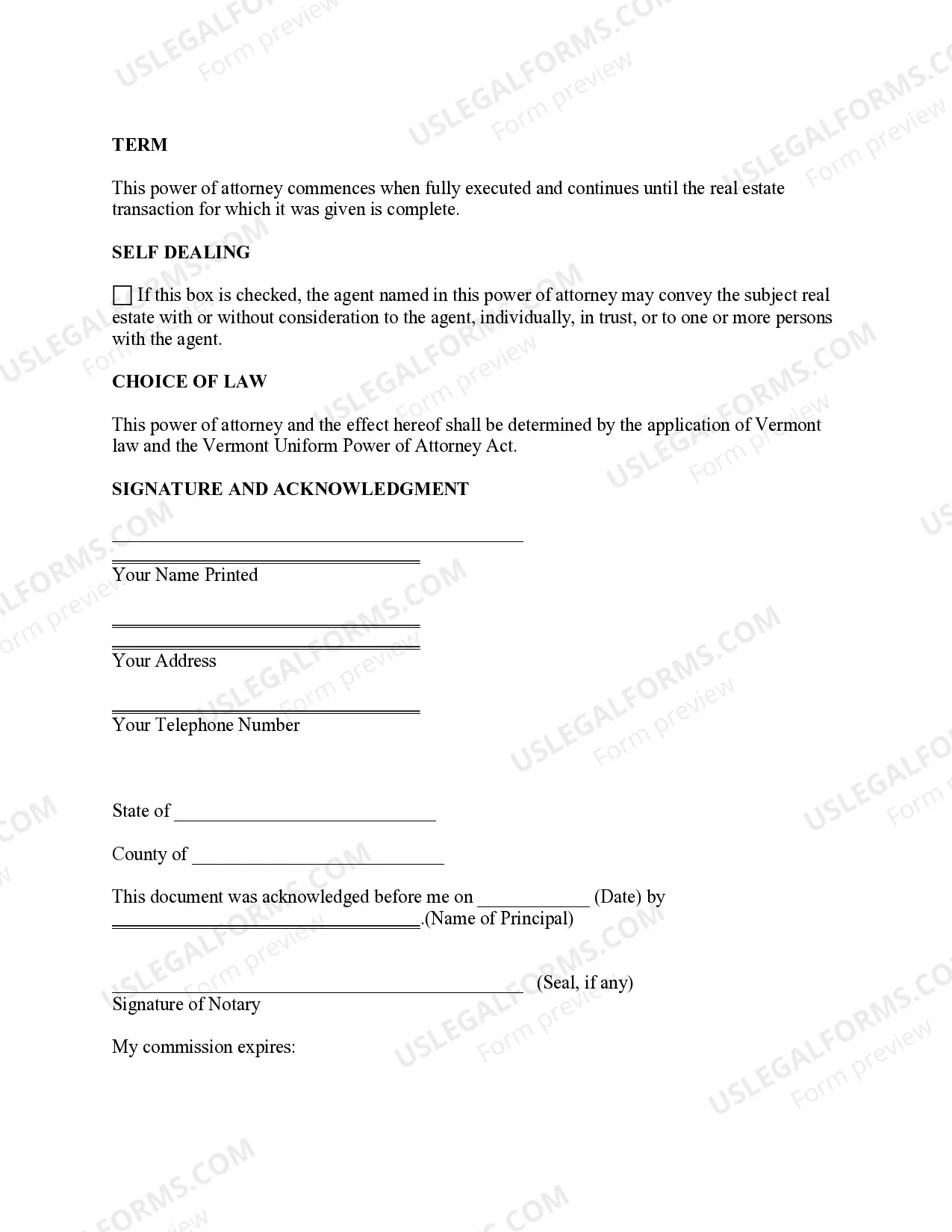
- Signature lines for the principal, witnesses, and notary acknowledgment.
When to use this form
This form should be used when a Purchaser needs to delegate the authority to another individual, known as an attorney-in-fact, to finalize a real estate purchase on their behalf. It is particularly useful when the Purchaser cannot be physically present at the transaction's closing, such as due to travel, health issues, or scheduling conflicts.
Who can use this document
This form is intended for:
- Individuals looking to purchase real estate but unable to attend the closing personally.
- Buyers who wish to ensure all documentation is handled legally and efficiently by a trusted agent.
- Those engaging in transactions from a distance or requiring assistance in managing the purchase process.
How to prepare this document
- Identify and enter the name, address, and other personal details of the principal (Purchaser).
- Designate the attorney-in-fact by including their full name and relevant address information.
- Provide the specific description and address of the property being purchased.
- Sign and date the document in the presence of a witness to affirm the transaction's legitimacy.
- Have the notary public acknowledge the signatures to ensure the document's legality.
Is notarization required?
Yes, this form must be notarized to be legally valid. It is essential to ensure that the signatures, including that of the principal and witnesses, are acknowledged by a notary public. US Legal Forms offers integrated online notarization services, making this process easy and secure through a video call, ensuring legal equivalence without the need for travel.
Get your form ready online
Our built-in tools help you complete, sign, share, and store your documents in one place.
Make edits, fill in missing information, and update formatting in US Legal Forms—just like you would in MS Word.
Download a copy, print it, send it by email, or mail it via USPS—whatever works best for your next step.
Sign and collect signatures with our SignNow integration. Send to multiple recipients, set reminders, and more. Go Premium to unlock E-Sign.
If this form requires notarization, complete it online through a secure video call—no need to meet a notary in person or wait for an appointment.
We protect your documents and personal data by following strict security and privacy standards.

Make edits, fill in missing information, and update formatting in US Legal Forms—just like you would in MS Word.

Download a copy, print it, send it by email, or mail it via USPS—whatever works best for your next step.

Sign and collect signatures with our SignNow integration. Send to multiple recipients, set reminders, and more. Go Premium to unlock E-Sign.

If this form requires notarization, complete it online through a secure video call—no need to meet a notary in person or wait for an appointment.

We protect your documents and personal data by following strict security and privacy standards.
Common mistakes
- Failing to include specific details about the property being purchased.
- Not obtaining the necessary signatures from witnesses or a notary.
- Delegating authority to someone who may not be qualified to handle the transaction.
- Not providing clear instructions or limitations on the powers granted to the attorney-in-fact.
Benefits of using this form online
- Convenience: Easily accessible and downloadable form for quick use.
- Editability: Fill out the form at your own pace and save for later.
- Reliability: Forms are prepared by licensed attorneys to ensure legal compliance.
- This power of attorney is legally binding as long as it is properly signed, witnessed, and notarized.
- It is important to ensure all powers granted are clearly defined to avoid legal confusion.
- Limitations may arise depending on specific state laws and the terms outlined in the document.
What to keep in mind
- This form allows a purchaser to appoint someone to manage a real estate transaction on their behalf.
- It is specific to real estate purchases, unlike a general power of attorney.
- Proper signing and notarization are crucial for the formâs validity.
- Understanding the powers granted to the attorney-in-fact can prevent misunderstandings.
Looking for another form?
Form popularity
FAQ
Name, signature, and address of the principal. Name, signature, and address of the agent. Properties and activities under the authority of the agent. Date of effect and termination of authority. Compensation to services of the agent.
A limited PoA, amongst other things, grants the PoA holder access and permission to execute trades/orders on your trading account, on your behalf. However, it does not allow the PoA holder to perform withdrawals requests or transfer of funds. All withdrawals must be requested by the authorized signatory of the account.
The non-durable power of attorney is used only for a set period of time and usually for a particular transaction in which you grant your agent authority to act on your behalf. Once the transaction is completed, or should the principal become incapacitated during this time, the non-durable power of attorney ceases.
What's the difference between durable and general power of attorney? A general power of attorney ends the moment you become incapacitated.A durable power of attorney stays effective until the principle dies or until they act to revoke the power they've granted to their agent.
The durable power of attorney is almost always required. This instrument gives another person specific powers to sign for an individual in a real estate transaction where the exact name and description of the property is stated in the document.
A limited power of attorney grants the representative that you choose (the agent or attorney-in-fact) the power to act on your behalf under limited circumstances.Under a general power of attorney, the agent or attorney-in-fact can do anything that you can do.
Step 1: Bring Your Power of Attorney Agreement and ID. Step 2: Determine the Preferred Signature Format. Step 3: Sign as the Principal. Step 4: Sign Your Own Name. Step 5: Express Your Authority as Attorney-in-Fact. Step 6: File the Documentation Somewhere Safe.
Hence, rights in immovable property are vested only when a sale deed or deed of conveyance is registered between the parties.Sale of property has various implications such as capital gains tax on the seller and payment of stamp duty on the document of transfer.
General Power of Attorney. Durable Power of Attorney. Special or Limited Power of Attorney. Springing Durable Power of Attorney.