Vermont Letter from Landlord to Tenant about time of intent to enter premises
About this form
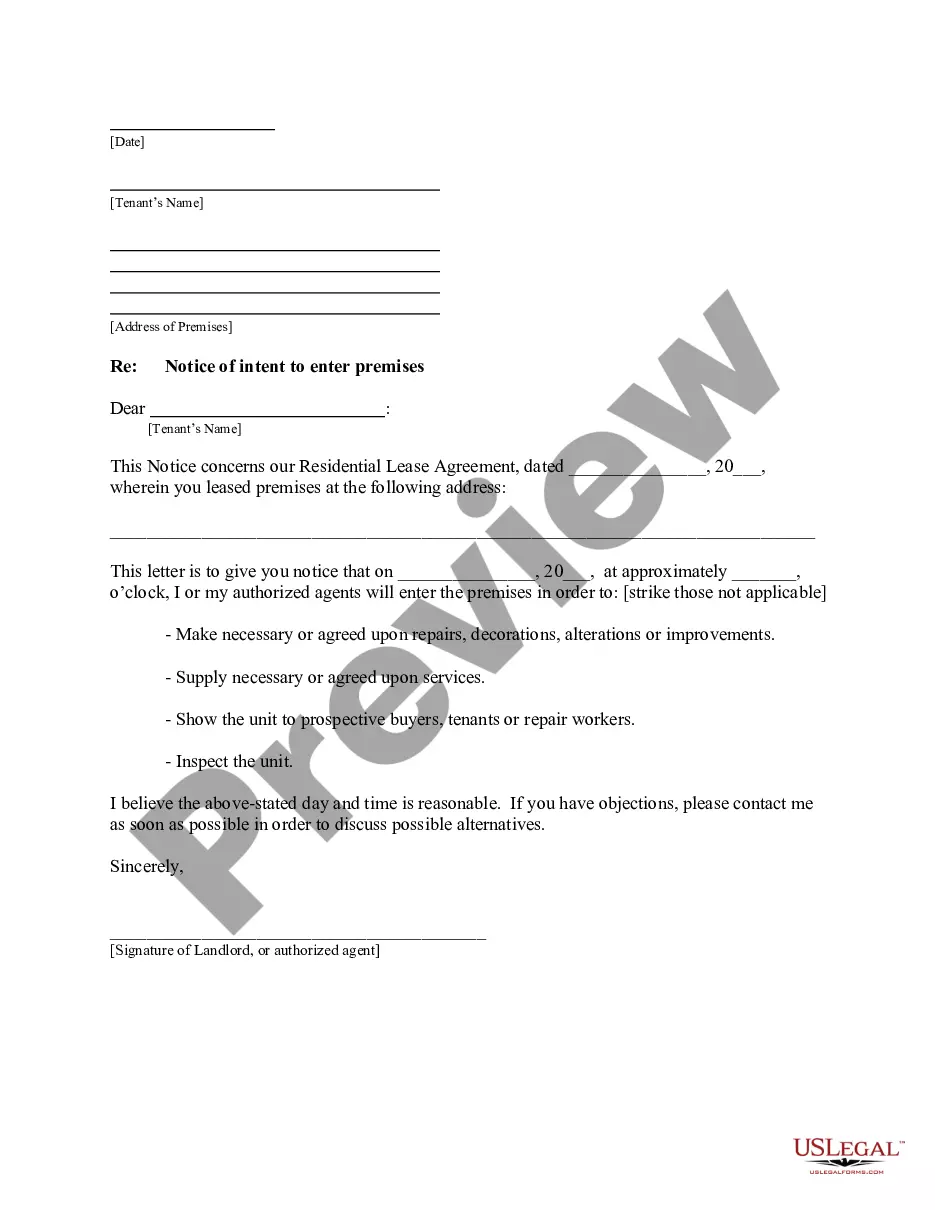
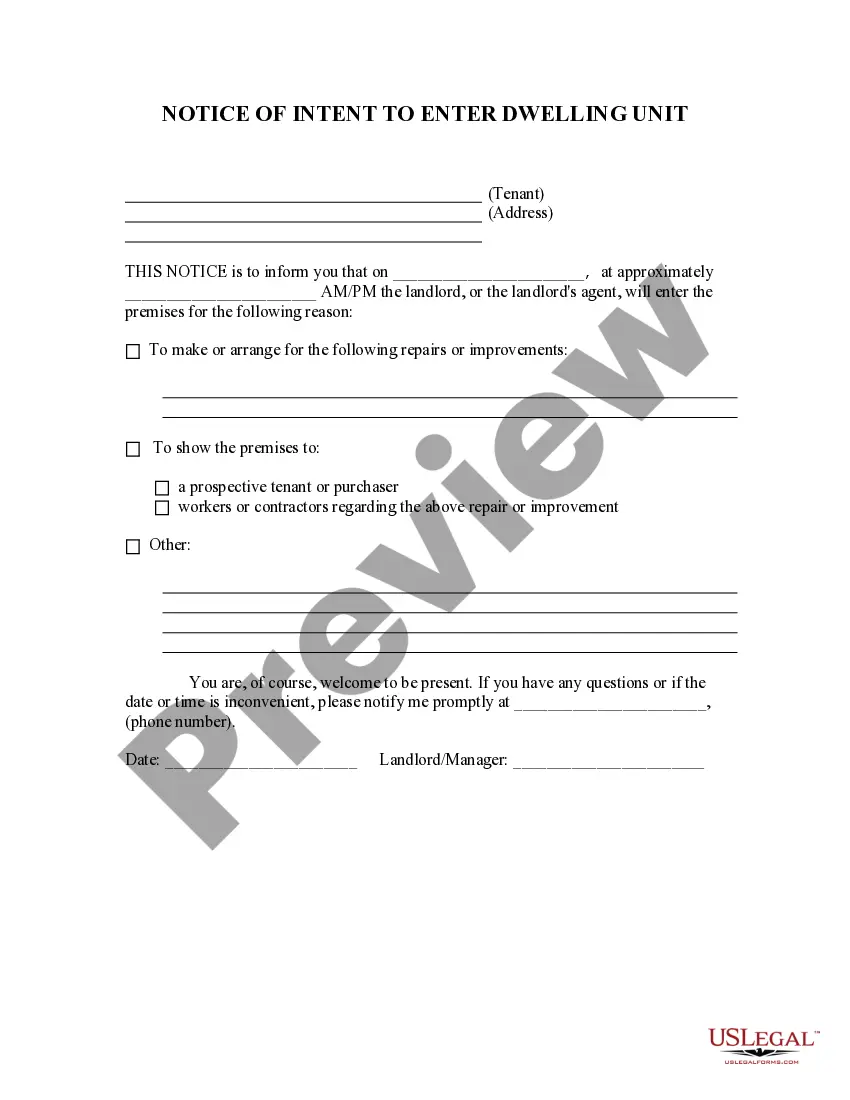
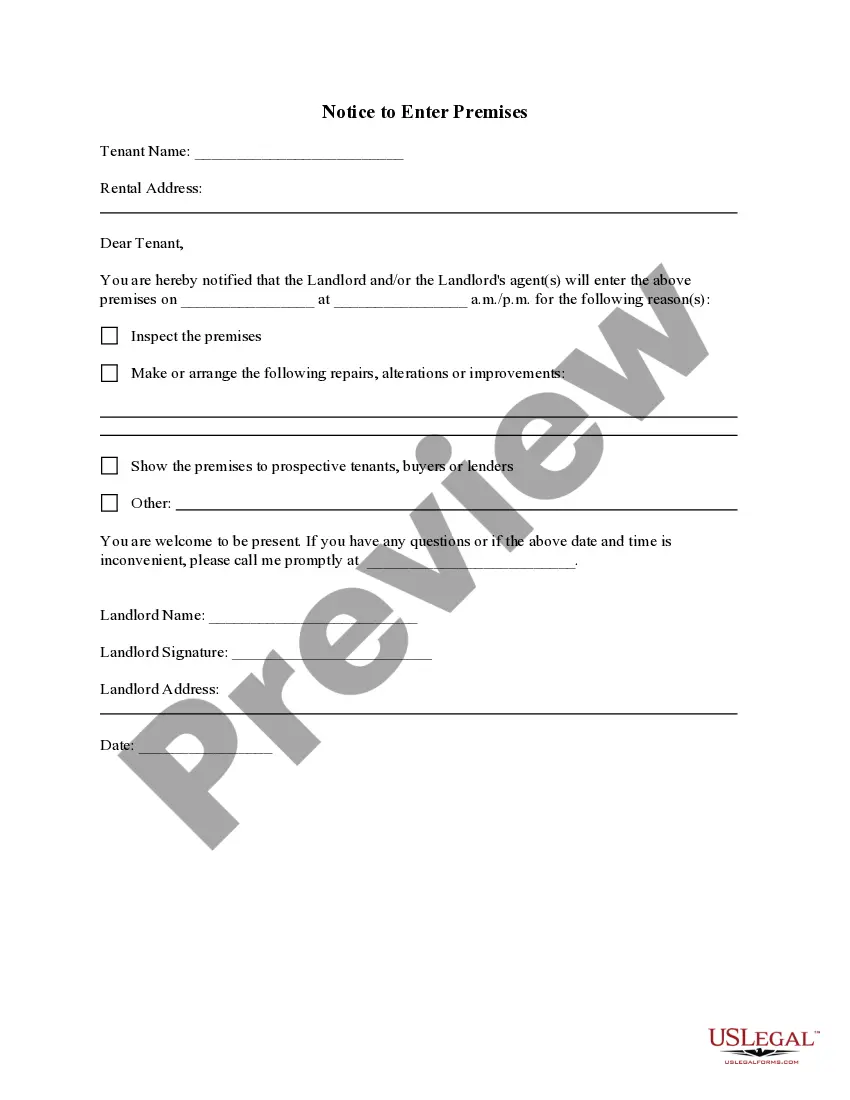
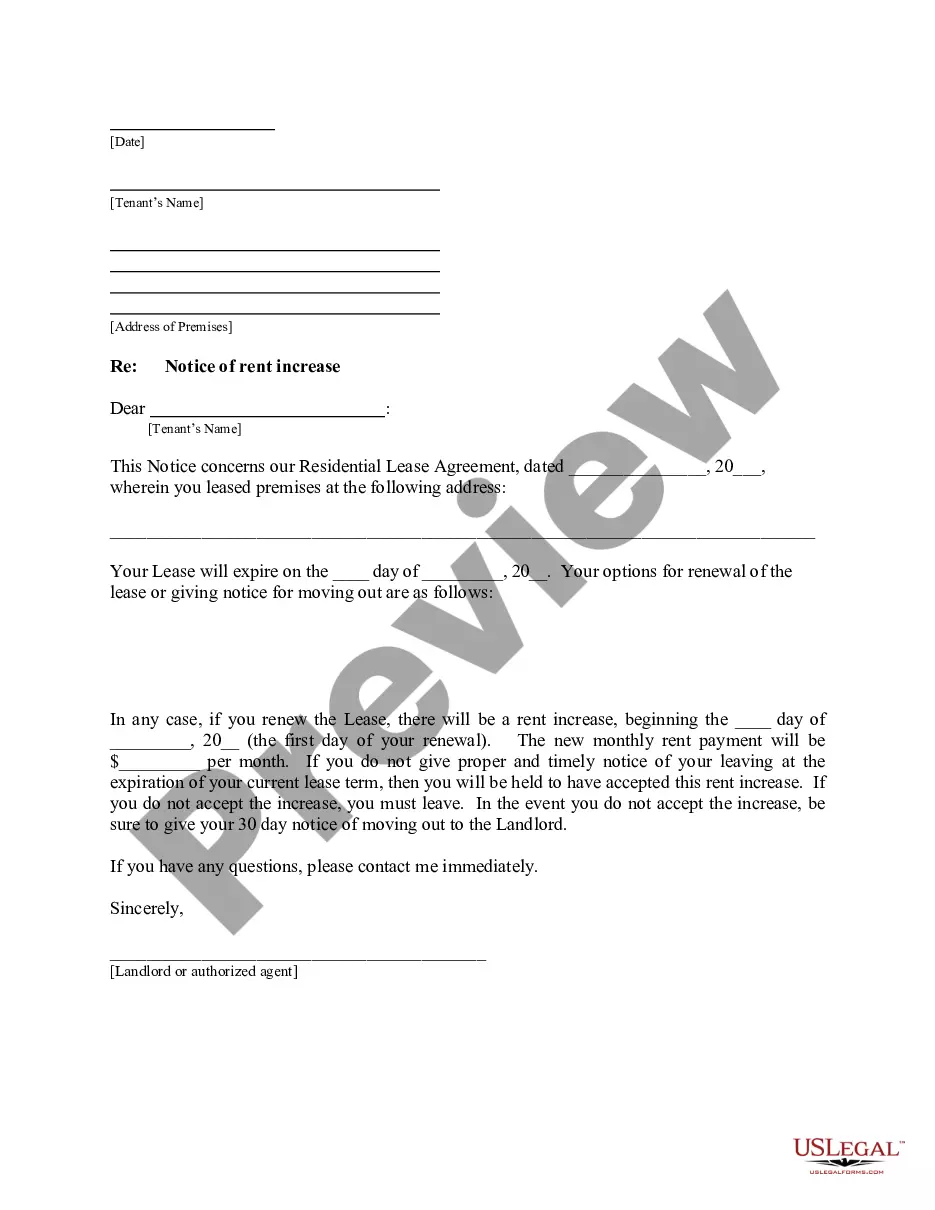
This form is a notice from a landlord to a tenant regarding the landlord's intent to enter the rented premises. It serves to inform the tenant of the purpose and scheduled time for such entry, ensuring compliance with rental agreement terms and state law. This letter differs from other types of notices by specifically focusing on entry notification, which is crucial in maintaining clear communication and rights for both parties in a landlord-tenant relationship.
Key components of this form
- Identification of the lease agreement date and property address.
- Scheduled date and time for entry by the landlord or authorized agent.
- Reason for entering the premises (repairs, inspections, showings, etc.).
- Contact information for the landlord to address any tenant objections.
- Signature line for the landlord or authorized agent.
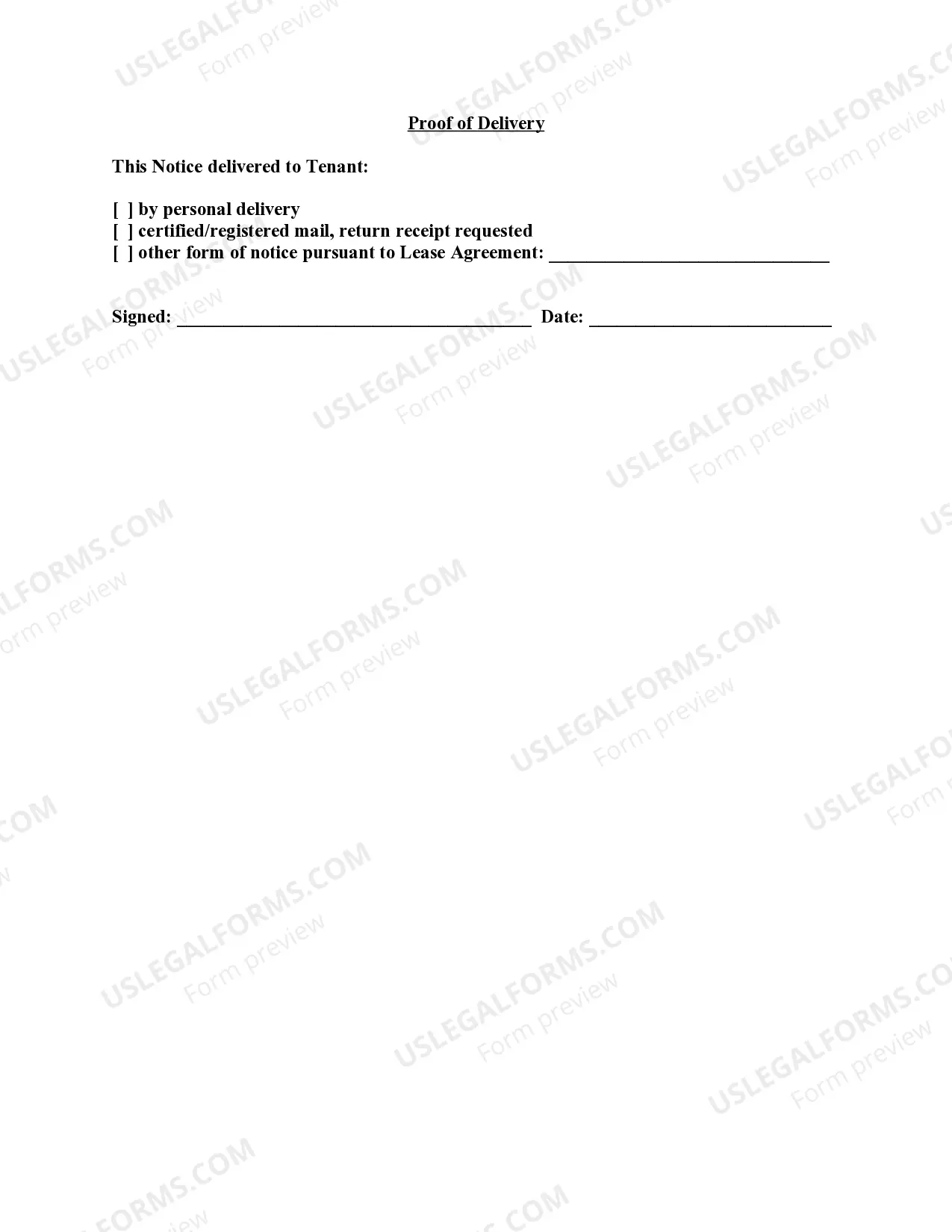
- Proof of delivery section to confirm receipt by the tenant.
When to use this document
Who can use this document
- Landlords managing residential rental properties.
- Property managers representing landlords.
- Agents authorized by the landlord to conduct property inspections or showings.
Completing this form step by step
- Identify the lease agreement by entering the date and property address.
- Specify the date and time you intend to enter the premises.
- Clearly state the reason for entering the property.
- Include your contact information for the tenant to voice any concerns.
- Sign the letter to authenticate it and provide proof of delivery method.
Notarization requirements for this form
Notarization is not commonly needed for this form. However, certain documents or local rules may make it necessary. Our notarization service, powered by Notarize, allows you to finalize it securely online anytime, day or night.
Get your form ready online
Our built-in tools help you complete, sign, share, and store your documents in one place.
Make edits, fill in missing information, and update formatting in US Legal Forms—just like you would in MS Word.
Download a copy, print it, send it by email, or mail it via USPS—whatever works best for your next step.
Sign and collect signatures with our SignNow integration. Send to multiple recipients, set reminders, and more. Go Premium to unlock E-Sign.
If this form requires notarization, complete it online through a secure video call—no need to meet a notary in person or wait for an appointment.
We protect your documents and personal data by following strict security and privacy standards.

Make edits, fill in missing information, and update formatting in US Legal Forms—just like you would in MS Word.

Download a copy, print it, send it by email, or mail it via USPS—whatever works best for your next step.

Sign and collect signatures with our SignNow integration. Send to multiple recipients, set reminders, and more. Go Premium to unlock E-Sign.

If this form requires notarization, complete it online through a secure video call—no need to meet a notary in person or wait for an appointment.

We protect your documents and personal data by following strict security and privacy standards.
Mistakes to watch out for
- Failing to provide adequate notice as required by law.
- Not clearly stating the reason for the entry.
- Using unclear or vague language that may confuse the tenant.
- Neglecting to include the method of delivery for proof of receipt.
Benefits of using this form online
- Easy access to professionally drafted templates tailored for your needs.
- Editable format allows landlords to customize details as needed.
- Convenient downloading enables quick delivery to tenants.
- Legal forms are prepared by licensed attorneys, ensuring compliance.
Legal use & context
- This form provides necessary documentation that can protect the landlord's rights during property access.
- Ensures transparency in the landlord-tenant relationship, reducing potential disputes.
- Failure to provide proper notice may lead to legal complications or tenant claims of unauthorized entry.
What to keep in mind
- Use this form to formally notify tenants of your intent to enter the premises.
- Ensure all fields are completed accurately to avoid misunderstandings.
- Consult local laws for specific requirements related to notice periods and delivery methods.
Looking for another form?
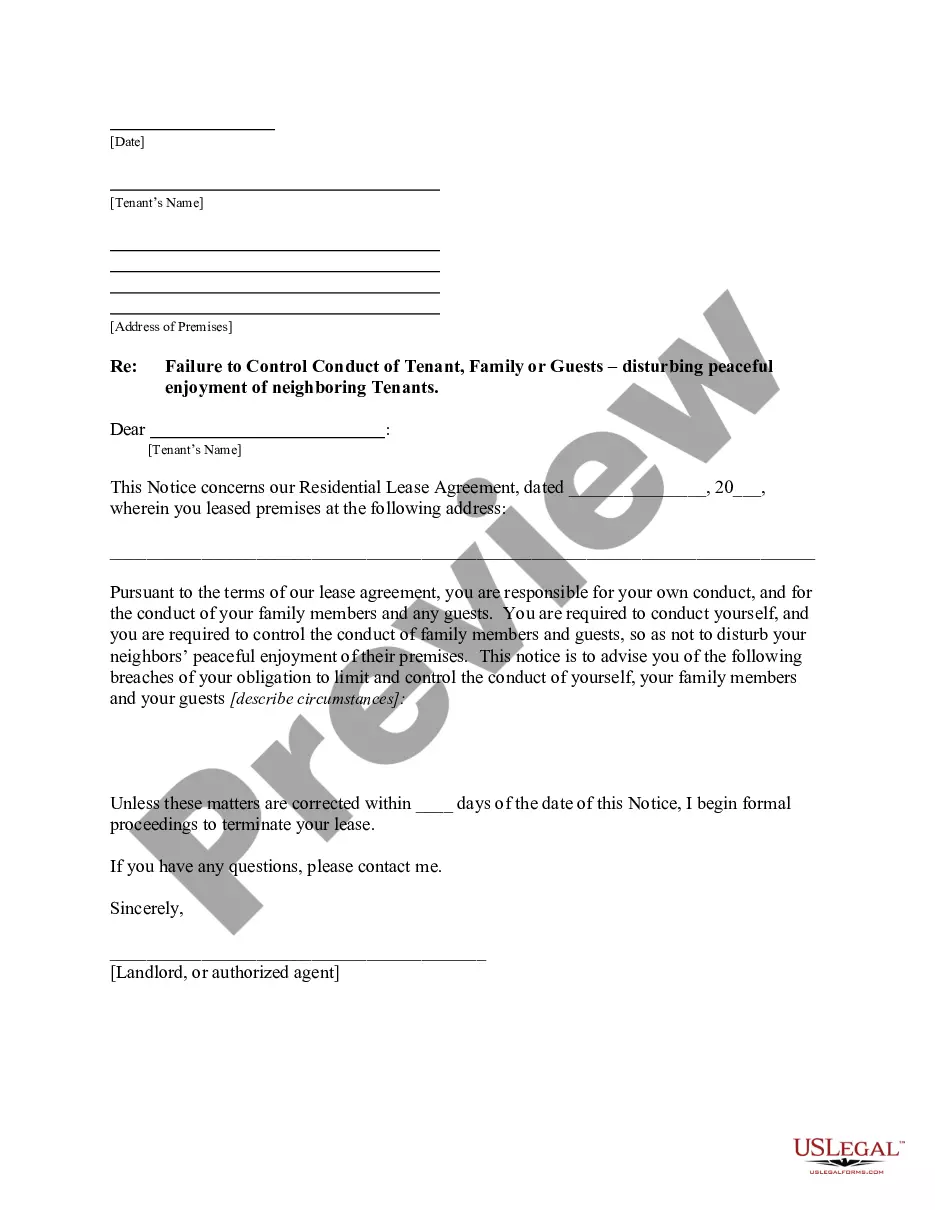
Form popularity
FAQ
What is a Notice to Enter? A Notice to Enter is a formal letter a property manager or landlord gives to the tenant of a rental property to inform the tenant of the landlord or property manager's intent to enter the residence on a given date at a specific time.
If your landlord enters your home without permission You have the right to live in your home without being disturbed unreasonably.If your landlord keeps turning up unannounced, or enters your home without notice or permission it could be harassment.
When you rent a property from a landlord it becomes your home. They should only enter the property without you being present, if you have given permission for them to do so, or in a genuine emergency.
A landlord can only enter a tenant's unit for specific reasons, unless: the tenant has given the landlord permission to enter; there is an emergency that requires the landlord to enter the unit; or. the tenant has abandoned the property.
Quiet enjoyment You are paying rent to the landlord for exclusive use as the property as your home and as such you have the right to decide who enters it and when. If a landlord enters your home without permission they are, technically, trespassing, unless they have a court order to allow them otherwise.
Put cameras everywhere (Nest Cam is a good brand), make sure you put signs "Premises secured by video surveillance" and you will be good to go. While it won't prevent the landlord from entering, it will prevent the landlord from doing anything funky, and who knows, with time even stop.
Your responsibilities Your landlord has to give you at least 24 hours' notice and visit at a reasonable time of day, unless it's an emergency and they need immediate access.only sublet a property if the tenancy agreement or your landlord allows it.
If your landlord enters your home without permission You have the right to live in your home without being disturbed unreasonably.If your landlord keeps turning up unannounced, or enters your home without notice or permission it could be harassment.
A landlord can only enter a rented property with the tenants' permission and after explaining why they need to get in.Remember landlords have a legal obligation to keep a property in good repair, and its appliances and services in good working order.