Virginia Letter from Landlord to Tenant as Notice to remove unauthorized pets from premises
Overview of this form
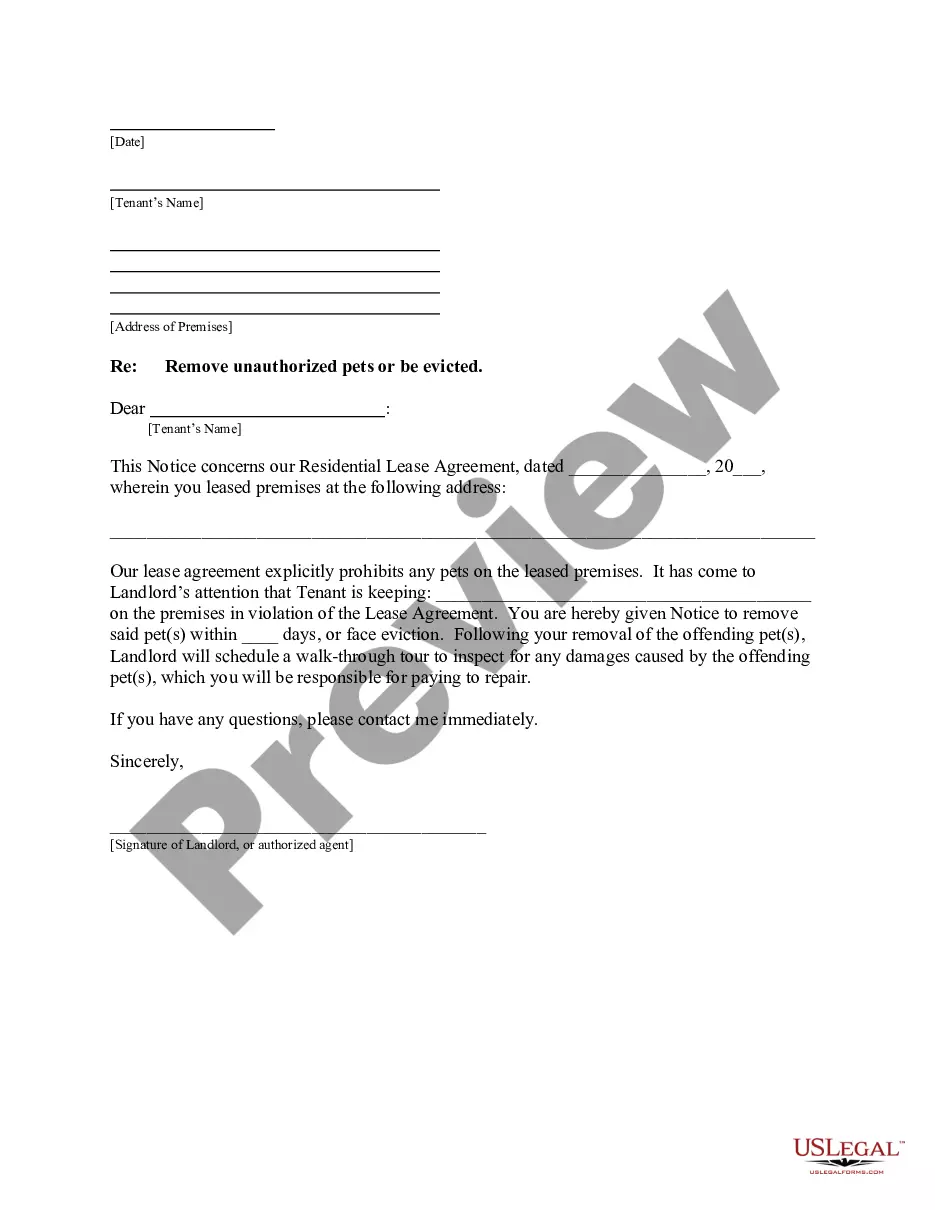
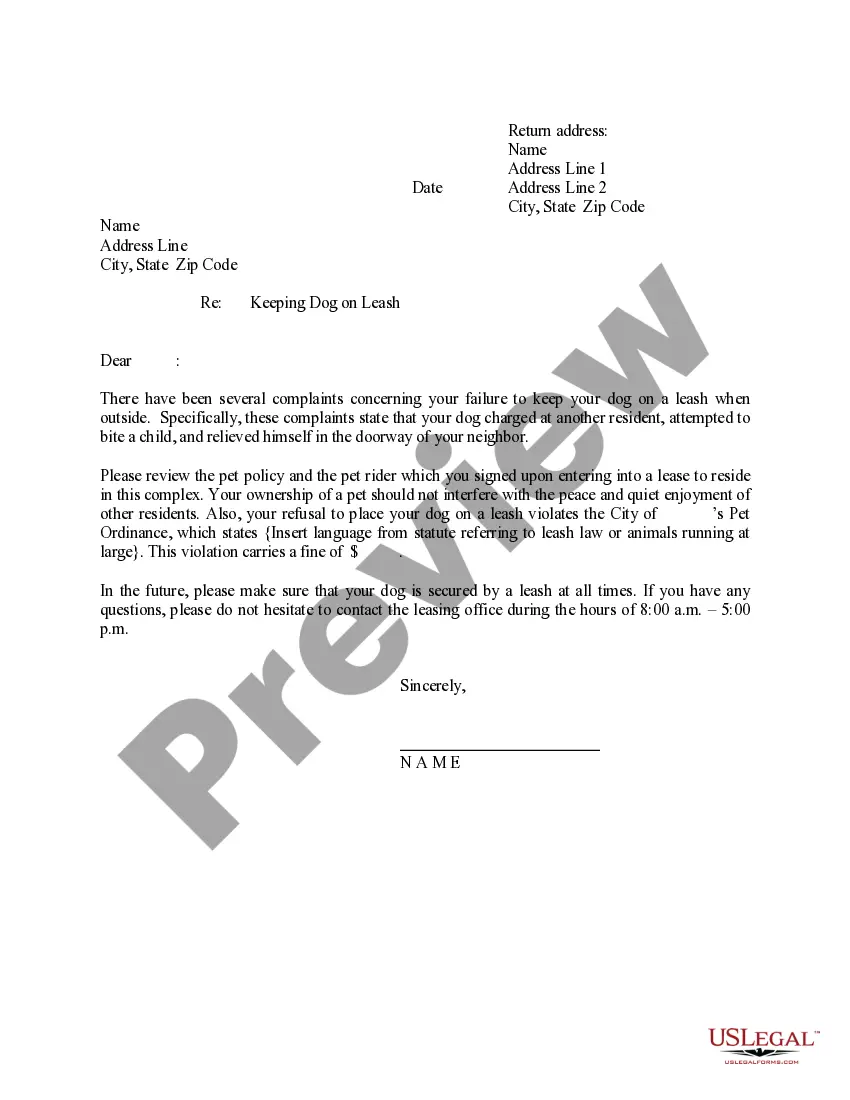
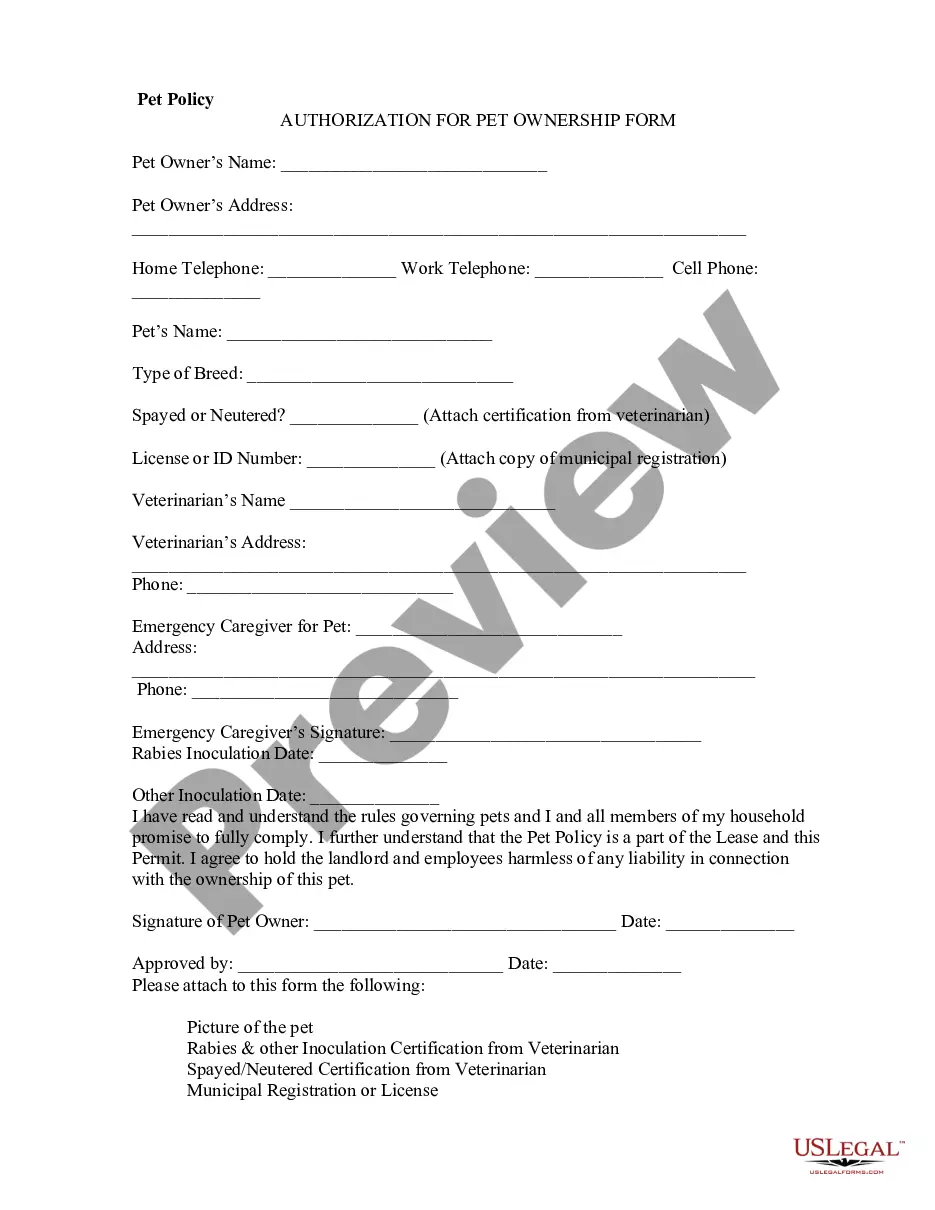
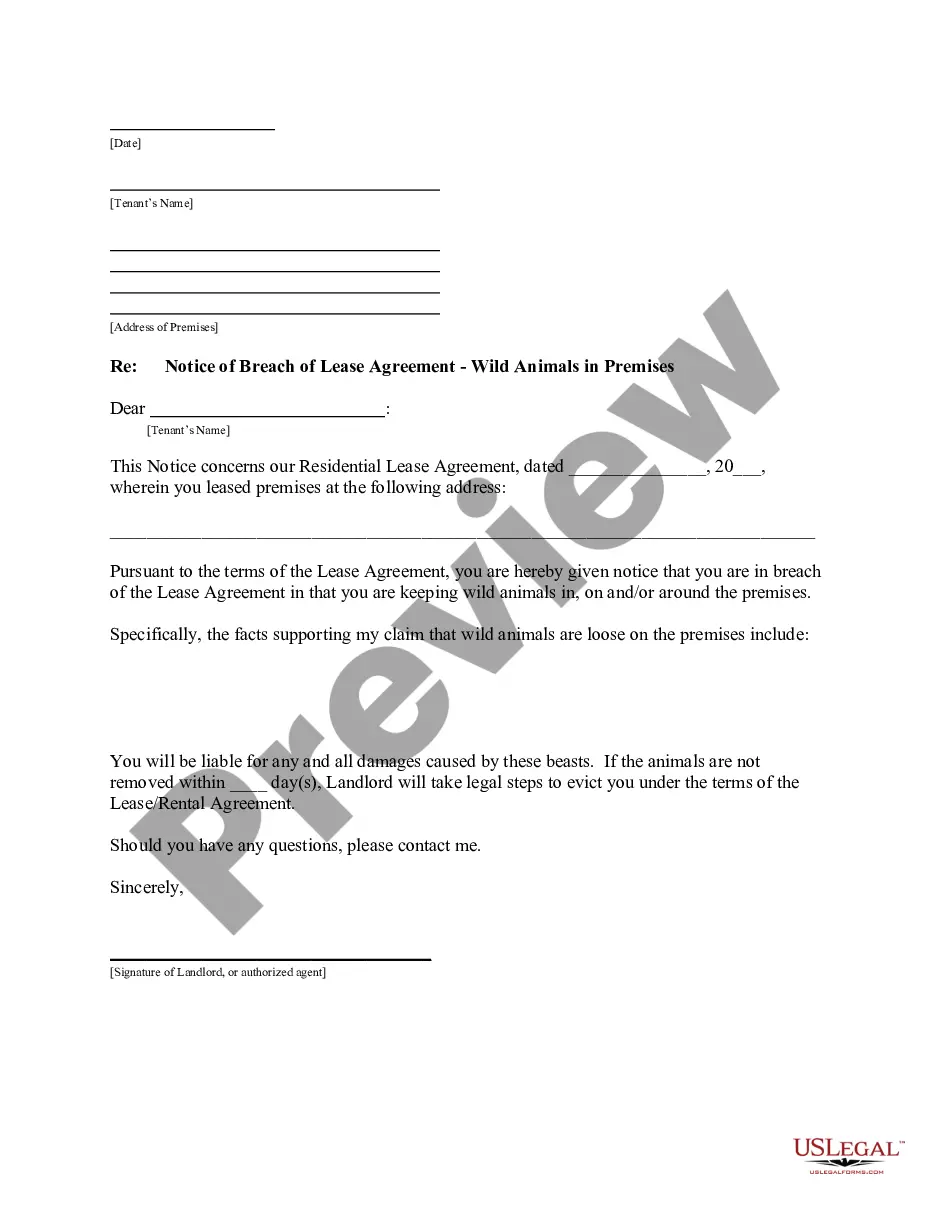
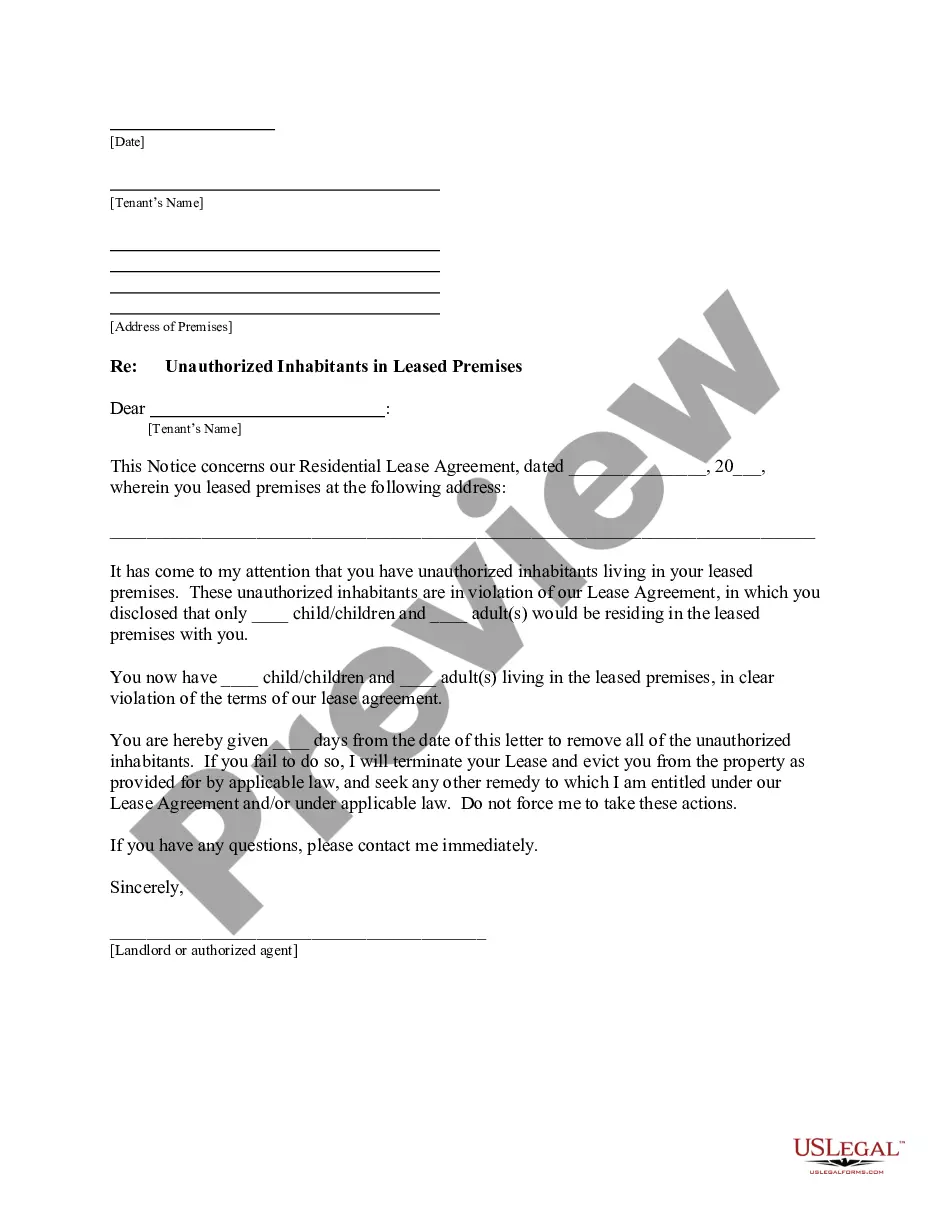
This form serves as a formal notice from a landlord to a tenant, requiring the removal of unauthorized pets from the premises. It is essential in residential lease agreements where pets are prohibited. Unlike other tenant notices, this form specifically addresses the violation of pet policies, allowing the landlord to take further action if the tenant does not comply.
Key components of this form
- Date of the lease agreement.
- Property address where the lease is in effect.
- Description of the unauthorized pets.
- Deadline for removal of the pets.
- Landlord's signature and contact information.
When to use this form
This form should be used when a landlord discovers that a tenant is keeping pets on the leased property in violation of the lease agreement. It serves to formally notify the tenant to remove the unauthorized animals within a specified timeframe to avoid potential eviction or legal action.
Who should use this form
- Landlords who have a no-pet policy in their residential lease agreements.
- Property managers enforcing lease terms regarding unauthorized pets.
- Tenants who have been informed of a pet violation and need to understand their responsibilities.
How to prepare this document
- Start by entering the date of the lease agreement.
- Specify the address of the leased premises.
- List the unauthorized pet(s) that need to be removed.
- Indicate the number of days the tenant has to comply.
- Sign the letter as the landlord or authorized agent.
Notarization requirements for this form
This form usually doesn’t need to be notarized. However, local laws or specific transactions may require it. Our online notarization service, powered by Notarize, lets you complete it remotely through a secure video session, available 24/7.
Get your form ready online
Our built-in tools help you complete, sign, share, and store your documents in one place.
Make edits, fill in missing information, and update formatting in US Legal Forms—just like you would in MS Word.
Download a copy, print it, send it by email, or mail it via USPS—whatever works best for your next step.
Sign and collect signatures with our SignNow integration. Send to multiple recipients, set reminders, and more. Go Premium to unlock E-Sign.
If this form requires notarization, complete it online through a secure video call—no need to meet a notary in person or wait for an appointment.
We protect your documents and personal data by following strict security and privacy standards.

Make edits, fill in missing information, and update formatting in US Legal Forms—just like you would in MS Word.

Download a copy, print it, send it by email, or mail it via USPS—whatever works best for your next step.

Sign and collect signatures with our SignNow integration. Send to multiple recipients, set reminders, and more. Go Premium to unlock E-Sign.

If this form requires notarization, complete it online through a secure video call—no need to meet a notary in person or wait for an appointment.

We protect your documents and personal data by following strict security and privacy standards.
Common mistakes
- Failing to accurately describe the unauthorized pets.
- Not providing a clear deadline for compliance.
- Neglecting to sign the notice before delivery.
- Not keeping a copy of the notice for reference.
Advantages of online completion
- Convenient access to legal forms that can be downloaded instantly.
- Editable templates that allow for quick customization.
- Forms drafted by licensed attorneys, ensuring compliance with legal standards.
Legal use & context
- Ensures the landlord communicates their rights under the lease agreement.
- Acts as a formal record that the tenant has been notified of the violation.
- Establishes a timeline for compliance, which is important in potential eviction cases.
Summary of main points
- This form is essential for landlords enforcing pet policies in their lease agreements.
- Using this notice protects landlords' rights and provides tenants with clear expectations.
- Properly completing the notice can help avoid potential disputes and legal action.
Looking for another form?








Form popularity
FAQ
A landlord cannot deny an ESA simply because they do not allow pets. No, your landlord cannot evict you because they do not want you to have an ESA.You are not required to pay a pet deposit or monthly fee. Unfortunately, not many landlords or building supers are well versed in ESA regulations.
Once you have notified your landlord, you should also present him/her with your ESA letter from your mental health professional. You may provide an original hard copy of your letter or send your landlord a digital copy via email.
Once you have notified your landlord, you should also present him/her with your ESA letter from your mental health professional. You may provide an original hard copy of your letter or send your landlord a digital copy via email.
Most landlords are willing to work with their tenants, even if you do break the lease, but some landlords won't. If you're caught sneaking in a pet, your landlord may have the right to evict you. If you're evicted, your landlord may sue you for the remainder of your lease payment.
Let Your Landlord Know About your ESA You can make your ESA request verbally or in writing (via email for example). The vast majority of landlords are happy to comply with their obligations under Fair Housing rules, and many landlords are sympathetic when it comes to the mental health needs of their tenants.
There is no written agreement When your roommate has month-to-month tenancy, California state law says that you can evict them by serving 30 or 60 days' notice without any reasoning.
Landlords can verify ESA letters in a way that does not violate HIPPA or the Fair Housing Act. A proper ESA letter will be on a letterhead, with contact information such as phone number and email, along with the therapist's license number.
Dear (Name of landlord or manager), This letter constitutes my written (number of days' notice that you need to give based on your lease agreement)-day notice that I will be moving out of my apartment on (date), the end of my current lease. I am leaving because (new job, rent increase, etc.)
Send a 3-day notice to fix or quit. If the tenant doesn't follow through with a fix, visit your local courthouse and begin a filing for eviction. In some states, you can file to only evict the unauthorized tenant. In others, you'll have the option to evict your tenant as well as the unauthorized occupant.