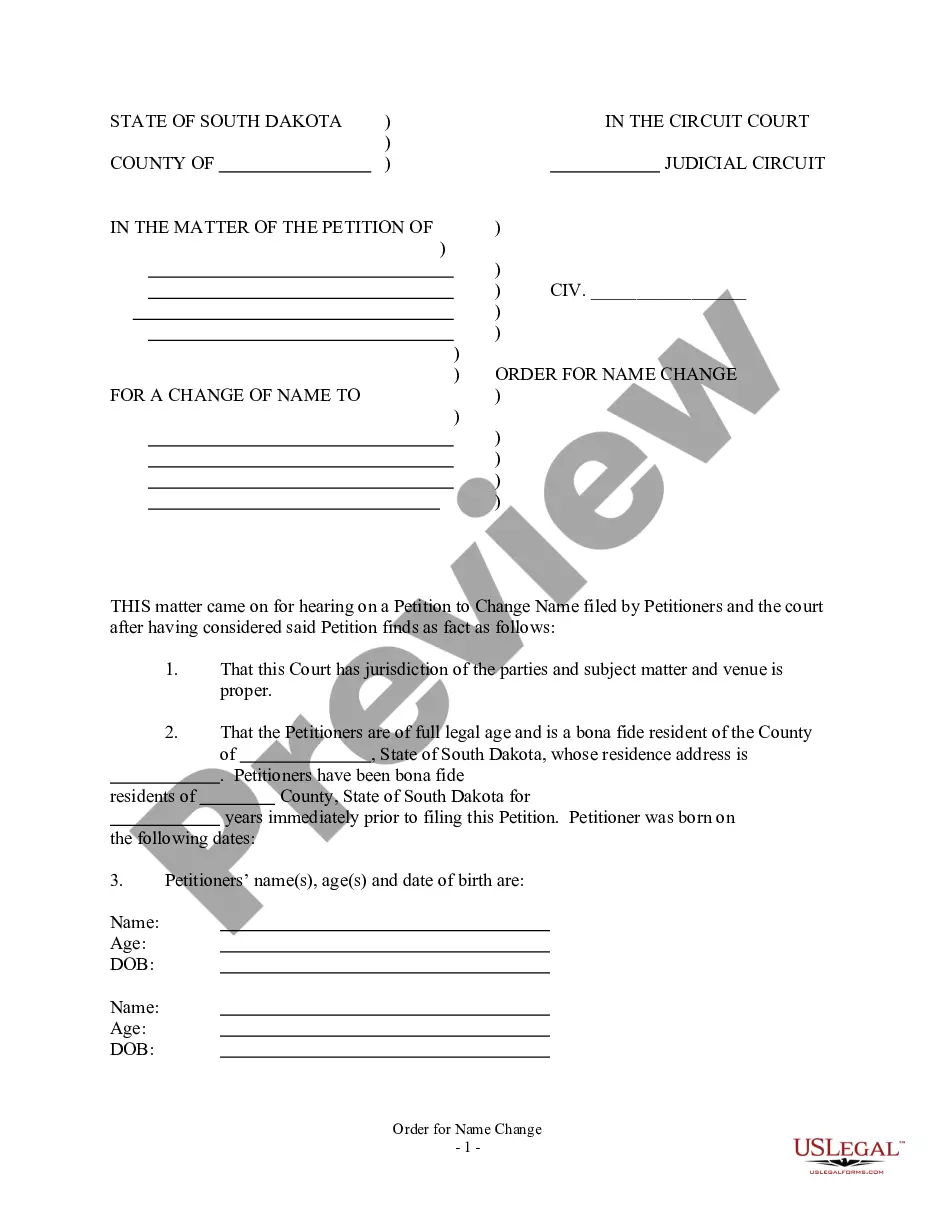
Subordination and Attornment Agreement - Landlord - Tenant - Lender
What is this form?
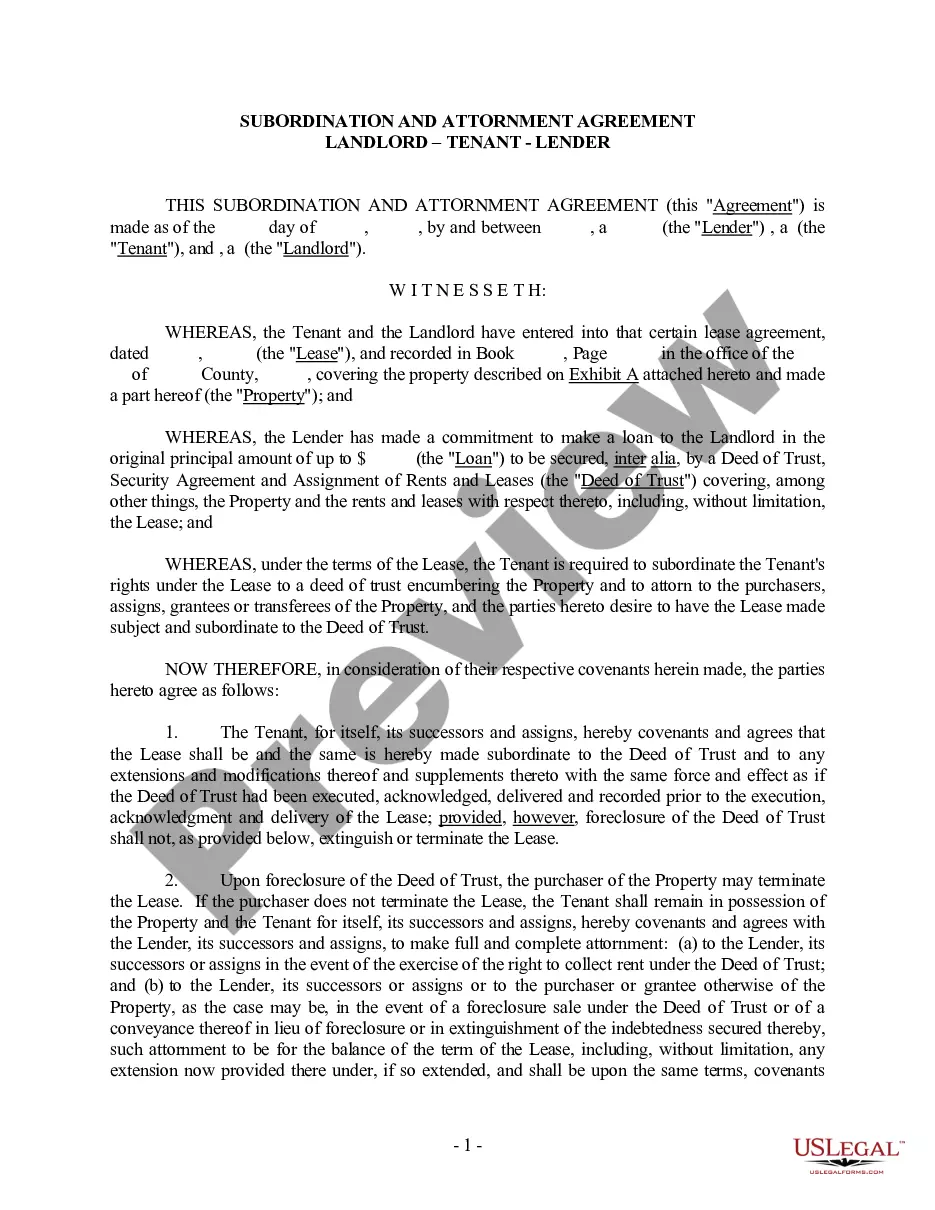
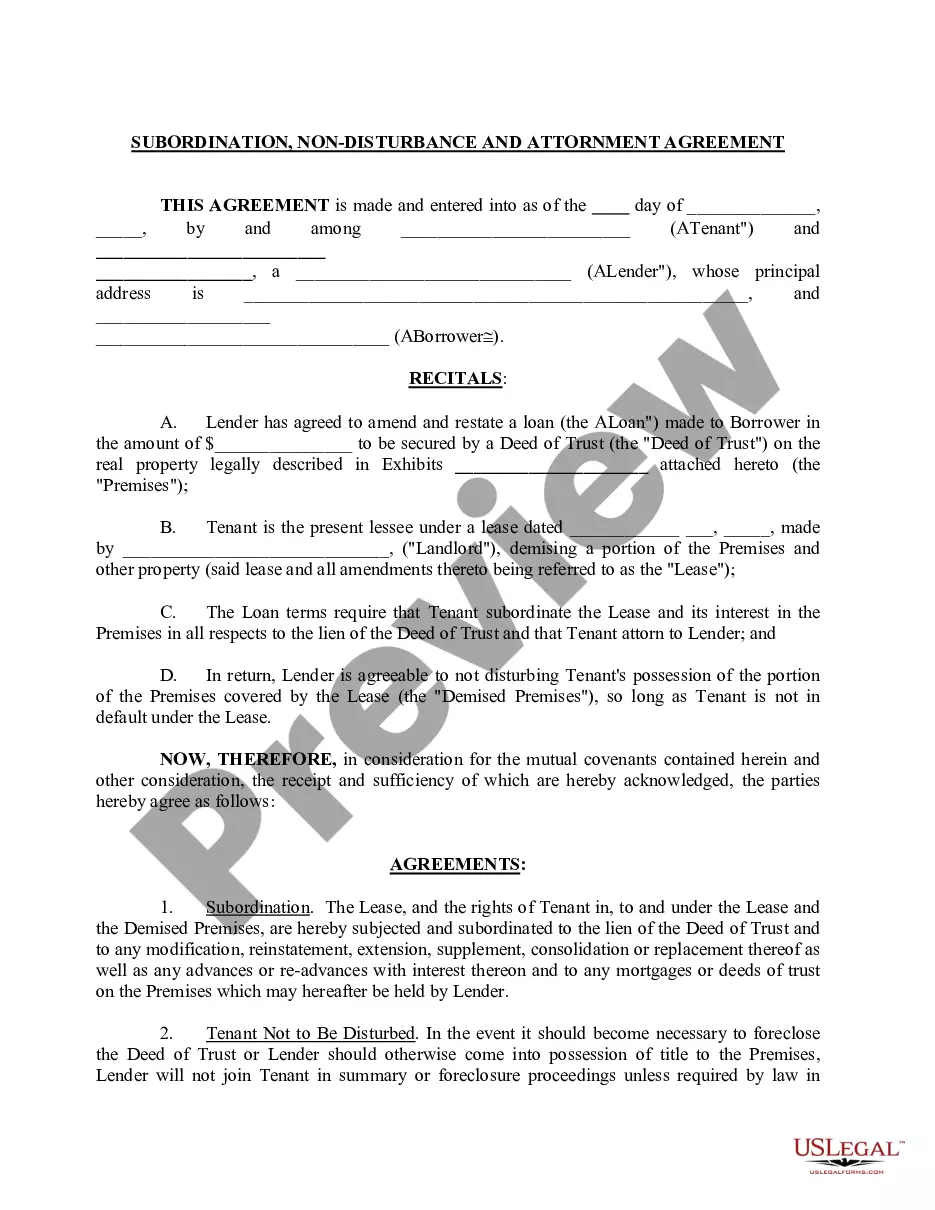
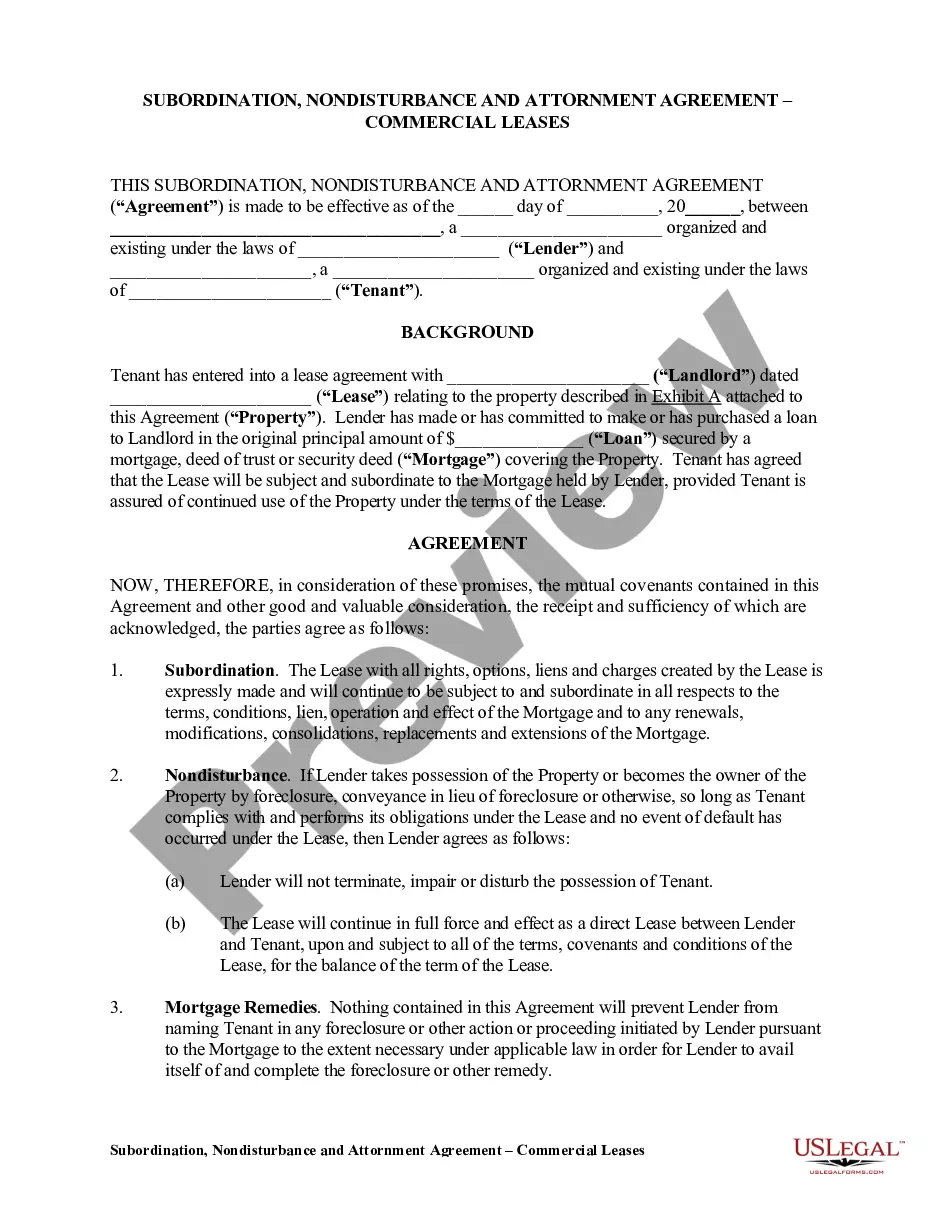
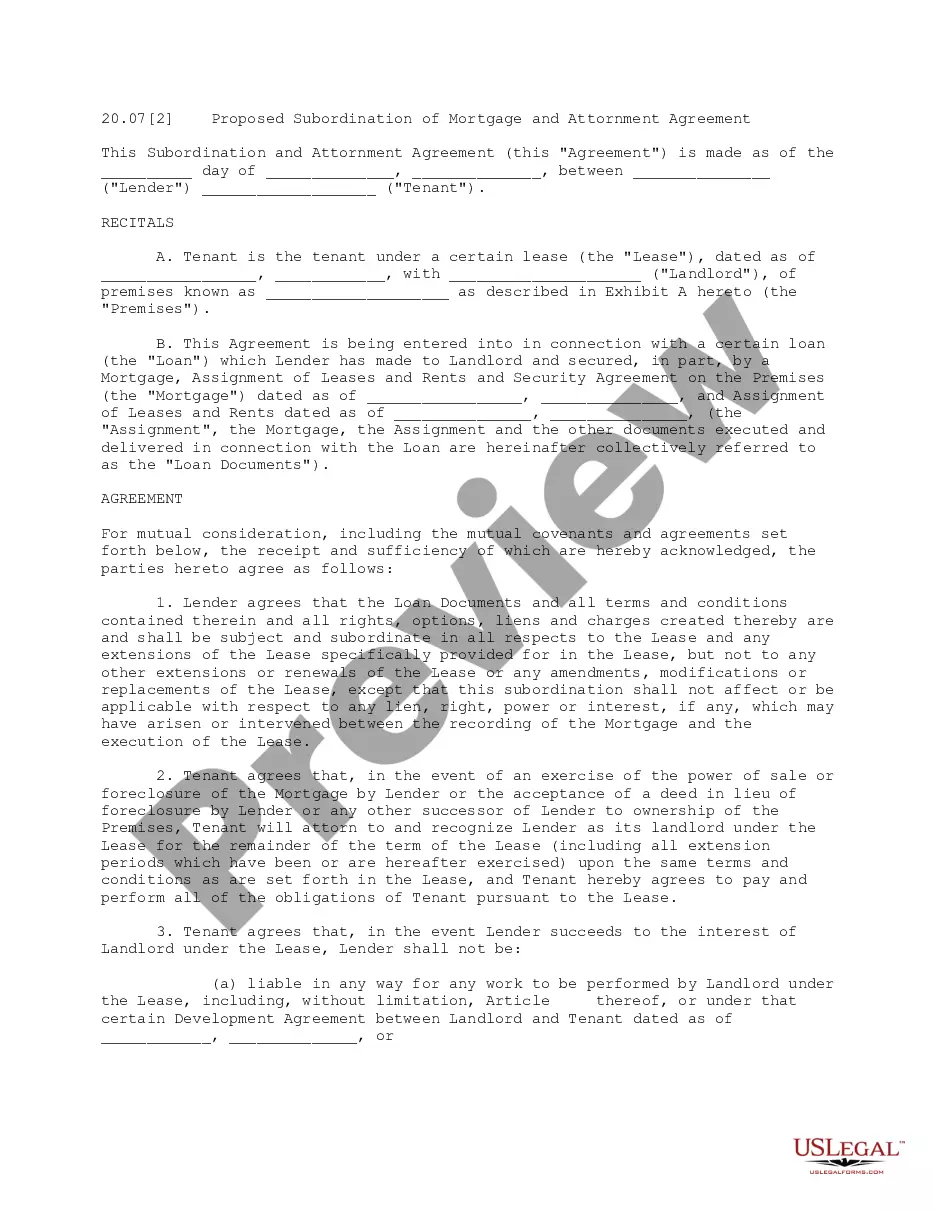
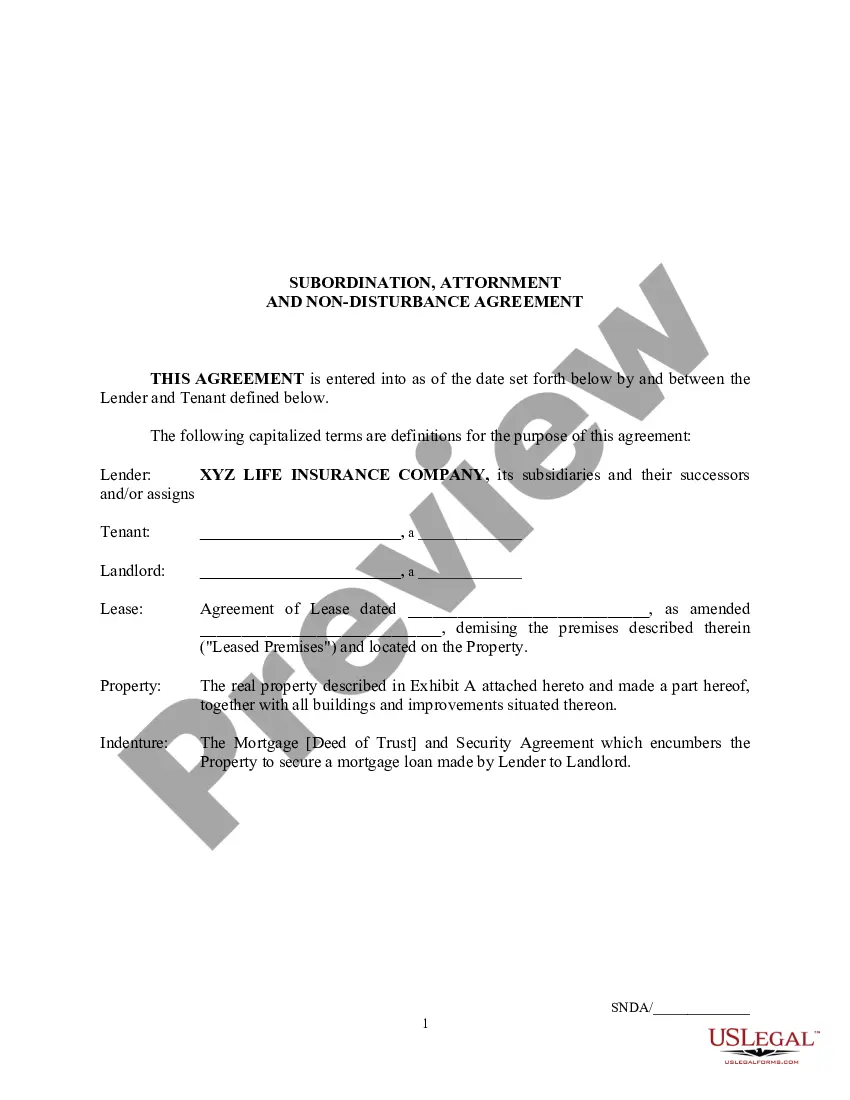
The Subordination and Attornment Agreement is a crucial document used to clarify the relationship between a landlord, tenant, and lender. This form is designed to ensure that the rights of the tenant under a lease are subordinate to a lender's mortgage or deed of trust, making the lease subject to changes in ownership. It establishes a connection between the tenant and potential new owners during a foreclosure or transfer of the property. This agreement is essential for protecting both the lender's interests and the tenant's rights in real estate transactions.
Key components of this form
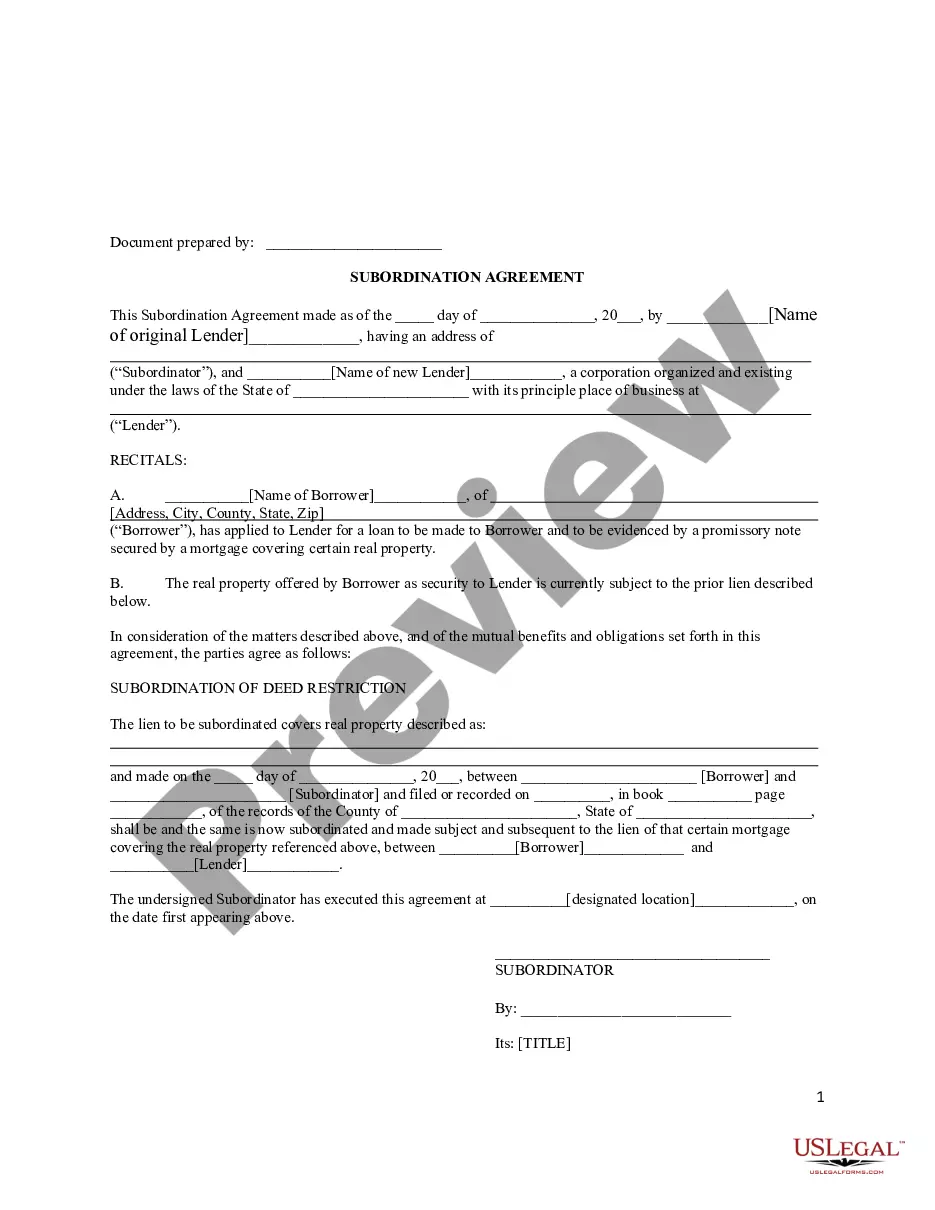
- Subordination clause detailing that the tenant's lease is subordinate to the lender's deed of trust.
- Attornment provisions requiring the tenant to recognize the lender or new purchasers as landlords after a foreclosure.
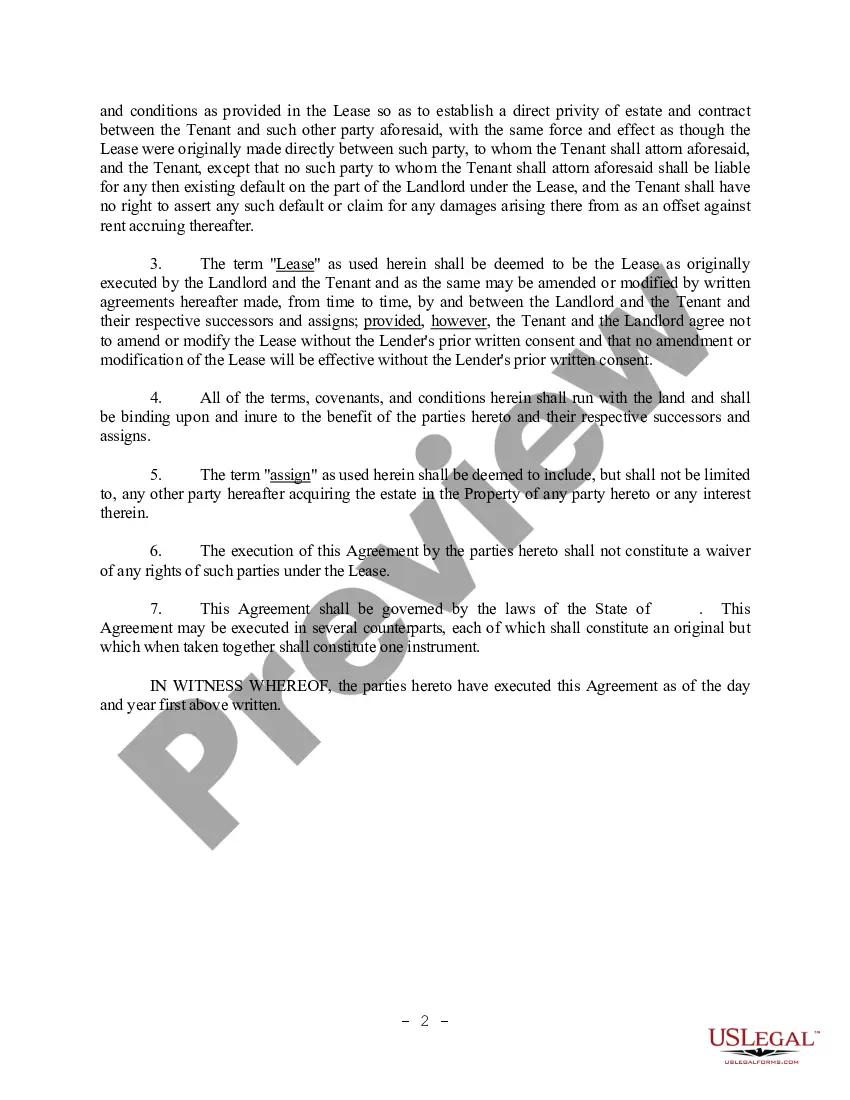
- Definitions and interpretations of the lease, including terms and conditions.
- Binding clauses ensuring the agreement applies to successors and assigns of all parties.
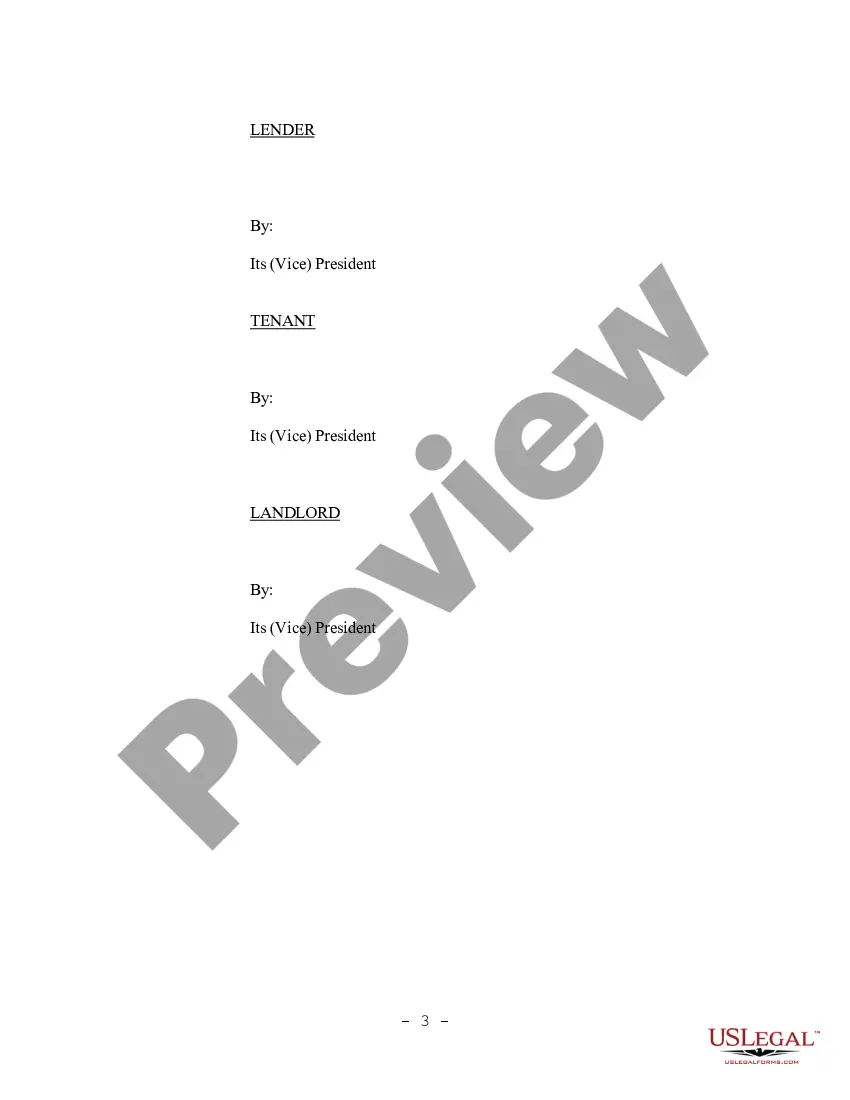
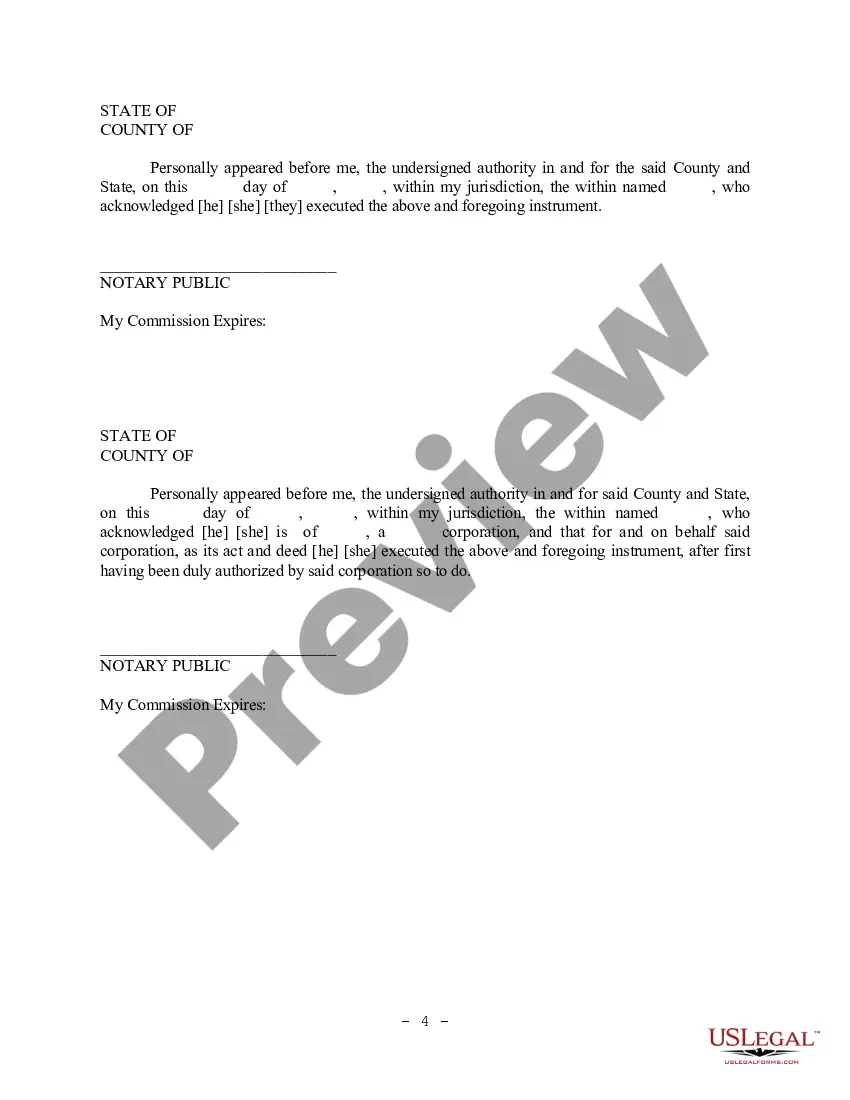
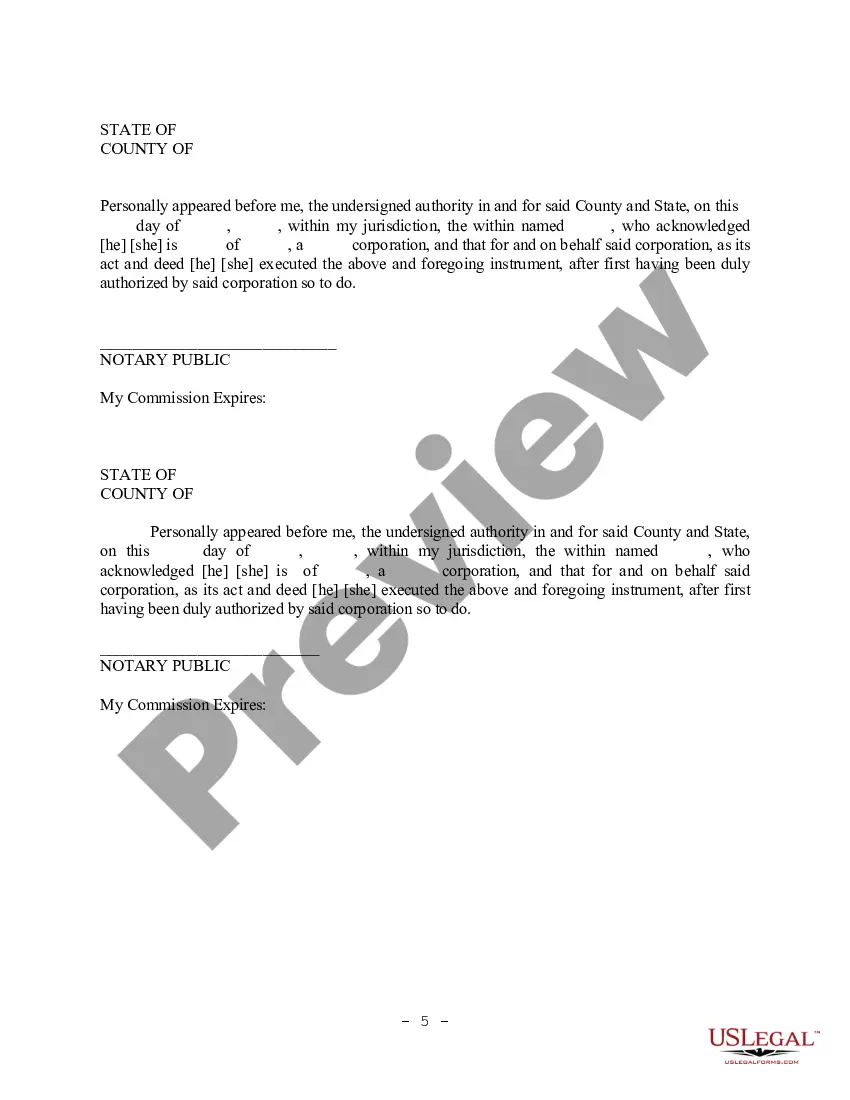
- Notarization section to provide legal validation of the agreement.

Common use cases
This form should be used in situations where there is a lease agreement between a tenant and a landlord who has taken out a mortgage or deed of trust on the property. It is particularly useful during refinancing or property sales, ensuring that the tenant remains protected if the property is foreclosed. This agreement solidifies the tenant's rights and obligations while clarifying the lender's position in relation to the lease.
Who needs this form
This form is intended for:
- Landlords seeking to formalize an agreement with their tenants regarding mortgages on rental properties.
- Tenants who want to ensure their rights are protected if the property undergoes foreclosure.
- Lenders requiring documented acknowledgment from tenants to enforce their rights over the property.
Instructions for completing this form
- Identify the parties involved: the landlord, tenant, and lender.
- Specify the property being leased, including legal descriptions as needed.
- Detail the terms of subordination and attornment clearly, including any related clauses.
- Include any necessary dates and signatures of all parties involved.
- Ensure the document is notarized if required by local law.
Notarization guidance
Yes, this form must be notarized to be legally valid. US Legal Forms offers integrated online notarization services, available 24/7. This secure video call process allows you to complete the notarization without needing to travel.
Get your form ready online
Our built-in tools help you complete, sign, share, and store your documents in one place.
Make edits, fill in missing information, and update formatting in US Legal Forms—just like you would in MS Word.
Download a copy, print it, send it by email, or mail it via USPS—whatever works best for your next step.
Sign and collect signatures with our SignNow integration. Send to multiple recipients, set reminders, and more. Go Premium to unlock E-Sign.
If this form requires notarization, complete it online through a secure video call—no need to meet a notary in person or wait for an appointment.
We protect your documents and personal data by following strict security and privacy standards.

Make edits, fill in missing information, and update formatting in US Legal Forms—just like you would in MS Word.

Download a copy, print it, send it by email, or mail it via USPS—whatever works best for your next step.

Sign and collect signatures with our SignNow integration. Send to multiple recipients, set reminders, and more. Go Premium to unlock E-Sign.

If this form requires notarization, complete it online through a secure video call—no need to meet a notary in person or wait for an appointment.

We protect your documents and personal data by following strict security and privacy standards.
Common mistakes
- Failing to have the document notarized, which may be necessary for enforceability.
- Not verifying the legal description of the property, leading to ambiguity.
- Neglecting to include all parties' signatures, which can invalidate the agreement.
- Forgetting to specify any modifications made to the lease after signing the agreement.
Benefits of using this form online
- Quick access to downloadable forms tailored to meet your needs, saving time and effort.
- Editability allows you to customize the agreement according to specific rental situations.
- Access to legal expertise ensures the forms are drafted in compliance with applicable laws.
Looking for another form?
Form popularity
FAQ
To turn over to another; transfer.
An attornment occurs when the title to an immovable property is transferred from the hands of one lessor to another. In such cases, the existing lessor will usually send a letter of attornment to the lessee notifying him of such sale and request him to make all further lease payments directly to the new lessor.
In response to the specific questions asked, the seller's solicitor will prepare a letter to the tenant (notice of attornment) advising the tenant of the sale and directing them to pay all future rent to the buyer as directed by them, which will be handed over on settlement.
To transfer homage and service from one feudal lord to another. 2. to agree to continue as tenant under a new landlord. Derived forms. attornment (at02c8tornment)
A nondisturbance clause is a provision in a mortgage contract that ensures that a rental agreement between the tenant and the landlord will continue under any circumstances.A nondisturbance clause ensures that a tenant will not be evicted in the event that the landlord goes bankrupt.
An attornment occurs when the title to an immovable property is transferred from the hands of one lessor to another. In such cases, the existing lessor will usually send a letter of attornment to the lessee notifying him of such sale and request him to make all further lease payments directly to the new lessor.
Term. Main definition. Letter of Attornment. A letter from a grantor to a tenant, stating that a property has been sold, and directing rent to be paid to the grantee (i.e., the new owner).
Attornment occurs when a tenant acknowledges a new owner of the property as their new landlord.