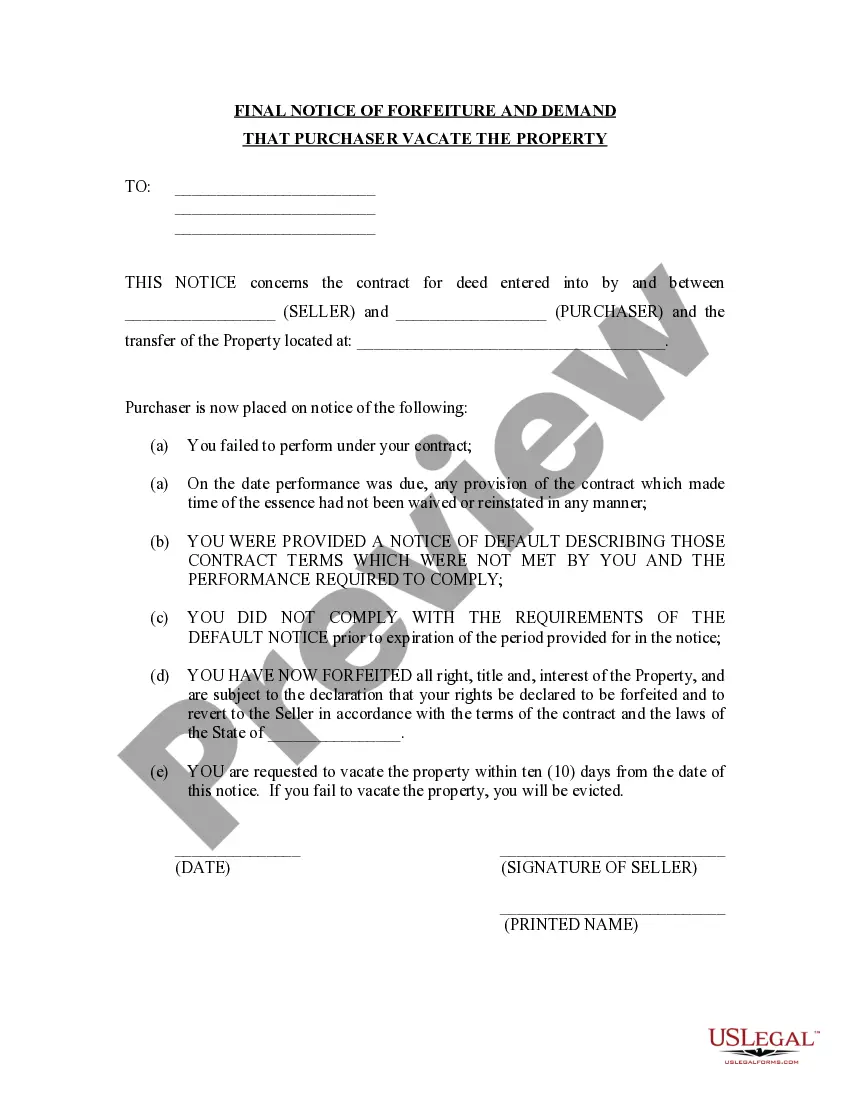
Real Estate General Partnership Agreement
What is this form?
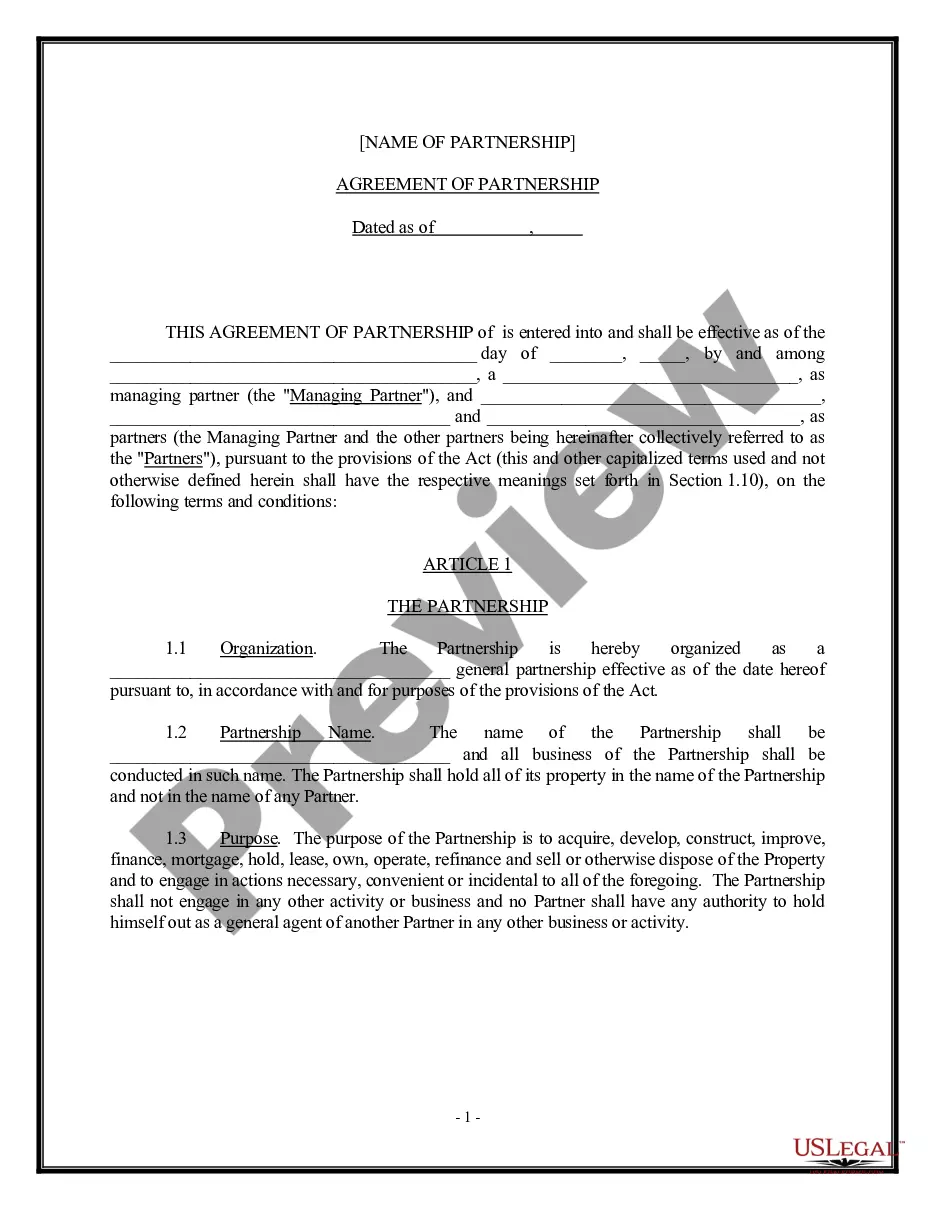
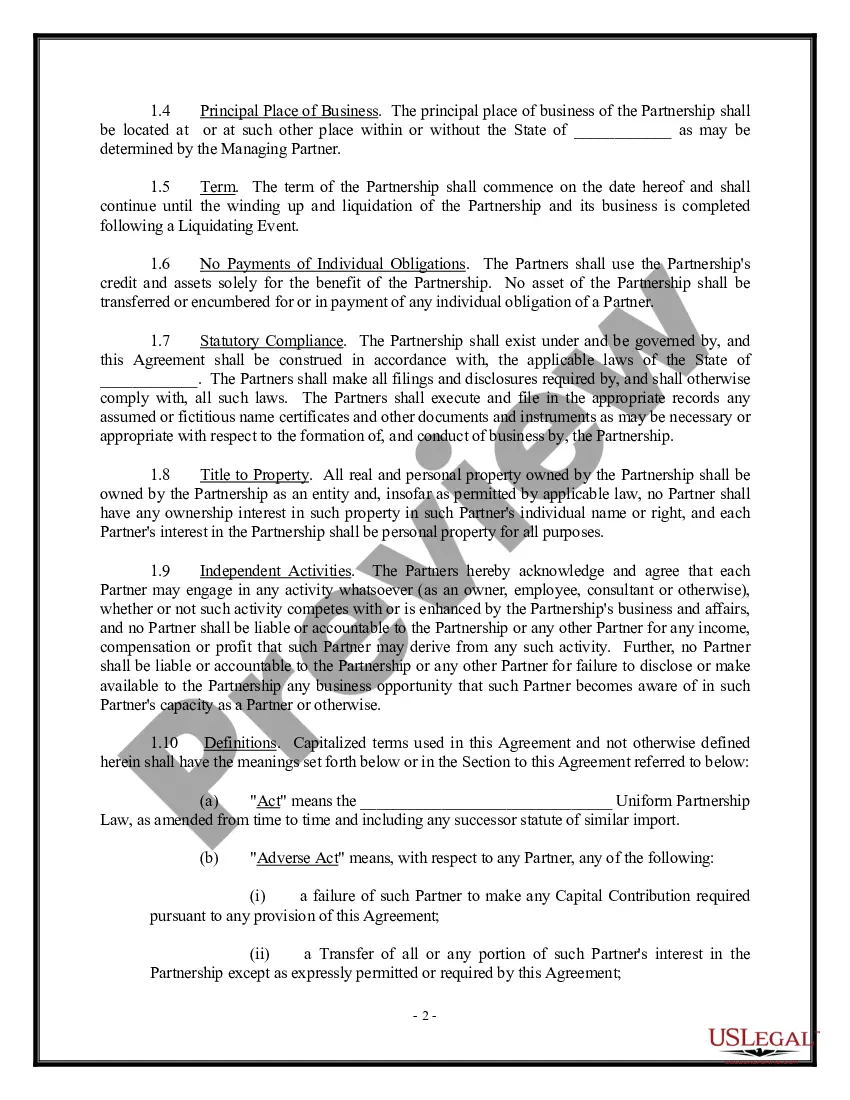
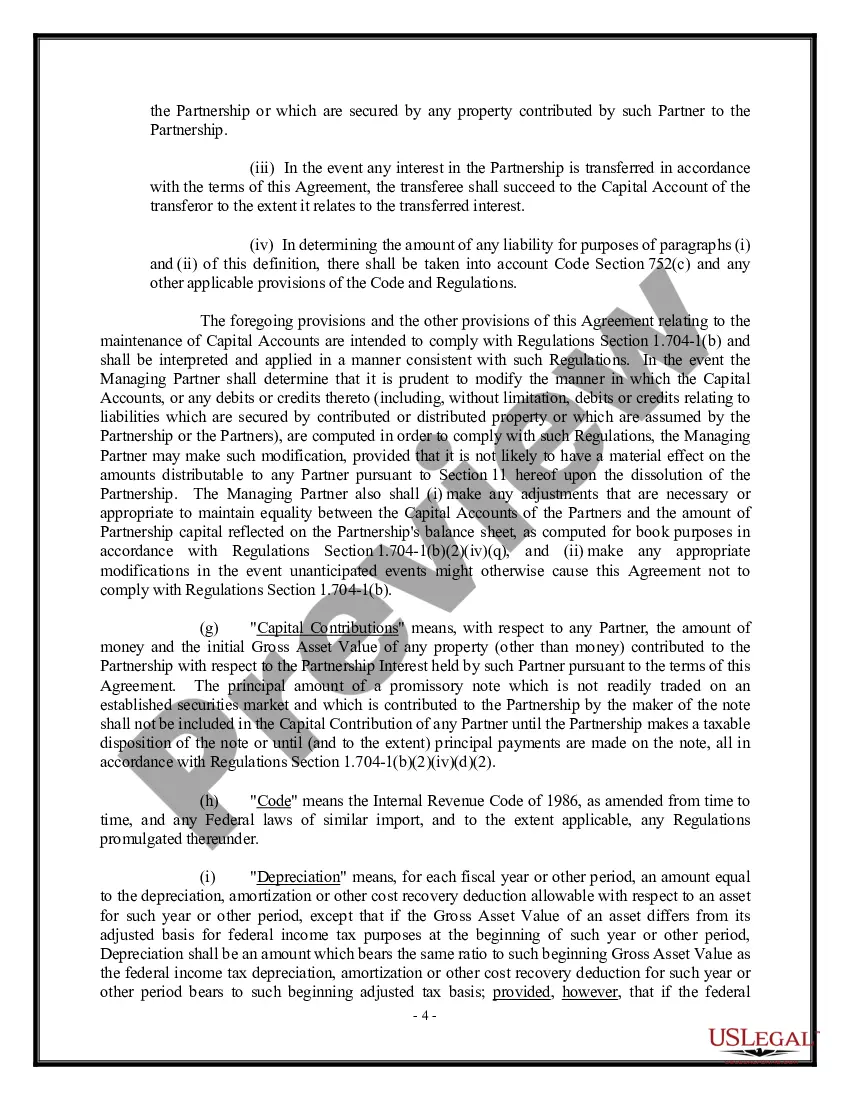
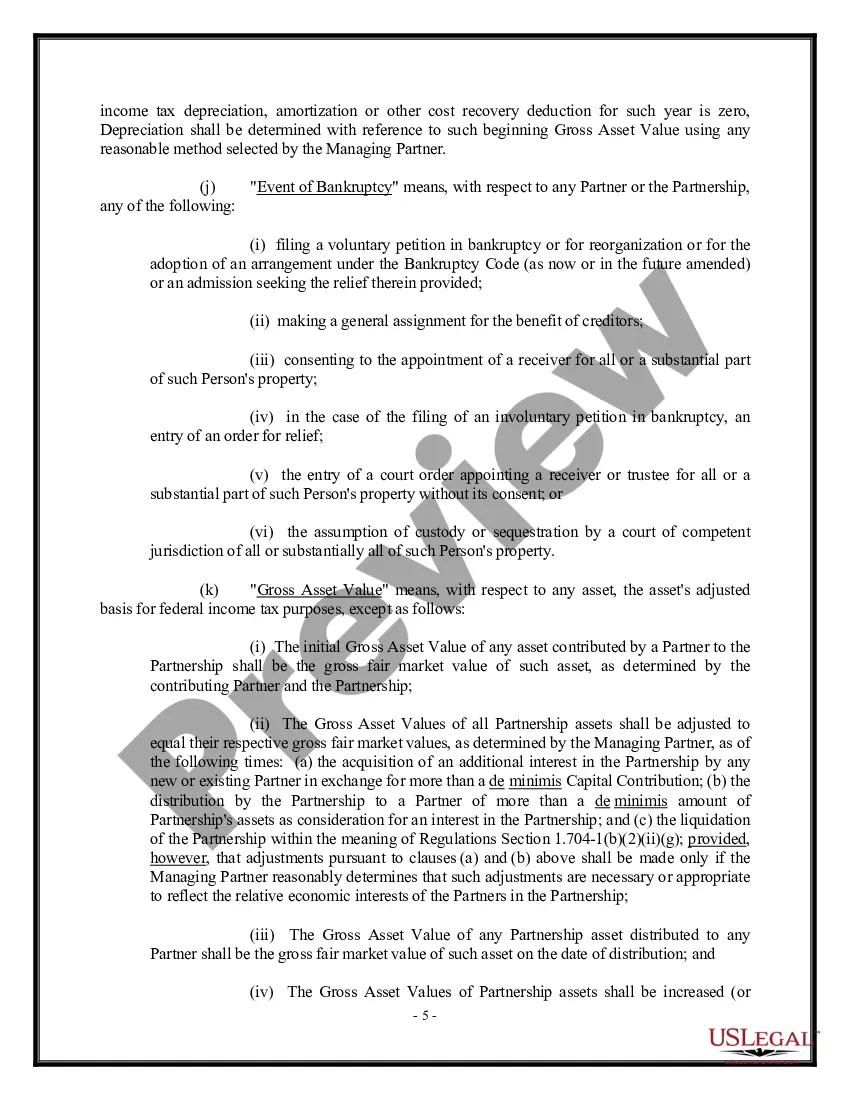
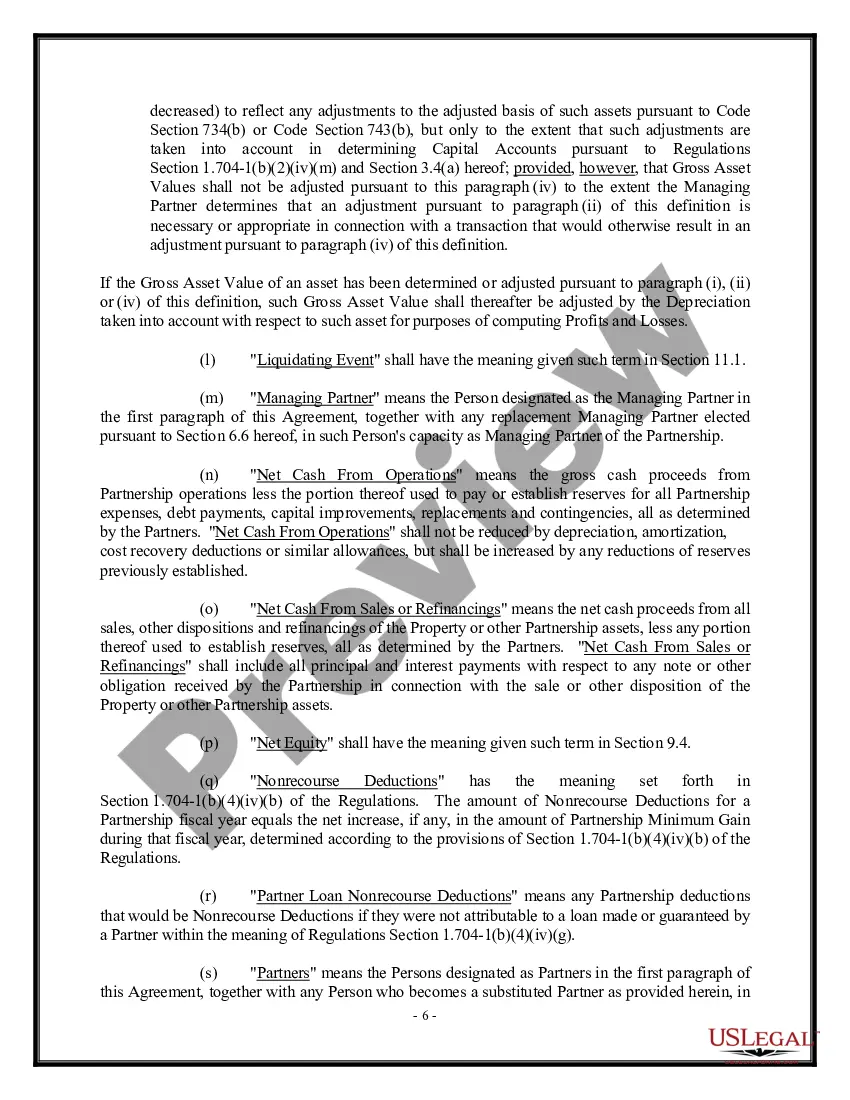
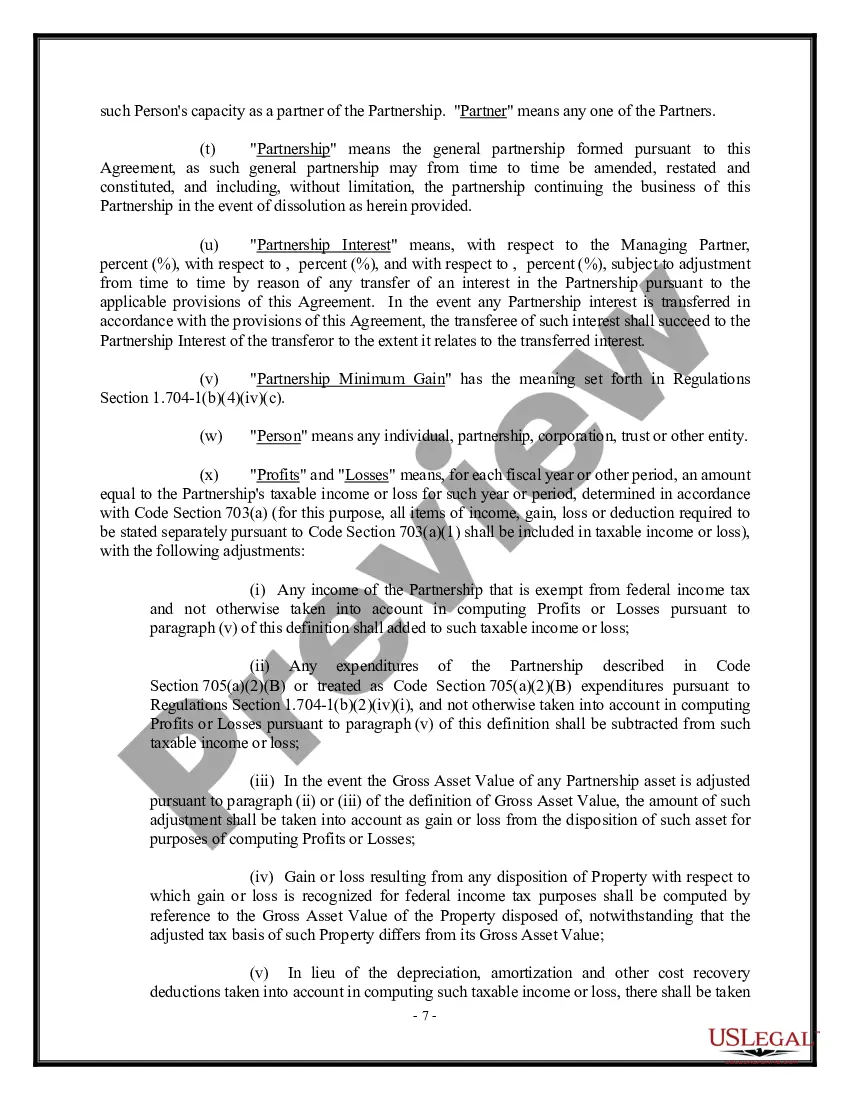
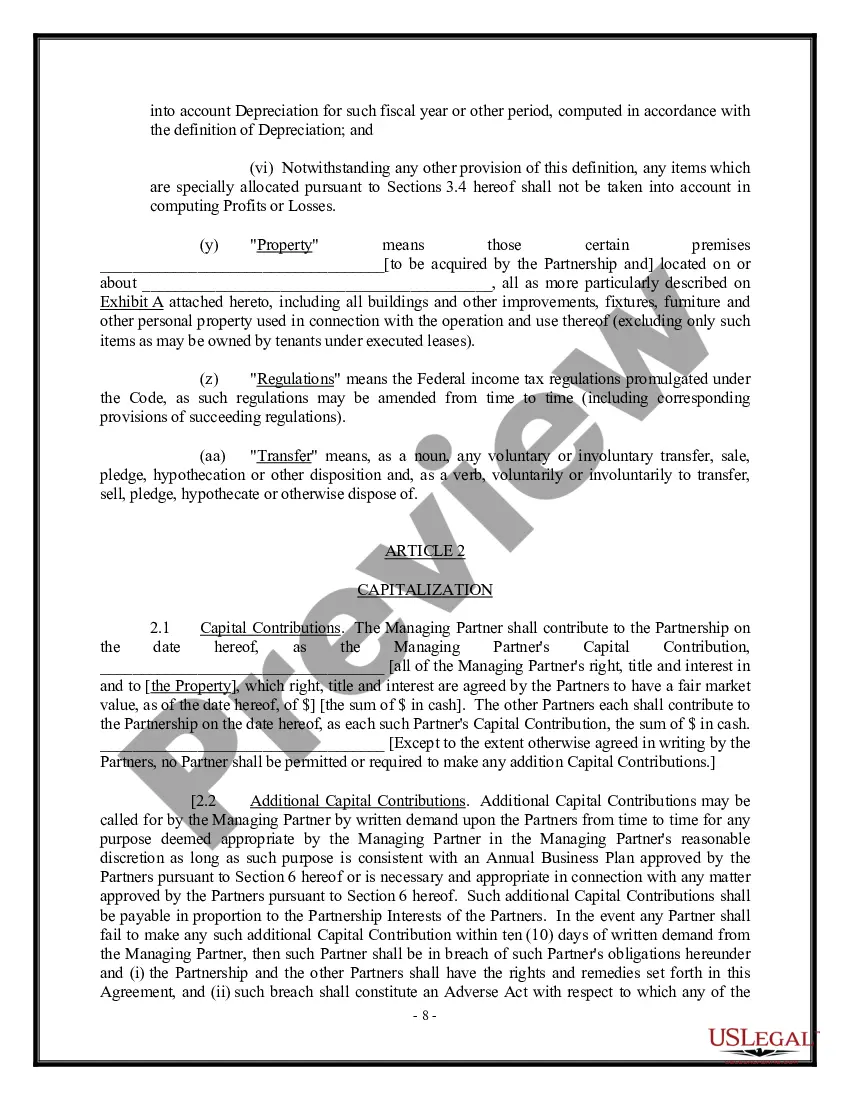
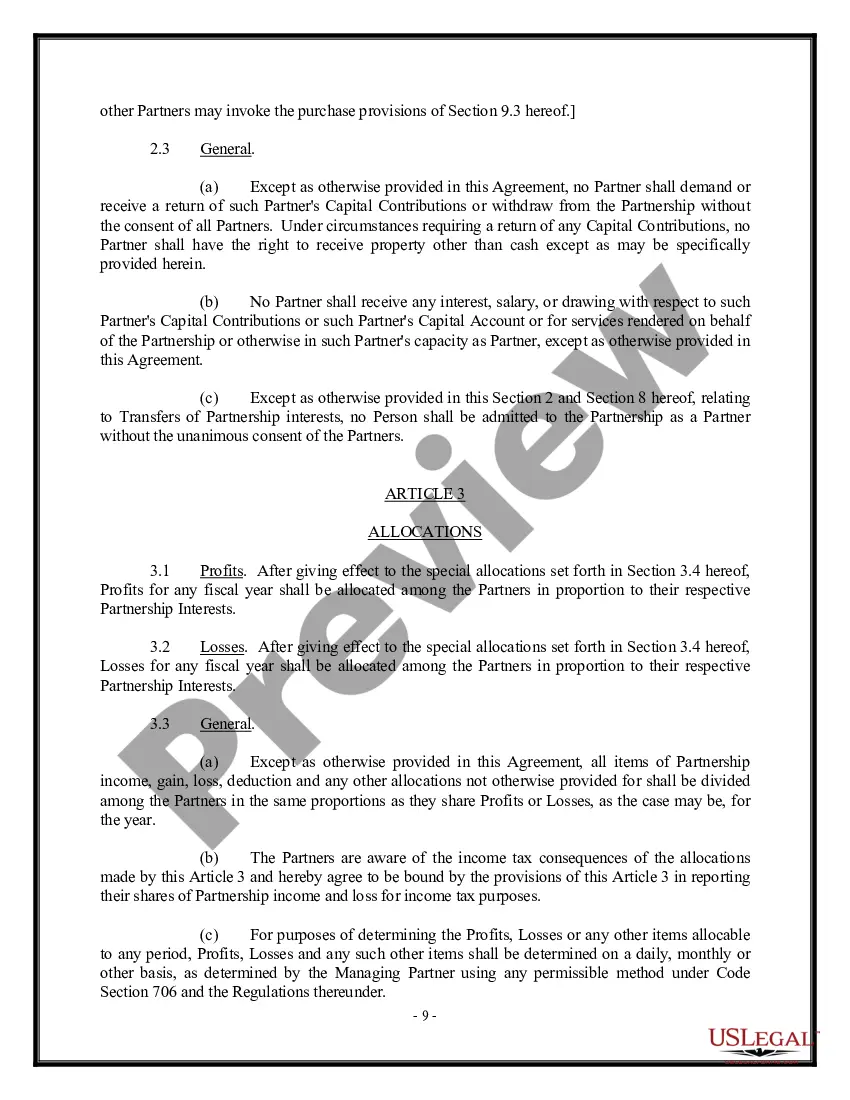
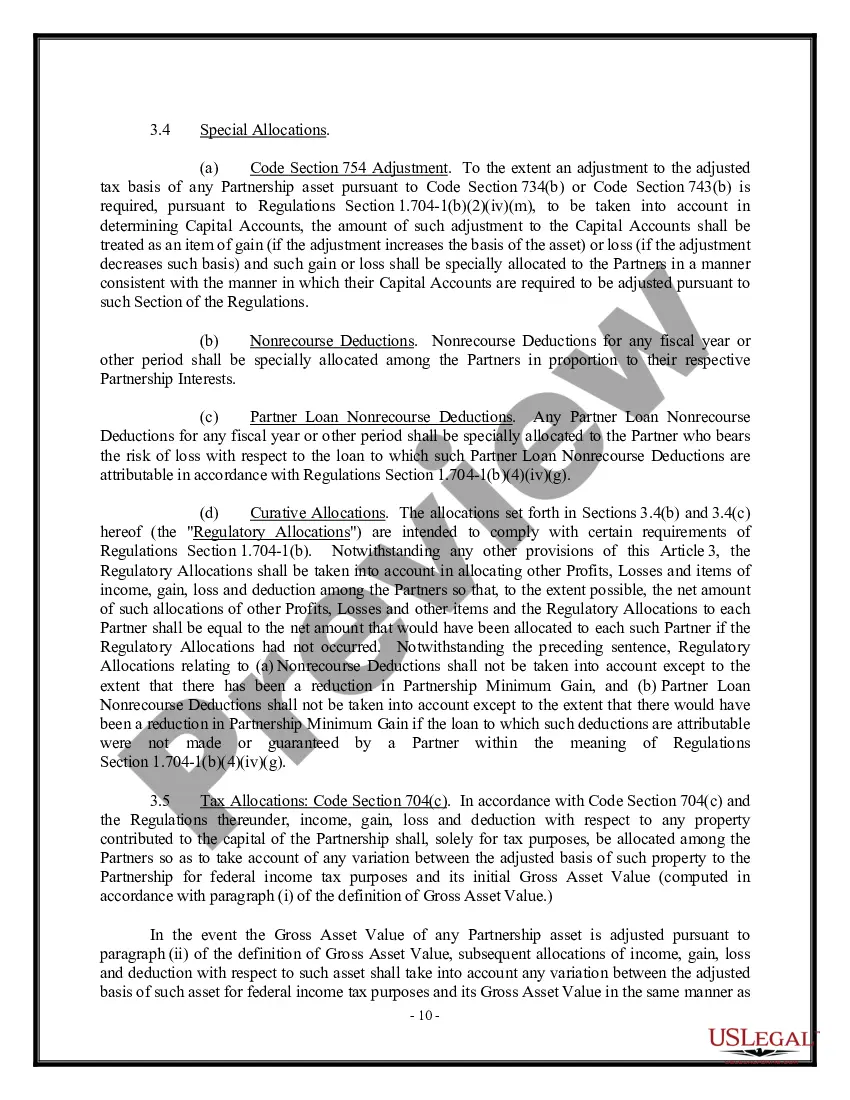
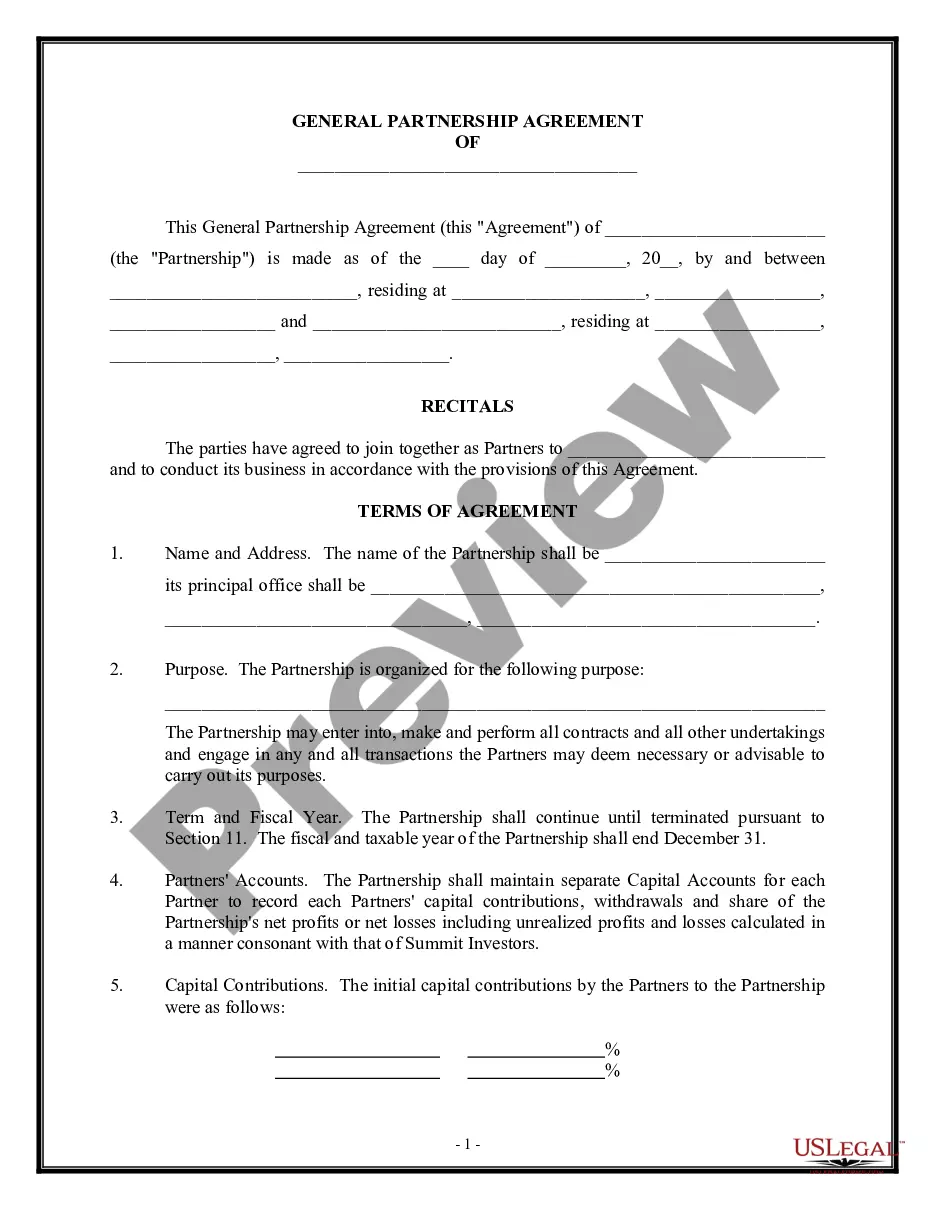
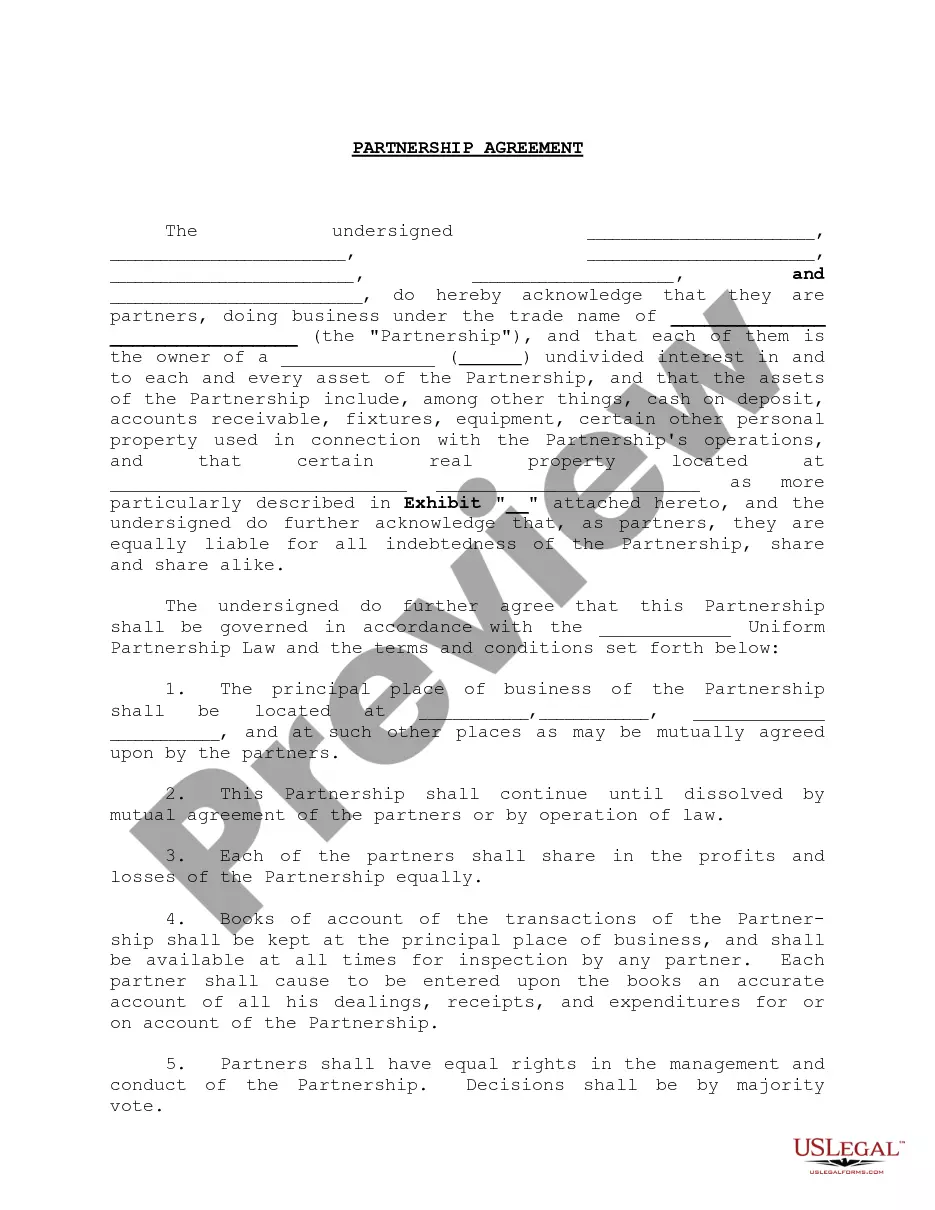
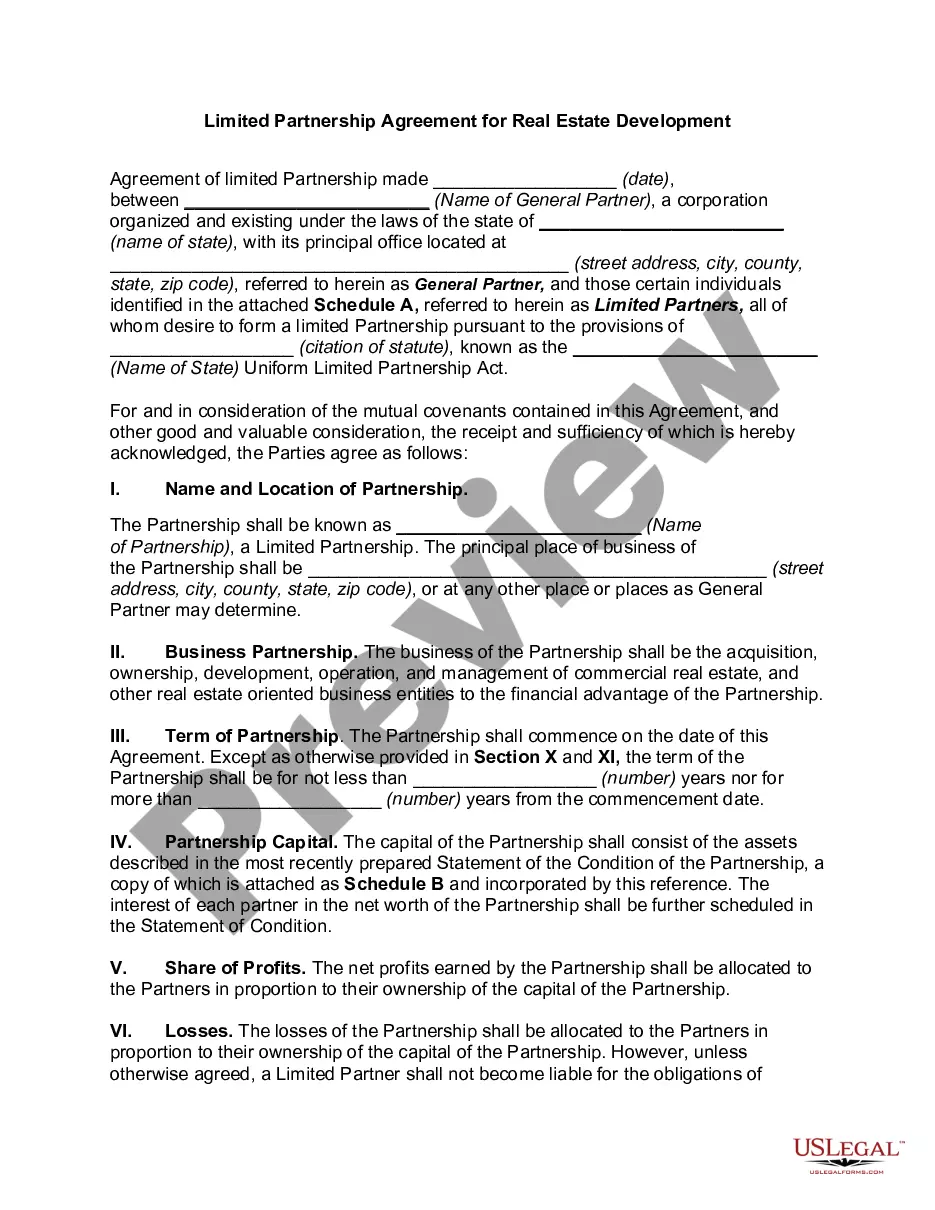
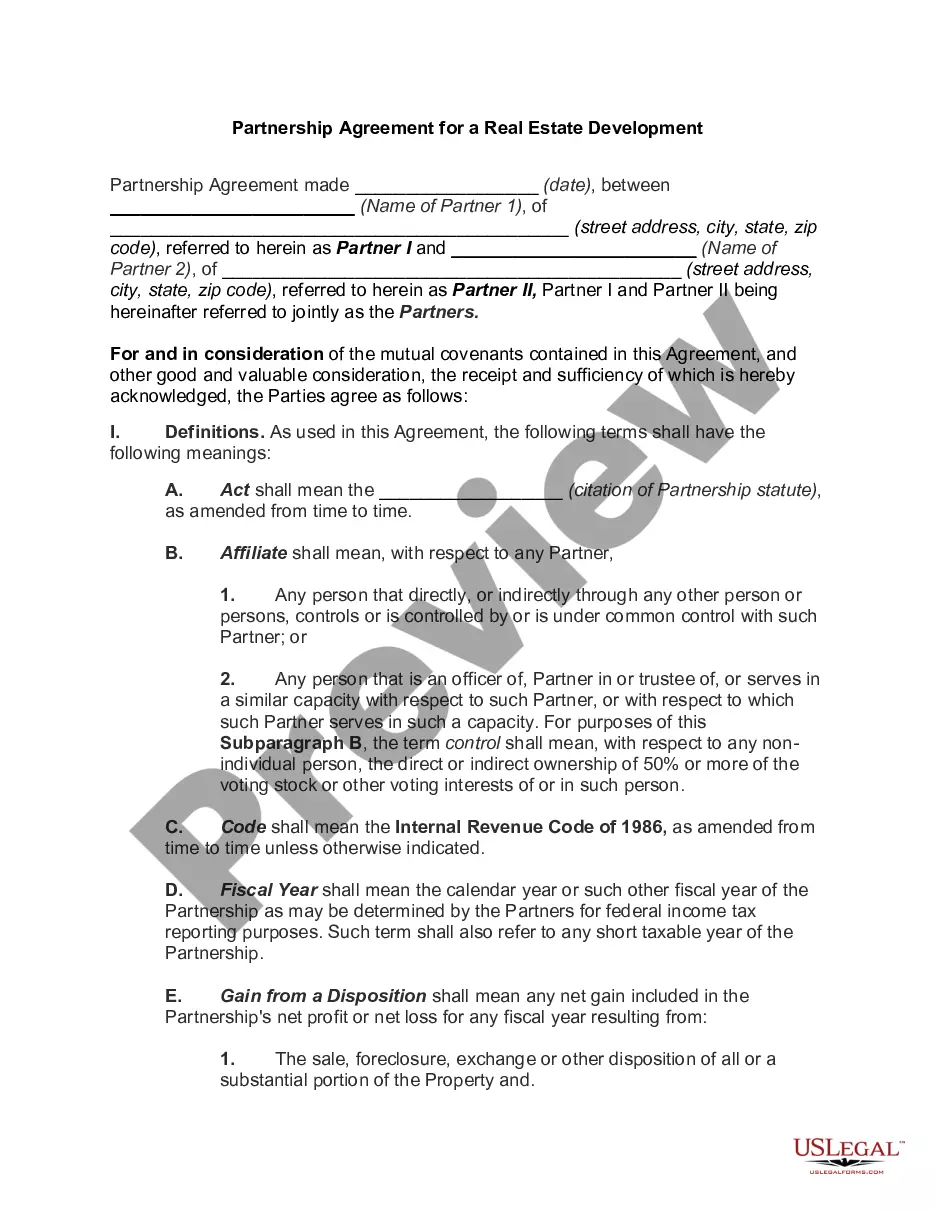
The Real Estate General Partnership Agreement is a legal document that establishes a general partnership for the purpose of managing real estate investments. This agreement outlines how the partnership will operate, the rights and responsibilities of each partner, and the management of partnership assets. Unlike other real estate agreements, this document specifically focuses on the partnership structure, ensuring that property ownership and activities are executed under the partnership's name rather than individual names.
Form components explained
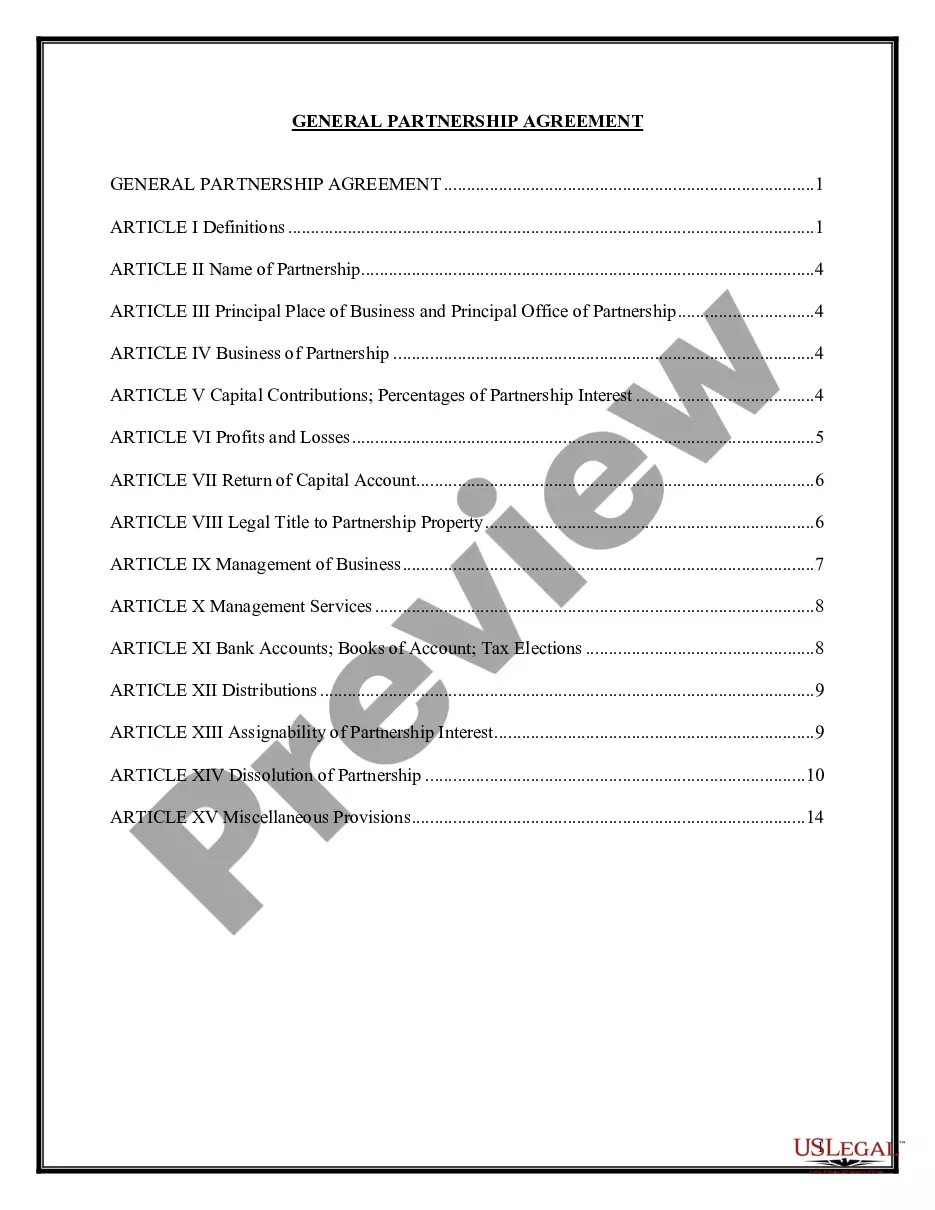
- Partnership organization and name â defines how the partnership is formed and its official name.
- Purpose â outlines the specific activities the partnership will engage in, such as acquiring, leasing, and selling real property.
- Principal place of business â specifies where the partnership will operate.
- Capital contributions â details the financial commitments each partner must provide.
- Management â describes the roles and powers of the managing partner in overseeing operations.
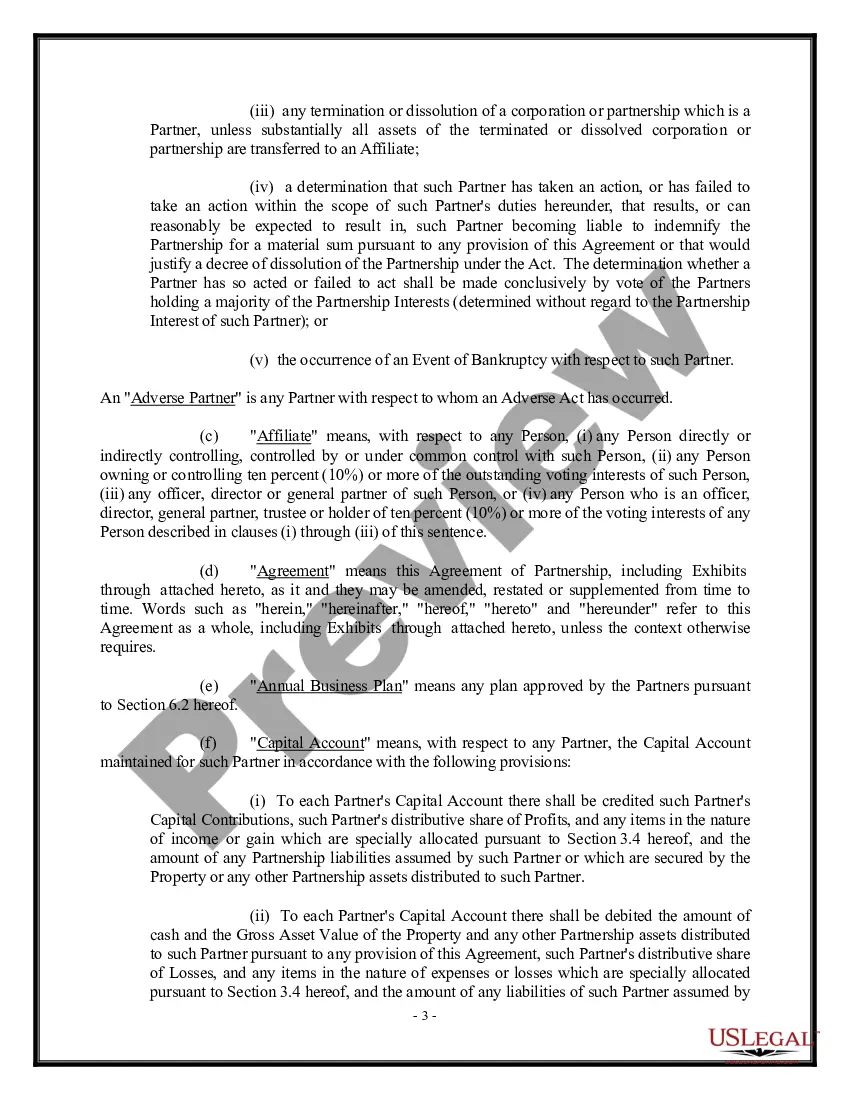
- Dissolution â outlines the conditions under which the partnership may be dissolved and how assets will be distributed.

Situations where this form applies
This form is particularly useful when two or more individuals wish to go into a business partnership to invest in real estate. It is ideal for situations where partners want to clearly define their roles, business intentions, and how profits or losses will be shared. Additionally, this agreement should be used when partners want to establish a legal framework that protects their interests in property ownership and management.
Who can use this document
Intended audience:
- Individuals planning to invest in real estate collaboratively.
- Partners who need to define their rights and obligations regarding real estate management.
- Real estate professionals who require a formal partnership structure for business operations.
- Any parties looking to ensure legal compliance and clarity in partnership dealings.
Completing this form step by step
Steps to complete this form:
- Identify the partners by entering their names and contact details.
- Specify the name of the partnership and its principal place of business.
- Outline the purpose of the partnership, detailing the real estate activities to be undertaken.
- Document the capital contributions required from each partner.
- Agree on the management structure, defining the roles of any managing partner.
- Sign and date the agreement in the presence of any required witnesses or notary, if applicable.
Notarization requirements for this form
No, this form does not typically require notarization unless specified by local law. However, it may be advisable to have the agreement notarized for additional legal strength and to establish authenticity, especially if required by state law.
Get your form ready online
Our built-in tools help you complete, sign, share, and store your documents in one place.
Make edits, fill in missing information, and update formatting in US Legal Forms—just like you would in MS Word.
Download a copy, print it, send it by email, or mail it via USPS—whatever works best for your next step.
Sign and collect signatures with our SignNow integration. Send to multiple recipients, set reminders, and more. Go Premium to unlock E-Sign.
If this form requires notarization, complete it online through a secure video call—no need to meet a notary in person or wait for an appointment.
We protect your documents and personal data by following strict security and privacy standards.

Make edits, fill in missing information, and update formatting in US Legal Forms—just like you would in MS Word.

Download a copy, print it, send it by email, or mail it via USPS—whatever works best for your next step.

Sign and collect signatures with our SignNow integration. Send to multiple recipients, set reminders, and more. Go Premium to unlock E-Sign.

If this form requires notarization, complete it online through a secure video call—no need to meet a notary in person or wait for an appointment.

We protect your documents and personal data by following strict security and privacy standards.
Mistakes to watch out for
- Failing to clearly define roles and responsibilities, leading to conflicts later.
- Not specifying the partnership name correctly, which could lead to legal complications.
- Leaving out important provisions regarding dissolution or exit strategies.
- Assuming verbal agreements will suffice without formal documentation.
Benefits of completing this form online
- Streamlined creation and management of the partnership, ensuring all partners are on the same page.
- Ability to customize the agreement to fit the specific needs and goals of the partners.
- Easy access to a legally vetted template, which reduces the risk of errors or omissions.
- Convenient and secure electronic management, allowing partners to review and edit as needed.
Legal use & context
- The agreement is enforceable in states that recognize general partnerships and written partnership agreements.
- It's important to ensure compliance with state-specific partnership laws.
- Limitations may apply based on the nature of the properties involved and the activities of the partnership.
Looking for another form?





Form popularity
FAQ
Partners do not receive a salary from the partnership. Rather, the partners are compensated by withdrawing funds from partnership earnings.As such, any profits or losses produced by the partnership pass through to the partners. This is known as that partner's distributive share.
The general partner is responsible for the management of the partnership and the limited partner is generally an investor only. Limited partners are often referred to as silent partners. They invest capital in exchange for a portion of the profits of the partnership.
Each partner may draw funds from the partnership at any time up to the amount of the partner's equity. A partner may also take funds out of a partnership by means of guaranteed payments. These are payments that are similar to a salary that is paid for services to the partnership.
Under the IRS' view, an individual cannot be both a partner and an employee for purposes of wage withholding, payroll taxes or FUTA (Revenue Ruling 69-184).A partner's salary is reported to the partner on a Schedule K-1 as a guaranteed payment rather than on a Form W-2.
Compensation of General Partner The general partner earns an annual management fee of up to 2%, which is used to carry out admin duties, covering expenses to be made like overhead and salaries. GPs can also earn a proportion of the private equity fund's profits, and this fee is carried interest.
The general partner is usually a corporation, an experienced property manager, or a real estate development firm. The limited partners are outside investors who provide financing in exchange for an investment return.
A general partner is a part-owner of a business and shares in its profits. A general partner is often a doctor, lawyer, or another professional who has joined a partnership in order to remain independent while being part of a larger business.
In the general partnership, the limited liability partnership, the limited liability limited partnership and the limited partnership, profits and losses are passed through to the partners as specified in the partnership agreement. If left unspecified, profits and losses are shared equally among the partners.