Waiver and Release From Liability For Adult for Land for Walking Dogs
What is this form?
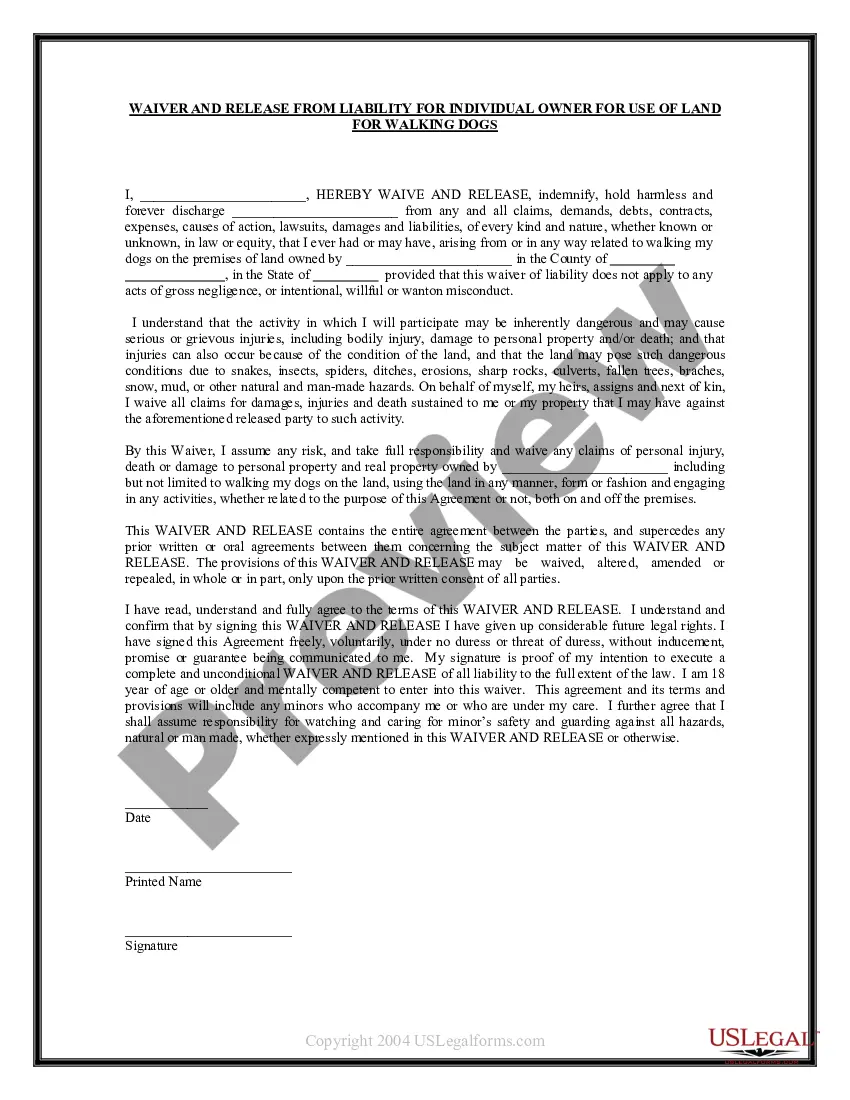
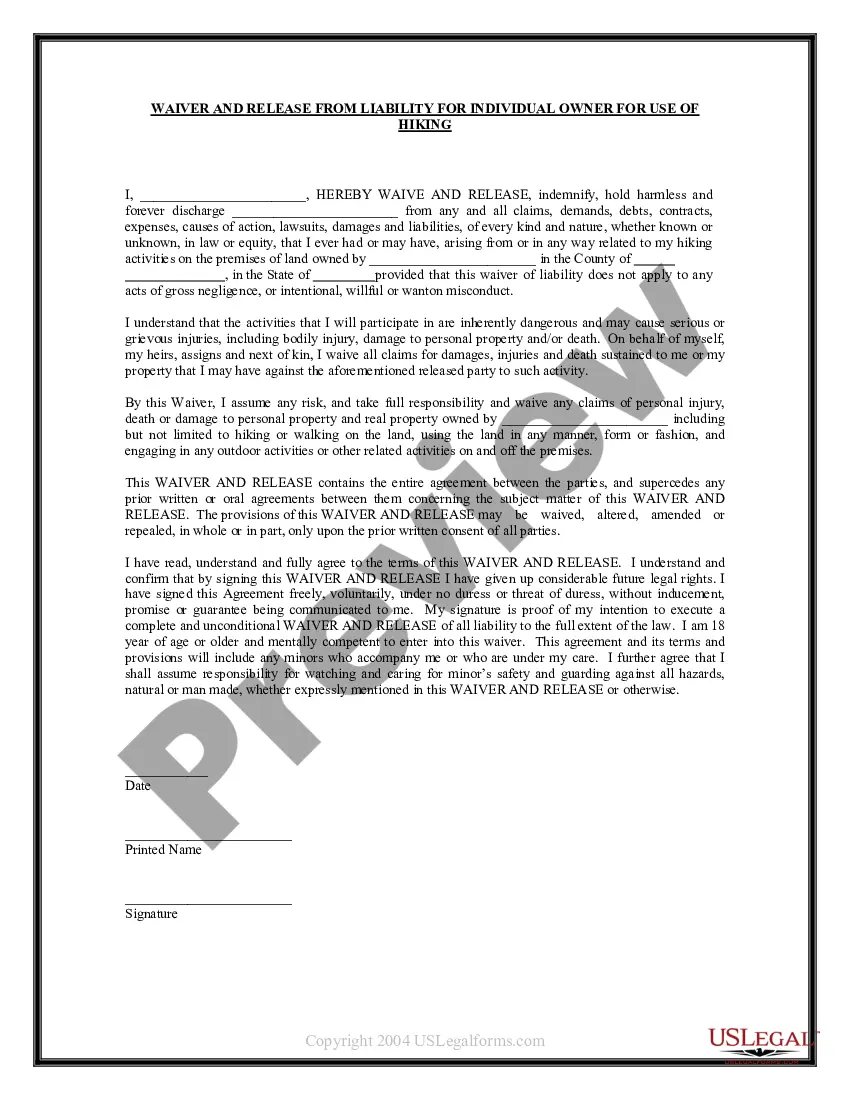
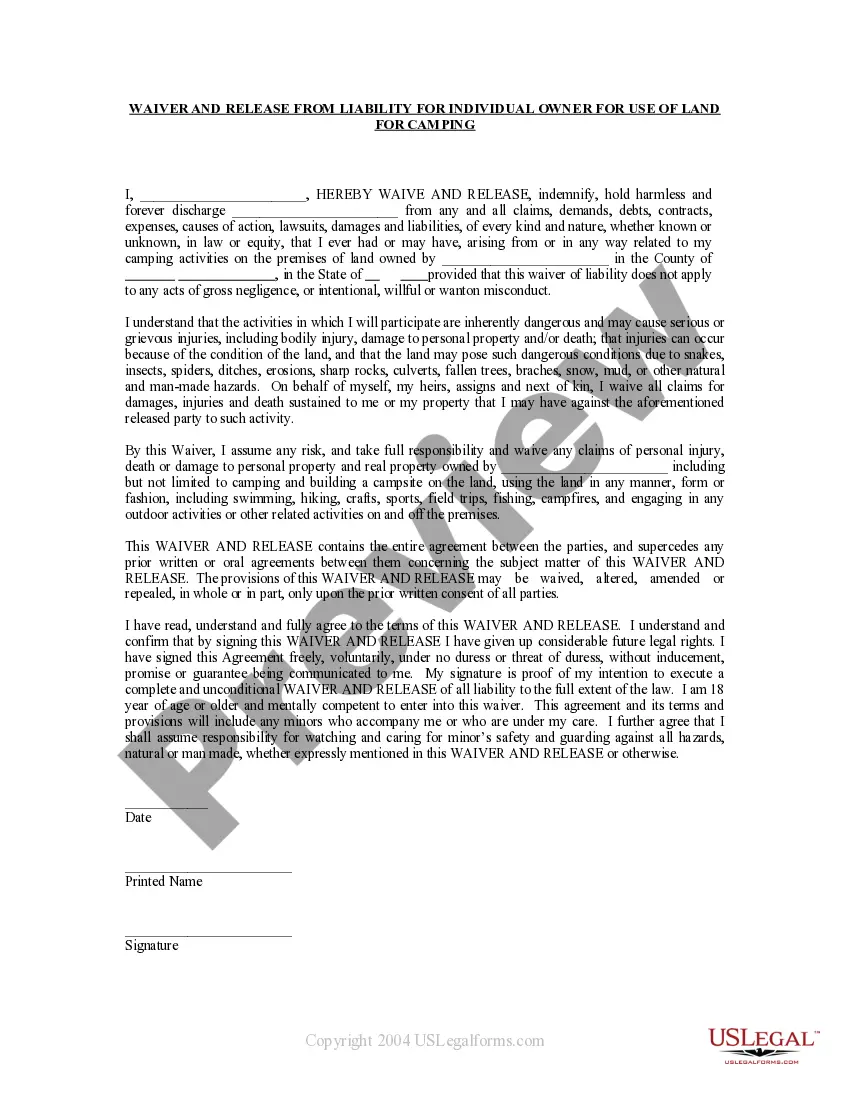
The Waiver and Release From Liability For Adult for Land for Walking Dogs is a legal document that releases a property owner from liability when an individual walks a dog on their property. This form is essential for both dog walkers and property owners, as it clarifies the assumption of risk involved in such activities and limits the property owner's legal exposure in the event of an accident or injury.
Key components of this form
- Identification of the land and property owner.
- Assumption of risk clause acknowledging the inherent dangers of walking dogs on the property.
- Waiver of claims for damages, injuries, or death sustained by the individual or their property.
- Agreement that the waiver applies to any minors accompanying the individual.
- Acknowledgment of the individual's age and mental competence to enter the agreement.
- Space for signatures and date to formalize the agreement.

When to use this form
This form should be used when a property owner allows an individual to walk their dog on their land. It is particularly important in instances where the land may contain natural or man-made hazards that could lead to possible injuries or damages. This form protects the property owner from potential lawsuits related to such activities.
Who this form is for
This waiver is ideal for:
- Property owners who allow individuals to walk dogs on their land.
- Dog owners or walkers who need to acknowledge the risks involved in using private property.
- Any adults over eighteen who are seeking to protect themselves and others from liability claims related to dog-walking activities.
Steps to complete this form
- Identify the property owner and their land accurately on the form.
- Read and understand the risks associated with walking dogs on the property.
- Fill in your name and date in the designated spaces.
- Sign the document to indicate your acceptance of the terms outlined.
- If applicable, ensure that any minors accompanying you are also acknowledged within the waiver.
Is notarization required?
Notarization is not commonly needed for this form. However, certain documents or local rules may make it necessary. Our notarization service, powered by Notarize, allows you to finalize it securely online anytime, day or night.
Get your form ready online
Our built-in tools help you complete, sign, share, and store your documents in one place.
Make edits, fill in missing information, and update formatting in US Legal Forms—just like you would in MS Word.
Download a copy, print it, send it by email, or mail it via USPS—whatever works best for your next step.
Sign and collect signatures with our SignNow integration. Send to multiple recipients, set reminders, and more. Go Premium to unlock E-Sign.
If this form requires notarization, complete it online through a secure video call—no need to meet a notary in person or wait for an appointment.
We protect your documents and personal data by following strict security and privacy standards.

Make edits, fill in missing information, and update formatting in US Legal Forms—just like you would in MS Word.

Download a copy, print it, send it by email, or mail it via USPS—whatever works best for your next step.

Sign and collect signatures with our SignNow integration. Send to multiple recipients, set reminders, and more. Go Premium to unlock E-Sign.

If this form requires notarization, complete it online through a secure video call—no need to meet a notary in person or wait for an appointment.

We protect your documents and personal data by following strict security and privacy standards.
Mistakes to watch out for
- Failing to read the waiver thoroughly before signing.
- Not including all necessary property details or parties involved.
- Overlooking the requirement for adult signatures when minors are involved.
- Neglecting to date the agreement, which can cause issues later.
Benefits of completing this form online
- Convenience of downloading and printing the form at any time.
- Ability to easily fill in the required fields online before printing.
- Access to a legal document drafted by licensed attorneys, ensuring reliability.
Looking for another form?

Form popularity
FAQ
The origin of the English word dog has been a riddle for ages. It developed through Middle English dogge from Old English docga, after which the trail seems to go cold. At first it referred mostly to dogs of a coarser nature and was often used disparagingly, also as an insult to people.
Dogs were probably domesticated by accident, when wolves began trailing ancient hunter-gatherers to snack on their garbage. Docile wolves may have been slipped extra food scraps, the theory goes, so they survived better, and passed on their genes. Eventually, these friendly wolves evolved into dogs.
Mixed Breeds. Labrador Retrievers. Pembroke Welsh Corgis. German Shepherds. Beagles. Poodles. Huskies. Golden Retrievers.
American Pit Bull Terrier. 1/6. American Pit Bulls are one of the most dangerous dogs and have been banned by many countries in the world. Rottweiler. 2/6. German Shepherd. 3/6. American Bulldog. 4/6. Bullmastiff. 5/6. Siberian Husky.
Dogs (Canis lupus familiaris) are domesticated mammals, not natural wild animals. They were originally bred from wolves. They have been bred by humans for a long time, and were the first animals ever to be domesticated.They are sometimes called "canines" from the Latin word for dog - canis.
Dogs do not see in black and white, but they are what we would call "color-blind," meaning they have only two color receptors (called cones) in their eyes, whereas most humans have three.
(Entry 1 of 4) 1a : canid wolves, foxes, and other dogs especially : a highly variable domestic mammal (Canis familiaris) closely related to the gray wolf the family's pet dog.
Taxonomy. In 1758, the Swedish botanist and zoologist Carl Linnaeus published in his Systema Naturae the two-word naming of species (binomial nomenclature). Canis is the Latin word meaning "dog," and under this genus he listed the domestic dog, the gray wolf, and the golden jackal.
Norwegian Lundehund. Dating back to the Ice Age, the Norwegian Lundehund is recognised as one of the rarest dogs on the planet due to its unique characteristics which aren't shared by any other breed. Lagotto Romagnolo. Azawakh. Otterhound. Mudi.