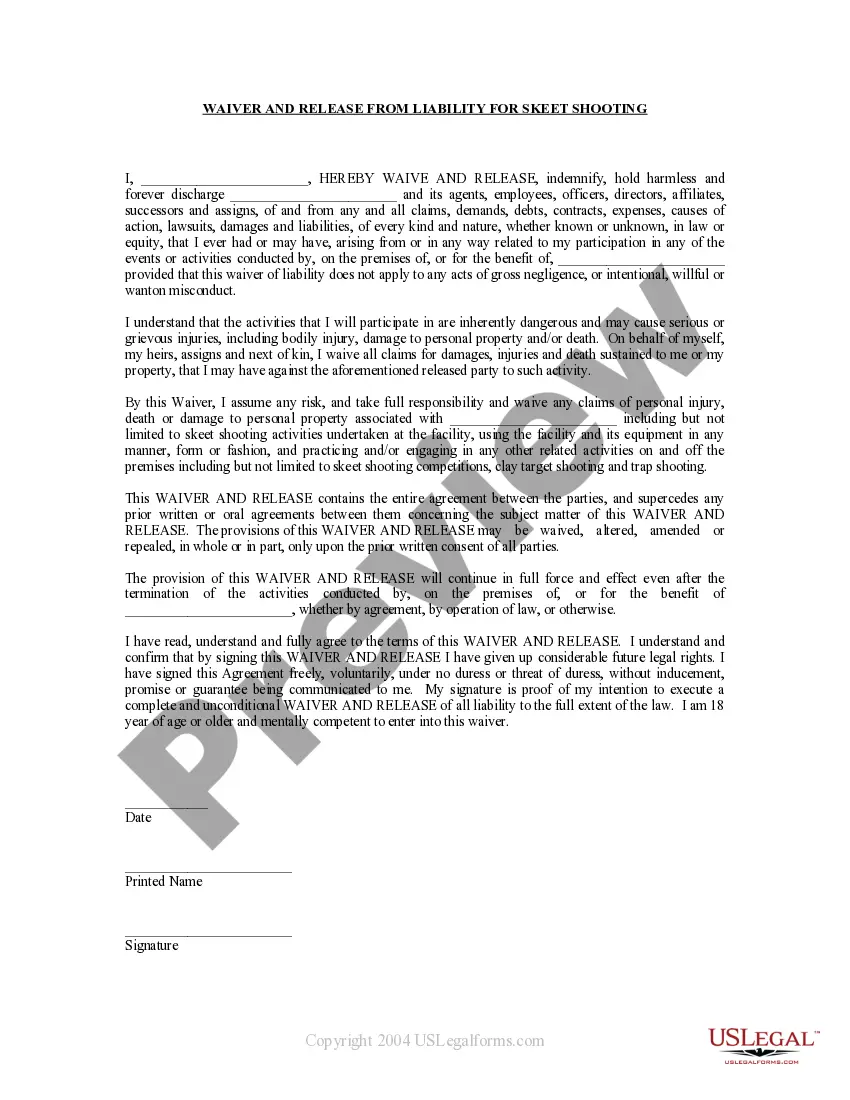
Waiver and Release From Liability For Adult for Skeet Shooting
Understanding this form
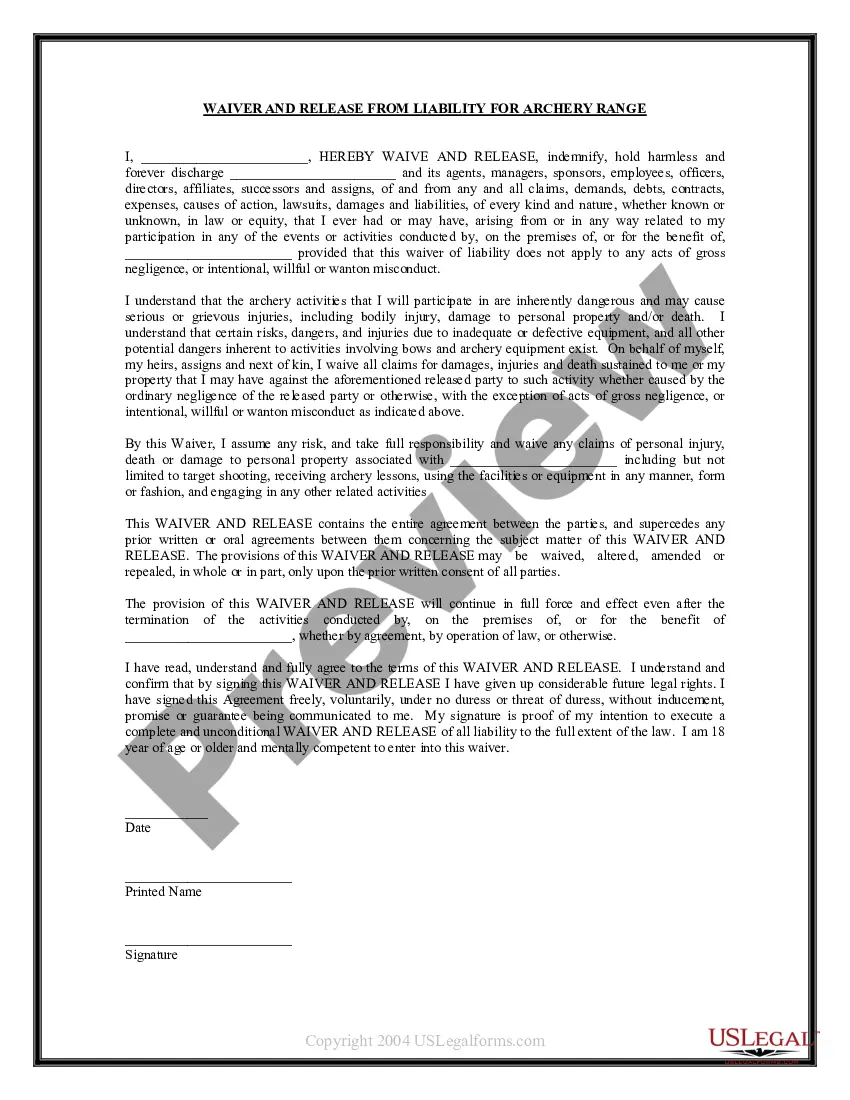
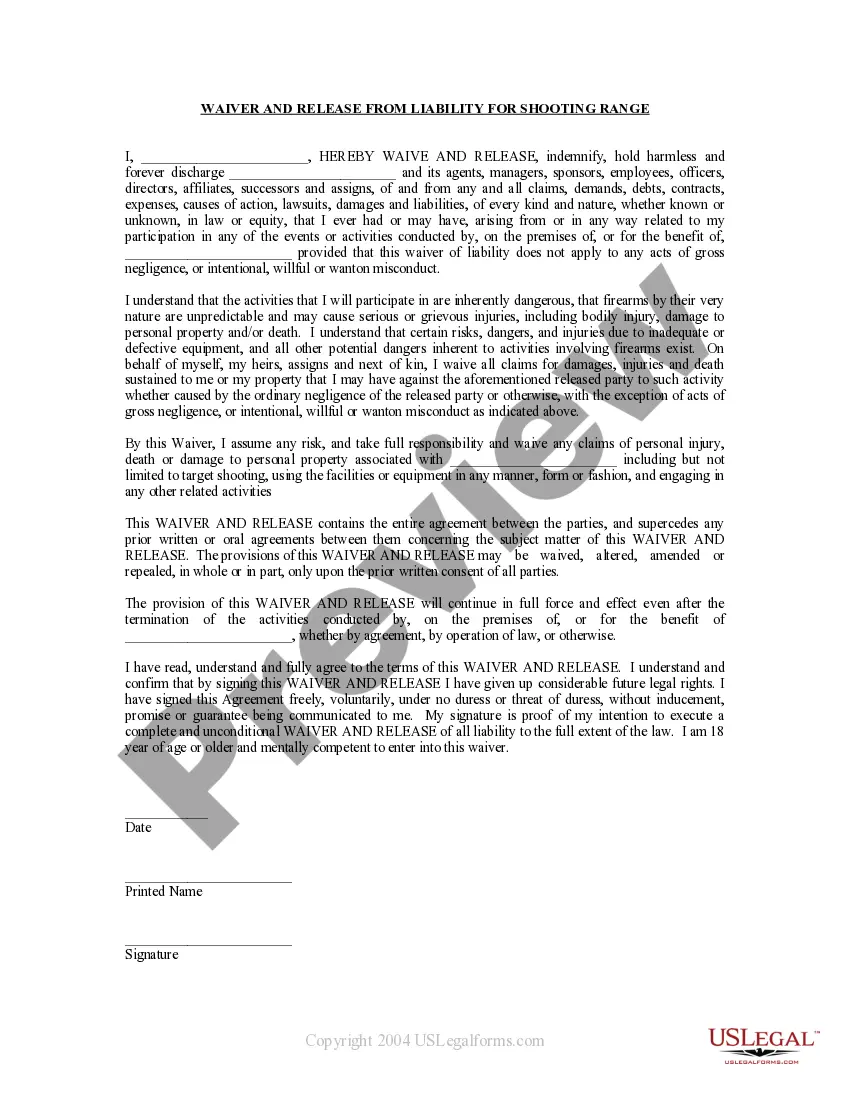
The Waiver and Release From Liability For Adult for Skeet Shooting is a legal document that allows an adult participant to release a skeet shooting facility from responsibility for potential injuries incurred during activities at the facility. This form is essential for protecting the facility from legal claims arising from accidents, while acknowledging the inherent risks of skeet shooting. Unlike other release forms, this specific waiver is tailored to the unique context of skeet and clay target shooting activities.
What’s included in this form
- Identification of the participant and the skeet shooting facility.
- A statement waiving the right to claim damages from the facility for injuries incurred.
- A recognition of the inherent risks associated with skeet shooting activities.
- Provision that the waiver does not cover gross negligence or intentional misconduct.
- Agreement that the waiver remains effective after the activities conclude.
- Signature lines for the participant to confirm understanding and acceptance of the waiver.
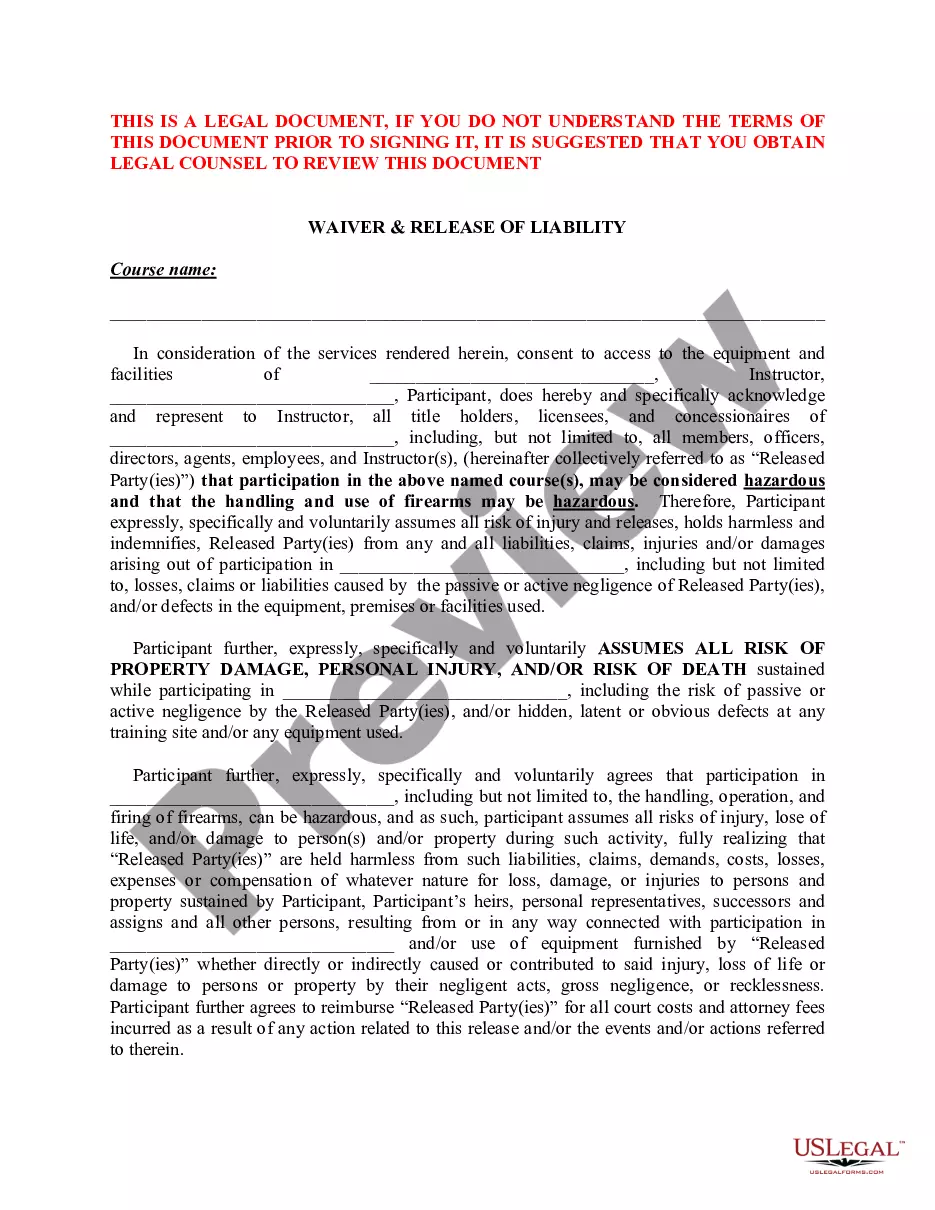
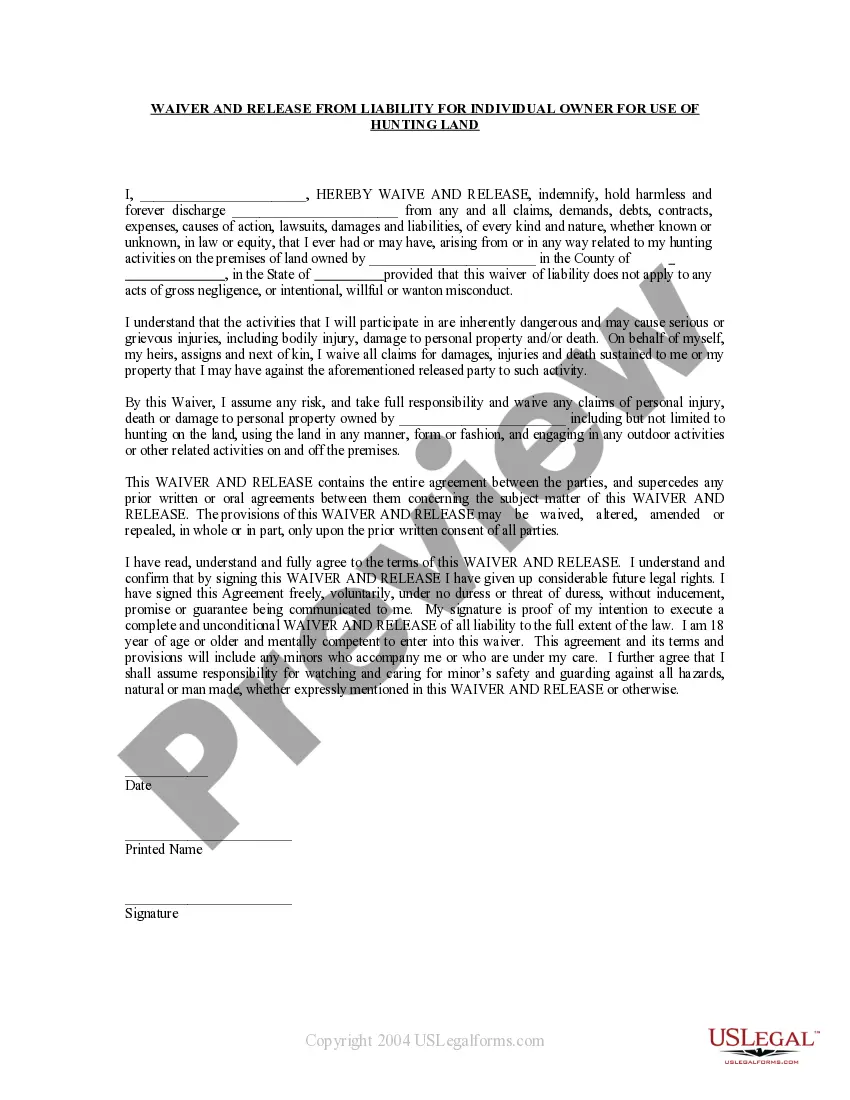
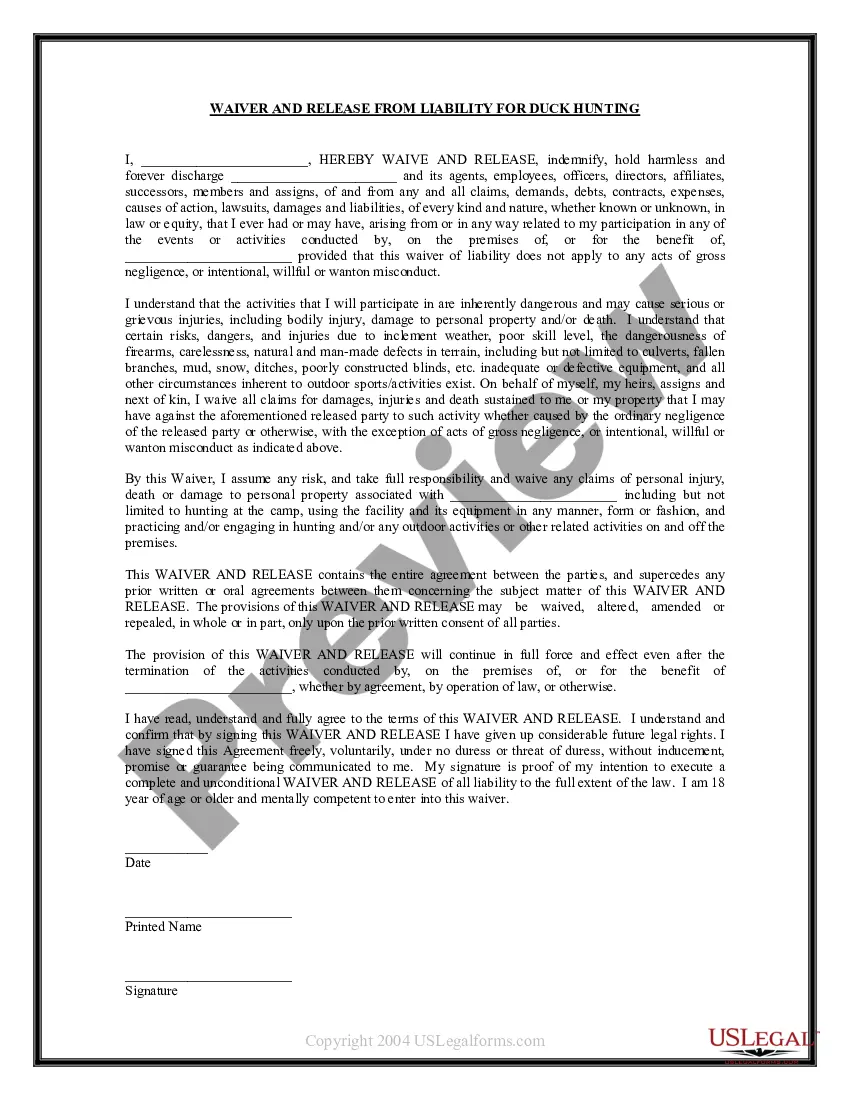
Situations where this form applies
This form should be used whenever an adult intends to participate in skeet shooting activities at a facility. It is particularly important when there is a potential for accidents or injuries related to the use of shooting equipment and facilities. This waiver protects both the participant and the facility by clarifying the risks involved and the release of liability before engaging in any activities.
Who should use this form
- Adults aged eighteen or older planning to participate in skeet shooting.
- Individuals participating in skeet shooting competitions or practice sessions.
- Groups or organizations renting a skeet shooting facility for an event.
How to prepare this document
- Identify and write down the name of the participant and the skeet shooting facility.
- Read the waiver terms carefully to understand the rights being waived.
- Include the date of signing in the specified field.
- Sign the form, confirming consent and understanding of the liability release.
- Print your name clearly where indicated.
Notarization requirements for this form
This form does not typically require notarization unless specified by local law. It is advisable to check with the relevant authorities if any specific notarization is required in your jurisdiction.
Get your form ready online
Our built-in tools help you complete, sign, share, and store your documents in one place.
Make edits, fill in missing information, and update formatting in US Legal Forms—just like you would in MS Word.
Download a copy, print it, send it by email, or mail it via USPS—whatever works best for your next step.
Sign and collect signatures with our SignNow integration. Send to multiple recipients, set reminders, and more. Go Premium to unlock E-Sign.
If this form requires notarization, complete it online through a secure video call—no need to meet a notary in person or wait for an appointment.
We protect your documents and personal data by following strict security and privacy standards.

Make edits, fill in missing information, and update formatting in US Legal Forms—just like you would in MS Word.

Download a copy, print it, send it by email, or mail it via USPS—whatever works best for your next step.

Sign and collect signatures with our SignNow integration. Send to multiple recipients, set reminders, and more. Go Premium to unlock E-Sign.

If this form requires notarization, complete it online through a secure video call—no need to meet a notary in person or wait for an appointment.

We protect your documents and personal data by following strict security and privacy standards.
Avoid these common issues
- Failing to read the waiver in its entirety before signing.
- Not providing accurate information in the participant or facility fields.
- Signing the form without confirming understanding of the risks involved.
- Overlooking the date or signature requirements.
Why complete this form online
- Convenience of immediate access to the waiver without the need for in-person visits.
- Editability allows for quick adjustments to participant or facility details.
- Reliable templates drafted by licensed attorneys ensure legal soundness.
Legal use & context
- This waiver serves to protect the skeet shooting facility from liability related to personal injuries incurred during shooting activities.
- Participants acknowledge their understanding of the risks involved in skeet shooting.
- In the case of a dispute, the waiver acts as a legal defense for the facility against negligence claims.
Summary of main points
- The Waiver and Release from Liability for Adult for Skeet Shooting is essential for protecting both participants and facilities.
- Understanding the legal implications of signing the waiver is crucial.
- This form is designed for adults and must be completed thoroughly for it to be valid.
Looking for another form?







Form popularity
FAQ
Release Versus Waiver The main difference between releases and waivers is the transferring of ownership. When rights are released, they are transferred to another party. When rights are waived, they are gone altogether.In the case of the skydiver, they might be asked to sign a release form rather than a waiver.
Essentially, a waiver removes a real or potential liability for the other party in the agreement. For example, in a settlement between two parties, one party might, by means of a waiver, relinquish its right to pursue any further legal action once the settlement is finalized.
A standard document for the release of existing indebtedness or obligations by way of consideration for an asset or share sale.
In California, a liability waiver must be clear, unambiguous, and explicit. In other words, waivers cannot be printed in faded ink, in small font, on the back of a paper, or in an otherwise ambiguous form. If the waiver that you sign is not represented clearly, it may not hold up in the event of a lawsuit.
What's the difference between waived and released? Players are waived if they have fewer than four years of experience in the NFL.However, if a player has four or more accrued seasons in the NFL, they are not waived, they are released. That means they are immediately free agents free to sign wherever they choose.
The Waiver must be clearly worded and unambiguous in its intent to relieve any and all legal liability, even liability for negligence. The Waiver should be prominent and not hidden in the fine print of a long contract. The Waiver must be signed by the person who it is being used against.
In many cases, the waiver is not enforceable.If you've been injured due to negligent actions, you can sue even if you signed a waiver. Winning a lawsuit concerning negligence is not uncommon. Many celebrities have sued for negligence even though they signed documents stating they understood the risks.
A waiver/release is an exculpatory contract that attempts to excuse or relieve a party, for injuries to a participant that arise out of the known and unknown risks in an activity.
Get help. Writing a waiver should not be complicated. Use the correct structure. Waivers should be written in a certain structure. Proper formatting. Include a subject line. Include a caution! Talk about the activity risks. Do not forget an assumption of risk. Hold harmless.