Waiver and Release From Liability For Adult for Hockey Rink
What is this form?
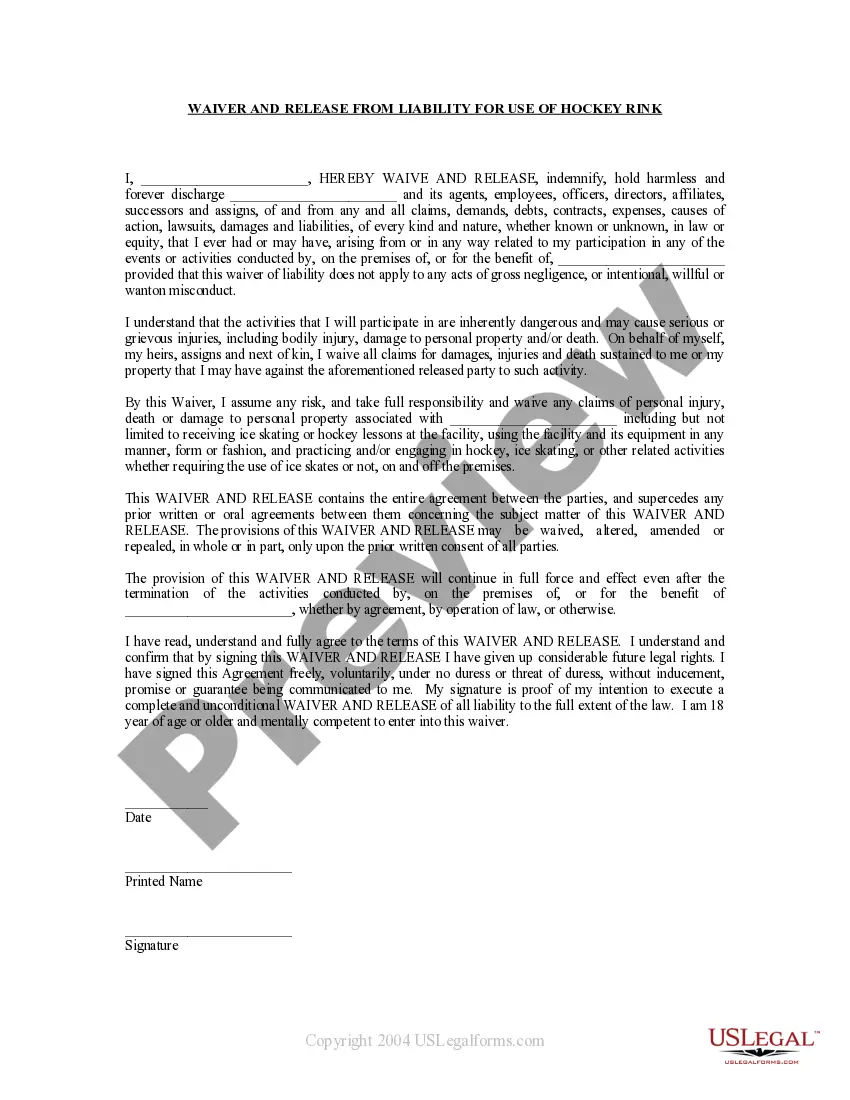
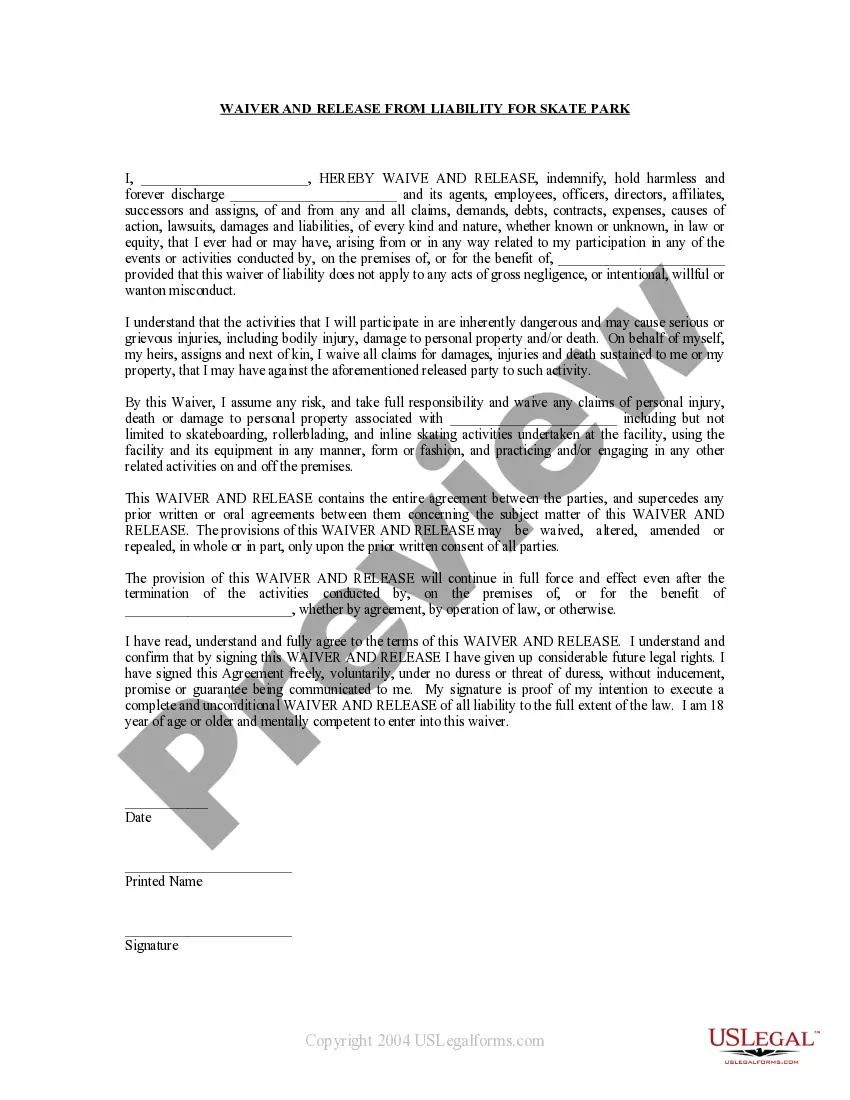
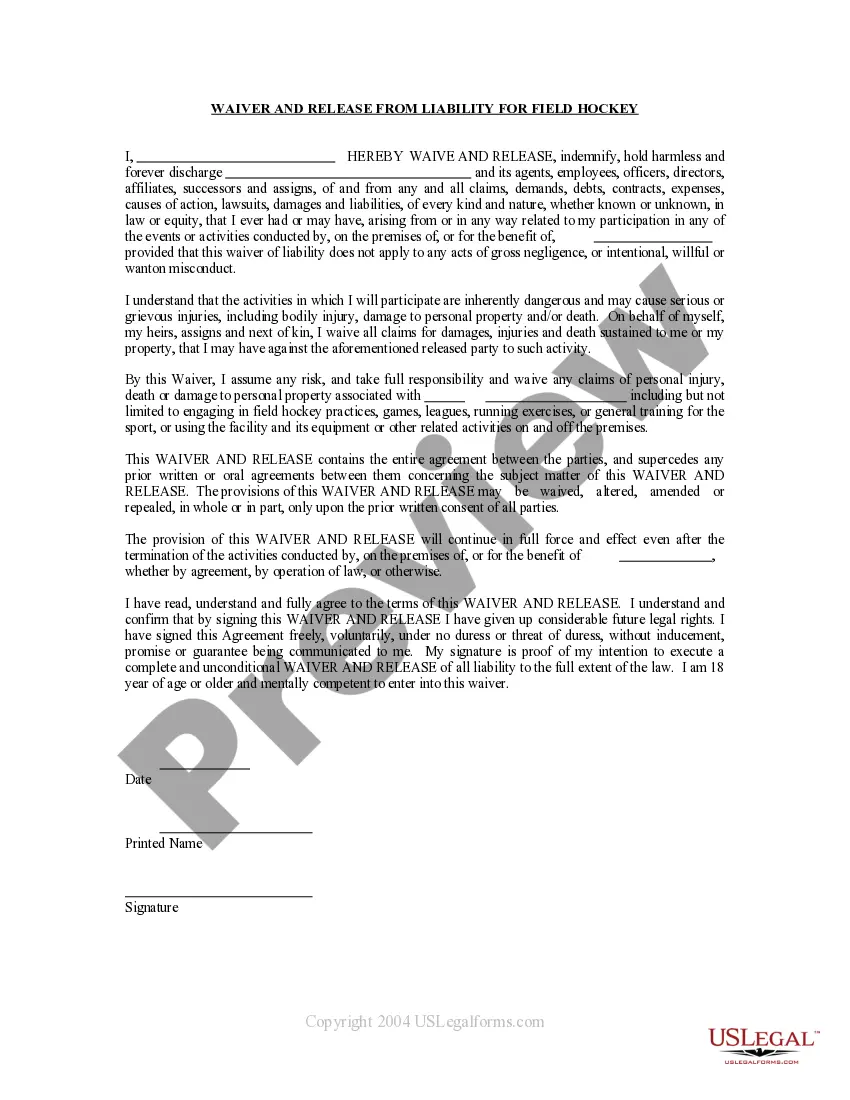
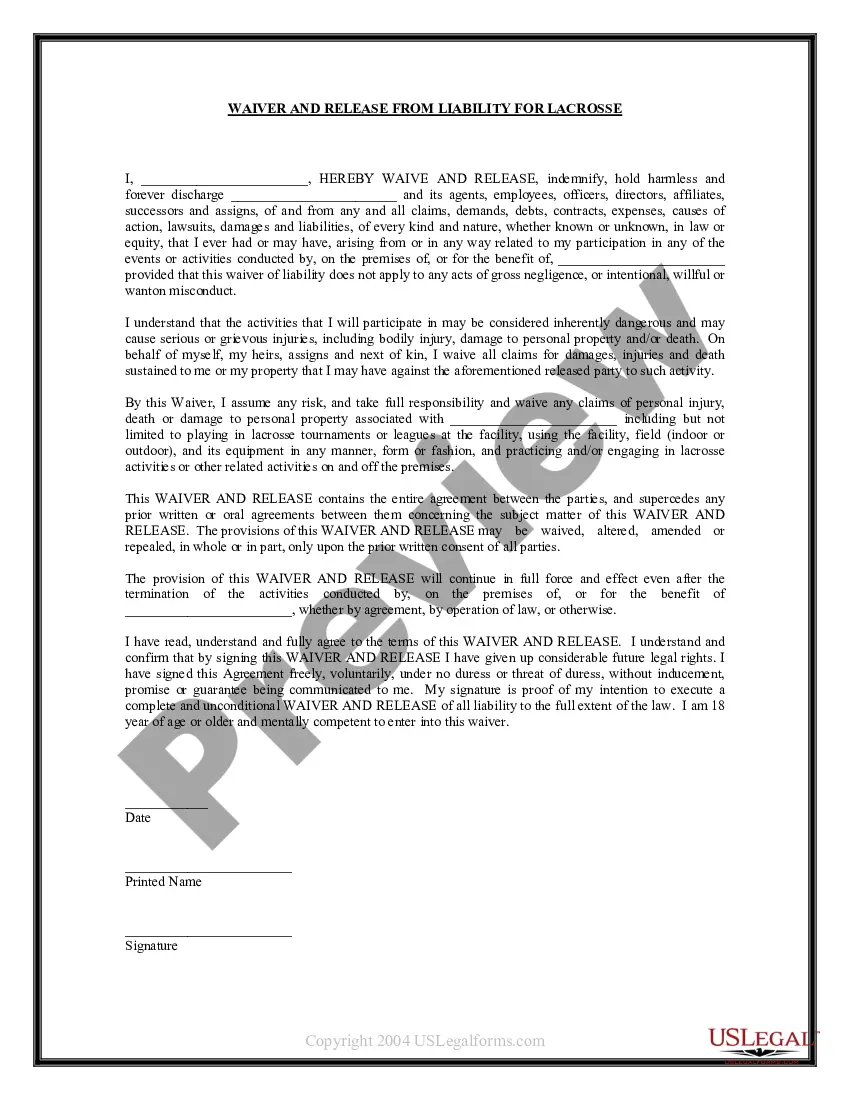
The Waiver and Release From Liability For Adult for Hockey Rink is a legal document allowing an adult to release a hockey rink from liability for injuries that may occur while on the premises or during activities. This form serves as a protection for the facility against claims arising from participation in potentially dangerous activities, distinguishing itself from other liability waivers by being specific to hockey rinks and similar settings.
Main sections of this form
- Identification of the participant and the hockey rink.
- Detailed waiver of liability for injuries occurring during activities.
- Assumption of risks associated with participating in hockey and ice skating.
- Indemnification clause protecting the facility from claims or lawsuits.
- Confirmation of understanding and agreement to the waiver terms.
- Signature and date fields for the participant.
Common use cases
This waiver should be completed when an adult participates in activities at a hockey rink, such as playing hockey, taking lessons, or engaging in recreational ice skating. It is also used when an individual wants to ensure that the hockey rink is not held liable for any injuries sustained during these activities.
Who can use this document
This waiver is intended for:
- Adults aged 18 or older engaging in hockey or ice skating activities.
- Individuals who wish to protect themselves and the rink from potential liabilities.
- Participants in organized events or recreational activities at a hockey rink.
Instructions for completing this form
- Identify and enter the participant's full name in the designated space.
- Provide the name of the hockey rink in the appropriate section.
- Read the waiver carefully to ensure understanding of the risks involved.
- Sign and date the form to confirm acceptance of the waiver terms.
- Keep a copy of the signed waiver for personal records.
Does this document require notarization?
Notarization is not commonly needed for this form. However, certain documents or local rules may make it necessary. Our notarization service, powered by Notarize, allows you to finalize it securely online anytime, day or night.
Get your form ready online
Our built-in tools help you complete, sign, share, and store your documents in one place.
Make edits, fill in missing information, and update formatting in US Legal Forms—just like you would in MS Word.
Download a copy, print it, send it by email, or mail it via USPS—whatever works best for your next step.
Sign and collect signatures with our SignNow integration. Send to multiple recipients, set reminders, and more. Go Premium to unlock E-Sign.
If this form requires notarization, complete it online through a secure video call—no need to meet a notary in person or wait for an appointment.
We protect your documents and personal data by following strict security and privacy standards.

Make edits, fill in missing information, and update formatting in US Legal Forms—just like you would in MS Word.

Download a copy, print it, send it by email, or mail it via USPS—whatever works best for your next step.

Sign and collect signatures with our SignNow integration. Send to multiple recipients, set reminders, and more. Go Premium to unlock E-Sign.

If this form requires notarization, complete it online through a secure video call—no need to meet a notary in person or wait for an appointment.

We protect your documents and personal data by following strict security and privacy standards.
Mistakes to watch out for
- Failing to read the waiver thoroughly before signing.
- Not filling in the full name or rink name correctly.
- Signing without ensuring that the participant is 18 or older.
- Neglecting to keep a signed copy for personal records.
Benefits of completing this form online
- Convenience of downloading the form anytime, anywhere.
- Editability to customize the form with specific names and details.
- Access to legally drafted templates by licensed attorneys.
Legal use & context
- This waiver is legally binding as long as it is signed voluntarily and without coercion.
- The limitations of liability may not protect against gross negligence or intentional misconduct.
- Enforceability may vary by state, and participants should ensure compliance with local laws.
Summary of main points
- The Waiver and Release From Liability is essential for adults participating in hockey activities.
- Understanding the terms of the waiver can protect both the participant and the facility.
- Ensure all fields are accurately completed to avoid issues later.
Looking for another form?

Form popularity
FAQ
3. How long do I keep signed waivers? The sponsoring unit is required to retain the waiver for six (6) years after the end of the event or activity for which the waiver was signed.
A liability waiver, or release waiver, is a legal document that a company or organization requires members of the public to sign in order to protect their organization from being sued if you sustain an injury.Depending on the facts of your case, you may still be able to file a lawsuit and recover damages.
In California, a liability waiver must be clear, unambiguous, and explicit. In other words, waivers cannot be printed in faded ink, in small font, on the back of a paper, or in an otherwise ambiguous form. If the waiver that you sign is not represented clearly, it may not hold up in the event of a lawsuit.
In many cases, the waiver is not enforceable.If you've been injured due to negligent actions, you can sue even if you signed a waiver. Winning a lawsuit concerning negligence is not uncommon. Many celebrities have sued for negligence even though they signed documents stating they understood the risks.
The waiver/release is properly drafted or worded according to the law in the state of the sports organization. It does not violate any state laws or public policy.
A liability waiver, or release of liability, is a legal document that a company or organization has you sign in order to protect them from being sued in the event that you are injured.
A release and waiver agreement is an enforceable promise not to pursue legal action in exchange for compensation. The releasee gives money or some other form of compensation to the releasor, who then agrees not to press charges, sue, or take any other legal action against the releasee.
A waiver is a legally binding provision where either party in a contract agrees to voluntarily forfeit a claim without the other party being liable. Waivers can either be in written form or some form of action.
The court explained that, in Florida, most waivers of liability are enforceable; however, only to a certain extent. While a defendant can include terms limiting a person's ability to sue based on the defendant's negligence, a defendant is not able to include terms limiting claims based on its gross negligence.