Post-Employment Restrictions on Competition
Overview of this form
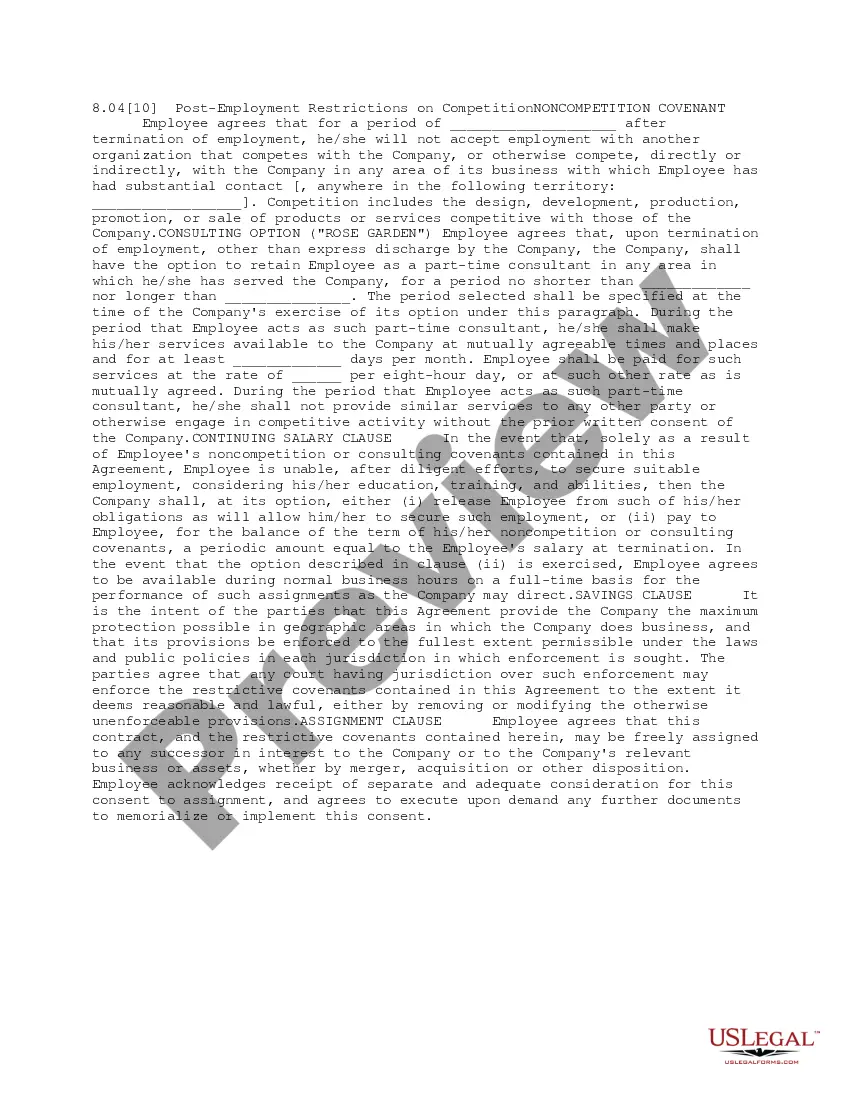
The Post-Employment Restrictions on Competition form is a legal document designed to establish certain limitations that an outgoing employee must adhere to after leaving a company. This form is particularly vital for employees who have been exposed to sensitive information, such as trade secrets or proprietary data. It includes a Noncompetition Covenant and various clauses, such as a Savings Clause, Consulting Option, and Assignment Clause, that collectively protect the company's interests while ensuring clarity on the employee's obligations.
What’s included in this form
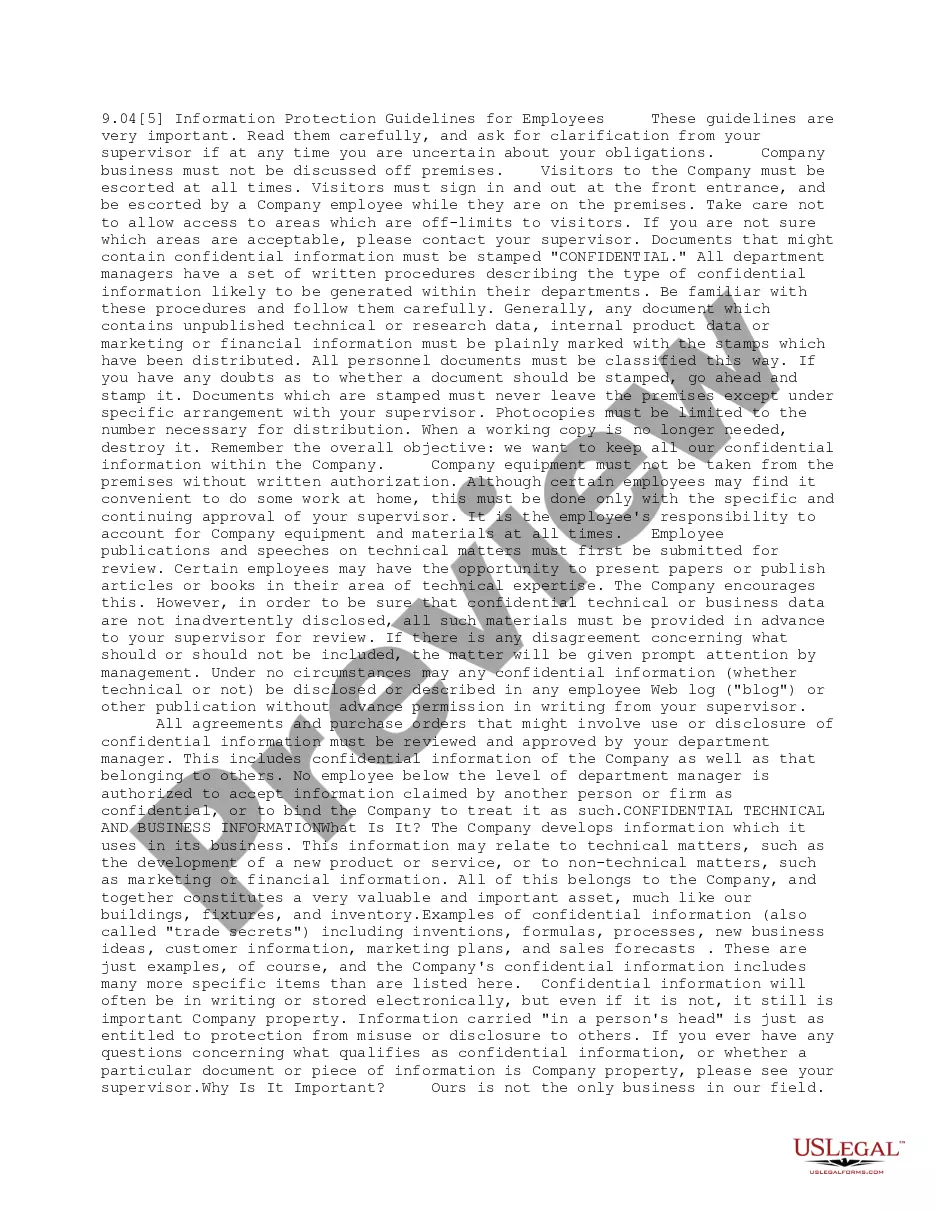
- Noncompetition Covenant: Restricts former employees from competing with the company for a specified period and within a defined territory.
- Consulting Option: Allows the company to retain the employee as a part-time consultant after termination under specific conditions.
- Continuing Salary Clause: Provides conditions under which the company may pay the employee if they are unable to find suitable employment due to noncompetition restrictions.
- Savings Clause: Ensures the agreement is enforceable to the maximum extent permissible by law, allowing for modification if necessary.
- Assignment Clause: Permits the company to transfer the contract and its obligations to another entity if necessary.

Common use cases
This form should be used when an employee is leaving a company and has had access to confidential information or competitive business strategies. It is essential for protecting the business from potential competition by former employees, especially when those employees have had significant responsibilities or knowledge that could benefit a competitor. The form clarifies the expectations and limitations placed on the employee after their departure.
Intended users of this form
- Employers who want to safeguard their business interests when an employee departs.
- Human resource professionals responsible for drafting and managing employee contracts.
- Employees who have been privy to proprietary information and are entering a different industry or role.
How to complete this form
- Identify the parties involved, including the employer and the employee.
- Specify the duration of the noncompetition restrictions after the termination of employment.
- Define the geographic territory where the noncompetition activities will be restricted.
- Indicate any specific terms related to the consulting option, including duration and payment structure.
- Review and ensure that all parties understand the obligations before signing the document.
Is notarization required?
Notarization is not commonly needed for this form. However, certain documents or local rules may make it necessary. Our notarization service, powered by Notarize, allows you to finalize it securely online anytime, day or night.
Get your form ready online
Our built-in tools help you complete, sign, share, and store your documents in one place.
Make edits, fill in missing information, and update formatting in US Legal Forms—just like you would in MS Word.
Download a copy, print it, send it by email, or mail it via USPS—whatever works best for your next step.
Sign and collect signatures with our SignNow integration. Send to multiple recipients, set reminders, and more. Go Premium to unlock E-Sign.
If this form requires notarization, complete it online through a secure video call—no need to meet a notary in person or wait for an appointment.
We protect your documents and personal data by following strict security and privacy standards.

Make edits, fill in missing information, and update formatting in US Legal Forms—just like you would in MS Word.

Download a copy, print it, send it by email, or mail it via USPS—whatever works best for your next step.

Sign and collect signatures with our SignNow integration. Send to multiple recipients, set reminders, and more. Go Premium to unlock E-Sign.

If this form requires notarization, complete it online through a secure video call—no need to meet a notary in person or wait for an appointment.

We protect your documents and personal data by following strict security and privacy standards.
Typical mistakes to avoid
- Failing to specify the duration of the noncompetition period.
- Not clearly defining the geographic area where the restrictions apply.
- Omitting necessary clauses that protect both parties involved.
- Not reviewing local laws that may impact the enforceability of the agreement.
Benefits of using this form online
- Conveniently accessible for immediate download and use.
- Easily customizable to fit specific needs and circumstances.
- Prepared by licensed attorneys, ensuring reliability and legal soundness.
- Allows for efficient processing without the need for in-person meetings.
Legal use & context
- This form may be enforced in court, provided its terms are reasonable and adhere to state laws.
- Ensure compliance with local regulations regarding noncompetition agreements, as these can impact enforceability.
- Some jurisdictions may limit the duration and scope of noncompetition clauses, so consider consulting legal counsel.
Main things to remember
- The Post-Employment Restrictions on Competition form is crucial for protecting business interests from former employees.
- It includes essential components like a noncompete clause and options for consulting, ensuring clarity and mutual agreement.
- Understanding state-specific laws can enhance the enforceability of this agreement.
Looking for another form?




Form popularity
FAQ
Negotiate the non-compete Outside of failing to read the contract, the worst mistake employees make is being afraid to negotiate its terms. Remember, employers can't force you to sign a non-compete, so use that as leverage to remove terms that are unfavorable.
When you leave a job some employers will say you can't work for a similar business for a certain amount of time.Your contract might restrict what work you can do next, but your employer can only do this if it's needed to protect their business.
While an employer cannot require you to sign a non-compete, they may terminate, or choose not to hire you if you refuse to sign. Courts generally do not approve of non-compete agreements. In disputes over non-compete agreements, courts consider certain factors to decide if the agreement is reasonable.
A post-employment restraint will only be enforceable by a court if it is considered reasonable in its scope and for the protection of the employer's legitimate business interests.whether the restraint is unduly injurious to the interests of the employee and the public.
Voiding a non-compete contract is possible in certain circumstances. For instance, if you can prove that you never signed the contract, or if you can demonstrate that the contract is against the public interest, you may be able to void the agreement.
Typically, the only way to fight a non-compete agreement is to go to court. If you are an employee (or former employee) who signed such an agreement, this means you must violate the agreement and wait to be sued. It may be that your former employer has never sued another employee to enforce the non-compete agreement.
If your employer asks you to sign a noncompete when you're promoted to a new position, it's reasonable to ask for money to compensate you for the rights you are giving up.If presented with a noncompete clause, demand that it take effect only if you leave the job voluntarily.
When you leave a job some employers will say you can't work for a similar business for a certain amount of time. Your contract might restrict what work you can do next, but your employer can only do this if it's needed to protect their business.