Simple Letter of Intent for Stock Acquisition
Understanding this form
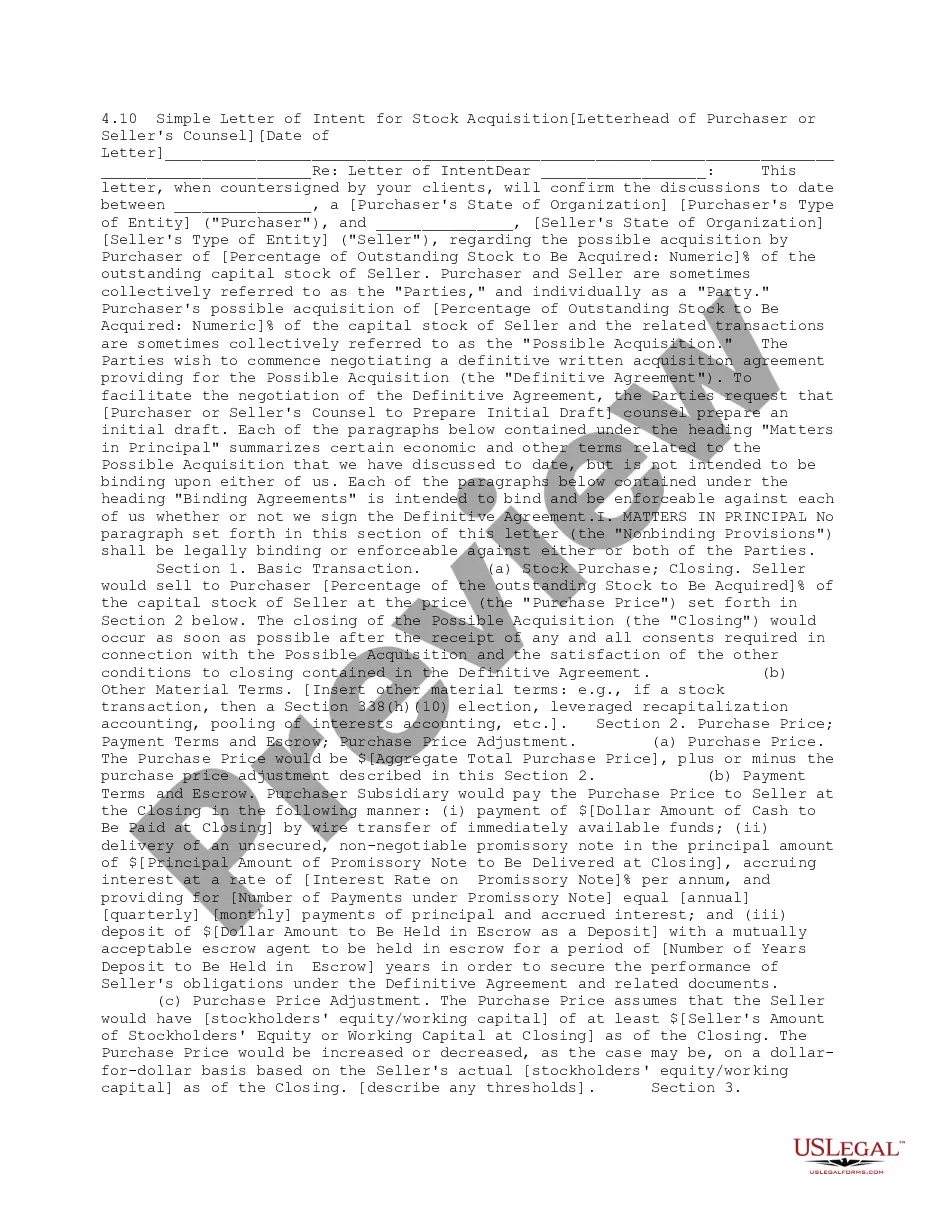
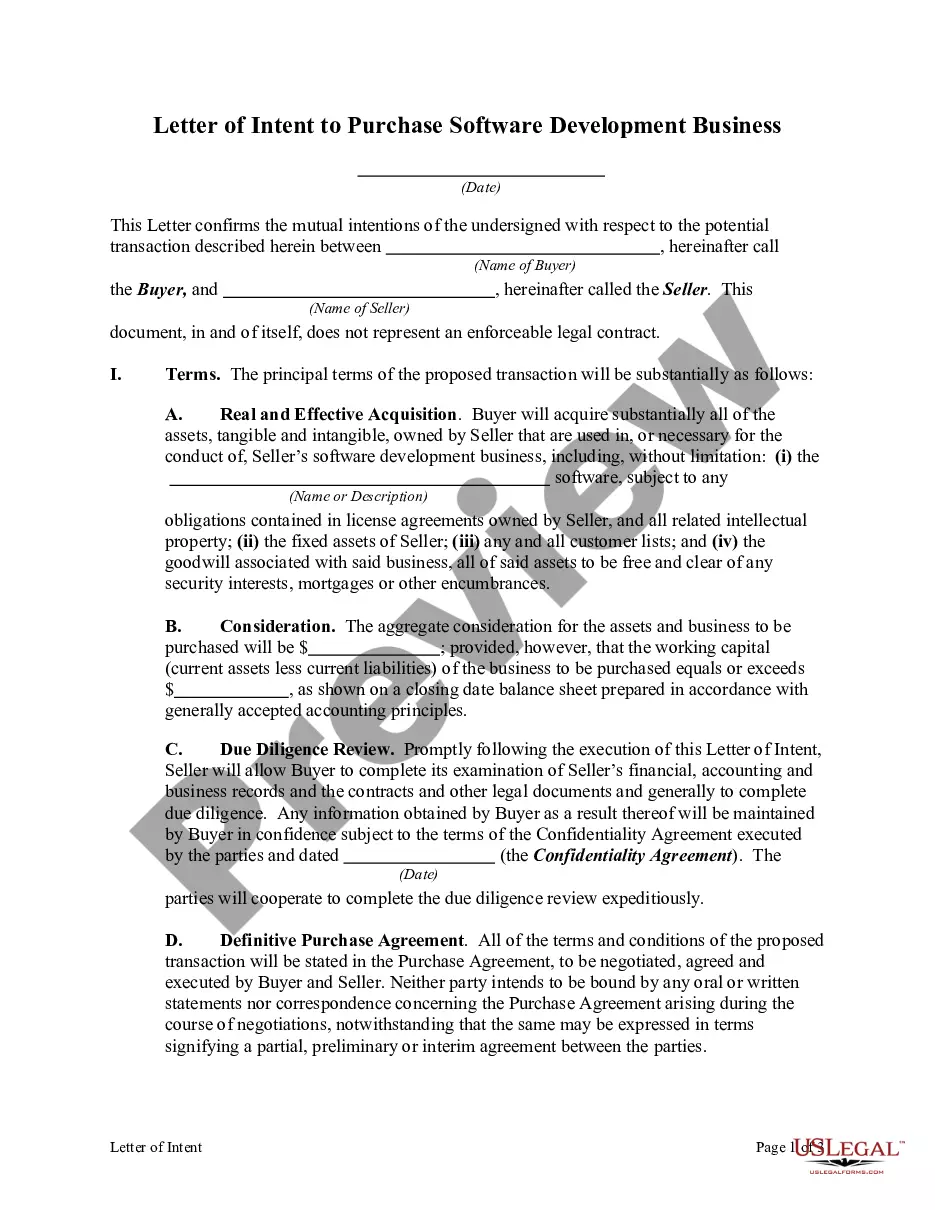
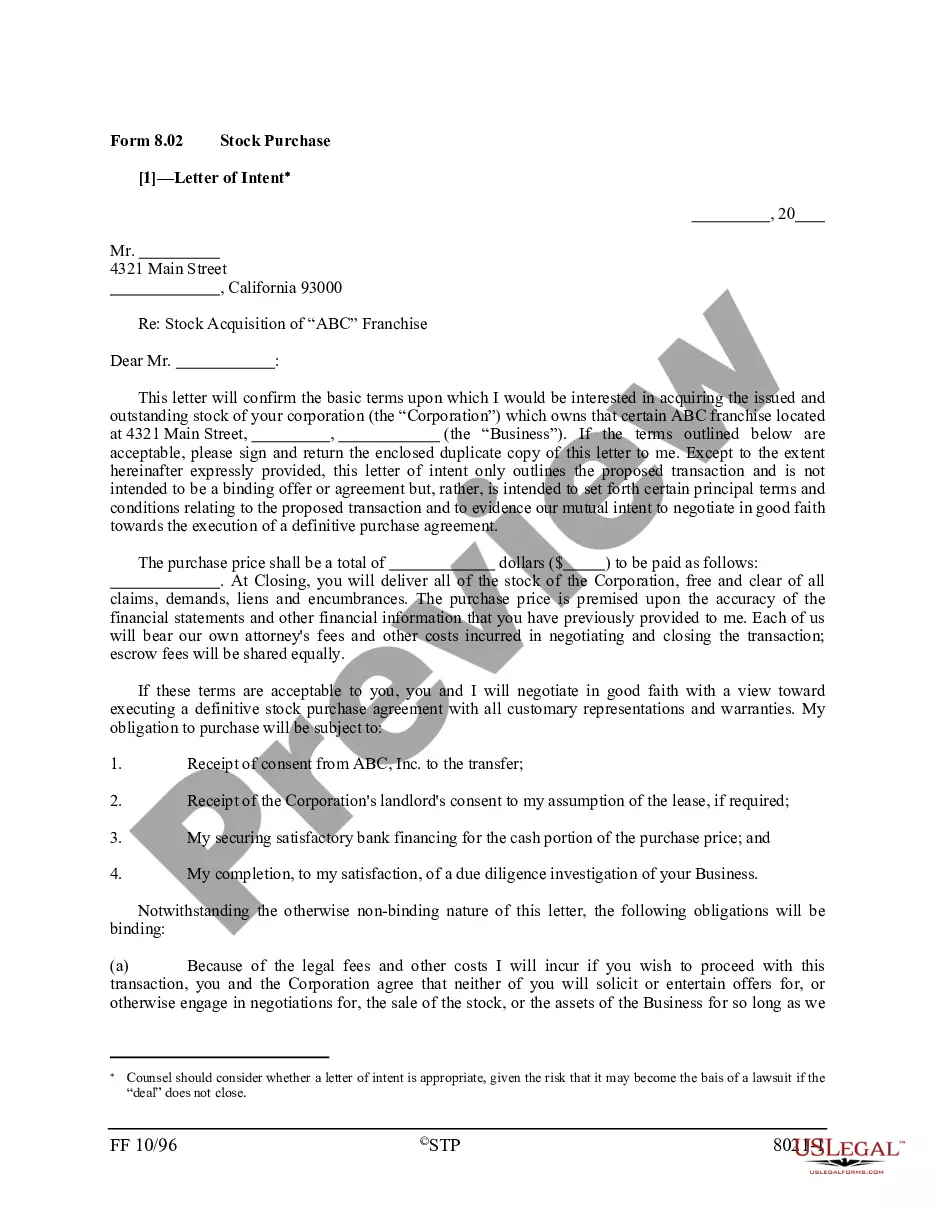
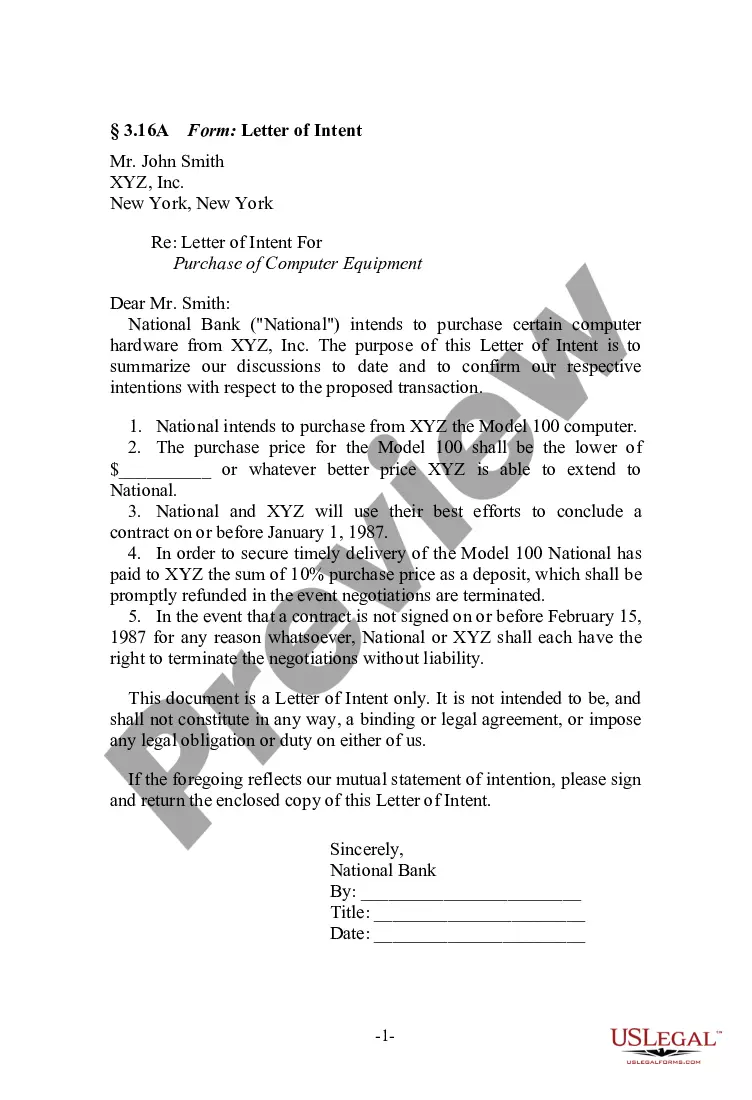
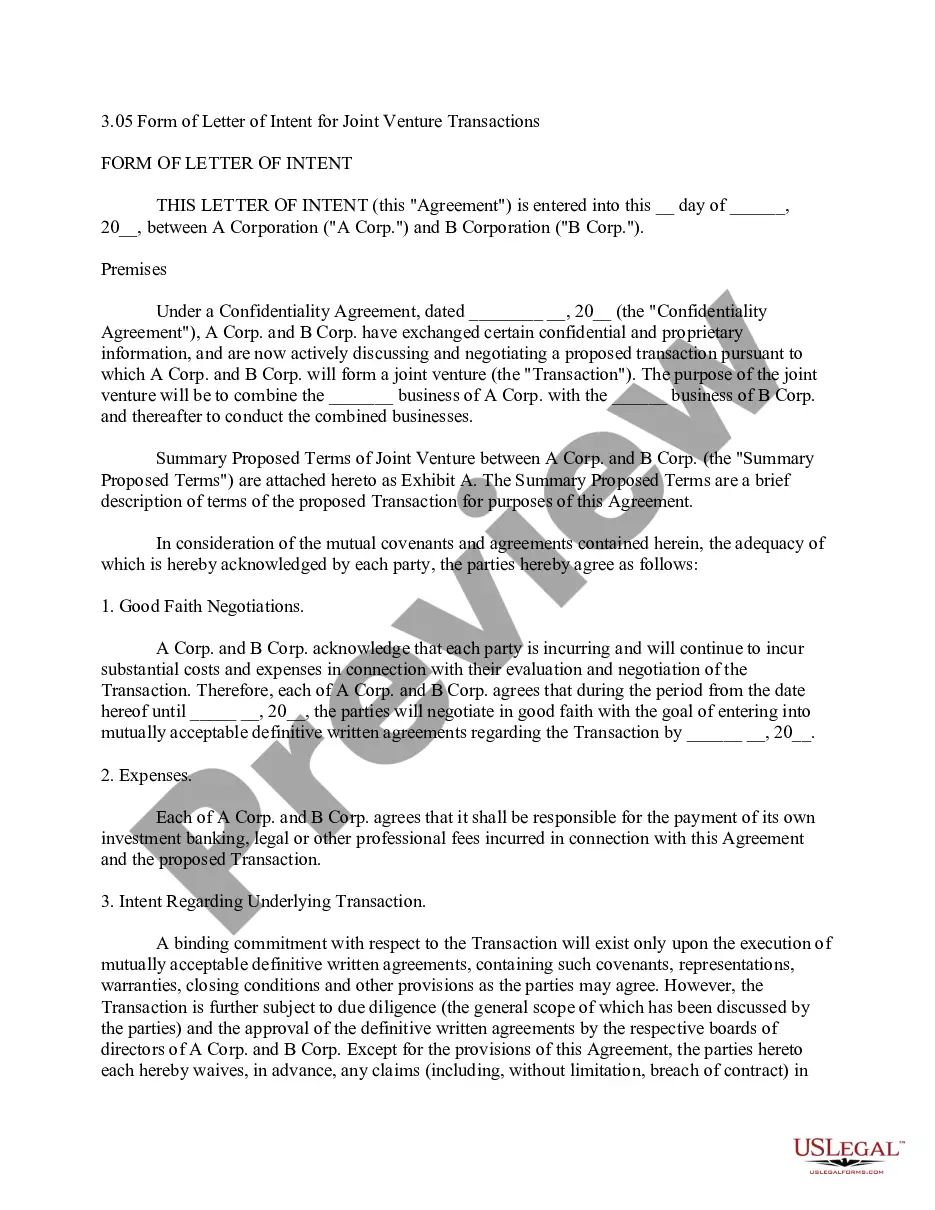
This Simple Letter of Intent for Stock Acquisition is a preliminary document that outlines the intentions of parties involved in the potential purchase of a company's stock. It serves as a summary of negotiations, and while it establishes the framework for the transaction, it is not legally binding in terms of the key financial details discussed. This form differs from a definitive agreement because it is meant to confirm discussions rather than finalize the transaction.
Key components of this form
- Letterhead of Purchaser or Seller's Counsel
- Date of the Letter
- Identification of Parties involved in the transaction
- Details of the percentage of stock being acquired
- Purchase Price and payment terms
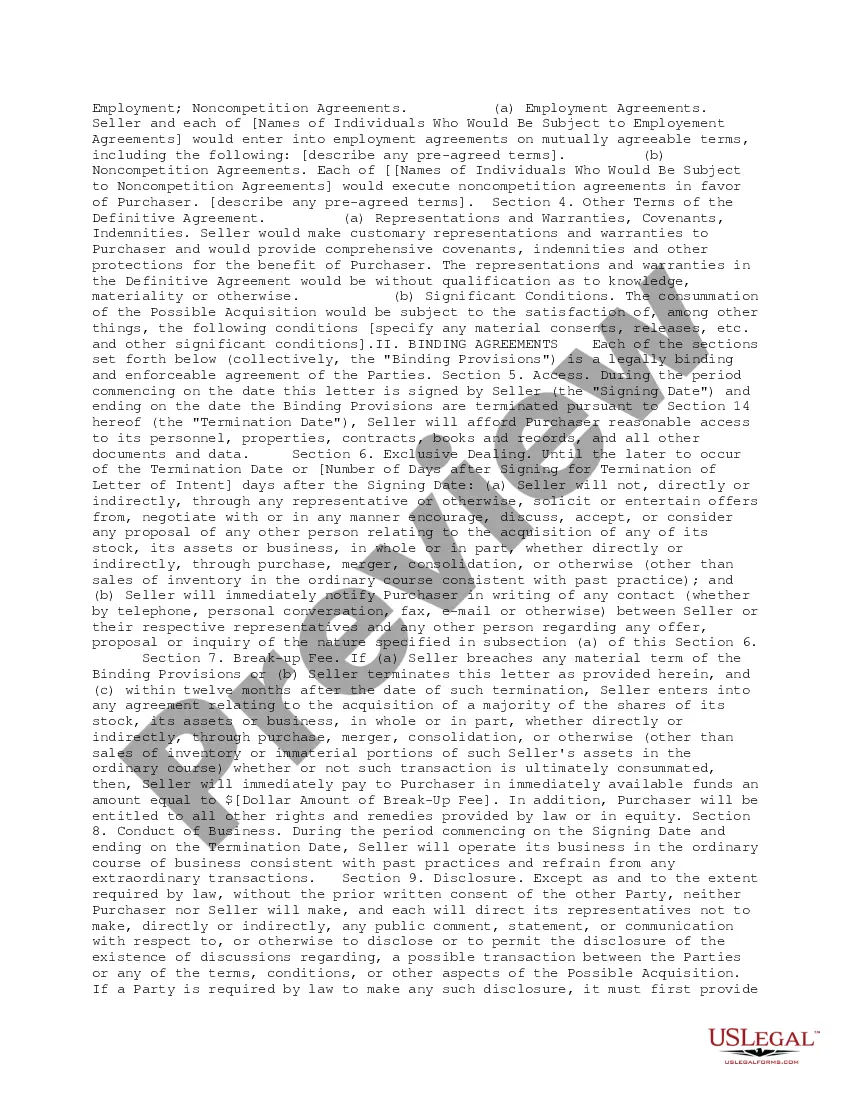
- Provisions for exclusivity and confidentiality
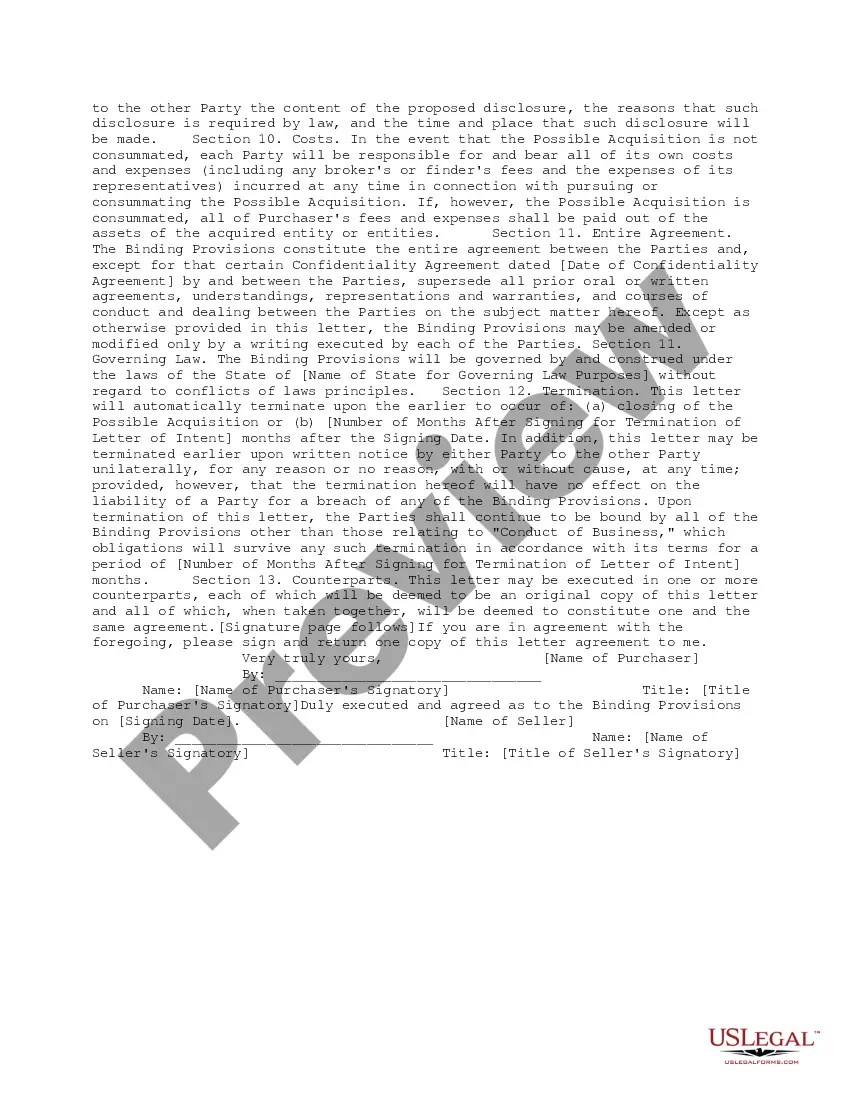
- Conditions and binding agreements relevant to the negotiations

When to use this form
This form should be used when two business parties are negotiating the acquisition of stock but have not yet signed a final agreement. It is particularly helpful in confirming the primary terms discussed and ensuring that both parties are on the same page as they proceed towards formalizing the acquisition.
Intended users of this form
This form is suitable for the following users:
- Business owners looking to sell their company shares
- Investors interested in acquiring stocks from a business
- Legal counsel representing either party in stock acquisition negotiations
How to prepare this document
To complete this form, follow these steps:
- Identify the parties involved by entering their names and the state of incorporation.
- Specify the percentage of stock being acquired and the purchase price.
- Detail any material terms of the stock transaction, including payment methods.
- Include any employment or noncompetition agreements, if applicable.
- Have each party's counsel review the document for accuracy and completeness.
- Ensure signatures are provided to acknowledge agreement to the terms outlined.
Notarization guidance
This form does not typically require notarization unless specified by local law.
Get your form ready online
Our built-in tools help you complete, sign, share, and store your documents in one place.
Make edits, fill in missing information, and update formatting in US Legal Forms—just like you would in MS Word.
Download a copy, print it, send it by email, or mail it via USPS—whatever works best for your next step.
Sign and collect signatures with our SignNow integration. Send to multiple recipients, set reminders, and more. Go Premium to unlock E-Sign.
If this form requires notarization, complete it online through a secure video call—no need to meet a notary in person or wait for an appointment.
We protect your documents and personal data by following strict security and privacy standards.

Make edits, fill in missing information, and update formatting in US Legal Forms—just like you would in MS Word.

Download a copy, print it, send it by email, or mail it via USPS—whatever works best for your next step.

Sign and collect signatures with our SignNow integration. Send to multiple recipients, set reminders, and more. Go Premium to unlock E-Sign.

If this form requires notarization, complete it online through a secure video call—no need to meet a notary in person or wait for an appointment.

We protect your documents and personal data by following strict security and privacy standards.
Common mistakes
- Failing to specify all key terms and conditions of the proposed acquisition.
- Not clearly identifying the parties involved in the transaction.
- Leaving out the necessary signatures to make the document mutually acknowledged.
- Using vague language that can be misinterpreted later during negotiations.
Why use this form online
- Convenience: Easily download and customize the form to suit specific acquisition details.
- Editability: Modify the document according to your needs and the nature of the stock acquisition.
- Reliability: Professionally drafted by attorneys, ensuring legal soundness for your agreements.
Legal use & context
- The Simple Letter of Intent for Stock Acquisition outlines the framework for negotiations but does not constitute a legally binding agreement except for specific sections.
- Understanding the non-binding nature of the majority of the content is crucial for both parties.
- This letter is often a precursor to more detailed contracts and can aid in ensuring that both parties have a clear understanding of their intentions.
Main things to remember
- Utilize the Simple Letter of Intent for Stock Acquisition to outline preliminary agreements between parties.
- Ensure all parties involved are clearly identified and agree to the terms discussed.
- Review the document with legal counsel to avoid common mistakes.
Looking for another form?
Form popularity
FAQ
A letter of intent (LOI) is a document that someone uses in order to declare their intent to do something, such as make a purchase, apply for a job or education program, or to clarify points in a business transaction. They are written in letter format, and signed by one party (the party writing it).
The Letter of Intent (LOI) in M&A is a written, non-binding document which outlines an agreement in principle for the buyer to purchase the seller's business, stating the proposed price and terms. The mutually signed LOI is required before the buyer proceeds with the due diligence phase of acquisition.
Flatter first. Your offer to purchase letter is an emotional pitch. Get to the point. You may have 10 great ideas that you'd like to tell the seller. Paint a picture. Don't remodel the house. Show stability. Show humility. Don't whine. Close your offer to purchase letter with clarity.
The full names of the buyer and the seller. The complete address of the property. The agreed-upon purchase price. The agreed-upon earnest deposit. The date of signing the SPA. The terms and conditions that surround the earnest deposit.
Write the introduction. Describe the transaction and timeframes. List contingencies. Go through due diligence. Include covenants and other binding agreements. State that the agreement is nonbinding. Include a closing date.
Choose the Right Letter of Intent Format and Layout. Research the Company Before You Write. Find 3 Ways You Fit the Position. Get Attention with a Strong First Paragraph. Explain Why You're Interested in Them. End Your Letter of Intent by Asking for Action. Sign off with a Professional Closing.
A purchase letter of intent is the written intention to purchase products or services from a vendor. The customer will make use of this letter to demonstrate their seriousness as a buyer and their motivation to transact business in the future.
Salutation. Begin with a professional salutation. Body Paragraph 1: Introduction. Body Paragraph 2: Highlight Relevant Skills. Body Paragraph 3: Call to Action. Closing. Use the appropriate format. When sending an email, include a clear subject line. Research the company.