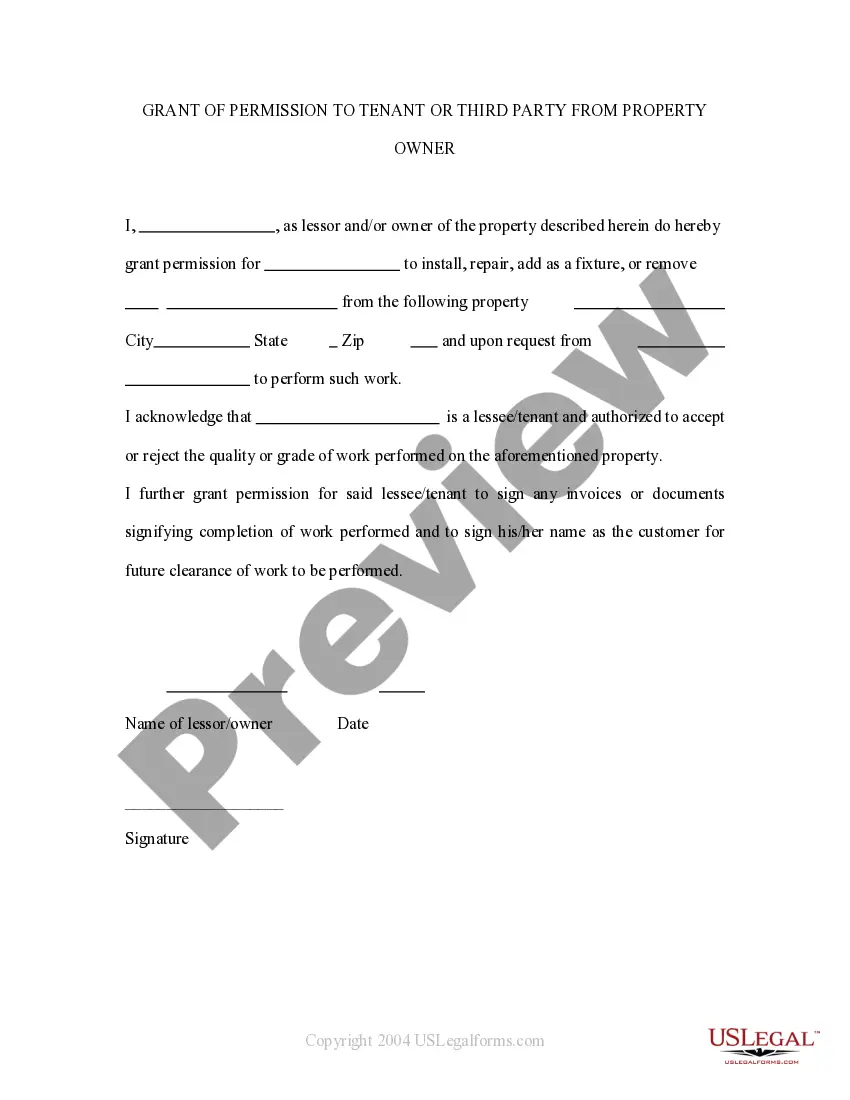
Grant Of Permission To Tenant Or Third Party From Property Owner
About this form
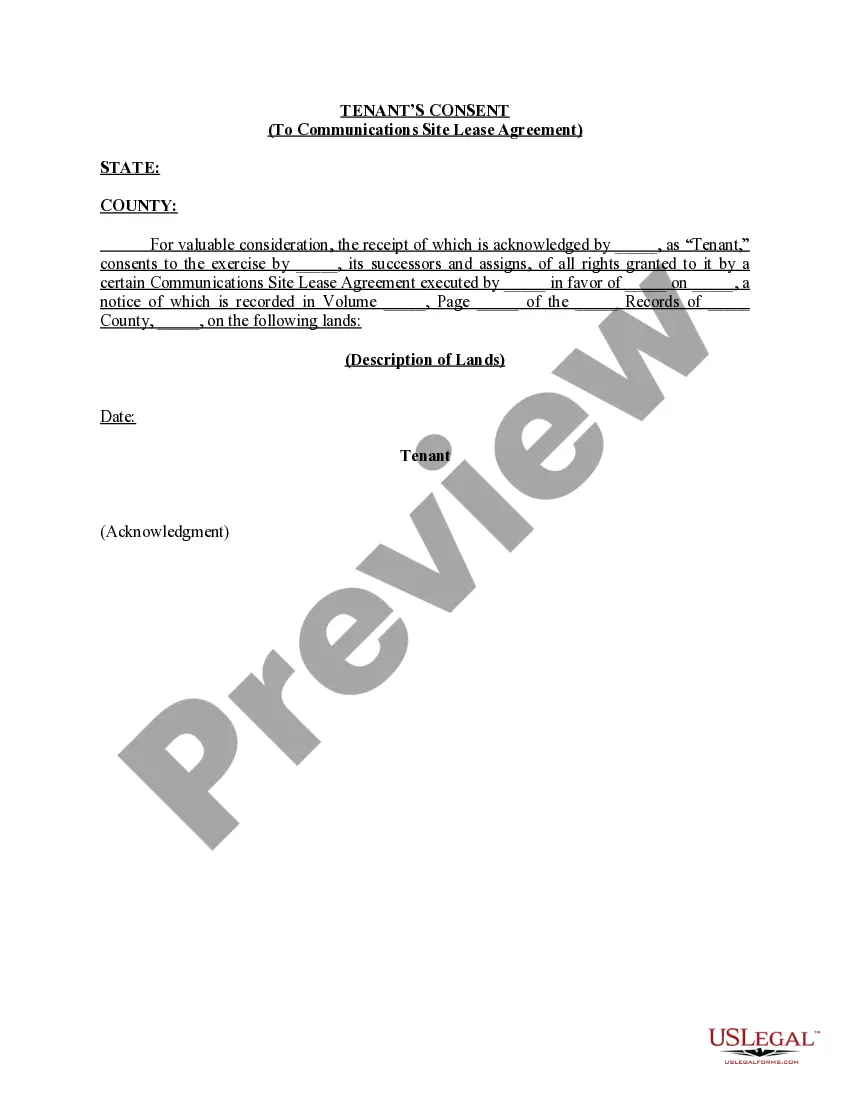
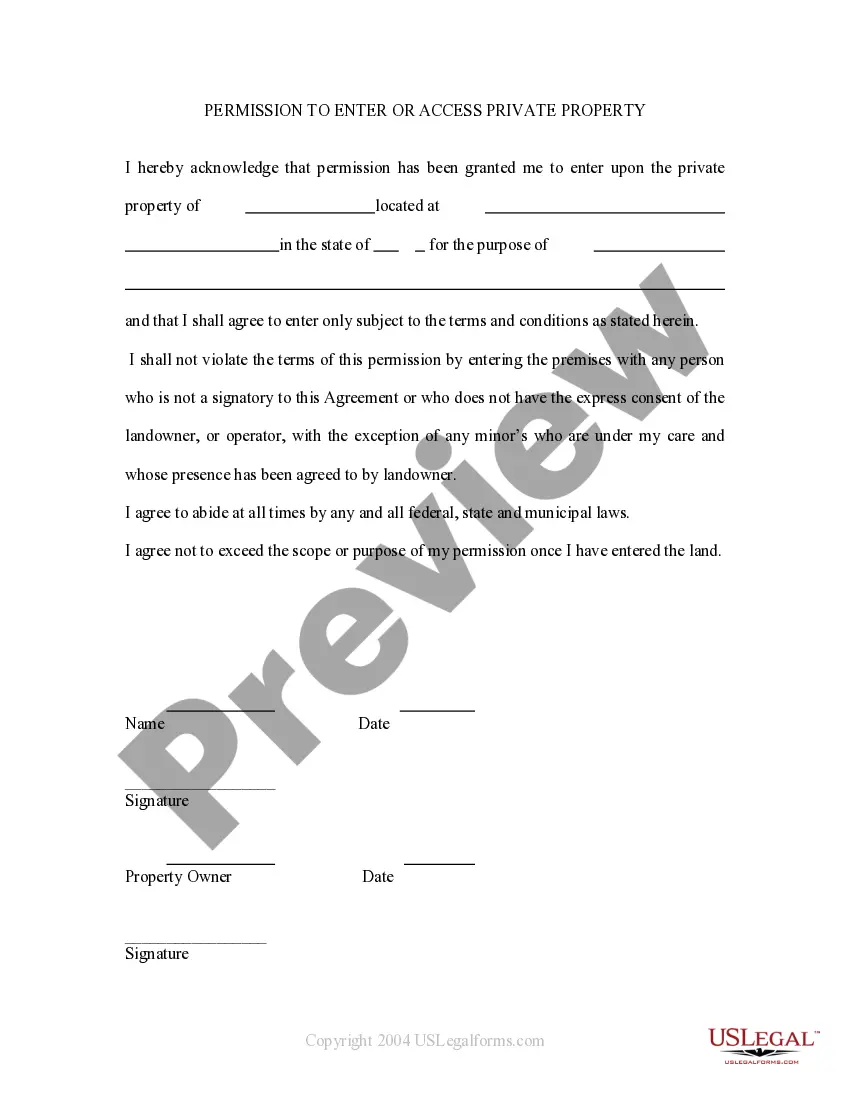
The Grant of Permission to Tenant or Third Party from Property Owner is a legal document that allows a property owner to authorize a tenant or third party to perform repairs or install fixtures, such as cable television, within a rental property. This form is distinct from rental agreements or maintenance requests, as it specifically grants permission for work to be done on the property, ensuring clarity and legal protection for both the landlord and the tenant.
Key parts of this document
- Identification of the property owner and tenant involved.
- Detailed description of the specific work or repairs authorized.
- Permission for the tenant to sign documents related to the work.
- Signature lines for all parties involved, confirming their consent.
Common use cases
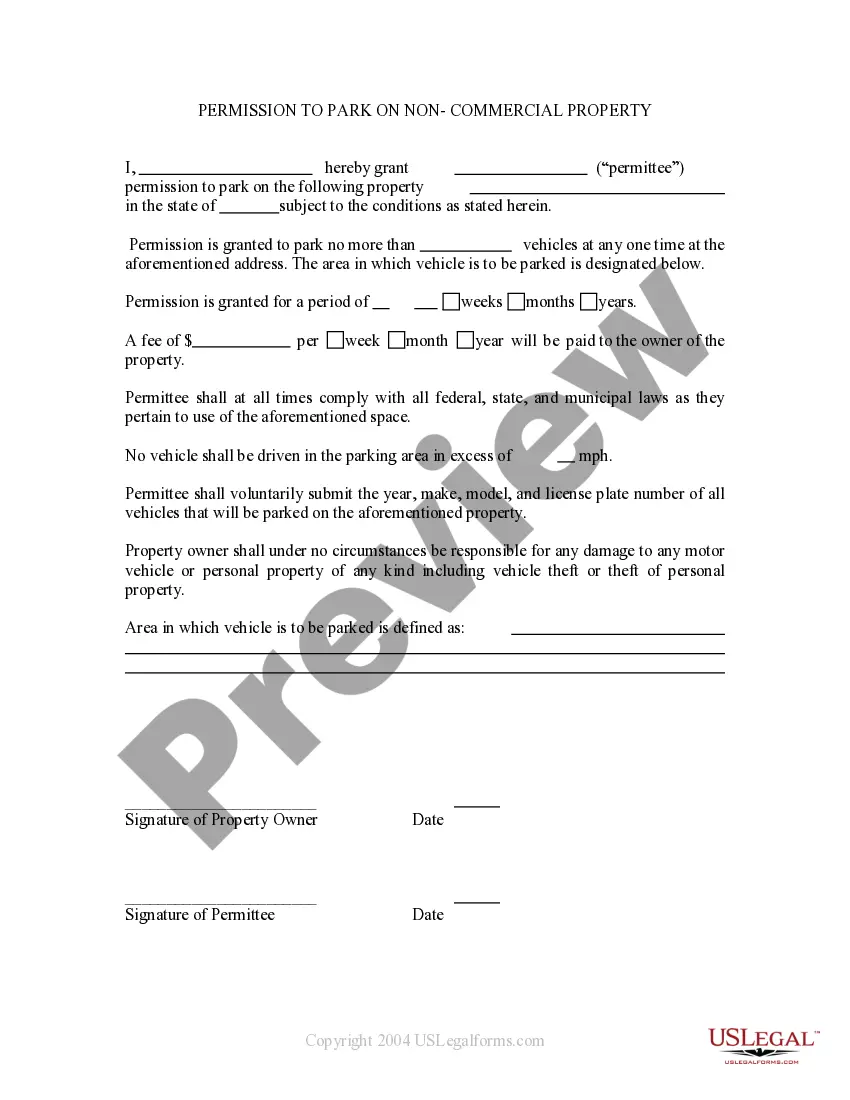
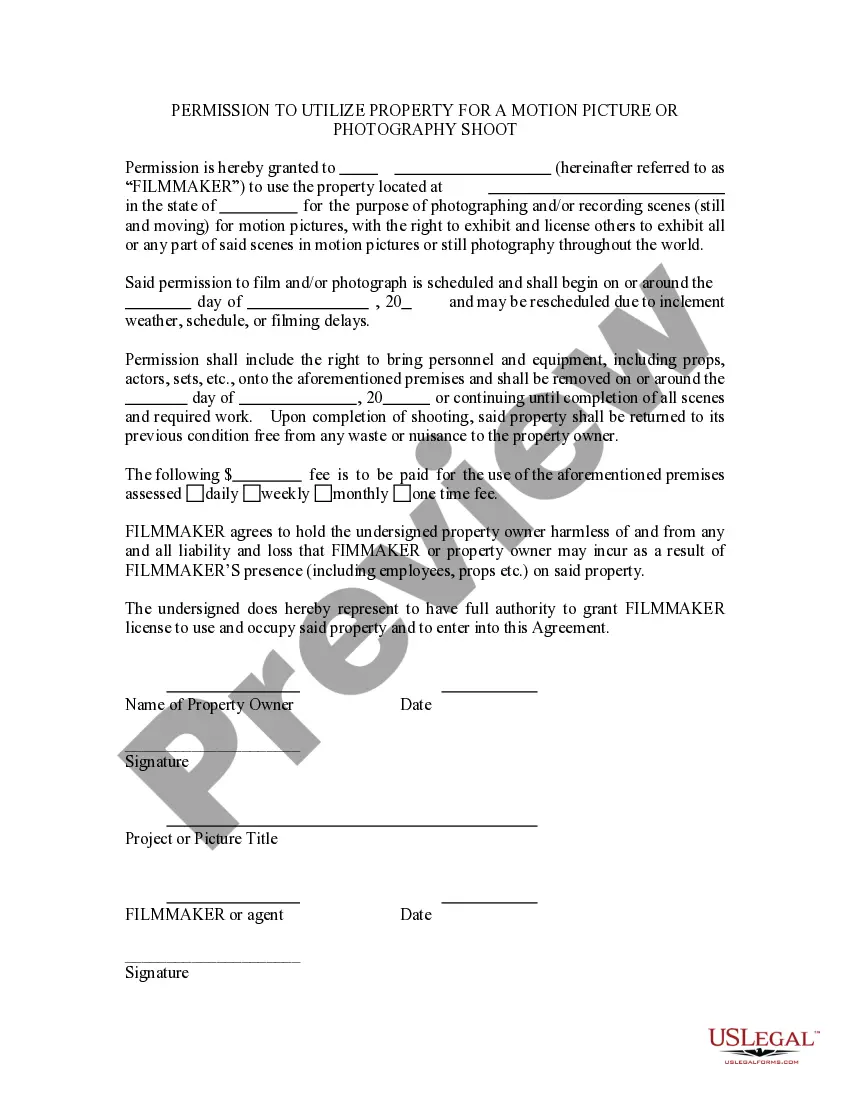
This form is used when a property owner needs to grant permission to a tenant or a third party to conduct necessary repairs or installations on the property. Scenarios might include situations where a tenant wants to install a new light fixture, make plumbing repairs, or have cable television services set up. By using this form, the property owner ensures that all parties understand the scope of work and the permissions granted.
Intended users of this form
- Property owners who want to allow repairs or installations on their property.
- Tenants seeking to have work done and require the property owner's permission.
- Third parties contracted by tenants to perform work on the property.
- Landlords looking to formalize agreements regarding maintenance and repairs.
How to prepare this document
- Identify and enter the full names and addresses of the property owner and tenant.
- Provide a clear description of the repairs or installations being authorized.
- Include any specifics, such as brand names or types of installations, if applicable.
- Sign and date the form, ensuring all parties involved provide their consent.
- Keep a copy of the completed form for your records.
Does this form need to be notarized?
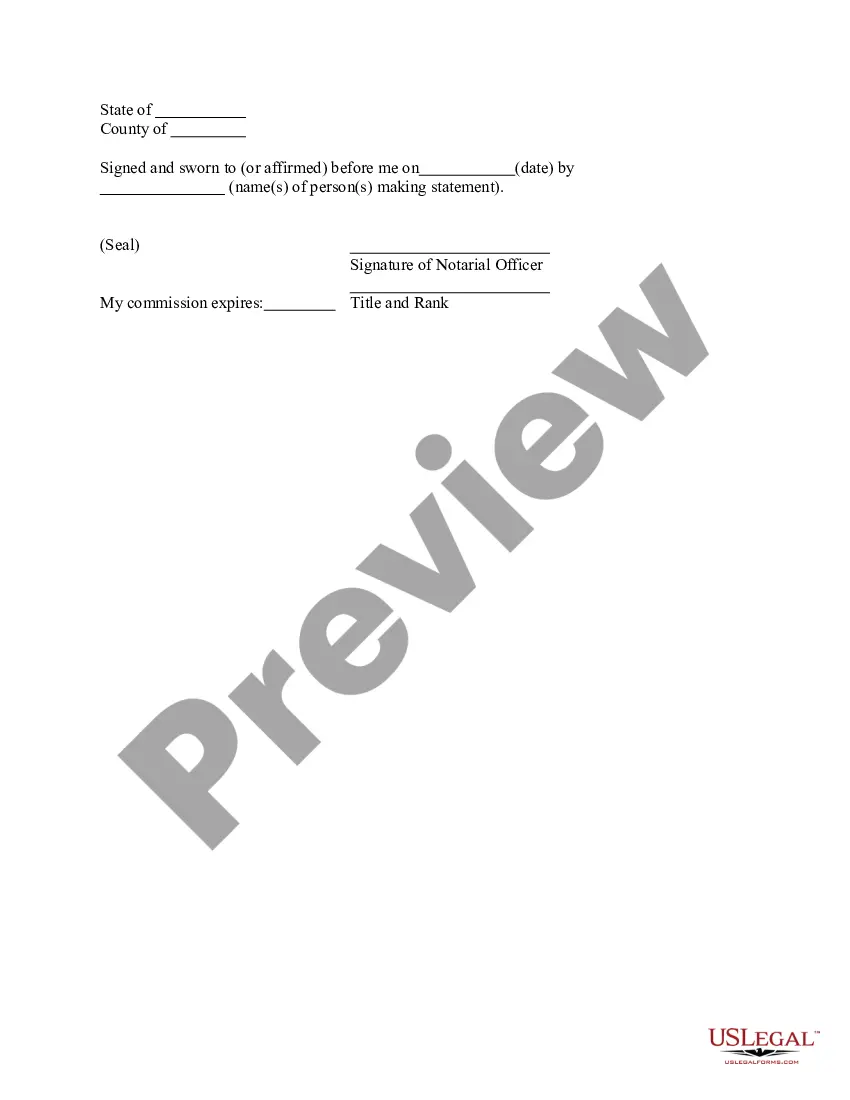
In most cases, this form does not require notarization. However, some jurisdictions or signing circumstances might. US Legal Forms offers online notarization powered by Notarize, accessible 24/7 for a quick, remote process.
Get your form ready online
Our built-in tools help you complete, sign, share, and store your documents in one place.
Make edits, fill in missing information, and update formatting in US Legal Forms—just like you would in MS Word.
Download a copy, print it, send it by email, or mail it via USPS—whatever works best for your next step.
Sign and collect signatures with our SignNow integration. Send to multiple recipients, set reminders, and more. Go Premium to unlock E-Sign.
If this form requires notarization, complete it online through a secure video call—no need to meet a notary in person or wait for an appointment.
We protect your documents and personal data by following strict security and privacy standards.

Make edits, fill in missing information, and update formatting in US Legal Forms—just like you would in MS Word.

Download a copy, print it, send it by email, or mail it via USPS—whatever works best for your next step.

Sign and collect signatures with our SignNow integration. Send to multiple recipients, set reminders, and more. Go Premium to unlock E-Sign.

If this form requires notarization, complete it online through a secure video call—no need to meet a notary in person or wait for an appointment.

We protect your documents and personal data by following strict security and privacy standards.
Common mistakes
- Failing to include a detailed description of the intended work.
- Not having all required signatures on the form.
- Providing vague details that could lead to misunderstandings.
- Neglecting to keep a copy of the signed document for reference.
Advantages of online completion
- Convenient access from anywhere, allowing for quick completion.
- Editability to tailor the document to specific needs before downloading.
- Reliable templates drafted by licensed attorneys, ensuring legal compliance.
- Secure and straightforward process to finalize necessary permissions.
What to keep in mind
- Use this form to legally authorize repairs or installations by tenants or third parties.
- Ensure all details are accurately filled out to prevent future disputes.
- This form can streamline communication and responsibilities between property owners and tenants.
Looking for another form?
Form popularity
FAQ
Co-owners have equal rights to possession of the property, and equal rights and responsibilities. If one co-owner excludes the other from the property, the excluded co-owner can recover the property's rental value from the excluding co-owner.
The legal interest (estate) is always co-owned under a legal joint tenancy. This means all co-owners have a legal right to occupation and use of the land as is the case with a beneficial joint tenancy. They are effectively trustees of the property holding the property on trust for themselves and all other co-owners.
Include a company or personal letterhead. If you do not have a letter head create one that includes your name, address and contact information such as phone number and email. Include the date in the top left corner. Include the tenant's name and address below the date.
Generally, joint owners have the right to possess and use the property. Most states do not require a joint owner to pay rent to the other joint owner(s) while exercising this right.Your rights as a joint owner also include: Money owed from renting the property to tenants.
Include the date, the tenant's full name and address at the top of the letter. Identify yourself as the landlord of the property and that you grant permission for the requested action. Add any additional conditions or provisions that must take place.
#1 Put the date at the top of the letter: #2 Provide the tenancy information: #3 Share whether or not the tenant paid rent on time: #4 Reveal the care and condition of the property : #5 Give information about the tenant's behavior:
If you want to sell the house and your co-owner doesn't, you can sell your share. Your co-owner probably won't like this option, however, unless they know and feel comfortable with their new co-owner.Co-owners usually have the right to sell their share of the property, but this right is suspended for the marital home.
The other owner has no right to evict you from something that you own. There is no cause of action that allows a co-owner to evict you. However, the co-owner can demand that you buy him or her out. If you cannot reach an agreement, then the co-owner can file a partition lawsuit and force the sale of the home.
If the property is found to not be in reasonable repair through no negligence or intentional action by the tenant, then it's the landlord's responsibility to fix the problem. The nature of the repairs will determine whether or not they must be fixed urgently, which is generally defined as within three days.