Permission To Hunt Trap or Fish
What this document covers
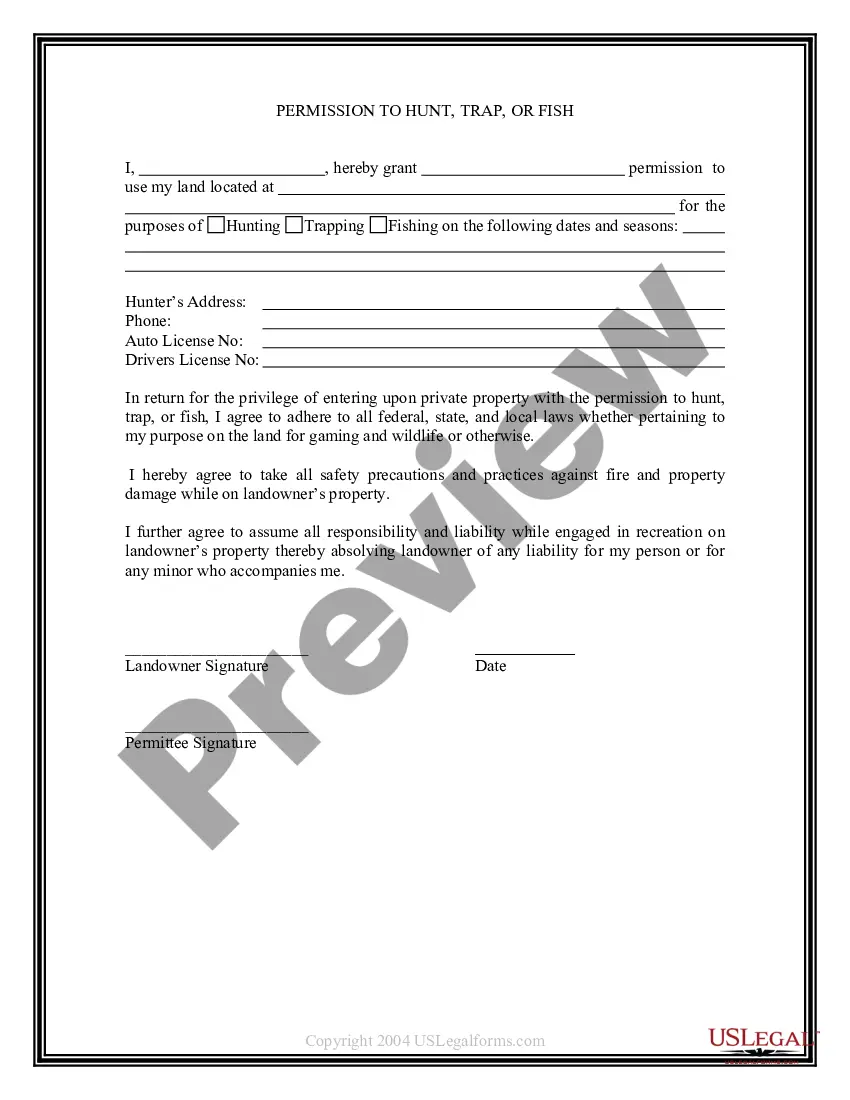
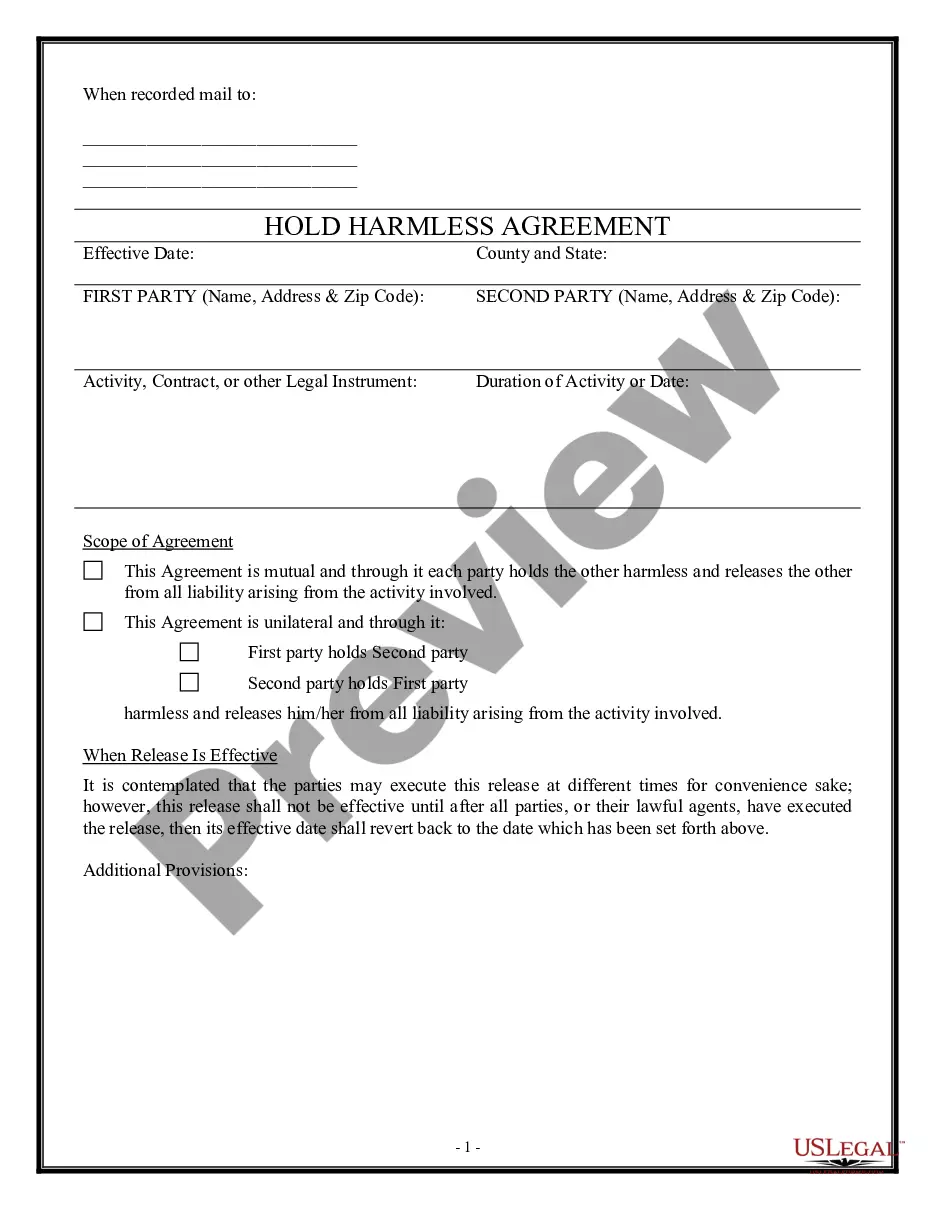
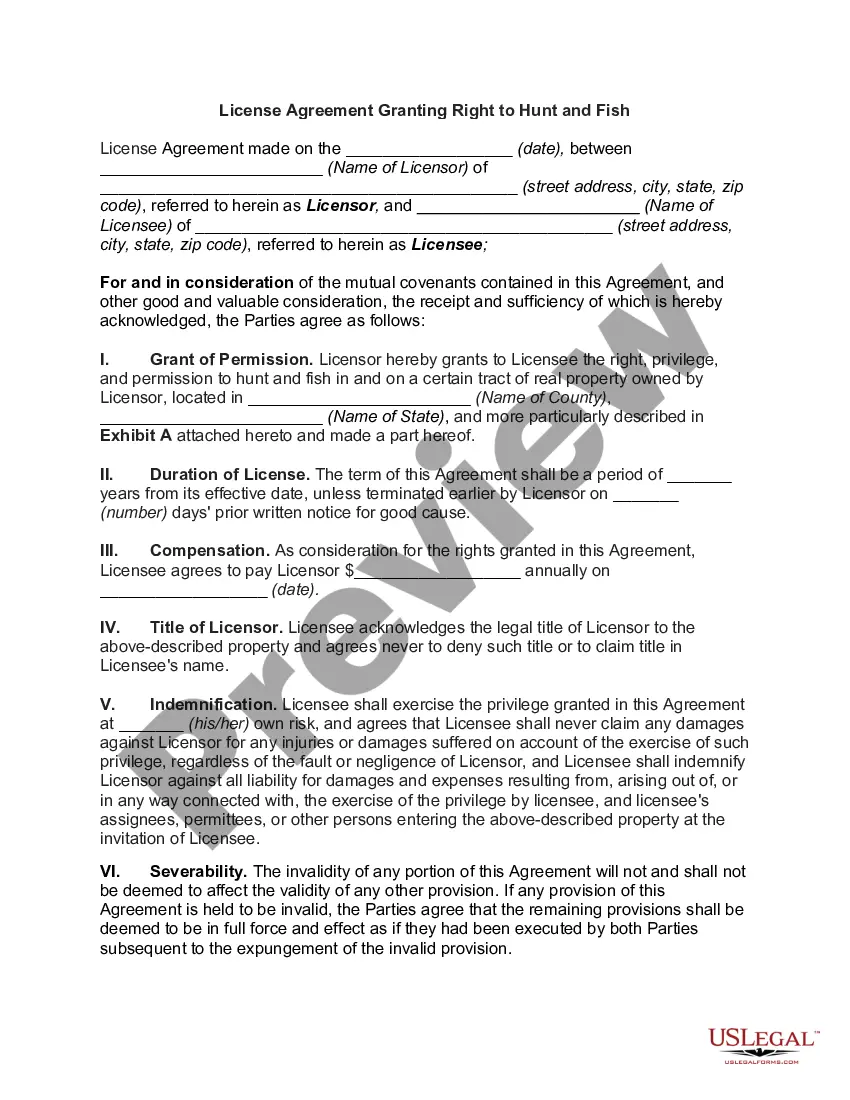
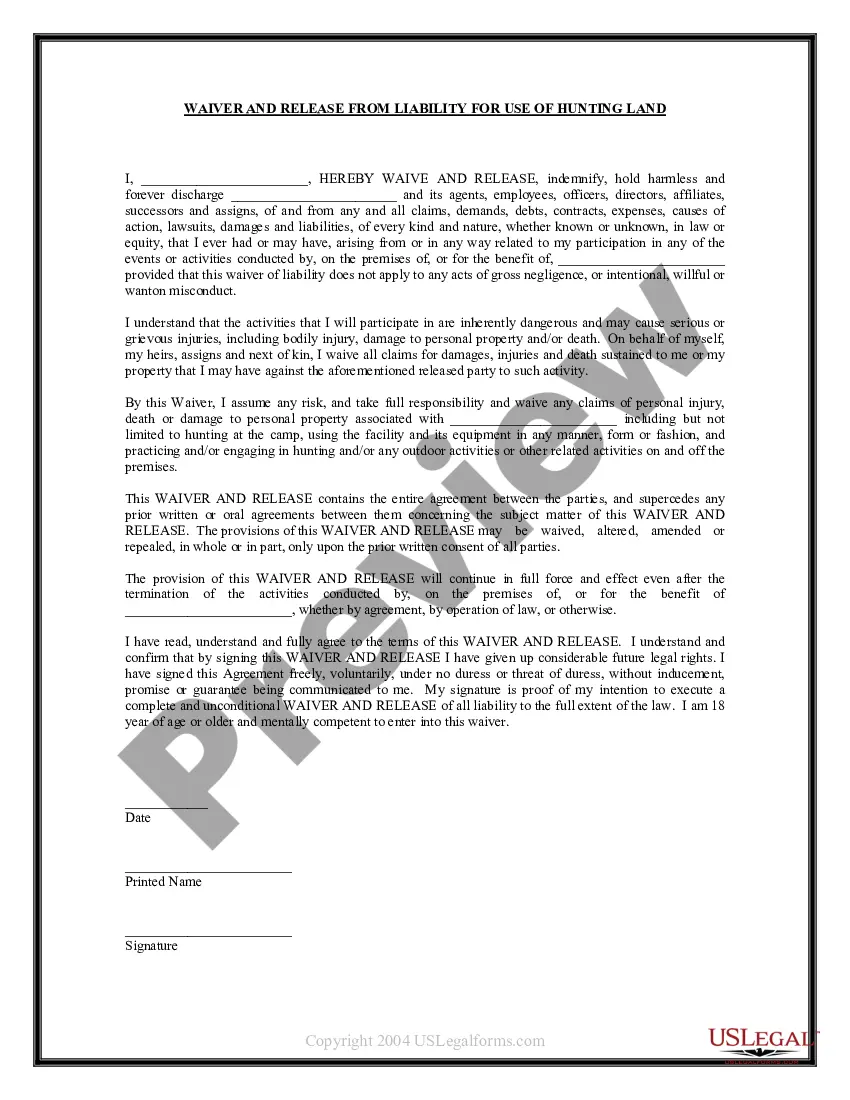
This Permission to Hunt Trap or Fish form is a legal document that allows a landowner to grant permission to an individual to hunt, trap, or fish on their property. By completing this form, both the landowner and the permittee acknowledge their responsibilities and agree to terms that absolve the landowner from liability during these activities. This form is essential for ensuring that all parties are aware of the rules and limitations regarding the use of the property for outdoor recreational purposes, setting it apart from general access or lease agreements.
Main sections of this form
- Identification of the landowner and permittee.
- Description of the specific property where hunting, trapping, or fishing is allowed.
- Statement of safety precautions the permittee must follow.
- Liability waiver absolving the landowner from responsibility for accidents or damages.
- Signatures of both the landowner and permittee, indicating mutual agreement.
Common use cases
This form should be used when a landowner wishes to permit another individual to engage in hunting, trapping, or fishing activities on their property. It is particularly useful for landowners who want to ensure that they are protected from liability while allowing controlled use of their land for recreation. This form is appropriate in situations such as hunting seasons, fishing excursions, or trapping regulations where explicit permission is needed to comply with local laws.
Who should use this form
- Landowners who wish to grant access to their property for hunting, trapping, or fishing.
- Individuals seeking formal permission from landowners to engage in these recreational activities.
- Property managers or leasing agents involved in managing land use permissions.
How to prepare this document
- Identify the parties involved by entering the names of the landowner and the permittee.
- Specify the exact property location where the hunting, trapping, or fishing will occur.
- Review and include any safety precautions that the permittee must take while on the property.
- Include a clause stating that the permittee agrees to absolve the landowner of any liability.
- Have both parties sign and date the form to confirm their agreement.
Is notarization required?
This form does not typically require notarization unless specified by local law. It is advisable to check any specific regulations in your state that may require a notarized signature for such permissions.
Get your form ready online
Our built-in tools help you complete, sign, share, and store your documents in one place.
Make edits, fill in missing information, and update formatting in US Legal Forms—just like you would in MS Word.
Download a copy, print it, send it by email, or mail it via USPS—whatever works best for your next step.
Sign and collect signatures with our SignNow integration. Send to multiple recipients, set reminders, and more. Go Premium to unlock E-Sign.
If this form requires notarization, complete it online through a secure video call—no need to meet a notary in person or wait for an appointment.
We protect your documents and personal data by following strict security and privacy standards.

Make edits, fill in missing information, and update formatting in US Legal Forms—just like you would in MS Word.

Download a copy, print it, send it by email, or mail it via USPS—whatever works best for your next step.

Sign and collect signatures with our SignNow integration. Send to multiple recipients, set reminders, and more. Go Premium to unlock E-Sign.

If this form requires notarization, complete it online through a secure video call—no need to meet a notary in person or wait for an appointment.

We protect your documents and personal data by following strict security and privacy standards.
Common mistakes to avoid
- Failing to include clear identification of the property location.
- Not specifying safety precautions that the permittee must follow.
- Leaving out signatures from one or both parties.
- Not ensuring the form complies with local hunting and fishing regulations.
Benefits of completing this form online
- Convenience of downloading and printing the form from home.
- Editability allows you to fill in specific information quickly.
- Access to forms drafted by licensed attorneys for added legal assurance.
Legal use & context
- Enforceable in legal disputes regarding access and liability for hunting on private property.
- Provides clarity and legal protection for both parties involved.
- Helps mitigate risks associated with recreational activities on landownerâs property.
What to keep in mind
- A Permission to Hunt, Trap, or Fish form is essential for granting access to private property.
- Both landowner and permittee must understand and agree to the terms outlined in the form.
- Completing the form correctly can help prevent liability issues for the landowner.
Looking for another form?

Form popularity
FAQ
From what I have seen, the default is usually 400 to 450 meters from a dwelling.
PA court: game wardens can enter private property.
In Pennsylvania, you may not hunt private property without the permission of the landowner. Written permission is not required, but it is advisable.
As well, there are restrictions on hunting wolves and coyotes in Northern Ontario (closed season; limit 2 per hunter).Nevertheless, livestock farmers can shoot wolves and coyotes in defence of property in these areas.
Hunters must obtain permission from the landowner (written is preferred) before hunting on thier land. Hunting on private property without permission is illegal. The OFAH has developed a landowner permission form to help landowners and hunters outline the details of their agreement.
Pennsylvania landowners have total control of hunting on their properties.But landowners can permit individuals to hunt within their safety zones.
Unless you've gained permission to do so, absolutely not. It doesn't matter if the animal is 1 yard or 500 yards from the fence. It's not OK. Plus, if you're firearm hunting, shooting across the fence into unknown territory could harm others or their property.
Greeting and Introduction. After a greeting that uses the landowner's name, explain who you are and where you're from in the first paragraph. Mention Bowhunting, Make Your Ask. Agree to Follow Rules. State Your Intentions. Offer to Give Back. Share Contact Information. Next Steps.