USLegal Pamphlet on Homestead Filing
Understanding this form
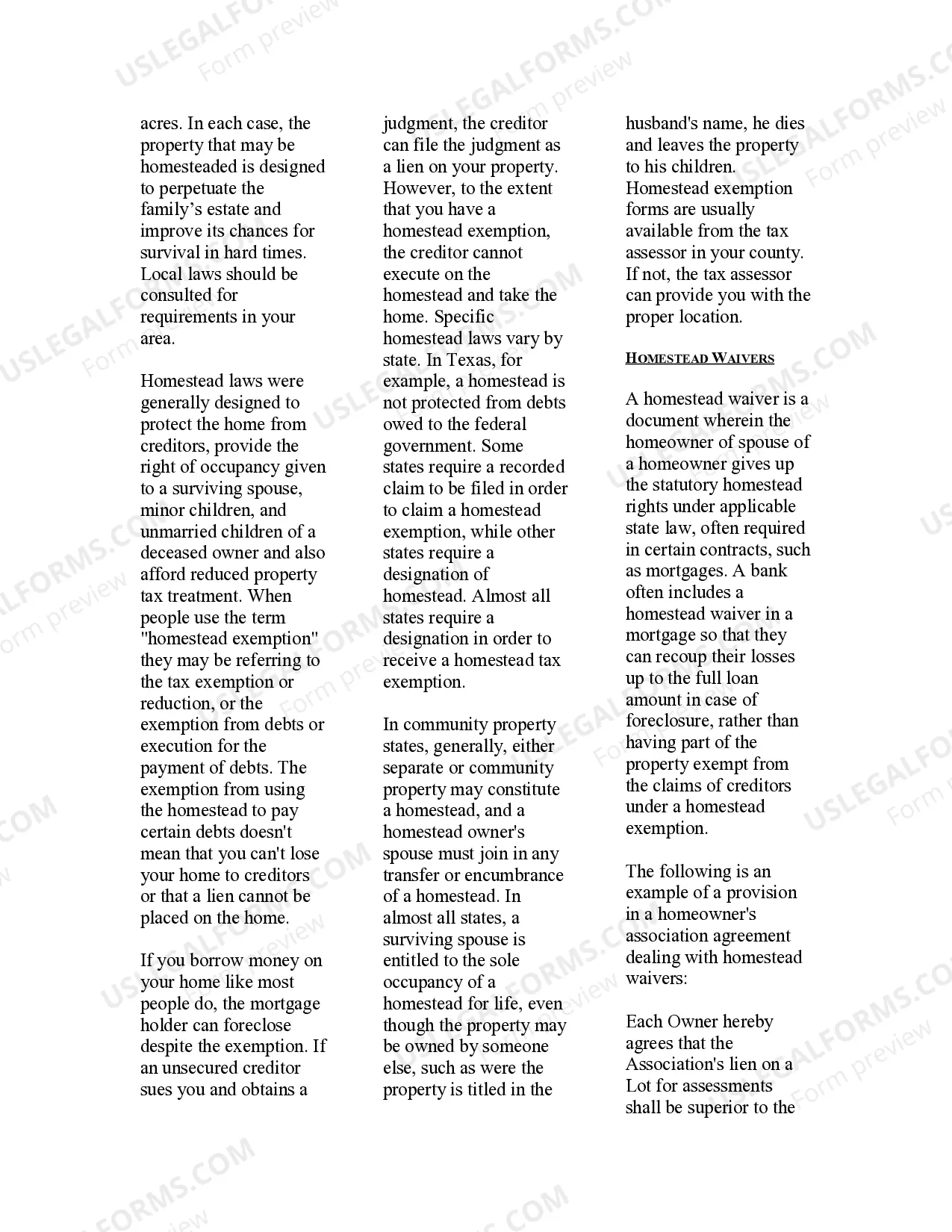
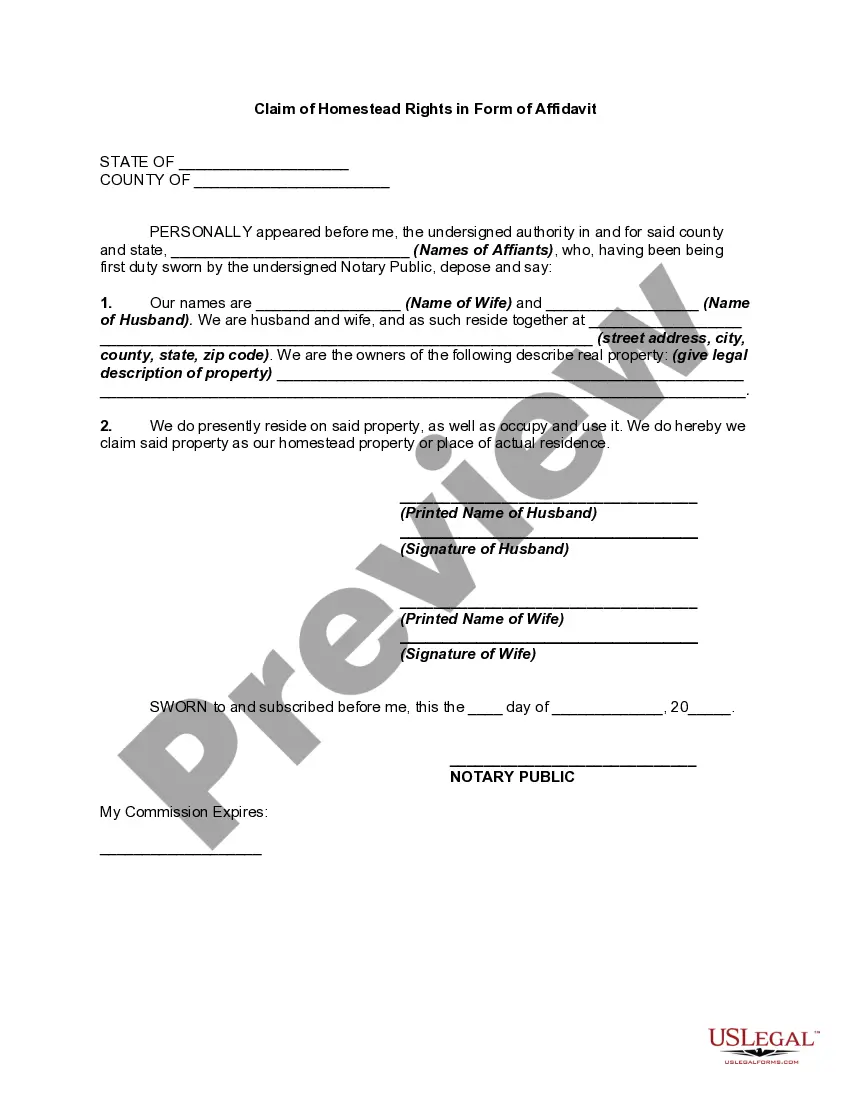
The USLegal Pamphlet on Homestead Filing provides essential information regarding the homestead filing process. It simplifies the understanding of homestead laws, which are designed to protect property owners from creditors, thereby safeguarding their homes and other assets. This pamphlet distinguishes itself by covering practical aspects such as the requirements for filing, types of protections available under state law, and the significance of homestead waivers, making it an invaluable resource for homeowners across the nation.
Key parts of this document
- Overview of homestead laws and their historical context.
- Explanation of general requirements for filing a homestead.
- Details on state-specific exemptions and protections.
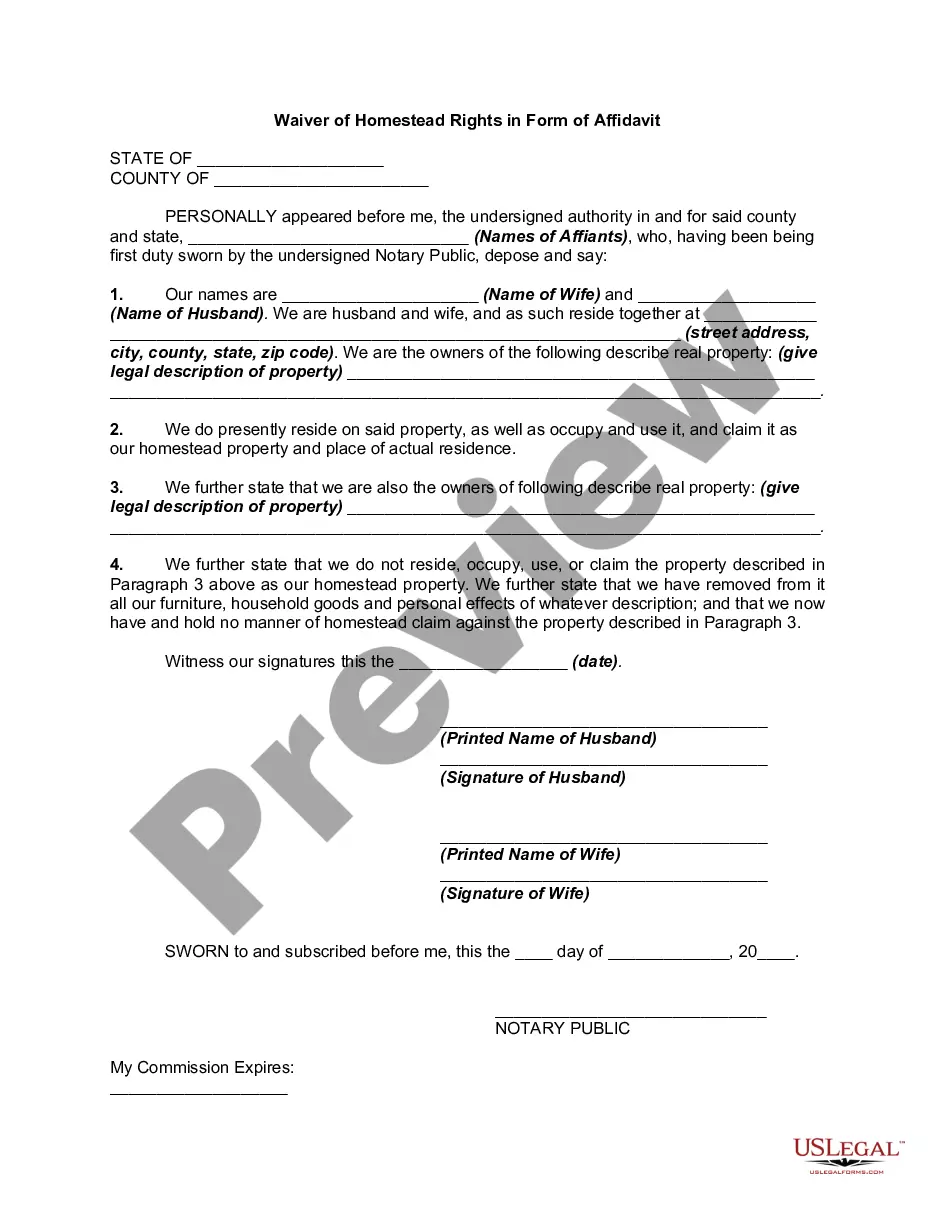
- Information on homestead waivers and their implications in agreements.
- Insights on eligibility for claiming a homestead exemption.

When to use this document
This pamphlet is useful when individuals are considering filing a homestead application or wish to understand their rights regarding homestead exemptions. It is particularly pertinent for homeowners facing financial difficulties, as well as those seeking to protect their property assets from creditors. Additionally, this document is beneficial for individuals involved in real estate transactions that require an understanding of homestead laws and waivers.
Intended users of this form
- Homeowners looking to file for a homestead exemption.
- Individuals seeking to understand their rights under state homestead laws.
- Real estate professionals advising clients on property protections.
- Anyone involved in mortgage or property transactions that mention homestead waivers.
Instructions for completing this form
- Review the eligibility criteria for filing for homestead exemption in your state.
- Gather necessary documents that prove ownership and any other required information.
- Fill out the application accurately, ensuring all fields are completed.
- Submit the completed application to the appropriate local authority.
- Keep copies of all submitted documents for your records.
Does this document require notarization?
This form does not typically require notarization to be legally valid. However, some jurisdictions or document types may still require it. US Legal Forms provides secure online notarization powered by Notarize, available 24/7 for added convenience.
Get your form ready online
Our built-in tools help you complete, sign, share, and store your documents in one place.
Make edits, fill in missing information, and update formatting in US Legal Forms—just like you would in MS Word.
Download a copy, print it, send it by email, or mail it via USPS—whatever works best for your next step.
Sign and collect signatures with our SignNow integration. Send to multiple recipients, set reminders, and more. Go Premium to unlock E-Sign.
If this form requires notarization, complete it online through a secure video call—no need to meet a notary in person or wait for an appointment.
We protect your documents and personal data by following strict security and privacy standards.

Make edits, fill in missing information, and update formatting in US Legal Forms—just like you would in MS Word.

Download a copy, print it, send it by email, or mail it via USPS—whatever works best for your next step.

Sign and collect signatures with our SignNow integration. Send to multiple recipients, set reminders, and more. Go Premium to unlock E-Sign.

If this form requires notarization, complete it online through a secure video call—no need to meet a notary in person or wait for an appointment.

We protect your documents and personal data by following strict security and privacy standards.
Typical mistakes to avoid
- Failing to research state-specific requirements before filing.
- Omitting necessary documentation, which can lead to application denial.
- Not submitting the application before the statutory deadlines.
- Misunderstanding the implications of signing a homestead waiver.
Benefits of using this form online
- Immediate access to essential information without the need for in-person visits.
- Ability to download and edit the form at your convenience.
- Up-to-date legal guidance that reflects current laws and regulations.
What to keep in mind
- Homestead laws protect homeowners from creditor claims.
- Requirements and protections vary by state, making it essential to consult local laws.
- The USLegal Pamphlet on Homestead Filing provides crucial insights for homeowners and professionals.
- Understanding homestead waivers is key when entering into mortgage agreements.
Looking for another form?








Form popularity
FAQ
Georgia Driver's License or valid GA identification. Social Security Number (Owner and Spouse) Registration for all vehicles owned. Recorded Deed for new owners (If our records have not been updated to reflect your name)
Fill in the parcel ID number or legal description. Fill in the type and date of the deed and the book, page number and date it was recorded. Check whether you filed for homestead exemption last year. Fill in your county and the tax year.
Filing for the Homestead Exemption can be done online. Homeowners may claim up to a $50,000 exemption on their primary residence. The first $25,000 of this exemption applies to all taxing authorities.
The owner must have legal or beneficial title by January 1 of the year of the application. The statutory filing deadline is March 1. The owner must establish Hillsborough County as his/her legal domicile, reside on the subject property as of January 1 and be a US citizen or Permanent Resident.
Go online and search for a Homeowner Declaration form for your state. Fill in the required information in the blanks on the Homestead Declaration form. Take the completed Homestead Declaration form to a licensed notary, such as at a bank, to have it signed and notarized.
Visit the Clark County Assessor's webpage for their detailed explanation on what the Homestead Law offers. You'll need to enter the Assessor's Parcel Number (APN) for your property. Enter in your name and contact info in the recording requested by section. Check the box next to your marital/declaration status.
APN number; Name(s) of the homestead owner(s); Address of the declared property; Property legal description; Date; Signature.
Visit the Clark County Assessor's webpage for their detailed explanation on what the Homestead Law offers. You'll need to enter the Assessor's Parcel Number (APN) for your property. Enter in your name and contact info in the recording requested by section. Check the box next to your marital/declaration status.
A person must actually occupy the home, and the home is considered their legal residence for all purposes. Persons that are away from their home because of health reasons will not be denied homestead exemption.