USLegal Pamphlet on Sentence Reduction
About this form
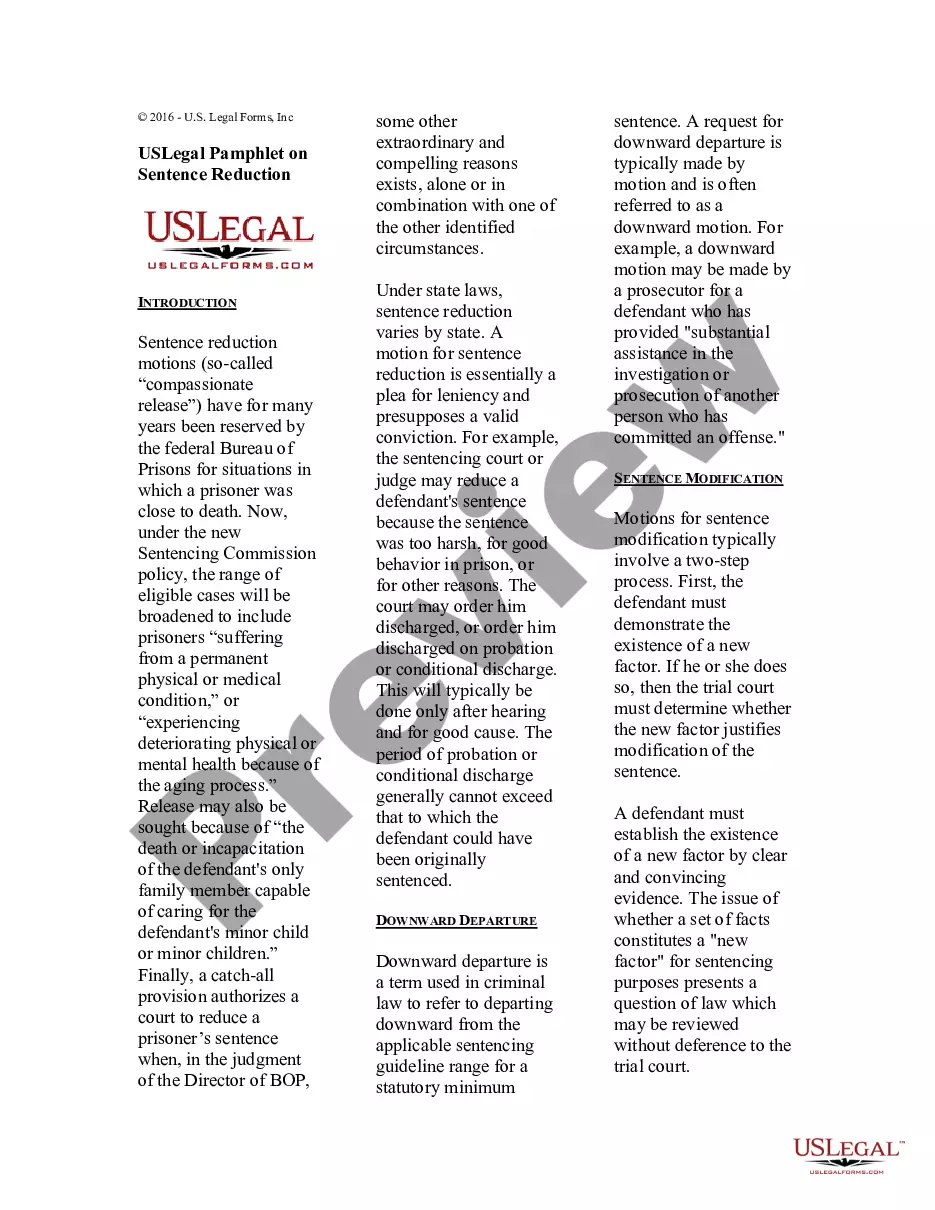
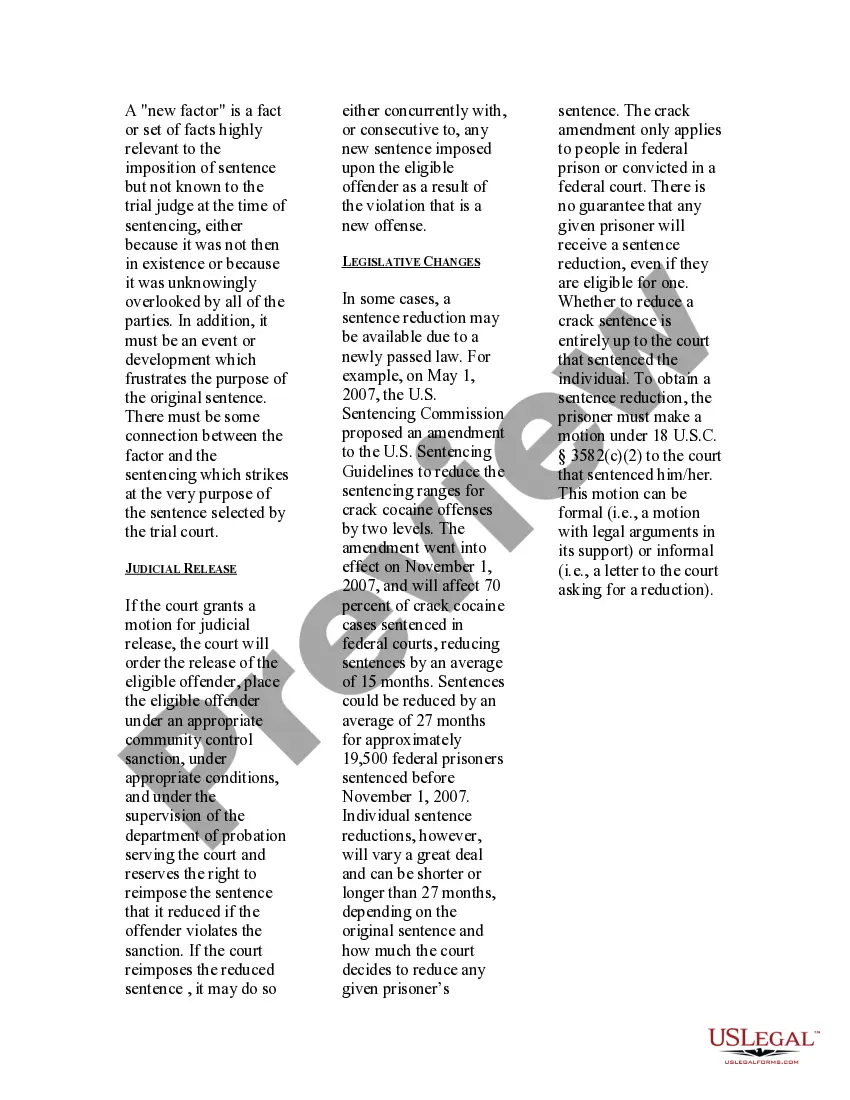
The USLegal pamphlet on sentence reduction provides a clear overview of the process and options available for reducing criminal sentences. It outlines various methods, including judicial release, downward departure, sentence modification, and the impact of recent legislative changes. This pamphlet serves as an essential resource for understanding sentence reduction in criminal law, differentiating it from other forms related to sentencing and appeals.
What’s included in this form
- Judicial release: Conditions under which a court may grant a sentence reduction.
- Downward departure: A motion for a reduced sentence based on specific circumstances.
- Sentence modification: A two-step process that allows for changes to the original sentence based on new factors.
- Legislative changes: Recent laws that may affect sentencing guidelines and eligibility for reduction.
Situations where this form applies
This pamphlet should be used by individuals or legal professionals when seeking to reduce a criminal sentence. It is particularly relevant in cases where the defendant is experiencing severe health issues, has demonstrated good behavior, or wants to contest the length of the sentence due to new, extraordinary circumstances. It can also guide individuals through motions related to recent legislative changes that could affect their sentences.
Who this form is for
- Defendants seeking a reduction in their criminal sentence.
- Legal representatives assisting clients with sentence reduction motions.
- Family members of prisoners who are exploring sentence reduction options on behalf of their loved ones.
- Individuals interested in understanding their rights regarding sentence modifications under new laws.
Completing this form step by step
- Identify the grounds for your motion, such as medical condition or good behavior.
- Gather any supporting documents that demonstrate the validity of your request.
- Formulate your motion, clearly stating why the sentence should be reduced.
- File the motion with the court that imposed the original sentence.
- Prepare for a hearing, if required, to present your case.
Notarization requirements for this form
This form does not typically require notarization to be legally valid. However, some jurisdictions or document types may still require it. US Legal Forms provides secure online notarization powered by Notarize, available 24/7 for added convenience.
Get your form ready online
Our built-in tools help you complete, sign, share, and store your documents in one place.
Make edits, fill in missing information, and update formatting in US Legal Forms—just like you would in MS Word.
Download a copy, print it, send it by email, or mail it via USPS—whatever works best for your next step.
Sign and collect signatures with our SignNow integration. Send to multiple recipients, set reminders, and more. Go Premium to unlock E-Sign.
If this form requires notarization, complete it online through a secure video call—no need to meet a notary in person or wait for an appointment.
We protect your documents and personal data by following strict security and privacy standards.

Make edits, fill in missing information, and update formatting in US Legal Forms—just like you would in MS Word.

Download a copy, print it, send it by email, or mail it via USPS—whatever works best for your next step.

Sign and collect signatures with our SignNow integration. Send to multiple recipients, set reminders, and more. Go Premium to unlock E-Sign.

If this form requires notarization, complete it online through a secure video call—no need to meet a notary in person or wait for an appointment.

We protect your documents and personal data by following strict security and privacy standards.
Common mistakes
- Failing to provide sufficient evidence to support the motion.
- Not adhering to the filing deadlines set by the court.
- Ignoring the specific requirements of state laws regarding sentence reduction.
- Neglecting to prepare adequately for a potential hearing.
Benefits of completing this form online
- Convenient access to legal information without the need for an in-person visit.
- Edit and customize documents easily to fit individual needs.
- Reliability of forms drafted by licensed attorneys, ensuring legal compliance.
Legal use & context
- The pamphlet serves as a guideline but does not guarantee approval of any motion for sentence reduction.
- Sentence reduction requests are subject to judicial discretion and must meet specific legal standards.
- Understanding the legal context can help in effectively arguing for a sentence reduction.
Summary of main points
- Sentence reduction is a complex process that requires a valid legal basis for the request.
- It is crucial to understand the requirements and procedures specific to your jurisdiction.
- Utilizing this resource can streamline the process and increase your chances of a successful outcome.
Looking for another form?


Form popularity
FAQ
Federal law requires the Director must file a motion on your behalf seeking a reduction in your sentence. The Director may file a motion for the reduction of your sentence if you are 70 or older, have served at least 30 years on a life sentence, and the Director believes you are no longer a danger to the public.
Their statements should be truthful, sincere and explain why they regret committing the crime. Also, a statement should be made accepting responsibility for the crime and reasons why they are writing the letter to the judge a defendant should ask for a lesser fine or a shorter sentence.
The letter should be addressed to the judge's full name such as Honorable Name of Judge along with the address of the district court. The letter may address Your Honor or Dear Judge Last Name of Judge. If the writer is not the defendant, the defendant's name should be given in the RE: line.
Motion to Modify a Sentence (Resentencing) in California.The motion typically seeks to reduce jail or prison time, to allow the defendant to be released from custody, or to relax the conditions of probation. A prisoner can file this petition no matter if he was sentenced for a misdemeanor or a felony.
When Can Sentences Be Changed? As a general rule, once a final judgment has been entered in a criminal caseonce the judge has delivered a legally valid sentencethe judge loses the ability to change that sentence unless a specific law gives the court authority to modify it.
The term sentence in law refers to punishment that was actually ordered or could be ordered by a trial court in a criminal procedure.If a sentence is reduced to a less harsh punishment, then the sentence is said to have been mitigated or commuted.
Federal law requires the Director must file a motion on your behalf seeking a reduction in your sentence. The Director may file a motion for the reduction of your sentence if you are 70 or older, have served at least 30 years on a life sentence, and the Director believes you are no longer a danger to the public.
It can certainly help, but be sure that his attorney sees any letter that you plan to submit to the court. Relapses happen on the road to recovery and showing how much support he has can only make the judge more comfortable with giving him...
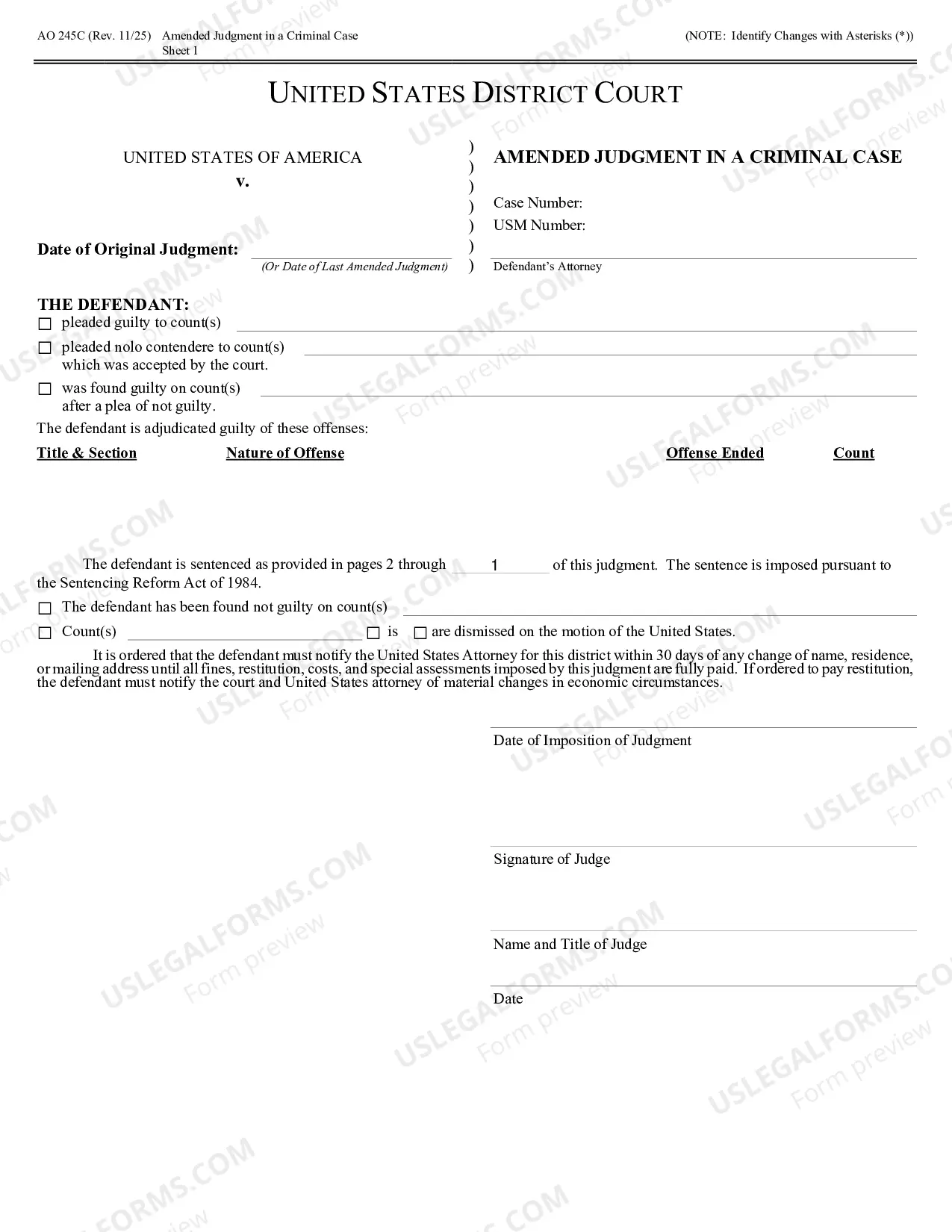
A judge may in fact modify your sentence if their was a clerical error. Yes. A court generally maintains power to correct an incorrect sentence. This means that if the sentence was brought about by a clerical error, the court can simply amend the abstract of judgment to reflect the correct sentence.