USLegal Pamphlet on How to Answer a Complaint
What this document covers
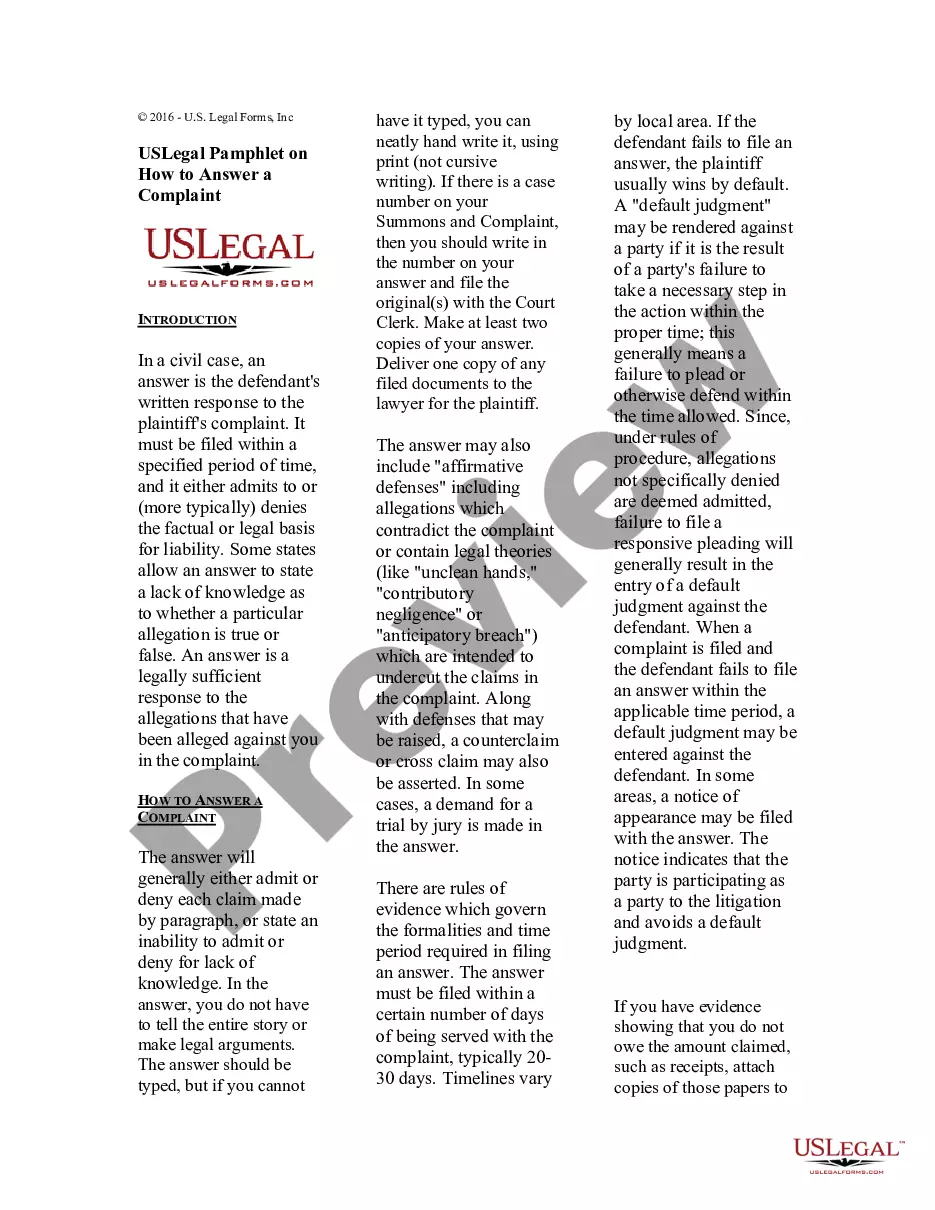
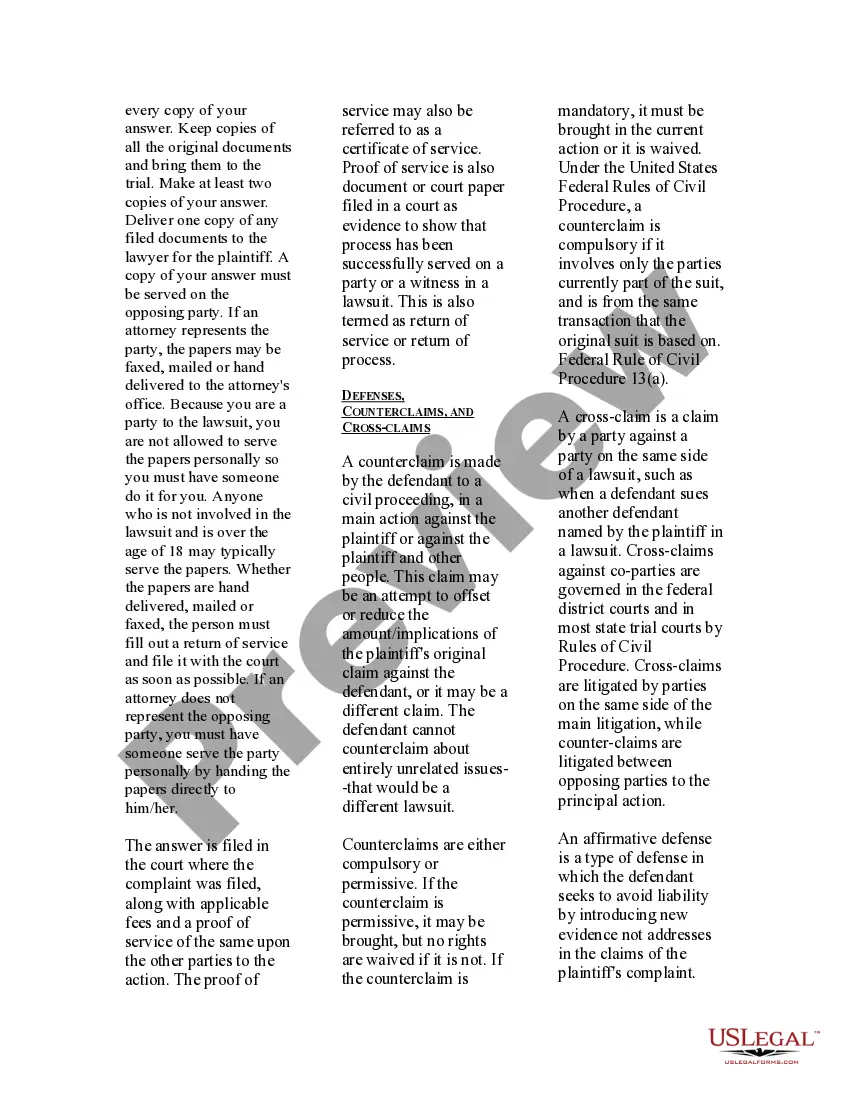
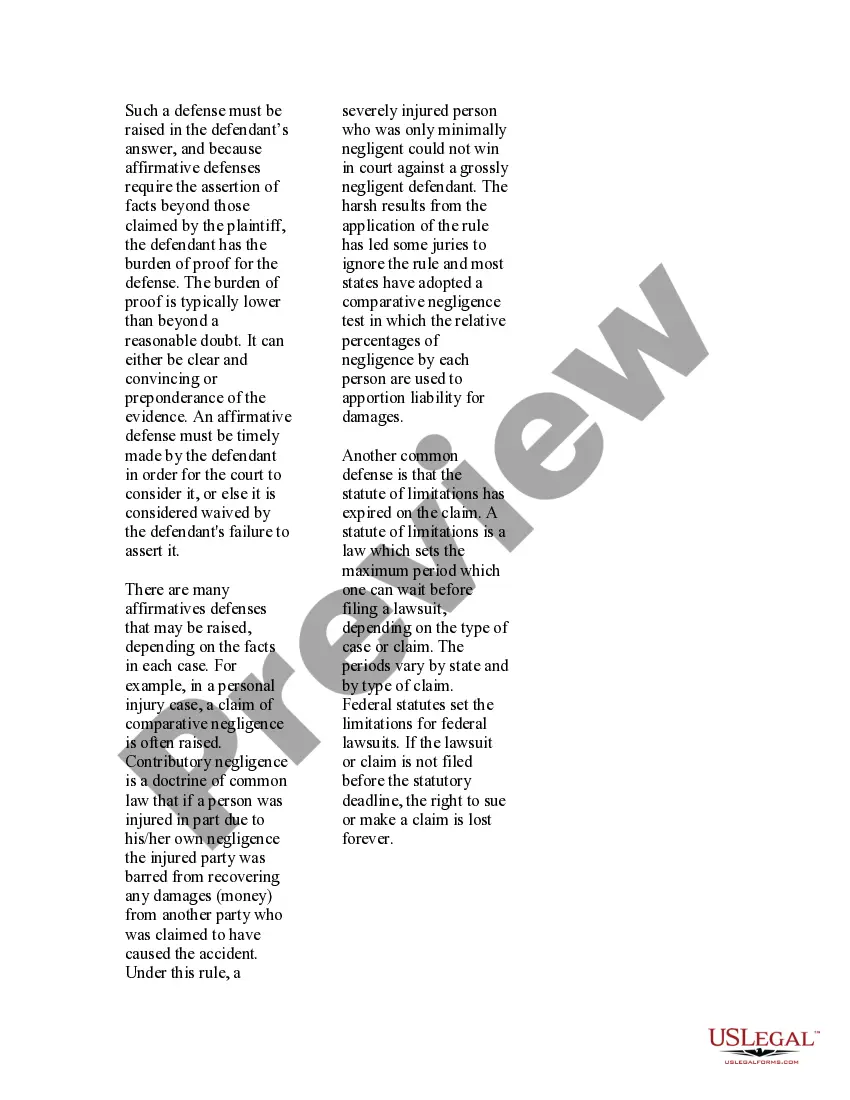
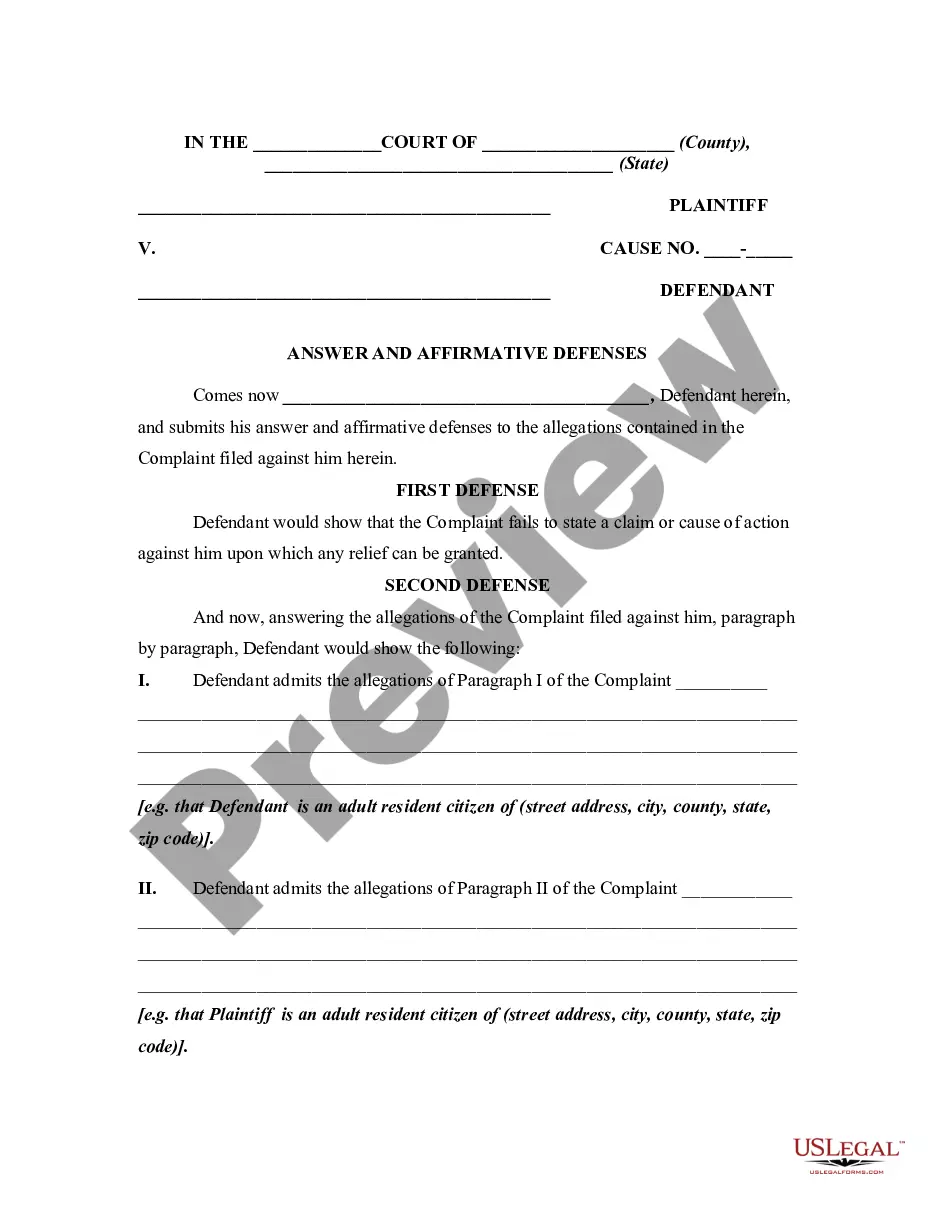
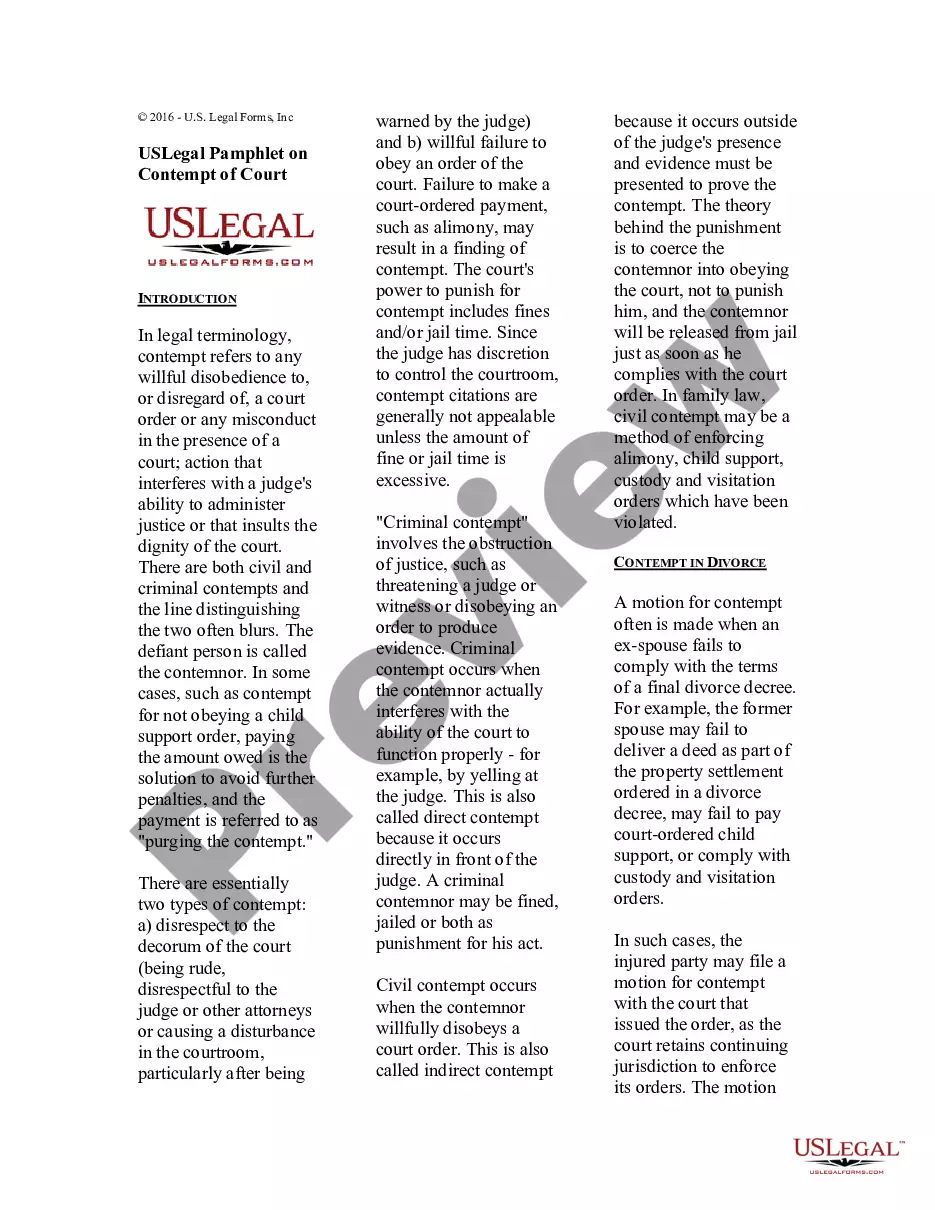
The USLegal pamphlet on how to answer a complaint provides essential guidance for defendants in civil cases. It outlines the procedure for responding formally to a plaintiff's allegations, distinguishing it from other legal documents. This pamphlet covers how to construct an answer, including details on defenses and potential counterclaims, ensuring users understand their responsibilities within the legal process.
What’s included in this form
- Definition of an answer: Explanation of what constitutes a legal answer to a complaint.
- Filing timelines: Specific time frames for submitting the answer after receiving the complaint.
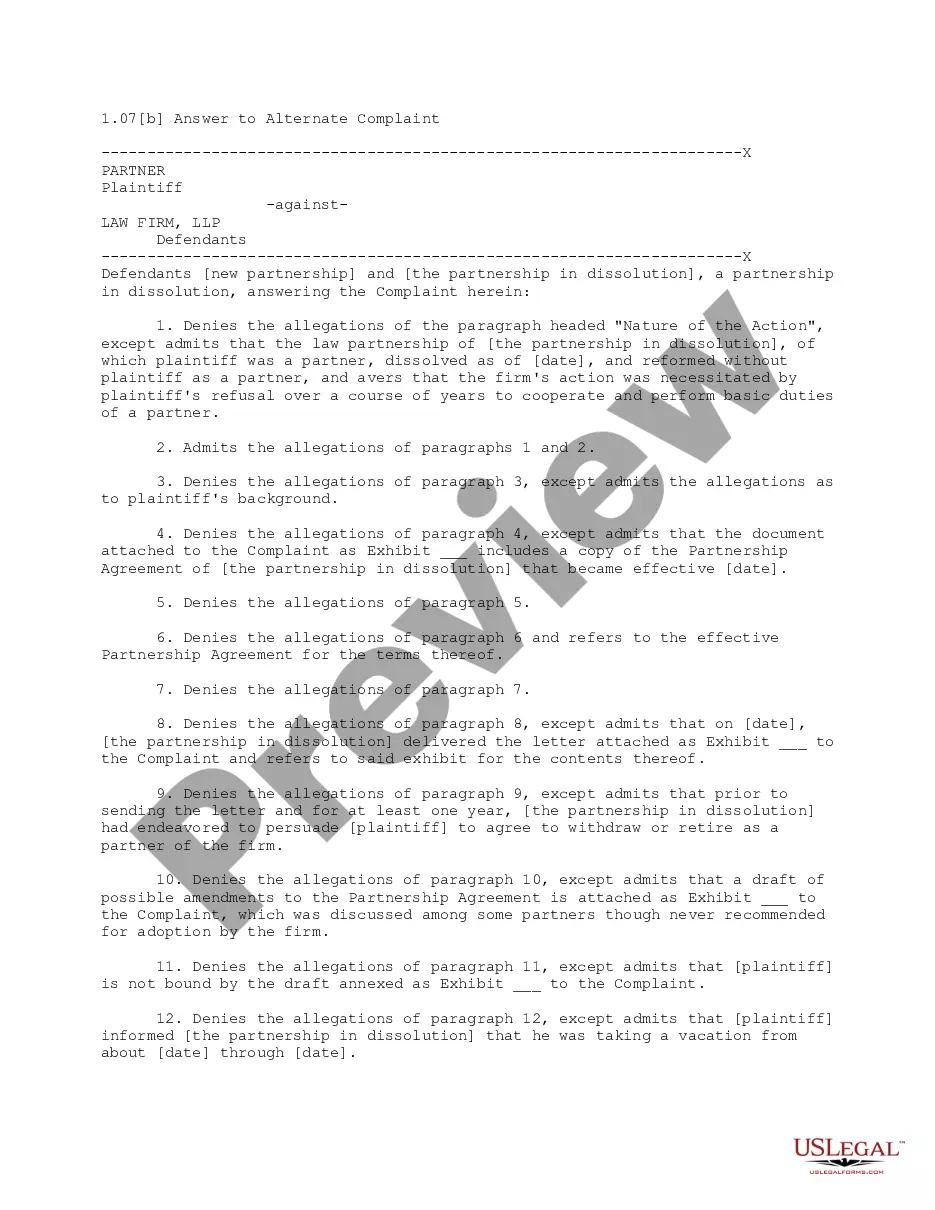
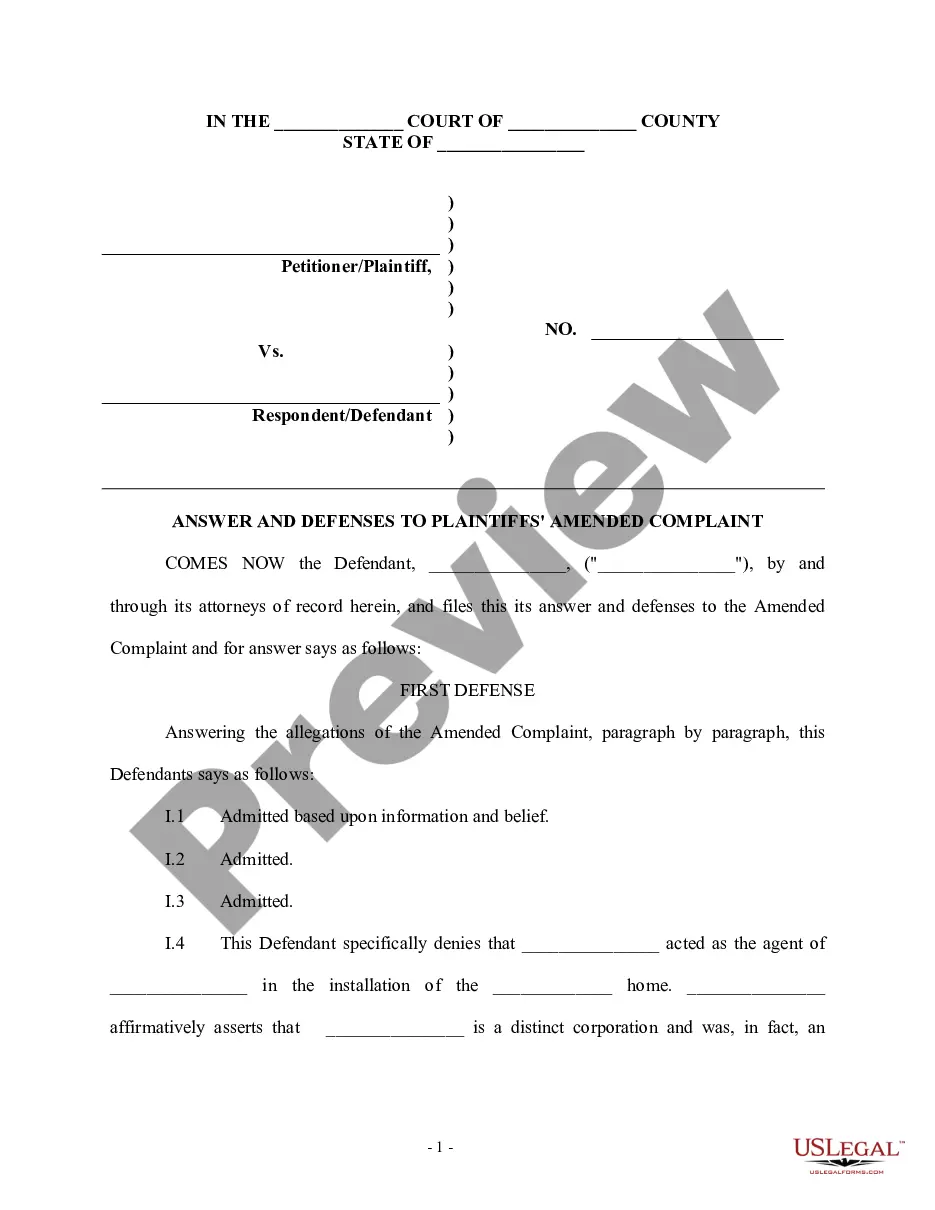
- Content of the answer: Instructions on admitting or denying claims and the inclusion of defenses.
- Counterclaims and cross-claims: An overview of when and how these can be included in the answer.
- Service of process: Details on delivering copies of the answer to the opposing party.
When to use this document
This pamphlet is vital when you have been served with a complaint in a civil lawsuit and are required to respond within a specific time frame. It applies to situations where you need to formally contest the allegations made against you or where you may wish to assert your own claims against the plaintiff. Using this pamphlet ensures that you follow the correct legal procedures to avoid default judgments.
Who should use this form
- Defendants in civil lawsuits who have received a complaint.
- Individuals who need to understand their rights and responsibilities in responding to legal claims.
- Claimants considering counterclaims against a plaintiff as part of their response.
- Anyone seeking to avoid default judgment by providing a formal answer to allegations.
Steps to complete this form
- Identify the parties involved: Clearly state your name and the names of the other parties in the case.
- Review the complaint: Read each claim carefully to determine whether to admit or deny each allegation.
- Draft your answer: Construct a response that includes your admissions, denials, or lack of knowledge regarding each claim.
- Include any defenses: Add any affirmative defenses or counterclaims you wish to assert against the plaintiff.
- File the answer: Submit the completed answer to the court along with any applicable fees and proof of service.
- Deliver copies: Serve copies of your answer to the plaintiff or their attorney as required.
Is notarization required?
This form usually doesn’t need to be notarized. However, local laws or specific transactions may require it. Our online notarization service, powered by Notarize, lets you complete it remotely through a secure video session, available 24/7.
Get your form ready online
Our built-in tools help you complete, sign, share, and store your documents in one place.
Make edits, fill in missing information, and update formatting in US Legal Forms—just like you would in MS Word.
Download a copy, print it, send it by email, or mail it via USPS—whatever works best for your next step.
Sign and collect signatures with our SignNow integration. Send to multiple recipients, set reminders, and more. Go Premium to unlock E-Sign.
If this form requires notarization, complete it online through a secure video call—no need to meet a notary in person or wait for an appointment.
We protect your documents and personal data by following strict security and privacy standards.

Make edits, fill in missing information, and update formatting in US Legal Forms—just like you would in MS Word.

Download a copy, print it, send it by email, or mail it via USPS—whatever works best for your next step.

Sign and collect signatures with our SignNow integration. Send to multiple recipients, set reminders, and more. Go Premium to unlock E-Sign.

If this form requires notarization, complete it online through a secure video call—no need to meet a notary in person or wait for an appointment.

We protect your documents and personal data by following strict security and privacy standards.
Mistakes to watch out for
- Failing to file the answer within the specified time limit.
- Not admitting or denying claims properly, which can result in default judgments.
- Neglecting to include affirmative defenses that may protect against liability.
- Serving documents incorrectly, which can lead to delays or further legal issues.
Benefits of using this form online
- Convenience: Easily access and download the pamphlet at any time from anywhere.
- Editability: Fill out the necessary information and customize the answer to your specific case.
- Reliability: All forms are drafted by licensed attorneys, ensuring accuracy and legal soundness.
Legal use & context
- Your answer serves as a formal legal response to the complaint.
- Failure to file may result in a default judgment, meaning you lose the case automatically.
- Including defenses and counterclaims can effectively challenge the plaintiffâs assertions.
Summary of main points
- An answer is a defendant's formal response to a plaintiff's complaint in civil court.
- Timely filing of the answer is crucial to avoid default judgments.
- Including relevant defenses or counterclaims can significantly impact the case outcome.
Looking for another form?







Form popularity
FAQ
A defendant may respond in an answer that admits or denies each of the plaintiff's allegations in the complaint. The answer will list defenses and counter-claims or cross-claims against the plaintiff or other defendants. The answer will state whether the defendant wants a jury trial. The case will then continue.
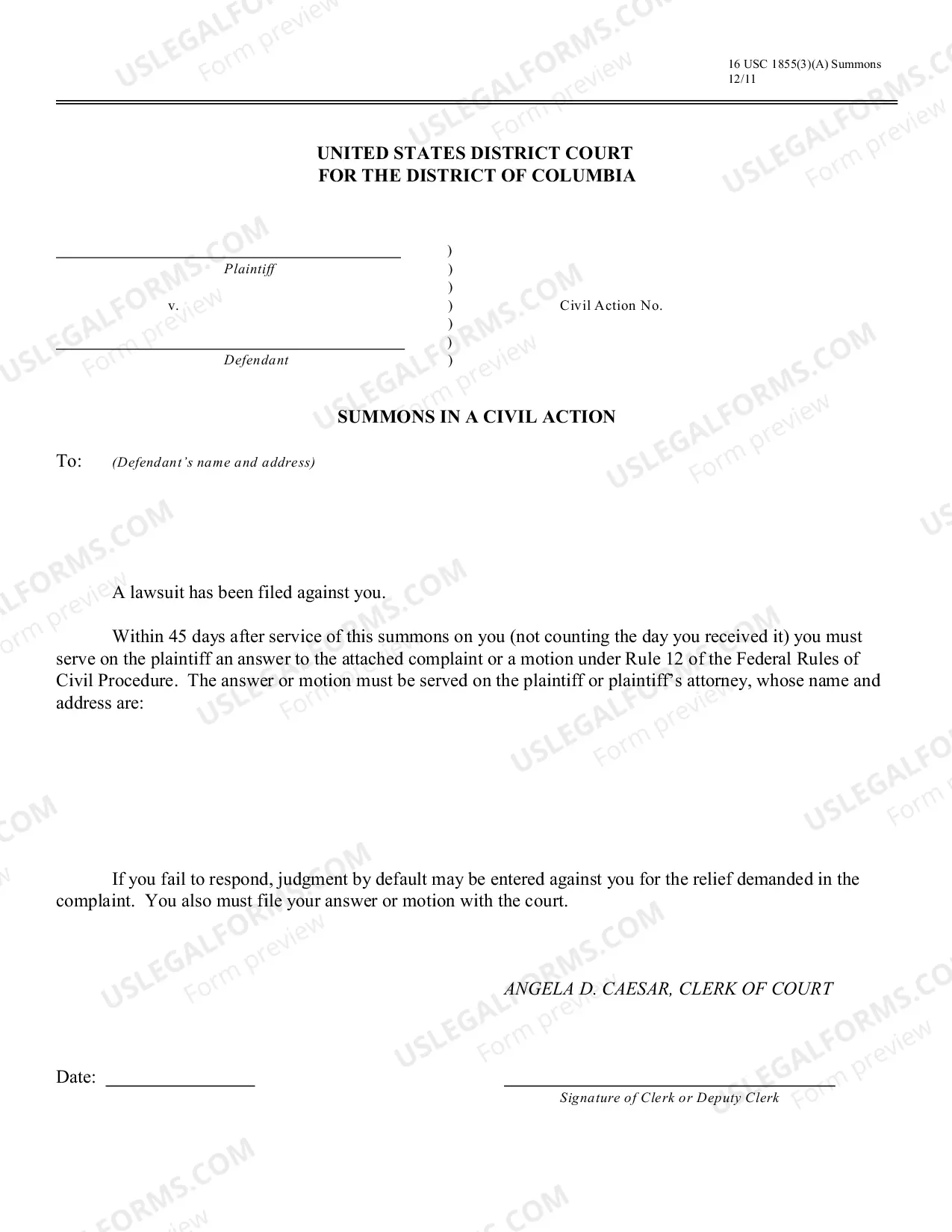
When the plaintiff files the complaint with the court, the court issues a summons, which instructs the defendant to answer the complaint within a specific time dictated by the rules in the court where the complaint was filed. Once the complaint and summons are served on a defendant, a response is required.
Be polite and formal in the tone of the letter. Mention the previous letter you received. Give a brief yet concise response to the claim letter sent to you. End on a positive and courteous tone.
File an answer An answer is your opportunity to respond to the complaint's factual allegations and legal claims. It also allows you to assert "affirmative defenses," facts or legal arguments you raise to defeat plaintiff's claim. Filing an answer prevents the plaintiff from getting a default judgment against you.
Read the summons and make sure you know the date you must answer by. Read the complaint carefully. Write your answer. Sign and date the answer. Make copies for the plaintiff and yourself. Mail a copy to the plaintiff. File your answer with the court by the date on the summons.
Read the summons and make sure you know the date you must answer by. Read the complaint carefully. Write your answer. Sign and date the answer. Make copies for the plaintiff and yourself. Mail a copy to the plaintiff. File your answer with the court by the date on the summons.
Provide the name of the court at the top of the Answer. You can find the information on the summons. List the name of the plaintiff on the left side. Write the case number on the right side of the Answer. Address the Judge and discuss your side of the case. Ask the judge to dismiss the case.
Contact the clerk's office of the court where the lawsuit was filed. You'll find a phone number and address for the clerk's office on your summons. The clerk will be able to tell you exactly what documents you should file with your answer and whether any filing fee is required.
After you file an answer with the court The court clerk will give or mail you a court date for you and the plaintiff to come back to court. This will probably be for a Case Management Conference or a Pre-Trial Hearing.
The Answer is the court document that helps you tell your story to the judge. This Answer form includes basic Defenses and Counterclaims. Defenses are the legal reasons why you should not be evicted. Example: The landlord is evicting you for not paying the rent and you paid the rent.