Plaintiff's First Set of Interrogatories to Defendant - Personal Injury
What is this form?
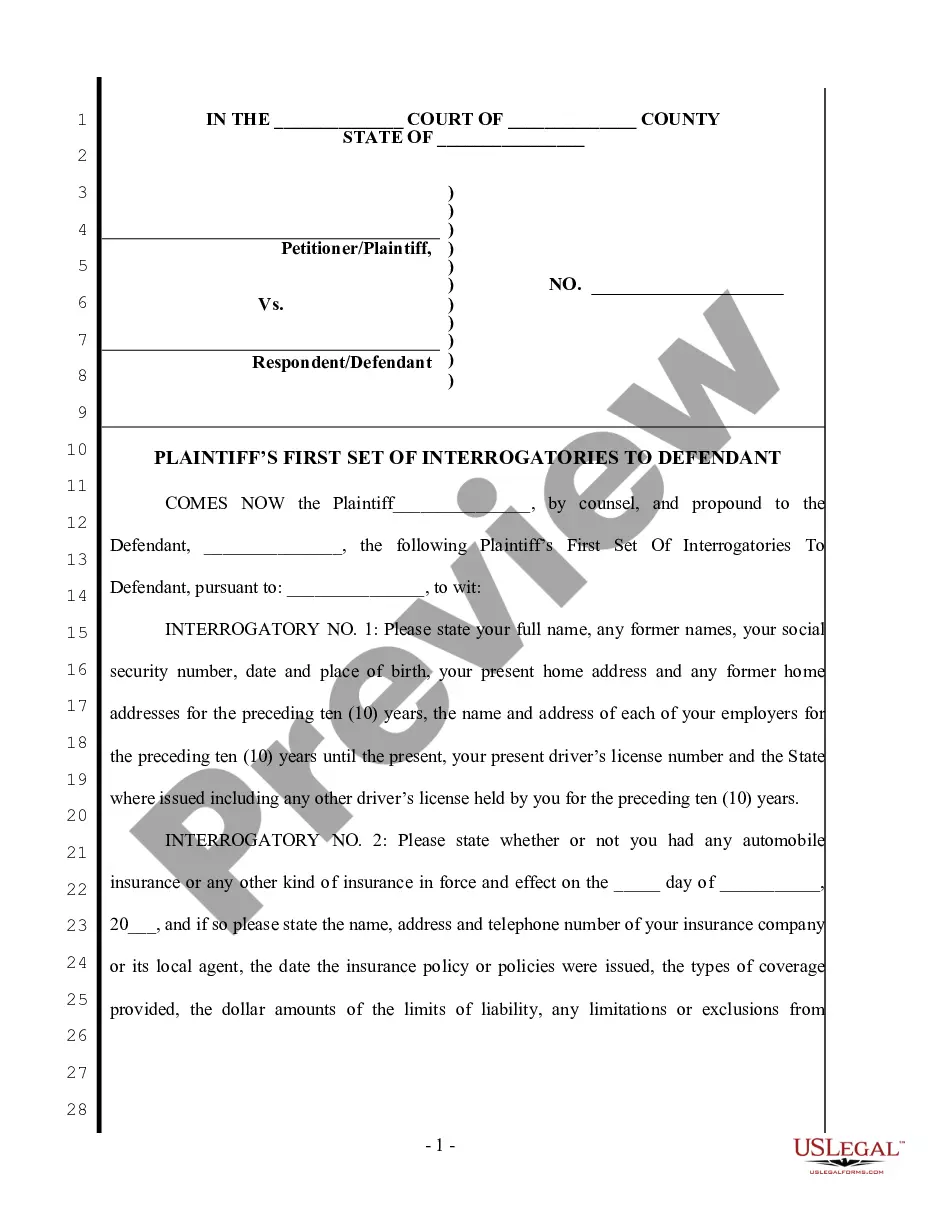
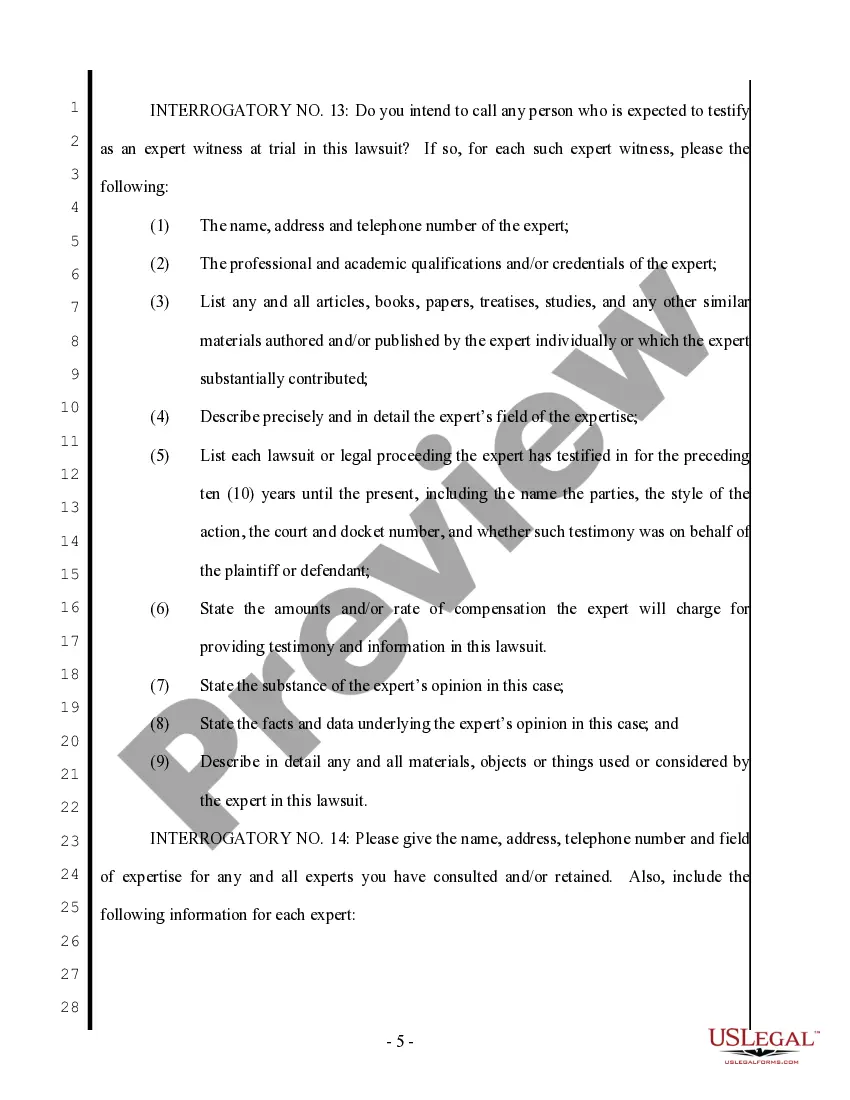
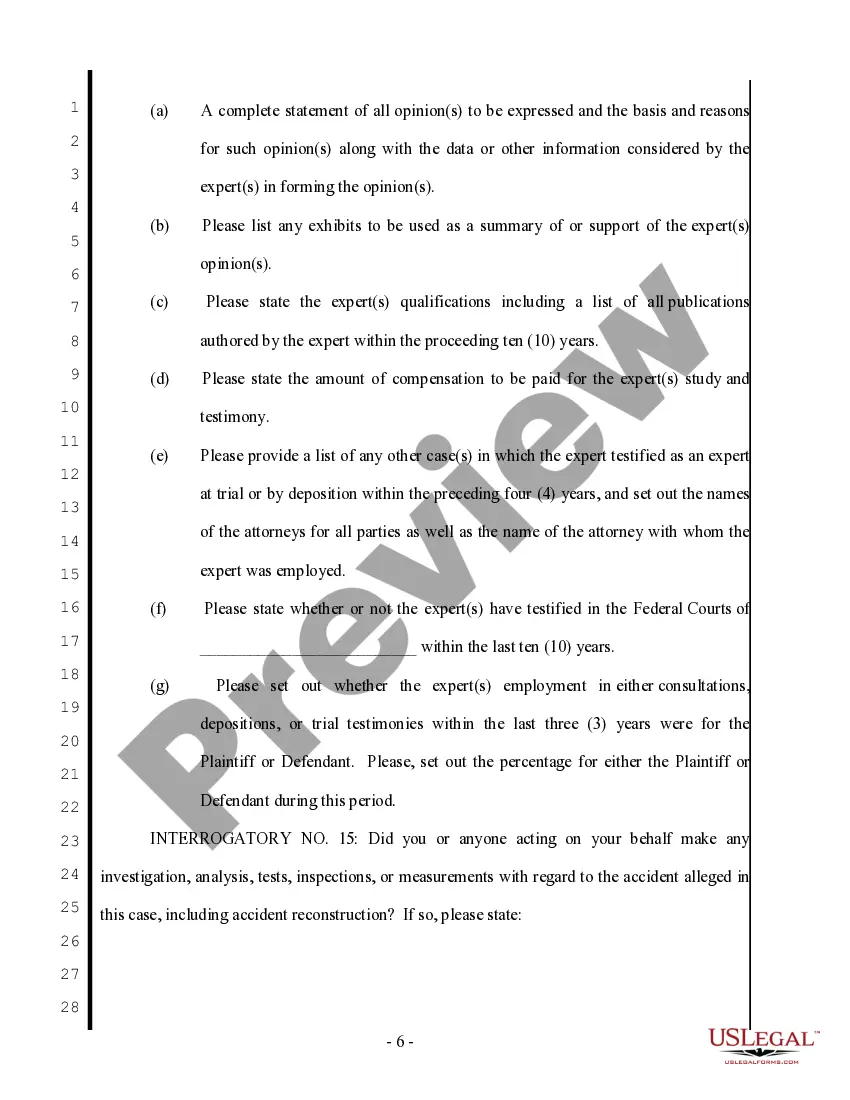
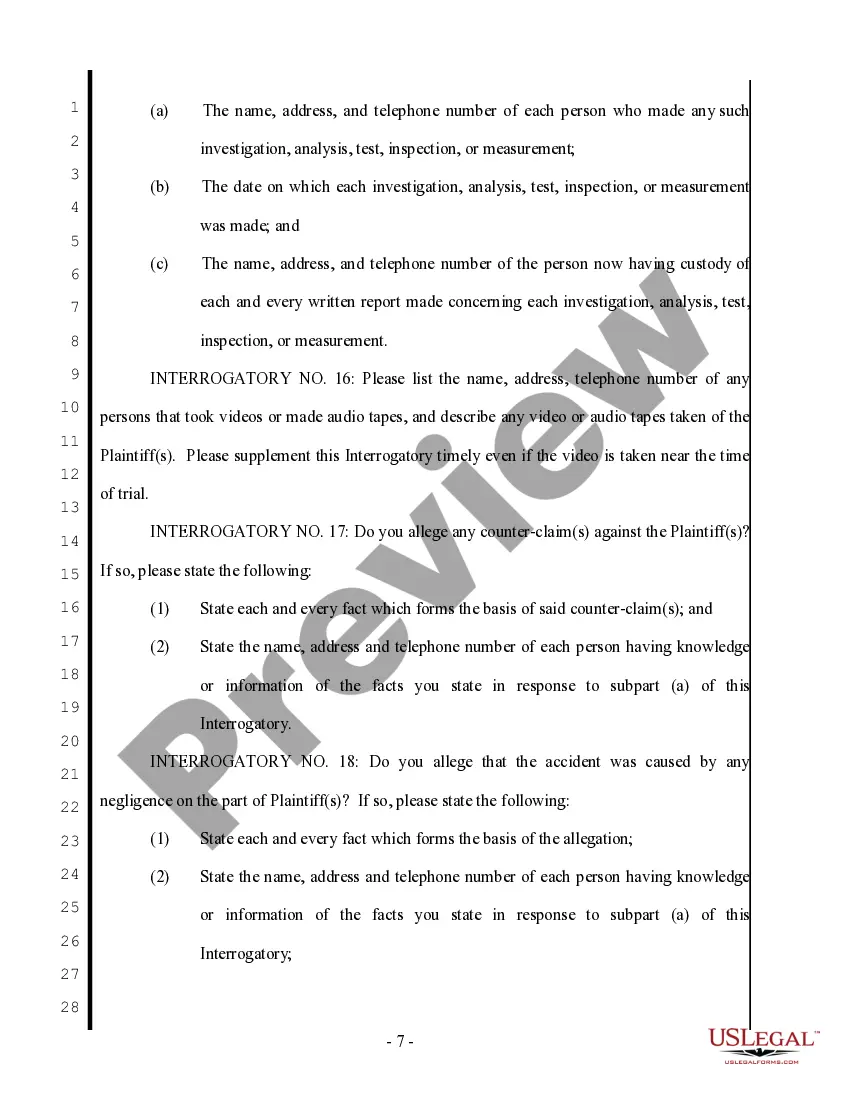
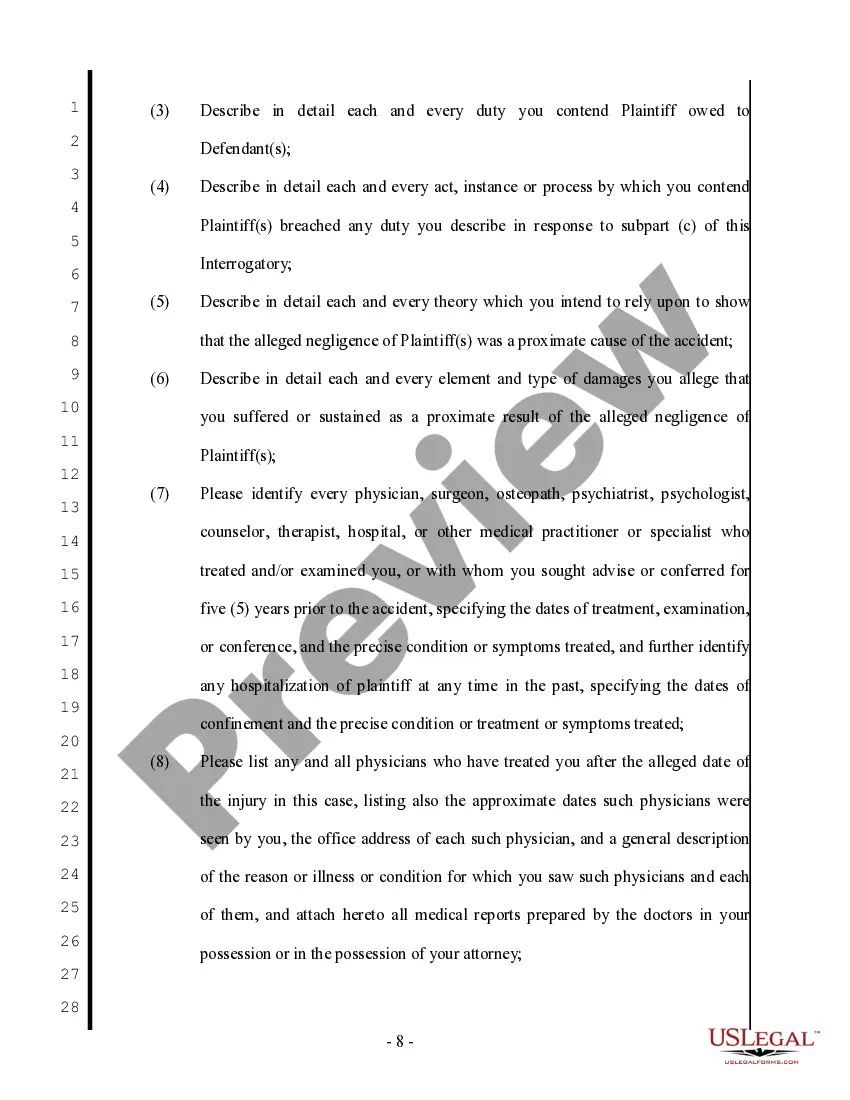
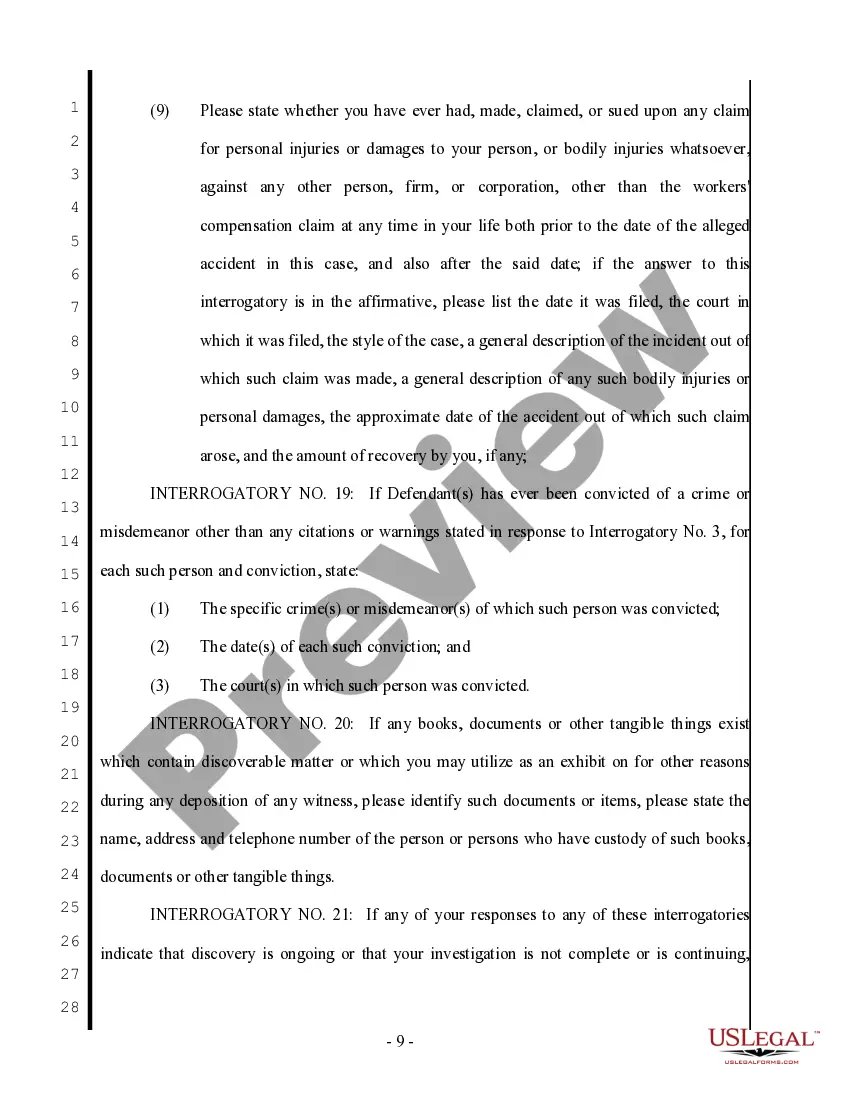
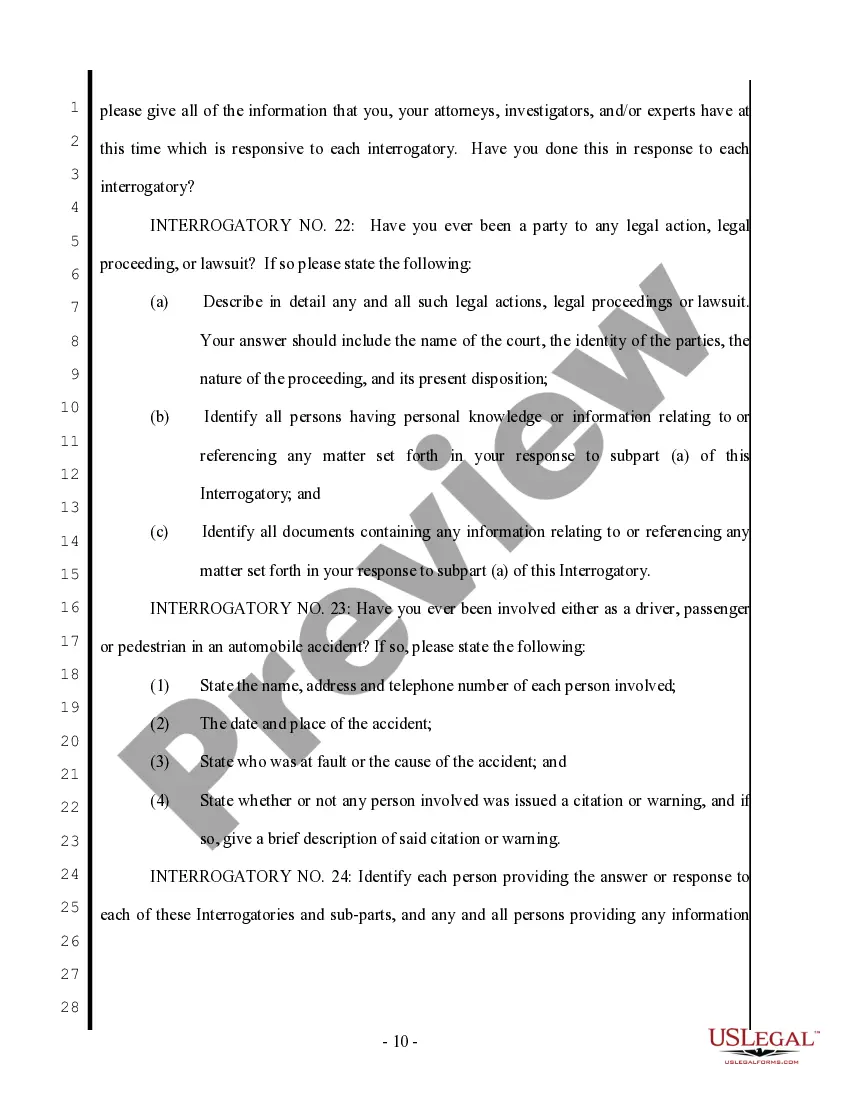
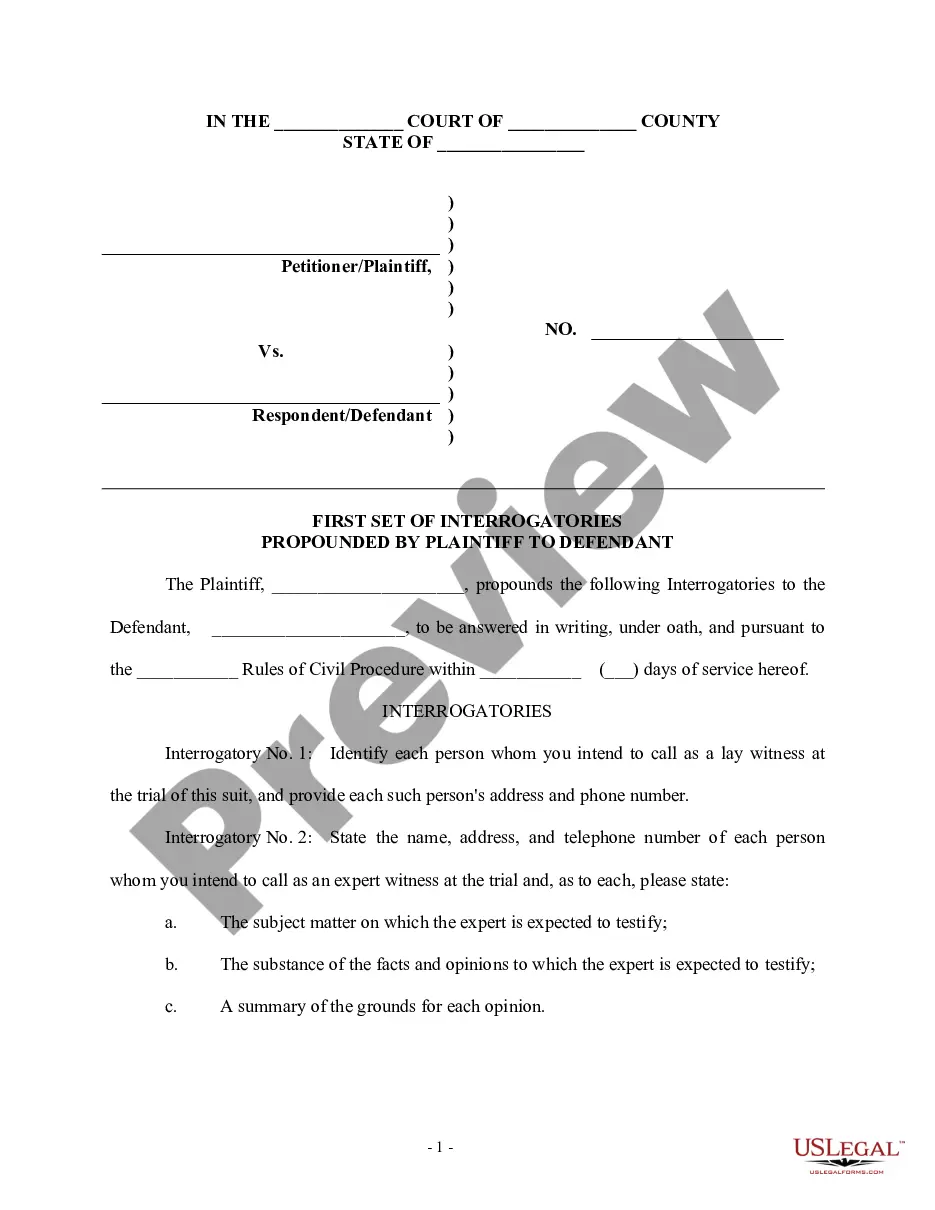
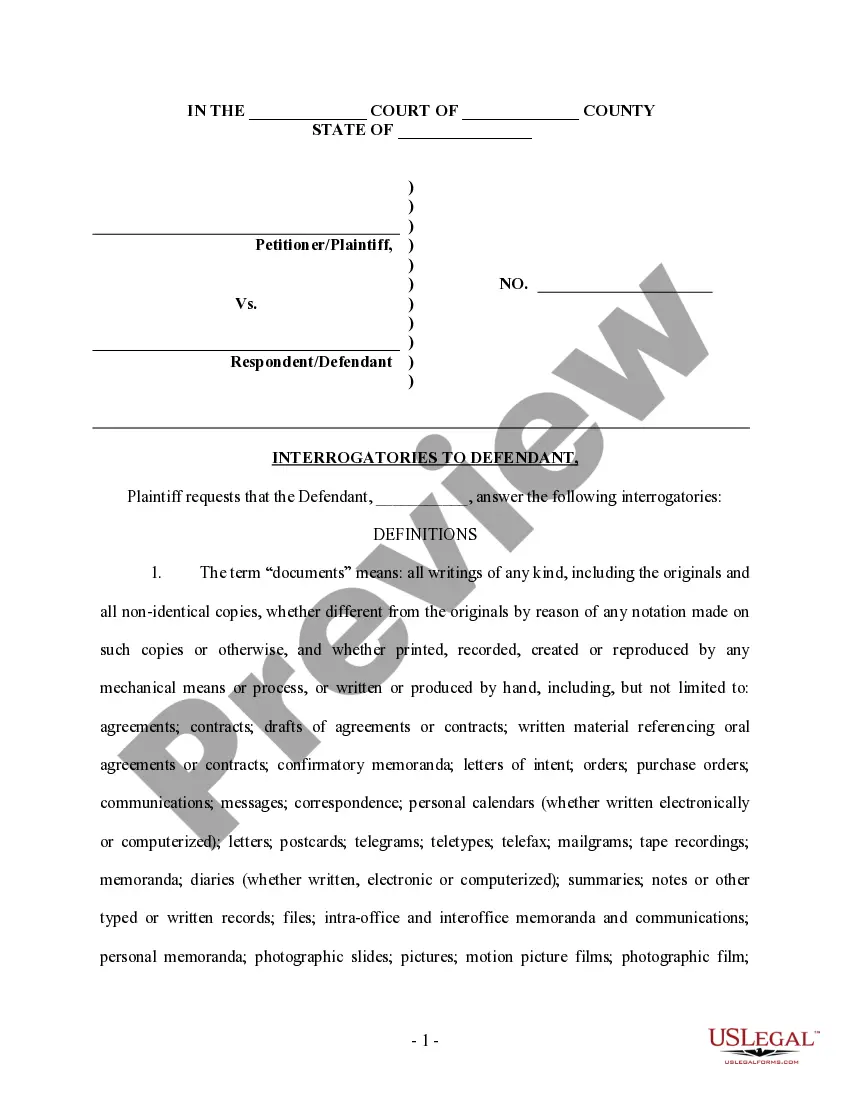
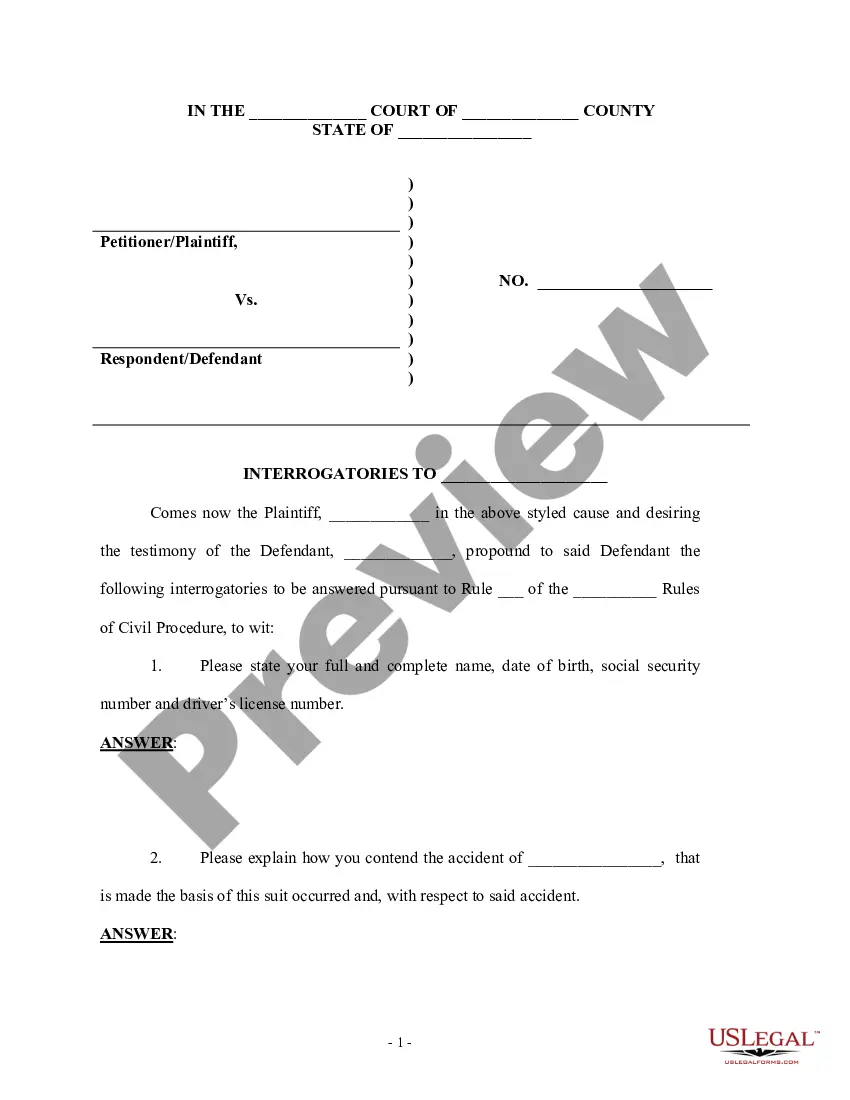
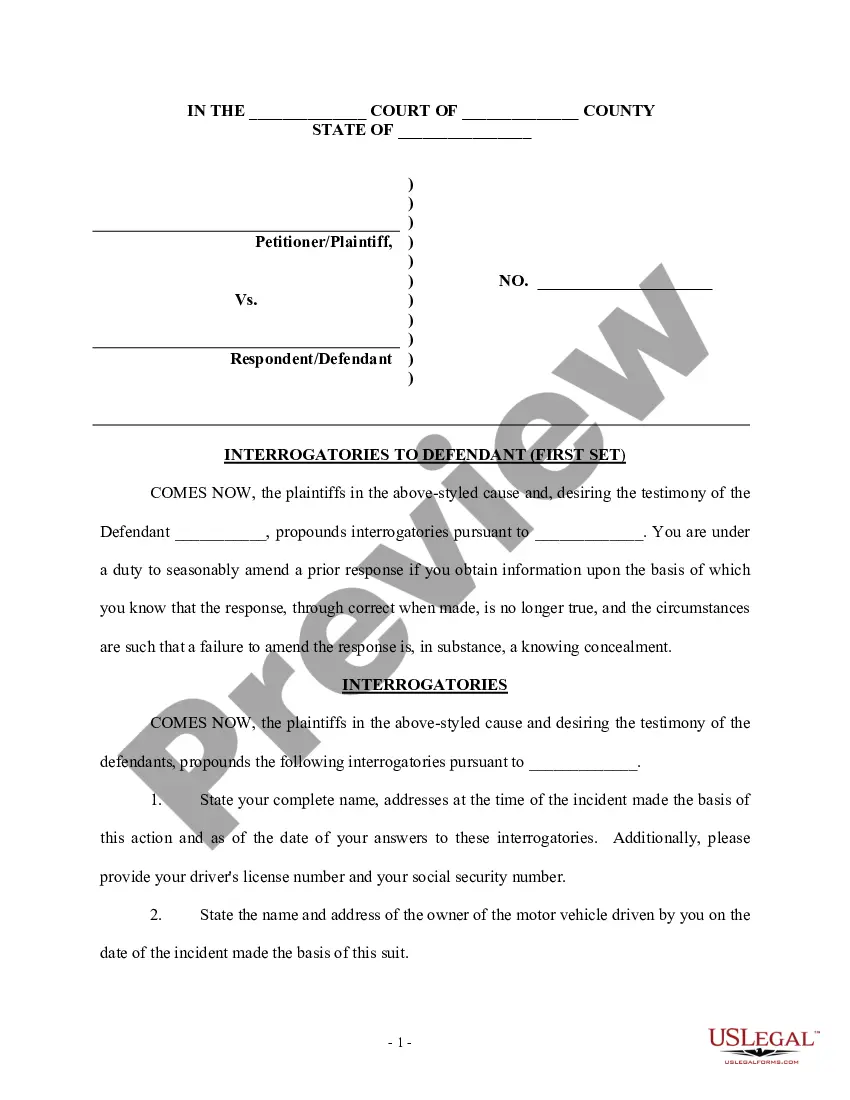
The Plaintiff's First Set of Interrogatories to Defendant - Personal Injury is a legal document used in personal injury lawsuits following an automobile accident. This form allows the plaintiff to formally request specific information from the defendant to gather facts pertinent to the case. Interrogatories help clarify details regarding liability, damages, and circumstances surrounding the incident, which can be essential for building a case or preparing for trial. Unlike other forms, this specific interrogatory focuses on the defendant's personal and driving history, as well as their insurance coverage, making it a critical tool in personal injury litigation.
Key components of this form
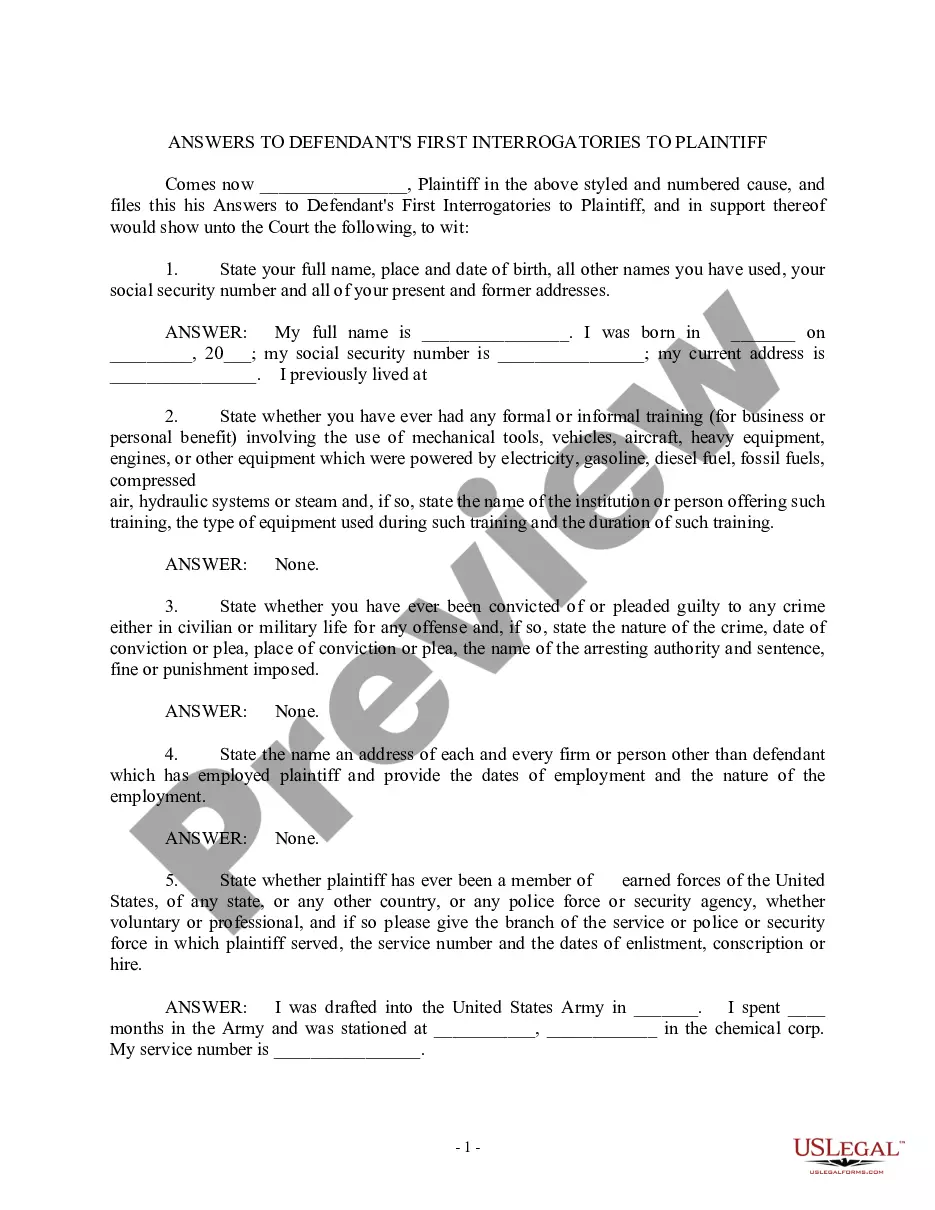
- Identification details of the defendant, including previous names, addresses, and social security number.
- Information about the defendant's automobile insurance and coverage limits on the date of the accident.
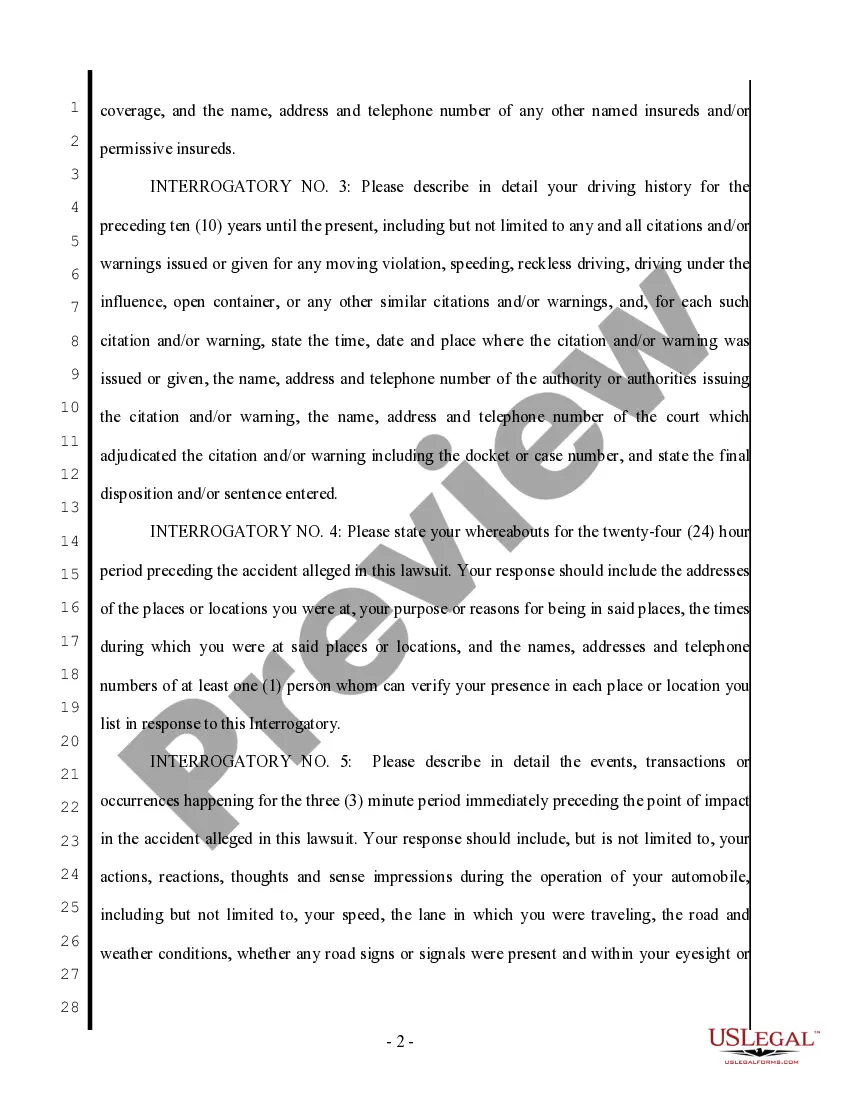
- Details of the defendant's driving history for the past ten years, including any moving violations.
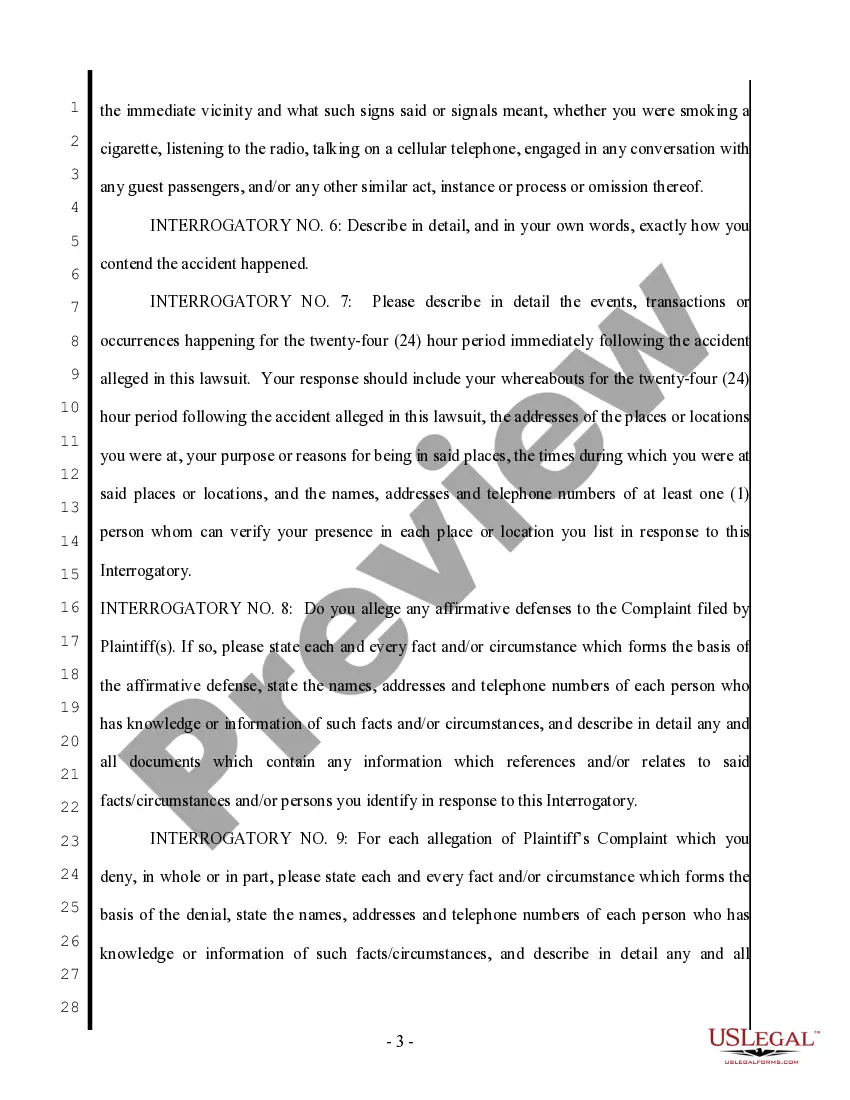
- Locations and activities of the defendant in the 24 hours leading up to and following the accident.
- Specifics about the events and circumstances surrounding the accident.
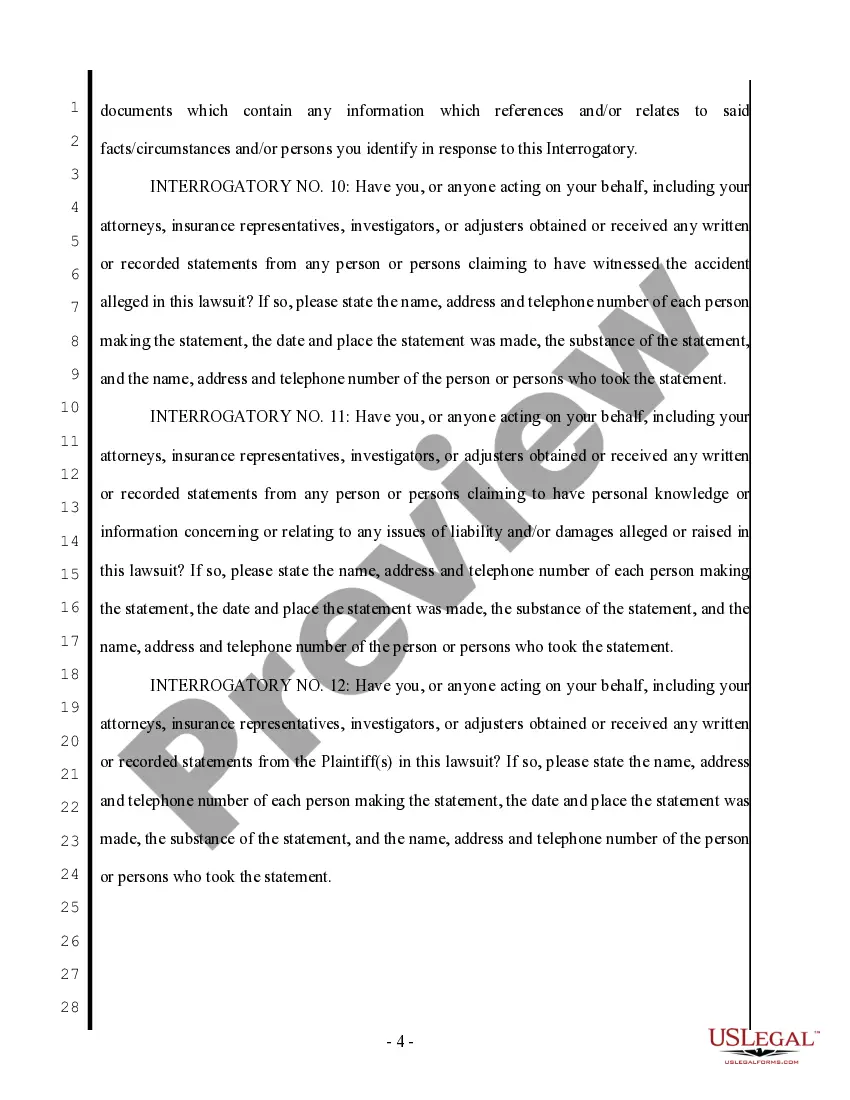
- Affirmative defenses and counterclaims, if alleged by the defendant.

Situations where this form applies
This form should be used when a plaintiff is initiating legal proceedings against a defendant in a personal injury case related to an automobile accident. It is especially useful post-filing of the complaint, allowing the plaintiff to gather necessary facts and evidence from the defendant to support their claims. Use this form to clarify the defendant's version of events and to prepare for possible trial scenarios or settlements.
Who can use this document
- Plaintiffs involved in a personal injury case due to an automobile accident.
- Attorneys representing plaintiffs in personal injury lawsuits.
- Individuals seeking to understand the defendant's position and build their case for litigation.
Steps to complete this form
- Enter the full name and personal details of the defendant, including social security number and addresses.
- Provide information regarding the defendant's automobile insurance on the date of the accident.
- Detail any citations or warnings received by the defendant within the last ten years.
- Describe the defendant's whereabouts during the 24-hour period before and after the accident.
- Explain the events leading up to and during the accident as understood by the defendant.
Is notarization required?
This form does not typically require notarization unless specified by local law. Always check your jurisdiction's specific requirements to ensure compliance with legal standards.
Get your form ready online
Our built-in tools help you complete, sign, share, and store your documents in one place.
Make edits, fill in missing information, and update formatting in US Legal Forms—just like you would in MS Word.
Download a copy, print it, send it by email, or mail it via USPS—whatever works best for your next step.
Sign and collect signatures with our SignNow integration. Send to multiple recipients, set reminders, and more. Go Premium to unlock E-Sign.
If this form requires notarization, complete it online through a secure video call—no need to meet a notary in person or wait for an appointment.
We protect your documents and personal data by following strict security and privacy standards.

Make edits, fill in missing information, and update formatting in US Legal Forms—just like you would in MS Word.

Download a copy, print it, send it by email, or mail it via USPS—whatever works best for your next step.

Sign and collect signatures with our SignNow integration. Send to multiple recipients, set reminders, and more. Go Premium to unlock E-Sign.

If this form requires notarization, complete it online through a secure video call—no need to meet a notary in person or wait for an appointment.

We protect your documents and personal data by following strict security and privacy standards.
Common mistakes
- Failing to provide complete personal information about the defendant.
- Not answering each interrogatory fully or truthfully.
- Overlooking deadlines for submitting interrogatories, which can delay legal proceedings.
- Neglecting to identify potential witnesses or evidence in responses.
Benefits of completing this form online
- Convenient access to comprehensive templates without the need for in-person consultations.
- Editable forms that allow users to fill in specific data and customize responses based on their case.
- Instant download availability for immediate use in legal proceedings.
- Reliability of forms drafted by experienced licensed attorneys.
Legal use & context
- This form is commonly used in personal injury litigation to gather information that may be pertinent to establishing fault or damages.
- Responses to these interrogatories can be used in court as evidence, influencing the outcome of the case.
- Failure to respond adequately to interrogatories may have legal consequences, including potential sanctions.
Looking for another form?




Form popularity
FAQ
You must answer each interrogatory separately and fully in writing under oath, unless you object to it. You must explain why you object. You must sign your answers and objections.
Your answers to the interrogatories should usually be short, clear, and direct and should answer only the question that is being asked. This is not the time to set out your entire case or defense to the other side. Take the time to make sure your answers are correct and truthful.
In law, interrogatories (also known as requests for further information) are a formal set of written questions propounded by one litigant and required to be answered by an adversary in order to clarify matters of fact and help to determine in advance what facts will be presented at any trial in the case.
Interrogatories are written questions that one party to a lawsuit sends to another, and the responding party submits written answers under oath. If a lawsuit is filed in a personal injury case, chances are interrogatories will come into play.
The plaintiff must give you responses to the request for interrogatories within 45 days of when you mailed the request. If they do not give you a response you can send a final request to the plaintiff. In the final request tell the plaintiff they have another 30 days to give you answers to your interrogatory requests.
Interrogatories are lists of questions sent to the other party that s/he must respond to in writing. You can use interrogatories to find out facts about a case but they cannot be used for questions that draw a legal conclusion.
So, can you refuse to answer interrogatories? The answer is, no, you may not.That answer must either permit inspection of the requested information or object to the production of the information for a specific reason.