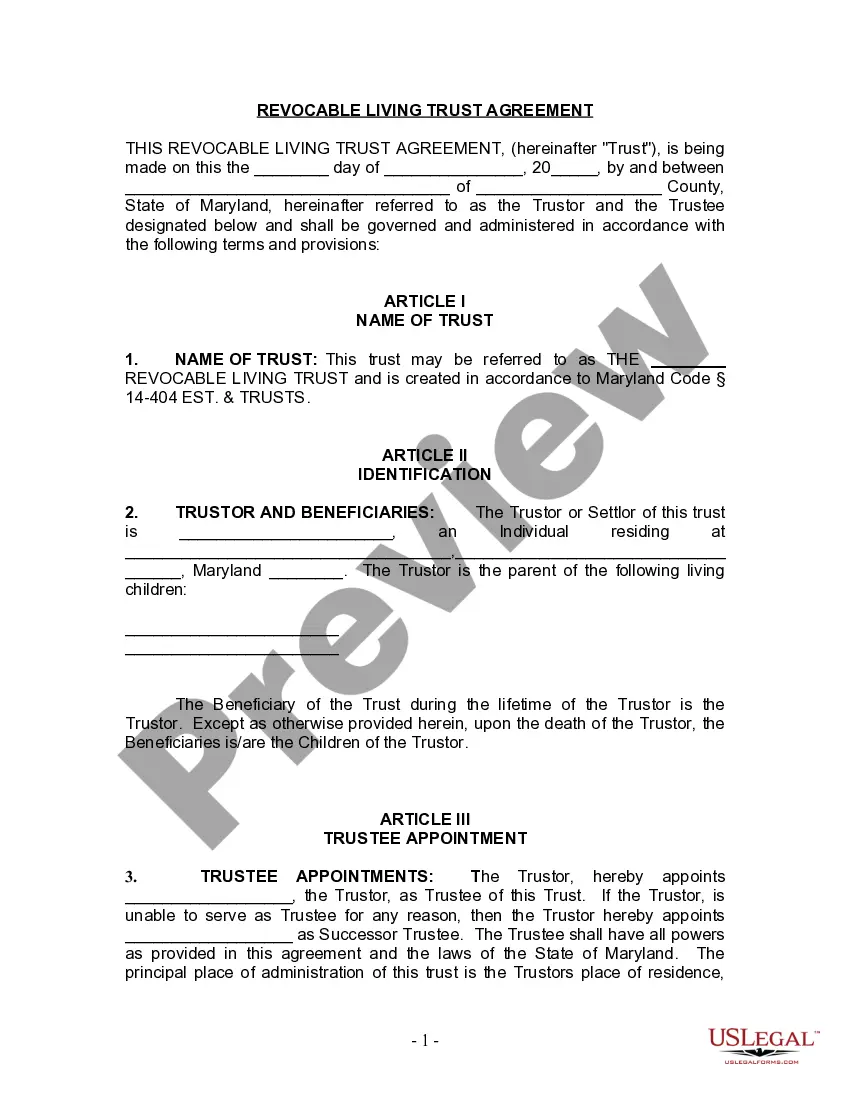
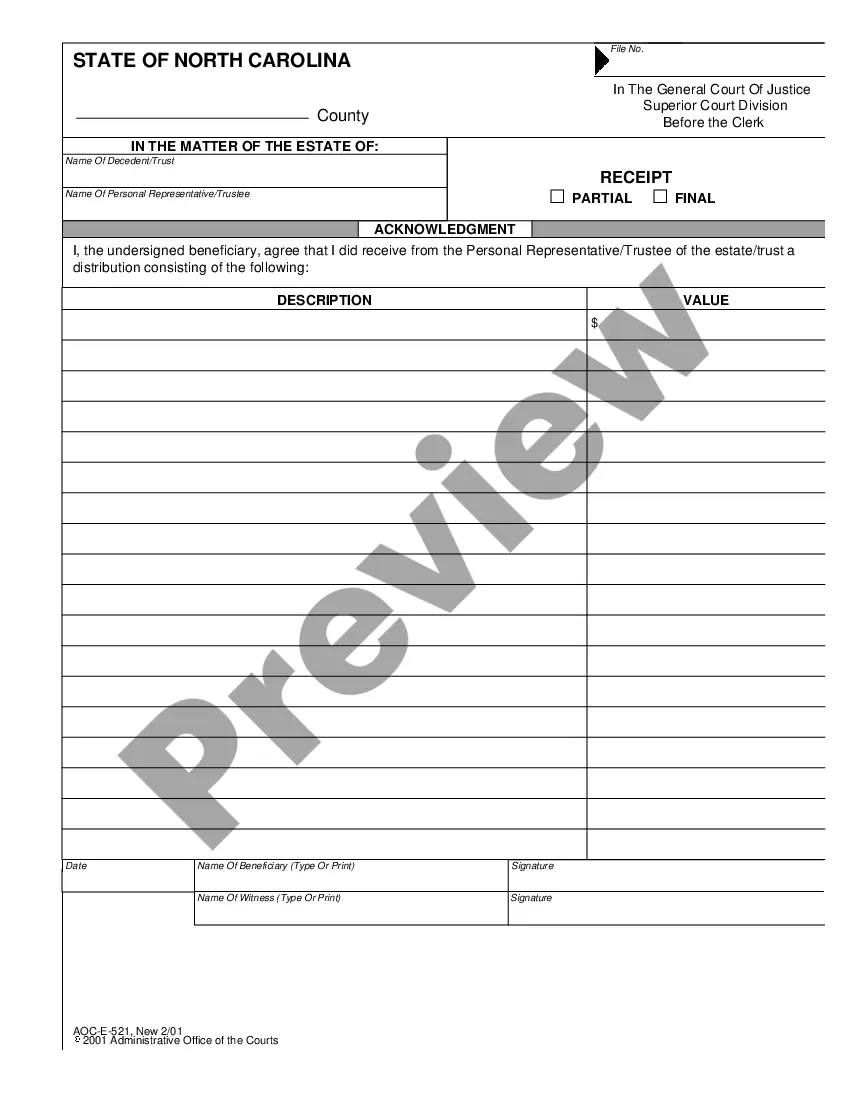
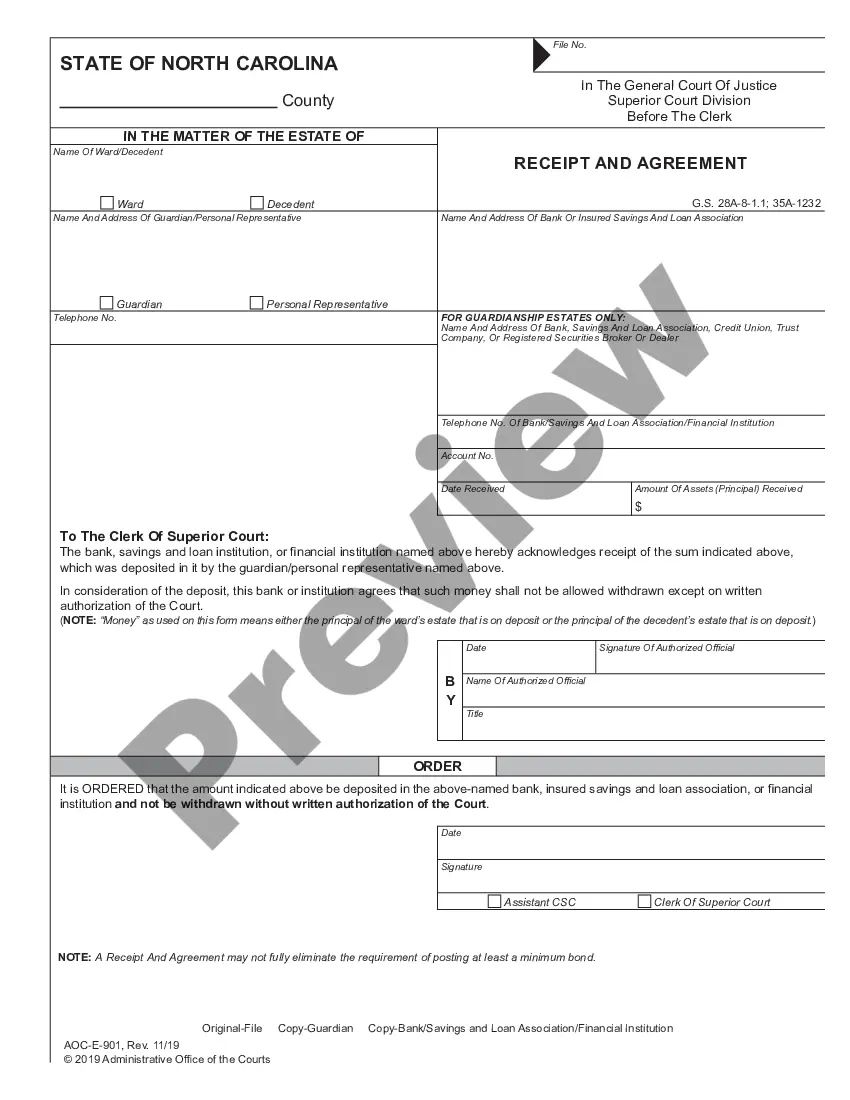
Receipt Partial/Final: This is an official form from the North Carolina Administration of the Courts (AOC), which complies with all applicable laws and statutes. USLF amends and updates the forms as is required by North Carolina statutes and law.
North Carolina Receipt Partial - Final
Instant download
This website is not affiliated with any governmental entity
Public form
Description

Get your form ready online
Our built-in tools help you complete, sign, share, and store your documents in one place.
Built-in online Word editor
Make edits, fill in missing information, and update formatting in US Legal Forms—just like you would in MS Word.
Export easily
Download a copy, print it, send it by email, or mail it via USPS—whatever works best for your next step.
E-sign your document
Sign and collect signatures with our SignNow integration. Send to multiple recipients, set reminders, and more. Go Premium to unlock E-Sign.
Notarize online 24/7
If this form requires notarization, complete it online through a secure video call—no need to meet a notary in person or wait for an appointment.
Store your document securely
We protect your documents and personal data by following strict security and privacy standards.

Make edits, fill in missing information, and update formatting in US Legal Forms—just like you would in MS Word.

Download a copy, print it, send it by email, or mail it via USPS—whatever works best for your next step.

Sign and collect signatures with our SignNow integration. Send to multiple recipients, set reminders, and more. Go Premium to unlock E-Sign.

If this form requires notarization, complete it online through a secure video call—no need to meet a notary in person or wait for an appointment.

We protect your documents and personal data by following strict security and privacy standards.
Looking for another form?
How to fill out North Carolina Receipt Partial - Final?
Steer clear of costly attorneys and discover the North Carolina Receipt Partial - Final you seek at a reasonable price on the US Legal Forms website. Utilize our straightforward groups feature to search for and acquire legal and tax paperwork. Examine their descriptions and preview them prior to downloading. Furthermore, US Legal Forms provides clients with step-by-step guidance on how to download and complete each document.
US Legal Forms users simply need to Log In and retrieve the particular document they require to their My documents section. Those without a subscription yet should adhere to the following instructions.
After downloading, you can complete the North Carolina Receipt Partial - Final either manually or with editing software. Print it and reuse the template several times. Achieve more for less with US Legal Forms!
- Ensure the North Carolina Receipt Partial - Final is permitted for use in your jurisdiction.
- If applicable, read the description and utilize the Preview feature before obtaining the template.
- If you are certain the document satisfies your requirements, click on Buy Now.
- If the form is not correct, use the search bar to locate the appropriate one.
- Then, create your account and choose a subscription option.
- Make payment via credit card or PayPal.
- Choose to receive the document in PDF or DOCX format.
- Click Download and locate your template in the My documents section. Feel free to save the document to your device or print it.
Form popularity
FAQ
The North Carolina small estate affidavit, or 'Form AOC-E-203B', is a form that can be used when there is an estate of a decedent that consists of $20,000 or less ($30,000 or less if spouse is the affiant) in total assets. In addition, there must have elapsed 30 days since death for it to be used.
Probate is generally required in North Carolina only when a decedent owned property in their name alone. Assets that were owned with a spouse, for which beneficiaries were named outside of a will, or held in revocable living trusts, generally do not need to go through probate.
Determine Your State's Laws Regarding Inventory Forms. Review the Instructions Provided. Identify Real Property. Identify Personal Property. Identify Bank Accounts. Identify Retirement Accounts. Identify Non-Probate Assets. File the Form With the Court.
You should expect it to take a minimum of six months to a year to settle an estate because of the legal notice requirements and time that creditors have to submit claims against the estate. Creditors have 90 days from the first publication date of the notice of probate.
All you need to do is to file one simple form with the court. You can get a fill-in-the-blanks form, called an Affidavit for Collection of Personal Property of Decedent, from the court clerk's office or the North Carolina courts website.
The application must be submitted along with the will (if there is one), a preliminary inventory of the estate and a certified copy of the deceased's death certificate. The fee to open an estate is $120. Both executors and administrators are known as personal representative of the estate.
Unless the Will provides otherwise, under North Carolina law, Executors or Administrators may claim a commission of up to 5% of the Estate assets and receipts, as approved by the Clerk of Court. Trusts should provide specific guidance regarding compensation.
In North Carolina, you can make a living trust to avoid probate for virtually any asset you ownreal estate, bank accounts, vehicles, and so on. You need to create a trust document (it's similar to a will), naming someone to take over as trustee after your death (called a successor trustee).
You should expect it to take a minimum of six months to a year to settle an estate because of the legal notice requirements and time that creditors have to submit claims against the estate. Creditors have 90 days from the first publication date of the notice of probate.