Plaintiff's Request for Production of Documents and Request for Admissions
About this form
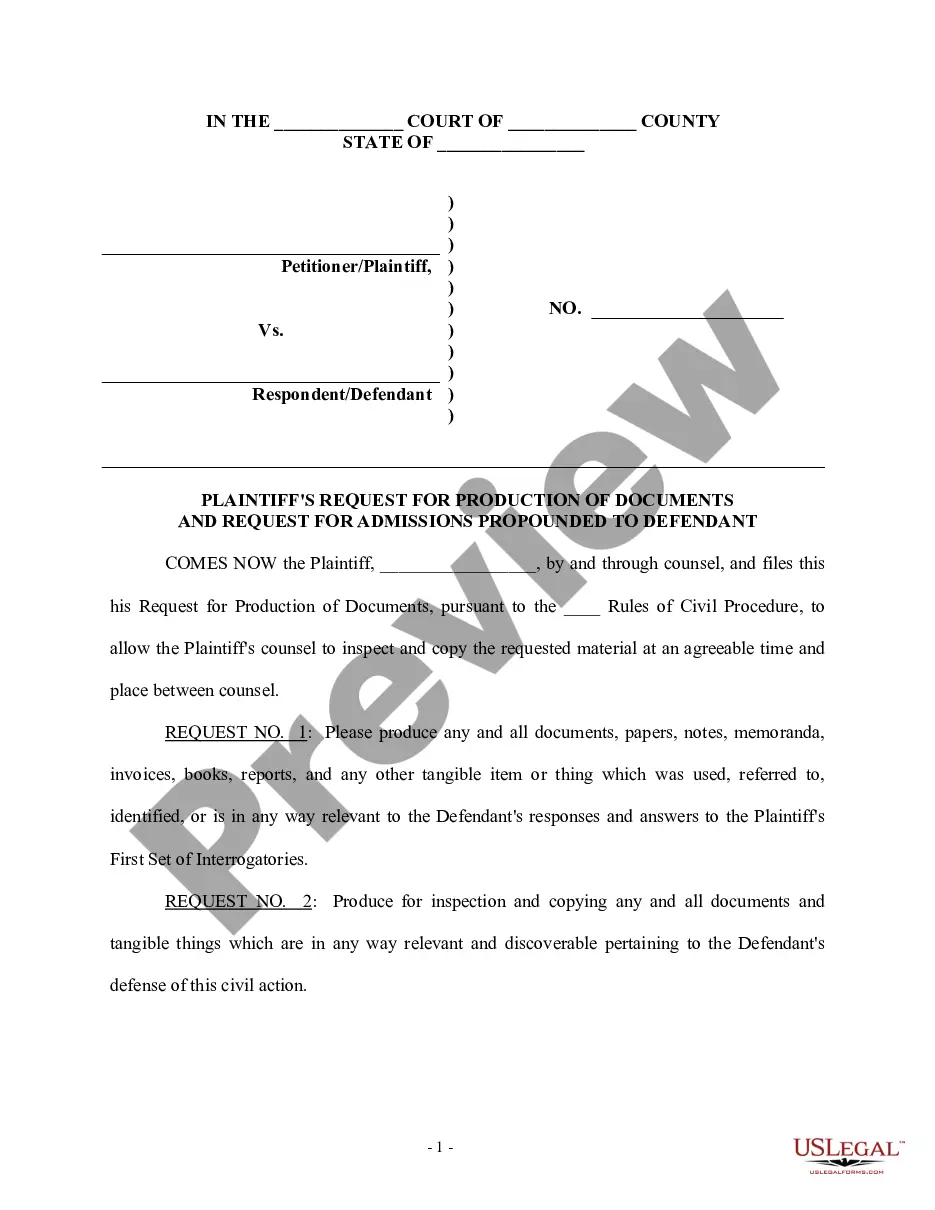
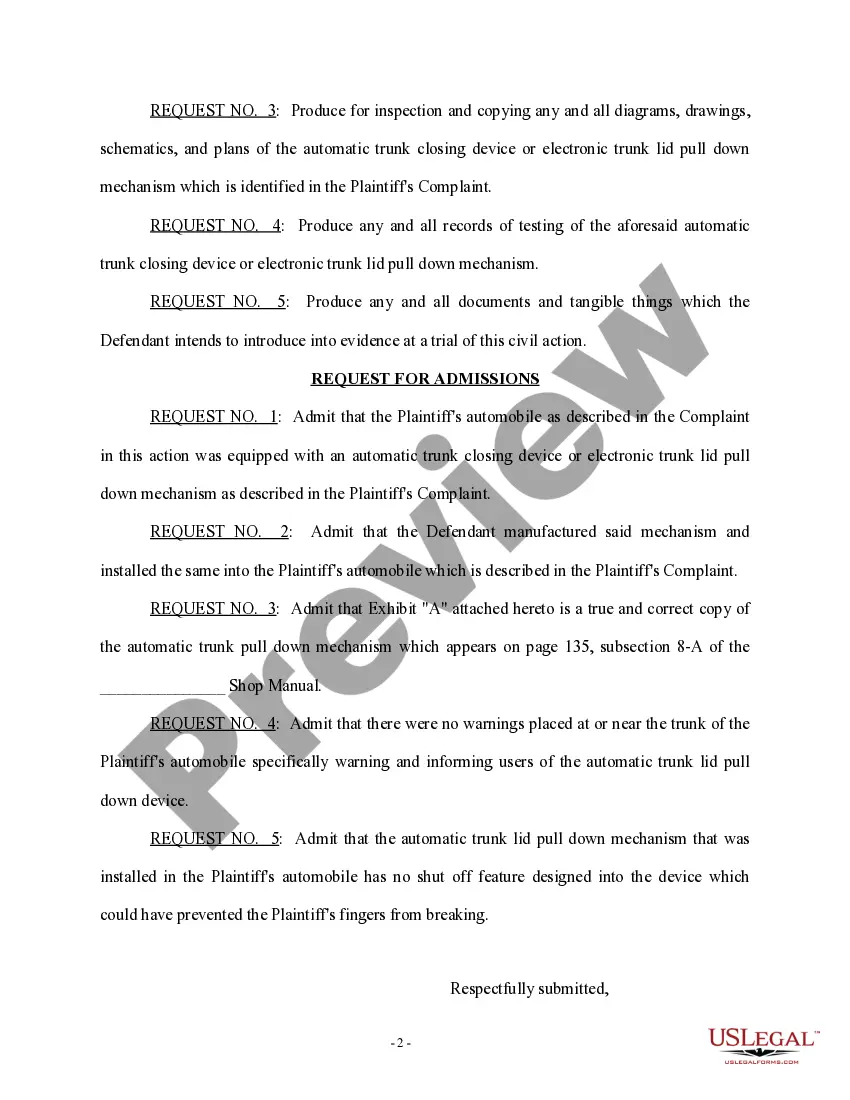
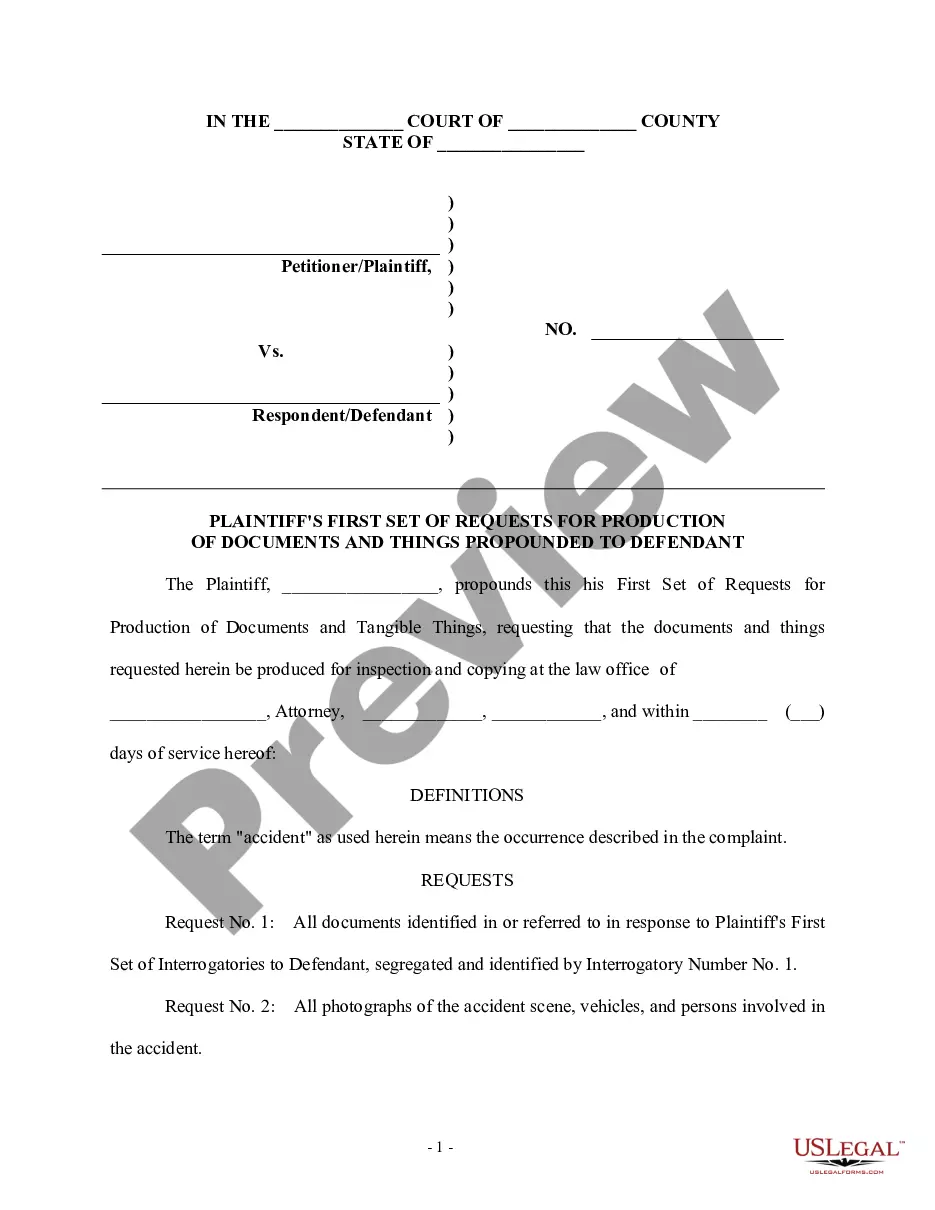
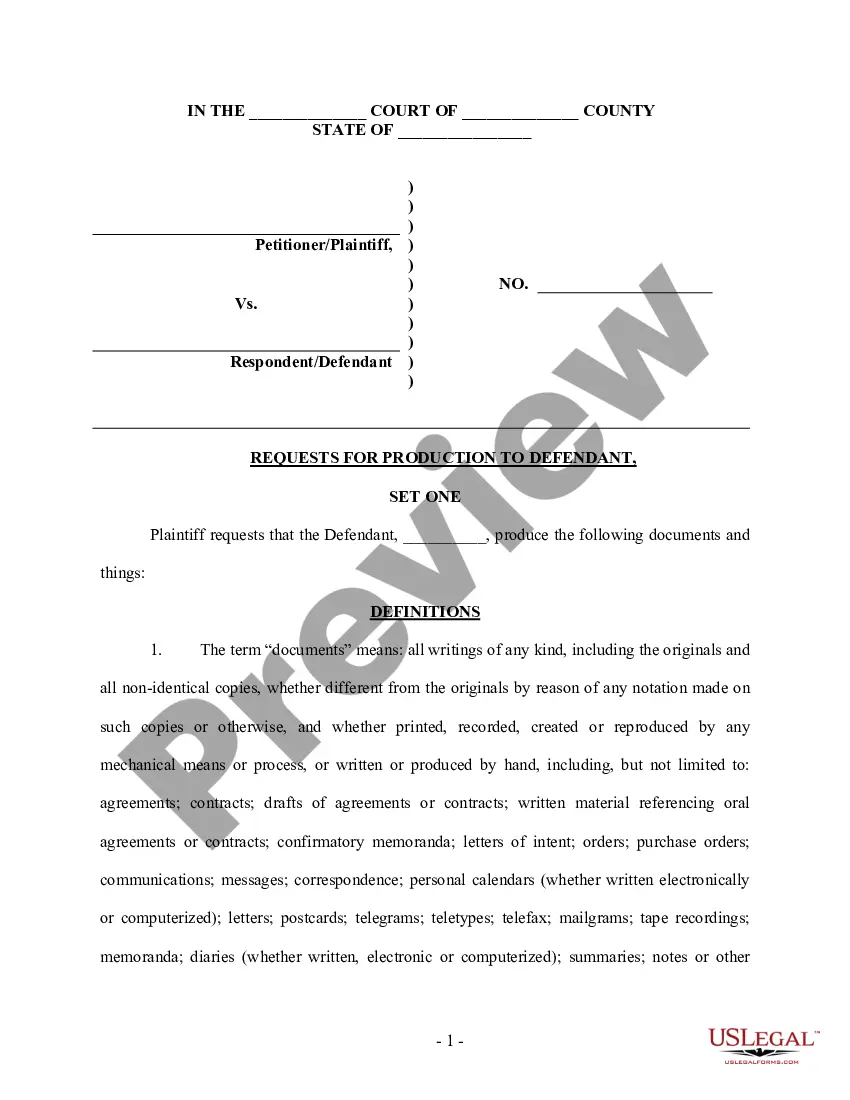
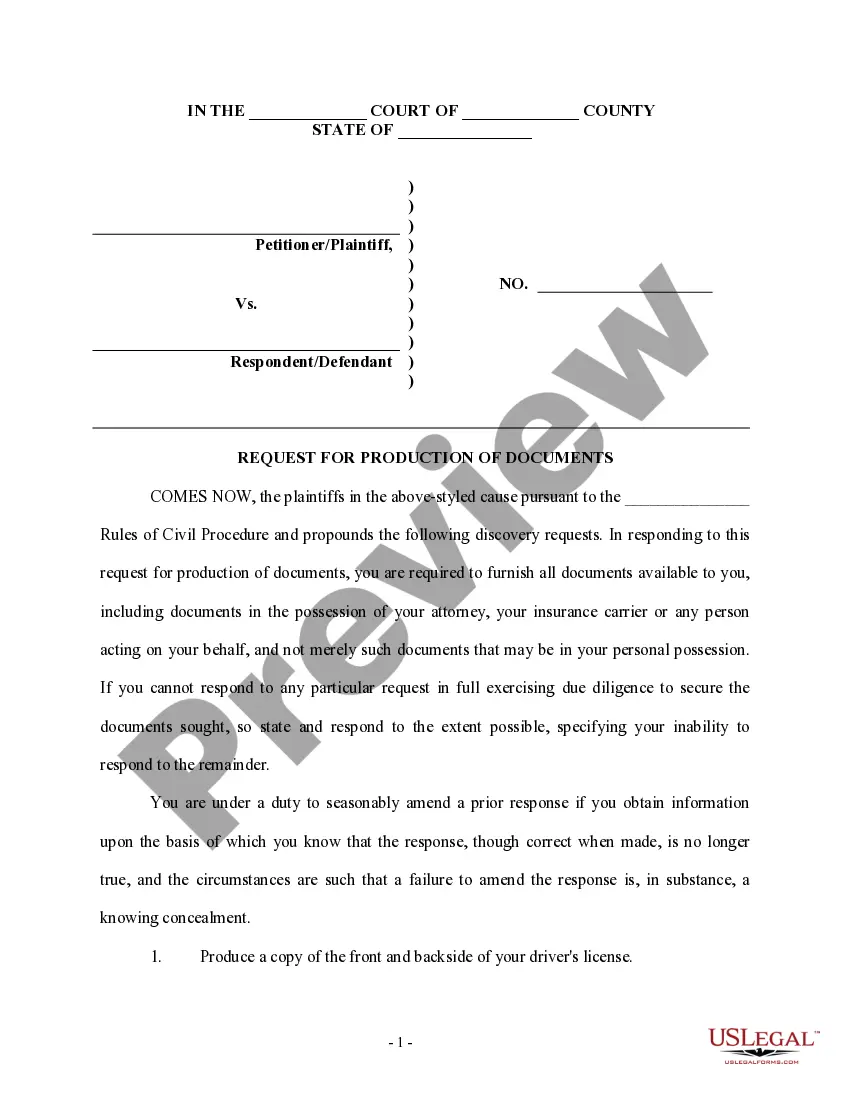
The Plaintiff's Request for Production of Documents and Request for Admissions is a legal document used in personal injury actions. This form allows the plaintiff to formally request the defendant to produce specific documents and admit certain facts relevant to the case. It is essential for gathering evidence and clarifying issues before trial, ensuring both parties are prepared for the legal process. Unlike other discovery forms, this one specifically combines requests for documents and admissions, streamlining the information-gathering process.
Main sections of this form
- Request for production of relevant documents and tangible items related to the defendant's responses.
- Request for admissions regarding specific facts, such as equipment installed in the plaintiff's vehicle.
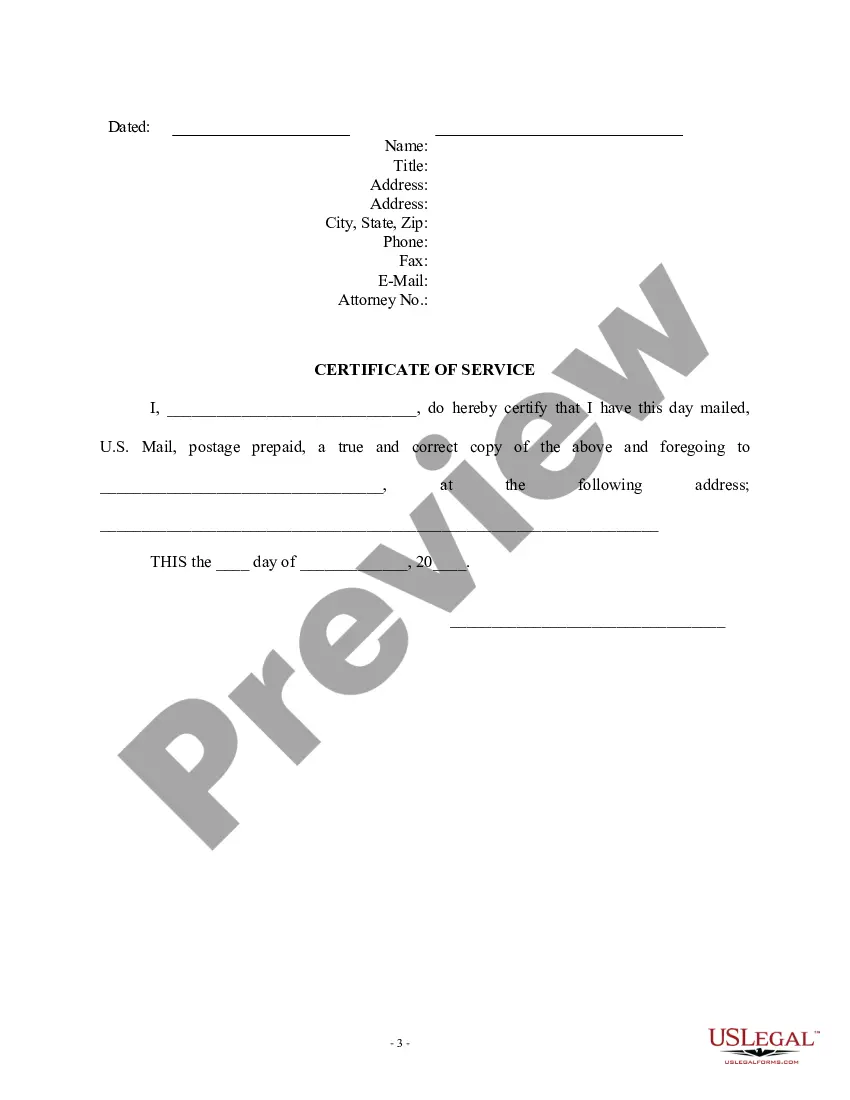
- Certification of service to confirm the documents were properly delivered to the defendant.
- Space for attorney details, including name, address, and contact information.

Situations where this form applies
This form should be used during the discovery phase of a personal injury lawsuit. It is particularly useful when the plaintiff needs to obtain crucial documents that may support their claim, such as records of product testing or design diagrams. Additionally, this form can clarify facts that the defendant must acknowledge, helping to narrow the issues for trial.
Intended users of this form
This form is intended for:
- Individuals or entities acting as plaintiffs in personal injury lawsuits.
- Attorneys representing plaintiffs in civil litigation cases.
- Legal professionals seeking to streamline the discovery process in their cases.
Completing this form step by step
- Identify the parties involved in the lawsuit and provide their legal names and addresses.
- Fill in the specific requests for documents by clearly stating what items you wish to obtain from the defendant.
- Specify any admissions you are requesting, making sure they relate to factual elements of the case.
- Complete the attorney information section, including name, address, phone number, and attorney number.
- Sign and date the form, and ensure you include a certificate of service indicating how the documents were delivered to the defendant.
Notarization guidance
This form does not typically require notarization to be legally valid. However, some jurisdictions or document types may still require it. US Legal Forms provides secure online notarization powered by Notarize, available 24/7 for added convenience.
Get your form ready online
Our built-in tools help you complete, sign, share, and store your documents in one place.
Make edits, fill in missing information, and update formatting in US Legal Forms—just like you would in MS Word.
Download a copy, print it, send it by email, or mail it via USPS—whatever works best for your next step.
Sign and collect signatures with our SignNow integration. Send to multiple recipients, set reminders, and more. Go Premium to unlock E-Sign.
If this form requires notarization, complete it online through a secure video call—no need to meet a notary in person or wait for an appointment.
We protect your documents and personal data by following strict security and privacy standards.

Make edits, fill in missing information, and update formatting in US Legal Forms—just like you would in MS Word.

Download a copy, print it, send it by email, or mail it via USPS—whatever works best for your next step.

Sign and collect signatures with our SignNow integration. Send to multiple recipients, set reminders, and more. Go Premium to unlock E-Sign.

If this form requires notarization, complete it online through a secure video call—no need to meet a notary in person or wait for an appointment.

We protect your documents and personal data by following strict security and privacy standards.
Mistakes to watch out for
- Failing to provide clear and specific requests, which can lead to objections from the defendant.
- Not including a certificate of service, making the form ineffective.
- Overlooking the necessity to adapt the form to specific state rules where applicable.
Why use this form online
- Convenience of downloading and completing the form quickly at your own pace.
- Editability allows for adjustments based on your specific case needs.
- Reliability as the form is drafted by licensed attorneys, ensuring legal compliance.
Legal use & context
- This form assists in the discovery process to uncover necessary information for litigation.
- Requests for admissions streamline the trial by narrowing the issues to be contested.
- Failure to comply with properly served requests can result in legal penalties or denial of evidence at trial.
Key takeaways
- Essential for gathering evidence in personal injury cases.
- Helps clarify facts through requests for admissions and production of documents.
- Must be completed accurately and in adherence to local jurisdictional rules.
Looking for another form?

Form popularity
FAQ
The process of delivering, or making available for review, documents in response to a request for documents, such as a request for production and a subpoena. A request for documents may call for the production of paper (hard copy) documents and electronically stored information (ESI).
A request for production is a discovery device used to gain access to documents, electronic data, and physical items held by an opposing party in a legal matter. The aim is to gain insight into any relevant evidence that the opposing party holds.
Thank you for your inquiry regarding our product or service. Thank you for your interest in our product or service. We would like to thank you for your letter inquiring about our product. We truly appreciate your letter asking for information about our service.
If a request asks for a document, make a copy of the document; in your response, describe the document and say that a copy is attached; and attach a copy of the document to the responses you send back to the other side.
The making available by a party of documents in his possession, custody or power for inspection by the other party or for use as evidence at trial.
Primary tabs. In a civil action, a request for admission is a discovery device that allows one party to request that another party admit or deny the truth of a statement under oath. If admitted, the statement is considered to be true for all purposes of the current trial.
What Is a Request for Production of Documents? A request for production is a discovery device used to gain access to documents, electronic data, and physical items held by an opposing party in a legal matter. The aim is to gain insight into any relevant evidence that the opposing party holds.
When responding to Requests for Admissions, remember to answer as follows: Admit: If any portion of the Request for Admission is true then you must admit to that portion of the request. You are also allowed to have a hybrid response admit the part of the request that is true while denying another part.