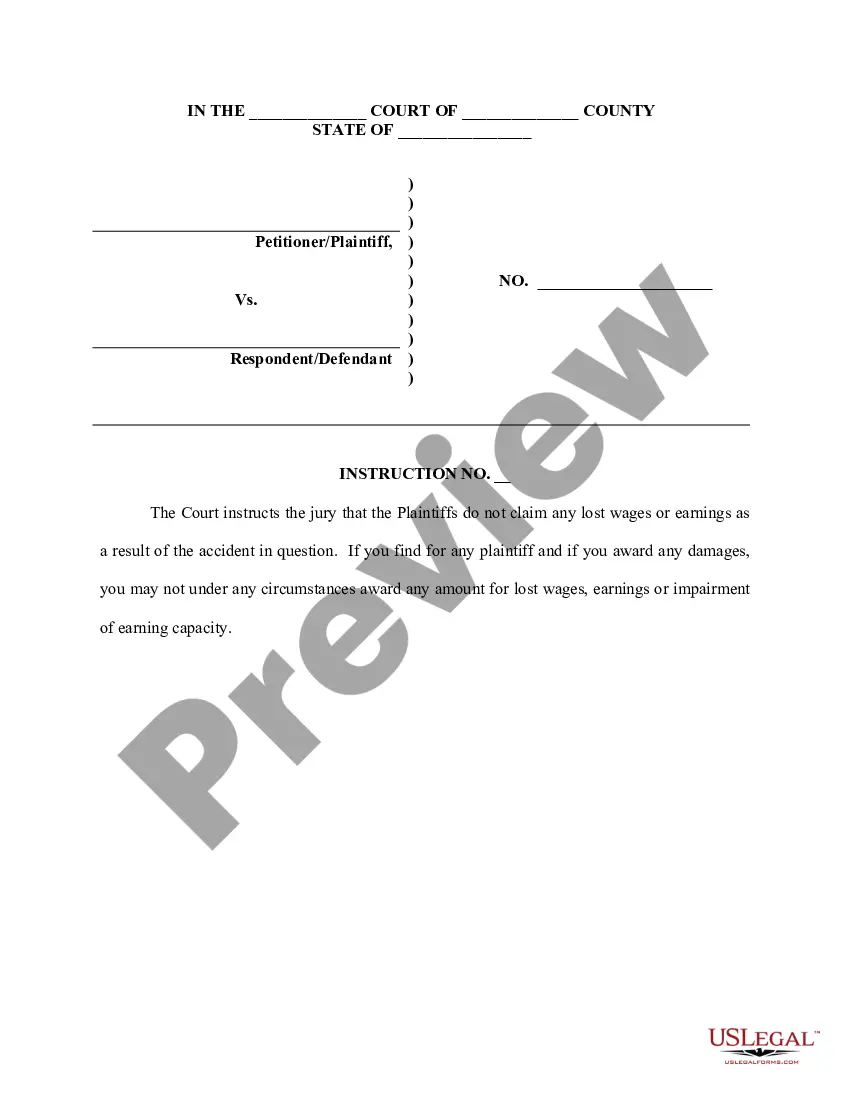
Jury Instruction - Personal Injury
Understanding this form
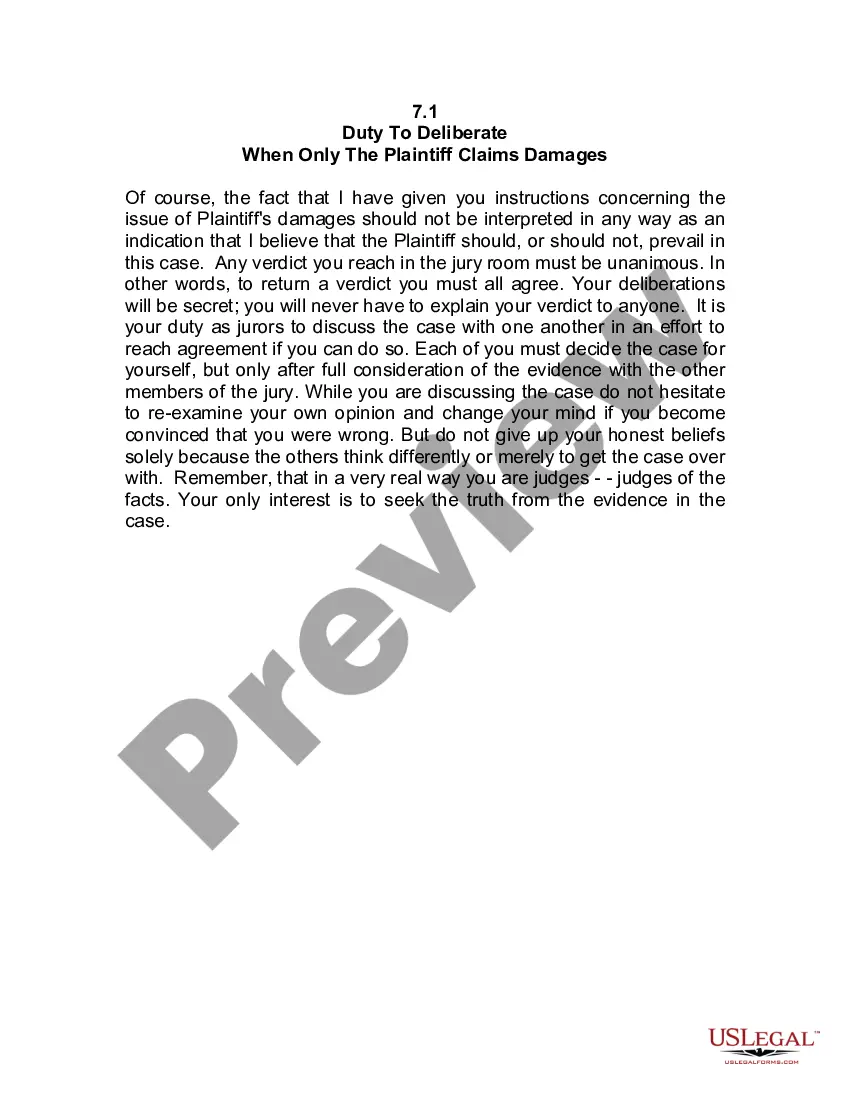
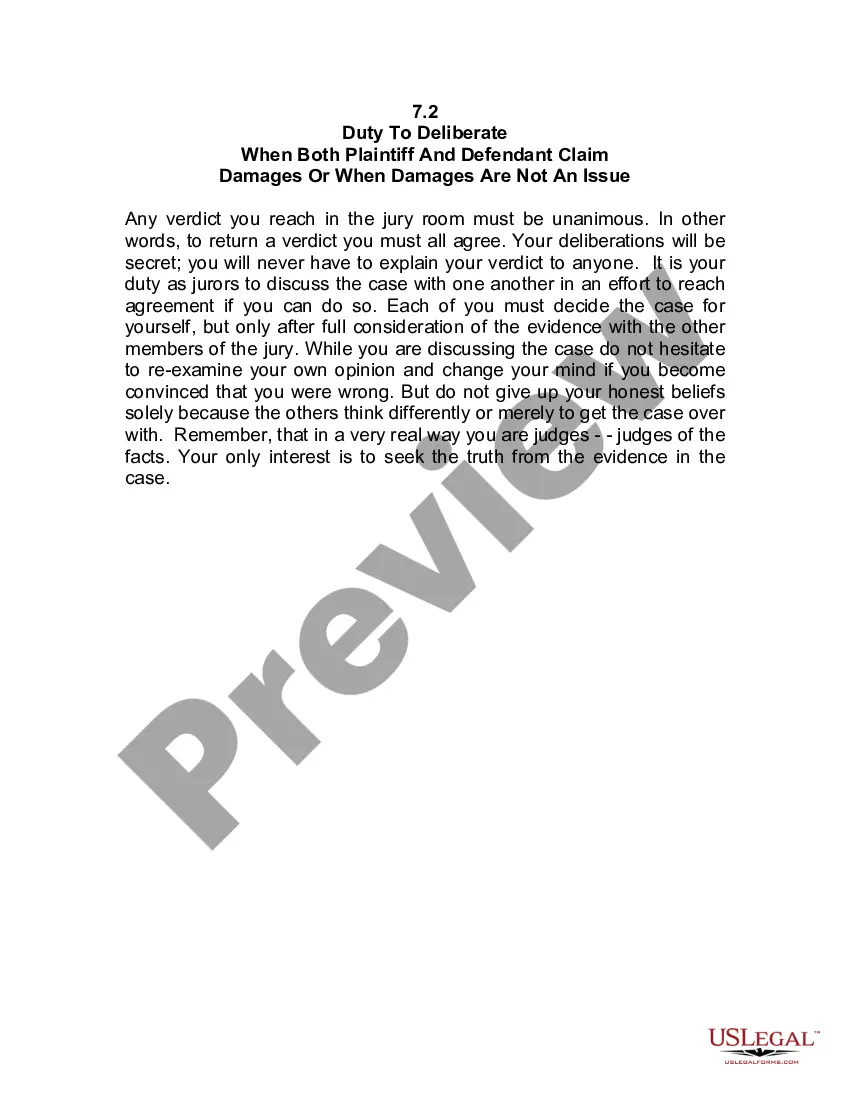
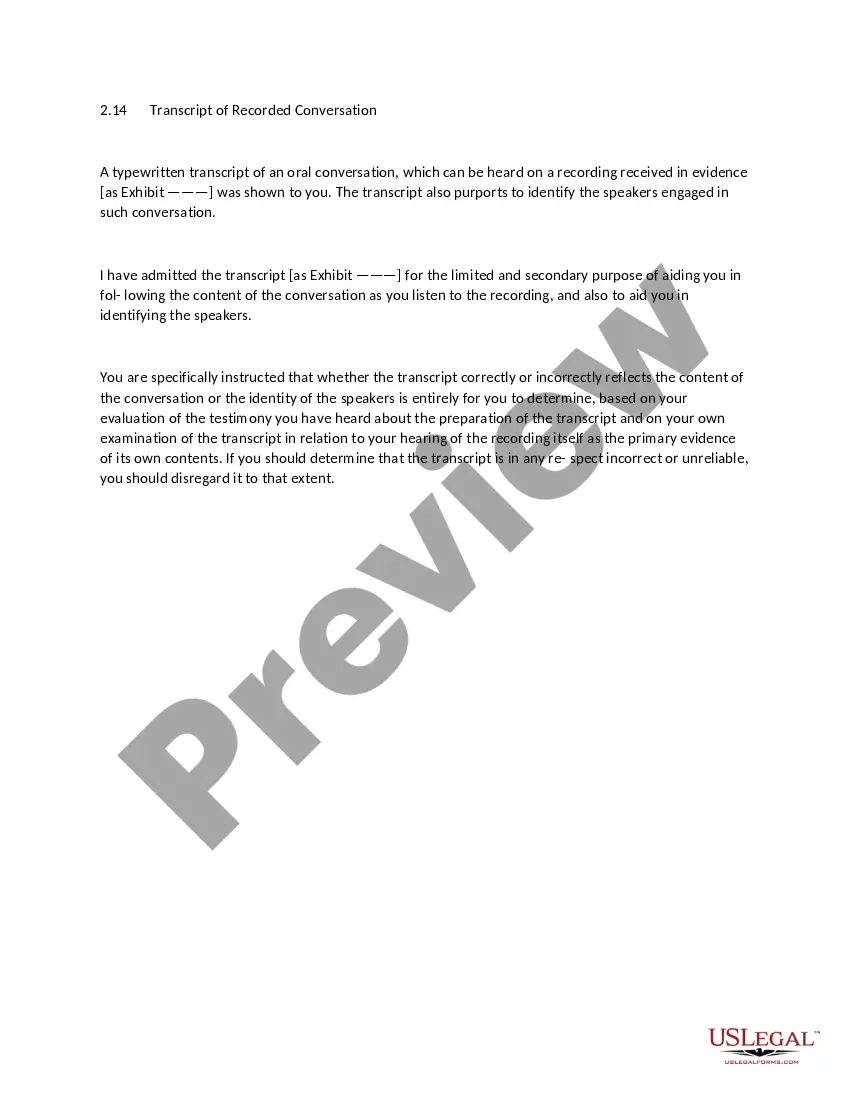
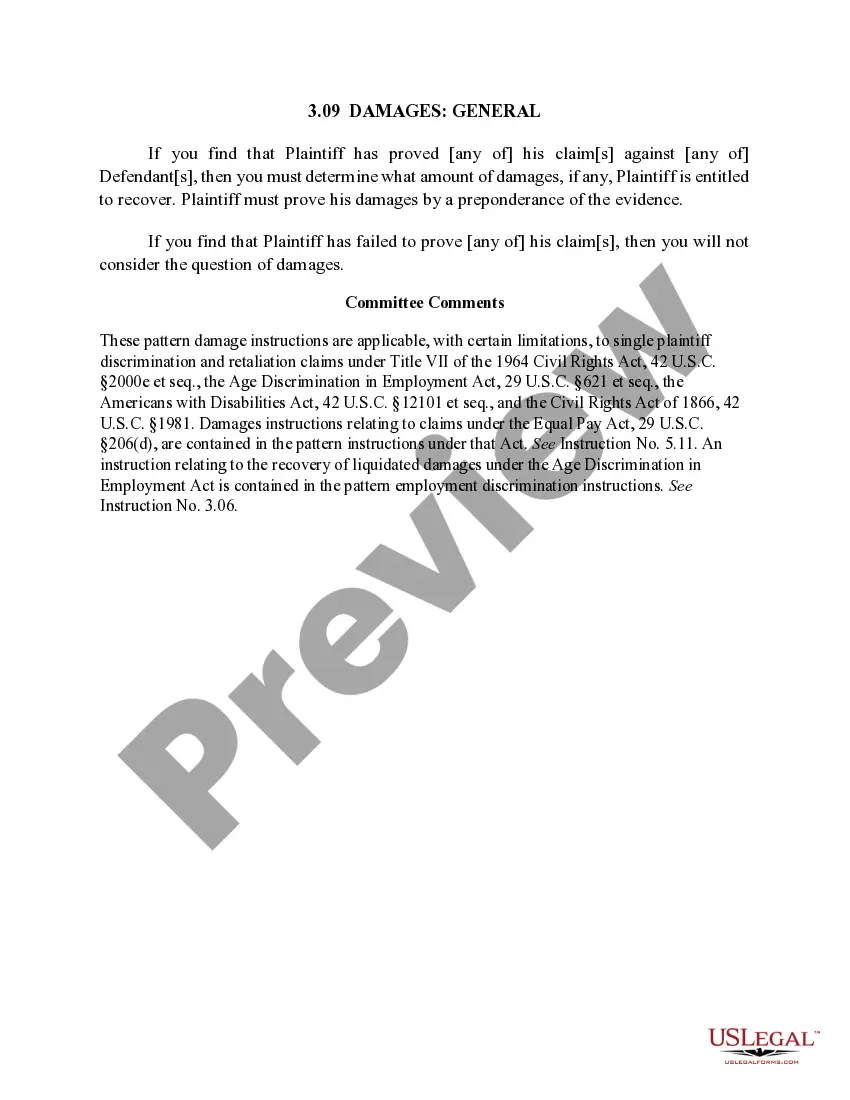
The Jury Instruction - Personal Injury form is a set of guidelines provided to jurors to help them determine appropriate damages in personal injury cases. This form is essential for ensuring that jurors understand the types of damages they may award and the standards they must follow. Unlike other legal forms, this specific directive focuses solely on personal injury claims, making it vital for cases within this category.
Key parts of this document
- Definition of compensatory damages and examples.
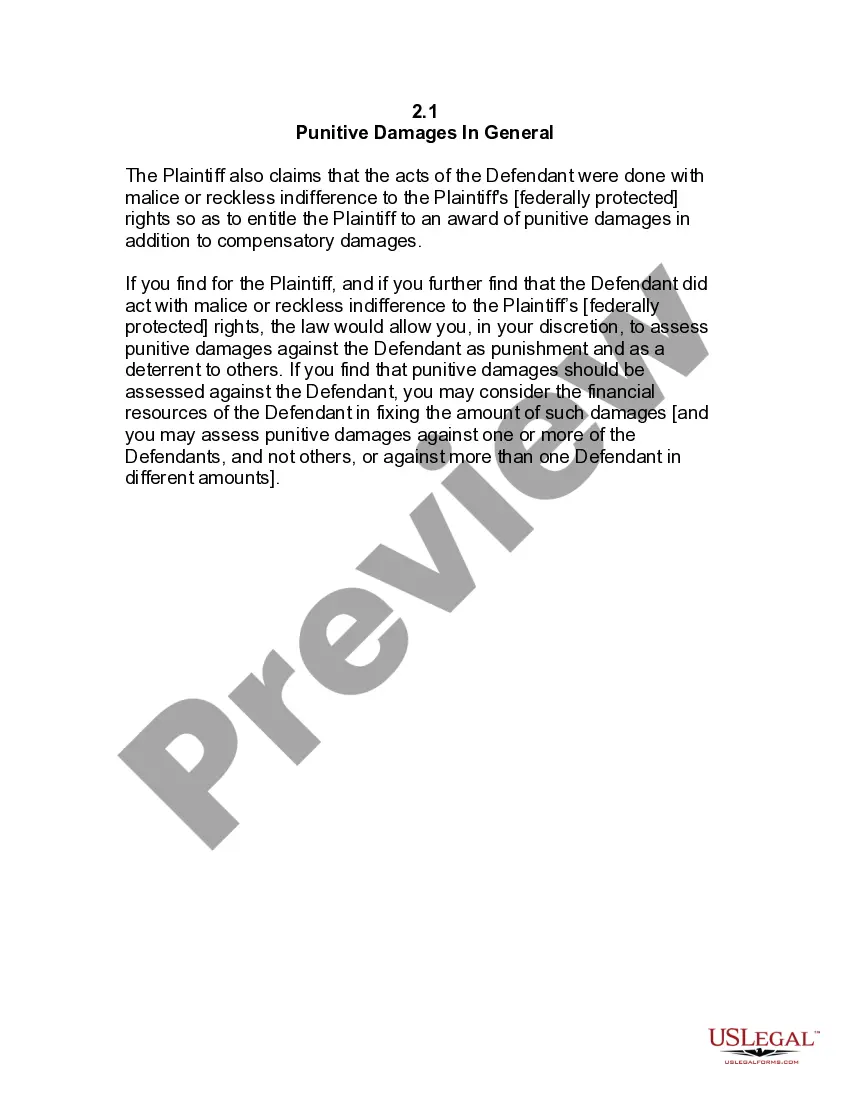
- Criteria for awarding punitive damages.
- Considerations for emotional distress damages.
- Instructions on analyzing the credibility of evidence presented.
- Direction on how to evaluate the severity of the injury.
Situations where this form applies
This form should be used in personal injury trials where the jury must deliberate on the types and amounts of damages to be awarded to the injured party. Scenarios may include car accidents, slip and fall incidents, or medical malpractice cases, where the extent of damages directly impacts the compensation awarded.
Who can use this document
Eligible users include:
- Attorneys representing clients in personal injury cases.
- Judges presiding over trials involving personal injury claims.
- Jury members tasked with determining damages in personal injury lawsuits.
- Legal professionals preparing jury instructions for similar cases.
Steps to complete this form
- Identify the parties involved in the case.
- Clarify the nature of the personal injury claims being addressed.
- Specify the types of damages to be explained to the jury.
- Review and incorporate legal standards relevant to your jurisdiction.
- Distribute the completed instructions to all jurors prior to deliberation.
Notarization requirements for this form
Notarization is not commonly needed for this form. However, certain documents or local rules may make it necessary. Our notarization service, powered by Notarize, allows you to finalize it securely online anytime, day or night.
Get your form ready online
Our built-in tools help you complete, sign, share, and store your documents in one place.
Make edits, fill in missing information, and update formatting in US Legal Forms—just like you would in MS Word.
Download a copy, print it, send it by email, or mail it via USPS—whatever works best for your next step.
Sign and collect signatures with our SignNow integration. Send to multiple recipients, set reminders, and more. Go Premium to unlock E-Sign.
If this form requires notarization, complete it online through a secure video call—no need to meet a notary in person or wait for an appointment.
We protect your documents and personal data by following strict security and privacy standards.

Make edits, fill in missing information, and update formatting in US Legal Forms—just like you would in MS Word.

Download a copy, print it, send it by email, or mail it via USPS—whatever works best for your next step.

Sign and collect signatures with our SignNow integration. Send to multiple recipients, set reminders, and more. Go Premium to unlock E-Sign.

If this form requires notarization, complete it online through a secure video call—no need to meet a notary in person or wait for an appointment.

We protect your documents and personal data by following strict security and privacy standards.
Mistakes to watch out for
- Failing to tailor the instructions to the specific case details.
- Omitting essential definitions of damages.
- Including legal jargon that may confuse jurors.
- Ignoring local rules that may dictate specific jury instruction formats.
Advantages of online completion
- Convenience of downloading from anywhere, anytime.
- Easily editable to fit specific case needs or jurisdictional requirements.
- Reliability of having templates drafted by licensed attorneys.
Legal use & context
- Jury instructions are essential for guiding jurors on the law applicable to the case.
- Properly drafted instructions can significantly affect the outcome of a trial.
- Failure to provide adequate instructions may lead to appeals on grounds of error.
What to keep in mind
- This form provides crucial jury instructions for determining damages in personal injury cases.
- It is important to adapt the form to the specifics of the case and local law.
- Using this form can ensure clarity and legality in jury proceedings.
Looking for another form?








Form popularity
FAQ
The Jury Prize (French: Prix du Jury) is an award presented at the Cannes Film Festival, chosen by the Jury from the "official section" of movies at the festival. According to film critic Dave Kehr, the award is "intended to recognize an original work that embodies the spirit of inquiry."
California jury instructions tell every juror considering punitive damages to consider: The reprehensibility of the conduct of the defendant. The amount of punitive damages which will have a deterrent effect on the defendant in the light of defendant's financial condition.
The damages to which you are entitled are typically calculated based on the severity of your injuries, the underlying circumstances of the incident in question, and whether the case settles or proceeds to a trial. The following factors are typically considered: Medical treatment expenses.
In a personal injury trial, a judge or jury examines the evidence to decide whether, by a "preponderance of the evidence," the defendant should be held legally responsible for the injuries and harm alleged by the plaintiff.
According to this theory, the jurors use the amount of compensation that the plaintiff is seeking as a starting point during deliberations. For example, if a plaintiff is seeking $500,000 in damages, the jury may begin deliberations by discussing whether they should award the full $500,000.
Negligence is a key factor in personal injury claims and lawsuits.Negligence is generally a matter of carelessness, an action or a failure to act in a manner that any other prudent person would engage in under similar circumstances.
How does a jury come up with its award when a personal injury lawsuit goes to trial?In order to make its decision, the jurors have to review the evidence that was presented in the trial, and consider the law that applies to the case.
General compensatory damages, meanwhile, include estimates of loss not involving actual monetary expenditure. Some courts use the "multiplier method," which calculates general damages by multiplying the sum total of one's actual damages by a number that signifies the seriousness of the injury.