Letter regarding Client's Injuries and Diagnosis
What this document covers
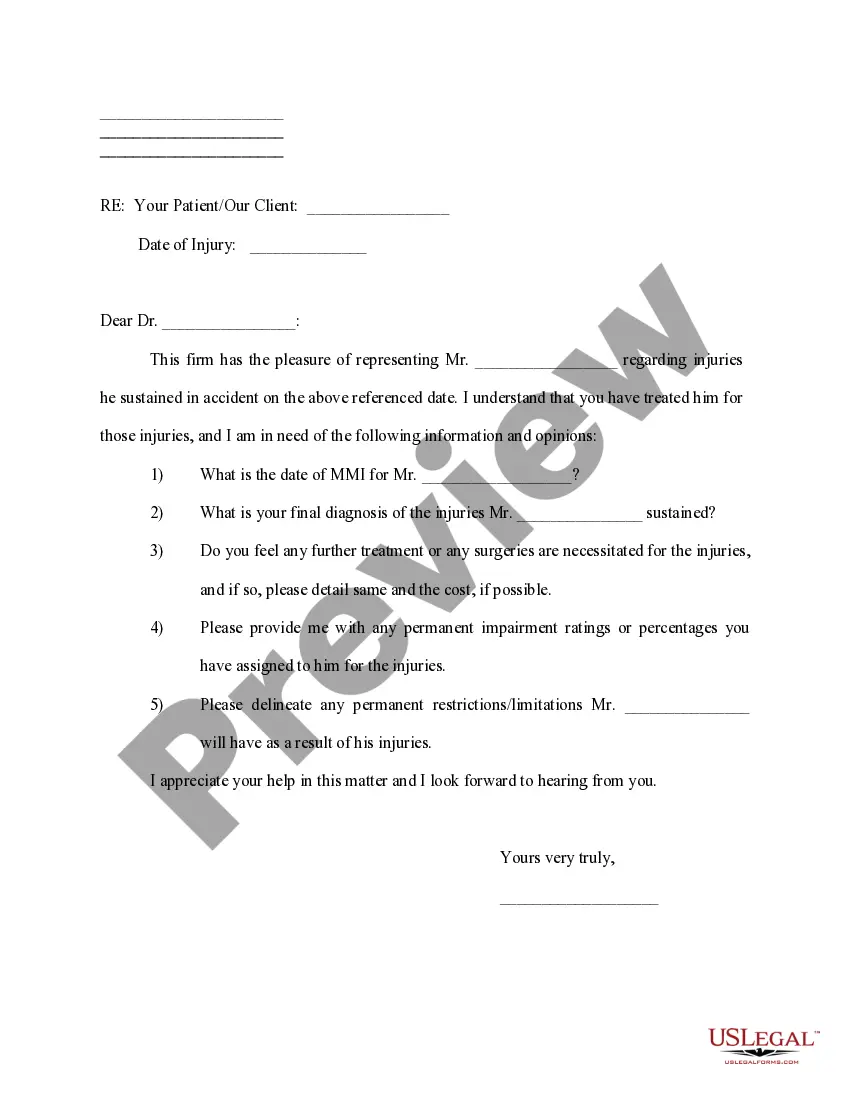
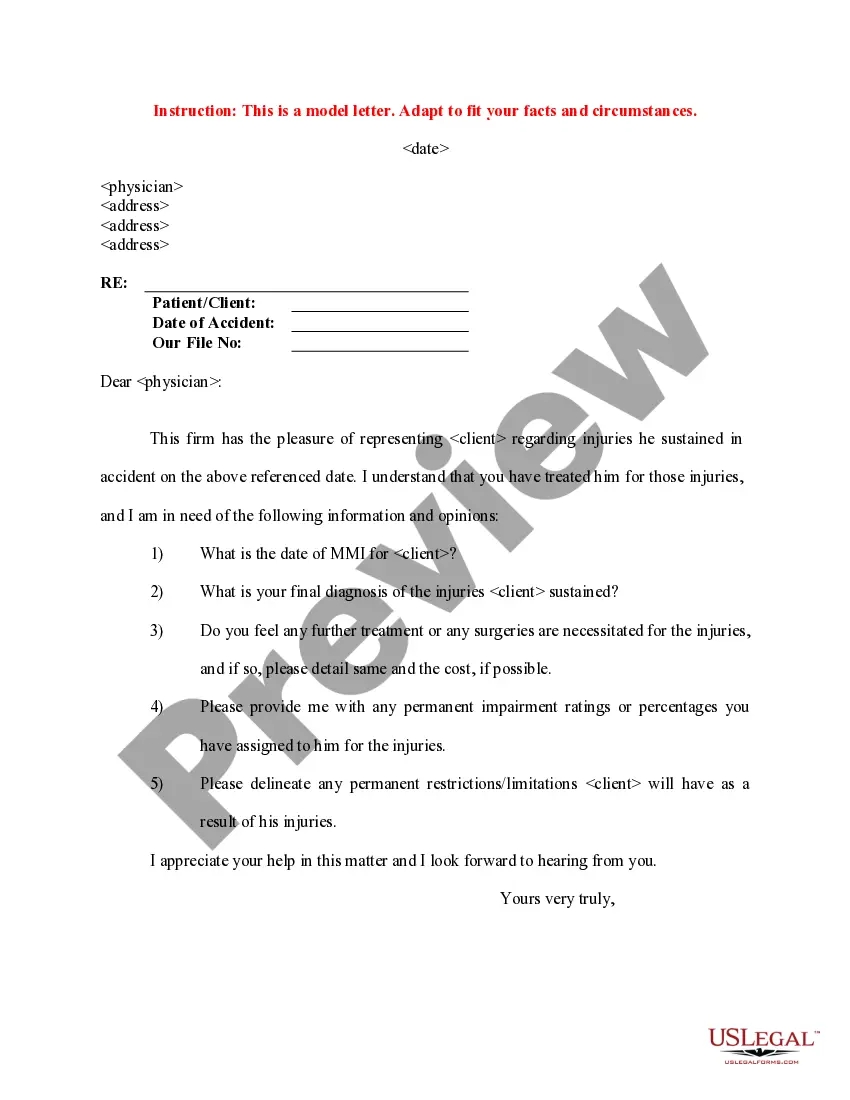
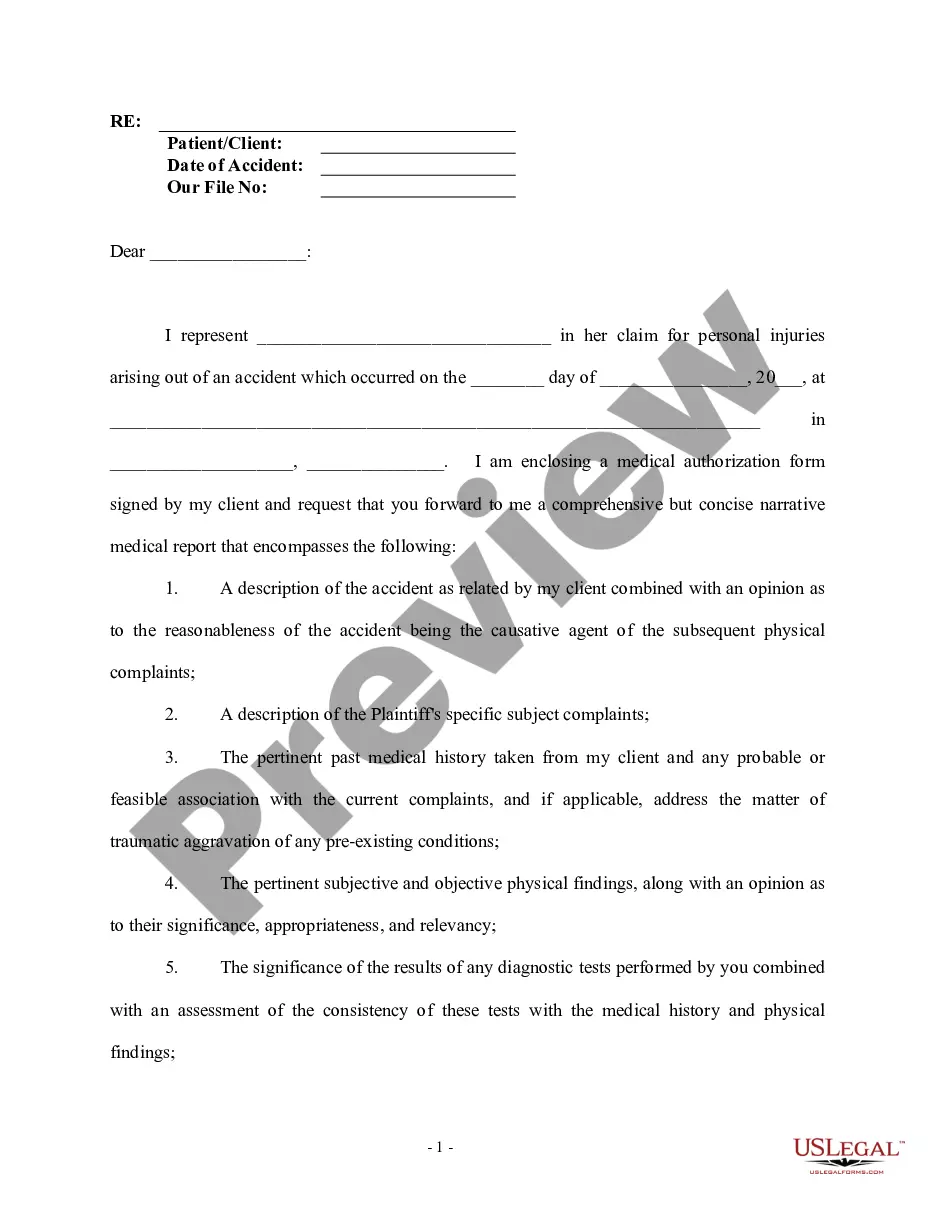
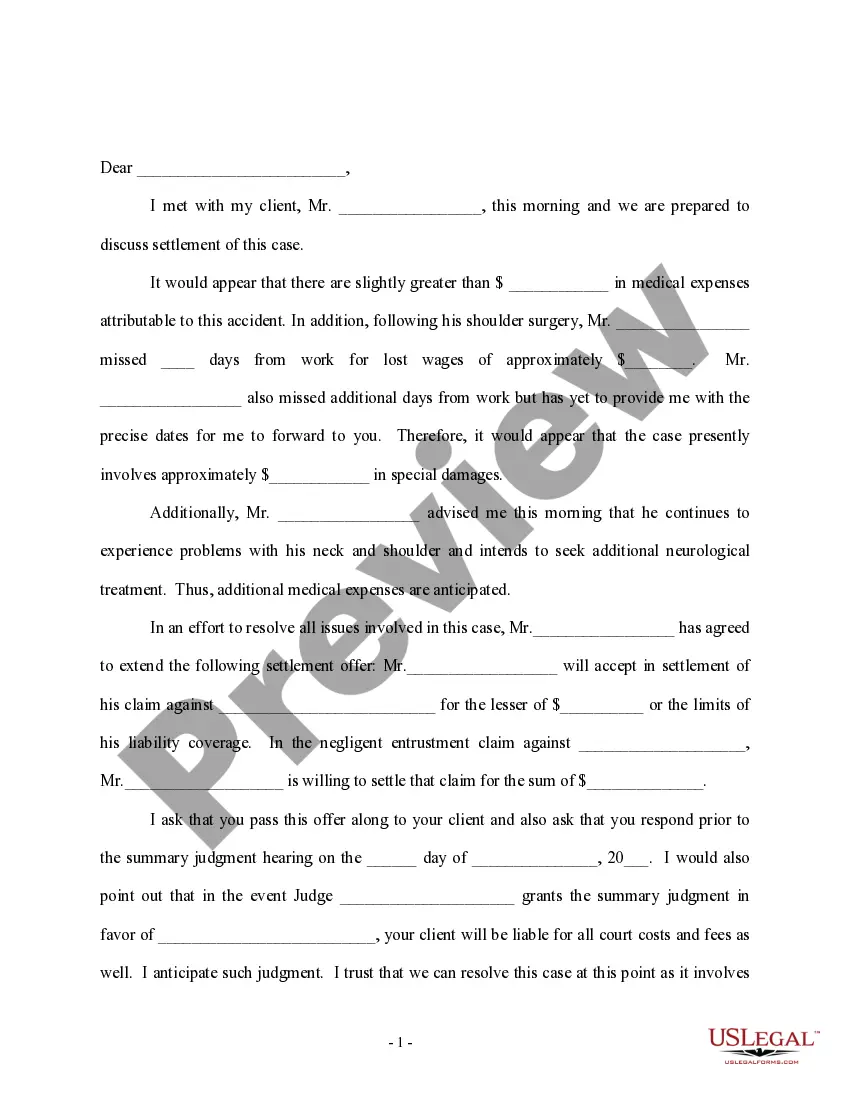
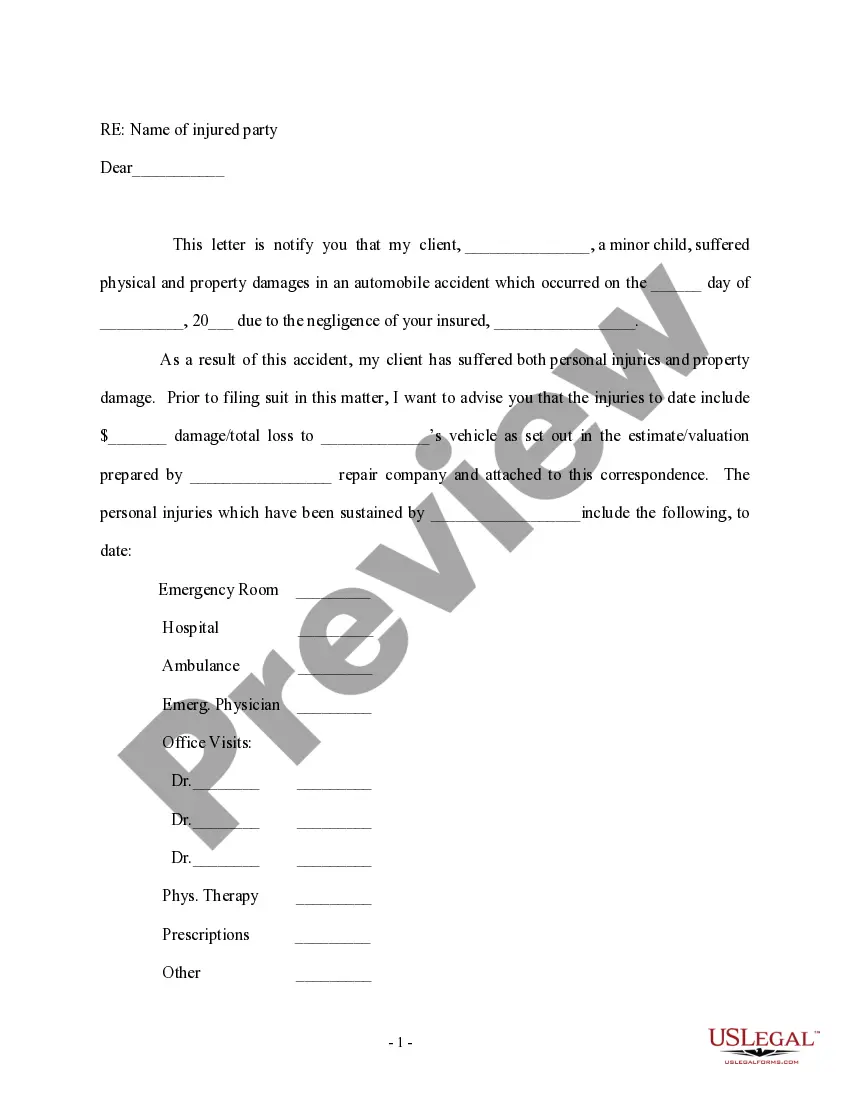
The Letter Regarding Client's Injuries and Diagnosis is a formal request sent by a plaintiff's attorney to a client's medical provider. Its purpose is to obtain detailed information about the client's injuries and treatment after an accident. Unlike other medical information requests, this letter is specifically tailored to gather critical information for legal processes, aiding in the evaluation of the client's case.
Form components explained
- Patient and client identification details, including names and dates of injury
- Request for the date of Maximum Medical Improvement (MMI)
- Final diagnosis of the injuries sustained
- Details regarding any further treatment or surgeries needed, including potential costs
- Permanent impairment ratings or percentages assigned to the client
- Permanent restrictions or limitations resulting from the injuries
When to use this document
This form should be used when an attorney is representing a client who has suffered injuries in an accident and needs to collect comprehensive medical information. It is particularly essential when preparing for negotiations, settlements, or courtroom procedures related to personal injury claims, and when understanding the clientâs medical condition and treatment plan is crucial for pursuing compensation.
Intended users of this form
- Attorneys representing clients in personal injury cases
- Healthcare providers needing to respond to formal requests for medical information
- Claims adjusters or insurance representatives working on personal injury claims
How to complete this form
- Enter the patient's name and the attorney's name at the top of the letter.
- Specify the date of injury in the appropriate field.
- List the requests for medical information, including details on MMI, diagnosis, further treatment, impairment ratings, and restrictions.
- Sign the letter at the bottom, including title and contact information.
- Send the completed letter to the medical provider, ensuring it is addressed correctly.
Does this document require notarization?
This form does not typically require notarization unless specified by local law. However, it is crucial to ensure compliance with state-specific requirements when sending medical information requests.
Get your form ready online
Our built-in tools help you complete, sign, share, and store your documents in one place.
Make edits, fill in missing information, and update formatting in US Legal Forms—just like you would in MS Word.
Download a copy, print it, send it by email, or mail it via USPS—whatever works best for your next step.
Sign and collect signatures with our SignNow integration. Send to multiple recipients, set reminders, and more. Go Premium to unlock E-Sign.
If this form requires notarization, complete it online through a secure video call—no need to meet a notary in person or wait for an appointment.
We protect your documents and personal data by following strict security and privacy standards.

Make edits, fill in missing information, and update formatting in US Legal Forms—just like you would in MS Word.

Download a copy, print it, send it by email, or mail it via USPS—whatever works best for your next step.

Sign and collect signatures with our SignNow integration. Send to multiple recipients, set reminders, and more. Go Premium to unlock E-Sign.

If this form requires notarization, complete it online through a secure video call—no need to meet a notary in person or wait for an appointment.

We protect your documents and personal data by following strict security and privacy standards.
Common mistakes
- Failing to include the date of injury or client information.
- Not clearly specifying the information requested from the medical provider.
- Leaving out contact information or signature, which may delay response.
- Using informal language instead of maintaining a professional tone.
Benefits of using this form online
- Easy access to a professionally drafted template.
- Convenient to fill out and customize according to specific client needs.
- Quick download options allow for immediate use in legal matters.
- Reduces the risk of errors by following a structured format.
Looking for another form?
Form popularity
FAQ
Date, time, and specific location of incident. Names, job titles, and department of employees involved and immediate supervisor(s) Names and accounts of witnesses. Events leading up to incident. Exactly what employee was doing at the moment of the accident.
The opening paragraph states the legal issue the letter is addressing followed by the facts, a discussion of the law as it applies to the facts and a conclusion which is essentially the advice to the client. Often attorneys include headings to lead the client through this process to arrive at the same conclusion.
Type your letter. Concisely review the main facts. Be polite. Write with your goal in mind. Ask for exactly what you want. Set a deadline. End the letter by stating you will promptly pursue legal remedies if the other party does not meet your demand. Make and keep copies.
Indicate at the start of the letter that you're making a claim then specify the type of claim you're making. If applicable indicate the policy number. Explain the specific details or circumstances of your claim.
Sir/Madam, I, _______________ (Patient Name), son of/ daughter of/ wife of _______________ residing at ( Address) hereby confirm that I was ________ (what your were doing at the time of accident) when suddenly __________ (reason of accident) and accident took place at __________ (location where accident taken place).
Type of incident (injury, near miss, property damage, or theft) Location (Address) Date/time of incident. Name. Name of supervisor. Description of the incident, including specific job site location, the sequence of events, and the results of the event.
Say who you are. Set out the accident circumstances. Allege negligence or fault or breach of statute. Describe your injuries and financial losses. Request sight of relevant documentation. Nominate medical experts.
DON'T Write War and Peace. DO Highlight Unique Facts About Your Case. DON'T Send the Demand by Certified Mail. DO Differentiate Your Case. DON'T Make a Specific Settlement Demand. DO Demand Policy Limits. DON'T Go Over-the-Top. DO Make Clear the Case Will Not Settle Unless2026