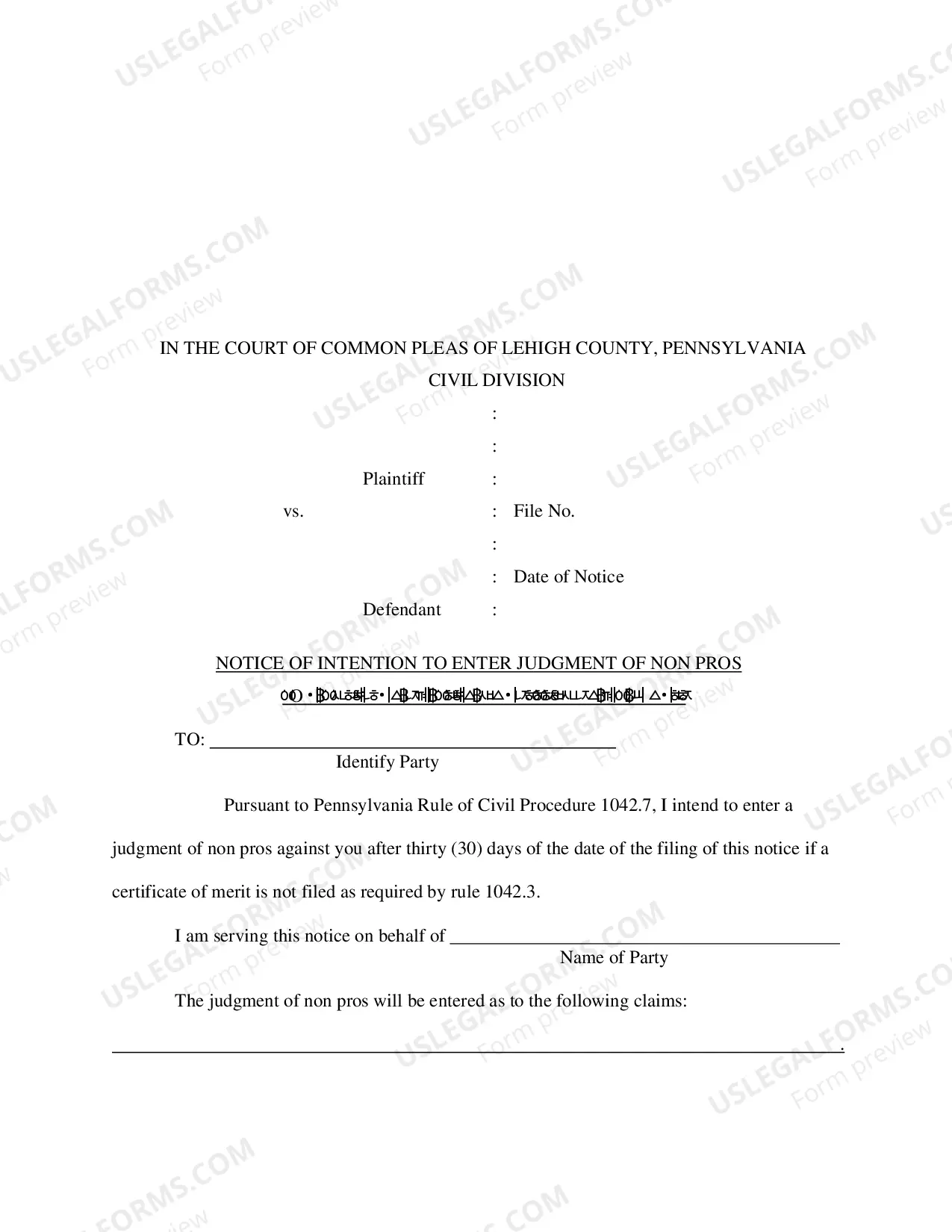
Complaint regarding Foreign Substance in Food
What is this form?
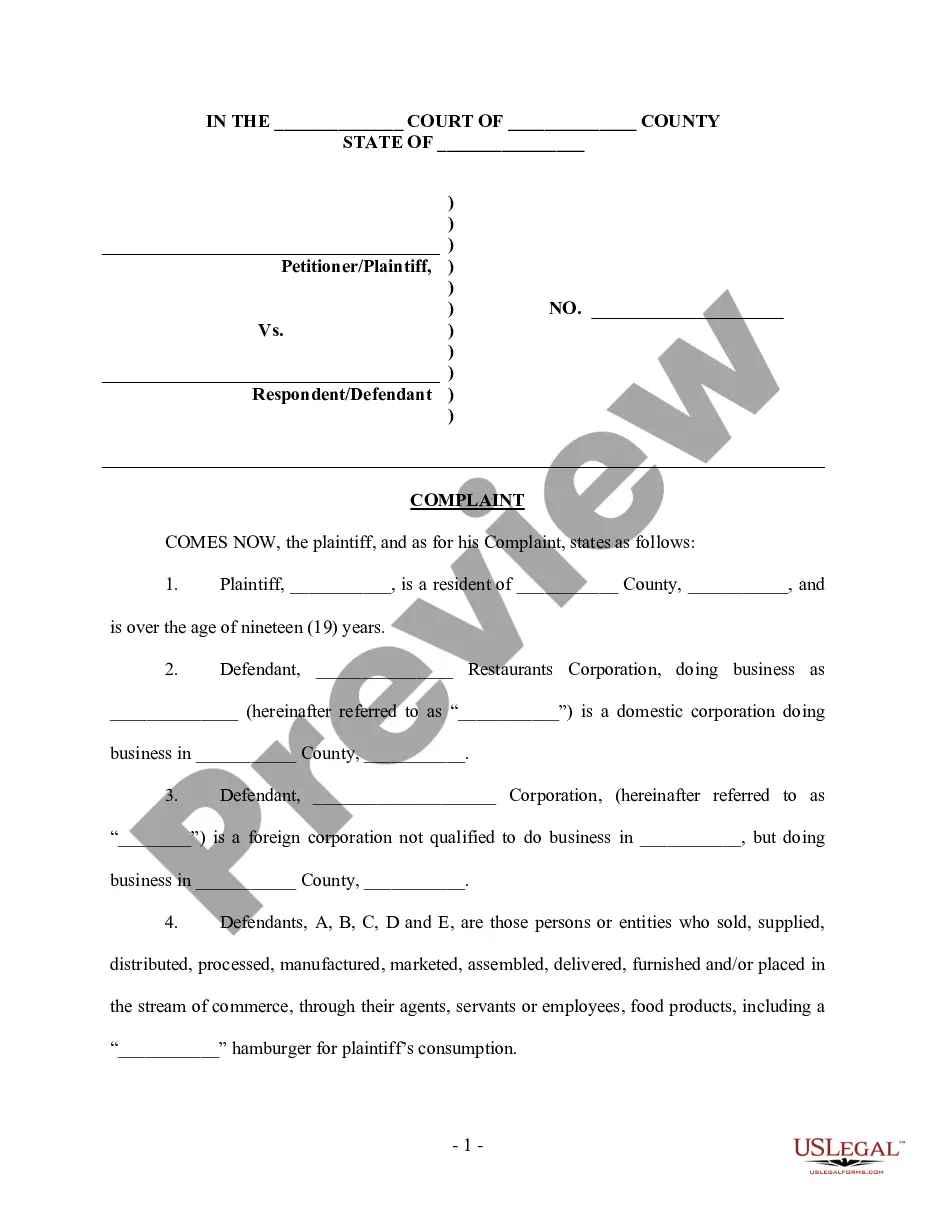
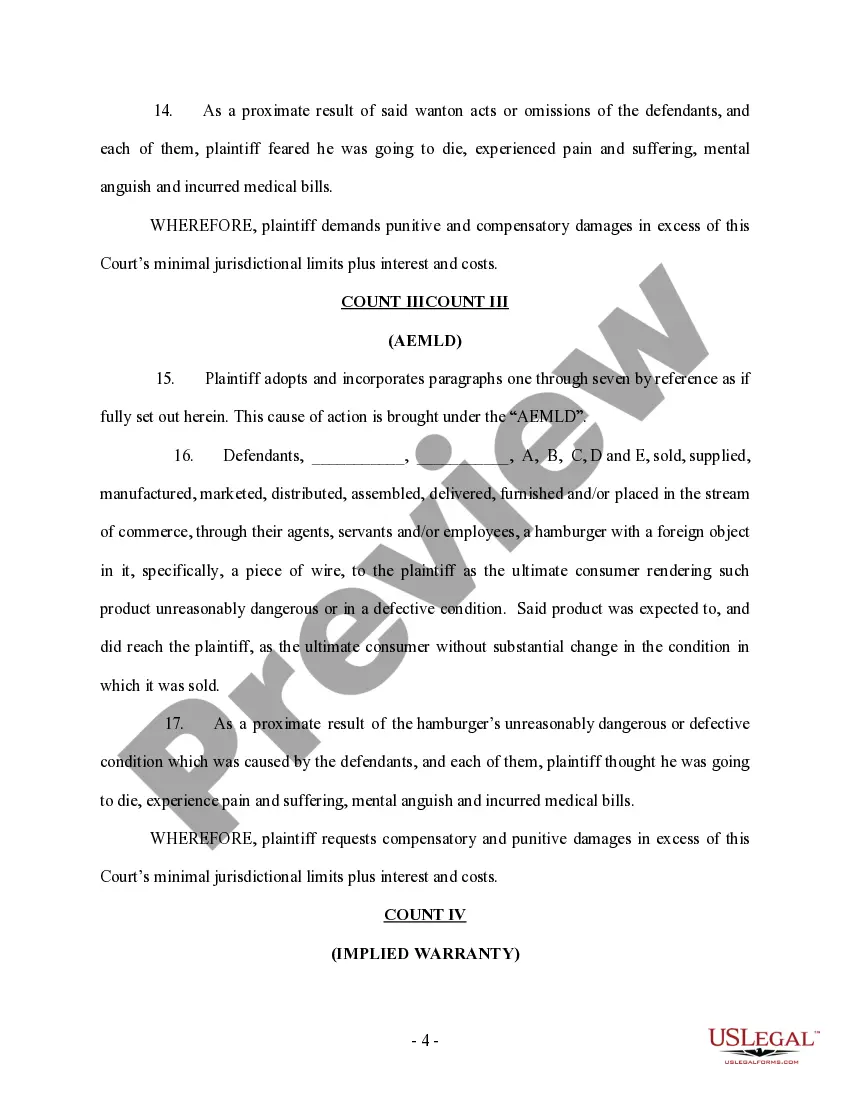
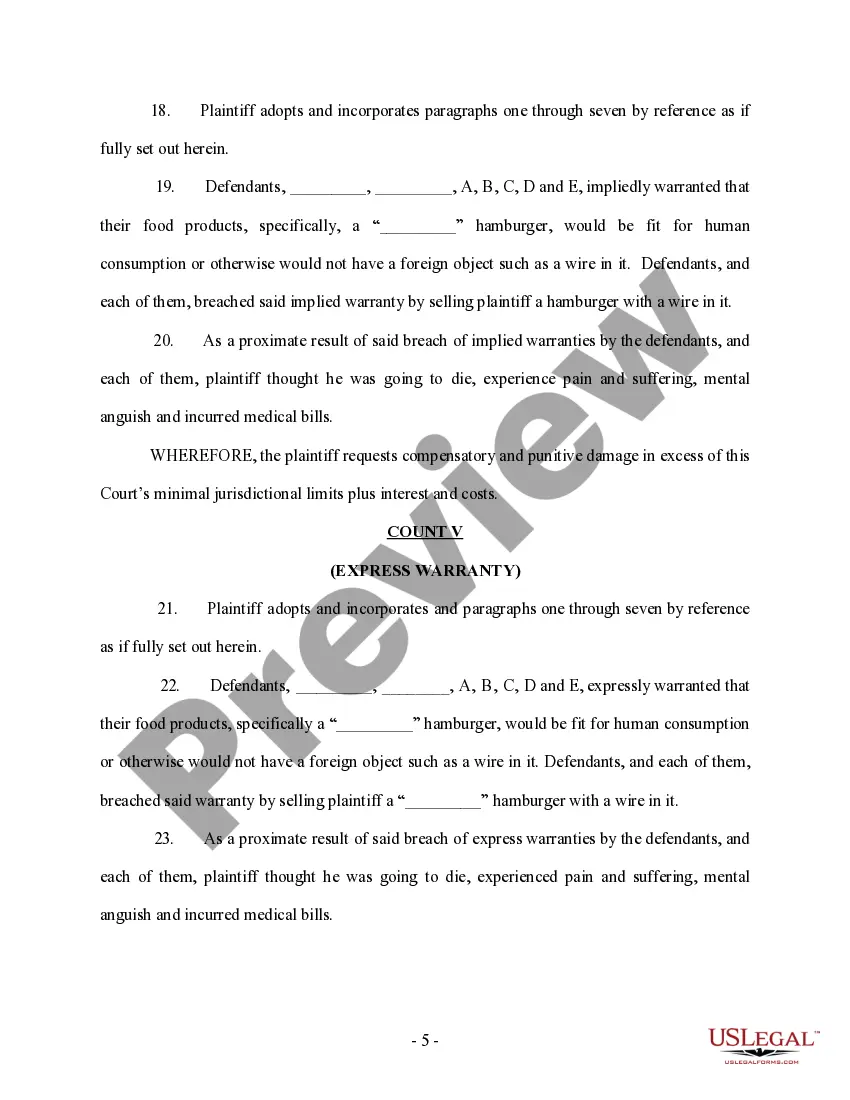
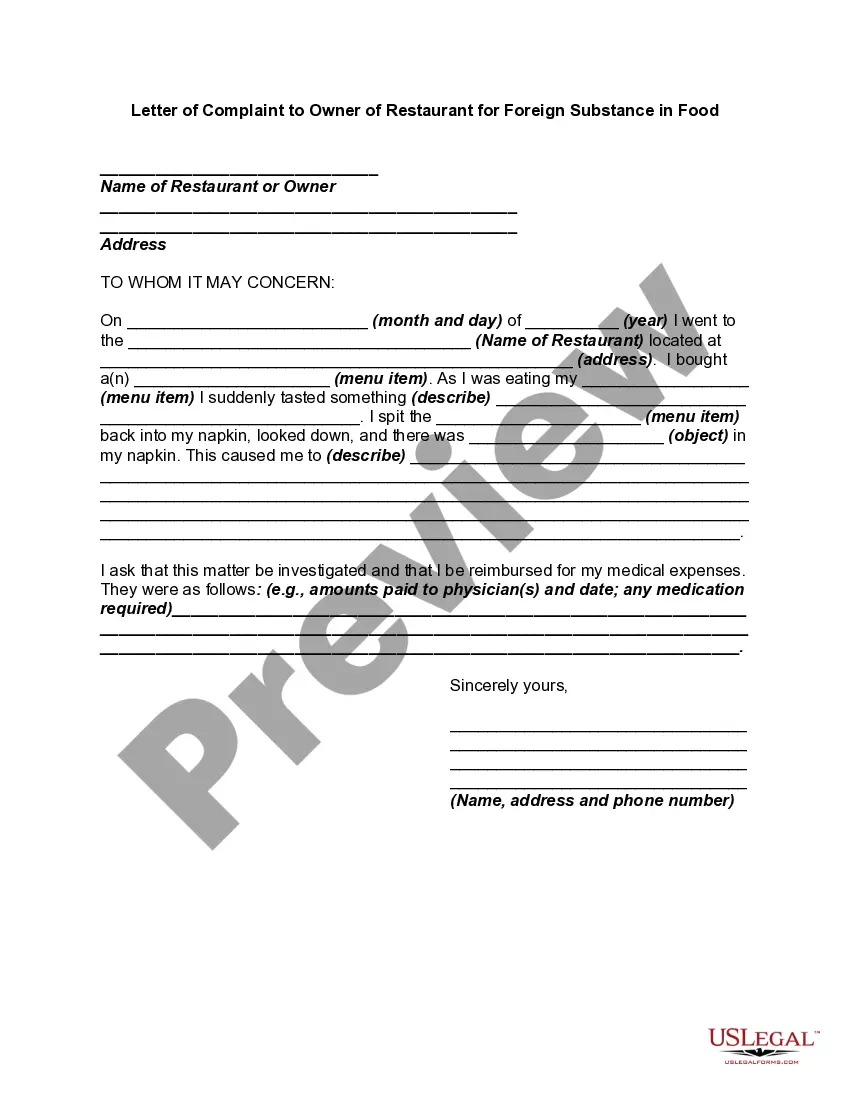
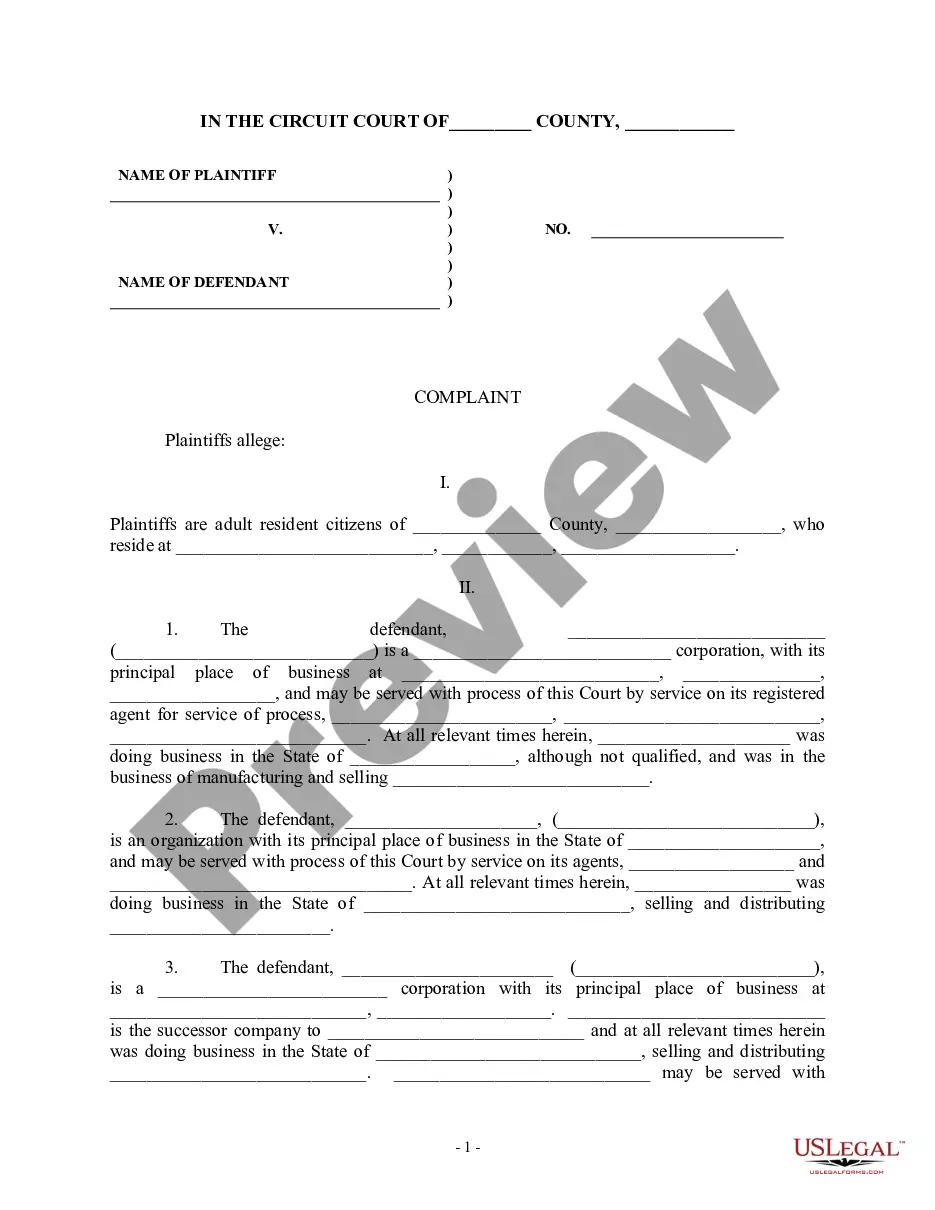
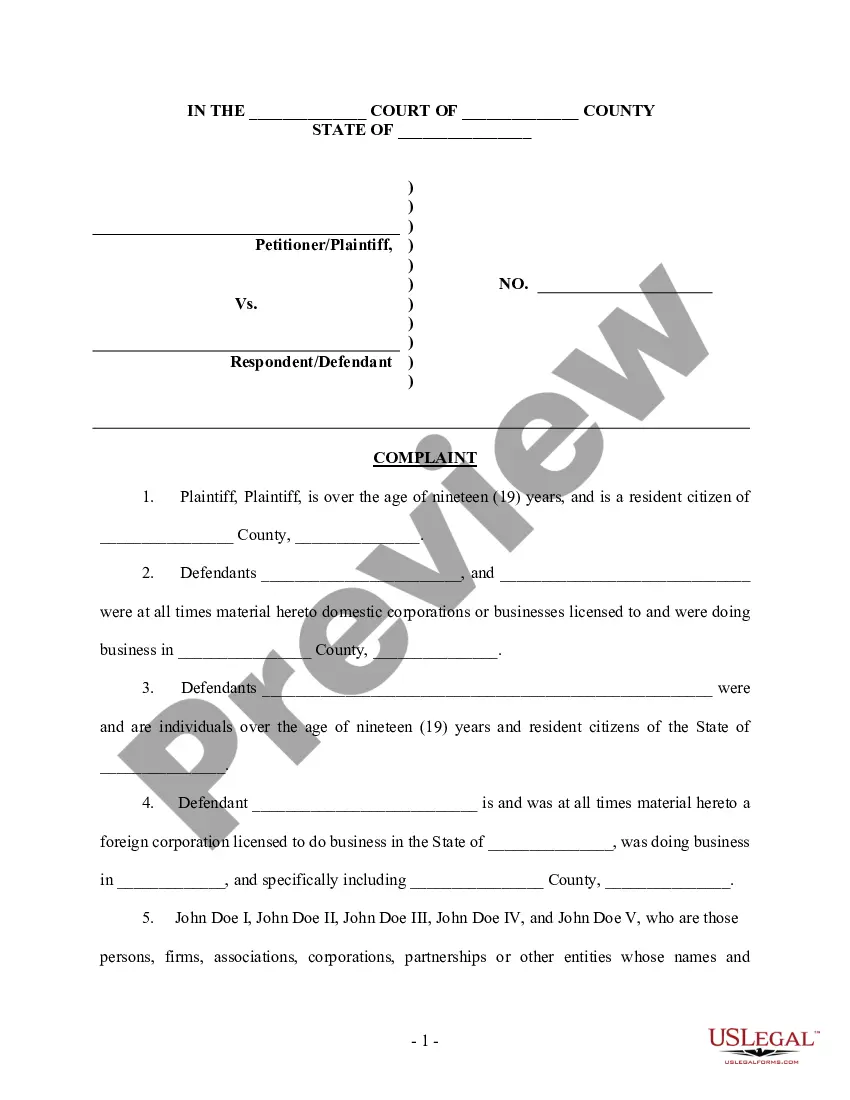
The Complaint regarding Foreign Substance in Food is a legal document used in personal injury cases where a foreign object, such as metal or plastic, is found in food purchased from a restaurant. This form outlines the allegations against the restaurant and any related entities for negligence and breach of warranty, which may have led to physical harm or emotional distress for the consumer. Unlike other forms of complaint, this document specifically addresses issues related to food safety and consumer rights in dining establishments.
Key components of this form
- Defendant identification: Details about the restaurant corporation and any additional defendants involved.
- Incident description: Information regarding the date and place of purchase, as well as the specifics of the foreign substance found in the food.
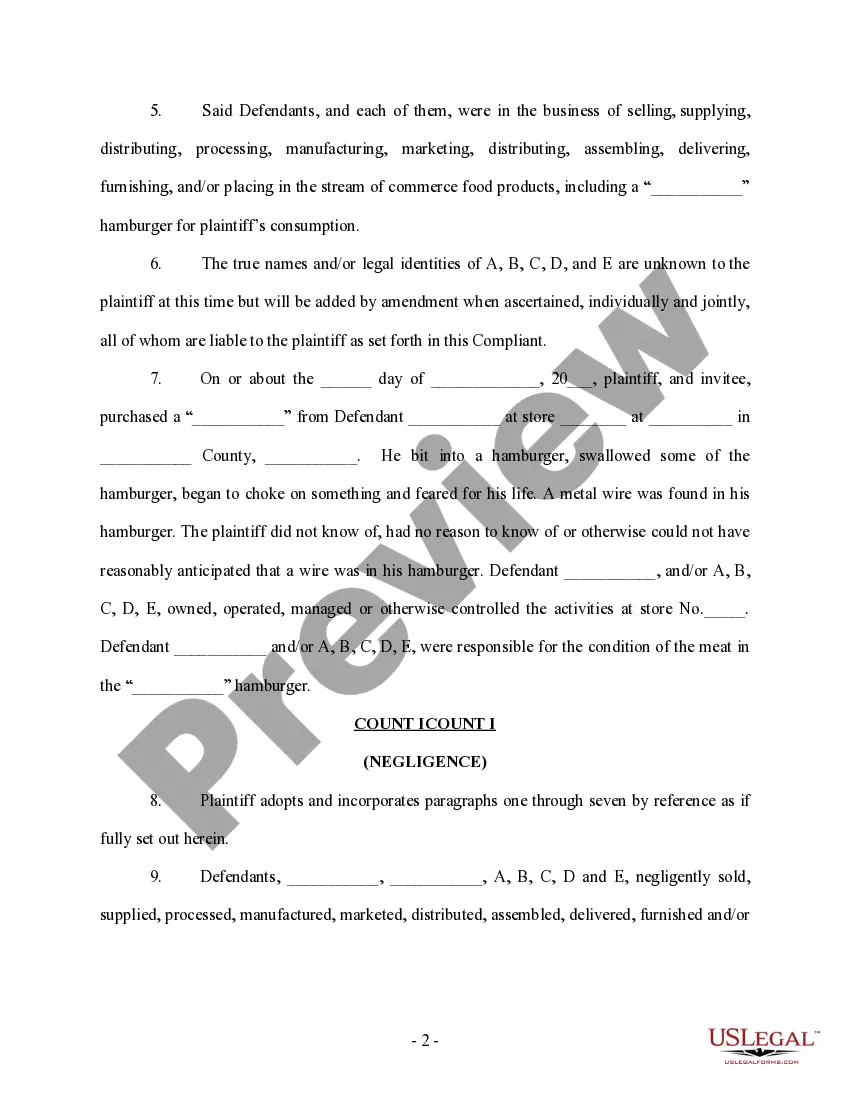
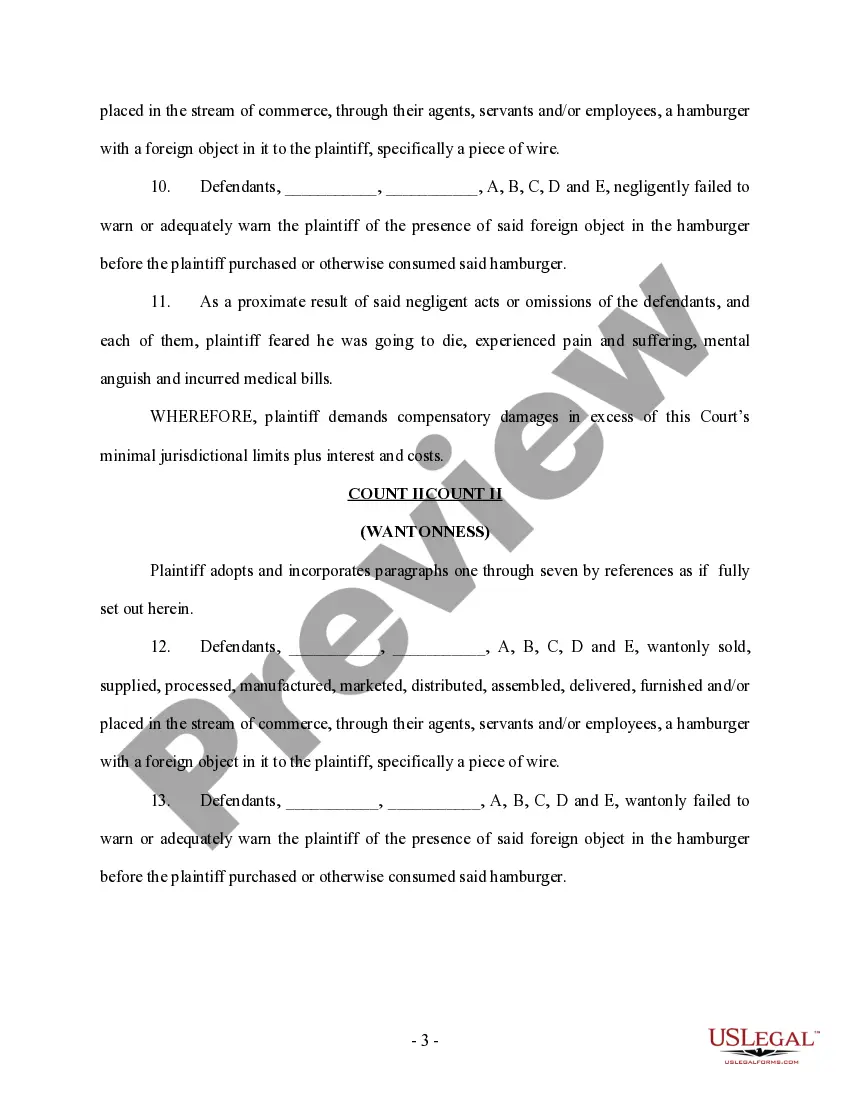
- Negligence claims: Allegations that the defendants failed to ensure food safety and proper warning about foreign objects.
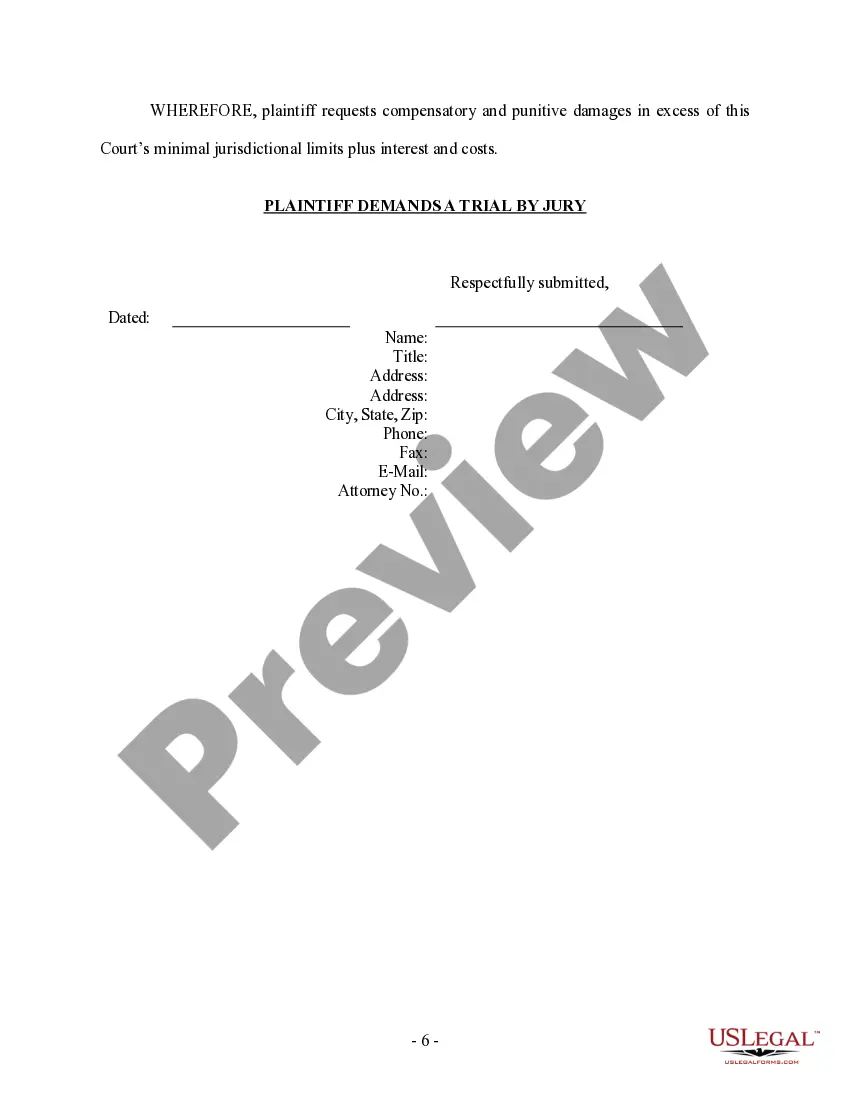
- Damages sought: A request for compensatory and punitive damages for pain, suffering, and medical expenses incurred by the plaintiff.
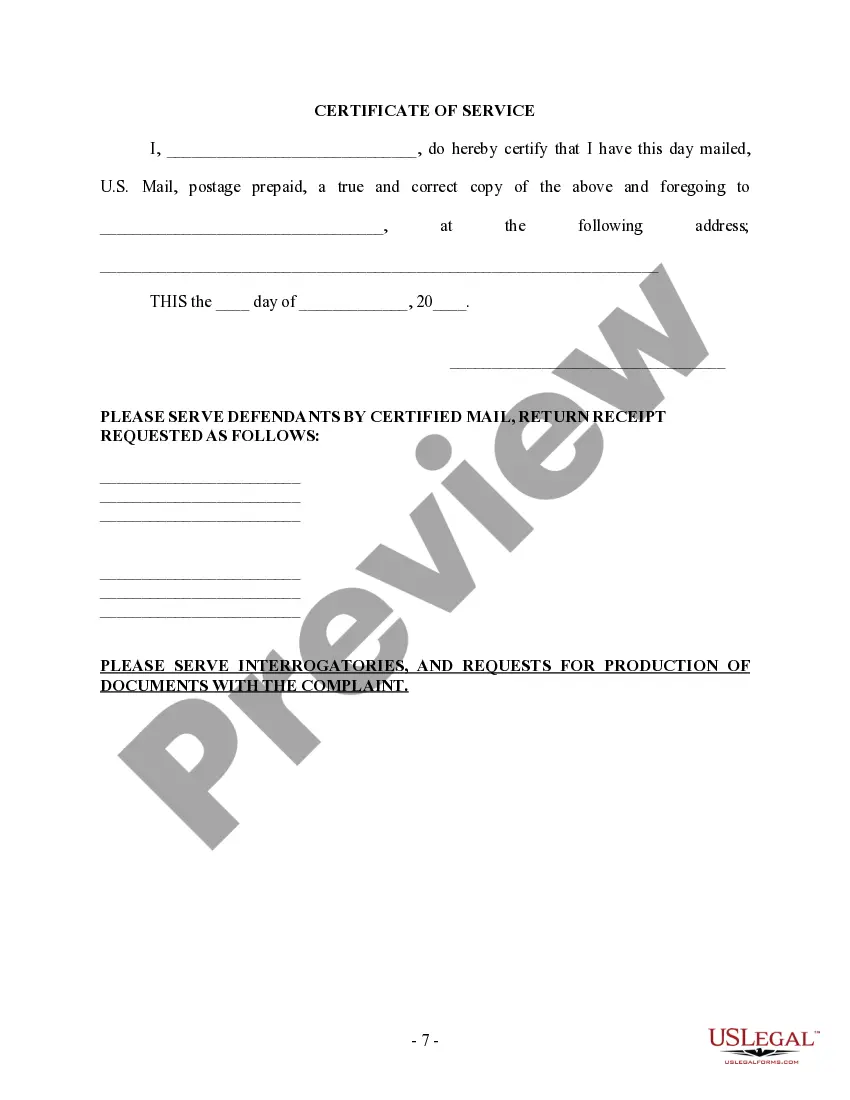
- Certification of service: A statement confirming that the complaint has been properly mailed to the defendants.

When to use this document
This form should be used when an individual discovers a foreign substance while consuming food from a restaurant, which may cause injury or distress. This can include instances such as biting into a hamburger and finding a metal wire or any other object that poses a health risk. If a consumer has suffered physical harm, emotional distress, or incurred medical costs as a result of such an incident, this complaint can be formally filed in a court of law against the responsible parties.
Who can use this document
- Consumers who have experienced physical harm after consuming food from a restaurant.
- Individuals seeking compensation for medical expenses or emotional distress caused by foreign objects in food.
- Legal representatives of victims who wish to file a complaint on their behalf.
How to prepare this document
- Identify the parties: Fill in the names of the defendants, including restaurant and suppliers.
- Provide incident details: Describe the date, location, and specifics of the food product in question.
- Detail the foreign substance: Clearly state the type of object found in the food and how it caused harm.
- Specify negligence claims: Include allegations related to negligence, wantonness, or breach of warranty.
- Request damages: Indicate the amount you are seeking in compensatory and punitive damages.
Notarization guidance
This form does not typically require notarization to be legally valid. However, some jurisdictions or document types may still require it. US Legal Forms provides secure online notarization powered by Notarize, available 24/7 for added convenience.
Get your form ready online
Our built-in tools help you complete, sign, share, and store your documents in one place.
Make edits, fill in missing information, and update formatting in US Legal Forms—just like you would in MS Word.
Download a copy, print it, send it by email, or mail it via USPS—whatever works best for your next step.
Sign and collect signatures with our SignNow integration. Send to multiple recipients, set reminders, and more. Go Premium to unlock E-Sign.
If this form requires notarization, complete it online through a secure video call—no need to meet a notary in person or wait for an appointment.
We protect your documents and personal data by following strict security and privacy standards.

Make edits, fill in missing information, and update formatting in US Legal Forms—just like you would in MS Word.

Download a copy, print it, send it by email, or mail it via USPS—whatever works best for your next step.

Sign and collect signatures with our SignNow integration. Send to multiple recipients, set reminders, and more. Go Premium to unlock E-Sign.

If this form requires notarization, complete it online through a secure video call—no need to meet a notary in person or wait for an appointment.

We protect your documents and personal data by following strict security and privacy standards.
Common mistakes
- Failing to accurately identify all parties involved in the case.
- Not providing sufficient detail about the incident and the foreign object.
- Neglecting to quantify the damages expected from the defendants.
- Omitting to properly serve the defendants with the complaint.
Why use this form online
- Convenience: Access and complete the form from anywhere at any time.
- Editability: Easily modify details as necessary before submitting the complaint.
- Reliability: Obtain professionally drafted legal documents that ensure compliance with standard legal practices.
Legal use & context
- This complaint serves as a formal initial document for personal injury claims related to food safety issues.
- The form outlines essential allegations needed to establish a case for damages against the defendants.
- Using a legally sound form increases the likelihood of successfully pursuing your claim.
Looking for another form?
Form popularity
FAQ
Call the toll-free USDA Meat and Poultry Hotline at 1-888-MPHotline (1-888-674-6854) or report the complaint online.
Immediately alert a manager or server. Maintain and preserve all possible evidence, including the object itself, as well as the receipt for the purchase. Obtain the medical attention you need to protect yourself. Contact an attorney.
Finding a foreign object in your food can be a truly traumatizing event.Victims who have been damaged by foreign objects in their food have every right to sue the fast-food chain, restaurant, or food product manufacturer responsible for the incident.
A foreign object in food is when someone discovers an object in their food or meal that they would not reasonably expect to be there. Pieces of rocks, glass, plastics or metal may be found in food and cause serious injuries to your teeth, gums, throat or digestive tract.
'Foreign body' is a technical term which refers to any extraneous matter, whether of a physical, chemical or biological nature, found in food. Usually foreign bodies render the food unfit for human consumption.
Dear Restaurant Manager, I am writing this letter to file a complaint about the food that was served to me in your restaurant on some date. I am sorry to inform you that your food was unsatisfactory at so many levels. Your complaint goes here.
Consumers can contact the FSSAI through an online platform called the 'Food Safety Voice'. This platform gives the people the right to register complaints regarding adulterated, substandard or unsafe food, and poor labelling or misleading ads associated with food products.