Defendant's Answers to Plaintiff's First Set of Interrogatories and Requests for Production of Documents
Overview of this form
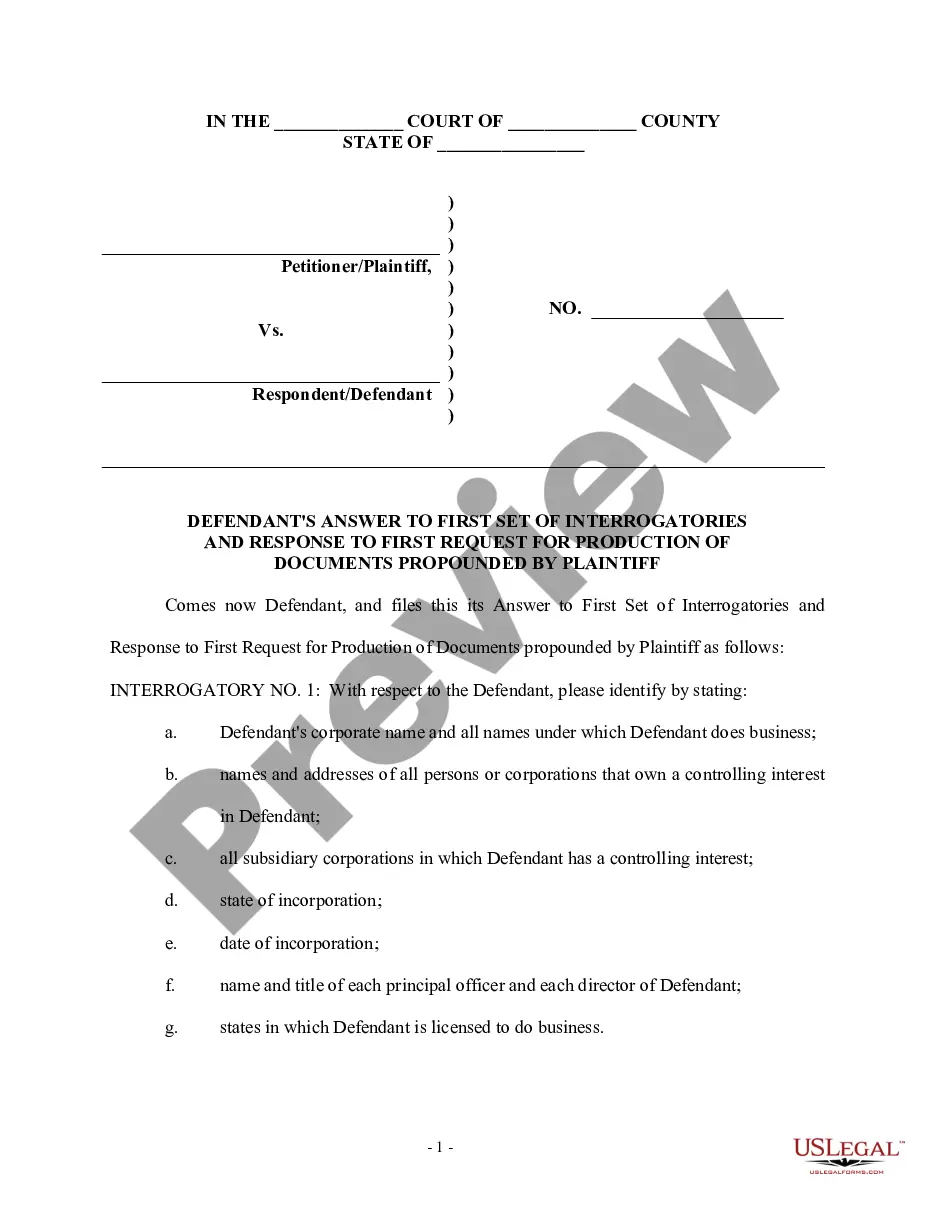
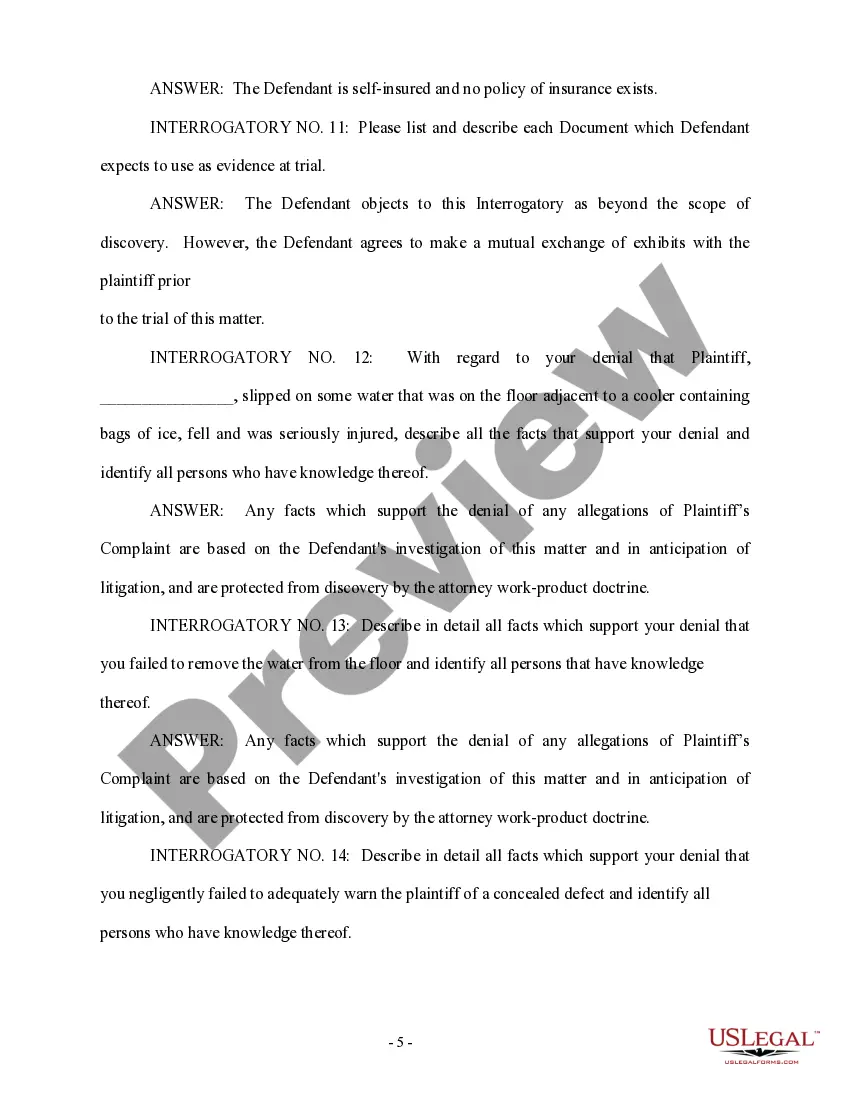
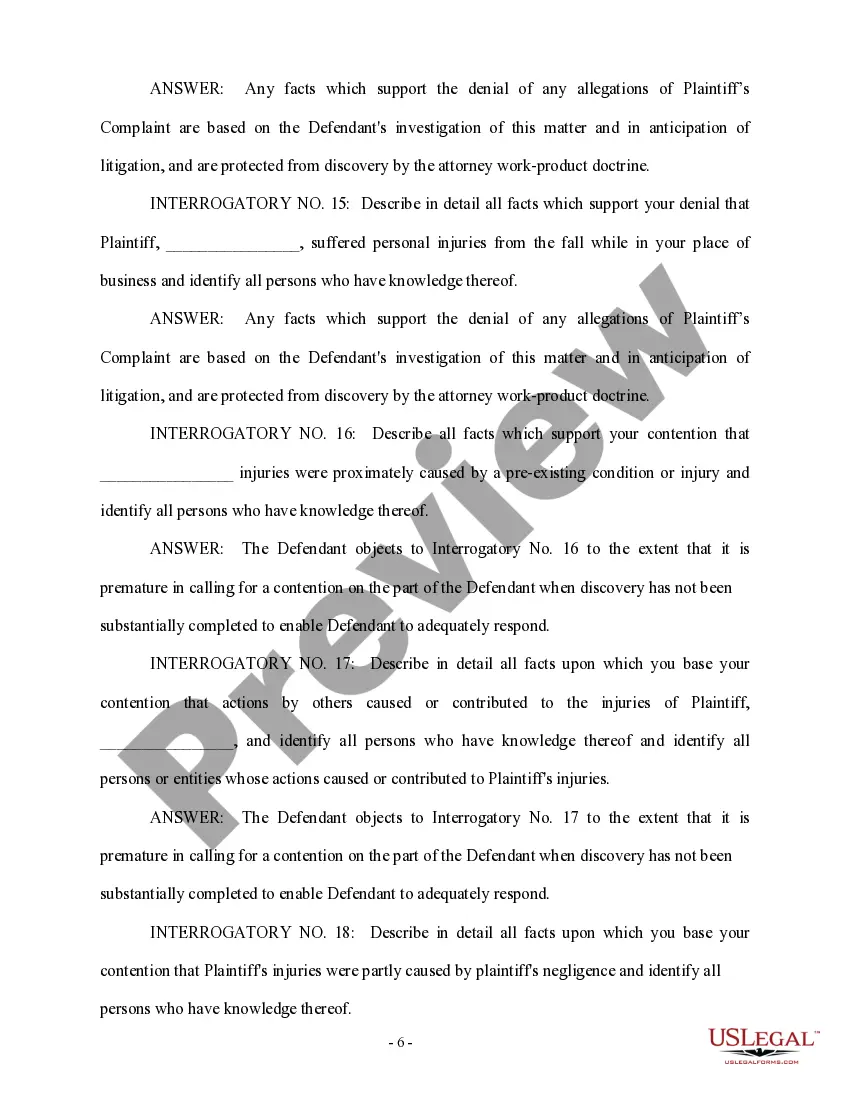
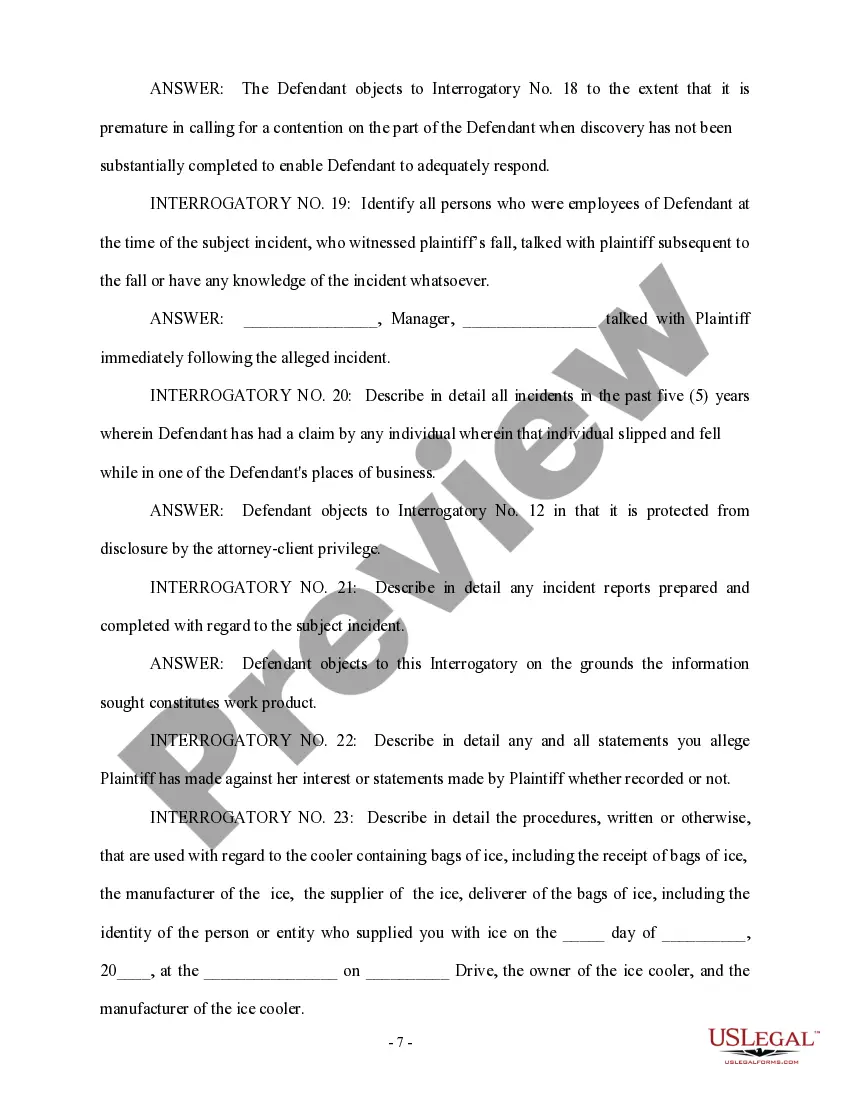
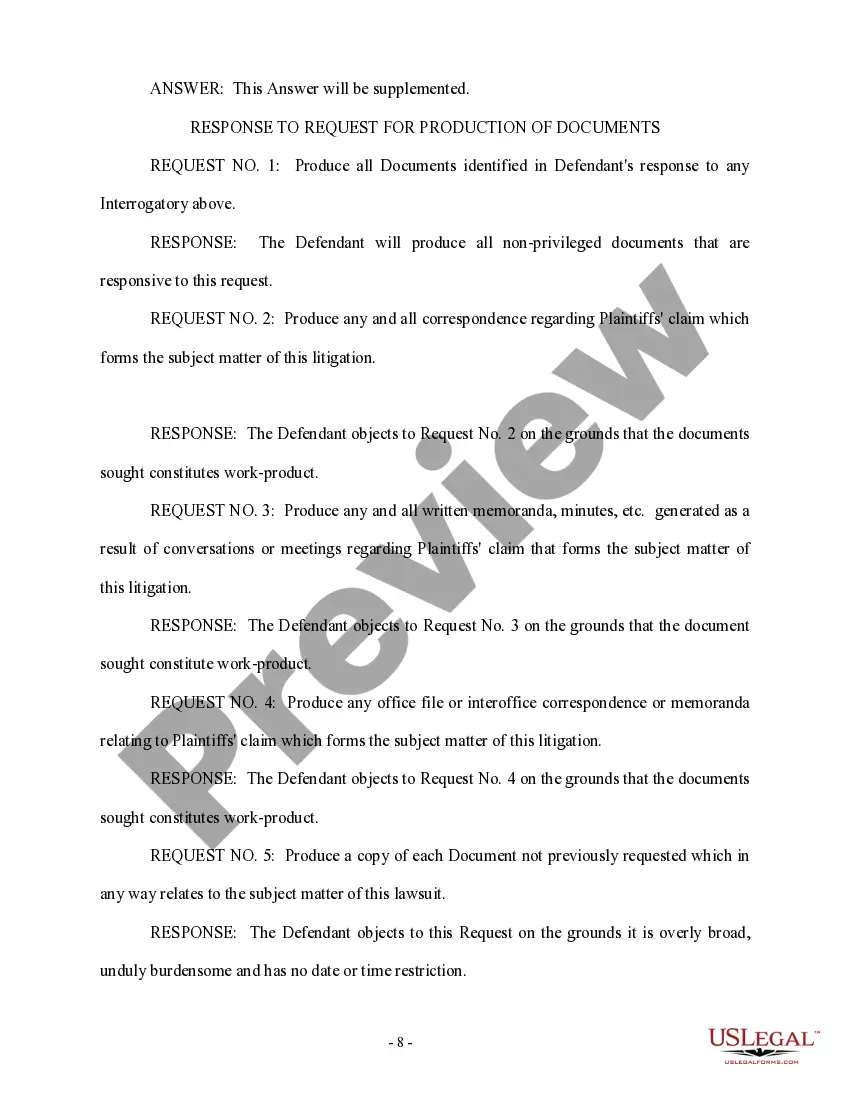
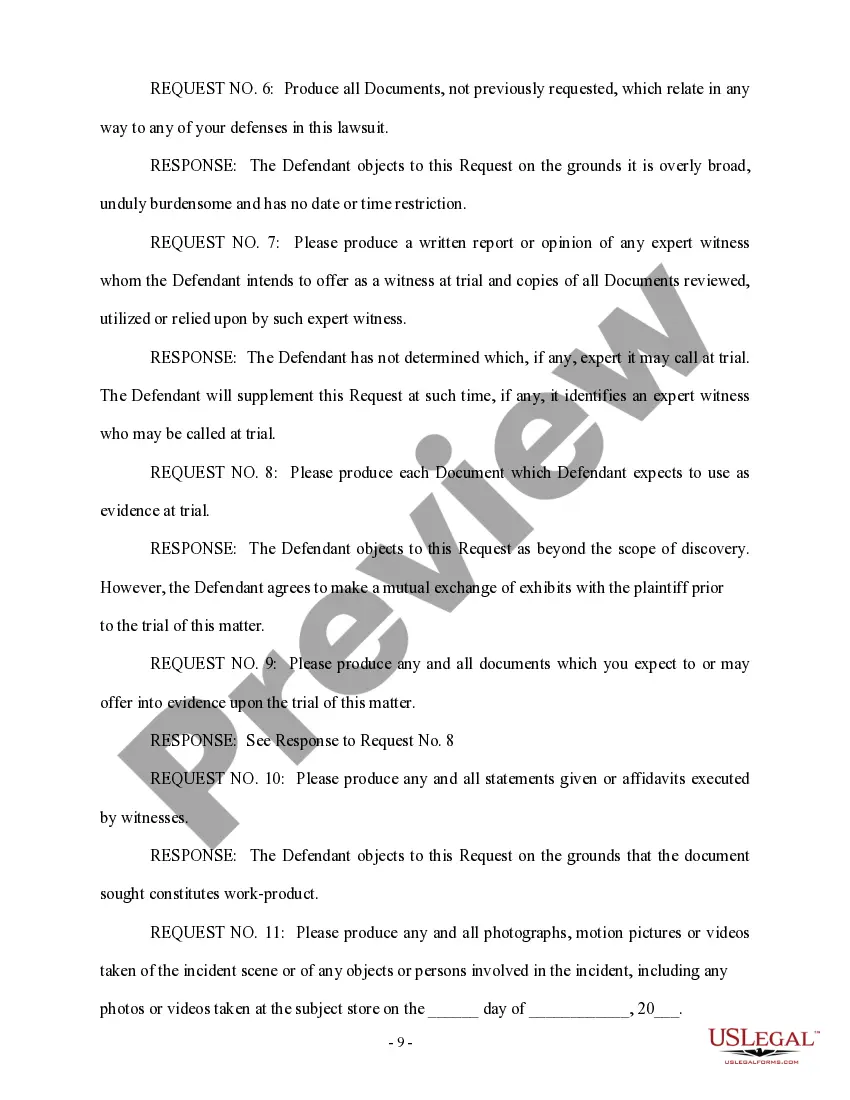
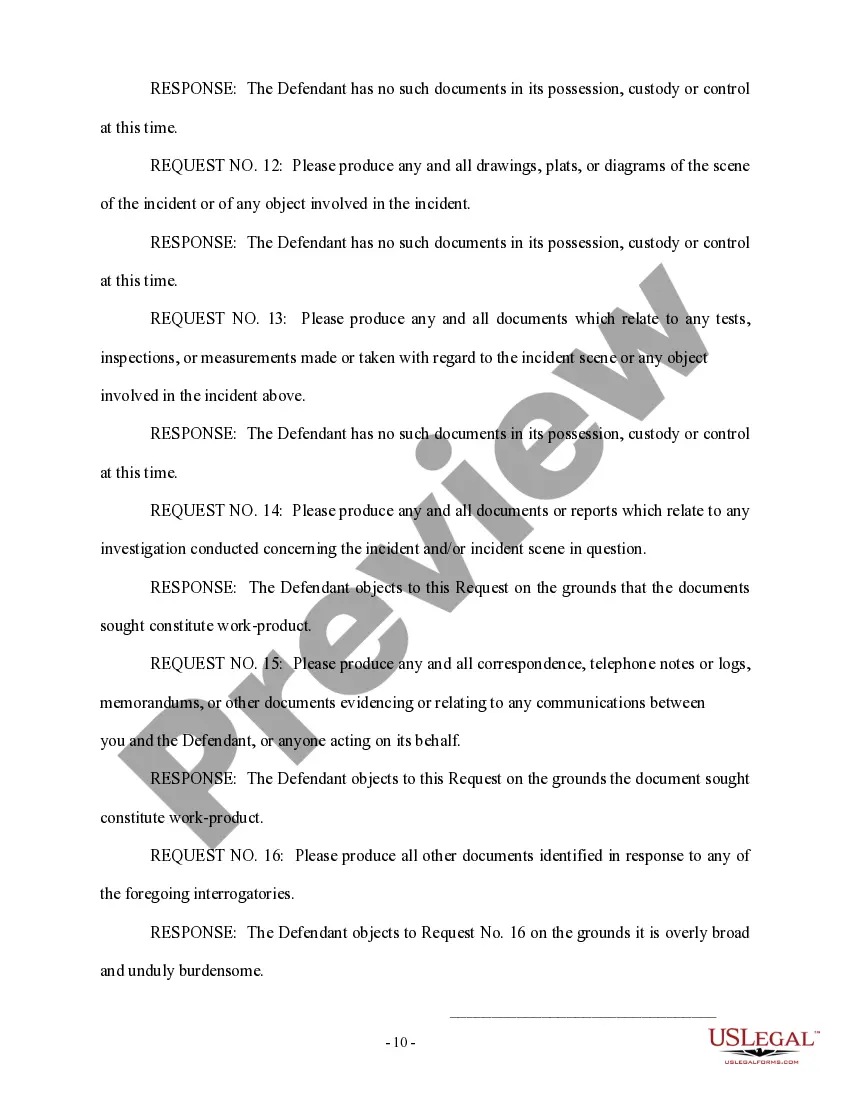
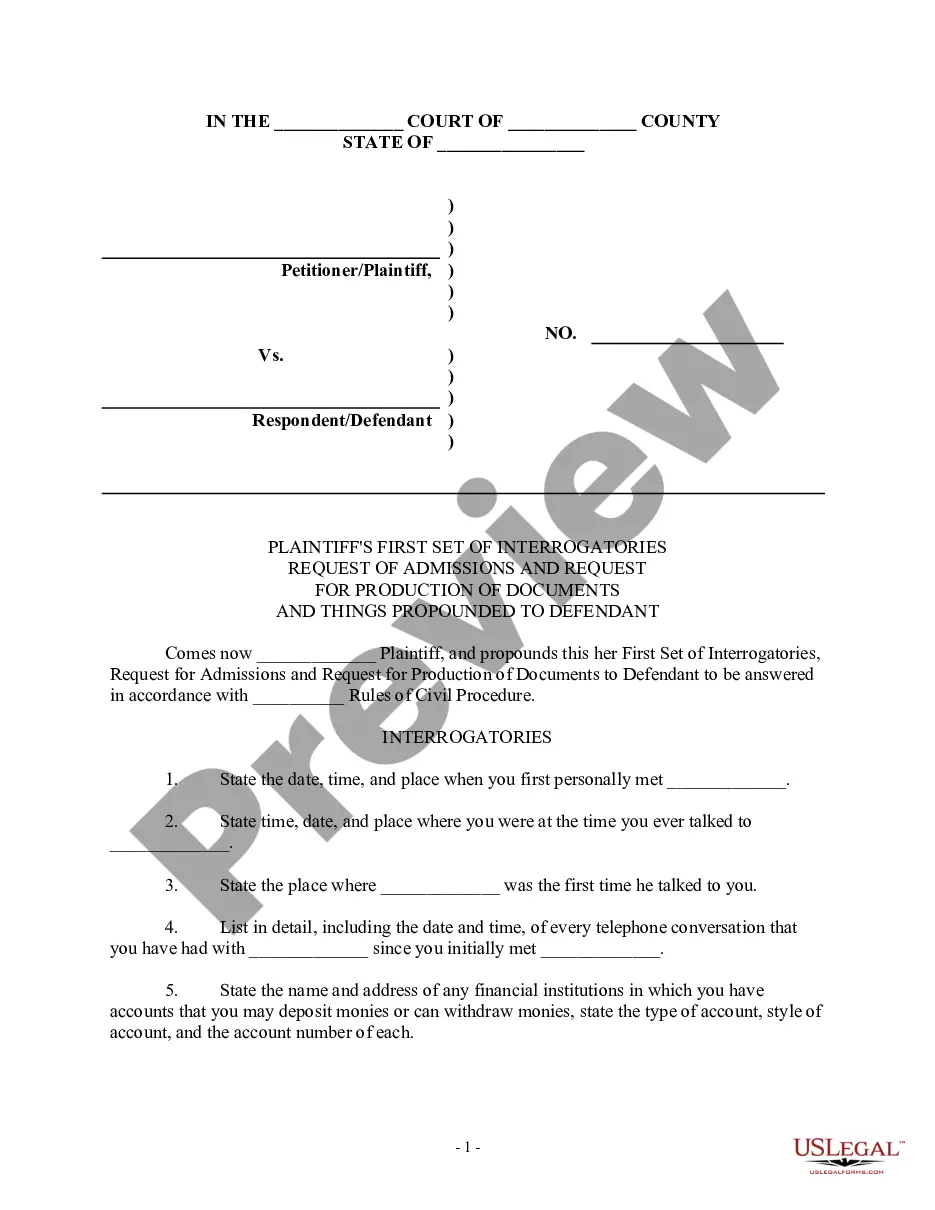
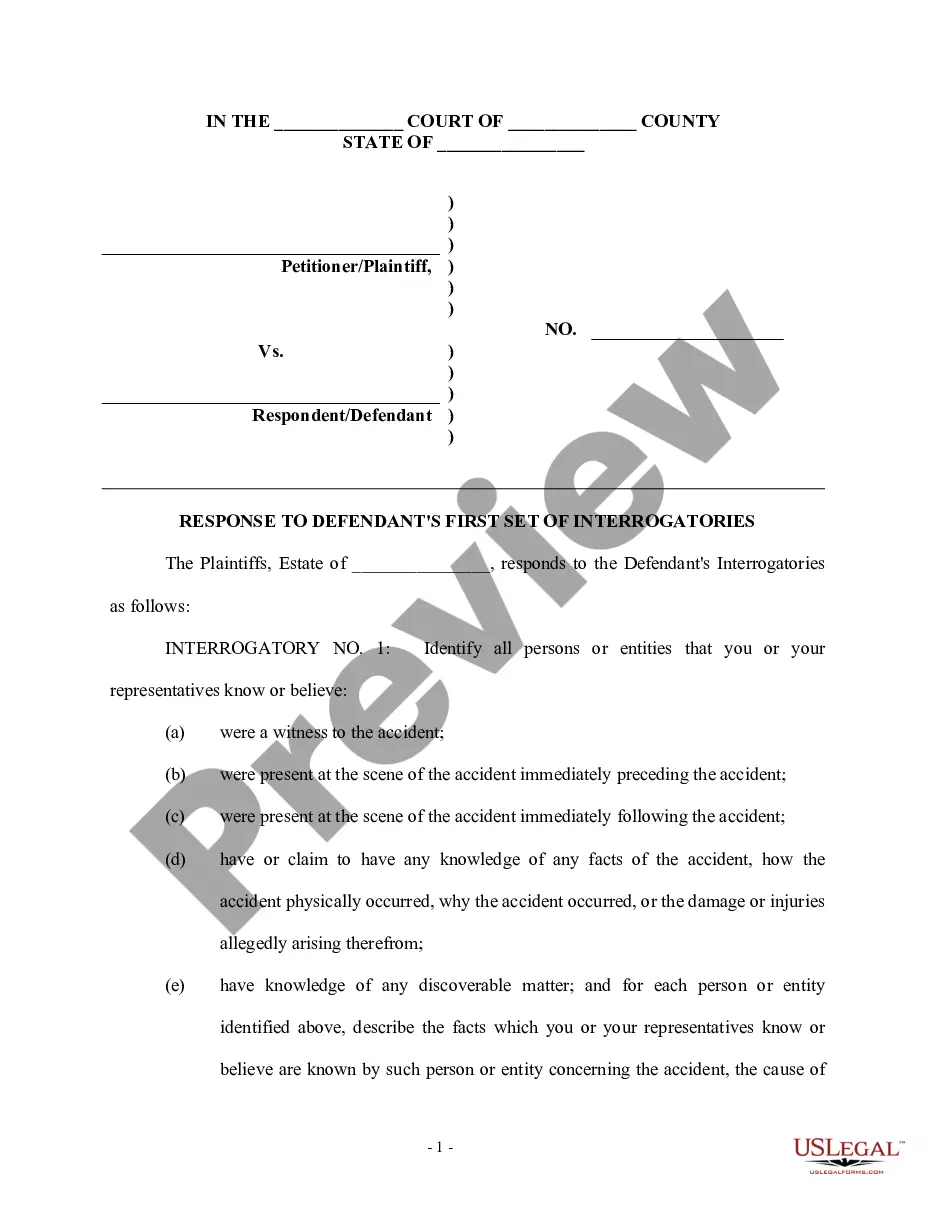
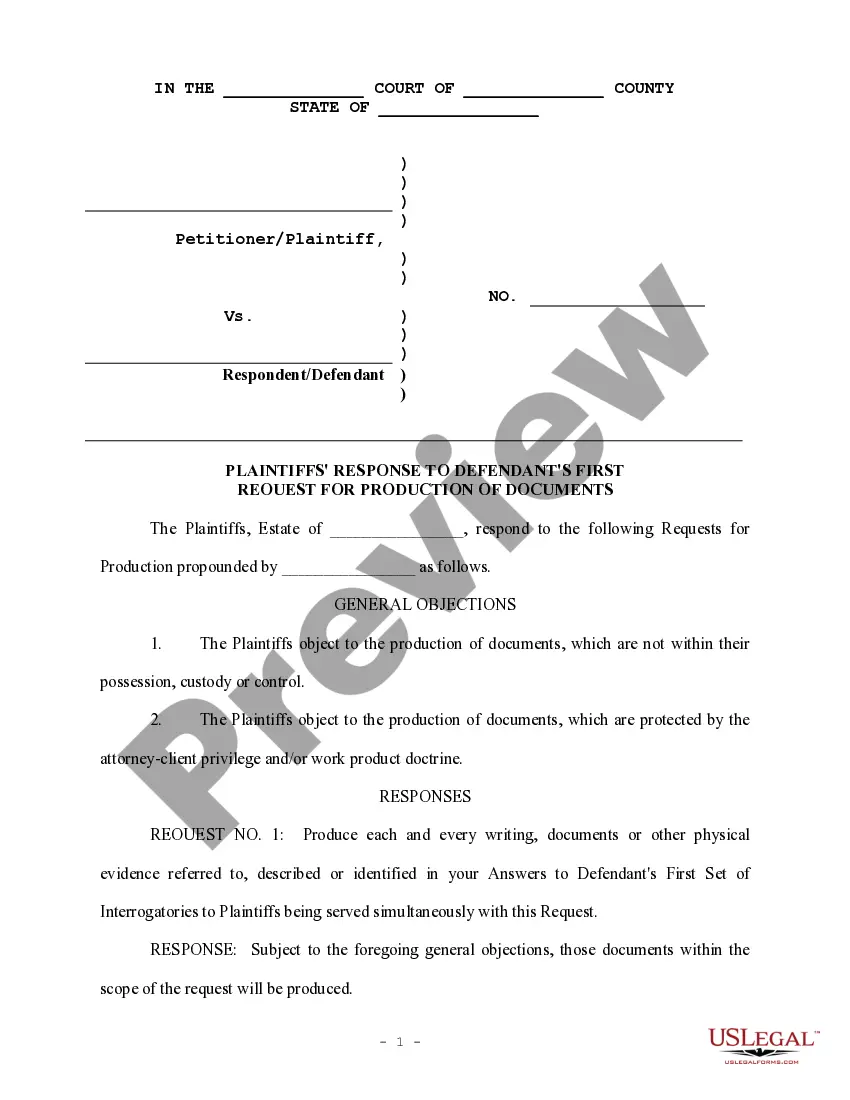
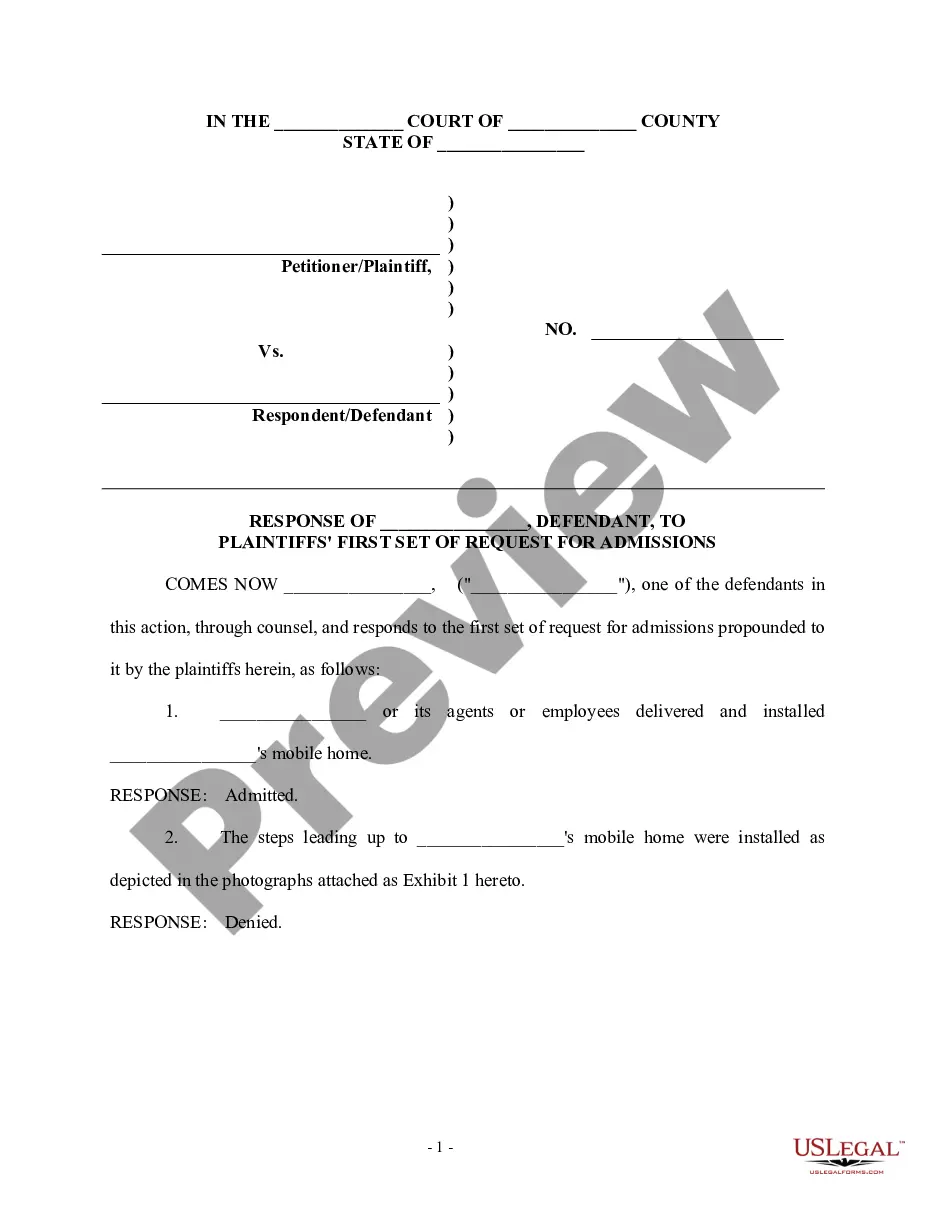
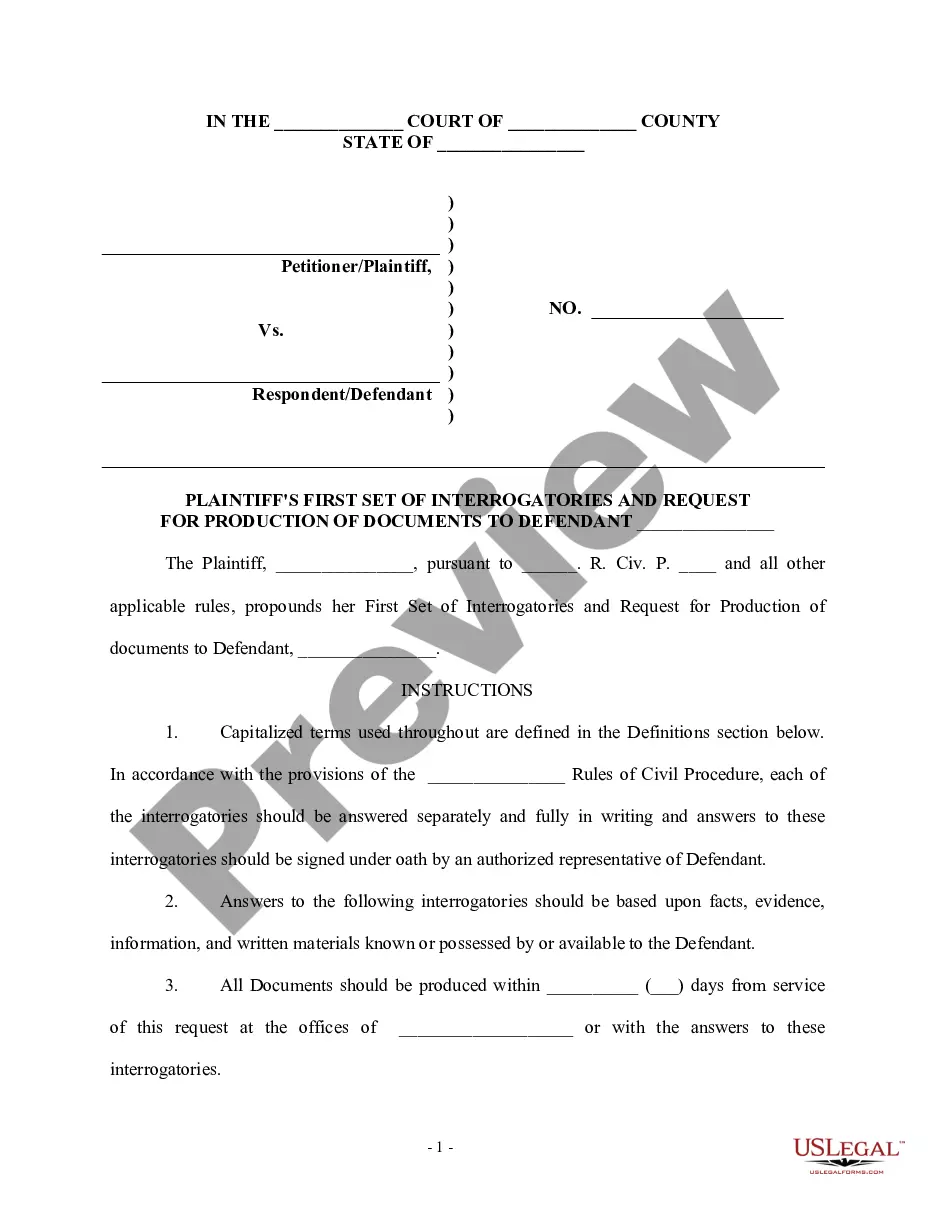
The Defendant's Answers to Plaintiff's First Set of Interrogatories and Requests for Production of Documents form is a legal document used in civil litigation. It is a response provided by the defendant to the plaintiff's questions and requests for documents pertaining to the lawsuit. This form is essential in formalizing the defendant's position and is distinct from other legal forms, as it specifically addresses interrogatories and requests for production required under civil procedure rules.
Key components of this form
- Identification of the defendant, including corporate name and business aliases.
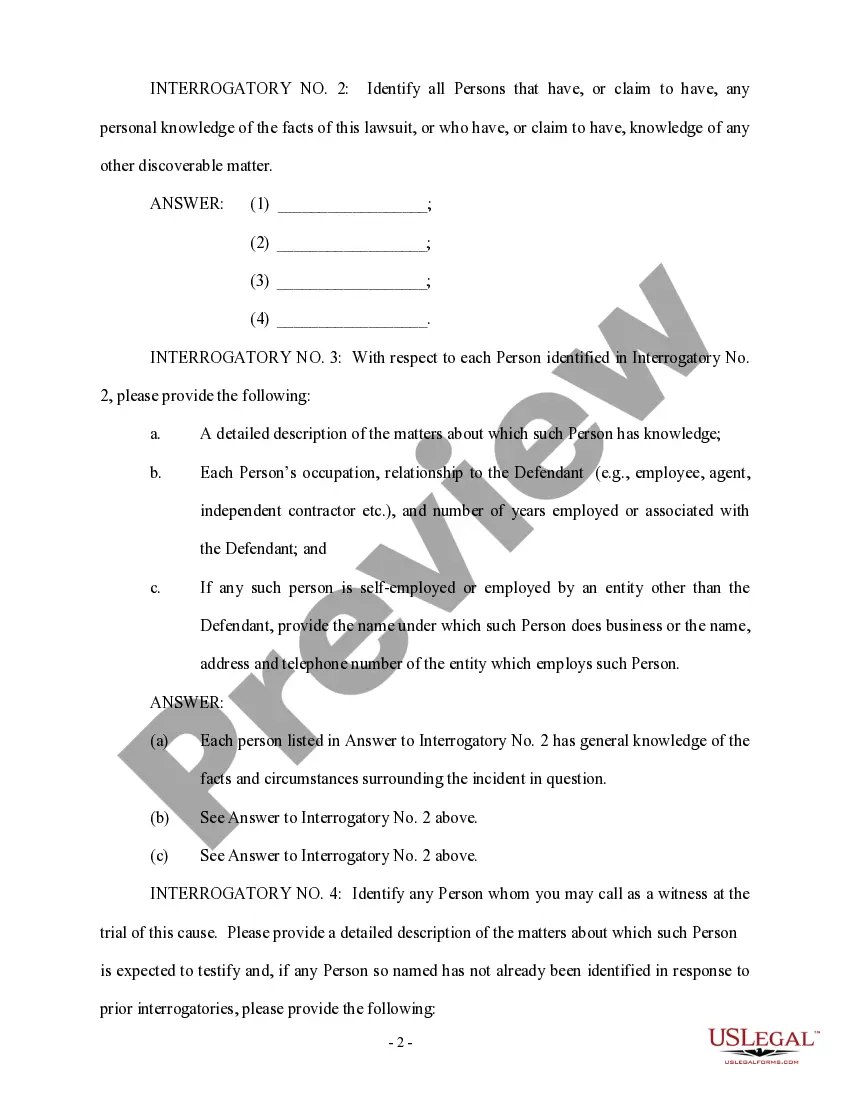
- Responses to inquiries about individuals with knowledge of the case.
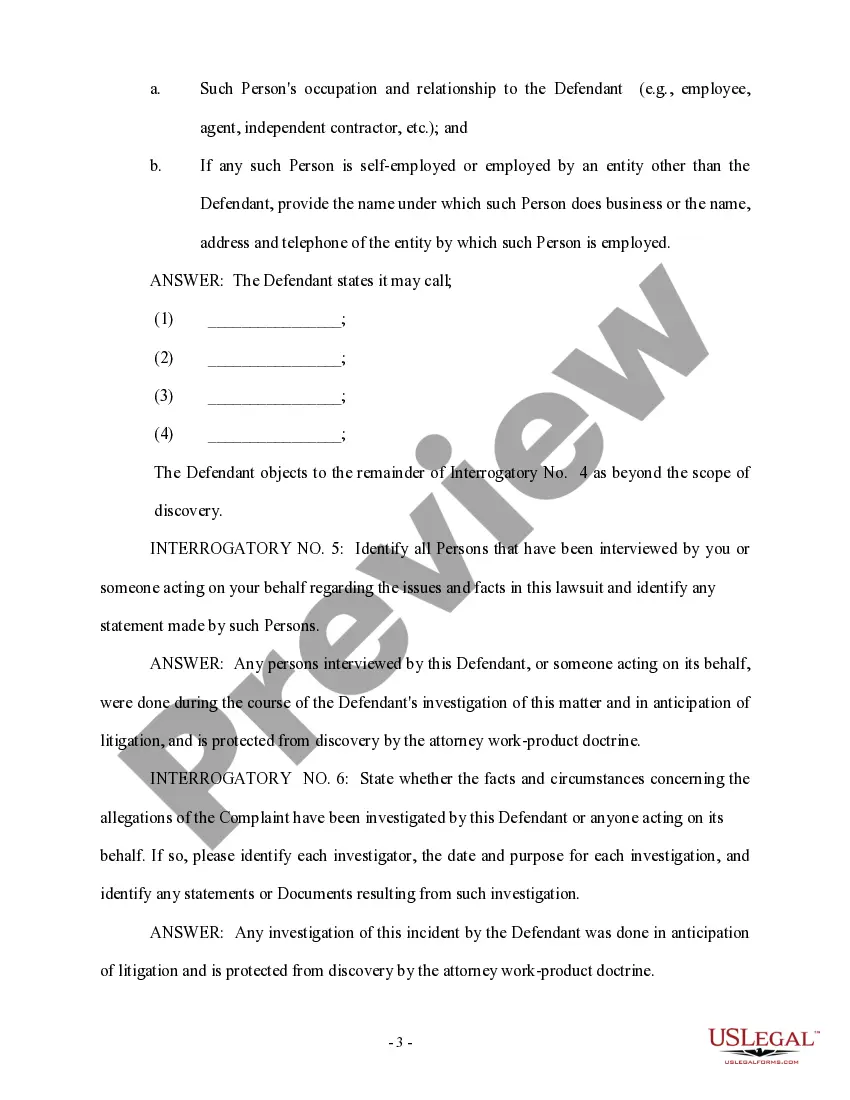
- Details related to any potential witnesses for the trial.
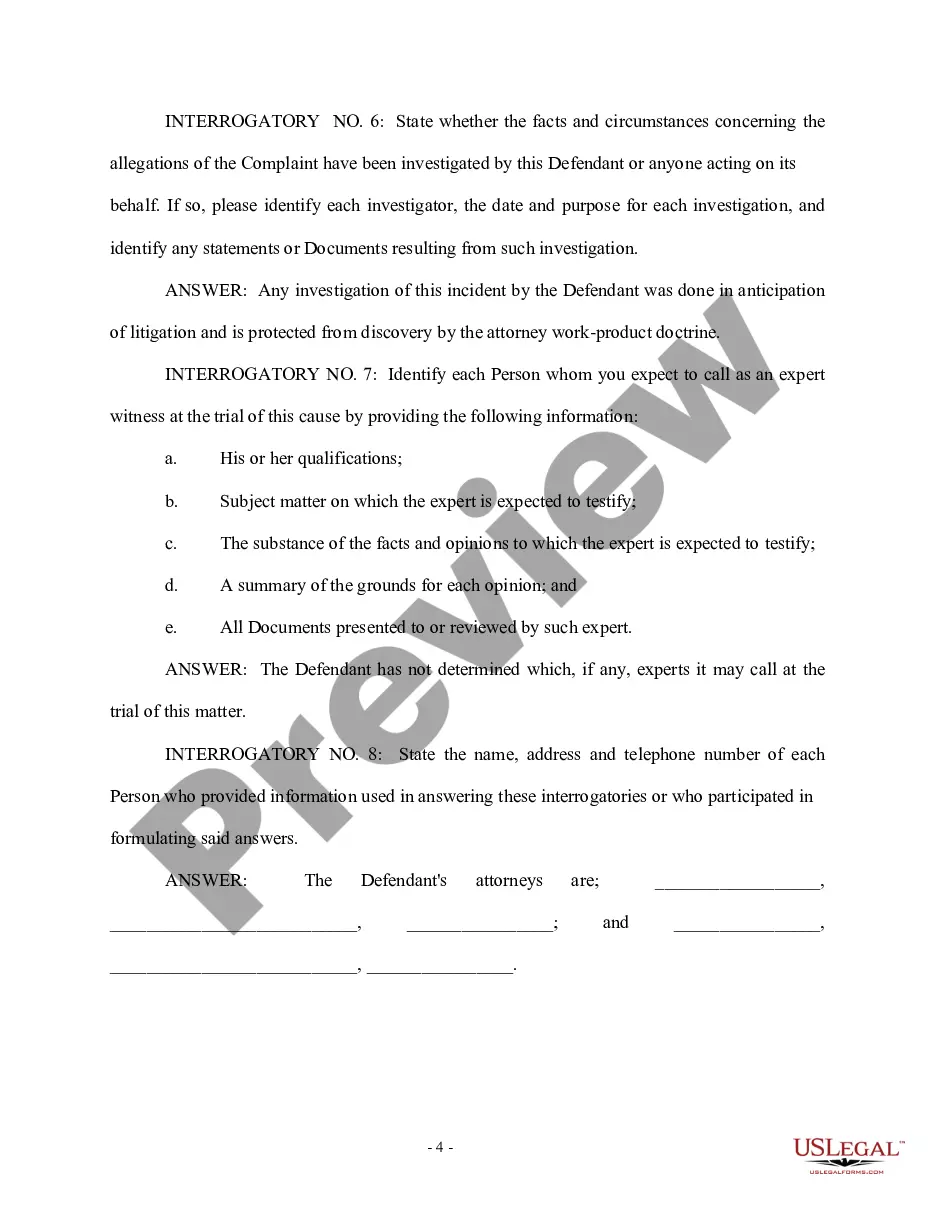
- Objections made by the defendant regarding certain requests or inquiries.
- Responses to requests for production of relevant documents.

Situations where this form applies
This form should be used when a defendant is required to formally respond to the plaintiff's interrogatories and requests for production in a civil lawsuit. It is essential during the discovery phase of litigation, where both parties gather and exchange information to prepare for trial.
Who should use this form
- Defendants who have been served with interrogatories and requests for production in a lawsuit.
- Legal representatives of defendants preparing answers in response to the plaintiff's inquiries.
- Individuals involved in civil litigation seeking to document their responses formally.
How to prepare this document
- Identify the parties involved in the litigation.
- Clearly list the answers to each interrogatory, addressing any objections as necessary.
- Document any relevant individuals who have knowledge of the facts surrounding the case.
- Provide responses to all requests for production concerning applicable documents.
- Ensure that the form is signed by an authorized representative of the defendant.
Is notarization required?
This form must be notarized to be legally valid. US Legal Forms provides secure online notarization powered by Notarize, allowing you to complete the process through a verified video call.
Get your form ready online
Our built-in tools help you complete, sign, share, and store your documents in one place.
Make edits, fill in missing information, and update formatting in US Legal Forms—just like you would in MS Word.
Download a copy, print it, send it by email, or mail it via USPS—whatever works best for your next step.
Sign and collect signatures with our SignNow integration. Send to multiple recipients, set reminders, and more. Go Premium to unlock E-Sign.
If this form requires notarization, complete it online through a secure video call—no need to meet a notary in person or wait for an appointment.
We protect your documents and personal data by following strict security and privacy standards.

Make edits, fill in missing information, and update formatting in US Legal Forms—just like you would in MS Word.

Download a copy, print it, send it by email, or mail it via USPS—whatever works best for your next step.

Sign and collect signatures with our SignNow integration. Send to multiple recipients, set reminders, and more. Go Premium to unlock E-Sign.

If this form requires notarization, complete it online through a secure video call—no need to meet a notary in person or wait for an appointment.

We protect your documents and personal data by following strict security and privacy standards.
Common mistakes
- Failing to provide complete responses to interrogatories, which may lead to court sanctions.
- Neglecting to document objections clearly, which could weaken the defendant's position.
- Omitting necessary signatures or dates, rendering the form invalid.
Why complete this form online
- Convenience of accessing the form anytime and anywhere.
- Editability allows for easy customization to fit specific cases.
- Reliability of professionally drafted templates ensures accuracy and compliance.
Legal use & context
- This form must be completed and filed within specific timelines set by the court rules.
- Responses provided must be truthful and cannot contain false information.
- Any objections raised should be legitimate and grounded in legal standards.
Summary of main points
- The form is crucial for the defendant during the discovery phase of litigation.
- Clear and precise responses are necessary to avoid penalties.
- Understanding the local rules is essential for effective use of this form.
Looking for another form?
Form popularity
FAQ
Interrogatories ask questions; the responding party provides written answers. A request for production of documents requests the production of documents (or other tangible things); the responding party provides documents.
So, can you refuse to answer interrogatories? The answer is, no, you may not.That answer must either permit inspection of the requested information or object to the production of the information for a specific reason.
You must answer each interrogatory separately and fully in writing under oath, unless you object to it. You must explain why you object. You must sign your answers and objections.
Interrogatories Interrogatories are written questions that are sent by one party to another.Requests for production are the means by which you can ask the other party to make copies of documents, photographs, records, etc. and to request the inspection of property.
Your answers to the interrogatories should usually be short, clear, and direct and should answer only the question that is being asked. This is not the time to set out your entire case or defense to the other side. Take the time to make sure your answers are correct and truthful.
The plaintiff must give you responses to the request for interrogatories within 45 days of when you mailed the request. If they do not give you a response you can send a final request to the plaintiff. In the final request tell the plaintiff they have another 30 days to give you answers to your interrogatory requests.
When responding to Requests for Admissions, remember to answer as follows: Admit: If any portion of the Request for Admission is true then you must admit to that portion of the request. You are also allowed to have a hybrid response admit the part of the request that is true while denying another part.
In law, interrogatories (also known as requests for further information) are a formal set of written questions propounded by one litigant and required to be answered by an adversary in order to clarify matters of fact and help to determine in advance what facts will be presented at any trial in the case.
Responding to Form InterrogatoriesAnswer each question, being careful to answer each subpart, if one exists. Read the question carefully, and answer only what it asks. You may attach exhibits, if necessary. The response must be verified, meaning you must swear that the responses given are true.