Motion to Intervene - Personal Injury
Overview of this form
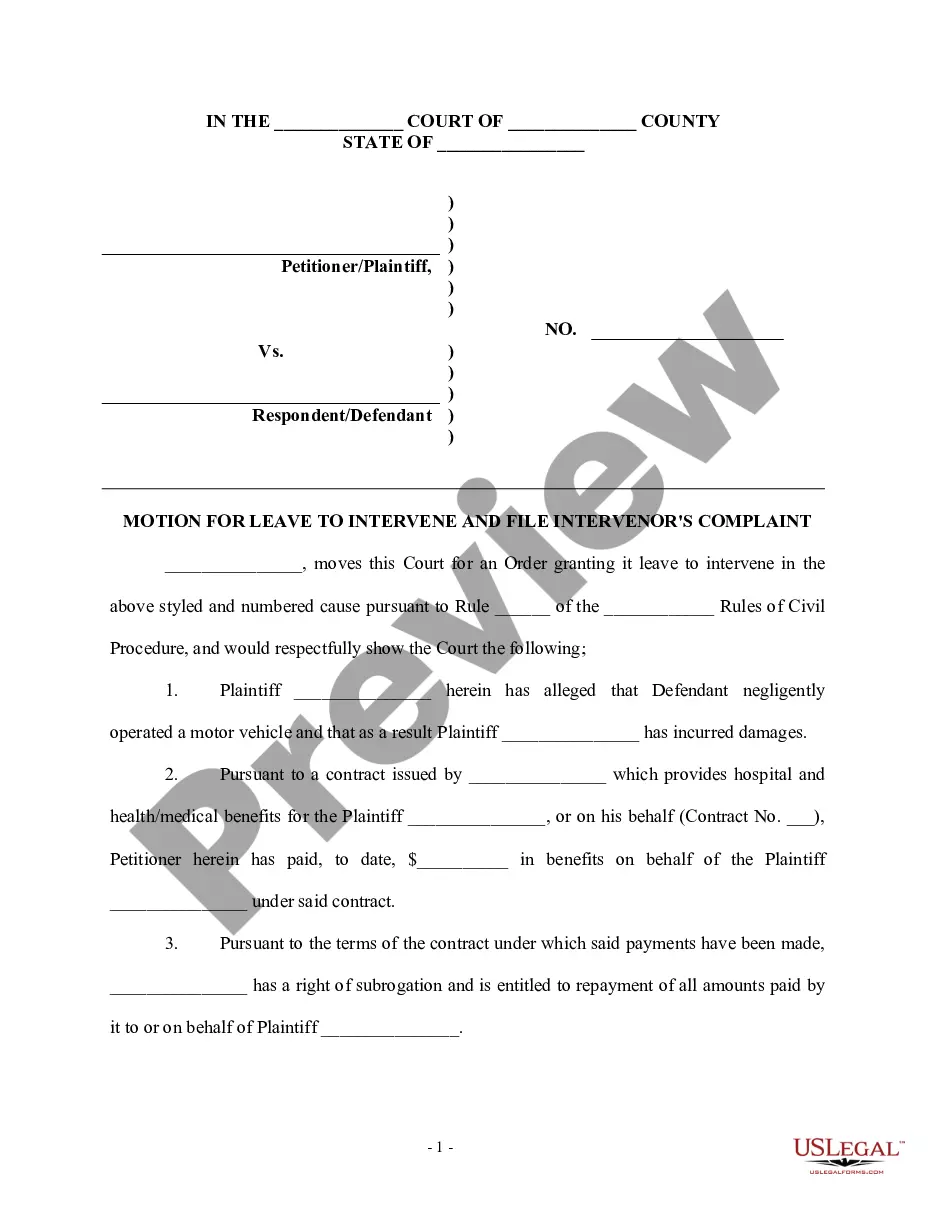
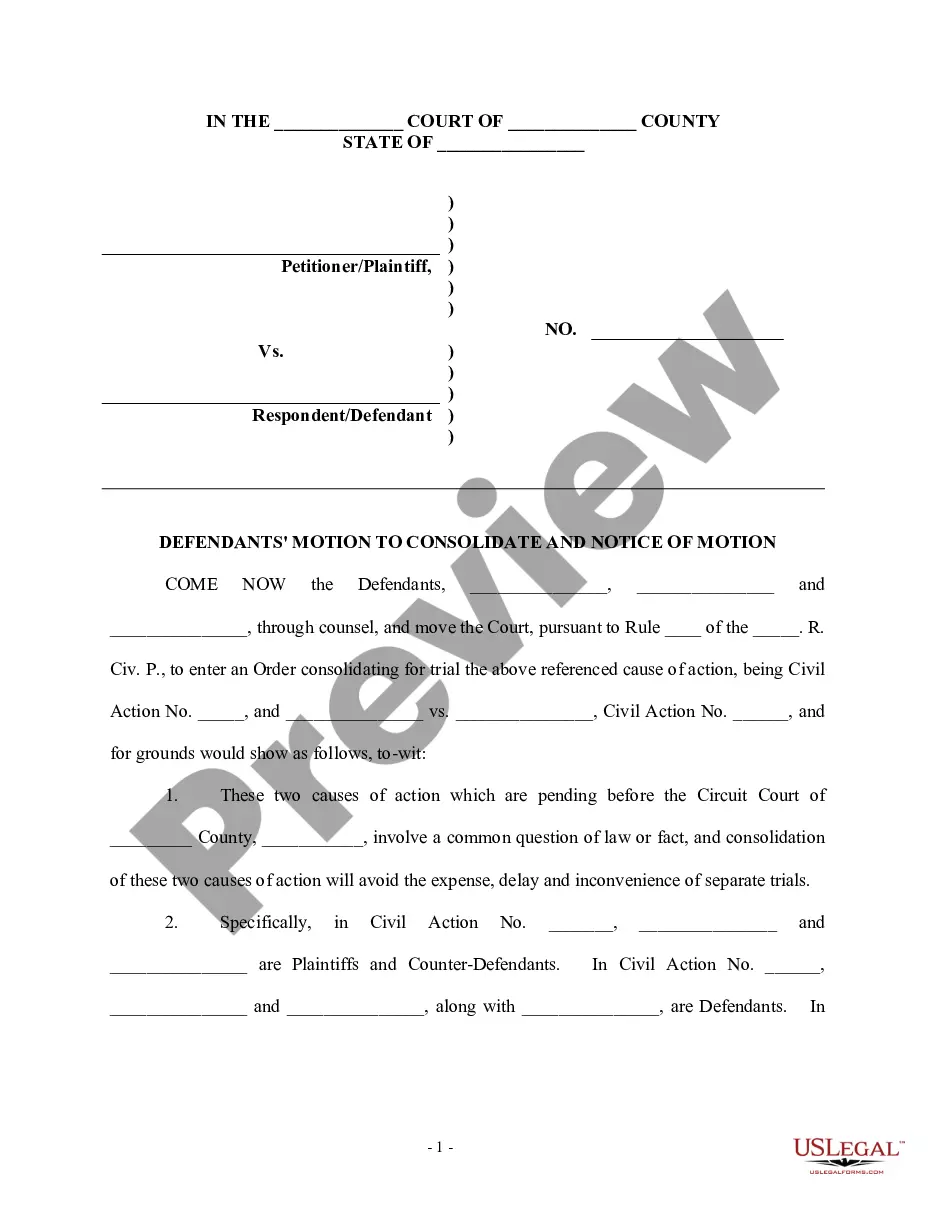
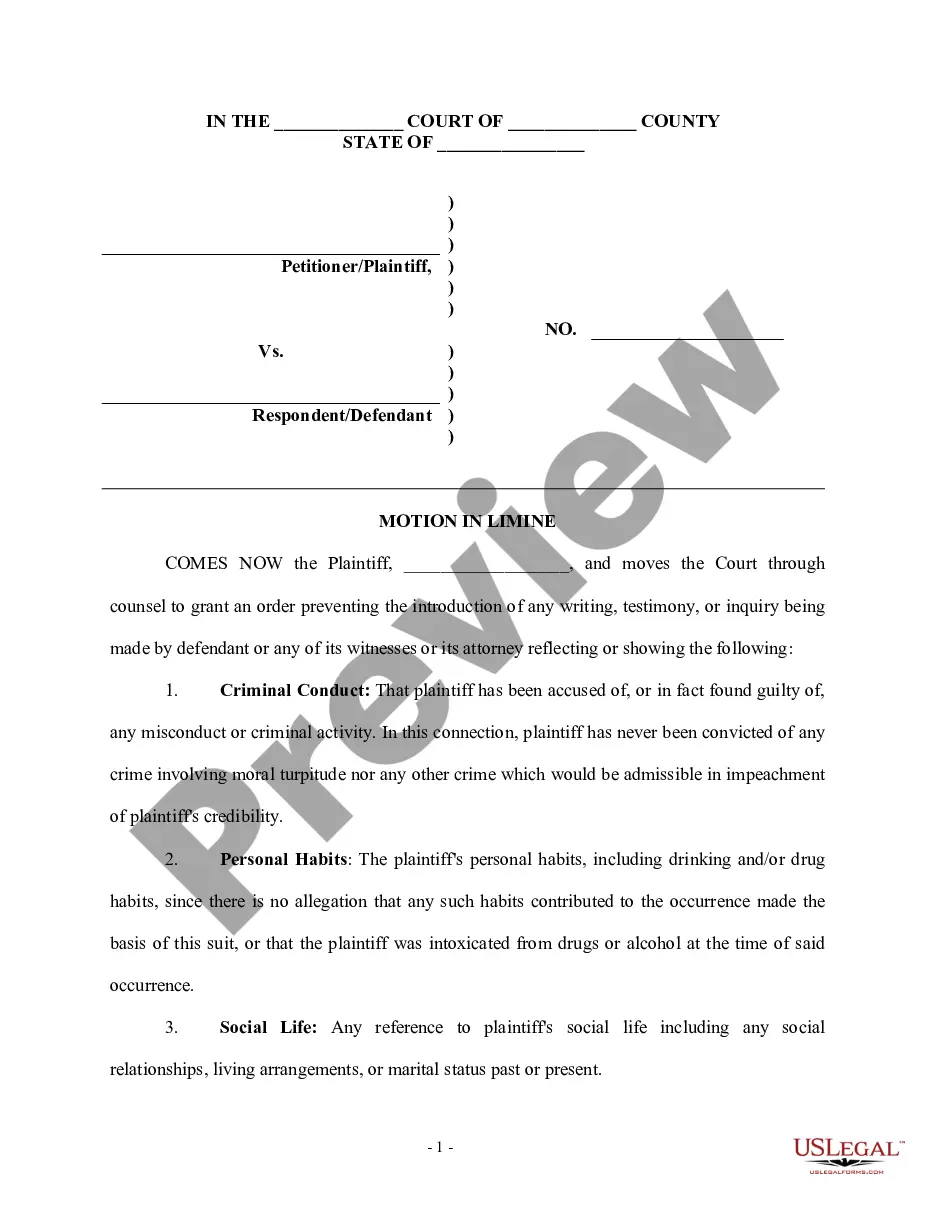
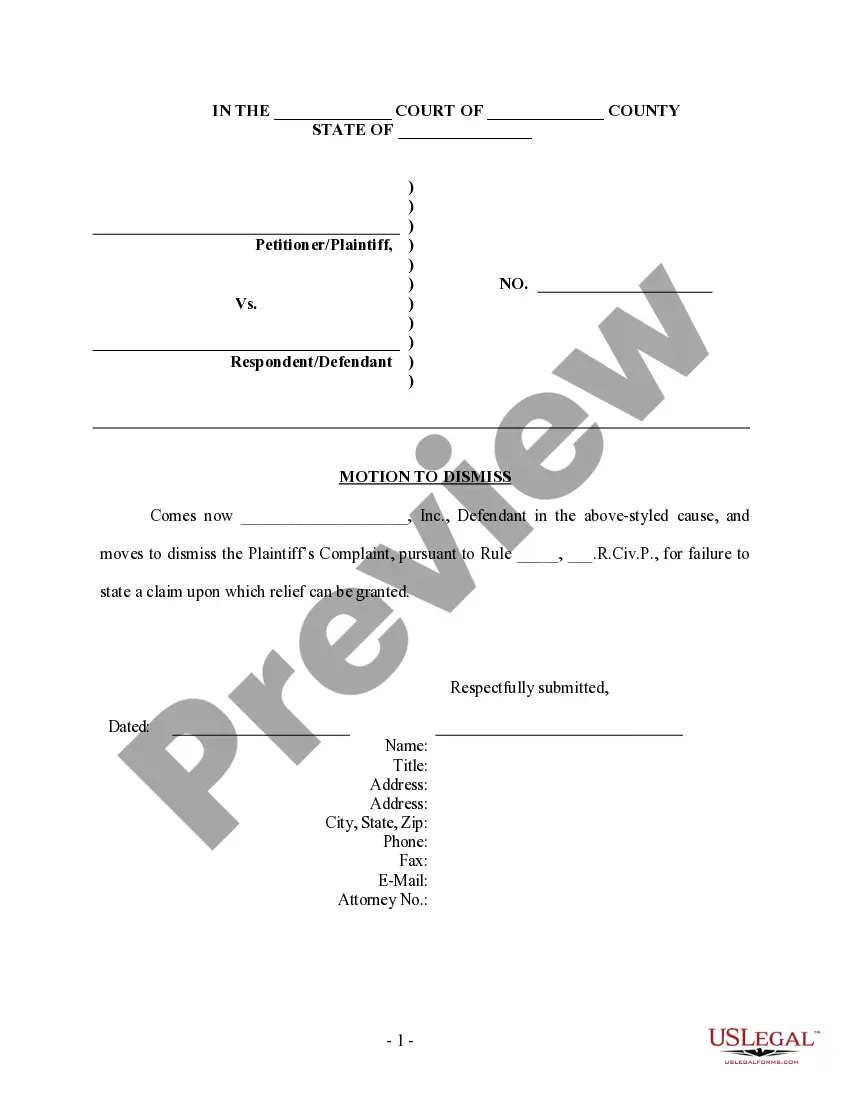
The Motion to Intervene for Personal Injury is a legal document that requests permission from the court for a third party to join an ongoing personal injury lawsuit as an intervenor. This form is used when an individual or entity has a vested interest in the outcome of the case, often due to being responsible for paying related medical or other benefits to the plaintiff. Unlike other motions, this form specifically allows for the inclusion of claims related to subrogation rights established under prior agreements.
Main sections of this form
- Allegations by the plaintiff regarding the defendant's negligence.
- Details of any existing contracts providing benefits to the plaintiff.
- Total benefits paid on behalf of the plaintiff by the intervenor.
- Statement of subrogation rights and the request for repayment.
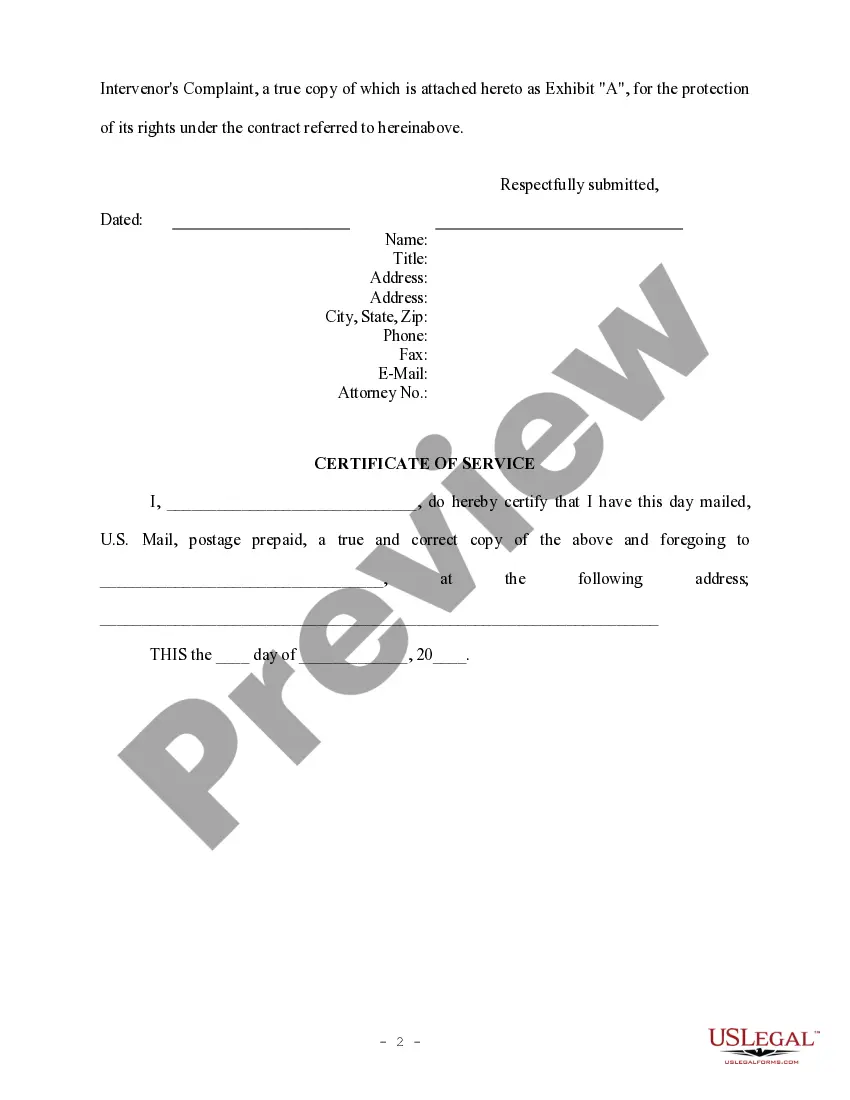
- Certificate of service indicating proper notification to the involved parties.
When to use this form
This form should be utilized when a party has provided financial benefits to the plaintiff in a personal injury case and wishes to intervene to protect its financial interests. It is typically applicable in situations where medical bills, rehabilitation costs, or other damages have been covered by the intervenor, creating a legal basis for their involvement in the lawsuit.
Who can use this document
- Insurance companies seeking to recover costs paid for medical care on behalf of the plaintiff.
- Healthcare providers who have billed the plaintiff for treatment related to the injury.
- Any individual or organization that can demonstrate a right to subrogation.
Steps to complete this form
- Identify the plaintiff and defendant involved in the personal injury case.
- Provide details of the intervenor and any relevant contracts related to benefits provided.
- Calculate and enter the total amount paid to date for benefits on behalf of the plaintiff.
- State the basis for the right of subrogation, including any relevant laws or agreements.
- Complete the certificate of service to indicate that all parties have been notified of the motion.
Notarization guidance
This form does not typically require notarization unless specified by local law. Always confirm local requirements to ensure valid submission.
Get your form ready online
Our built-in tools help you complete, sign, share, and store your documents in one place.
Make edits, fill in missing information, and update formatting in US Legal Forms—just like you would in MS Word.
Download a copy, print it, send it by email, or mail it via USPS—whatever works best for your next step.
Sign and collect signatures with our SignNow integration. Send to multiple recipients, set reminders, and more. Go Premium to unlock E-Sign.
If this form requires notarization, complete it online through a secure video call—no need to meet a notary in person or wait for an appointment.
We protect your documents and personal data by following strict security and privacy standards.

Make edits, fill in missing information, and update formatting in US Legal Forms—just like you would in MS Word.

Download a copy, print it, send it by email, or mail it via USPS—whatever works best for your next step.

Sign and collect signatures with our SignNow integration. Send to multiple recipients, set reminders, and more. Go Premium to unlock E-Sign.

If this form requires notarization, complete it online through a secure video call—no need to meet a notary in person or wait for an appointment.

We protect your documents and personal data by following strict security and privacy standards.
Avoid these common issues
- Failing to notify all involved parties of the motion.
- Incorrectly calculating the total benefits paid on behalf of the plaintiff.
- Neglecting to properly establish the right of subrogation.
Benefits of completing this form online
- Convenient access to templates available for immediate download.
- Editable fields allow users to customize information easily.
- Reliability from forms drafted by licensed attorneys, ensuring compliance and accuracy.
Legal use & context
- The motion should demonstrate a clear connection to the personal injury case.
- Timely filing is crucial to protect the intervenorâs rights.
- Subrogation claims must be supported with documentation of incurred costs.
What to keep in mind
- The Motion to Intervene is vital for protecting financial interests in a personal injury case.
- Ensure all relevant details are accurately completed to avoid delays.
- Consult an attorney if uncertain about the process or requirements.
Looking for another form?
Form popularity
FAQ
A motion for intervention, in the context of family law, is a petition by an interested party to testify to the best interests of a child when the existing parties cannot adequately protect a child's best interests.
In law, intervention is a procedure to allow a nonparty, called intervenor (also spelled intervener) to join ongoing litigation, either as a matter of right or at the discretion of the court, without the permission of the original litigants.
Intervention in legal cases is most common in child custody litigation. If you want to intervene in a legal case whether with the plaintiff, with the defendant, or on your own with independent claims against either party you must first file a motion and ask the judge's permission.
Intervention is the procedure whereby someone not named as a party to an action (or ordered joined as a party) may nevertheless become a party. (Code of Civ.