Request for Admissions - Personal Injury - Auto Accident
About this form
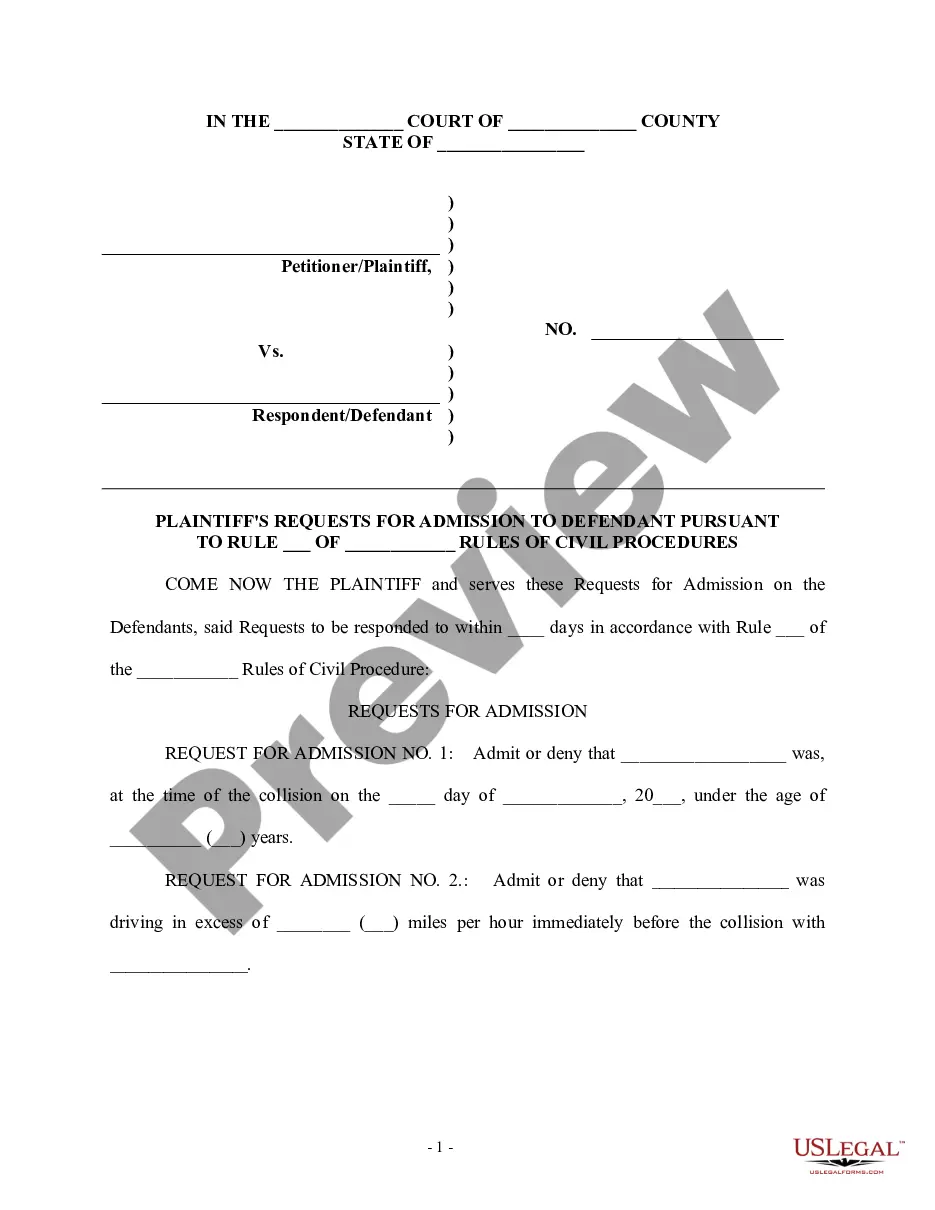
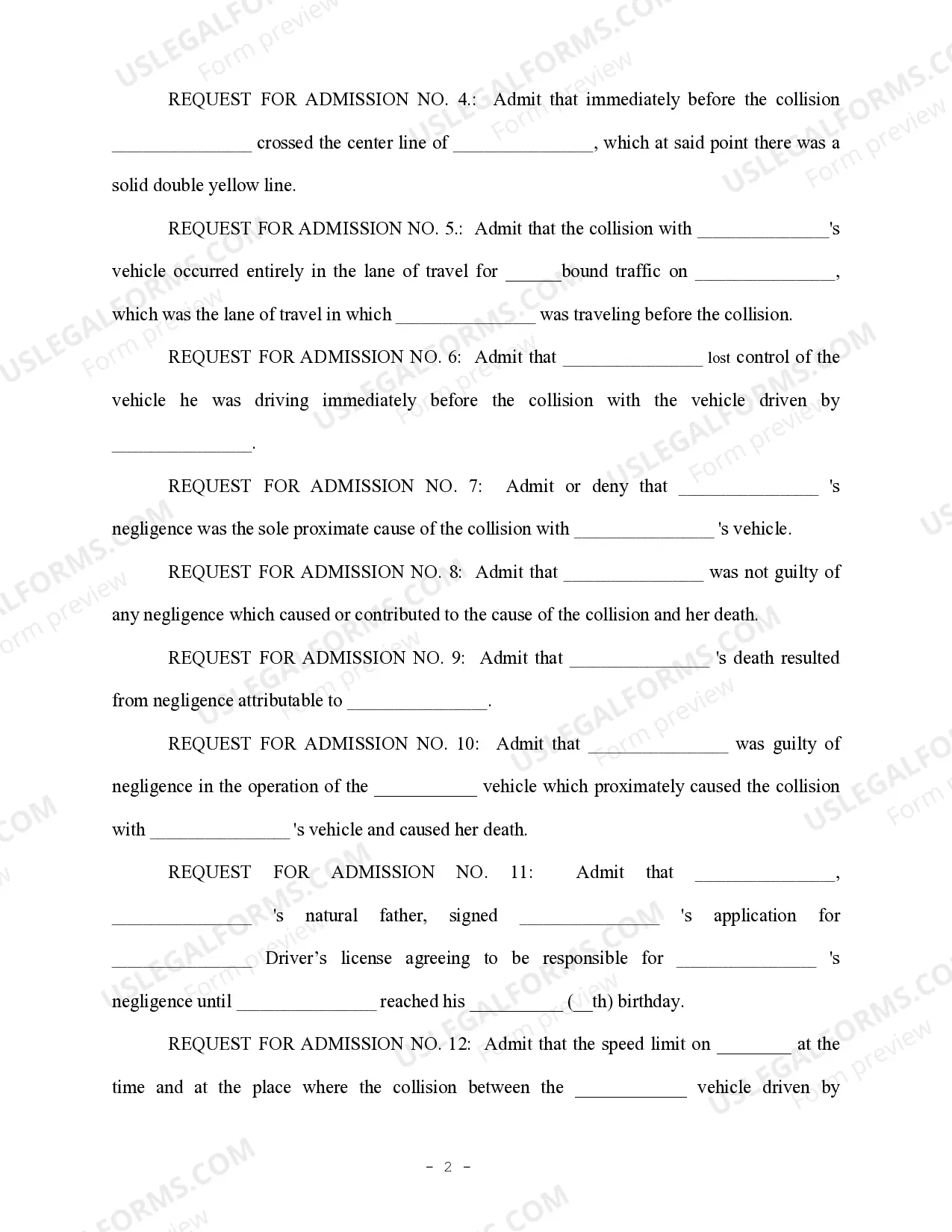
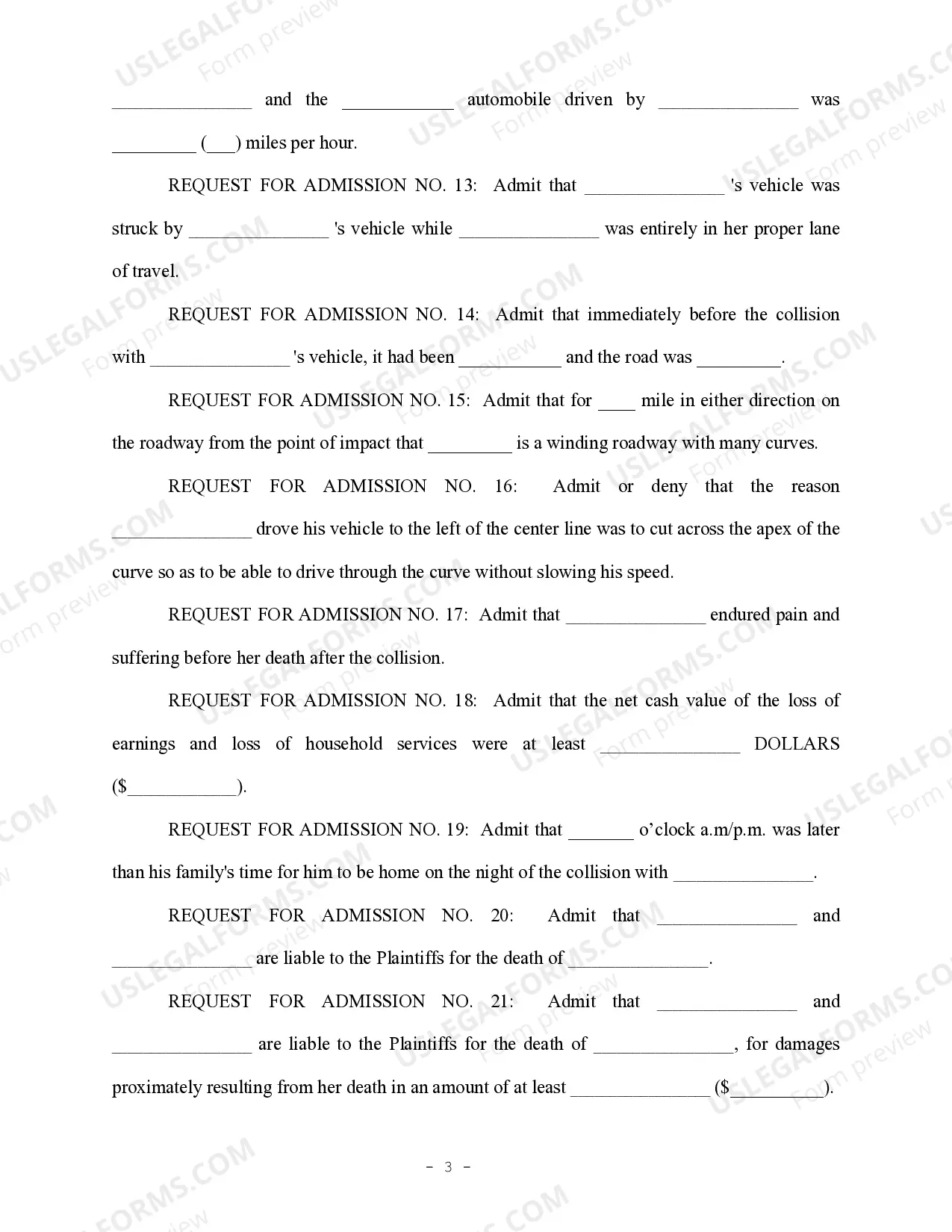
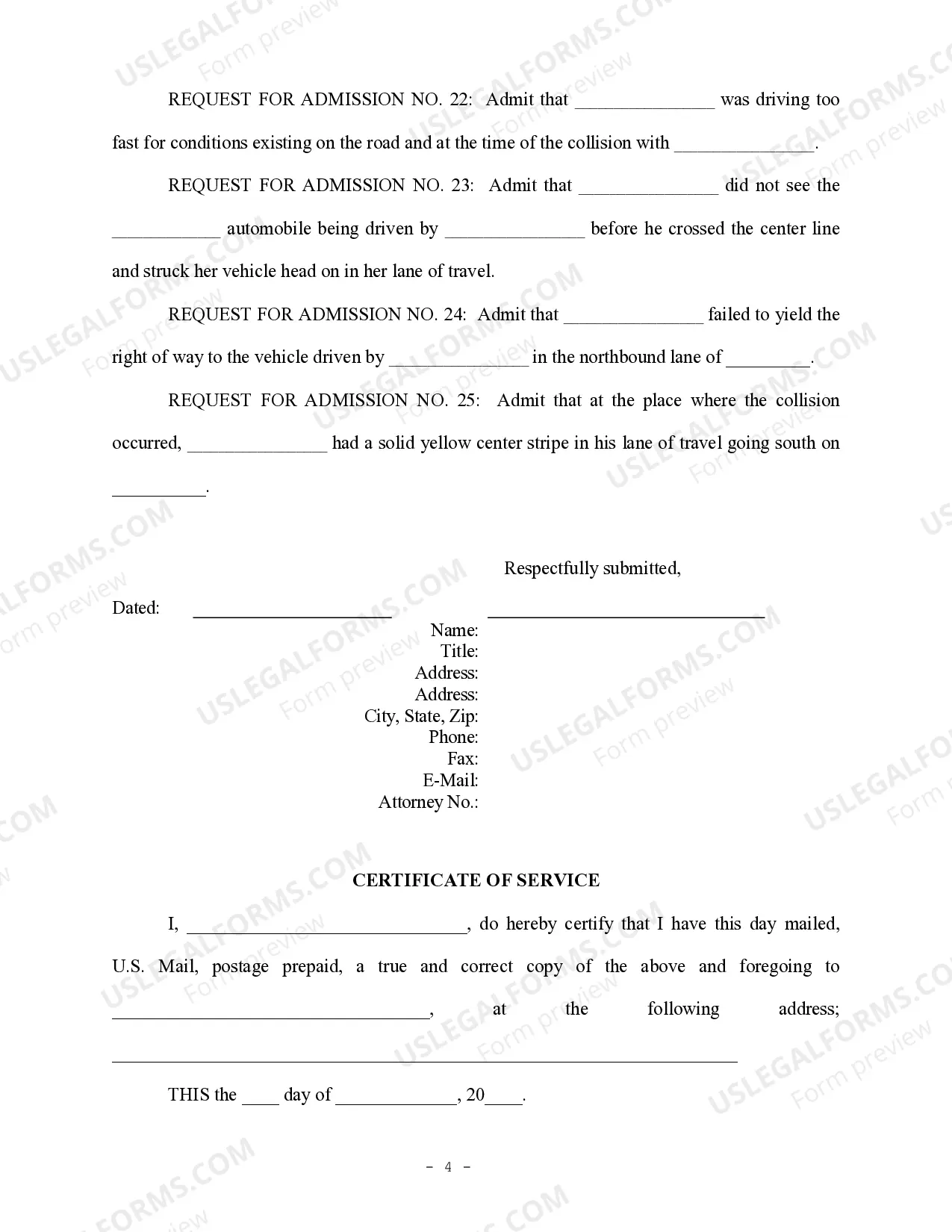
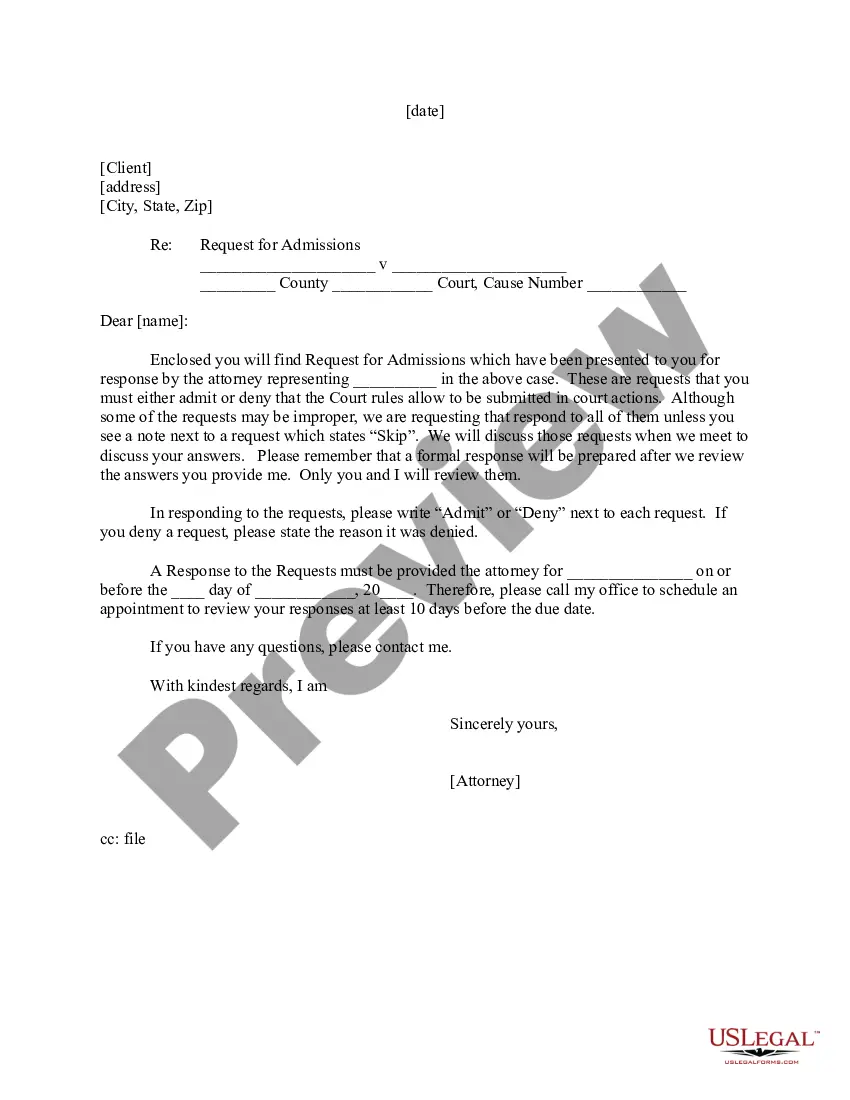
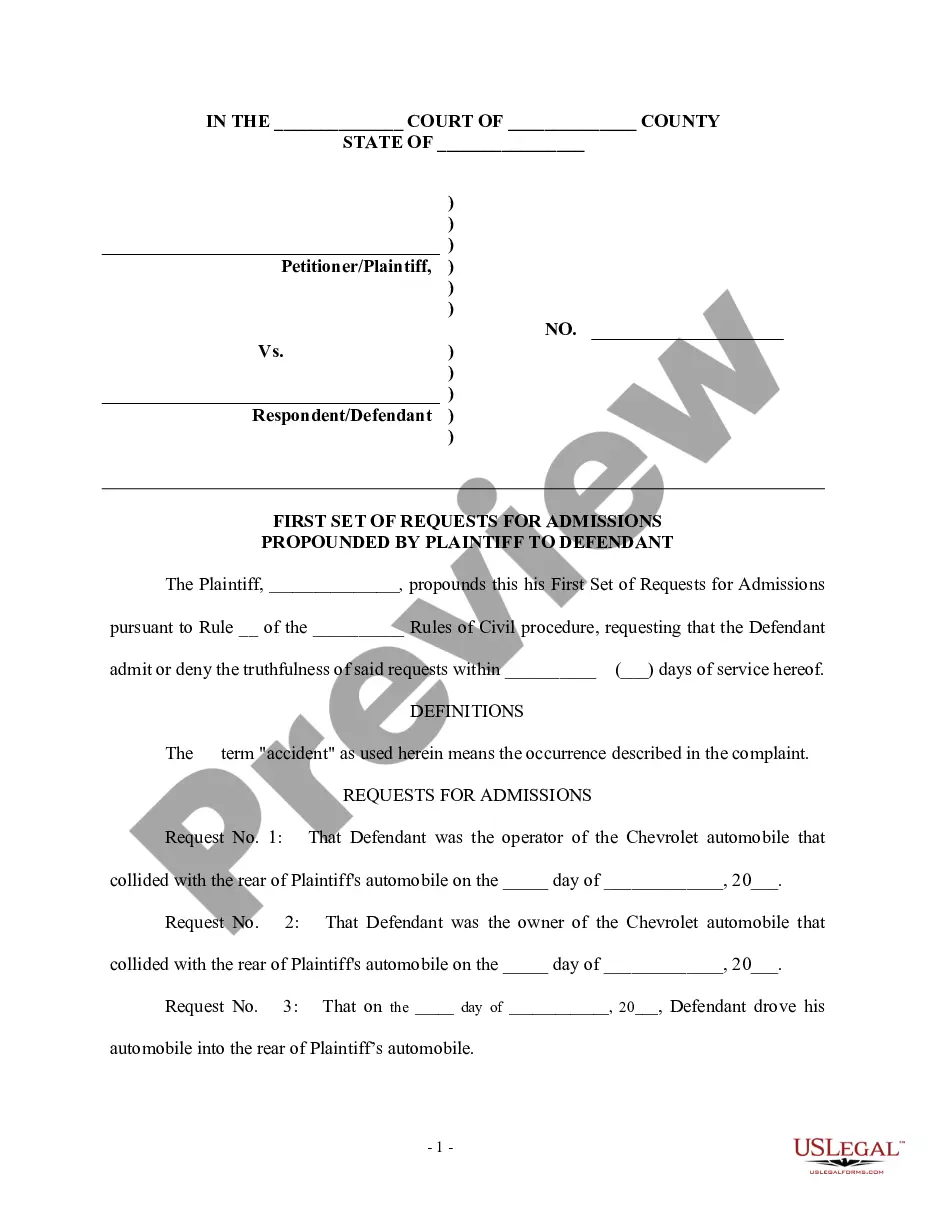
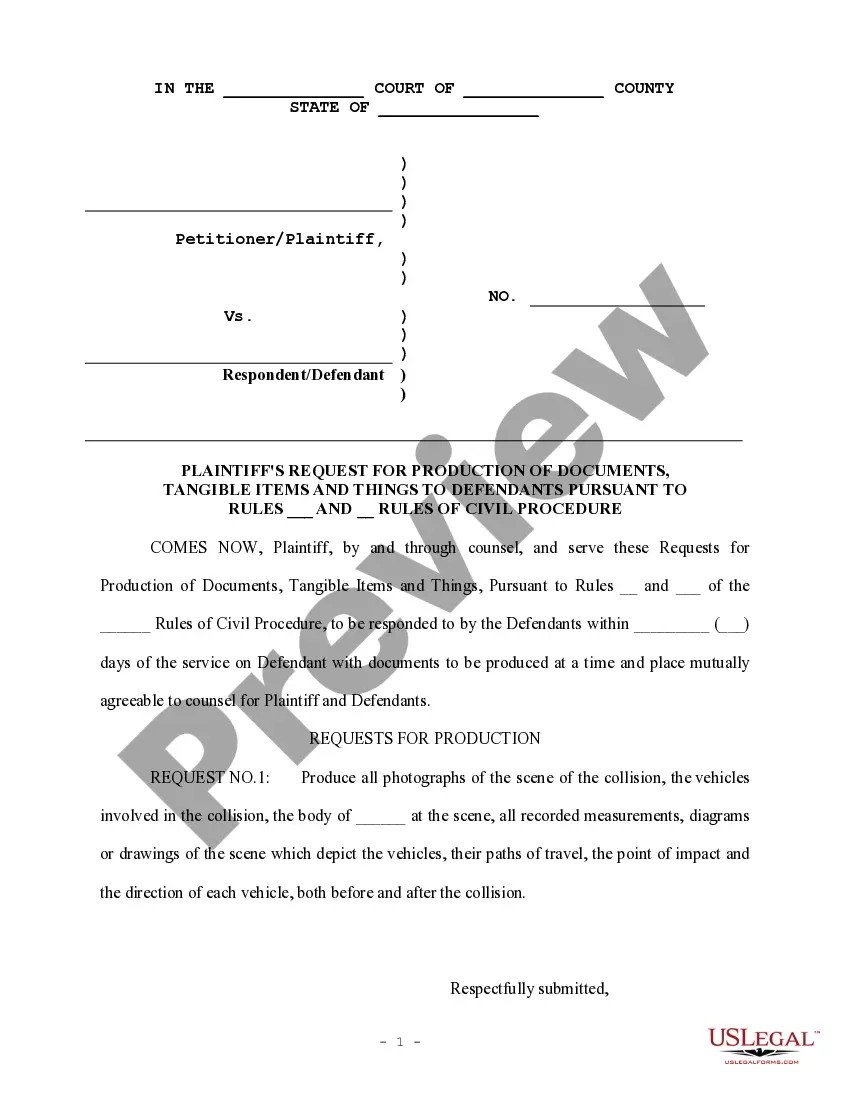
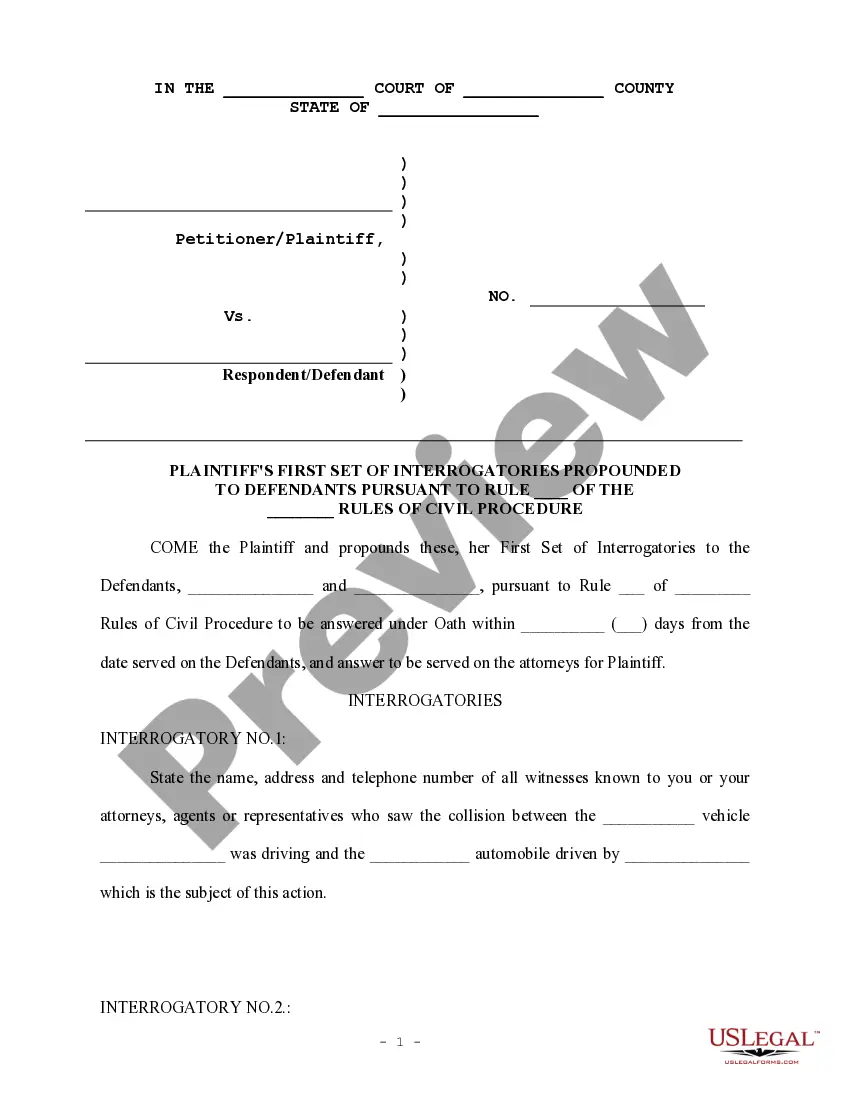
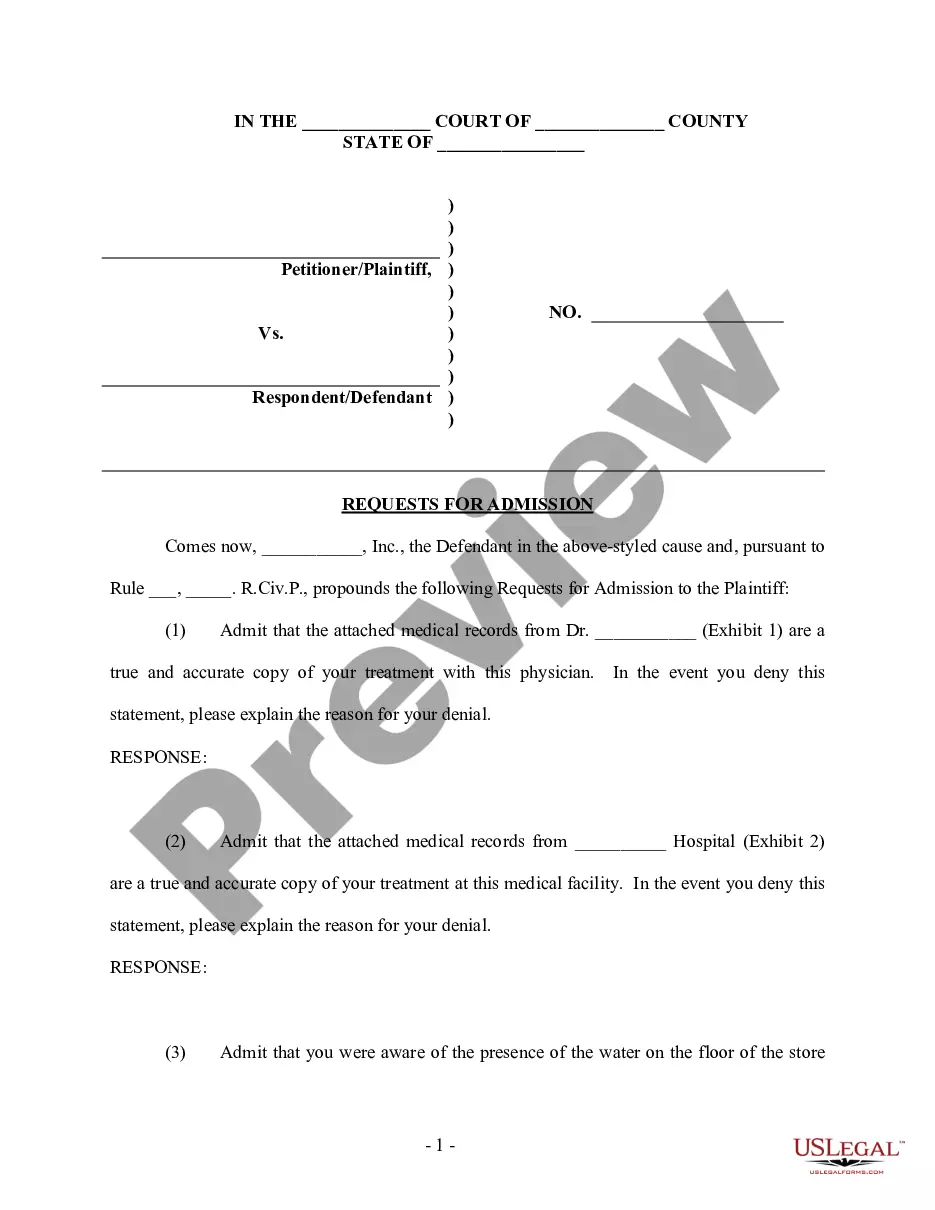
The Request for Admissions - Personal Injury - Auto Accident is a legal document used by a plaintiff to formally ask the defendant to admit or deny specific facts related to an automobile accident. This form aims to clarify the issues at hand and streamline the litigation process by establishing which facts are undisputed. Unlike other legal forms, this document specifically focuses on admissions that can directly impact the outcome of personal injury cases resulting from auto accidents.
Main sections of this form
- Request for admission statements regarding the age and actions of involved parties at the time of the accident.
- Questions addressing the speed limits and driving behavior leading to the collision.
- Inquiries about the conditions of the road and whether either party was at fault.
- Provisions for admitting or denying facts related to negligence and liability.
- Statements that can establish causation and damages related to the accident.

Common use cases
This form should be used in the context of a personal injury lawsuit following an automobile accident. It is particularly relevant when both parties have differing accounts of the events leading to the collision. By using this form, plaintiffs can clarify key facts, which can lead to a more efficient resolution of the case, whether through settlement or trial.
Who this form is for
- Individuals who have filed a personal injury claim resulting from an auto accident.
- Plaintiffs seeking to establish facts for legal proceedings.
- Attorneys representing clients in personal injury auto accident cases.
- Defendants responding to factual claims in auto accident lawsuits.
Steps to complete this form
- Identify the parties involved in the accident and enter their names in the appropriate sections.
- Fill in specific details about the accident, including dates, location, and circumstances leading to the collision.
- Complete each request by stating whether the opposing party admits or denies the factual statements provided.
- Ensure all relevant requests are included to address liability and negligence comprehensively.
- Sign and date the document, and submit a copy according to the requirements of the court or opposing party.
Is notarization required?
This form does not typically require notarization to be legally valid. However, some jurisdictions or document types may still require it. US Legal Forms provides secure online notarization powered by Notarize, available 24/7 for added convenience.
Get your form ready online
Our built-in tools help you complete, sign, share, and store your documents in one place.
Make edits, fill in missing information, and update formatting in US Legal Forms—just like you would in MS Word.
Download a copy, print it, send it by email, or mail it via USPS—whatever works best for your next step.
Sign and collect signatures with our SignNow integration. Send to multiple recipients, set reminders, and more. Go Premium to unlock E-Sign.
If this form requires notarization, complete it online through a secure video call—no need to meet a notary in person or wait for an appointment.
We protect your documents and personal data by following strict security and privacy standards.

Make edits, fill in missing information, and update formatting in US Legal Forms—just like you would in MS Word.

Download a copy, print it, send it by email, or mail it via USPS—whatever works best for your next step.

Sign and collect signatures with our SignNow integration. Send to multiple recipients, set reminders, and more. Go Premium to unlock E-Sign.

If this form requires notarization, complete it online through a secure video call—no need to meet a notary in person or wait for an appointment.

We protect your documents and personal data by following strict security and privacy standards.
Mistakes to watch out for
- Failing to provide sufficient details or context for each request for admission.
- Not specifying the exact points of contention, leading to confusion.
- Omitting signatures or dates on the document, which can impact its validity.
- Submitting the request without reviewing state-specific rules on admissions.
Advantages of online completion
- Convenient access to a standardized legal form that can be downloaded and customized.
- Editability allows users to tailor the form to their specific circumstances quickly.
- Reliable templates drafted by licensed attorneys, ensuring legal compliance.
Looking for another form?
Form popularity
FAQ
In a civil action, a request for admission is a discovery device that allows one party to request that another party admit or deny the truth of a statement under oath. If admitted, the statement is considered to be true for all purposes of the current trial.
When responding to Requests for Admissions, remember to answer as follows: Admit: If any portion of the Request for Admission is true then you must admit to that portion of the request. You are also allowed to have a hybrid response admit the part of the request that is true while denying another part. See C.C.P.
Proper Objections A responding party has four options: (1) admit; (2) deny; (3) admit in part and deny in part; or (4) explain why the party is unable to answer. It is possible to object to all or part of a request as well, but courts do not like parties who play word games to avoid responding.
Remain at the Scene of the Accident. Gather Information at the Scene. Obtain Witness Information. Seek Medical Treatment. Report the Accident to Your Insurance Carrier. Keep All of Your Bills. Keep a Record of Your Injuries and Recovery. Keep Going to Your Doctor.
Seek medical treatment immediately. Have a medical examination immediately following any collision, even if you think you were not injured. Document the collision. Follow through. Do not communicate with anyone. Negotiate with your head, not your heart.
Each request must be numbered consecutively. The first paragraph immediately shall state he identity of the party requesting the admissions, the set number, and the identity of the responding party. Each request shall be separately set forth and identified by letter or number. C.C.P.
The provisions of Rule 36 make it clear that admissions function very much as pleadings do. Thus, when a party admits in part and denies in part, his admission is for purposes of the pending action only and may not be used against him in any other proceeding.
When responding to Requests for Admissions, remember to answer as follows: Admit: If any portion of the Request for Admission is true then you must admit to that portion of the request. You are also allowed to have a hybrid response admit the part of the request that is true while denying another part.
A party who considers that a matter of which an admission has been requested presents a genuine issue for trial may not object to the request on that ground alone; the party may deny the matter or set forth reasons why the party cannot admit or deny it, subject to rule 1.380(c).