Defendant's Response to Plaintiff's Motion for Summary Judgment on the Issue of Liability
About this form
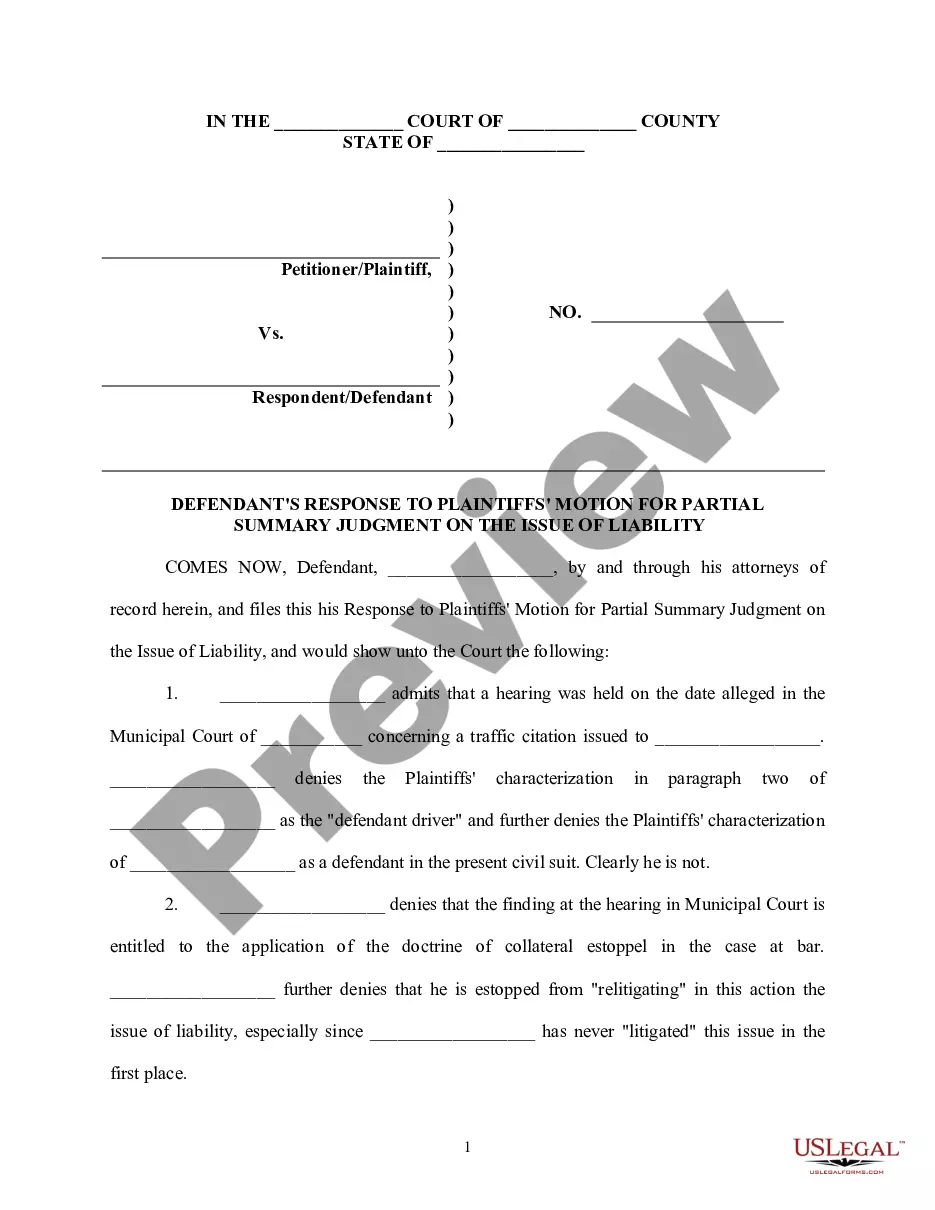
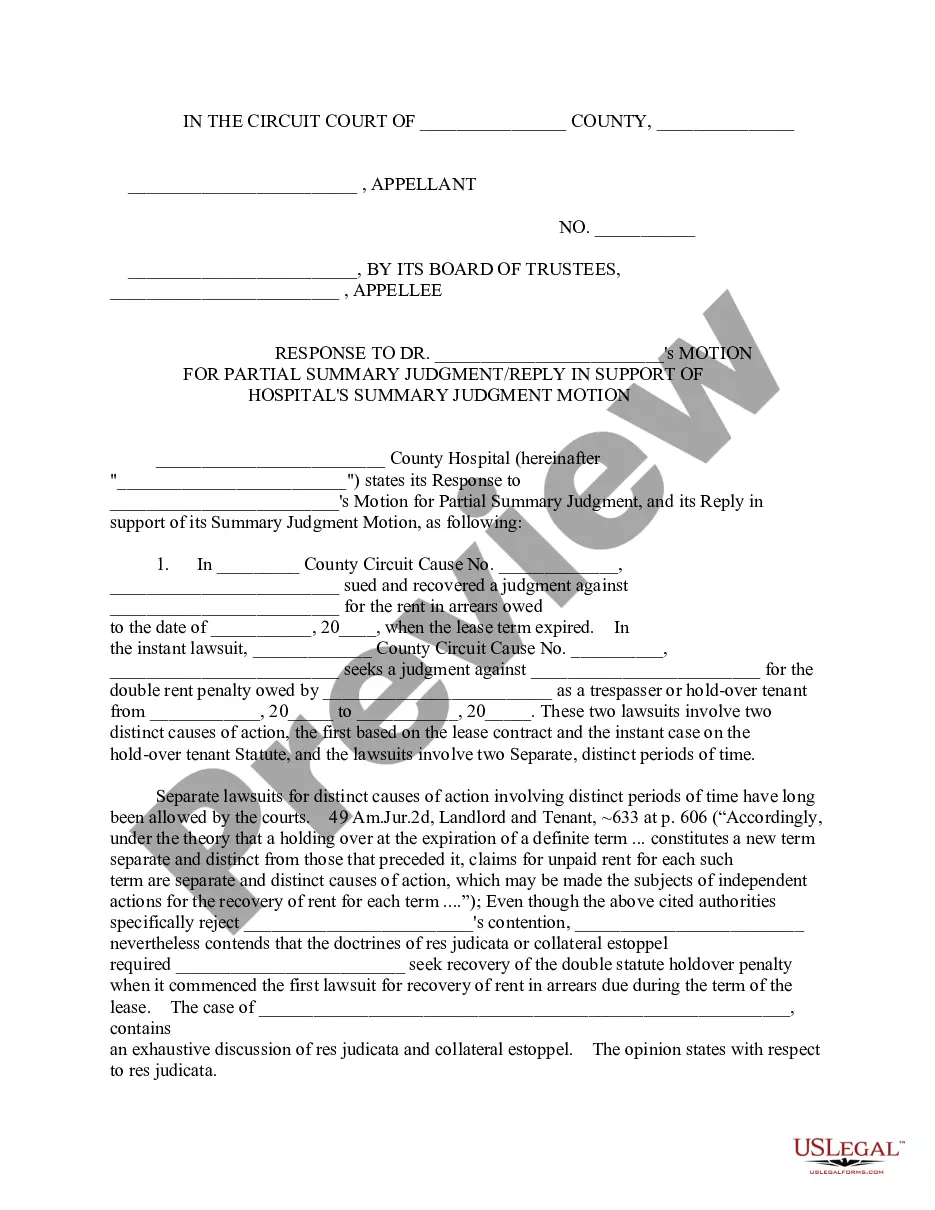
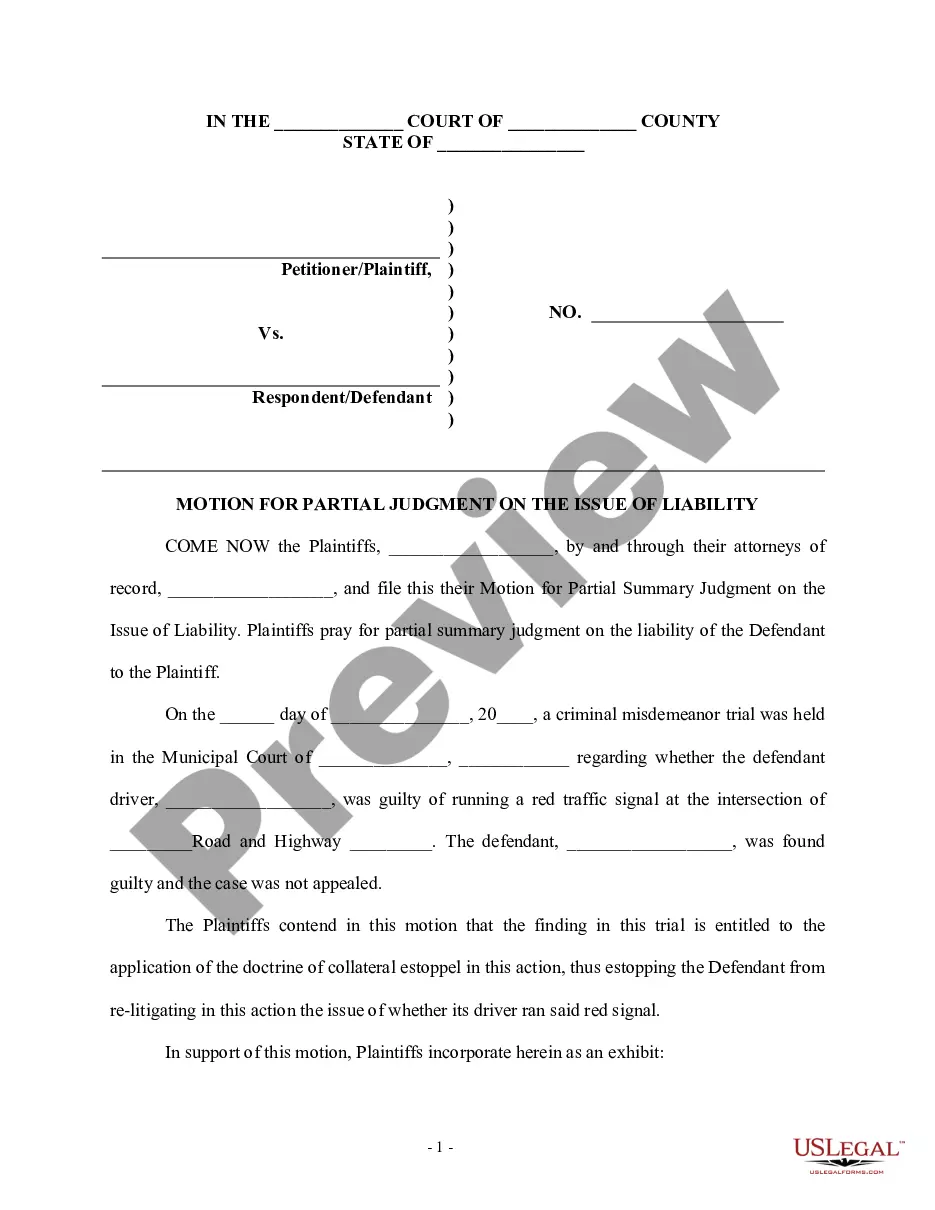
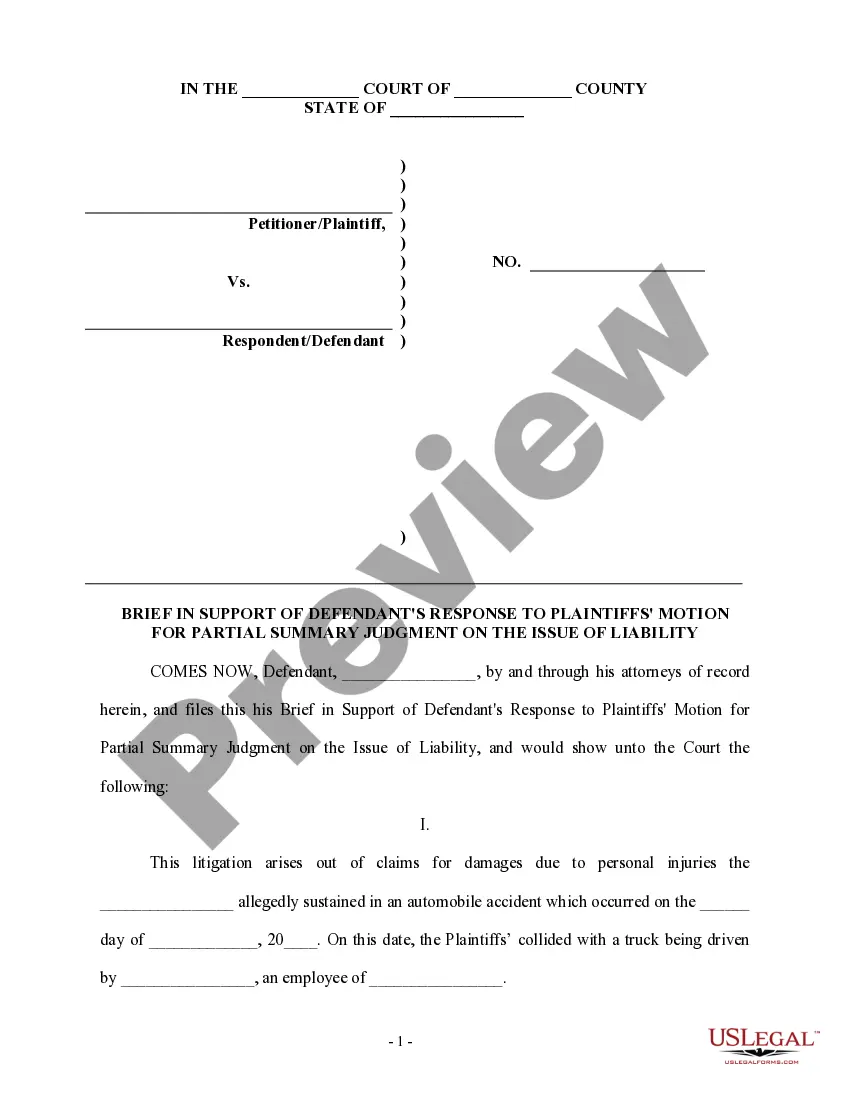
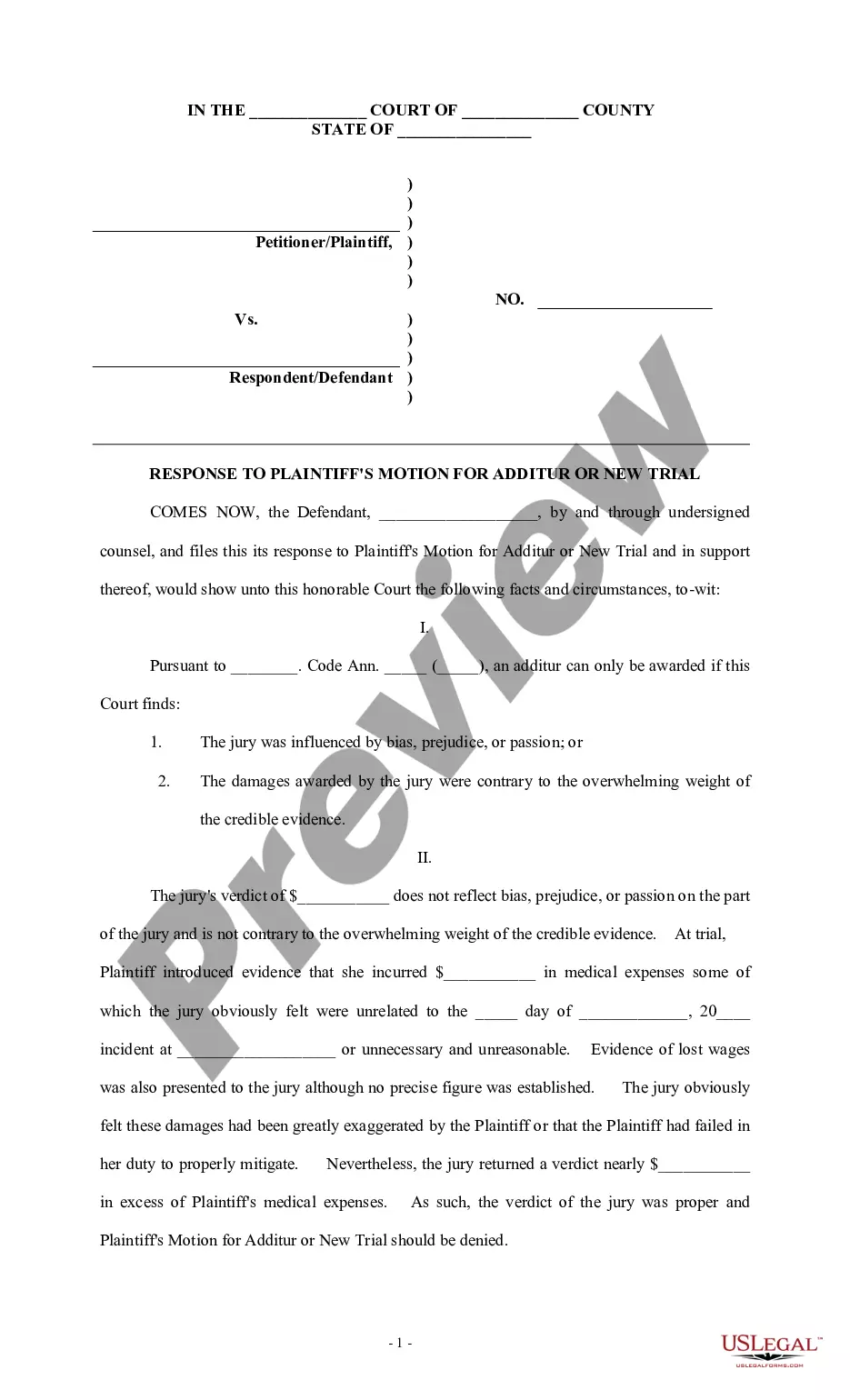
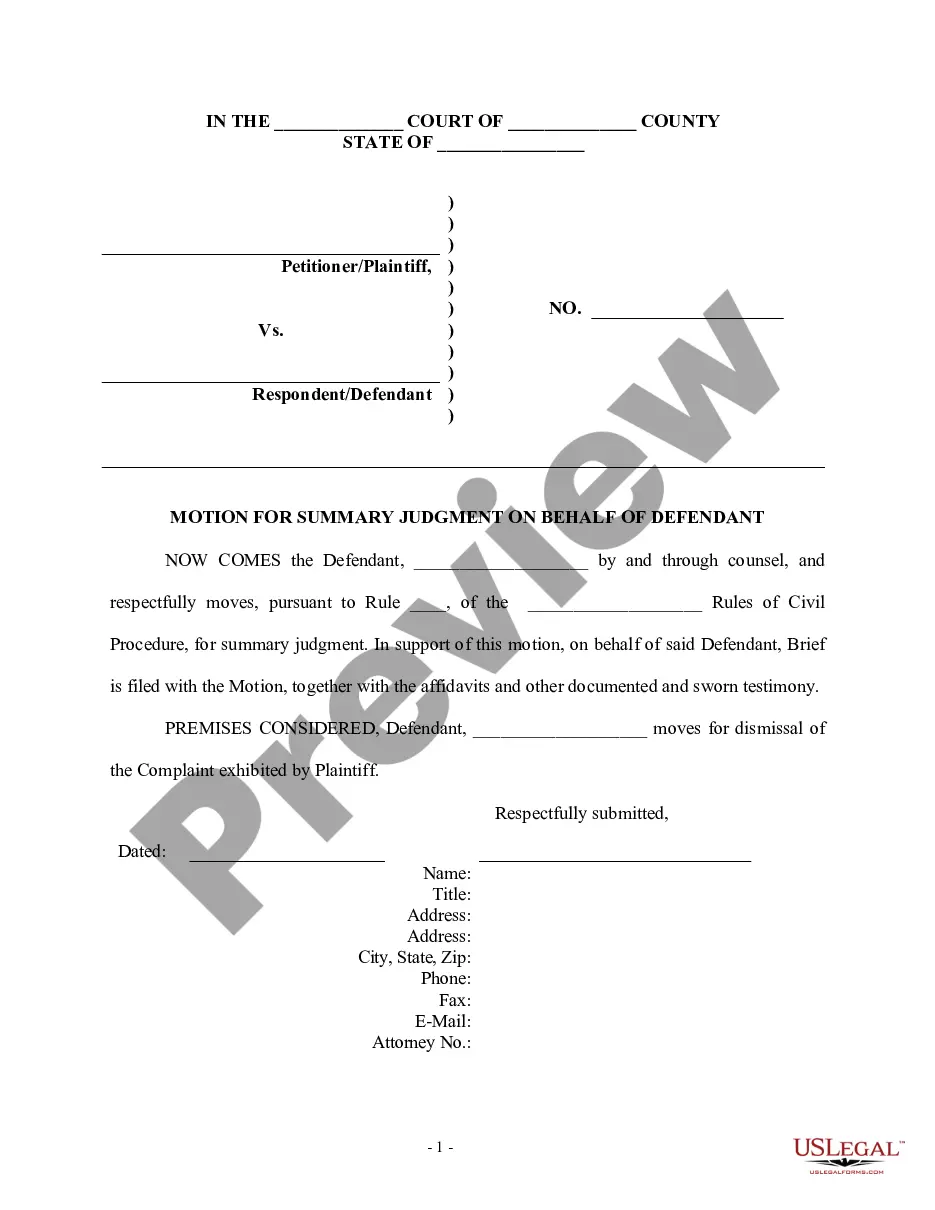
This legal form is known as the Defendant's Response to Plaintiff's Motion for Summary Judgment on the Issue of Liability. It is a formal document submitted by a defendant in response to a plaintiffâs request for a partial summary judgment regarding liability in a civil case. This form outlines the defendant's admissions, denials, and legal arguments against the plaintiff's claims. It is essential for disputing the plaintiff's assertions and ensuring that the case progresses appropriately.
Form components explained
- Admissions and denials regarding the hearing and the plaintiff's claims.
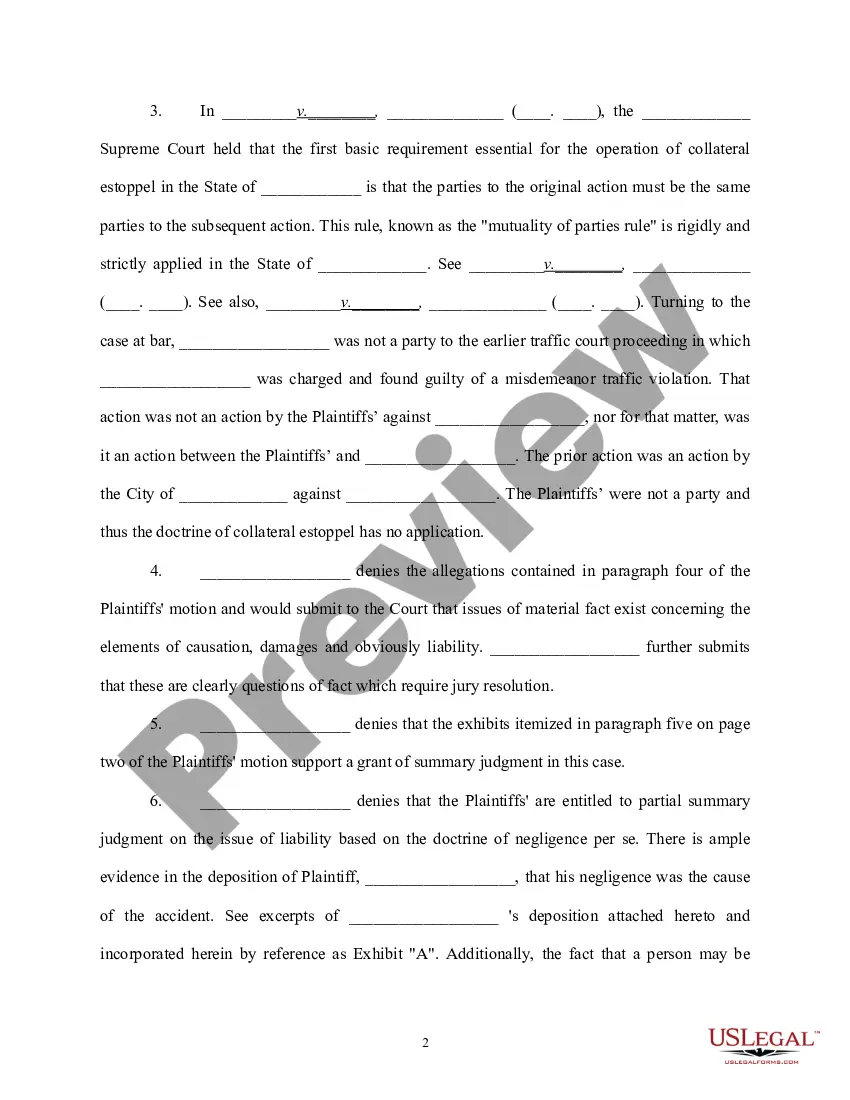
- Arguments against the application of collateral estoppel and mutuality of parties.
- Citations to relevant case law and legal precedents.
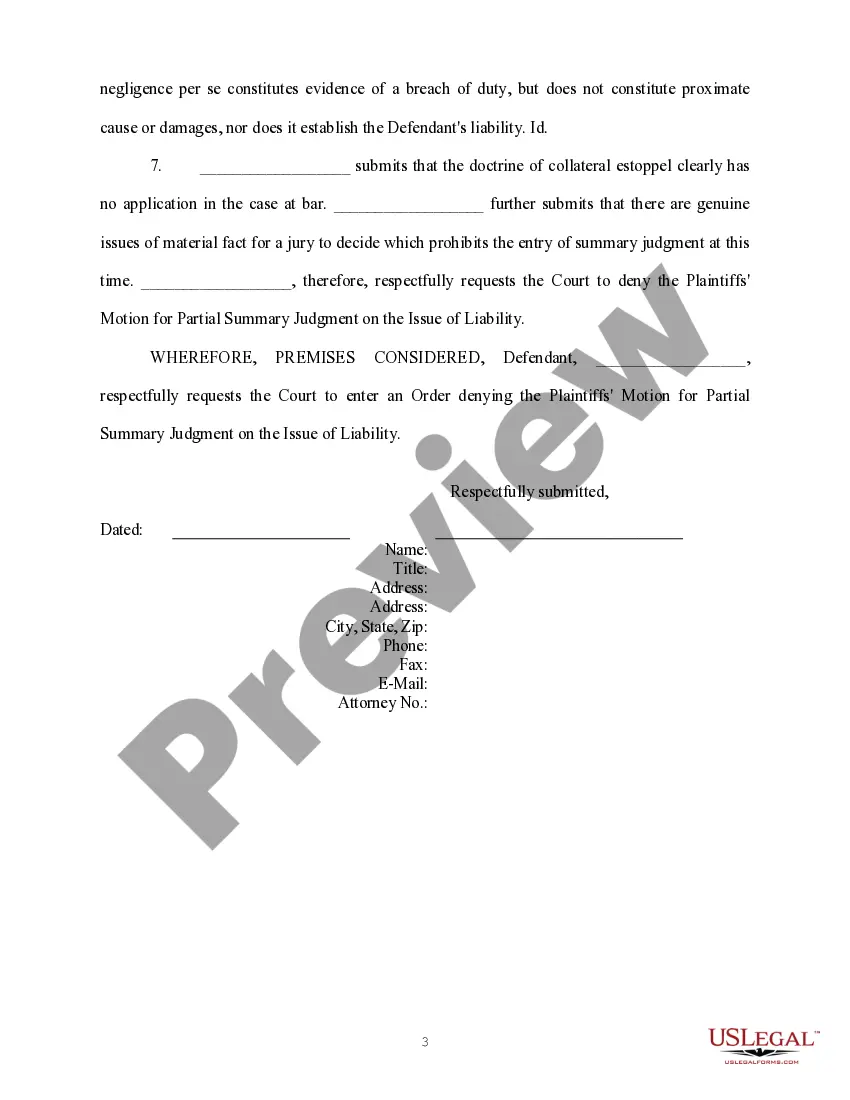
- Claims that material facts exist which warrant a trial.
- A request to deny the plaintiffâs motion for summary judgment.
When to use this form
This form should be used when a defendant needs to respond to a plaintiff's motion for partial summary judgment regarding liability. It is applicable in civil lawsuits where the plaintiff alleges that there is no genuine issue of material fact related to liability. If you believe there are disputes over facts that warrant a trial or if the legal principles cited by the plaintiff do not apply to your situation, this form is critical for articulating those points to the court.
Who needs this form
This form is intended for:
- Defendants involved in civil litigation where the plaintiff has filed a motion for partial summary judgment on liability.
- Individuals or businesses contesting claims made against them in court.
- Those who require a structured method to document their responses to legal motions.
Completing this form step by step
- Identify the parties involved in the case and specify the municipal court where the initial hearing took place.
- Clearly state admissions and denials regarding the plaintiffâs allegations and any relevant prior hearings.
- Cite legal precedents applicable to your case, especially concerning collateral estoppel and mutuality of parties.
- Provide a detailed argument outlining why the plaintiff's motion should be denied, emphasizing material facts that require judicial resolution.
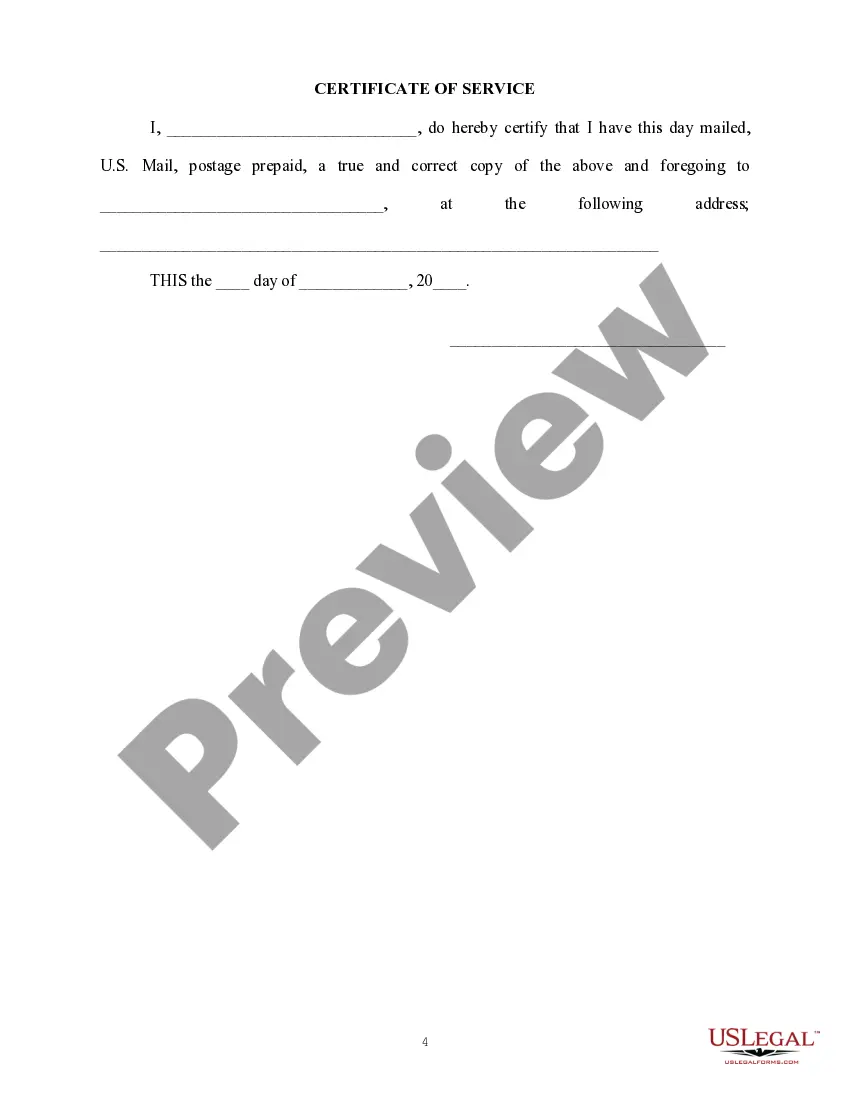
- Sign and date the document, and ensure it is served to the opposing counsel as required.
Notarization guidance
This form does not typically require notarization unless specified by local law. Always check your state's requirements to confirm any notarization obligations.
Get your form ready online
Our built-in tools help you complete, sign, share, and store your documents in one place.
Make edits, fill in missing information, and update formatting in US Legal Forms—just like you would in MS Word.
Download a copy, print it, send it by email, or mail it via USPS—whatever works best for your next step.
Sign and collect signatures with our SignNow integration. Send to multiple recipients, set reminders, and more. Go Premium to unlock E-Sign.
If this form requires notarization, complete it online through a secure video call—no need to meet a notary in person or wait for an appointment.
We protect your documents and personal data by following strict security and privacy standards.

Make edits, fill in missing information, and update formatting in US Legal Forms—just like you would in MS Word.

Download a copy, print it, send it by email, or mail it via USPS—whatever works best for your next step.

Sign and collect signatures with our SignNow integration. Send to multiple recipients, set reminders, and more. Go Premium to unlock E-Sign.

If this form requires notarization, complete it online through a secure video call—no need to meet a notary in person or wait for an appointment.

We protect your documents and personal data by following strict security and privacy standards.
Common mistakes to avoid
- Failing to address all allegations made in the plaintiff's motion.
- Neglecting to provide sufficient legal arguments supported by appropriate case law.
- Missing the deadline for submitting the response, which could lead to unfavorable judgments.
- Not properly formatting or including necessary signatures and certifications.
Benefits of completing this form online
- Convenient access to necessary legal documents from anywhere with an internet connection.
- Ability to edit and customize the form easily to fit your specific case details.
- Drafts prepared by licensed attorneys ensure reliability and legal compliance.
Legal use & context
- This form serves to formally dispute a plaintiff's claim of negligence and establish a defense.
- Understanding the legal context of terms like collateral estoppel is crucial for effective use.
- The form preserves a defendant's right to a fair trial by highlighting disputed issues of material fact.
Main things to remember
- The form is essential for defendants responding to motions for summary judgment.
- Clearly articulating legal arguments and factual disputes is crucial for a successful defense.
- Completing the form accurately ensures compliance with court procedures and timelines.
Looking for another form?








Form popularity
FAQ
This form is a defendant's formal reply to a plaintiff's request for partial summary judgment on liability in a civil case. It sets forth admissions and denials, presents legal arguments against the motion, and cites relevant precedents. It also argues that material facts require a trial and requests denial of the plaintiff's motion to move the case forward.
Generally, an answer to the complaint is not filed again with the motion; instead, a defendant files an opposition to the motion for summary judgment. This form serves as that opposition, focusing on liability and detailing admissions or denials, along with supported legal arguments and authorities.
To respond to a motion for summary judgment using this form, identify any genuine issues of material fact related to liability, present admissions or denials of the plaintiff's claims, and cite relevant case law. The document should articulate why disputed facts warrant a trial and include factual support for each point.
An opposition is a formal filing that disputes the plaintiff's motion, outlining disputed facts and legal arguments, and requesting denial. In the Defendant's Response, it includes admissions/denials, citations to precedents, and points that material facts require a trial.
If the court denies the motion, the case continues to trial on liability or other issues; if granted, liability may be resolved in favor of the plaintiff or defendant. This form supports denial, preserving trial rights by presenting disputed facts and supporting authorities.
This form is tailored to liability disputes in civil cases. It includes admissions and denials, arguments against collateral estoppel and mutuality of parties, citations to case law, and a clear request to deny the motion, plus a specific focus on facts that warrant a trial.