Motion for Leave to Appear Pro Hac Vice
What this document covers
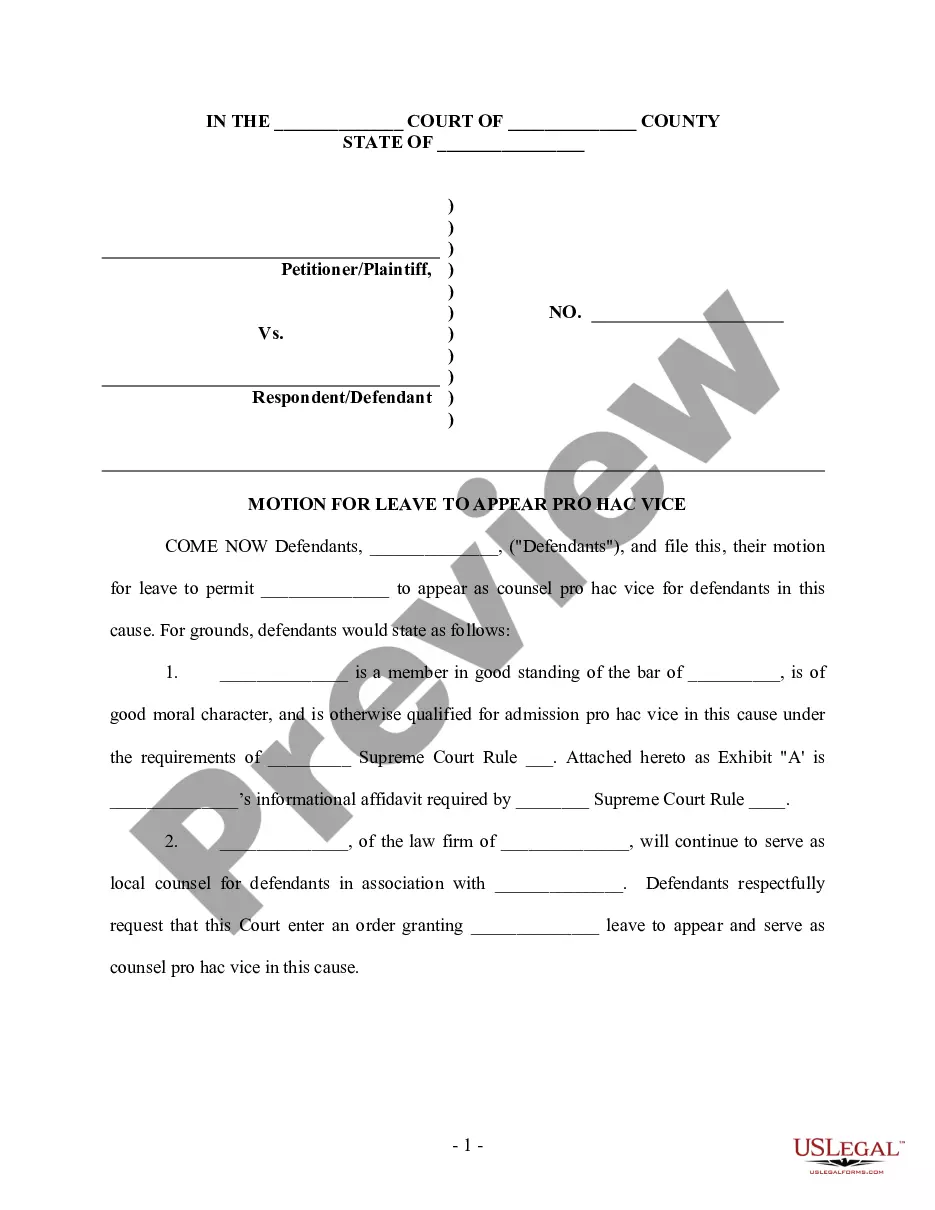
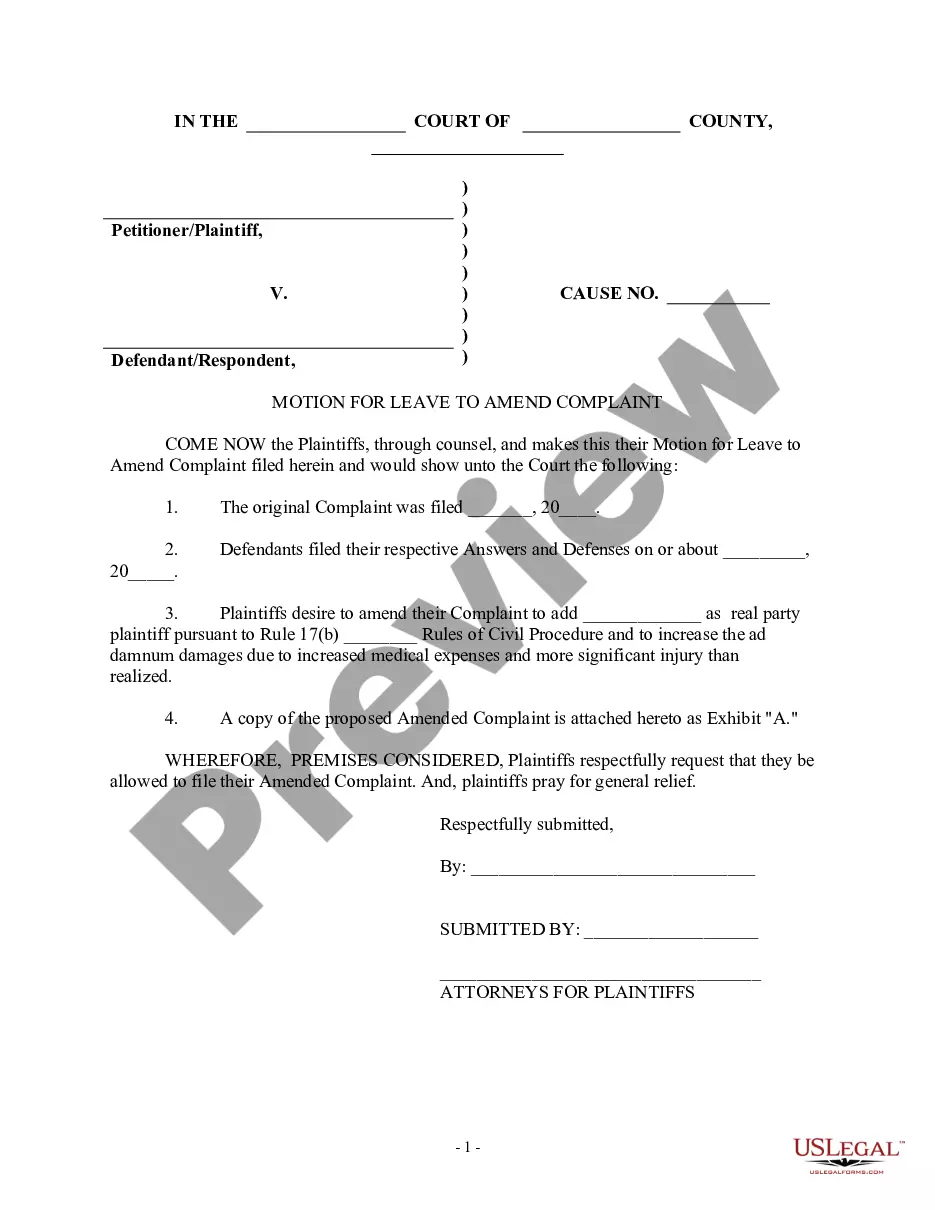
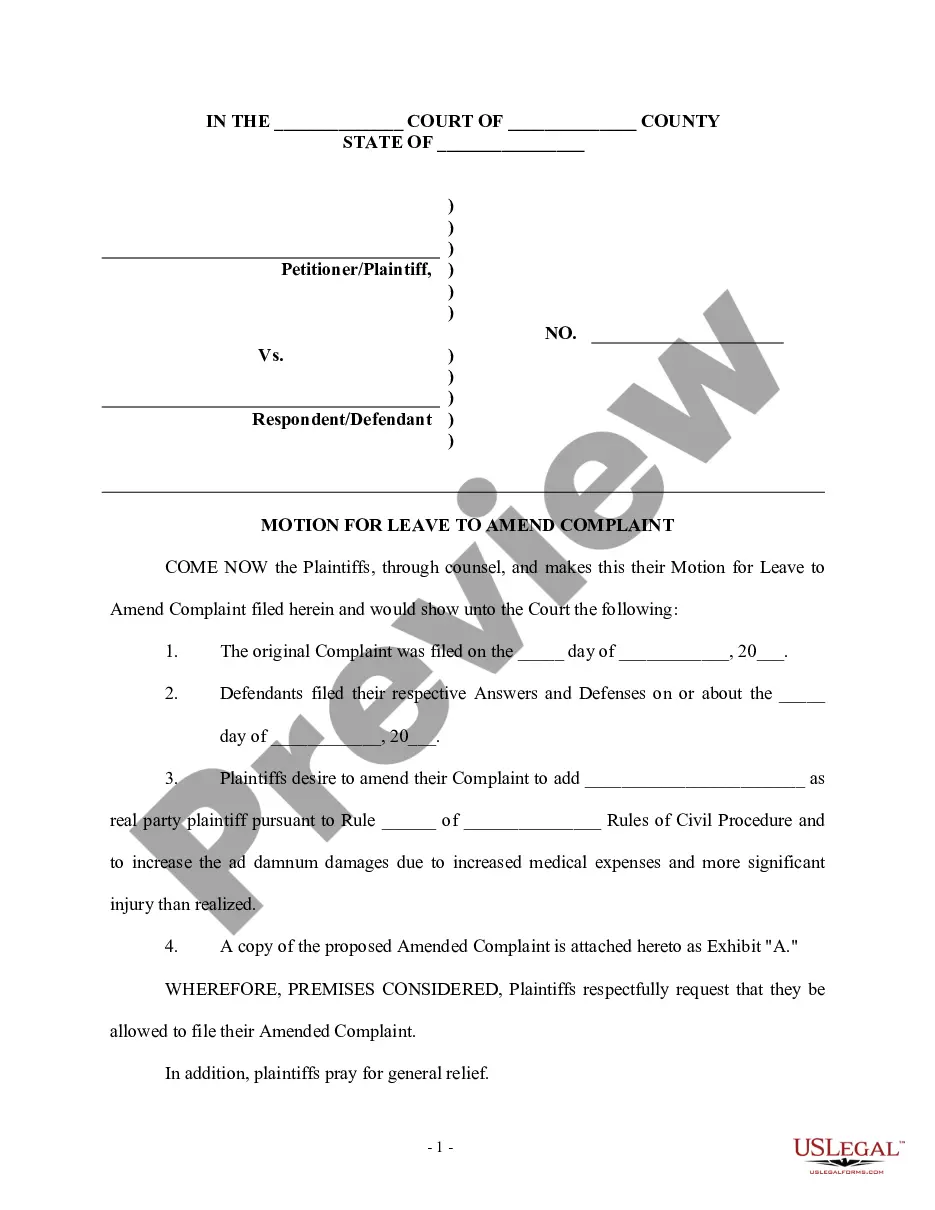
The Motion for Leave to Appear Pro Hac Vice is a legal document that requests court permission for an attorney licensed in one state to represent a client in a different state for a specific case. This form ensures that out-of-state attorneys can provide legal representation while adhering to jurisdictional requirements, distinguishing it from general admission forms which involve broader licensing and credential assessments.
Main sections of this form
- Name of the attorney applying for pro hac vice admission.
- State where the attorney is licensed to practice.
- Moral character and qualifications declaration.
- Affidavit attached as Exhibit A detailing the attorney's qualifications.
- Name and firm of local counsel supporting the motion.
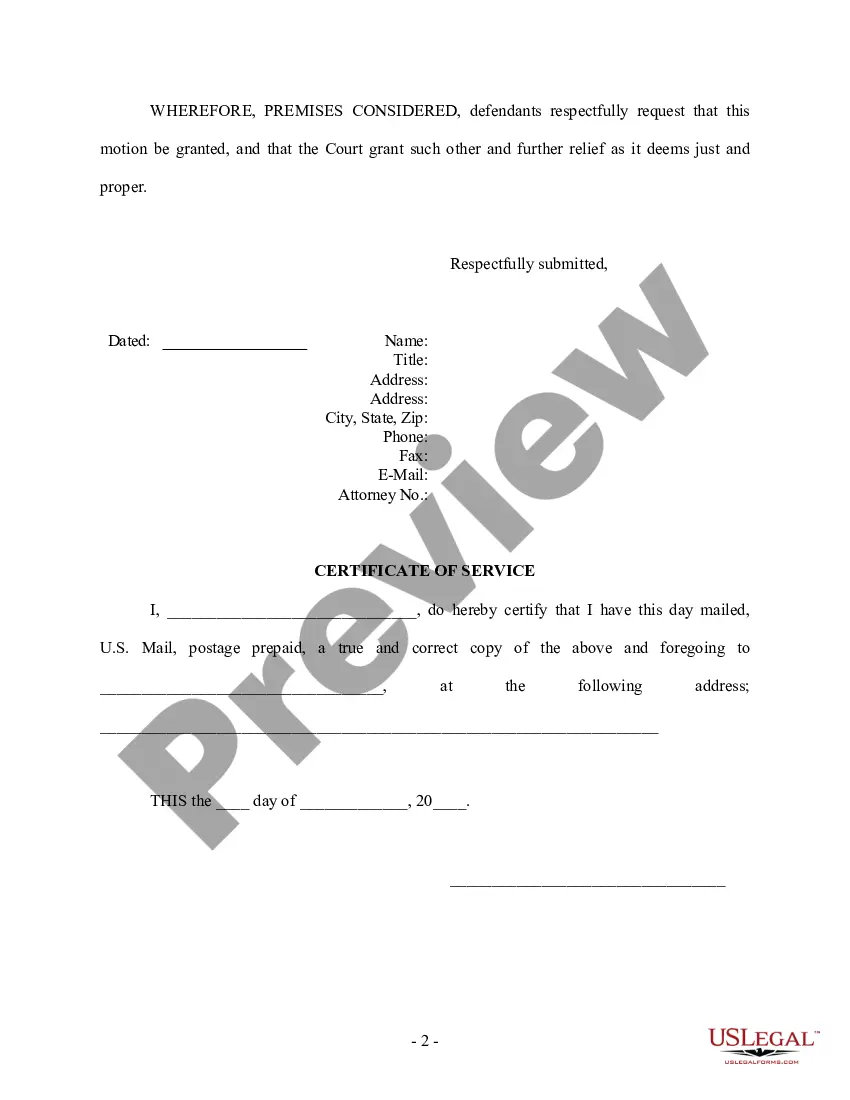
- Request for the court to grant permission to represent the client.

Situations where this form applies
This form is typically used when an out-of-state attorney wants to represent a client in a case outside their home jurisdiction. Situations may include large-scale litigation, specific legal specialties, or instances where local counsel cannot adequately serve the client's needs. It is essential for ensuring that clients are represented by qualified attorneys while adhering to state regulations.
Who can use this document
- Out-of-state attorneys wishing to represent a client in a different jurisdiction.
- Clients who require specialized legal representation not available locally.
- Legal firms representing clients in multi-state matters.
- Local attorneys acting as sponsors for out-of-state colleagues.
How to complete this form
- State the name of the attorney applying for admission.
- Provide the state where the attorney is licensed.
- Attach an affidavit detailing the attorneyâs qualifications and good moral character as Exhibit A.
- Name the local counsel who will be associated with the case.
- Clearly state the request for the court to grant leave for the out-of-state attorney to appear.
Does this document require notarization?
This form does not typically require notarization unless specified by local law. It is advisable to consult your stateâs regulations to verify notarization requirements for the Motion for Leave to Appear Pro Hac Vice.
Get your form ready online
Our built-in tools help you complete, sign, share, and store your documents in one place.
Make edits, fill in missing information, and update formatting in US Legal Forms—just like you would in MS Word.
Download a copy, print it, send it by email, or mail it via USPS—whatever works best for your next step.
Sign and collect signatures with our SignNow integration. Send to multiple recipients, set reminders, and more. Go Premium to unlock E-Sign.
If this form requires notarization, complete it online through a secure video call—no need to meet a notary in person or wait for an appointment.
We protect your documents and personal data by following strict security and privacy standards.

Make edits, fill in missing information, and update formatting in US Legal Forms—just like you would in MS Word.

Download a copy, print it, send it by email, or mail it via USPS—whatever works best for your next step.

Sign and collect signatures with our SignNow integration. Send to multiple recipients, set reminders, and more. Go Premium to unlock E-Sign.

If this form requires notarization, complete it online through a secure video call—no need to meet a notary in person or wait for an appointment.

We protect your documents and personal data by following strict security and privacy standards.
Avoid these common issues
- Failing to attach the required affidavit as Exhibit A.
- Not providing complete information about local counsel.
- Omitting signatures where required.
- Not reviewing state-specific requirements before submission.
Advantages of online completion
- Convenient access to legally sound templates drafted by licensed attorneys.
- Editable forms allow customization for specific cases and jurisdictions.
- Quick downloads enable immediate use in critical situations.
Legal use & context
- This form is essential for maintaining the integrity of legal representation across state lines.
- It helps ensure that out-of-state attorneys comply with local laws when representing clients.
Looking for another form?

Form popularity
FAQ
Active members in good standing of the State Bar of California may apply for admission to the Bar of this Court by completing an Application for Admission to the Bar of the Central District of California (Form G-60), submitting it online, and paying the required fee by credit or debit card at the time of submission.
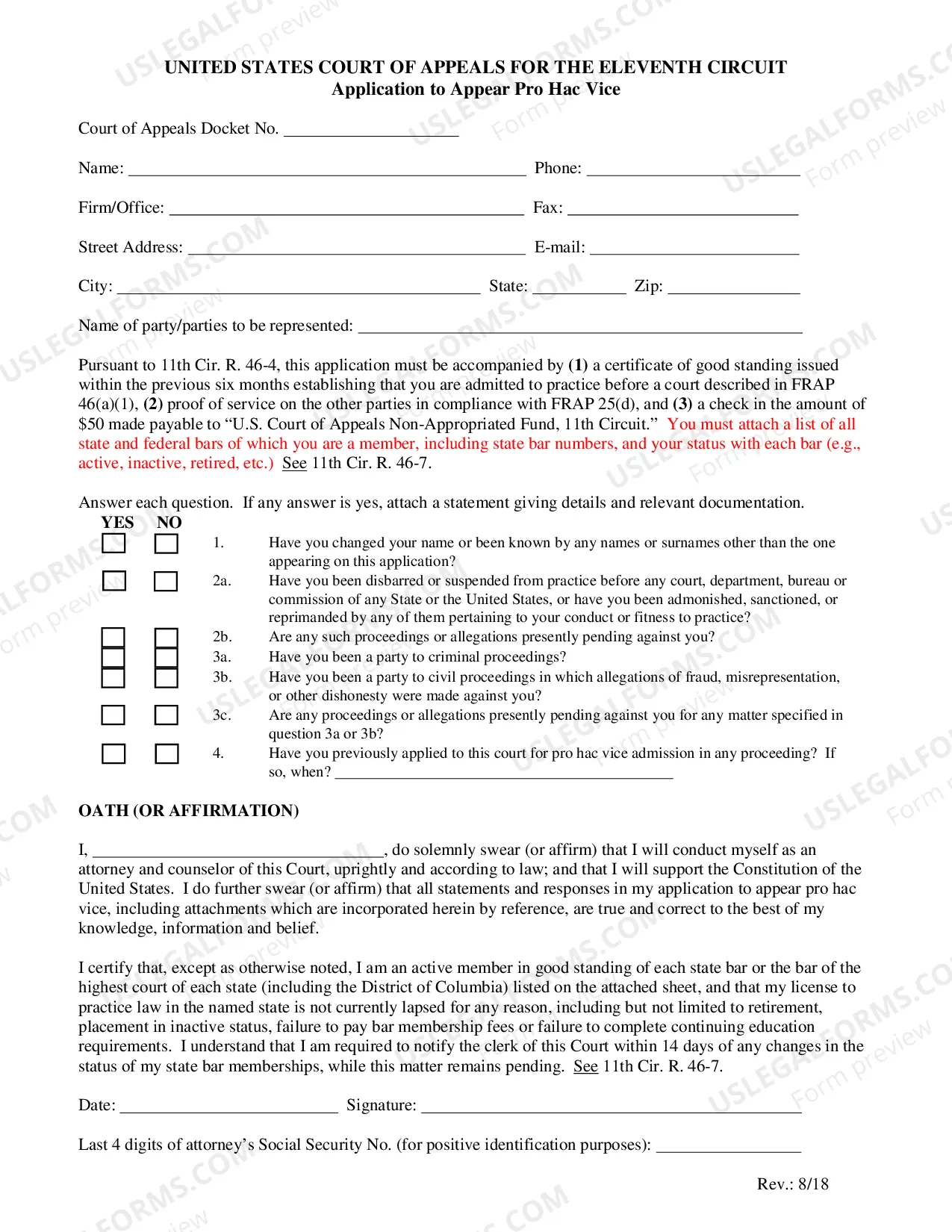
Federal courts. Admission to a state bar does not automatically entitle an individual to practice in federal courts, such as the United States district courts or United States court of appeals. In general, an attorney is admitted to the bar of these federal courts upon payment of a fee and taking an oath of admission.
Today, the boundaries of the Northern District of California encompass fifteen counties: Alameda, Contra Costa, Del Norte, Humboldt, Lake, Marin, Mendocino, Monterey, Napa, San Benito, San Francisco, San Mateo, Santa Clara, Santa Cruz, and Sonoma.
Register as an ECF user. Fill out a Petition for Bar Membership. E-file the petition in CM/ECF (using the Petition for Bar Membership event under Civil and Attorney Admissions) and, when prompted, pay via Pay.gov.
A person desiring to appear as counsel pro hac vice in a superior court must file with the court a verified application together with proof of service by mail in accordance with Code of Civil Procedure section 1013a of a copy of the application and of the notice of hearing of the application on all parties who have
The United States District Court for the Northern District of California is one of 94 United States district courts. It is headquartered in San Francisco, with courthouses in Oakland, San Jose, and Eureka.
Pro hac vice is a legal term for adding an attorney to a case in a jurisdiction in which he or she is not licensed to practice in such a way that the attorney does not commit unauthorized practice of law.
A person desiring to appear as counsel pro hac vice in a superior court must file with the court a verified application together with proof of service by mail in accordance with Code of Civil Procedure section 1013a of a copy of the application and of the notice of hearing of the application on all parties who have