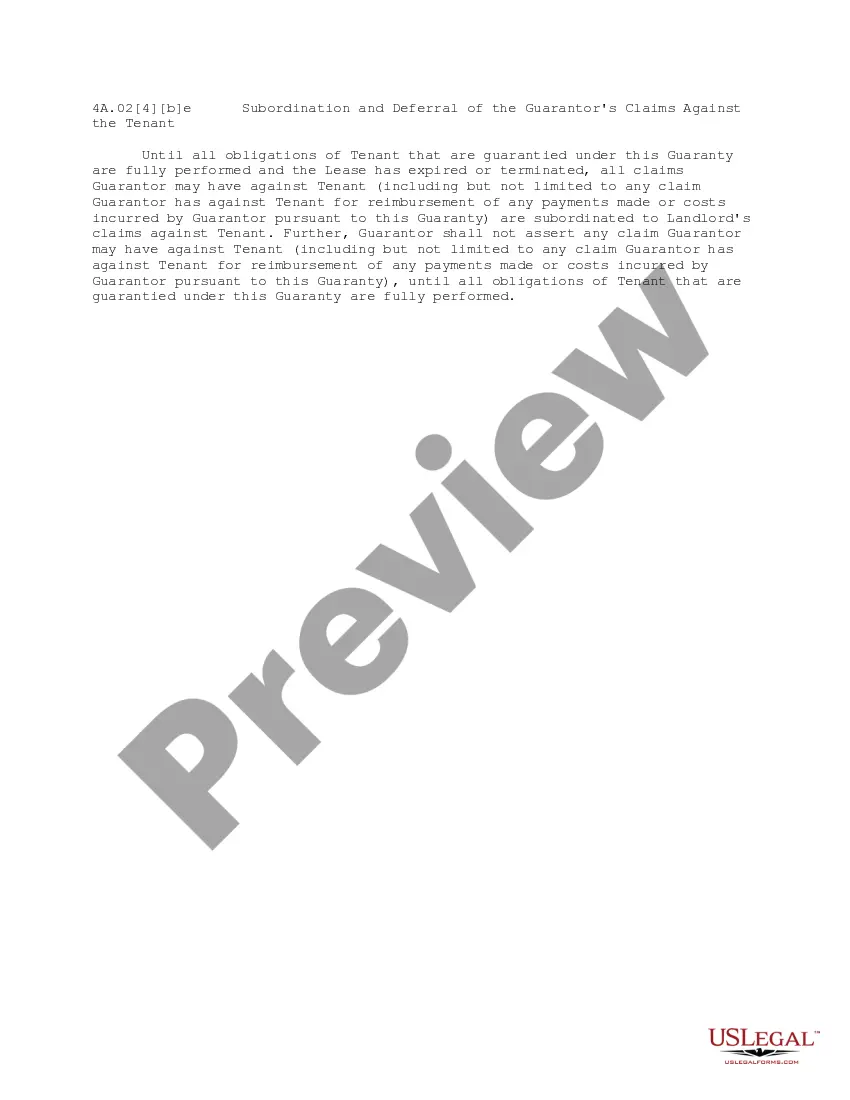
Subordination and Deferral of the Guarantors Claims Against the Tenant
Understanding this form
The Subordination and Deferral of the Guarantors Claims Against the Tenant is a legal document used in commercial leases. This form clarifies that any claims that a guarantor has against a tenant are subordinate to the claims of the landlord until all of the tenant's obligations under the lease are fulfilled. This means that the landlord's interests take precedence, which can provide security for landlords and clarify responsibilities for all parties involved.
Key components of this form
- Statement of subordination of the guarantor's claims to the landlord's claims.
- Conditions under which the guarantor must defer claims against the tenant.
- Clarification of the obligations guaranteed under the lease.
- Provisions regarding the timing of claims by the guarantor.

When to use this document
This form is needed when a landlord requires a guarantor to ensure the tenant complies with the lease terms. It is typically used in commercial leasing situations where the landlord wants to prioritize their claims should any disputes arise, especially concerning unpaid rent or damages. This form can be beneficial in situations where the tenantâs financial stability is uncertain.
Who can use this document
- Landlords who wish to secure their interests in a lease agreement.
- Guarantors who need to understand their rights and obligations in relation to a tenant.
- Tenants and their legal representatives who are negotiating lease terms.
How to prepare this document
- Identify the parties involved: Clearly name the landlord, tenant, and guarantor.
- Specify the lease details: Include the lease terms and obligations of the tenant.
- State the subordination terms: Outline how the guarantorâs claims are subordinated to the landlordâs claims.
- Include signatures: Ensure that all parties sign and date the document.
Is notarization required?
This form does not typically require notarization unless specified by local law. Always check local jurisdiction requirements to ensure compliance.
Get your form ready online
Our built-in tools help you complete, sign, share, and store your documents in one place.
Make edits, fill in missing information, and update formatting in US Legal Forms—just like you would in MS Word.
Download a copy, print it, send it by email, or mail it via USPS—whatever works best for your next step.
Sign and collect signatures with our SignNow integration. Send to multiple recipients, set reminders, and more. Go Premium to unlock E-Sign.
If this form requires notarization, complete it online through a secure video call—no need to meet a notary in person or wait for an appointment.
We protect your documents and personal data by following strict security and privacy standards.

Make edits, fill in missing information, and update formatting in US Legal Forms—just like you would in MS Word.

Download a copy, print it, send it by email, or mail it via USPS—whatever works best for your next step.

Sign and collect signatures with our SignNow integration. Send to multiple recipients, set reminders, and more. Go Premium to unlock E-Sign.

If this form requires notarization, complete it online through a secure video call—no need to meet a notary in person or wait for an appointment.

We protect your documents and personal data by following strict security and privacy standards.
Avoid these common issues
- Failing to clearly identify all parties involved in the agreement.
- Not outlining specific obligations of the tenant under the lease.
- Overlooking signature requirements, leading to an unenforceable document.
Why use this form online
- Easy access to a professionally drafted form created by licensed attorneys.
- Editability allows users to customize details specific to their situation.
- Convenient downloading and printing options save time during the leasing process.
Legal use & context
- This form helps clarify the hierarchy of claims during disputes between landlords and tenants.
- Understanding this form can prevent legal issues regarding tenant obligations and guarantor rights.
What to keep in mind
- The form prioritizes the landlordâs claims over those of the guarantor until the tenant's obligations are met.
- It is essential for landlords and guarantors to understand their rights and responsibilities.
- Ensure all parties are accurately identified and that the document is properly signed for legal enforceability.
Looking for another form?
Form popularity
FAQ
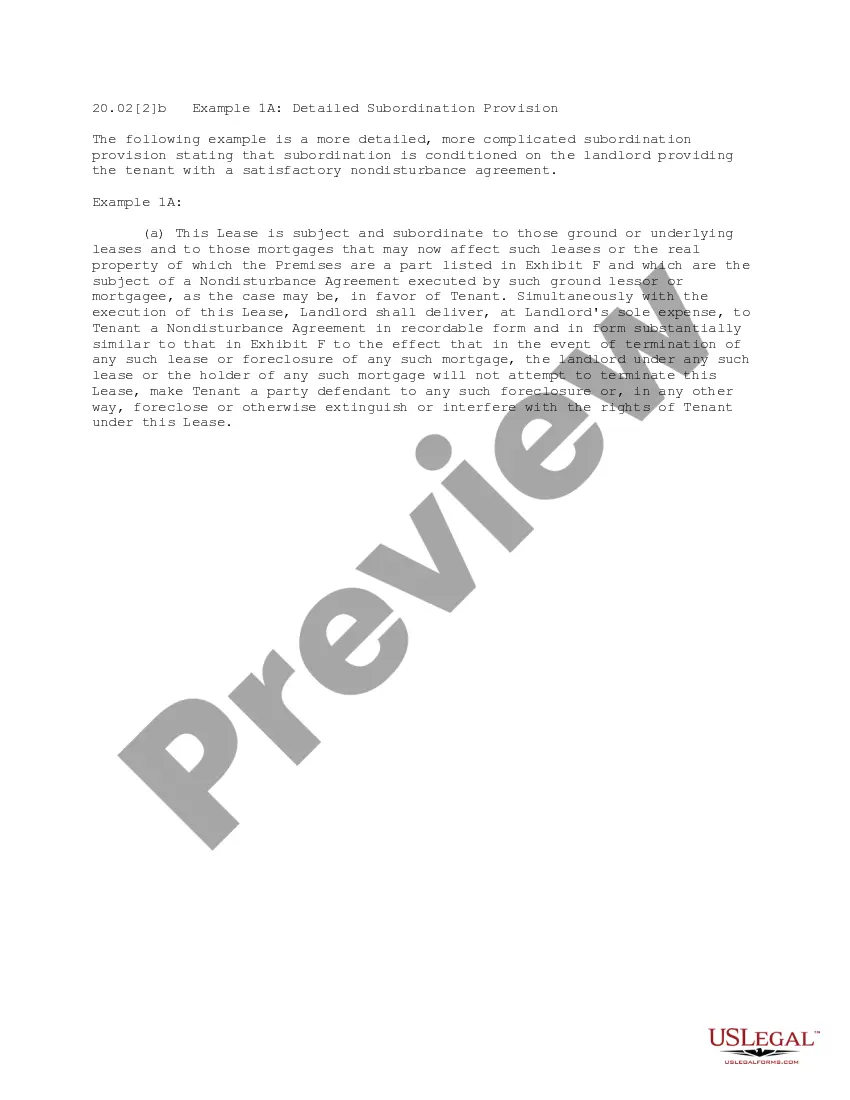
Subordination is the tenant's agreement that its interest under the lease will be subordinate to that of the lender. Of course, in many situations, the mortgage will already be superior, depending on when the mortgage was recorded and when the lease was recorded or the tenant took possession of the property.
A Subordination and Non-Disturbance Agreement (SNDA) commonly called a non-disturb is an agreement that your landlord asks its lender to provide. The agreement basically says that if the building goes bankrupt and the lender takes control of the building from the landlord, the lender will honor your lease.
: placement in a lower class, rank, or position : the act or process of subordinating someone or something or the state of being subordinated As a prescriptive text, moreover, the Bible has been interpreted as justifying the subordination of women to men.
Despite its technical-sounding name, the subordination agreement has one simple purpose. It assigns your new mortgage to first lien position, making it possible to refinance with a home equity loan or line of credit.
Subordination clauses in mortgages refer to the portion of your agreement with the mortgage company that says their lien takes precedence over any other liens you may have on your property.However, it's also possible to have other liens. You might have some placed by contractors until work is paid off.
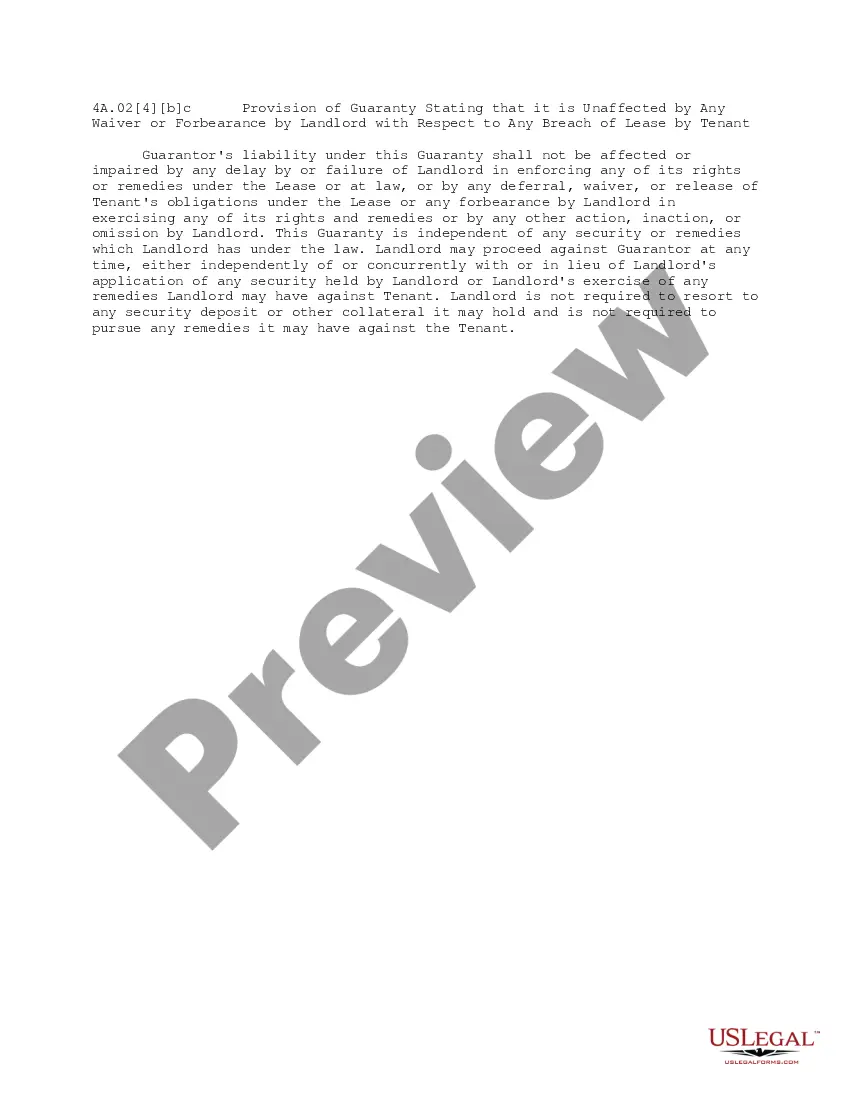
In rental property, the guarantors are also liable for any damage, cleaning costs, outstanding bills or any other tenancy related obligation - in effect they are agreeing to the obligations outlined in the tenancy agreement.
Close the loan/pay off the loan early. Get the borrower/guarantor to pay off the loan early. The lender goes out of business.
If there is more than one tenant in the property, the guarantor could be legally responsible for rent arrears and damages owed by the other tenants as well.If you end up having to pay the debts of someone because you acted as a guarantor, you can try to reclaim your money from this person by taking them to court.
Essentially, in the event of a tenant being unable to meet their obligations under the Tenancy Agreement contract, whether it is for overdue rent, damage to the property or whatever, the Guarantor is legally bound to accept the liabilities on behalf of the tenant.