Oregon Last Will and Testament for Domestic Partner with Minor Children
About this form
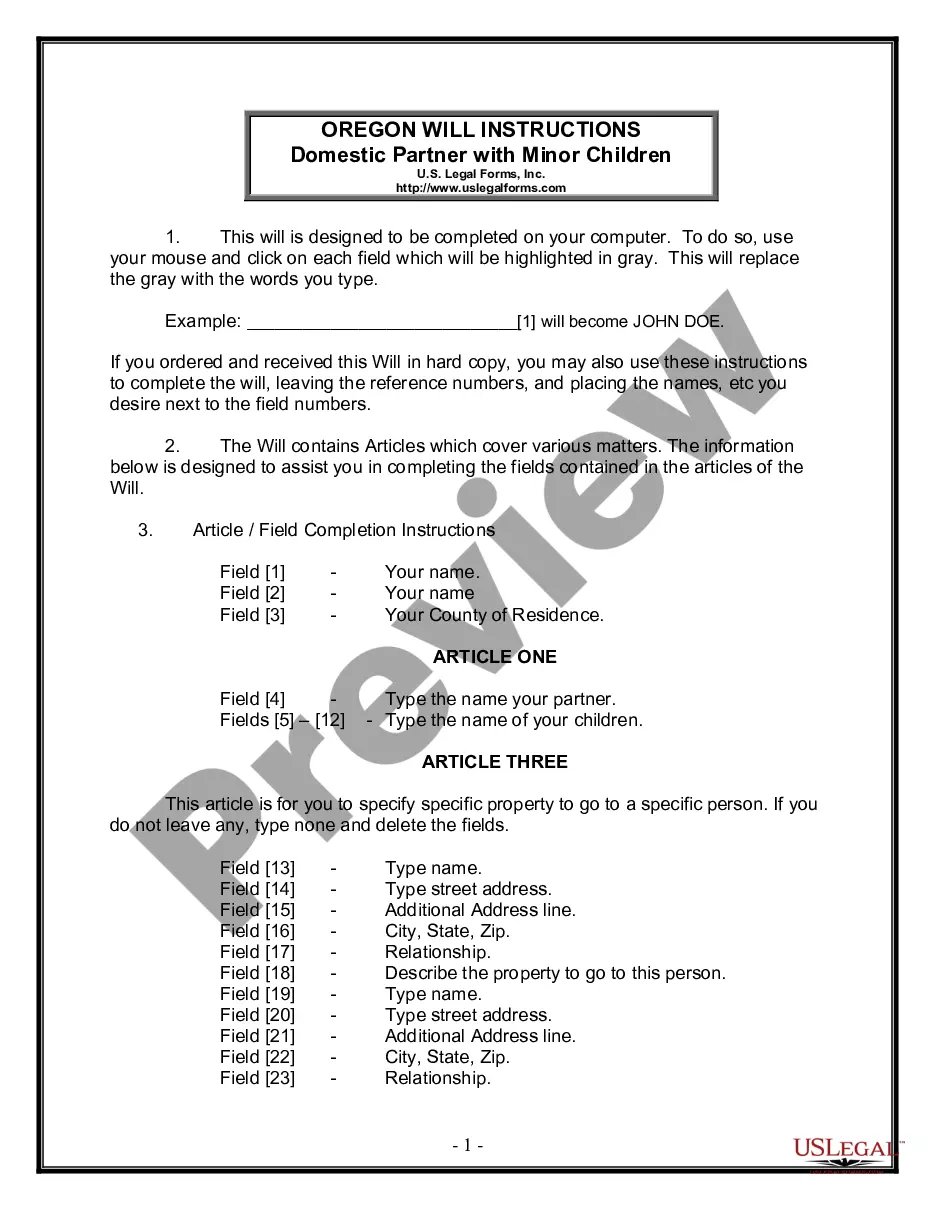
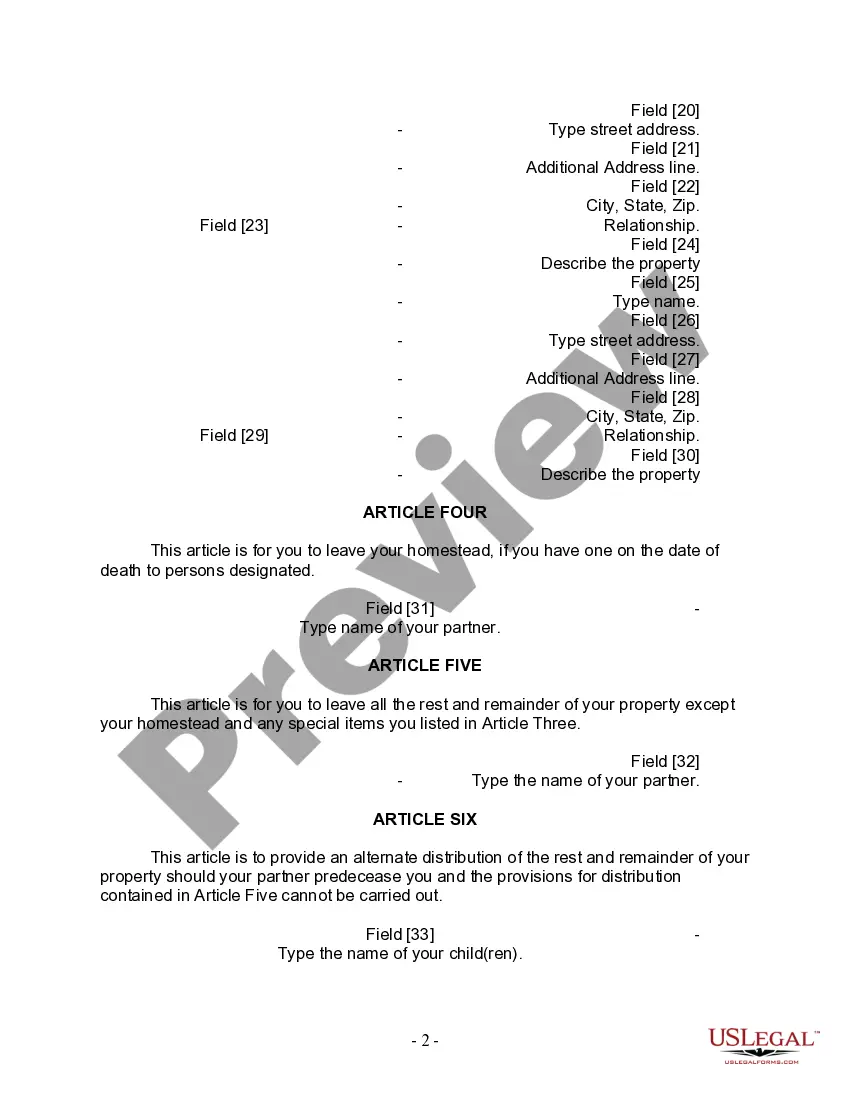
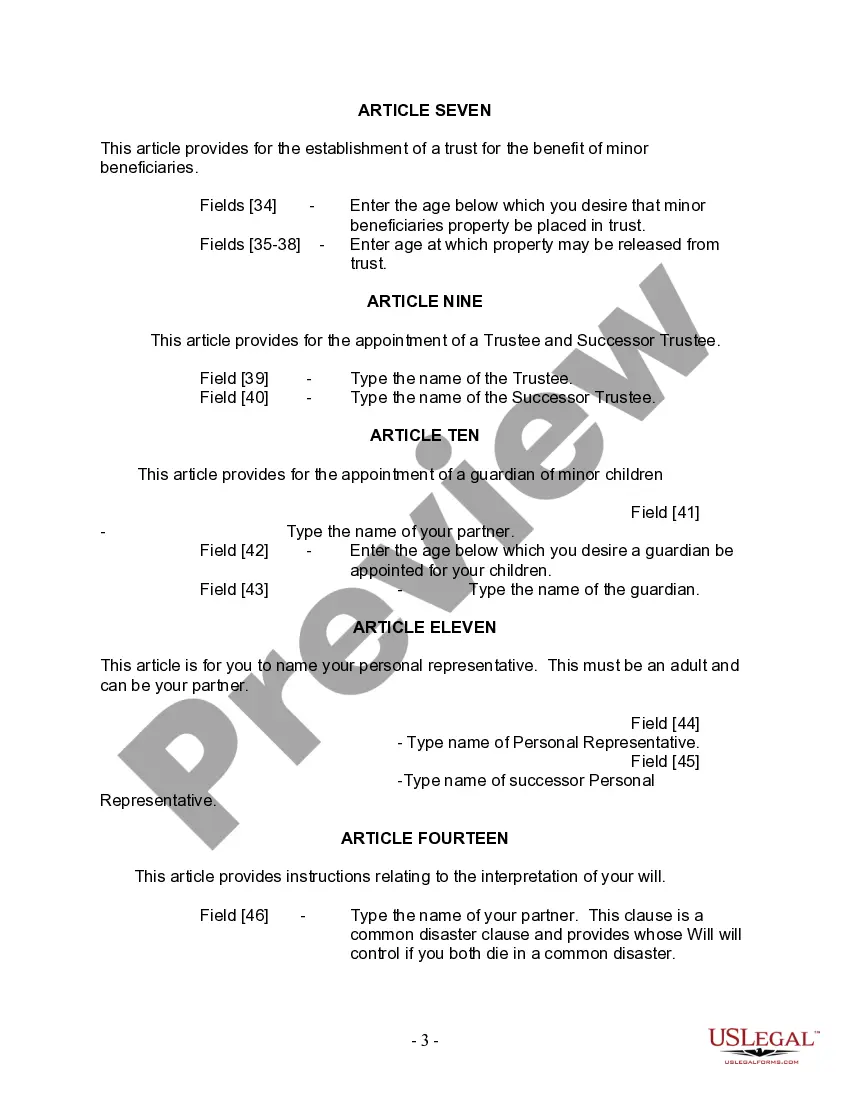
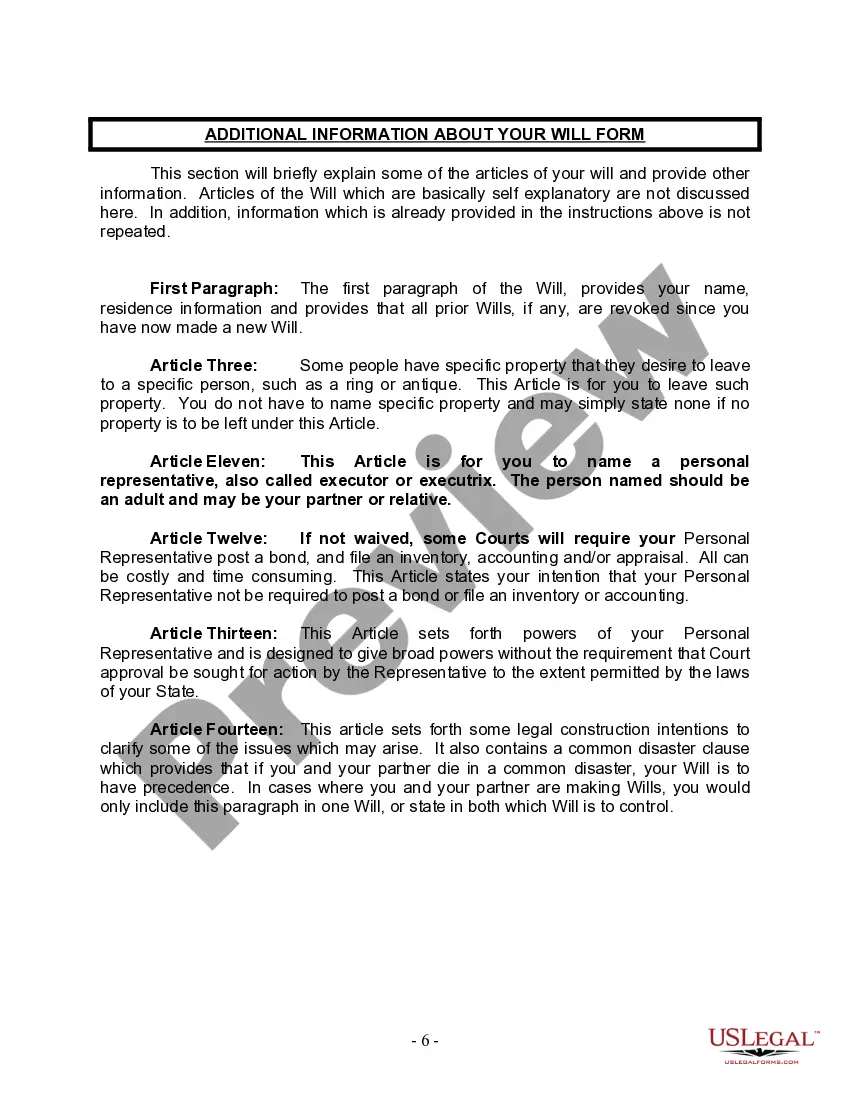
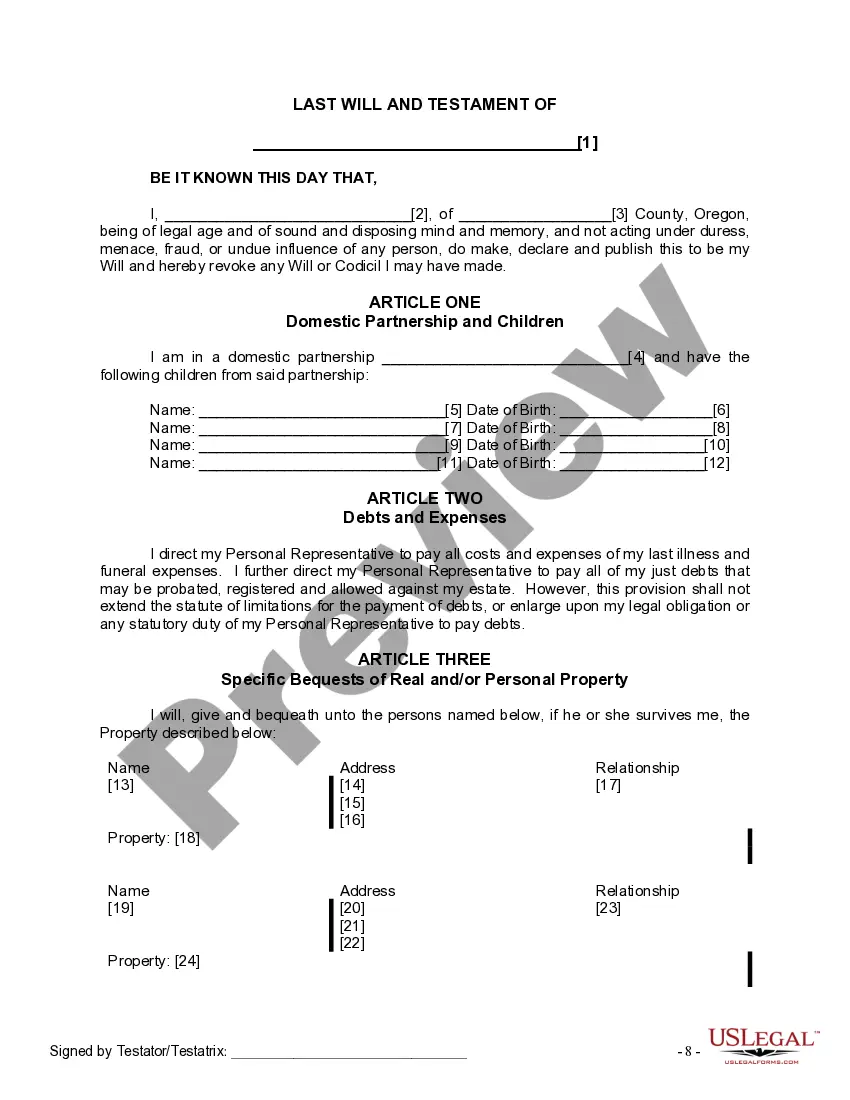
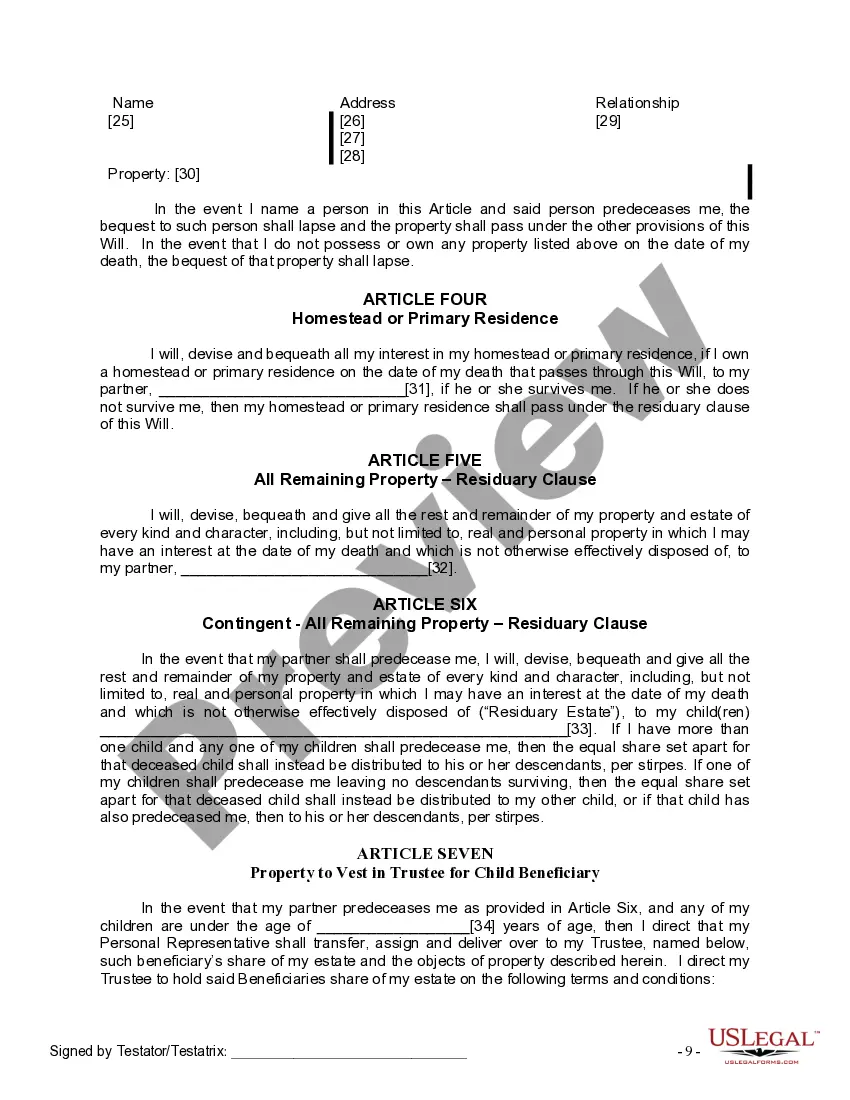
This Last Will and Testament for Domestic Partner with Minor Children is a legal document designed for individuals in a domestic partnership who have minor children. It outlines the distribution of assets upon death, appoints guardians for the children, and establishes trusts to manage the children's inheritance. This form is specifically tailored to address the needs of partners and children, differentiating it from other wills that may not cater to domestic partners or minor dependents.
Key components of this form
- Appointment of a personal representative or executor to manage the estate.
- Designations for who will inherit specific properties and assets.
- Establishment of trusts for minor children to ensure proper management of their inheritance.
- Provisions for guardianship in case both partners pass away.
- Instructions for executing the will, including witness requirements.





Situations where this form applies
This form should be used when a person in a domestic partnership wishes to plan for the distribution of their assets and care for their minor children after their passing. It is essential when partners want to ensure their partner and children are financially secure and properly cared for in the event of a tragedy.
Who needs this form
- Individuals in a domestic partnership with minor children.
- Partners who want to specify inheritance and guardianship arrangements.
- Those looking for a legally effective way to manage their estate planning needs.
- Anyone wanting their will to reflect their unique family situation.
Instructions for completing this form
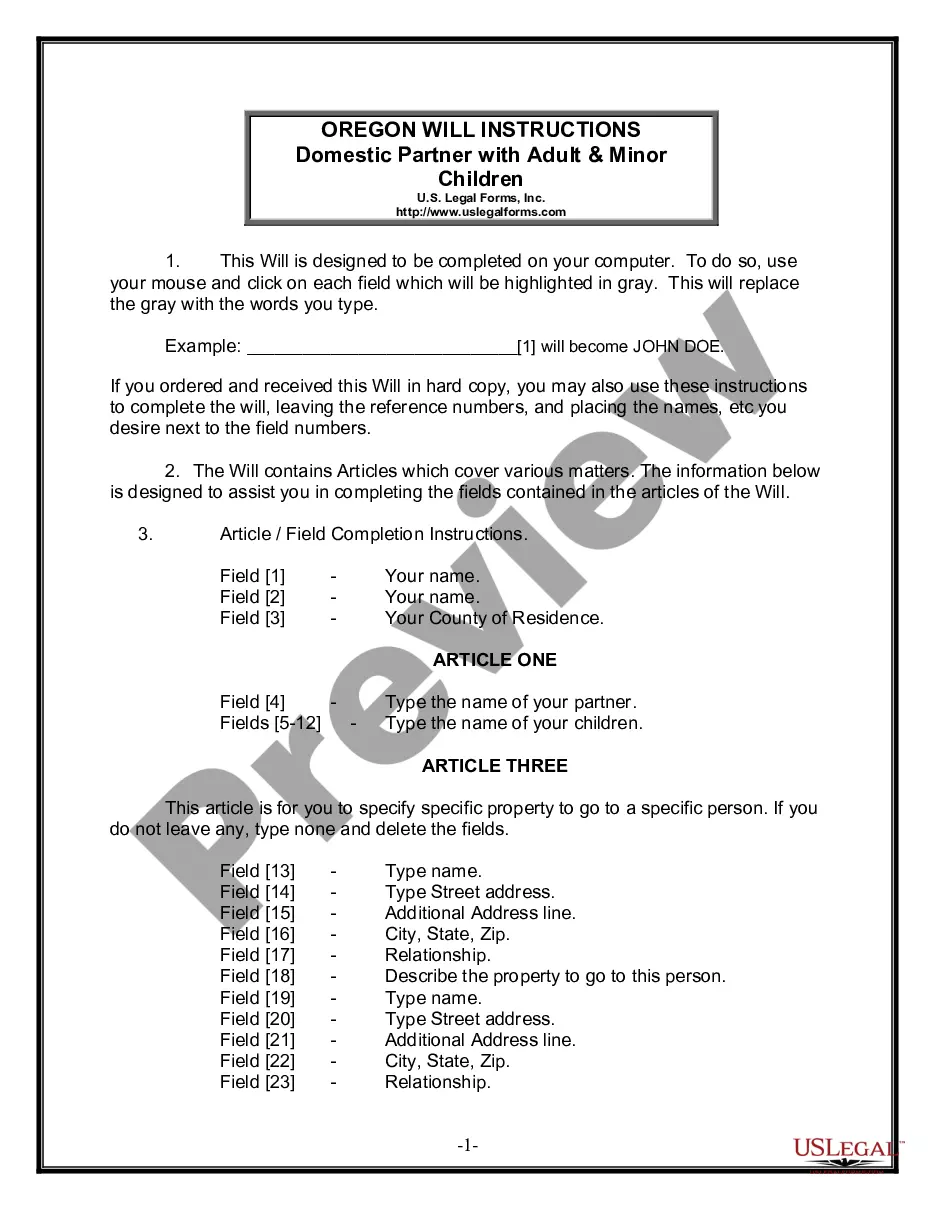
- Enter your name and the names of your domestic partner and children in the designated fields.
- Specify the beneficiaries of specific assets and describe the properties you wish to bequeath.
- Appoint a guardian for your children and a trustee for any trusts established.
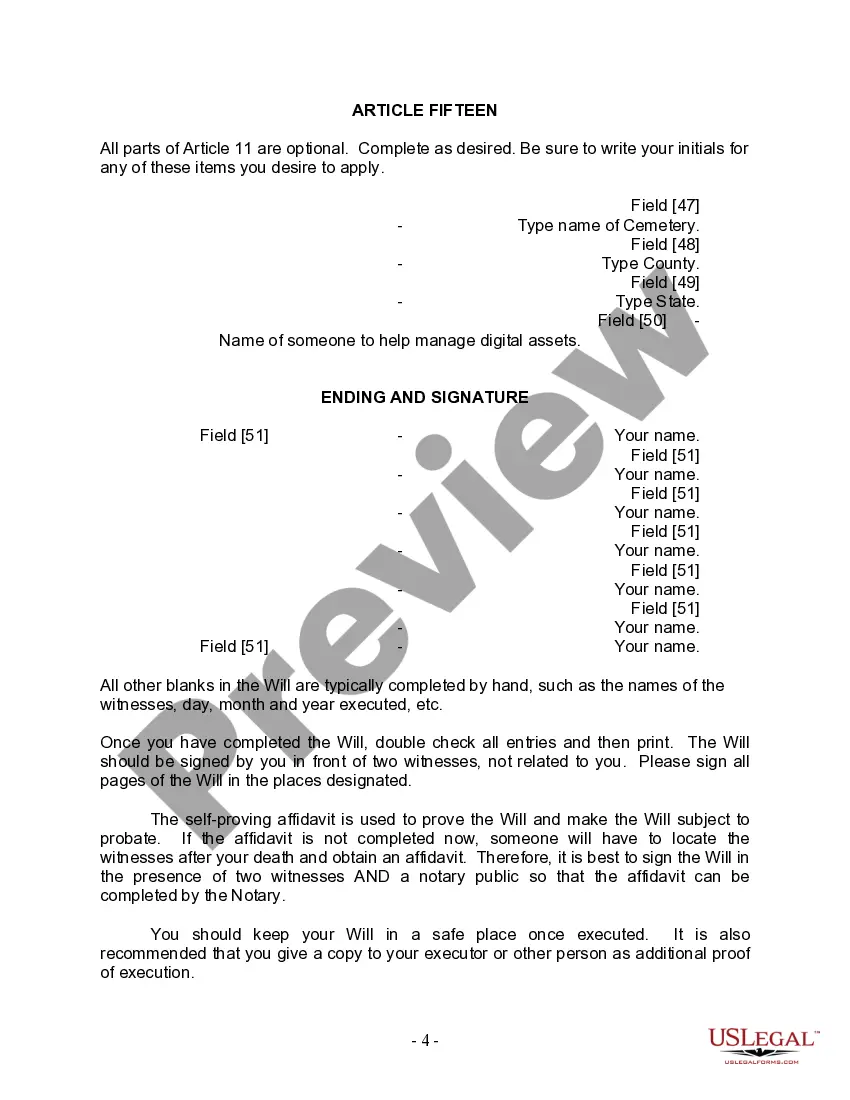
- Ensure two unbiased witnesses sign the document in your presence, if required by your state.
- Consider seeking the assistance of a notary to complete the self-proving affidavit for probate purposes.
Notarization requirements for this form
This document requires notarization to meet legal standards. US Legal Forms provides secure online notarization powered by Notarize, allowing you to complete the process through a verified video call, available 24/7.
Get your form ready online
Our built-in tools help you complete, sign, share, and store your documents in one place.
Make edits, fill in missing information, and update formatting in US Legal Forms—just like you would in MS Word.
Download a copy, print it, send it by email, or mail it via USPS—whatever works best for your next step.
Sign and collect signatures with our SignNow integration. Send to multiple recipients, set reminders, and more. Go Premium to unlock E-Sign.
If this form requires notarization, complete it online through a secure video call—no need to meet a notary in person or wait for an appointment.
We protect your documents and personal data by following strict security and privacy standards.

Make edits, fill in missing information, and update formatting in US Legal Forms—just like you would in MS Word.

Download a copy, print it, send it by email, or mail it via USPS—whatever works best for your next step.

Sign and collect signatures with our SignNow integration. Send to multiple recipients, set reminders, and more. Go Premium to unlock E-Sign.

If this form requires notarization, complete it online through a secure video call—no need to meet a notary in person or wait for an appointment.

We protect your documents and personal data by following strict security and privacy standards.
Common mistakes
- Not signing the will in the presence of the required number of witnesses.
- Failing to indicate specific bequests or neglecting to account for all assets owned.
- Overlooking the appointment of a guardian for minor children.
- Not updating the will after significant life events, such as marriage or the birth of additional children.
Benefits of using this form online
- Convenience of completing the form from home at your own pace.
- Easy to edit and update the document as needed.
- Access to attorney-drafted templates ensures legal compliance and reliability.
- Reduced costs compared to hiring an attorney for simple estate planning needs.
Looking for another form?

Form popularity
FAQ
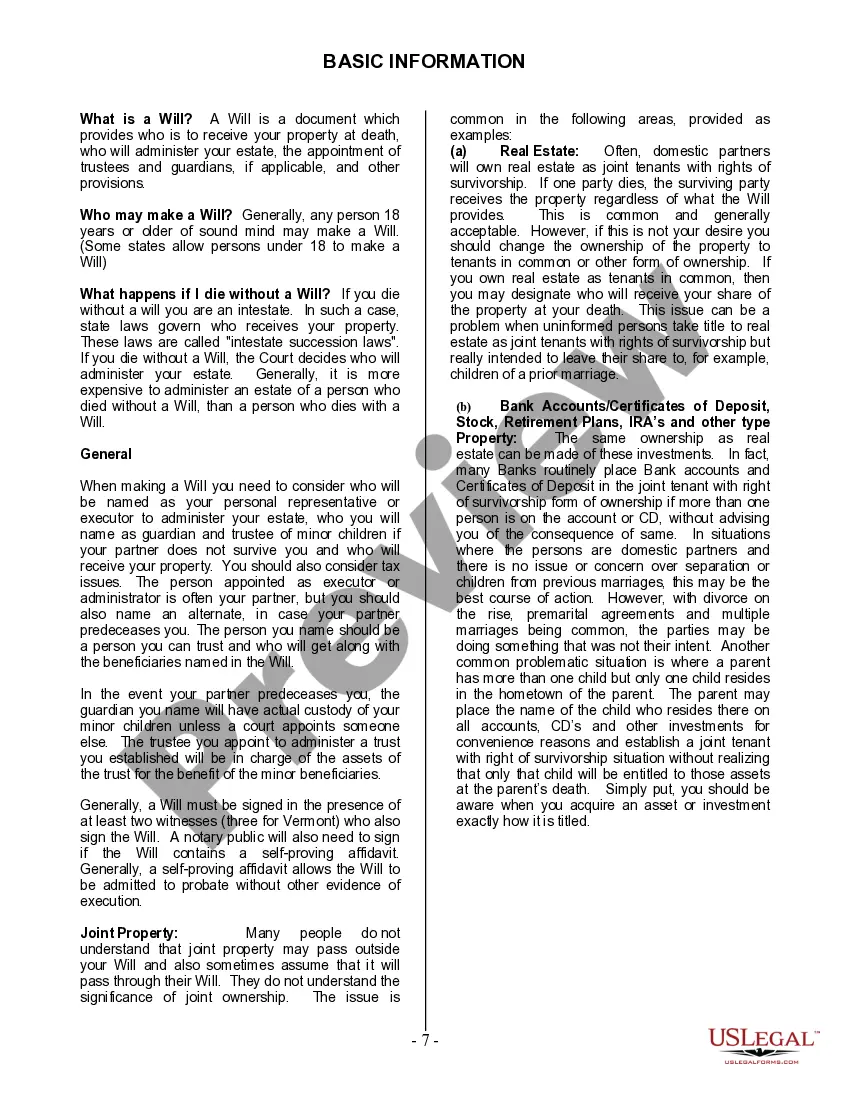
Witnesses: An Oregon will must be signed by at least two individuals who saw the testator sign the will or heard him acknowledge the signature. Writing: An Oregon will must be in writing. Beneficiaries: A testator can leave property to anyone.
A will is a set of instructions that explains how you want your property distributed after your death. In Oregon, you must be at least 18 years old and of sound mind to make a will.Your will must be in writing and must be signed by you and two witnesses. Some people cannot serve as witnesses to your will.
You can either download a template (many are free) and write your Will at your own pace offline using your word processor, or tell us your wishes in our online questionnaire and let us write it for you.
No, in Oregon, you do not need to notarize your will to make it legal. However, Oregon allows you to make your will "self-proving" and you'll need to go to a notary if you want to do that. A self-proving will speeds up probate because the court can accept the will without contacting the witnesses who signed it.
It does not matter whether the will was prepared online or by an attorney, so long as it is valid. In order for a will to be valid, it must meet the requirements of the state where the testator lives.
In most situations, a will template is an easy and inexpensive way to make sure your wishes are known and carried out. Most people can get everything they need by using a will template, with little cost or hassle.
The short answer is no. Wills that are handwritten and not witnessed are not recognized as valid in Oregon. A handwritten will that is witnessed by two individuals will be considered valid.
The short answer is no. Wills that are handwritten and not witnessed are not recognized as valid in Oregon. A handwritten will that is witnessed by two individuals will be considered valid.
A notarized will does not need to be probated.When a person dies leaving behind a will that is not notarized, the law requires that its validity be ascertained by a notary or by a court. Similarly, any non-notarized modification made to a will must be probated, whether the will is notarized or not.