Nondisturbance and Attornment Agreement With Landlord
About this form
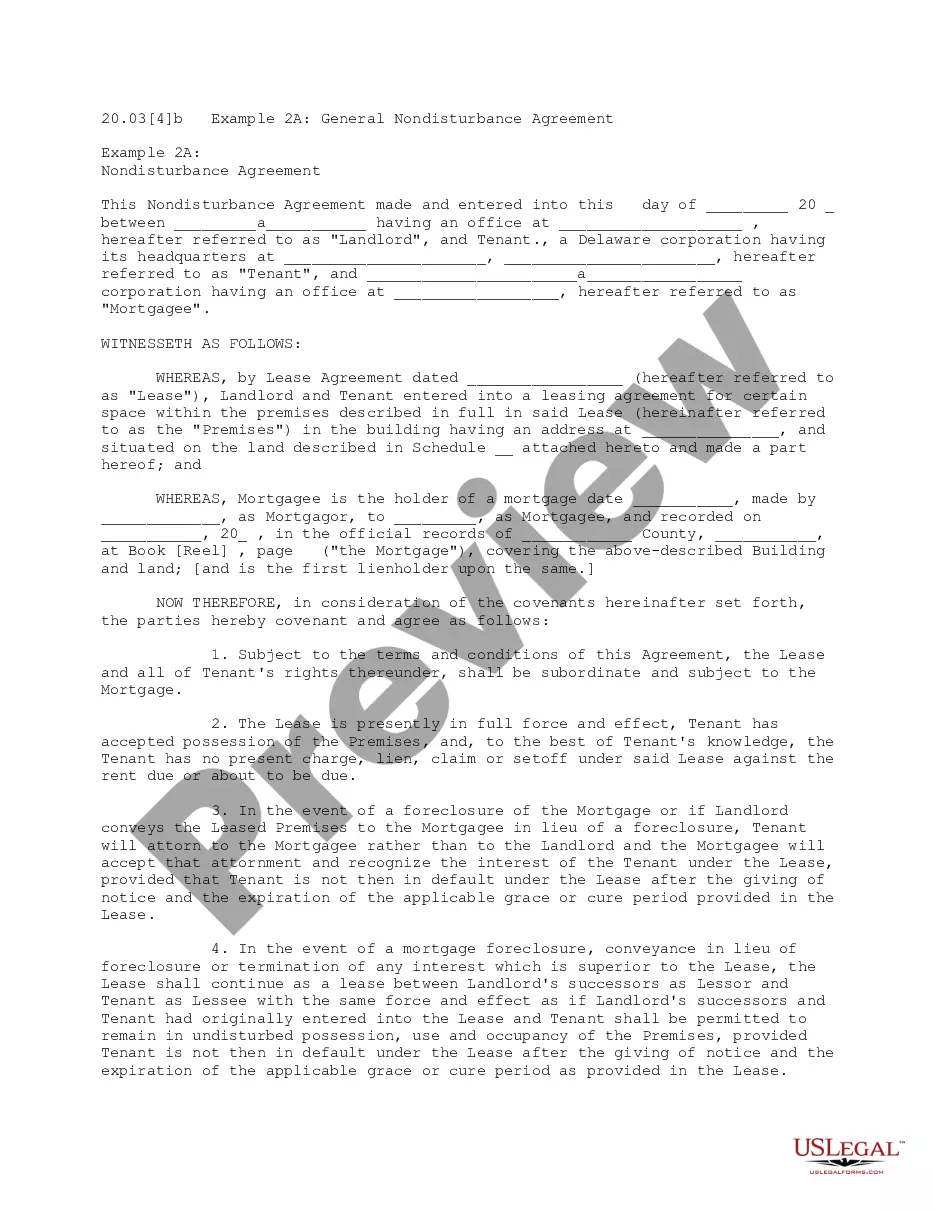
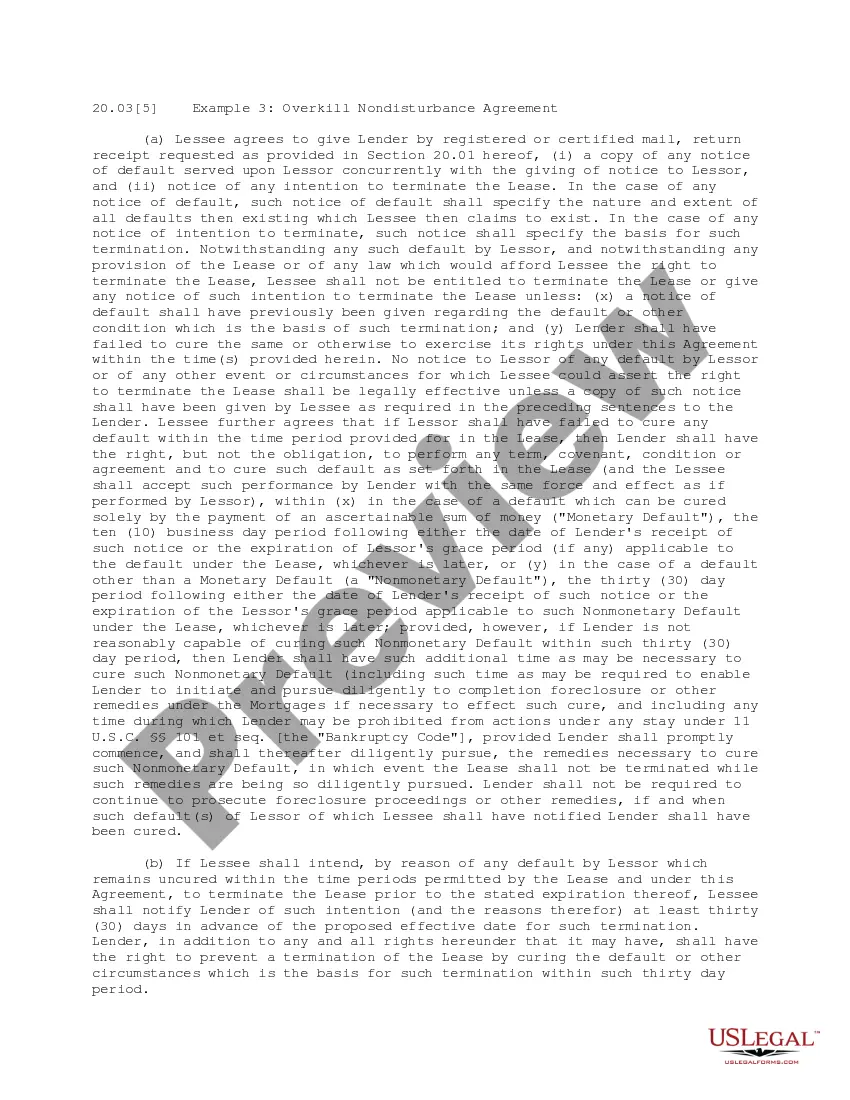
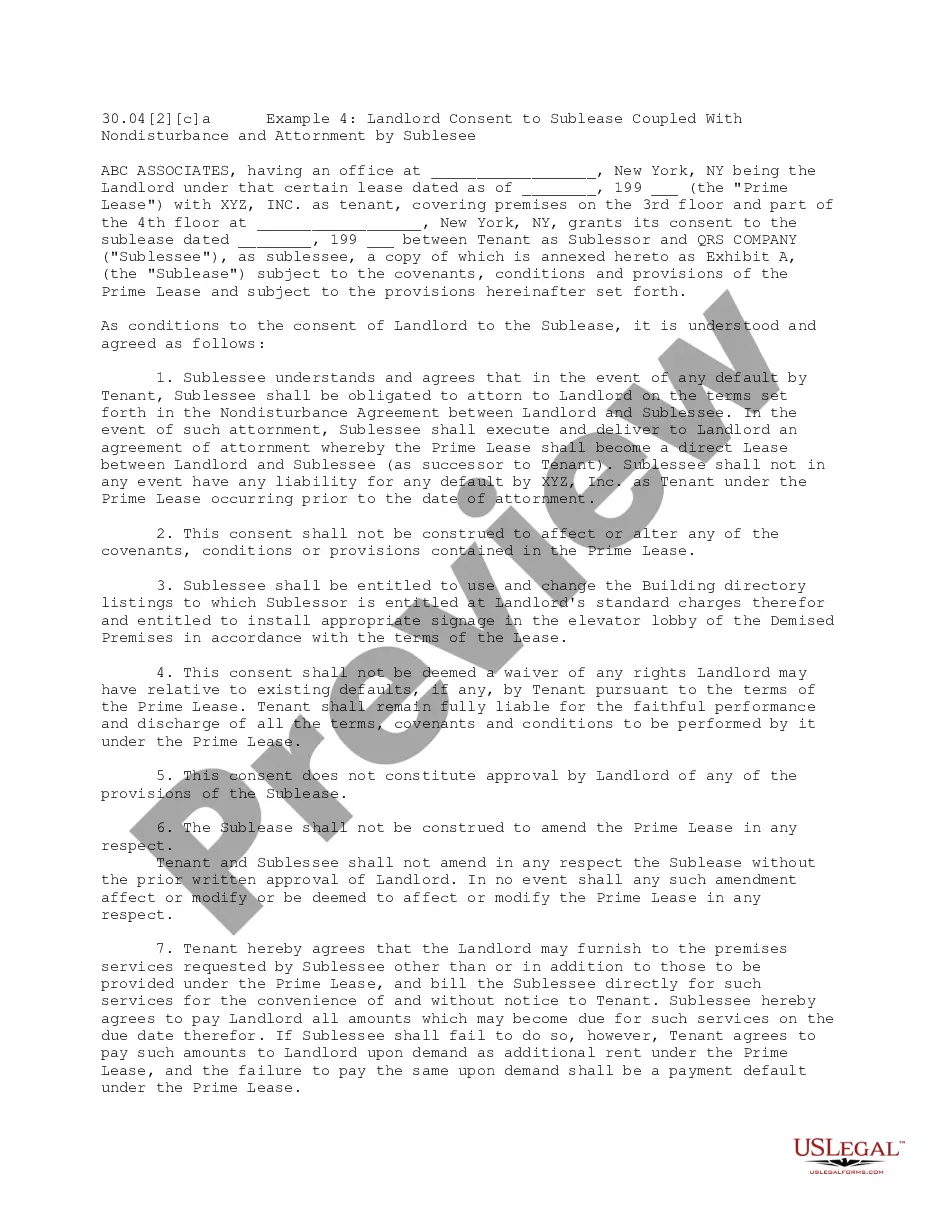
The Nondisturbance and Attornment Agreement With Landlord is a legal document used in office leasing situations. It establishes the relationship between a landlord, a tenant (sublessor), and a sublessee. This form specifically ensures that, in case of lease termination, the sublessee will accept the landlord as their direct landlord and continue under the existing lease terms. It serves to protect the sublessee's rights and provides clarity on obligations and agreements that differ from a typical lease agreement.
Form components explained
- Identification of the parties involved, including the landlord, tenant, and sublessee.
- Agreement of the sublessee to accept the landlord as their direct landlord.
- Conditions under which the sublessee remains liable for the lease obligations.
- Requirements for notifying the landlord of tenant defaults.
- Exemptions for the landlord from tenant-related claims or defenses.
- Successors in interest and their rights related to the agreement.

When this form is needed
This form is typically used when a tenant wishes to sublease part of their rental property to a sublessee. It is particularly necessary when the primary lease may be at risk of termination, ensuring that the sublessee can remain in the premises without disturbance. The Nondisturbance and Attornment Agreement helps clarify the obligations and rights of all involved parties, thus providing legal security in complex leasing arrangements.
Who can use this document
- Landlords who are renting property to tenants that plan to sublease.
- Tenants (sublessors) who want to ensure their sublessee has continued rights in the event of lease termination.
- Sublessees who want to secure their position and rights in the property they are renting.
How to complete this form
- Identify the landlord and sublessee by entering their names and addresses.
- Include relevant dates, such as the date of lease agreement and the dates of the sublease.
- Clearly specify the property being subleased, including any relevant details about the premises.
- Ensure all parties understand the terms of attornment and the obligations linked to the lease.
- Have all parties sign and date the agreement to formalize it.
Is notarization required?
This form usually doesn’t need to be notarized. However, local laws or specific transactions may require it. Our online notarization service, powered by Notarize, lets you complete it remotely through a secure video session, available 24/7.
Get your form ready online
Our built-in tools help you complete, sign, share, and store your documents in one place.
Make edits, fill in missing information, and update formatting in US Legal Forms—just like you would in MS Word.
Download a copy, print it, send it by email, or mail it via USPS—whatever works best for your next step.
Sign and collect signatures with our SignNow integration. Send to multiple recipients, set reminders, and more. Go Premium to unlock E-Sign.
If this form requires notarization, complete it online through a secure video call—no need to meet a notary in person or wait for an appointment.
We protect your documents and personal data by following strict security and privacy standards.

Make edits, fill in missing information, and update formatting in US Legal Forms—just like you would in MS Word.

Download a copy, print it, send it by email, or mail it via USPS—whatever works best for your next step.

Sign and collect signatures with our SignNow integration. Send to multiple recipients, set reminders, and more. Go Premium to unlock E-Sign.

If this form requires notarization, complete it online through a secure video call—no need to meet a notary in person or wait for an appointment.

We protect your documents and personal data by following strict security and privacy standards.
Common mistakes to avoid
- Not including all parties' accurate information.
- Failing to specify the property details properly.
- Omitting to sign or date the document.
- Neglecting to review local laws affecting the agreement.
- Assuming all conditions of the primary lease apply without adaptations.
Why complete this form online
- Easy access to a professionally drafted legal document tailored to your needs.
- Quick download and edit options to suit specific circumstances.
- Provides peace of mind with a reliable legal framework for leasing arrangements.
Looking for another form?
Form popularity
FAQ
Despite its technical-sounding name, the subordination agreement has one simple purpose. It assigns your new mortgage to first lien position, making it possible to refinance with a home equity loan or line of credit.
An SNDA is enforceable between the parties signing it (lender, landlord, and tenant) whether or not it is recorded. However, a recorded SNDA provides greater protection because it puts third-party buyers at a foreclosure sale on notice that the tenant's lease cannot be terminated by means of a foreclosure.
Signing this document means a landlord agrees to give a lender access to the property, and priority to taking collateral in the event of default. This means that if you stop paying your lender, they have the right to collateral in your rented or leased premisesahead of the landlord.
A nondisturbance clause is a provision in a mortgage contract that ensures that a rental agreement between the tenant and the landlord will continue under any circumstances. This is done primarily to protect the renter from eviction by the mortgagor if the property is foreclosed upon by the lender.
Unless there is a subordination agreement, it is virtually impossible to refinance your first mortgage. The document agreeing to the subordination must be signed by the lender and the borrower and requires notarization.
THE SBA LOAN MUST BE CURRENT PRIOR TO CONSIDERATION OF ANY ACTION. The Small Business Administration will consider a subordination action for the refinance of any liens it is subordinate to for reduction of interest rate with NORMAL CLOSING COSTS. SBA will NOT move downward in lien position.
Further, the SNDA is a document that typically states that the lease will be subordinate to the mortgage loan and the lender's interest in the property and that the tenant agrees to attorn to, or recognize, the lender or its assignee or transferee, as the new landlord.
Subordination is the tenant's agreement that its interest under the lease will be subordinate to that of the lender. Of course, in many situations, the mortgage will already be superior, depending on when the mortgage was recorded and when the lease was recorded or the tenant took possession of the property.
The attornment clause in an SNDA obligates the tenant to recognize the new owner of the property as its landlord regardless of whether the new owner acquired the property through a normal sale or a foreclosure.The tenant can lease the premises even after the property is sold or foreclosed.