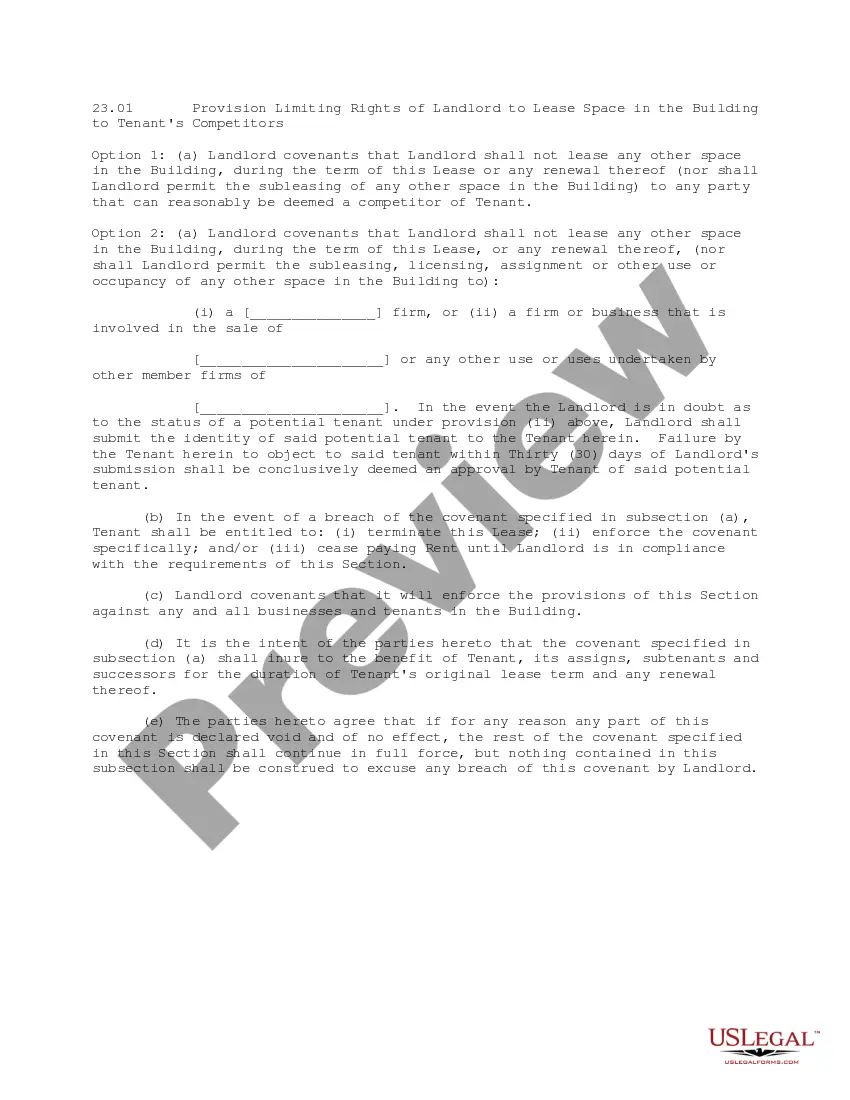
Provision Limiting Rights of Landlord to Lease Space in the Building to Tenant Competitors
What this document covers
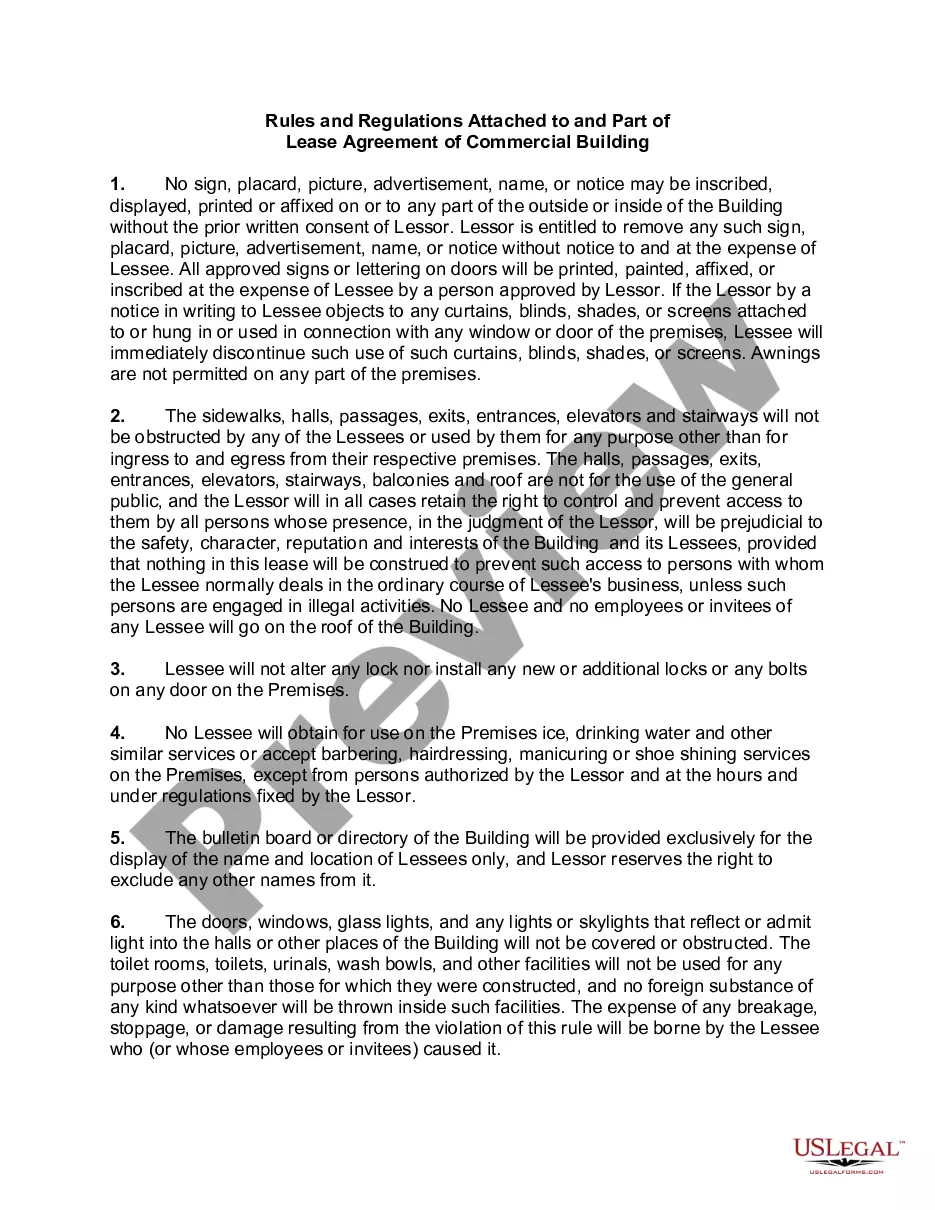
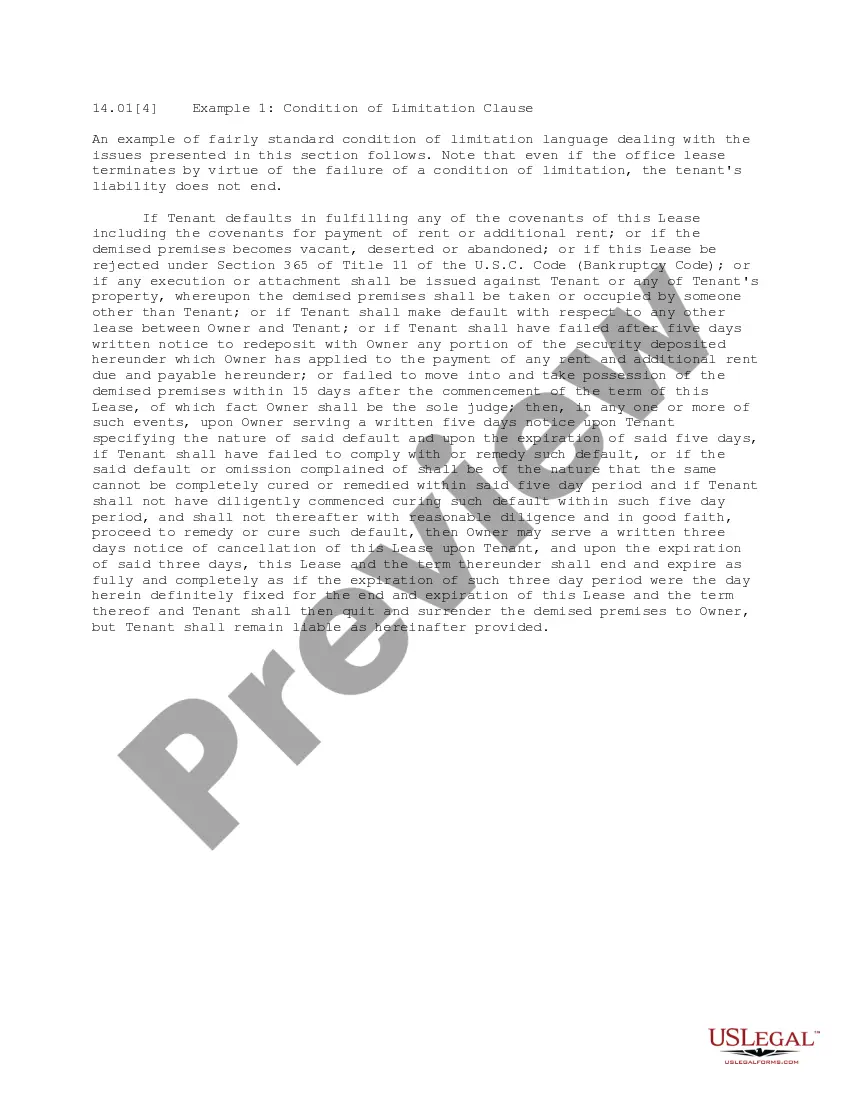
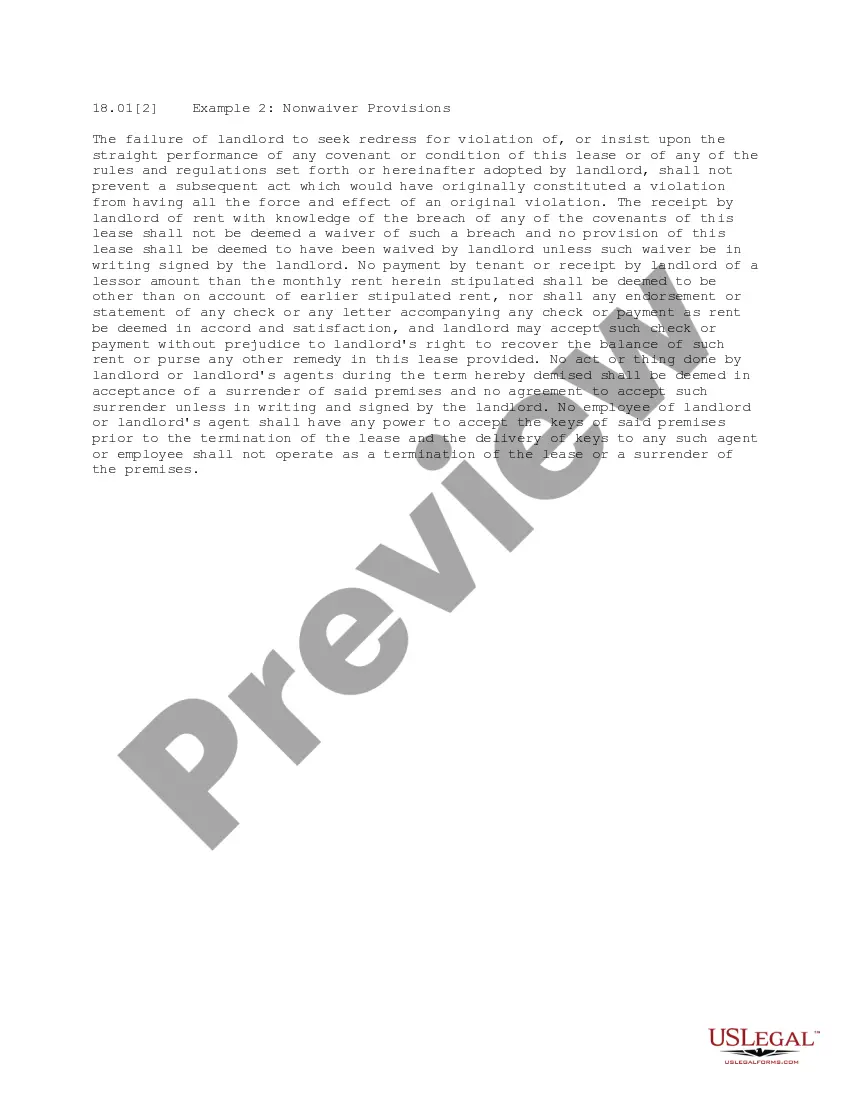
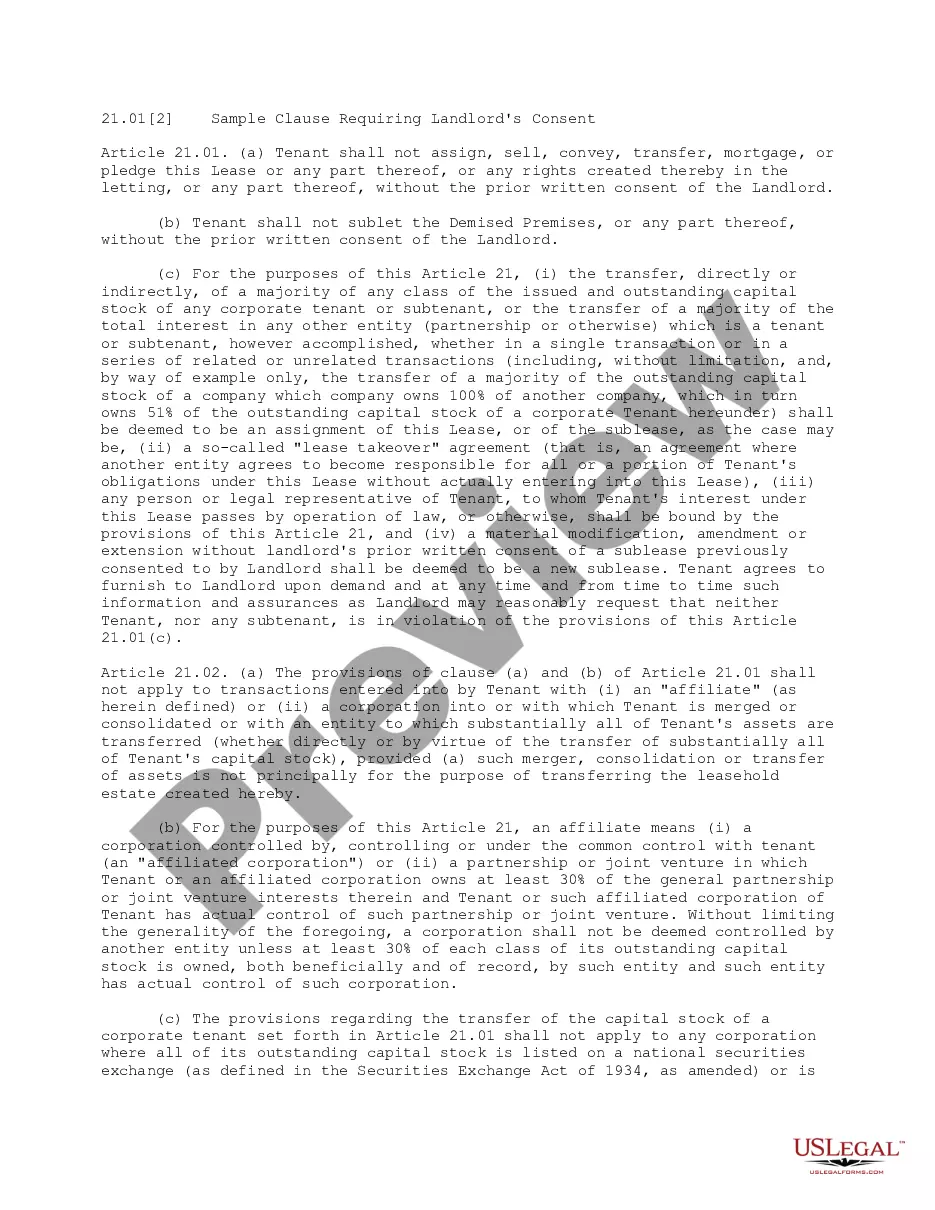
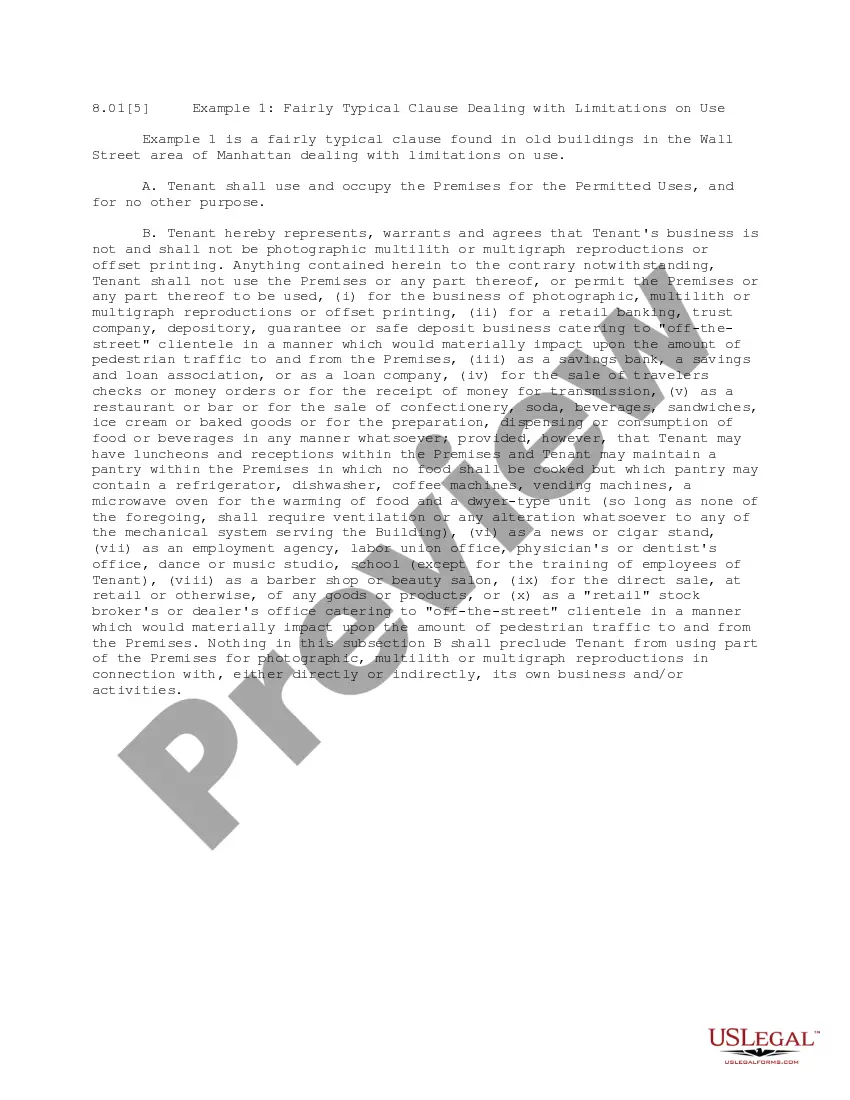
This form is a Provision Limiting Rights of Landlord to Lease Space in the Building to Tenant Competitors, which restricts the landlord from renting or leasing any other space in the building to competitors of the tenant. It ensures that during the lease term and any possible renewals, the tenant can operate without the concern of direct competition in the same building.
Form components explained
- The landlord's covenant not to lease space to competitors during the lease term.
- Procedures for tenant approval of potential competitors.
- Tenant's rights in the event of a breach by the landlord.
- Enforcement provisions of the covenant against other tenants in the building.
- Stipulations regarding the continuation of the covenant if parts are voided.
When to use this form
This form should be used when entering into a lease agreement where the tenant wishes to protect their business interests by ensuring the landlord does not rent to competing businesses within the same building. It is particularly relevant in commercial leasing scenarios where direct competition could impact revenue or brand positioning.
Who can use this document
- Commercial tenants who need protection from competition in multi-tenant buildings.
- Landlords who wish to offer a competitive advantage to their tenants.
- Real estate professionals involved in drafting or negotiating leases.
How to complete this form
- Identify the parties involved: the landlord and tenant.
- Specify the leased space and its intended use.
- List any specific competitor categories that should be restricted.
- Include terms regarding tenant approval of potential tenants.
- Sign and date the form to formalize the agreement.
Does this form need to be notarized?
Notarization is generally not required for this form. However, certain states or situations might demand it. You can complete notarization online through US Legal Forms, powered by Notarize, using a verified video call available anytime.
Get your form ready online
Our built-in tools help you complete, sign, share, and store your documents in one place.
Make edits, fill in missing information, and update formatting in US Legal Forms—just like you would in MS Word.
Download a copy, print it, send it by email, or mail it via USPS—whatever works best for your next step.
Sign and collect signatures with our SignNow integration. Send to multiple recipients, set reminders, and more. Go Premium to unlock E-Sign.
If this form requires notarization, complete it online through a secure video call—no need to meet a notary in person or wait for an appointment.
We protect your documents and personal data by following strict security and privacy standards.

Make edits, fill in missing information, and update formatting in US Legal Forms—just like you would in MS Word.

Download a copy, print it, send it by email, or mail it via USPS—whatever works best for your next step.

Sign and collect signatures with our SignNow integration. Send to multiple recipients, set reminders, and more. Go Premium to unlock E-Sign.

If this form requires notarization, complete it online through a secure video call—no need to meet a notary in person or wait for an appointment.

We protect your documents and personal data by following strict security and privacy standards.
Typical mistakes to avoid
- Failing to define what constitutes a "competitor" clearly.
- Neglecting to include terms for tenant approval of competing tenants.
- Not specifying the property address or details accurately.
Benefits of using this form online
- Convenient access to professionally drafted legal documents.
- Editability to tailor the form to specific needs quickly.
- Reliable and up-to-date legal language ensured by licensed attorneys.
Main things to remember
- This form helps protect tenants from competition within the same building.
- Clear definitions and processes for tenant approval are critical.
- Legal safeguards exist for breaches of the lease agreement by the landlord.
Looking for another form?
Form popularity
FAQ
The Letter of Intent should include the names of the parties negotiating, such as the name of the Tenant and the Property Owner/Landlord, and a list of industry standard list items. You should also include items that are important to your business when leasing commercial real estate.
Most leases and rental agreements include a clause in which the tenant agrees that the premises are in habitable (livable) condition and promises to alert the landlord to any defective or dangerous condition. Tenant's repair and maintenance responsibilities.
Names of All Tenants and Occupants. Description of Rental Property. Term of the Tenancy. Rental Price. Security Deposits and Fees. Repair and Maintenance Policies. Landlord's Right to Enter Rental Property. Rules and Important Policies.
Lease provisions are usually described as "boilerplate," since many leases use standard language. Boilerplate language in a lease may include the terms of the lease, payment dates, and late fees, among others. But unusual issues sometimes crop up.
Names of all tenants. Limits on occupancy. Term of the tenancy. Rent. Deposits and fees. Repairs and maintenance. Entry to rental property. Restrictions on tenant illegal activity.
If an issue crops up after a lease has begun, you can still add a clause or addendum. You will just need to send your tenant written notice of the change, preferably with a lease amendment, and then get your tenant's signature on the new amendment.
Lease provisions are usually described as "boilerplate," since many leases use standard language. Boilerplate language in a lease may include the terms of the lease, payment dates, and late fees, among others.
What are Lease Clauses? Unlike lease rules that you decide, clauses are typically written specifically to comply with state and local landlord-tenant laws and are written in legal jargon.
Exclusive possession; determinate term; term less than that of grantor.