Tenant Audit Provision Fairer Negotiated Provision
What this document covers
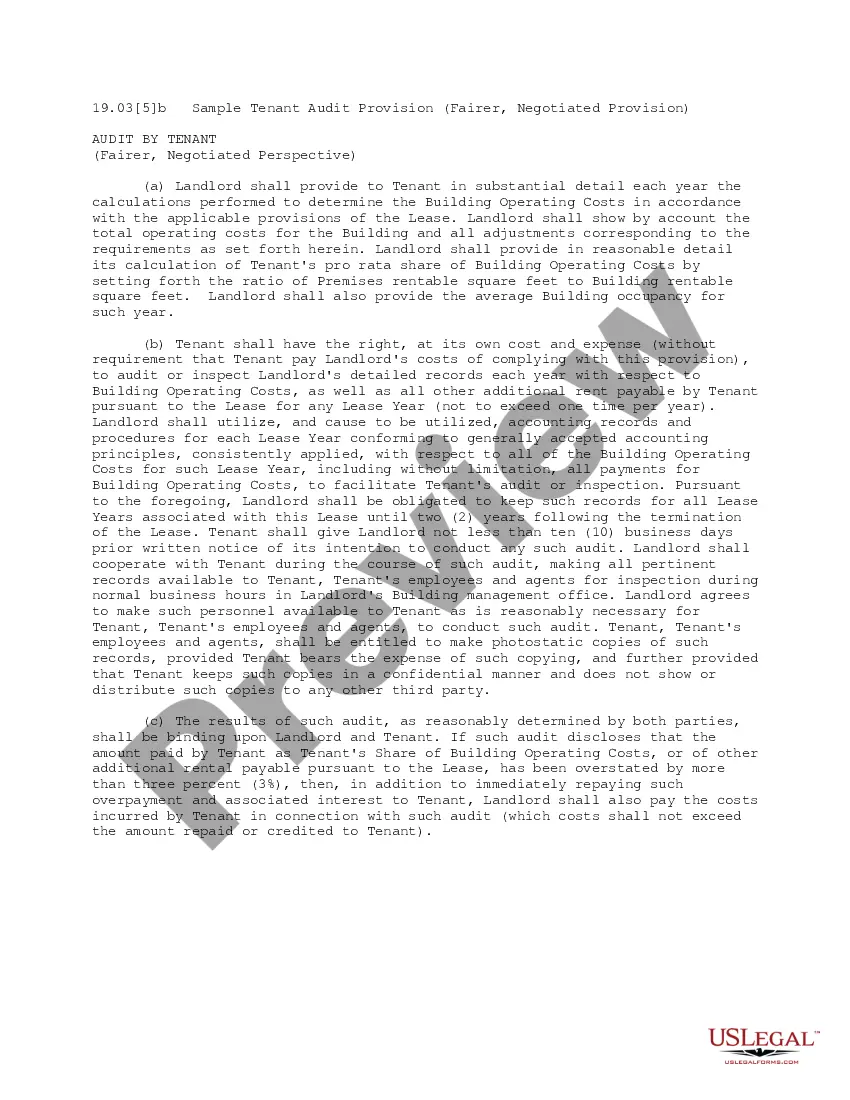
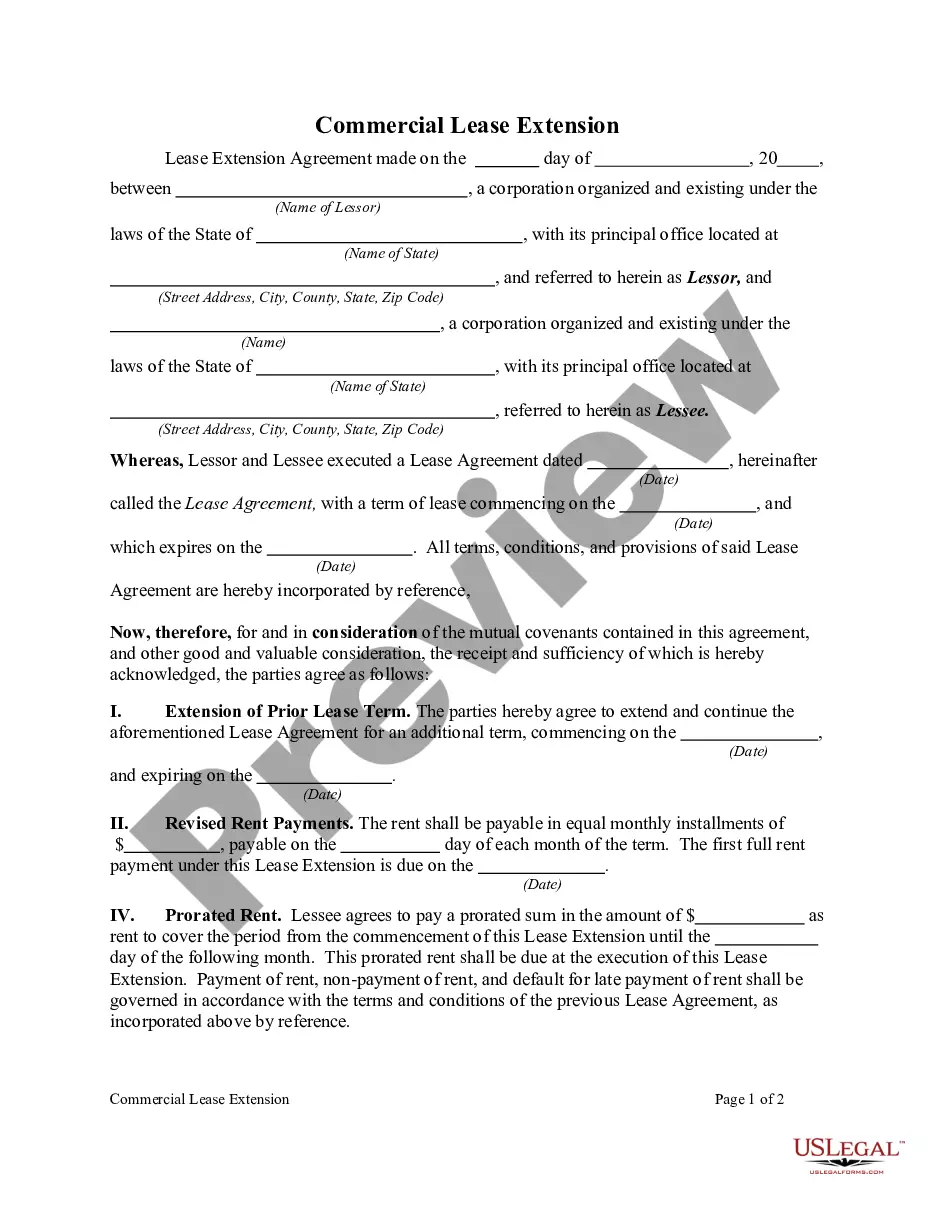
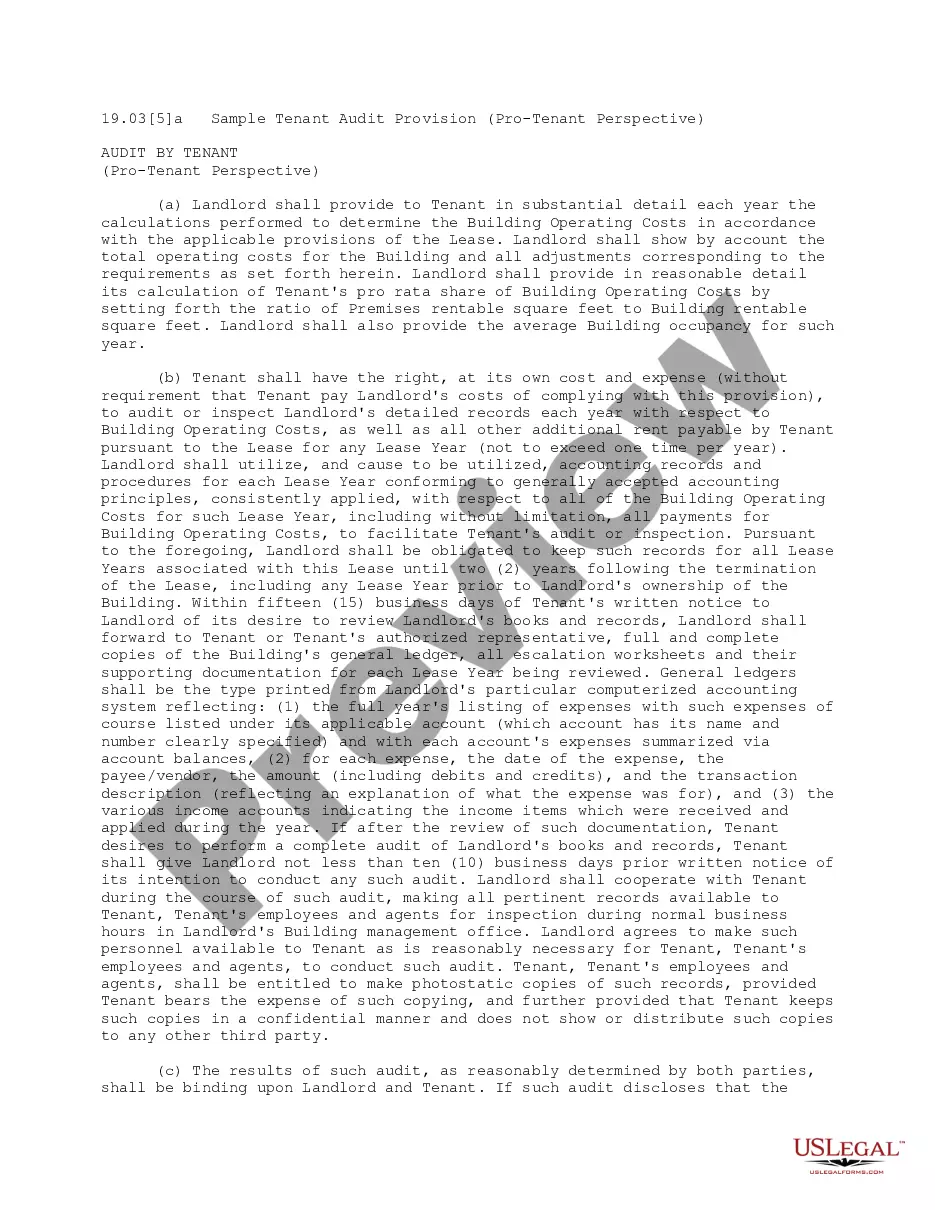
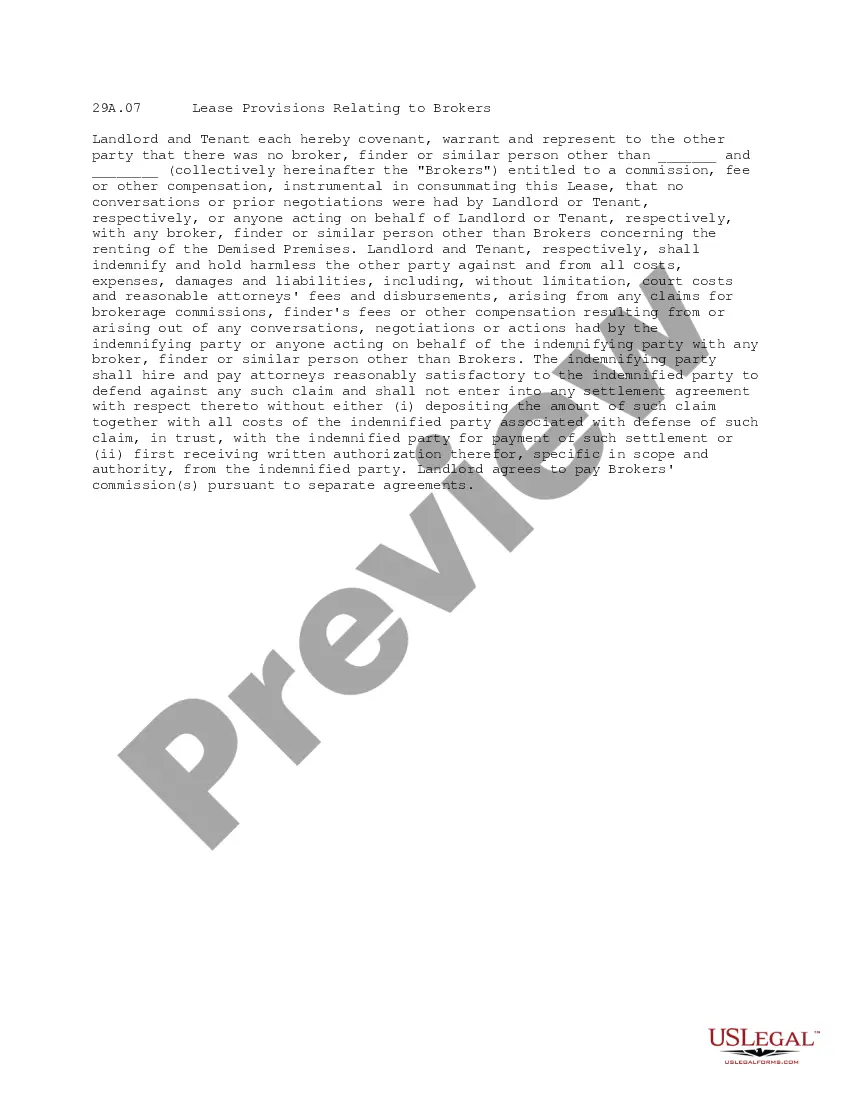
The Tenant Audit Provision Fairer Negotiated Provision is a legal form that outlines the tenant's right to audit a landlord's operating cost calculations for a commercial lease. Unlike standard lease agreements, this provision specifically ensures transparency by requiring landlords to provide detailed annual calculations of building operating costs. This allows tenants to verify their share and ensures fair negotiation regarding additional rent costs associated with property expenses.
What’s included in this form
- Annual detailed accounting of building operating costs provided by the landlord.
- Tenant's right to audit operating costs at their own expense, once per year.
- Requirements for record-keeping by the landlord, including maintenance of records for two years post-lease termination.
- Binding result of the audit if discrepancies in costs exceed three percent.
- Rights of the tenant to have access to pertinent records and personnel during audit inspections.
Common use cases
This form is useful when a commercial tenant wants to ensure that the operating costs charged by their landlord are accurate and justified. It is typically used in lease negotiations to establish a fair auditing process, helping tenants avoid unjust overpayment for shared building expenses.
Intended users of this form
- Commercial tenants looking to establish transparency regarding building operating costs.
- Landlords seeking to clarify obligations and rights in lease agreements.
- Individuals involved in lease negotiations and wanting to protect their financial interests.
Completing this form step by step
- Review the lease agreement to identify the sections related to operating costs.
- Ensure that the landlord provides the annual operating cost calculations as required.
- Notify the landlord in writing at least ten business days before the intended audit.
- Gather the necessary personnel and resources to conduct the audit.
- Document any discrepancies and communicate findings with the landlord.
Does this document require notarization?
This form does not typically require notarization unless specified by local law. Always check with a legal professional to ensure compliance with local requirements.
Get your form ready online
Our built-in tools help you complete, sign, share, and store your documents in one place.
Make edits, fill in missing information, and update formatting in US Legal Forms—just like you would in MS Word.
Download a copy, print it, send it by email, or mail it via USPS—whatever works best for your next step.
Sign and collect signatures with our SignNow integration. Send to multiple recipients, set reminders, and more. Go Premium to unlock E-Sign.
If this form requires notarization, complete it online through a secure video call—no need to meet a notary in person or wait for an appointment.
We protect your documents and personal data by following strict security and privacy standards.

Make edits, fill in missing information, and update formatting in US Legal Forms—just like you would in MS Word.

Download a copy, print it, send it by email, or mail it via USPS—whatever works best for your next step.

Sign and collect signatures with our SignNow integration. Send to multiple recipients, set reminders, and more. Go Premium to unlock E-Sign.

If this form requires notarization, complete it online through a secure video call—no need to meet a notary in person or wait for an appointment.

We protect your documents and personal data by following strict security and privacy standards.
Common mistakes
- Failing to notify the landlord of the audit in the required timeframe.
- Not understanding the specific costs that can be audited as per the lease.
- Overlooking the confidentiality requirement when duplicating records.
Benefits of completing this form online
- Convenient access to legally binding documents from anywhere.
- Easy customization to meet specific lease requirements and terms.
- Quick downloads and immediate availability for tenants and landlords.
Legal use & context
- This provision ensures tenants have the right to audit and verify costs to prevent unjust overcharging.
- Maintaining transparency in financial dealings between landlords and tenants fosters trust.
Main things to remember
- The Tenant Audit Provision Fairer Negotiated Provision allows for transparency in operating costs.
- It provides tenants with the right to audit the landlord's records regarding these costs.
- Proper notification and adherence to audit guidelines are essential for compliance.
Looking for another form?


Form popularity
FAQ
Tenancy audits enable landlords to check that their properties are used properly by the people who have the right to live in them, and to identify situations where there has been misuse or fraudulent subletting.
1) Completeness. 2) Existence/Occurrence. 3) Valuation/Allocation. 4) Cut-off. 5) Rights/Obligations. 6) Classification/Presentation & Disclosure. 1) Preventative Controls: 2) Detective Controls:
Verify Income. As part of your rental application, you should be asking applicants how much monthly income they're bringing in. Pull a Credit Report. Use Common Sense. Speak With the Previous Landlord.
Understand the Laws. Know Where to Advertise. Clean Your House. Use a Rental Application. Require Renters Insurance. Avoid Interviews. Do Background Checks. Wait for the Check to Clear.
A lease audit is an examination of these charges to determine if they are consistent with the lease. It is a comparison of billed amounts to lease provisions to ensure the tenant is not overpaying its rental obligations.
A lease audit is a process for examining a landlord's books and records to make sure the operating expense charges that are passed through to the tenant are fair and accurate and they meet the terms outlined in the lease agreement.