Negotiating and Drafting the Counterparts Provision
Understanding this form
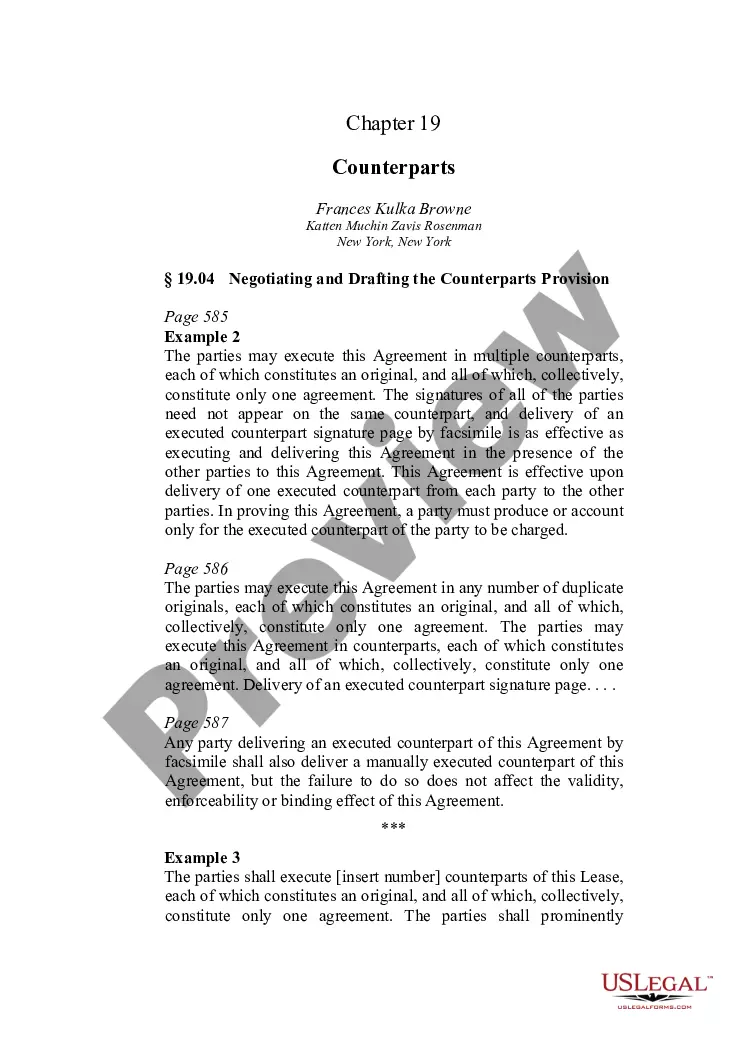
This form, known as Negotiating and Drafting the Counterparts Provision, provides essential boilerplate clauses for contracts that specify how multiple counterparts of an agreement may be executed. It is important for ensuring that each counterpart is considered an original document, allowing for flexibility in the execution process. This form includes various language options tailored to meet different needs and circumstances, distinguishing it from other legal forms that may not address counterparts explicitly.
Main sections of this form
- Definitions of "counterparts" and how they function in the context of a contract.
- Clauses regarding the number of counterparts that can be executed.
- Provisions detailing the effectiveness of facsimile signatures.
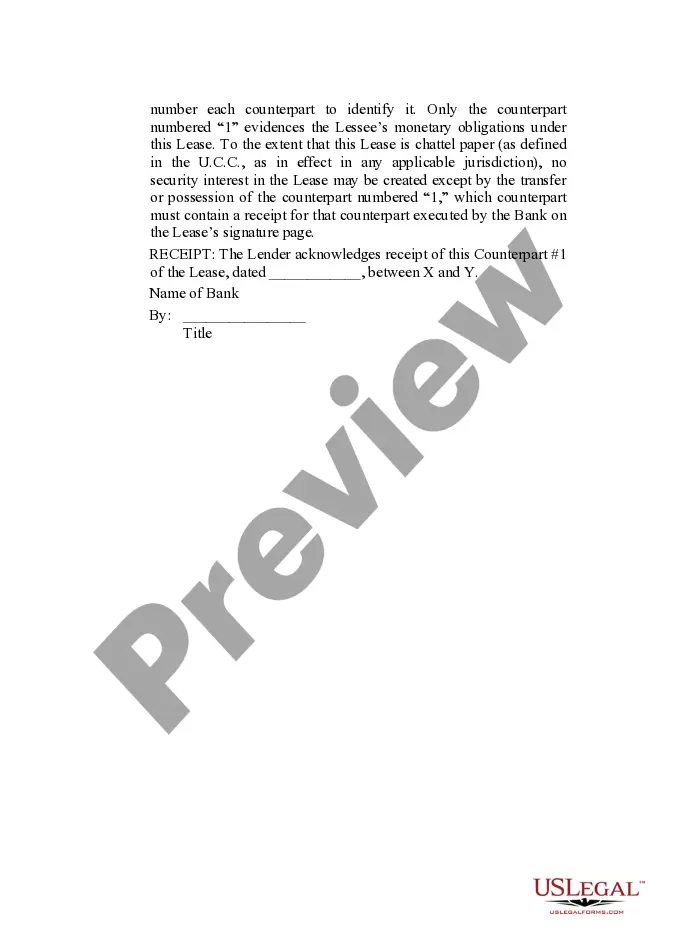
- Instructions for identifying the original counterpart for monetary obligations.
- Guidelines on the delivery of executed counterparts.

When to use this form
This form is critical when you need to finalize a contract involving multiple parties who may sign separate copies of the same document. It is particularly useful in situations such as real estate transactions, partnership agreements, or any instance where parties are not present in the same location during the signing process. The counterparts provision facilitates the legal binding of each signed copy as part of a single agreement.
Who can use this document
- Business owners looking to formalize agreements with multiple parties.
- Legal professionals drafting contracts that require flexibility in signature execution.
- Individuals entering into lease agreements with terms involving multiple counterparts.
- Organizations seeking to simplify the signing process for agreements requiring signatures from various stakeholders.
How to prepare this document
- Identify and list all parties involved in the agreement.
- Specify the number of counterparts that will be executed.
- Include clauses regarding signature methods, such as facsimile or electronic signatures.
- Number each counterpart prominently as a means of identification.
- Ensure that all parties sign and date the corresponding counterpart(s).
Notarization guidance
Notarization is not commonly needed for this form. However, certain documents or local rules may make it necessary. Our notarization service, powered by Notarize, allows you to finalize it securely online anytime, day or night.
Get your form ready online
Our built-in tools help you complete, sign, share, and store your documents in one place.
Make edits, fill in missing information, and update formatting in US Legal Forms—just like you would in MS Word.
Download a copy, print it, send it by email, or mail it via USPS—whatever works best for your next step.
Sign and collect signatures with our SignNow integration. Send to multiple recipients, set reminders, and more. Go Premium to unlock E-Sign.
If this form requires notarization, complete it online through a secure video call—no need to meet a notary in person or wait for an appointment.
We protect your documents and personal data by following strict security and privacy standards.

Make edits, fill in missing information, and update formatting in US Legal Forms—just like you would in MS Word.

Download a copy, print it, send it by email, or mail it via USPS—whatever works best for your next step.

Sign and collect signatures with our SignNow integration. Send to multiple recipients, set reminders, and more. Go Premium to unlock E-Sign.

If this form requires notarization, complete it online through a secure video call—no need to meet a notary in person or wait for an appointment.

We protect your documents and personal data by following strict security and privacy standards.
Common mistakes to avoid
- Failing to specify the number of counterparts in the contract.
- Not including provisions for facsimile or electronic signatures.
- Forgetting to number counterparts for easy identification.
- Assuming all parties must sign the same physical document.
Benefits of using this form online
- Convenient access to pre-drafted legal clauses by licensed attorneys.
- Editability to customize terms and language as per individual needs.
- Secure and reliable access, ensuring documents are stored safely and efficiently.
Legal use & context
- The counterparts provision ensures that all signed copies of a contract are legally valid.
- Facsimile signatures are recognized as effective in many jurisdictions, streamlining contract execution.
- Using multiple counterparts can facilitate the signing process when parties are in different locations.
Quick recap
- The Negotiating and Drafting the Counterparts Provision form simplifies executing contracts with multiple parties.
- It's crucial to specify the number of counterparts and the effectiveness of signatures.
- The form can be adapted for use across various states, ensuring broad applicability.
Looking for another form?





Form popularity
FAQ
When a document requires the signature of two directors, can the directors sign separate counterparts of the same document? There is currently no English law evidence or specific authority on whether each authorised signatory can sign counterparts of the same document.
Simple contracts and deeds are often executed in counterparts. This means that each party to the contract will sign separate but identical copies of the same document.Simple contracts and deeds typically contain a clause expressly allowing the document to be executed in counterparts.
The term "counterpart" is used in legal documents to describe a copy of a contract that is signed and is considered legally binding, in the same way as the original. In many cases, several copies of a contract document are prepared, so that all parties and signatories can have a copy of the contract.
In order to speed up the process of signing a document, the document may be signed 'in counterpart'. This is where a copy of the document is produced for each party signing. The parties then each sign one of the copies rather than all of them, which, when brought together, form a complete executed document.
To sign a contract in counterparts means that each party to the contract will be signing different, but identical, copies of the contract. The purpose of a counterpart clause of a contract is to expressly allow for the parties to the contract to sign in counterparts that is, to sign different copies of the contract.
Simple contracts and deeds are often executed in counterparts. This means that each party to the contract will sign separate but identical copies of the same document. The signed copies will together form a single binding agreement.
In the law of contracts, a written paper that is one of several documents that constitute a contract, such as a written offer and a written acceptance. If the parties are in different localities, often a contract is executed in several counterparts that are the same, but each counterpart is signed by a different party.
What is a counterparts clause? A counterparts clause is normally included in a written agreement where the parties to the contract intend they will execute separate copies of the agreement (for example, in transactions where there is no signing meeting).