Indemnity Provisions - Exclusivity of Indemnity as a Remedy
What is this form?
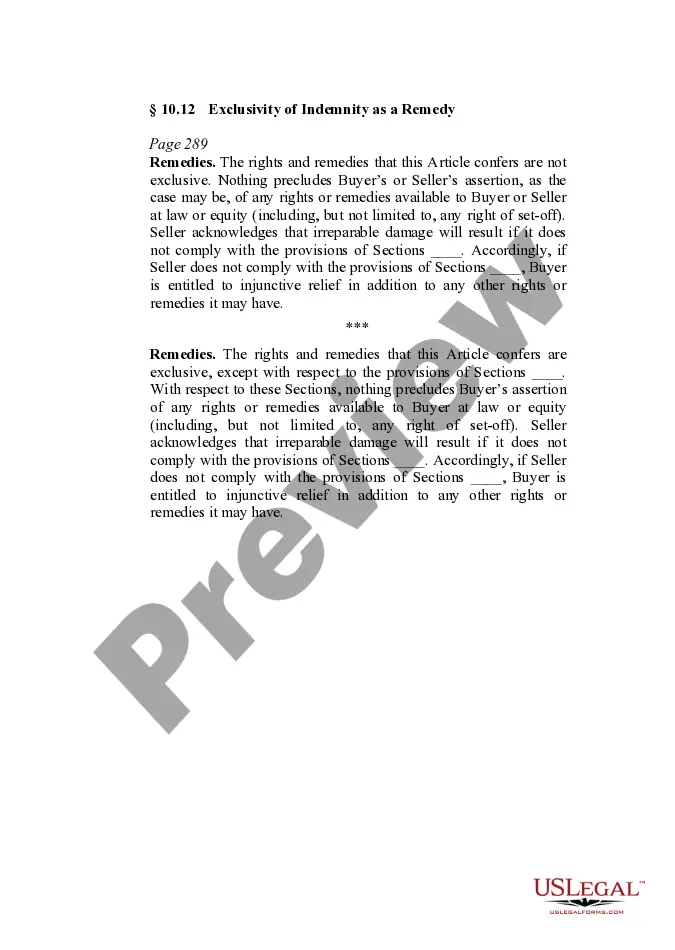
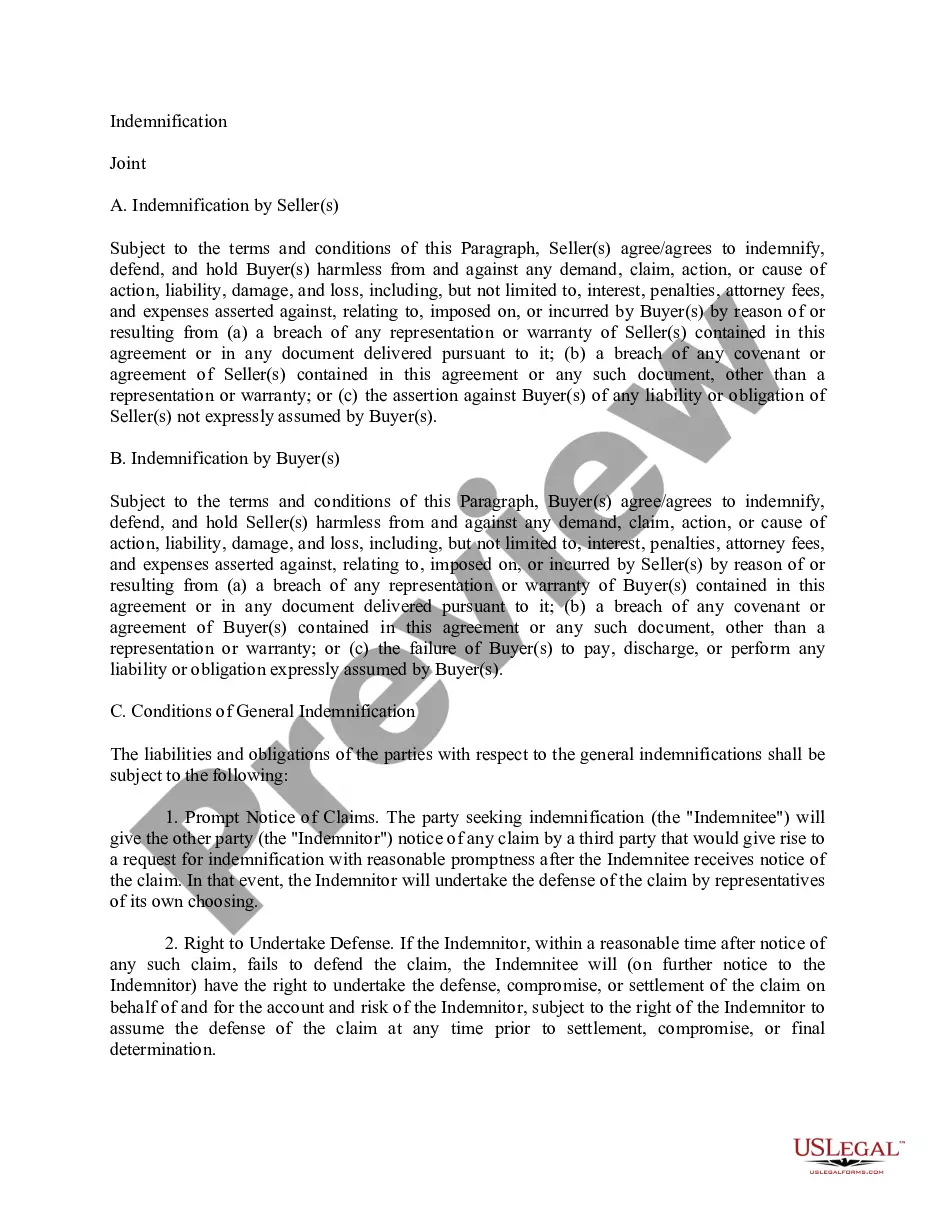
The Indemnity Provisions form, specifically focused on the exclusivity of indemnity as a remedy, provides essential boilerplate clauses for contracts. It outlines how indemnity claims can be exclusive or nonexclusive under the agreement's terms, which is crucial for protecting the rights of both buyers and sellers in a contract. This form helps clarify the extent of indemnity available if a party fails to fulfill its obligations, distinguishing itself from other legal forms that may not specify these indemnity remedies clearly.
Key components of this form
- Definitions of exclusivity and nonexclusivity of indemnity as a remedy.
- Rights and remedies available to buyers and sellers.
- Provisions on irreparable damage and entitlement to injunctive relief.
- Clauses specifying how rights under the agreement can be exercised.
When to use this document
This form is used in contract negotiations or drafting when parties need to clarify their indemnity rights and remedies. It is particularly relevant in cases where there is a potential for significant damage or liability, ensuring that the parties understand the limits of indemnification. Use this form when entering agreements where one party may need to seek damages or relief due to the actions or inactions of another party.
Who this form is for
- Contractors who are drafting contractual agreements.
- Business owners seeking to define risk management measures.
- Legal professionals representing clients in contract negotiations.
- Individuals or entities involved in sales agreements with liability concerns.
How to complete this form
- Identify the parties involved in the contract.
- Specify the sections of the indemnity that are exclusive or nonexclusive.
- Clearly define the rights and remedies applicable to both parties.
- Enter the necessary details, such as contract dates and relevant section numbers.
- Ensure both parties sign and date the agreement.
Notarization requirements for this form
Notarization is generally not required for this form. However, certain states or situations might demand it. You can complete notarization online through US Legal Forms, powered by Notarize, using a verified video call available anytime.
Get your form ready online
Our built-in tools help you complete, sign, share, and store your documents in one place.
Make edits, fill in missing information, and update formatting in US Legal Forms—just like you would in MS Word.
Download a copy, print it, send it by email, or mail it via USPS—whatever works best for your next step.
Sign and collect signatures with our SignNow integration. Send to multiple recipients, set reminders, and more. Go Premium to unlock E-Sign.
If this form requires notarization, complete it online through a secure video call—no need to meet a notary in person or wait for an appointment.
We protect your documents and personal data by following strict security and privacy standards.

Make edits, fill in missing information, and update formatting in US Legal Forms—just like you would in MS Word.

Download a copy, print it, send it by email, or mail it via USPS—whatever works best for your next step.

Sign and collect signatures with our SignNow integration. Send to multiple recipients, set reminders, and more. Go Premium to unlock E-Sign.

If this form requires notarization, complete it online through a secure video call—no need to meet a notary in person or wait for an appointment.

We protect your documents and personal data by following strict security and privacy standards.
Typical mistakes to avoid
- Failing to clearly define whether indemnity is exclusive or nonexclusive.
- Omitting crucial details about rights and remedies available.
- Neglecting to review local laws that may impact indemnity clauses.
- Not including signatures from all parties involved.
Advantages of online completion
- Convenient access to professionally drafted legal language.
- Editability allows for customization to fit specific agreements.
- Instant download provides immediate access for urgent needs.
- Drafted by licensed attorneys ensuring reliability and legal compliance.
Legal use & context
- This form establishes the terms under which indemnity can be claimed, helping to mitigate risks in contractual relationships.
- Understanding these provisions is critical for enforcing contract remedies in case of default or breach.
Looking for another form?
Form popularity
FAQ
Indemnity is not an appropriate remedy for claims, such as breach of contract claims, involving only the parties to the contract. In most instances, even without contractual indemnity, the law in nearly all states (including Illinois) will impose proportionate liability on the culpable party or parties.
Whether or not your company is small and large, tech or professional, indemnification clauses can be useful. These clauses are typically used when either: a business wants to guarantee it's service or product; or. a business wants to protect itself from liability, especially in cases of sub-contractors.
Company/Business/Individual Name shall fully indemnify, hold harmless and defend _______ and its directors, officers, employees, agents, stockholders and Affiliates from and against all claims, demands, actions, suits, damages, liabilities, losses, settlements, judgments, costs and expenses (including but not
A remedies clause sets forth the parties' intention to provide for equitable remedies for breach of contract, in addition to or instead of just monetary relief. A remedies clause can also be used to limit the relief the parties can obtain upon breach of the contract.
You should look to limit indemnification clauses by narrowing their scope, putting in caps on damages, and clearly defining the indemnifiable acts (i.e. the representations and warranties in the example above). Also consider purchasing insurance as a means to limit your financial risk.
Common law indemnity is an equitable remedy that arises out of obligations imposed through special relationships, but contractual indemnity is not concerned with "special relationships" or vicarious, constructive, derivative or technical liability; it is concerned with the express terms of the agreement to indemnify...
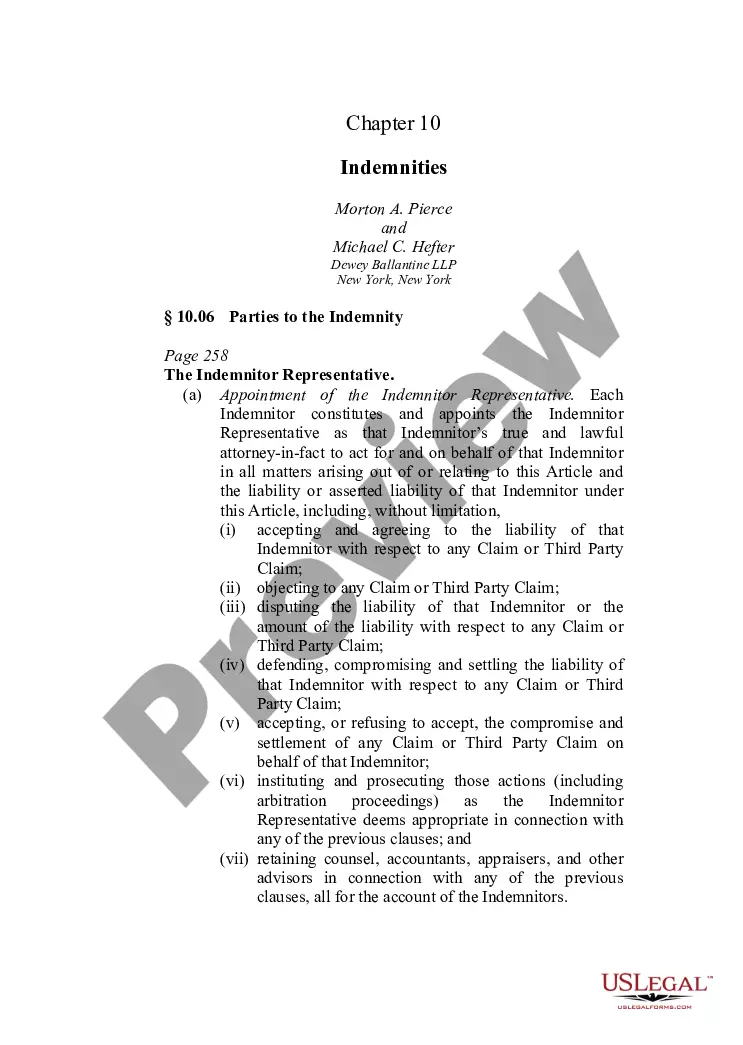
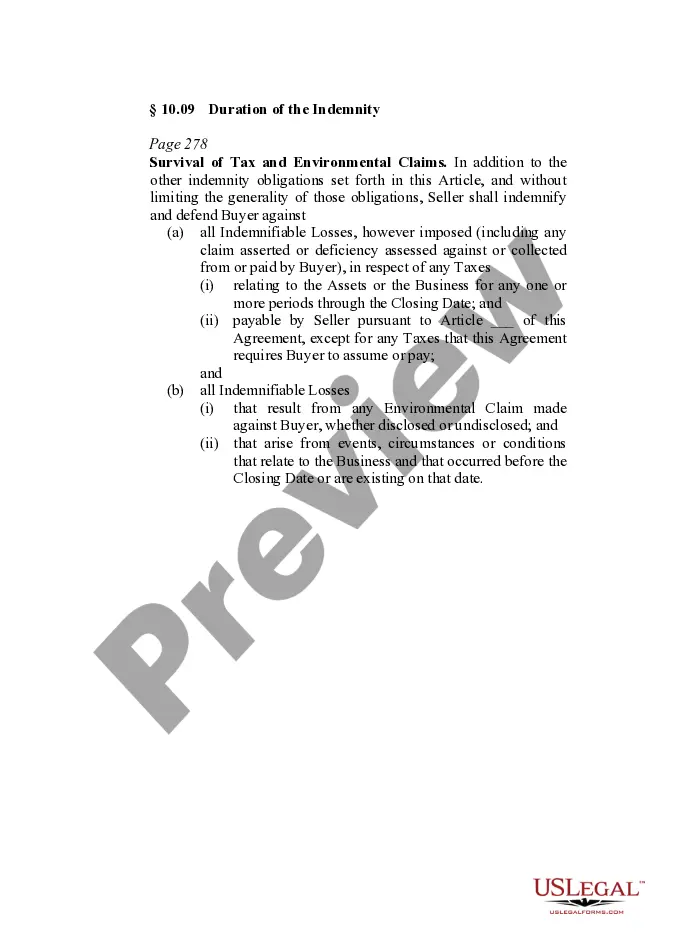
As the name suggests, an indemnification as an exclusive remedy provision means that the right to indemnification provided under the M&A agreement is the parties' exclusive remedy for any breach of the representations, warranties, covenants, agreements, and obligations in the M&A agreement.
Building Blocks of an Indemnification Clause. Typical indemnification provisions will be long sentences with many clauses, legal-sounding words, and long lists of specific details. Insurance Implications and Other Contractual Matters. Other Technical Elements of an Indemnification Provision. Takeaway.
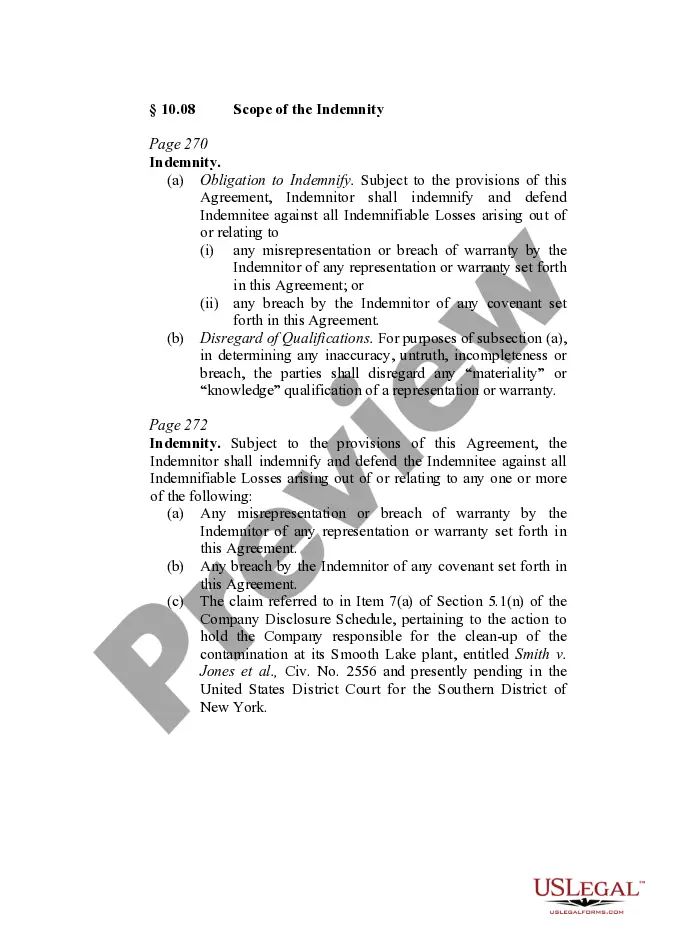
To indemnify means to compensate someone for his/her harm or loss. In most contracts, an indemnification clause serves to compensate a party for harm or loss arising in connection with the other party's actions or failure to act. The intent is to shift liability away from one party, and on to the indemnifying party.