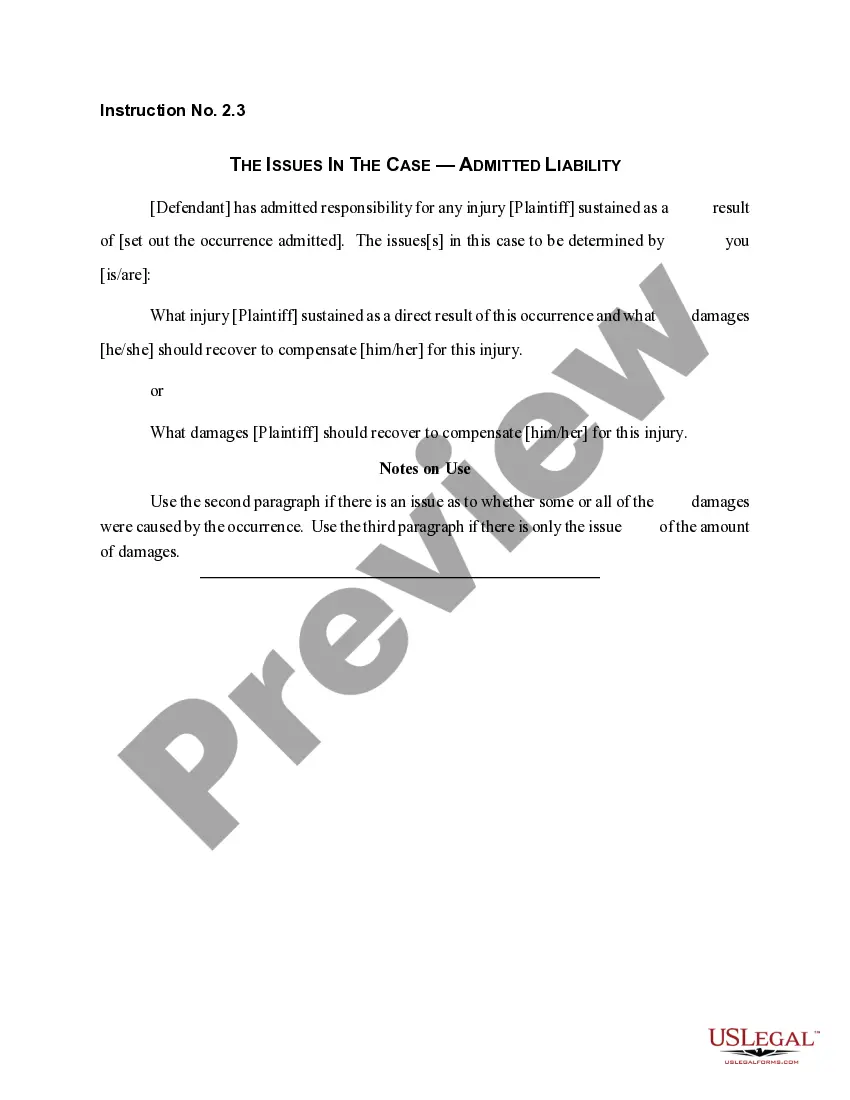
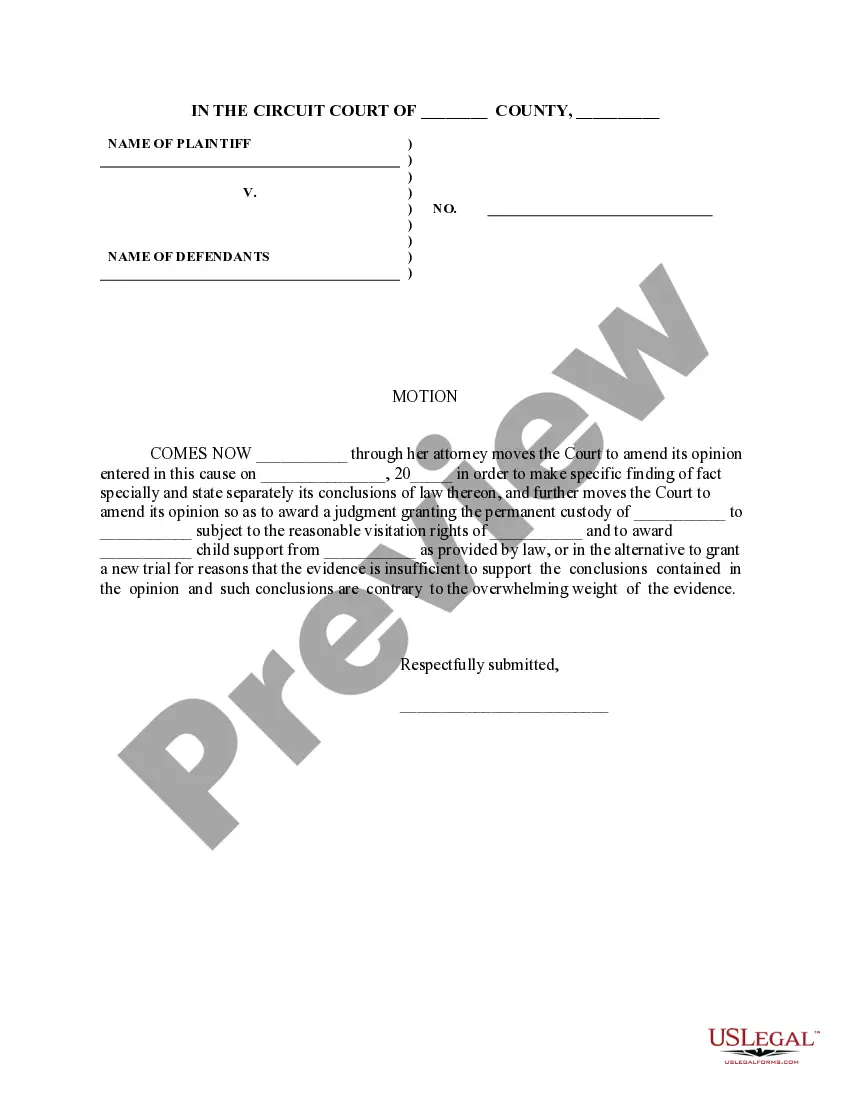
Motion to Make Specific Findings of Fact and State Conclusions of Law - Domestic Relations
What is this form?
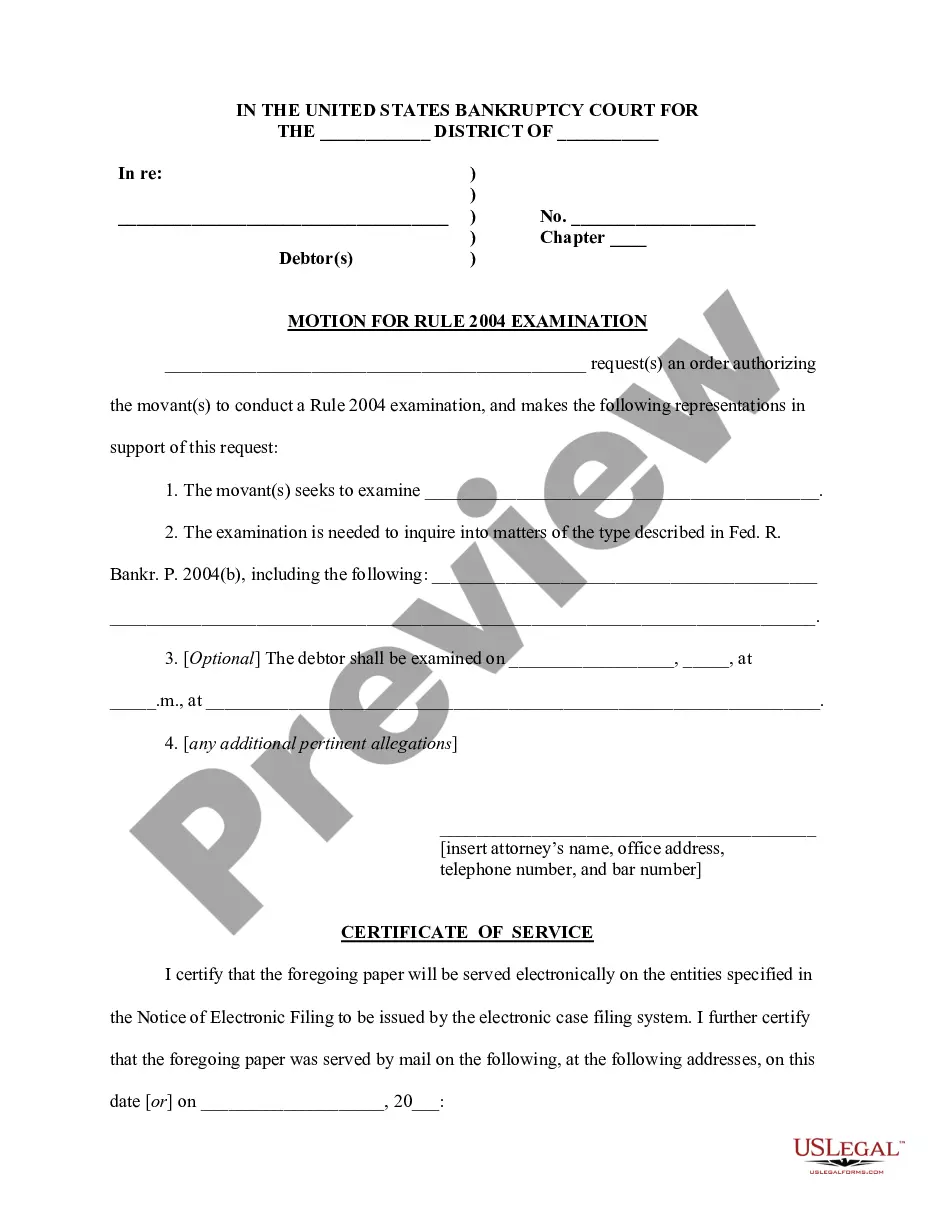
The Motion to Make Specific Findings of Fact and State Conclusions of Law - Domestic Relations is a legal document used in domestic relations cases. This form allows a party to request the court to make explicit findings of fact and to state conclusions of law related to the case. It is distinct from other motions as it focuses specifically on clarifying the legal basis for decisions made in domestic matters, facilitating a better understanding of the court's reasoning.
Key parts of this document
- Identification of the parties involved in the domestic relations case.
- Specific facts and evidence supporting the request for findings.
- Legal grounds for the motion, citing applicable laws or precedents.
- A declaration of the desired conclusions of law from the court.
- Signature line for the filing party or attorney to certify the submission.
When this form is needed
This form should be used when a party in a domestic relations case wishes to ensure the court records its specific findings of fact and the legal conclusions drawn from those facts. Scenarios for use include during divorce proceedings, child custody disputes, or other litigations where clear legal definitions are necessary for the case outcome.
Who can use this document
- Individuals involved in domestic relations cases, such as divorce or custody disputes.
- Attorneys representing clients in family law matters.
- Parties seeking clarity on legal rulings made in their case.
Instructions for completing this form
- Identify and enter the names of the parties involved in the case.
- Clearly outline the facts that support your request for specific findings.
- Cite the legal basis for your motion, referencing any relevant statutes or case law.
- State your desired conclusions of law to provide clarity to the court.
- Sign the form as the filing party or have your attorney sign on your behalf.
Is notarization required?
This form usually doesn’t need to be notarized. However, local laws or specific transactions may require it. Our online notarization service, powered by Notarize, lets you complete it remotely through a secure video session, available 24/7.
Get your form ready online
Our built-in tools help you complete, sign, share, and store your documents in one place.
Make edits, fill in missing information, and update formatting in US Legal Forms—just like you would in MS Word.
Download a copy, print it, send it by email, or mail it via USPS—whatever works best for your next step.
Sign and collect signatures with our SignNow integration. Send to multiple recipients, set reminders, and more. Go Premium to unlock E-Sign.
If this form requires notarization, complete it online through a secure video call—no need to meet a notary in person or wait for an appointment.
We protect your documents and personal data by following strict security and privacy standards.

Make edits, fill in missing information, and update formatting in US Legal Forms—just like you would in MS Word.

Download a copy, print it, send it by email, or mail it via USPS—whatever works best for your next step.

Sign and collect signatures with our SignNow integration. Send to multiple recipients, set reminders, and more. Go Premium to unlock E-Sign.

If this form requires notarization, complete it online through a secure video call—no need to meet a notary in person or wait for an appointment.

We protect your documents and personal data by following strict security and privacy standards.
Typical mistakes to avoid
- Failing to provide sufficient factual detail to support the motion.
- Not citing relevant laws or precedents that strengthen the case.
- Omitting required signatures or dates on the form.
- Submitting the form without proper formatting according to local court rules.
Benefits of completing this form online
- Convenience of downloading and completing the form at your own pace.
- Editability allows you to customize the form to fit your specific situation.
- Access to templates drafted by licensed attorneys ensures compliance with legal standards.
Legal use & context
- This form is intended for legal professionals and individuals navigating family law matters.
- It must be completed accurately to ensure enforceability in court.
- Check local laws for any additional requirements or adjustments to the form.
Quick recap
- The Motion to Make Specific Findings of Fact and State Conclusions of Law is crucial in domestic relations litigation.
- It clarifies the court's reasoning and legal conclusions, benefiting all parties involved.
- Ensure accuracy and compliance with local regulations for successful submission.
Looking for another form?
Form popularity
FAQ
(3) All motions shall be ruled upon within one hundred twenty days from the date the moti on was filed, except as otherwi se noted on the report forms.
February 12, 2020. (n) Findings Of Fact is the decision, opinion or observation arrived by a judge or jury on the issues related to the fact that are submitted for a decision of the court. The finding of facts ultimately influence the judgment.
Findings and conclusions show the appellate court that the trial court applied the right standard and found the facts necessary to support the judgment.
TLDR; yes but its difficult. Don't rely on being able to challenge a finding after it is made it is far, far better to challenge it at the time of your court case, if you have all the available evidence.
Finding. The result of the deliberations of a jury or a court. A decision upon a Question of Fact reached as the result of a judicial examination or investigation by a court, jury, referee, Coroner, etc.The word commonly applies to the result reached by a judge or jury.
(n) Findings Of Fact is the decision, opinion or observation arrived by a judge or jury on the issues related to the fact that are submitted for a decision of the court.
Findings of Fact & Conclusions of Law After many bench trials or the hearing of motions, the judge often will issue findings of fact and conclusions of law, especially if requested to do so by a party. These set forth the facts the judge found to be true and the conclusions of law he reached regarding those facts.
Something that is factual is concerned with facts or contains facts, rather than giving theories or personal interpretations. adj. The editorial contained several factual errors..., Any comparison that is not strictly factual runs the risk of being interpreted as subjective.