Intra-Company Trademark, Service Mark, and Trade Name License Agreement
Overview of this form
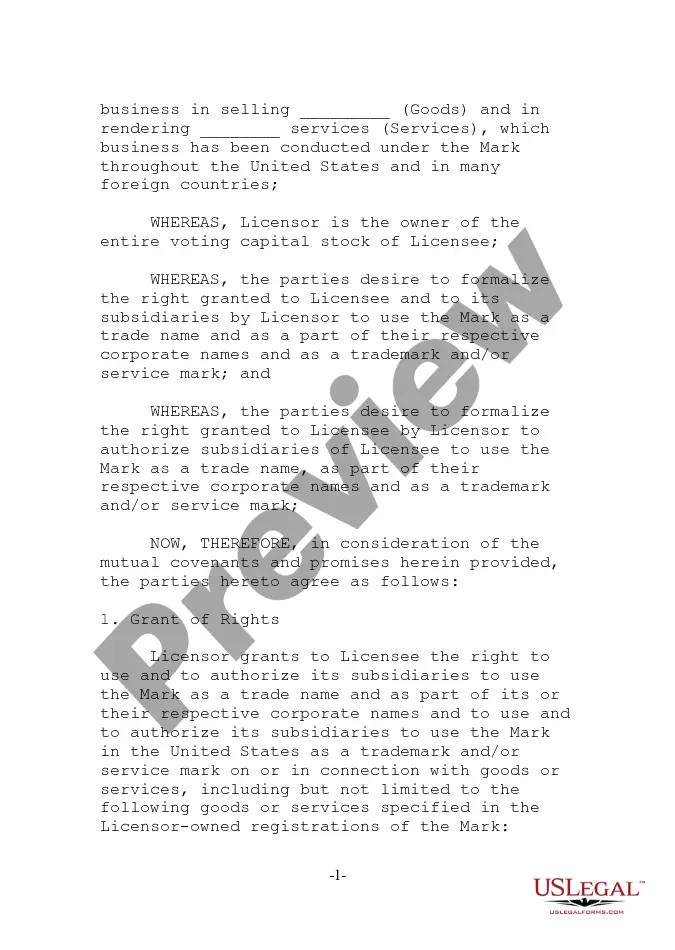
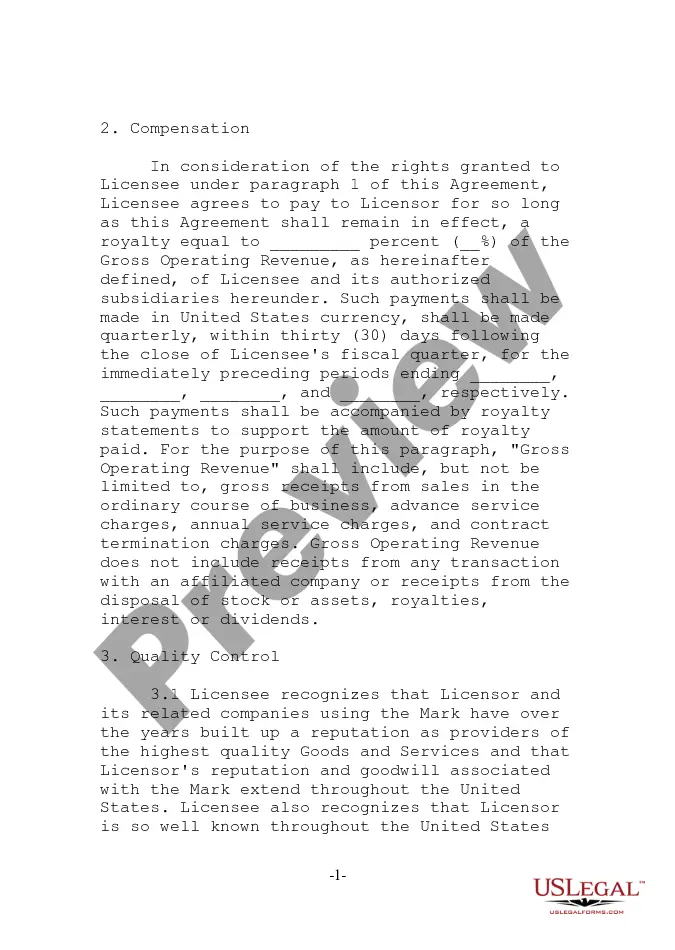
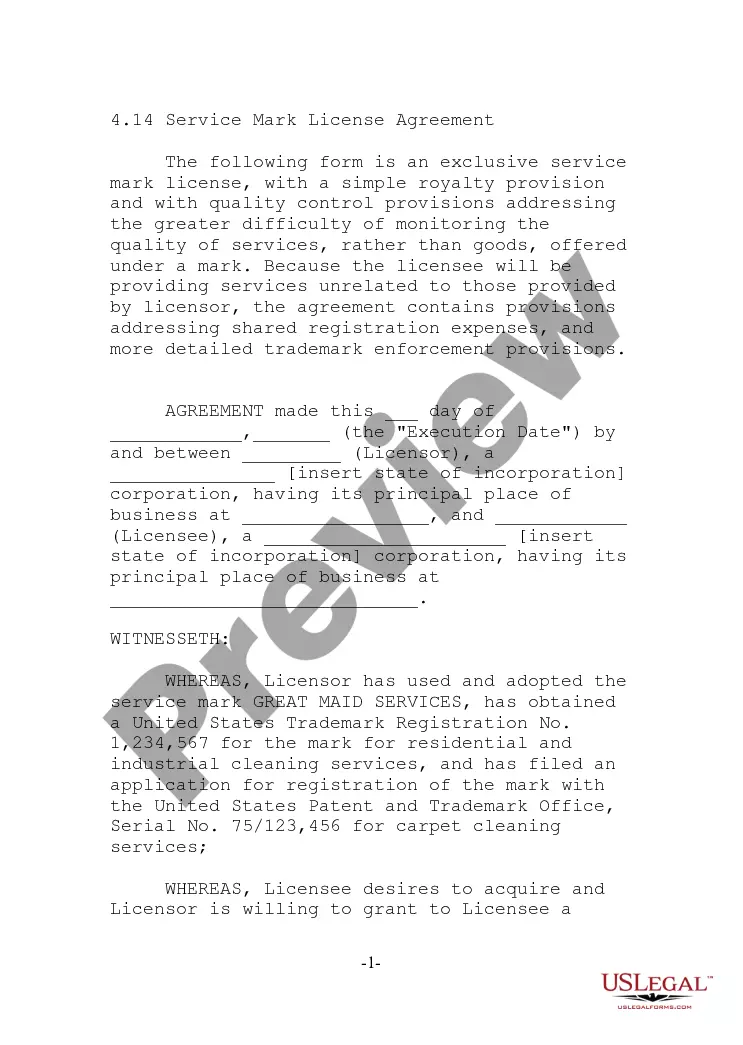
The Intra-Company Trademark, Service Mark, and Trade Name License Agreement is a legal document used to formalize the license granted between affiliated companies to use a trademark or trade name. This agreement allows a company (the licensee) to utilize the mark as part of its corporate name and grants the right to sublicense. Unlike general license agreements, this form specifically addresses the nuances of intra-company relationships, including quality control measures that the licensee must uphold to protect the reputation associated with the mark.
What’s included in this form
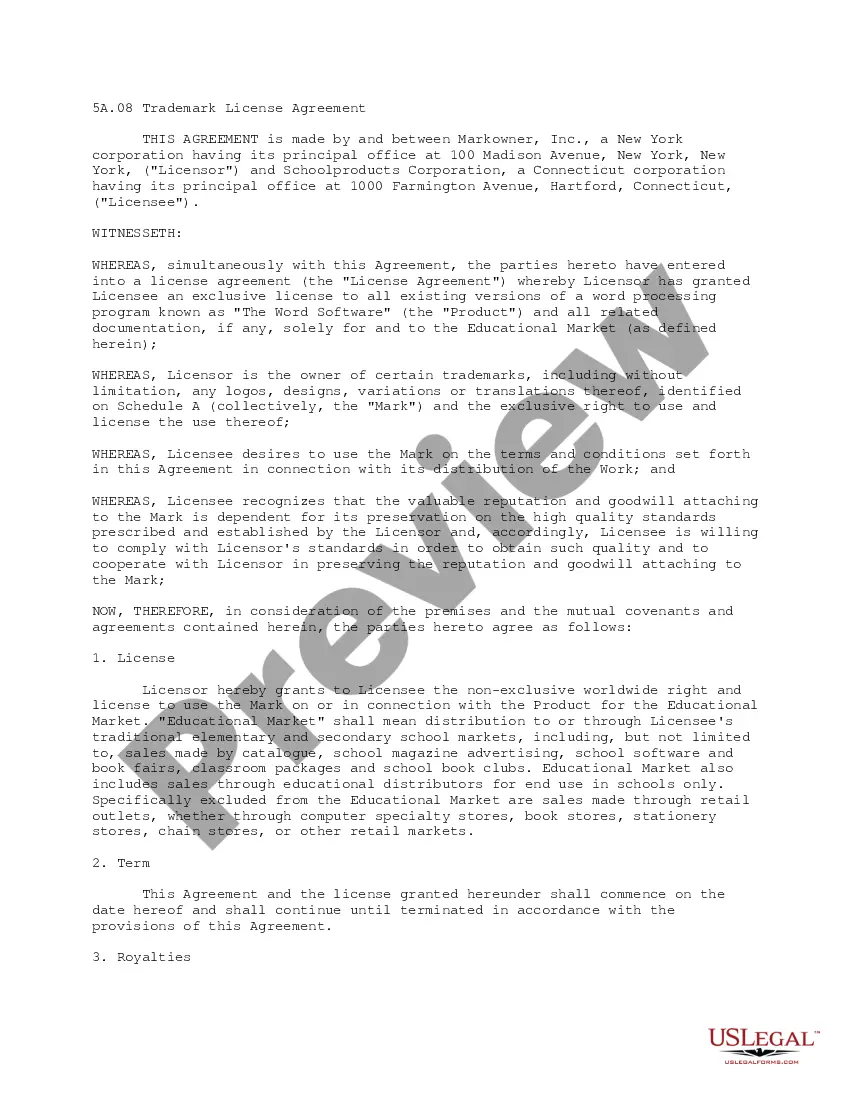
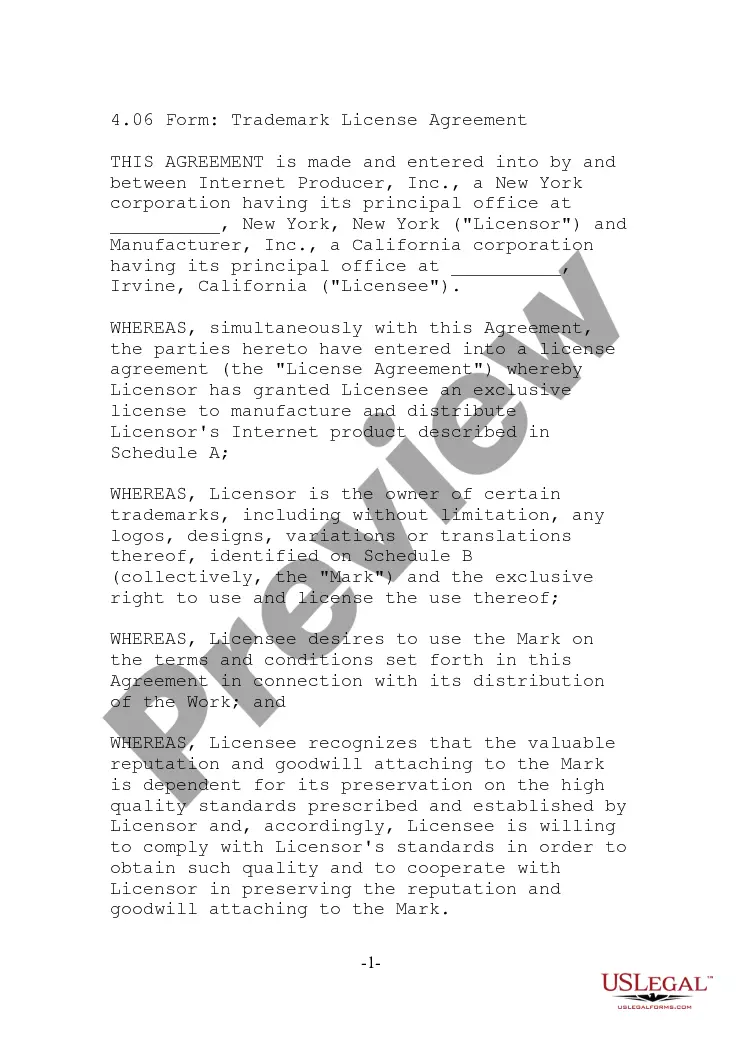
- Grant of rights to use the trademark in business operations.
- Details on compensation, including royalty payment structure.
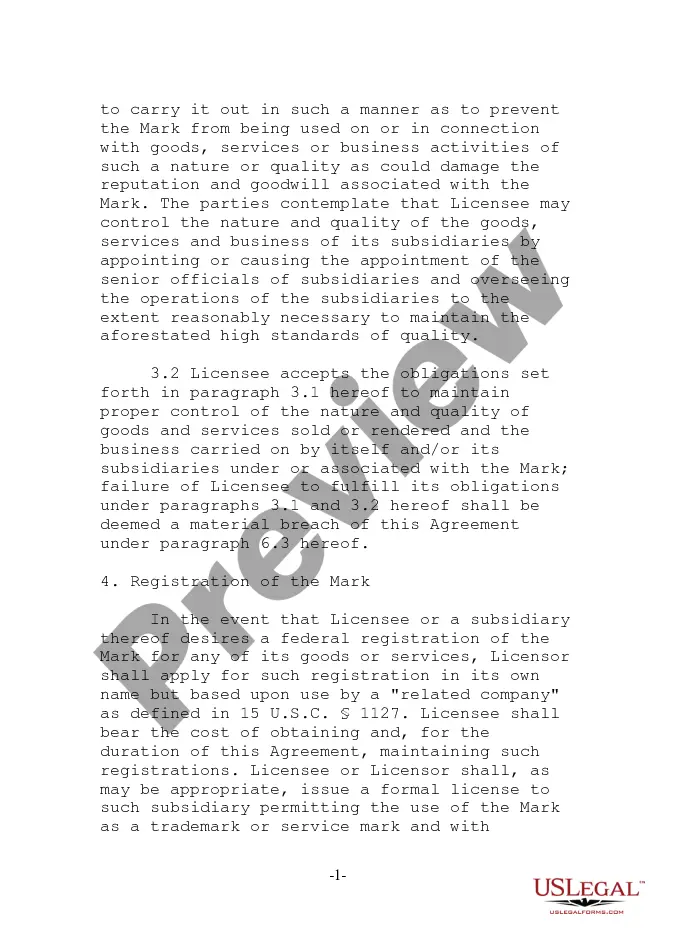
- Quality control requirements to maintain the mark's reputation.
- Provisions for registration of the trademark.
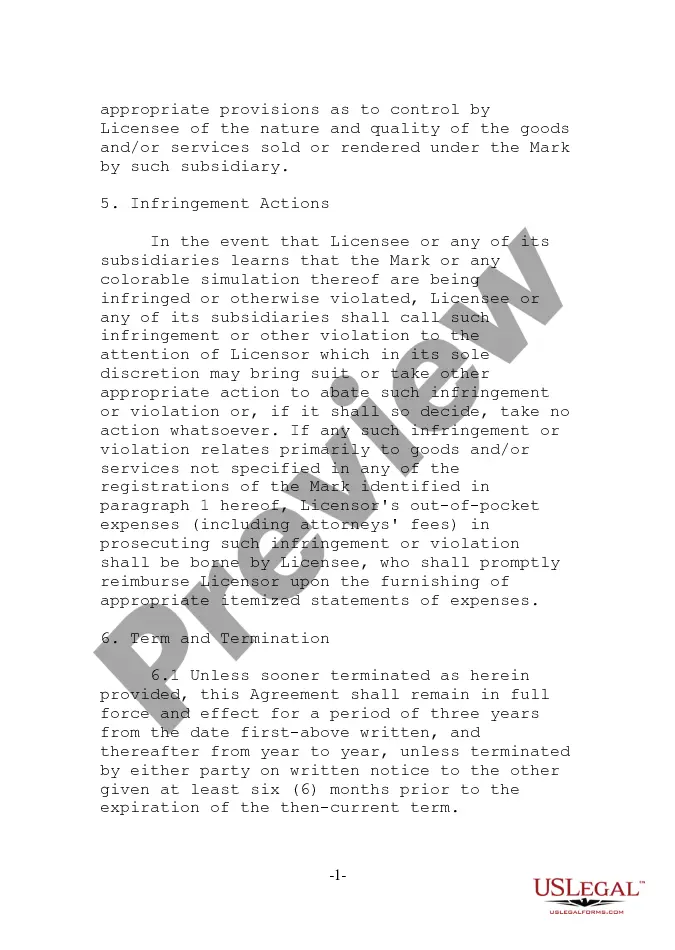
- Clauses addressing infringement actions and responsibilities.
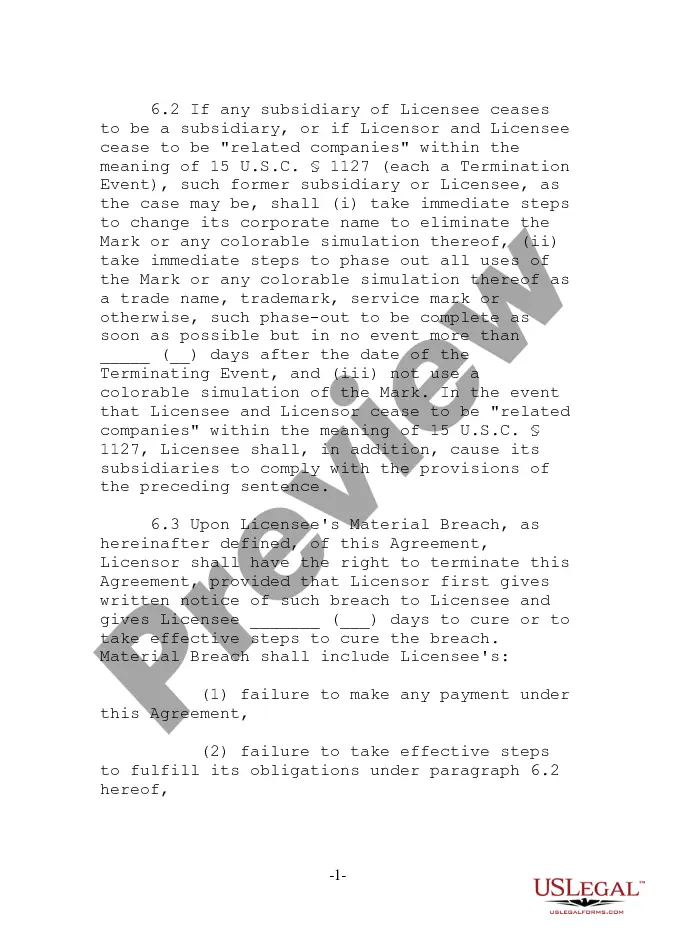
- Terms for the duration and termination of the agreement.




Situations where this form applies
This form is essential when one company licenses a trademark or service mark to another affiliated company. It is particularly useful in situations where companies share branding elements and need to ensure that they can legally use those elements in a way that maintains the mark's integrity and quality. This agreement is relevant in industries such as entertainment, product development, or any field involving intellectual property.
Who should use this form
- Businesses that have affiliated companies and wish to formalize trademark usage.
- Companies wishing to protect their brand and maintain quality across subsidiaries.
- Entities involved in the licensing of intellectual property for commercial purposes.
Completing this form step by step
- Identify the parties involved: Licensor and Licensee, including their state of incorporation.
- Enter the trademark or service mark to be licensed.
- Specify the services or goods associated with the mark.
- Determine compensation details, such as royalty percentage and payment schedule.
- Include quality control standards and obligations to maintain the mark's reputation.
- Sign the agreement with authorized representatives from both parties.
Notarization guidance
Notarization is not commonly needed for this form. However, certain documents or local rules may make it necessary. Our notarization service, powered by Notarize, allows you to finalize it securely online anytime, day or night.
Get your form ready online
Our built-in tools help you complete, sign, share, and store your documents in one place.
Make edits, fill in missing information, and update formatting in US Legal Forms—just like you would in MS Word.
Download a copy, print it, send it by email, or mail it via USPS—whatever works best for your next step.
Sign and collect signatures with our SignNow integration. Send to multiple recipients, set reminders, and more. Go Premium to unlock E-Sign.
If this form requires notarization, complete it online through a secure video call—no need to meet a notary in person or wait for an appointment.
We protect your documents and personal data by following strict security and privacy standards.

Make edits, fill in missing information, and update formatting in US Legal Forms—just like you would in MS Word.

Download a copy, print it, send it by email, or mail it via USPS—whatever works best for your next step.

Sign and collect signatures with our SignNow integration. Send to multiple recipients, set reminders, and more. Go Premium to unlock E-Sign.

If this form requires notarization, complete it online through a secure video call—no need to meet a notary in person or wait for an appointment.

We protect your documents and personal data by following strict security and privacy standards.
Mistakes to watch out for
- Failing to define the scope of the trademark usage clearly.
- Not including adequate quality control measures.
- Omitting payment details and compensation structure.
- Neglecting to specify the duration or termination conditions of the agreement.
Why complete this form online
- Convenient access to a legally vetted template at any time.
- Edit and customize the document easily to fit specific needs.
- Downloadable in Word format for immediate use.
- Time-saving compared to drafting a license agreement from scratch.
Looking for another form?

Form popularity
FAQ
Even software licenses described as perpetual can usually be terminated in specified circumstances (e.g., by the vendor if the customer fails to pay the license fee, or by the customer if the licensed software does not meet certain requirements).
Most trademark license agreements aren't assignable, transferable or perpetual, and when you add in exclusive you get an agreement that looks much more like a transfer of all rights rather than a license.
What is the purpose of trademark law? The primary purpose of the trademark laws is to prevent unfair competition by applying a test of consumer confusion and providing rights and remedies to the owner of the trademark.
Get it in writing. Develop a detailed licensing agreement that is signed by both licensor and licensee. Work with an experienced trademark attorney, who has knowledge in both drafting agreements and enforcing proper use. Establish brand guidelines that clearly dictate how and where the trademark can be used.
A trademark licensing agreement is a legal contract between a trademark owner and another party that have agreed to use the trademark on preapproved terms decided between the contracting parties.
It is a good idea to register your trademark to protect yourself against an infringement suit, to add value to your company, to put your competitors and the public on notice of your rights in your own brand and to strengthen the legal protection of your mark.
Trademark licensing is the process by which a registered trademark owner, called a licensor or proprietor, allows another party, called a licensee, to make and distribute specific products or services under the licensor's trademark agreement. Trademark licensing is a type of merchandise agreement.
Registration provides nationwide priority over all others who might seek to adopt the registered mark. Registration significantly reduces the costs of enforcing trademark rights. Registration provides for enhanced protection against counterfeiters, cybersquatters, and importers of infringing product.
A perpetual license allows end users to use the software for as long as the end user complies with all terms of the license agreement. A term license allows the end user to use the software for a specified license term so long as the end user complies with all the terms of the license agreement.