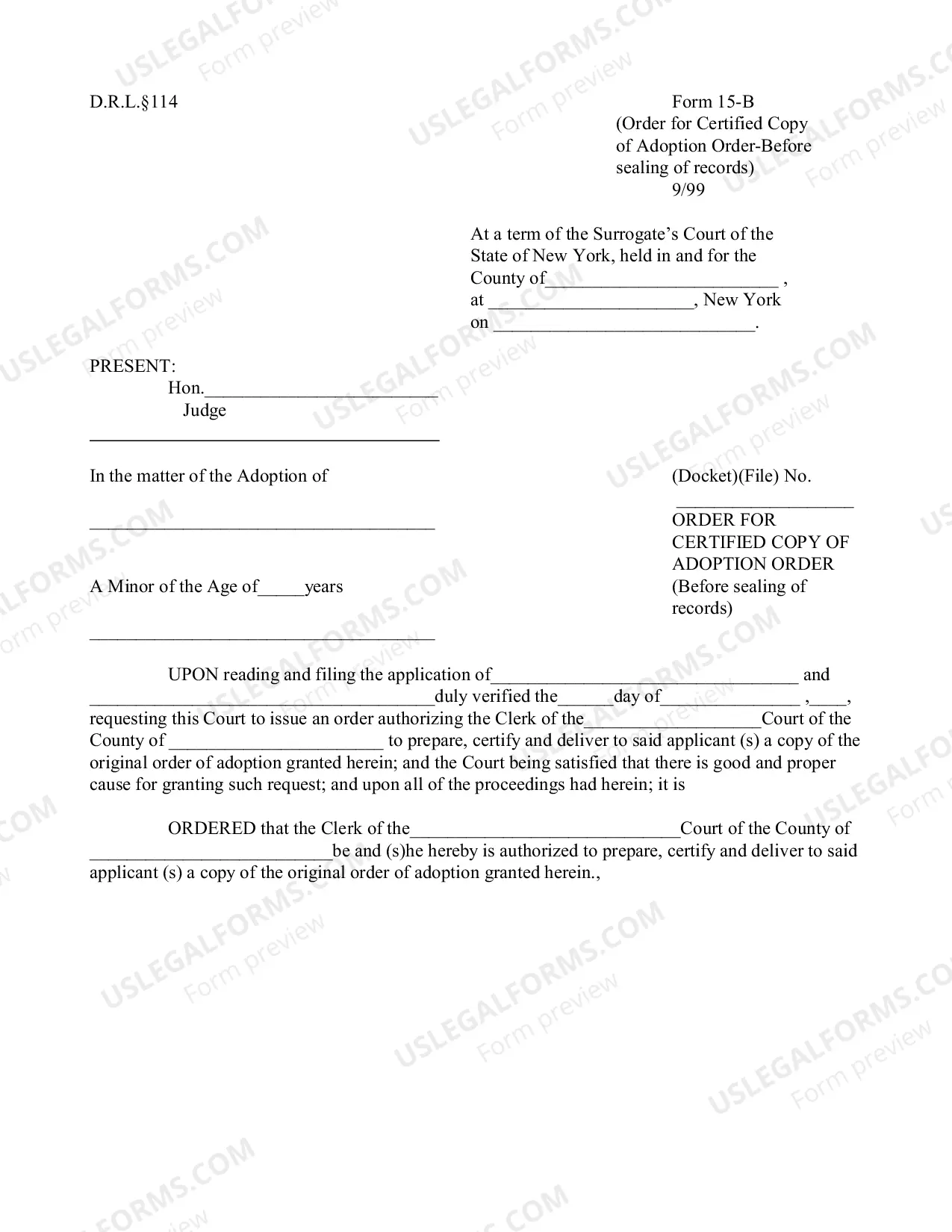
Basic Nonexclusive Royalty Free Trademark License Agreement
Understanding this form
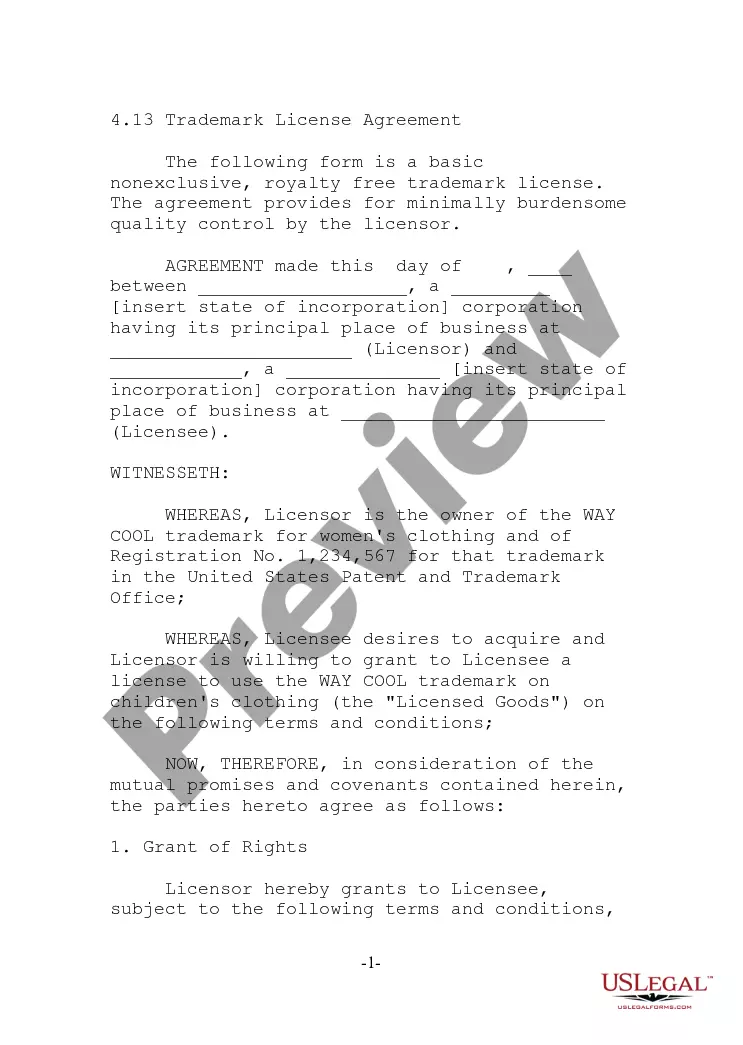
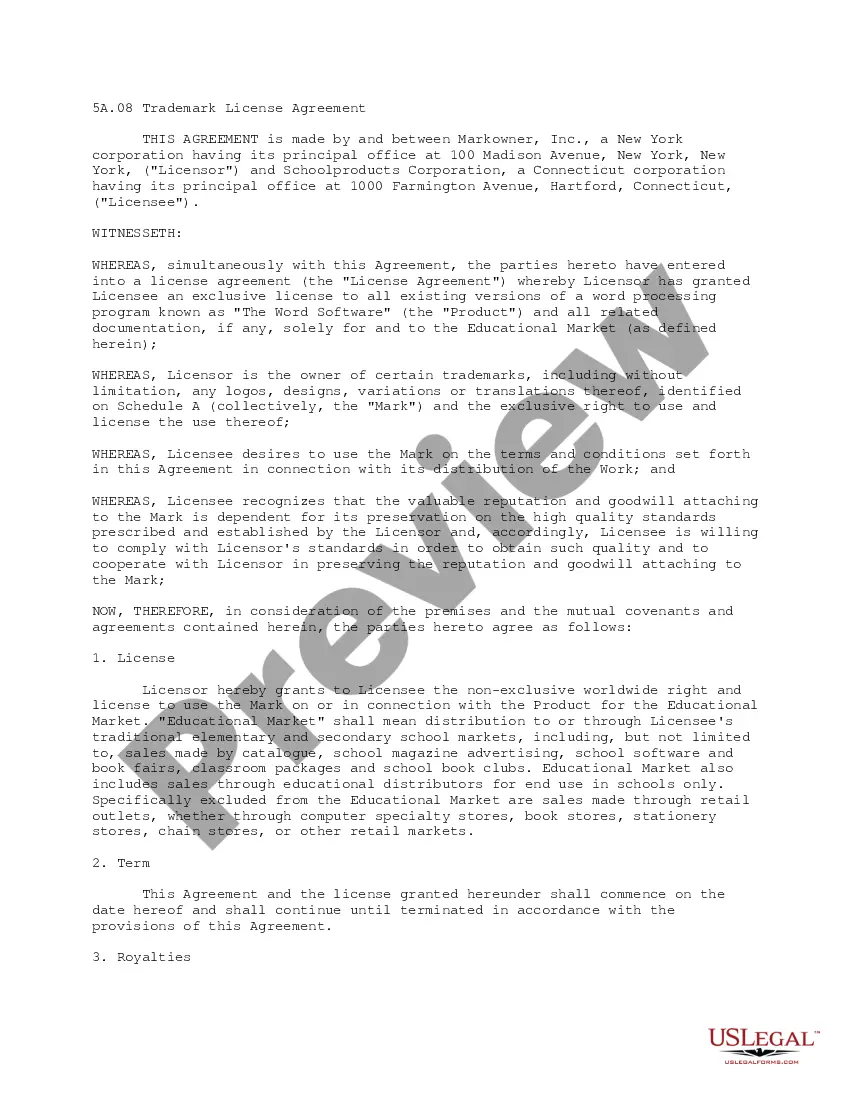
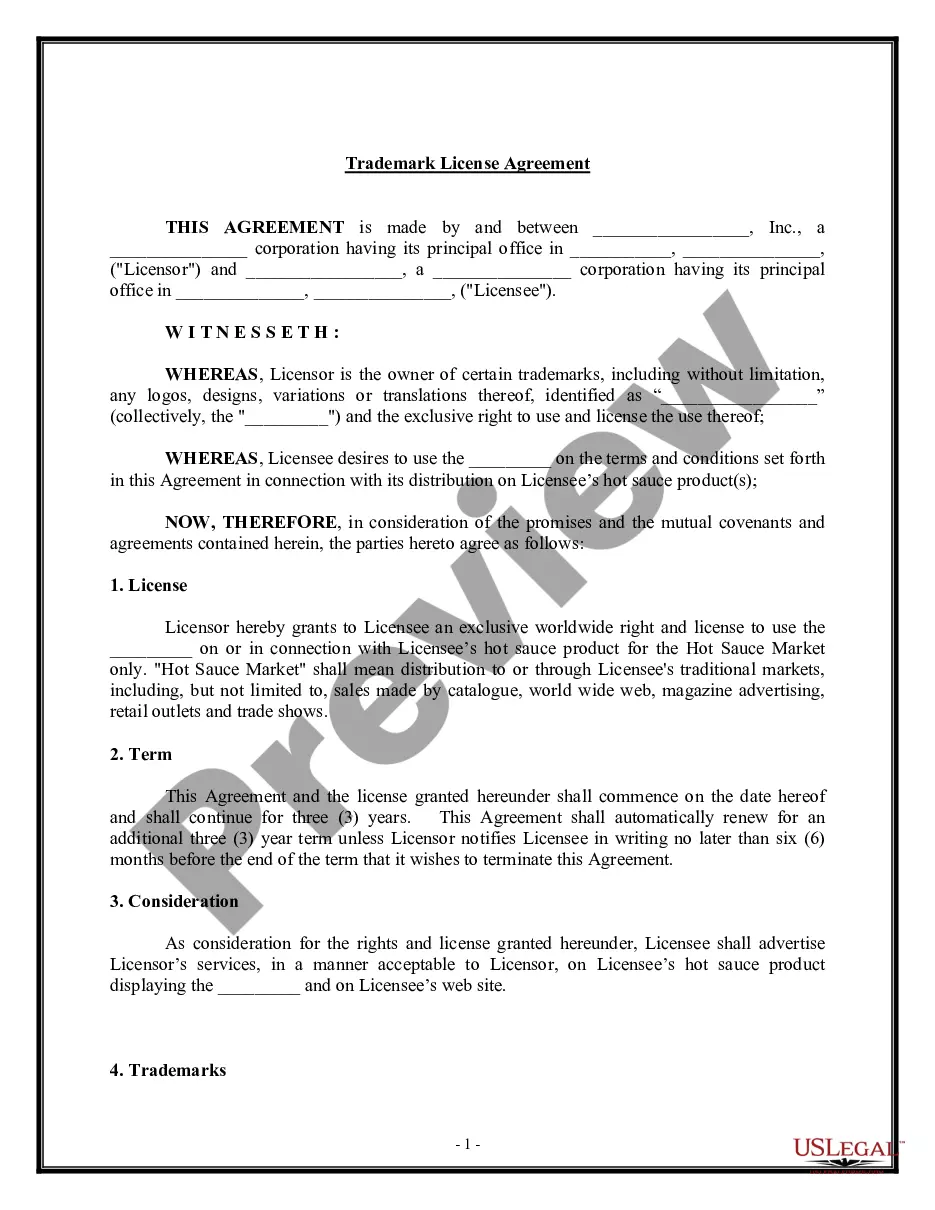
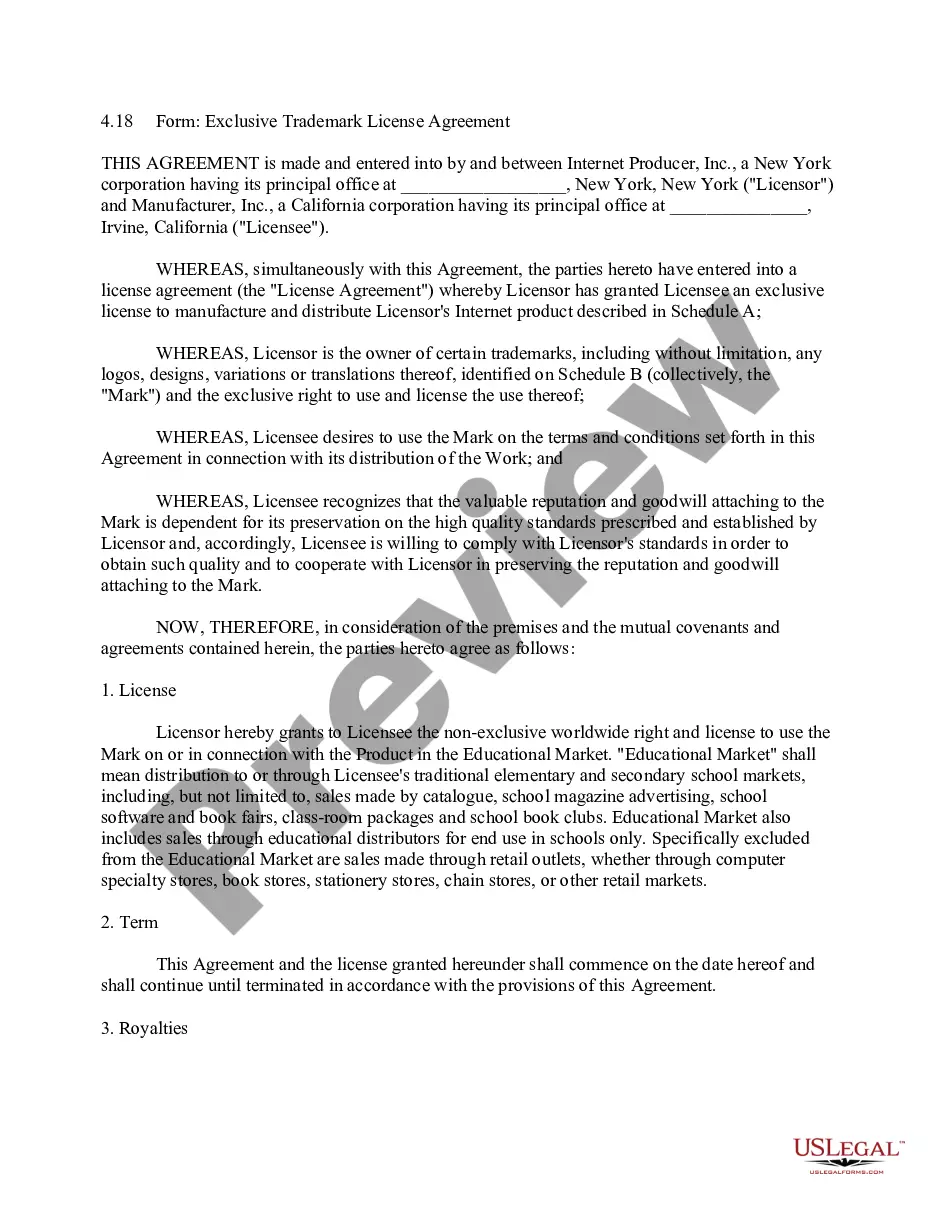
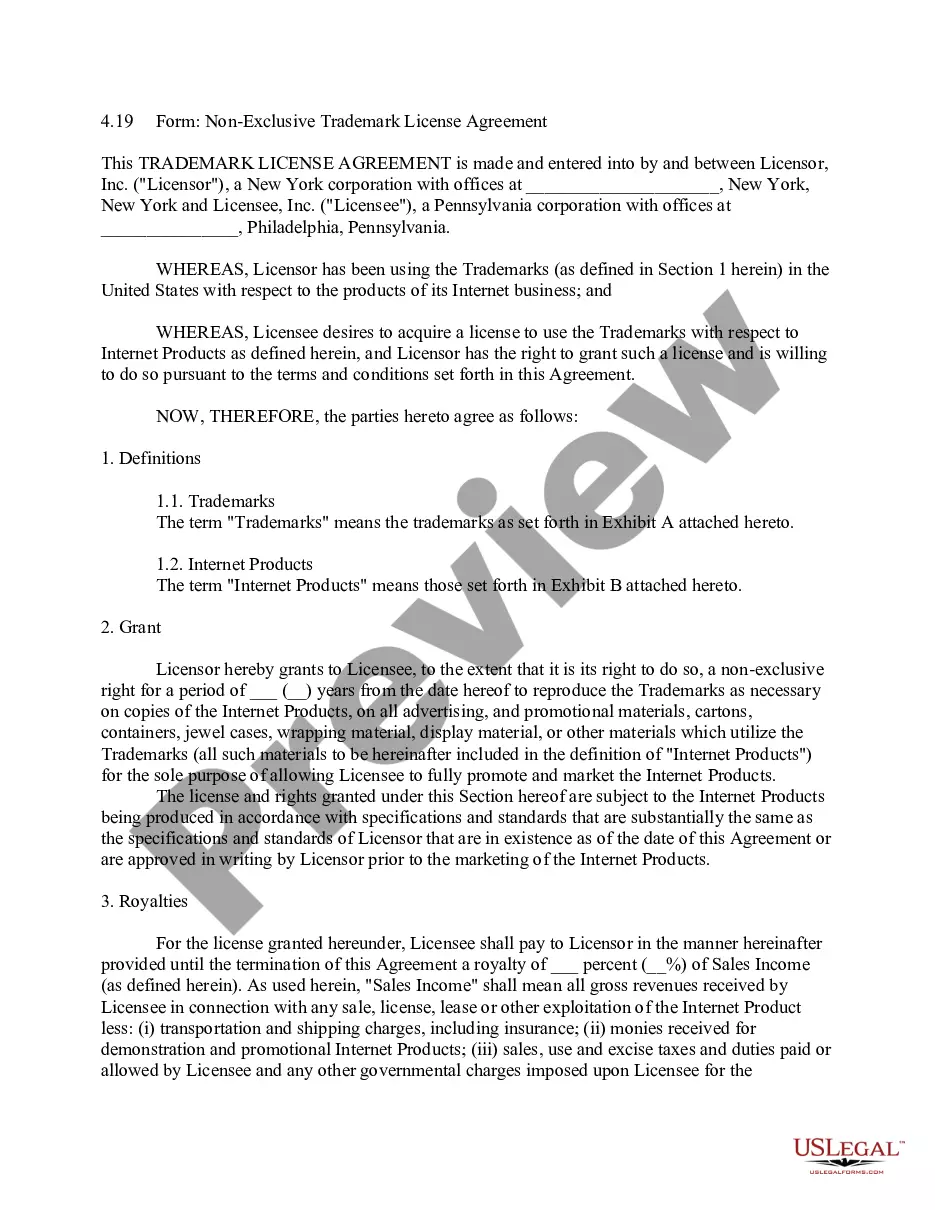
The Basic Nonexclusive Royalty Free Trademark License Agreement is a legal document that allows one party (the Licensee) to use a trademark owned by another party (the Licensor) without the payment of royalties. This agreement is beneficial for businesses looking to expand their product lines while maintaining quality control standards. Unlike exclusive agreements, this form permits the Licensor to grant similar rights to multiple Licensees, making it ideal for broader licensing arrangements in various markets.
Main sections of this form
- Grant of rights: Licensor grants a royalty-free, nonexclusive license for trademark use.
- Term: Specifies the duration of the agreement.
- Quality control: Outlines standards that the Licensee must adhere to when using the trademark.
- Ownership of the trademark: Confirms that the Licensor retains all rights to the trademark.
- Indemnification: Protects the Licensor against any claims resulting from the Licensee's actions.
- Termination: Describes conditions under which the agreement may be ended.


When to use this document
This agreement is appropriate when a Licensor wishes to allow a Licensee to use their trademark on certain goods without charging royalties. Companies may use this form when they want to enable collaboration without overly restrictive conditions, such as when introducing a new line of products or when entering a new market while ensuring some level of quality control over how their trademark is used.
Who should use this form
- Business owners who own a trademark and want to license it for use by others.
- Companies wishing to expand their product offerings under a shared trademark.
- Entrepreneurs seeking to leverage established brands without incurring royalty fees.
- Legal professionals facilitating licensing agreements for clients.
How to prepare this document
- Identify the Licensor and Licensee: Fill in the names and business addresses of both parties.
- Specify the trademark: Clearly state the trademark being licensed, including registration details.
- Define the Licensed Goods: Specify the products that will carry the trademark.
- Set the term of the agreement: Indicate the start date and any termination conditions.
- Include quality control standards: Outline how the Licensee will ensure product quality.
- Enter dates and signatures: Ensure that both parties sign and date the agreement for it to be valid.
Is notarization required?
This form does not typically require notarization unless specified by local law. However, having it notarized can provide an additional layer of security and formality.
Get your form ready online
Our built-in tools help you complete, sign, share, and store your documents in one place.
Make edits, fill in missing information, and update formatting in US Legal Forms—just like you would in MS Word.
Download a copy, print it, send it by email, or mail it via USPS—whatever works best for your next step.
Sign and collect signatures with our SignNow integration. Send to multiple recipients, set reminders, and more. Go Premium to unlock E-Sign.
If this form requires notarization, complete it online through a secure video call—no need to meet a notary in person or wait for an appointment.
We protect your documents and personal data by following strict security and privacy standards.

Make edits, fill in missing information, and update formatting in US Legal Forms—just like you would in MS Word.

Download a copy, print it, send it by email, or mail it via USPS—whatever works best for your next step.

Sign and collect signatures with our SignNow integration. Send to multiple recipients, set reminders, and more. Go Premium to unlock E-Sign.

If this form requires notarization, complete it online through a secure video call—no need to meet a notary in person or wait for an appointment.

We protect your documents and personal data by following strict security and privacy standards.
Typical mistakes to avoid
- Failing to clearly define the trademark and its registration details.
- Overlooking the quality control provisions, leading to inconsistencies in product quality.
- Not specifying the consequences of breach, which can lead to disputes.
- Neglecting to have both parties sign the agreement, making it unenforceable.
Advantages of online completion
- Convenience: Downloadable forms are accessible anytime, streamlining the licensing process.
- Editability: Easy customization allows you to tailor the agreement to specific needs.
- Reliability: Legal forms drafted by licensed attorneys to ensure compliance with applicable laws.
Legal use & context
- This agreement provides legal protection for both parties regarding trademark use.
- It establishes a clear framework for resolving disputes related to trademark usage.
- Confirms that trademark ownership remains with the Licensor, minimizing confusion about rights.
Quick recap
- A Basic Nonexclusive Royalty Free Trademark License Agreement allows multiple parties to use a trademark without royalties.
- Clear definitions of rights and responsibilities help maintain brand integrity.
- Quality control is crucial in ensuring products meet the standards set by the licensor.
Looking for another form?


Form popularity
FAQ
A trademark license agreement allows the licensee to use (but not own) the licensor's trademark in connection with agreed-on products or services. Licensing can help a company expand into new markets effectively and easily while lending the licensee an established name and reputation.
An example of a licensing agreement is a contract between the copyright holders of software and another company, allowing the latter to use the computer software for their daily business operations.
Trademark licensing is the process by which a registered trademark owner, called a licensor or proprietor, allows another party, called a licensee, to make and distribute specific products or services under the licensor's trademark agreement. Trademark licensing is a type of merchandise agreement.
Get it in writing. Develop a detailed licensing agreement that is signed by both licensor and licensee. Work with an experienced trademark attorney, who has knowledge in both drafting agreements and enforcing proper use. Establish brand guidelines that clearly dictate how and where the trademark can be used.
A licensing agreement allows one party (the licensee) to use and/or earn revenue from the property of the owner (the licensor). Licensing agreements generate revenues, called royalties, earned by a company for allowing its copyrighted or patented material to be used by another company.
A trademark licensing agreement is a legal contract between a trademark owner and another party that have agreed to use the trademark on preapproved terms decided between the contracting parties.
A Non-Exclusive Licence grants to the licensee the right to use the intellectual property, but means that the licensor remains free to exploit the same intellectual property and to allow any number of other licensees to also exploit the same intellectual property.
A licensing agreement is a legal contract between two parties, known as the licensor and the licensee. In a typical licensing agreement, the licensor grants the licensee the right to produce and sell goods, apply a brand name or trademark, or use patented technology owned by the licensor.
What is a Licensing Agreement? A licensing agreement is a contract between two parties (the licensor and licensee) in which the licensor grants the licensee the right to use the brand name, trademark, patented technology, or ability to produce and sell goods owned by the licensor.