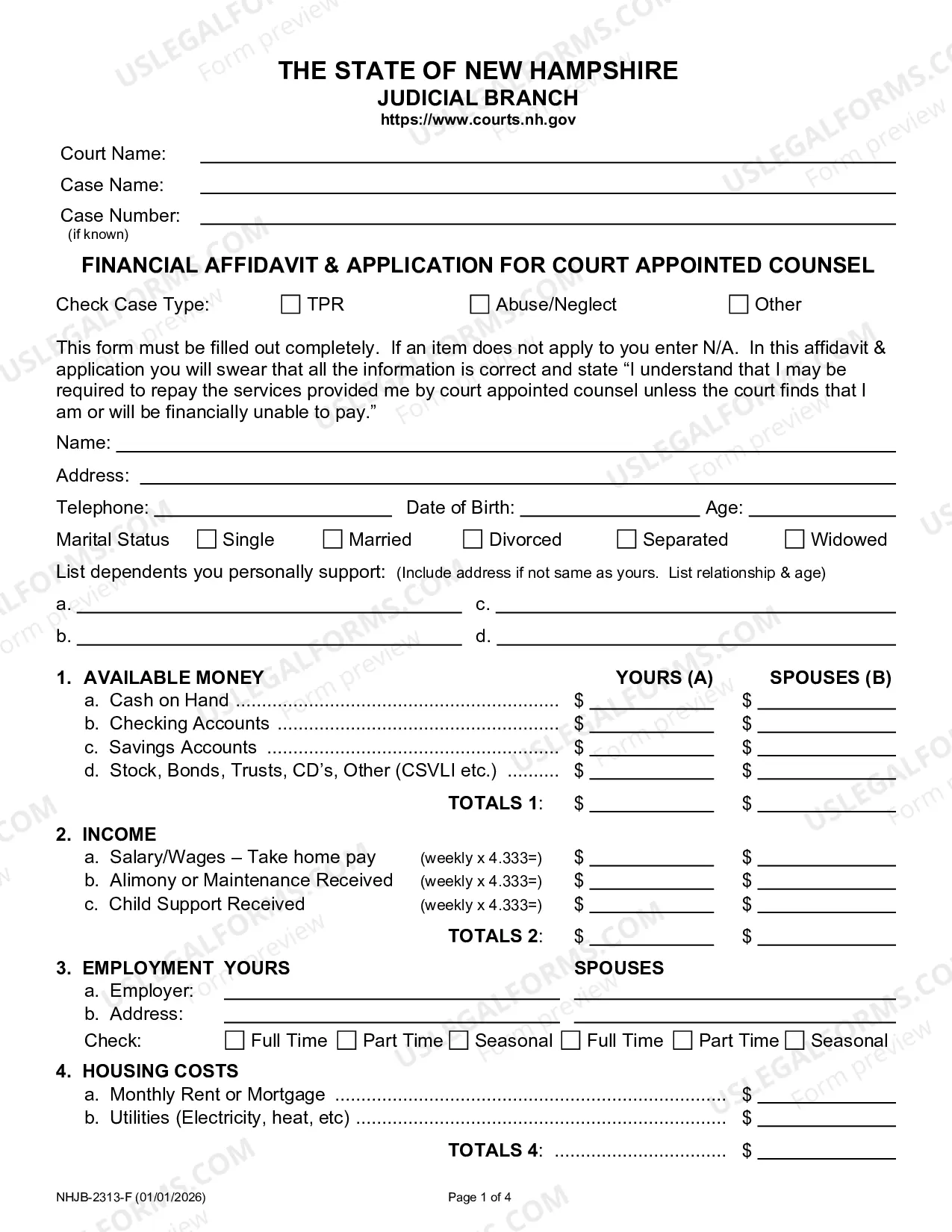
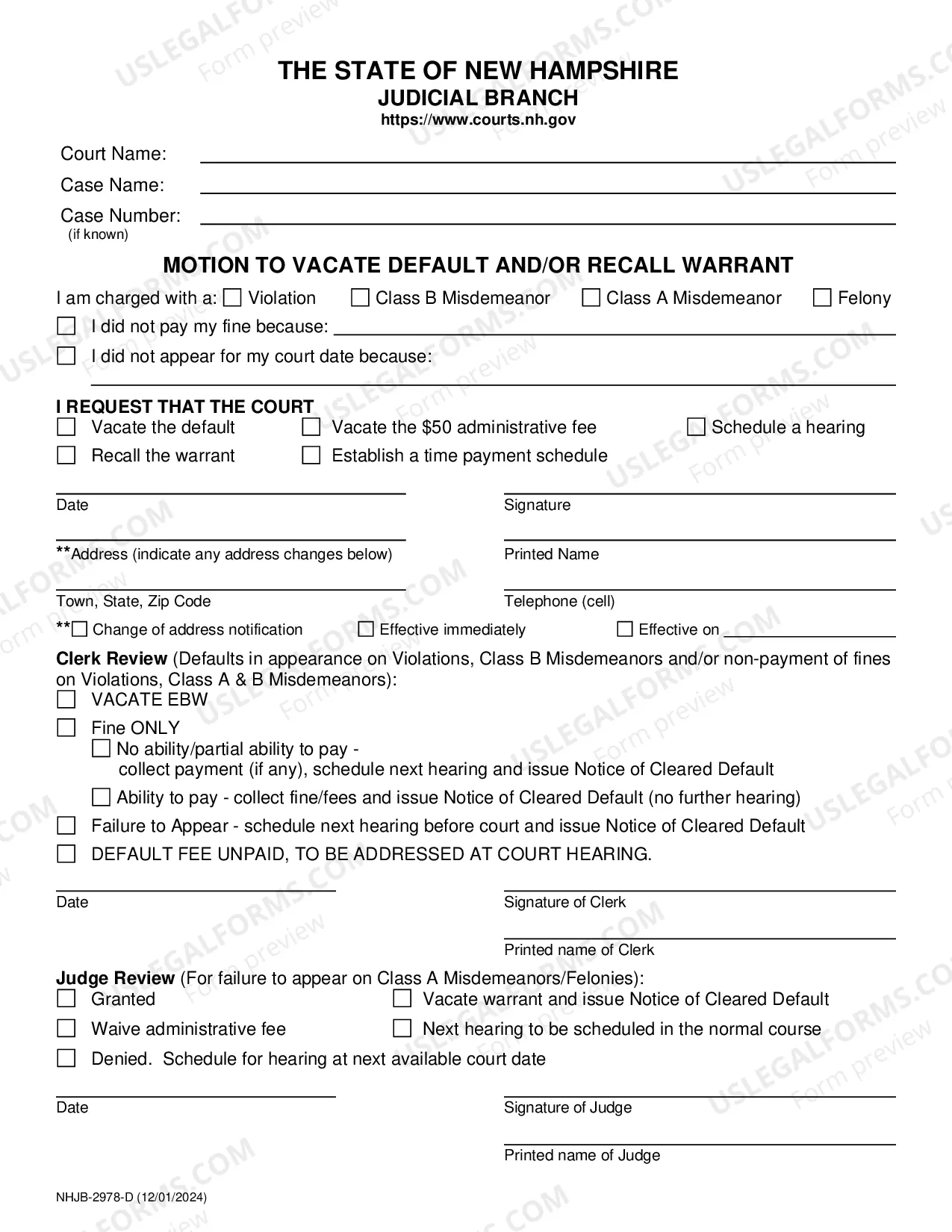
Self-Employed Commercial Fisherman Services Contract
Overview of this form
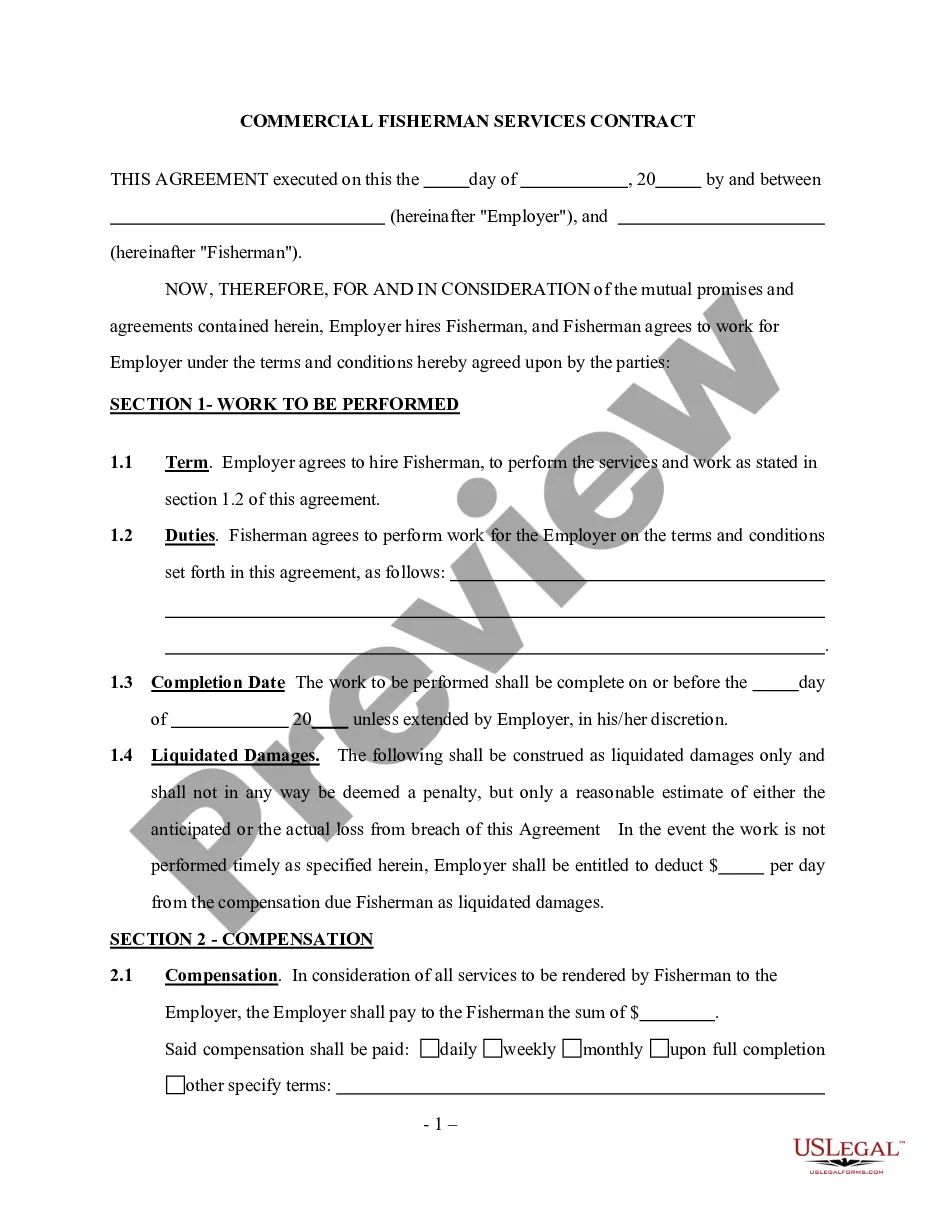
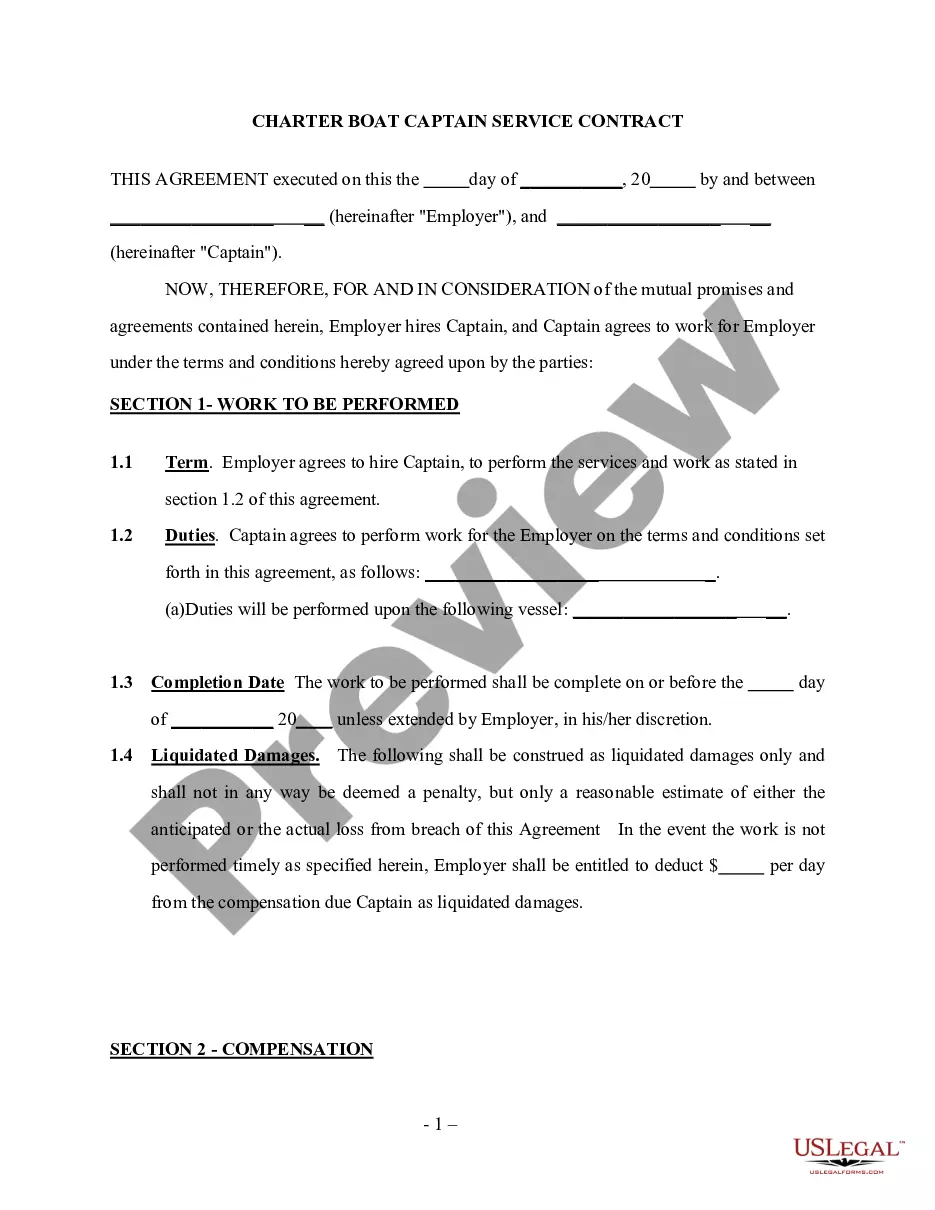
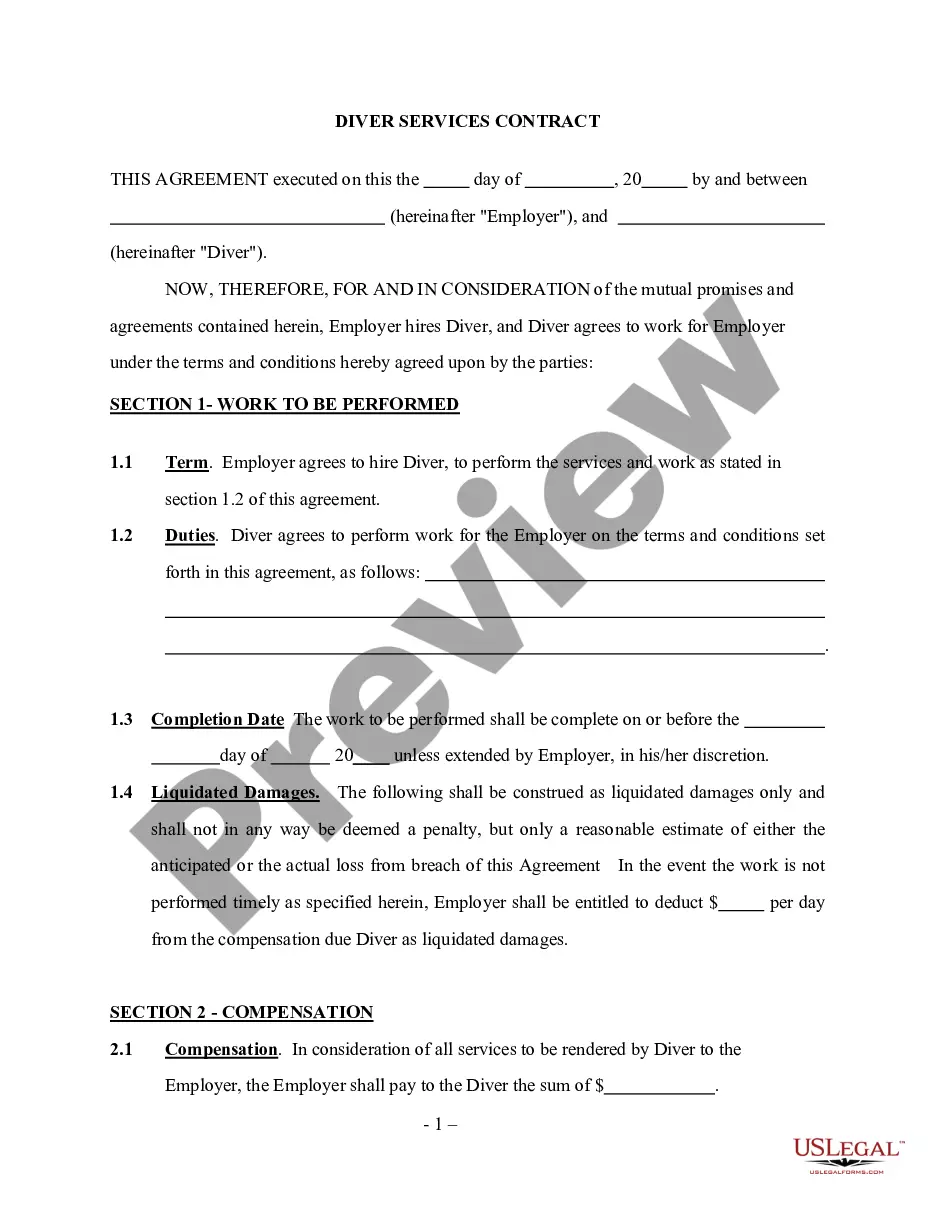
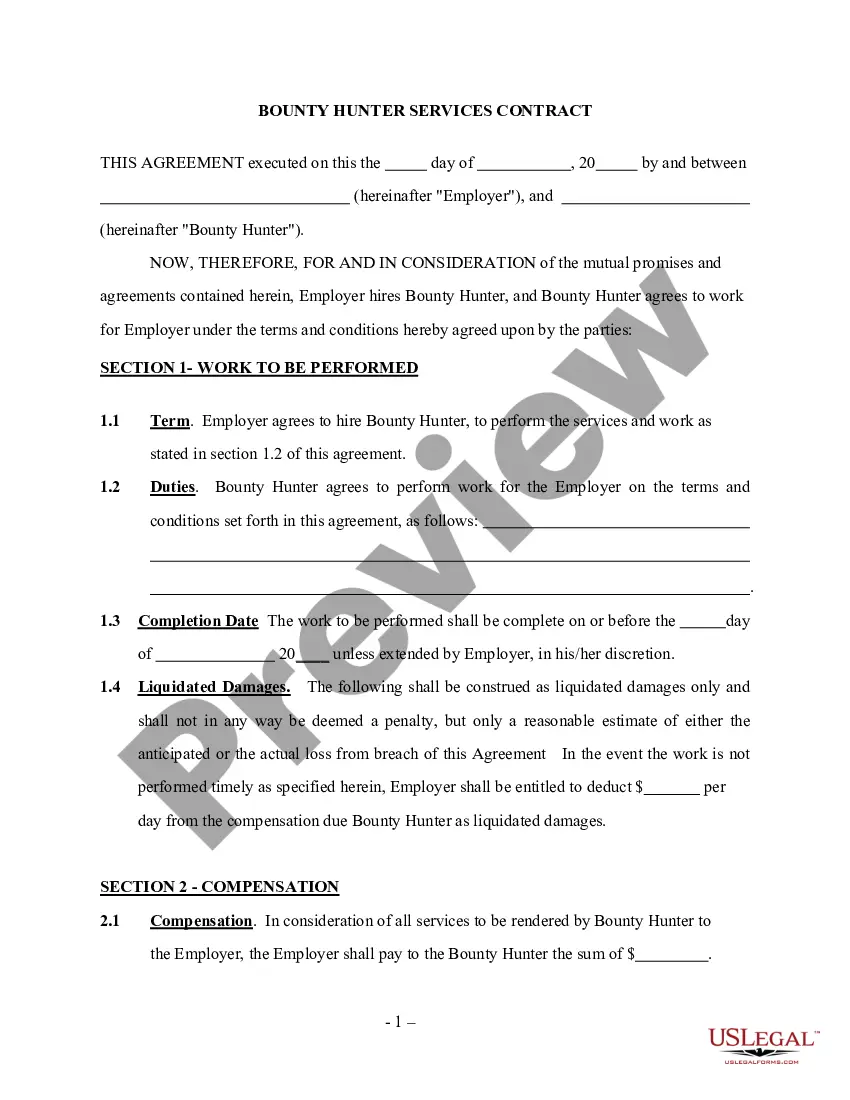
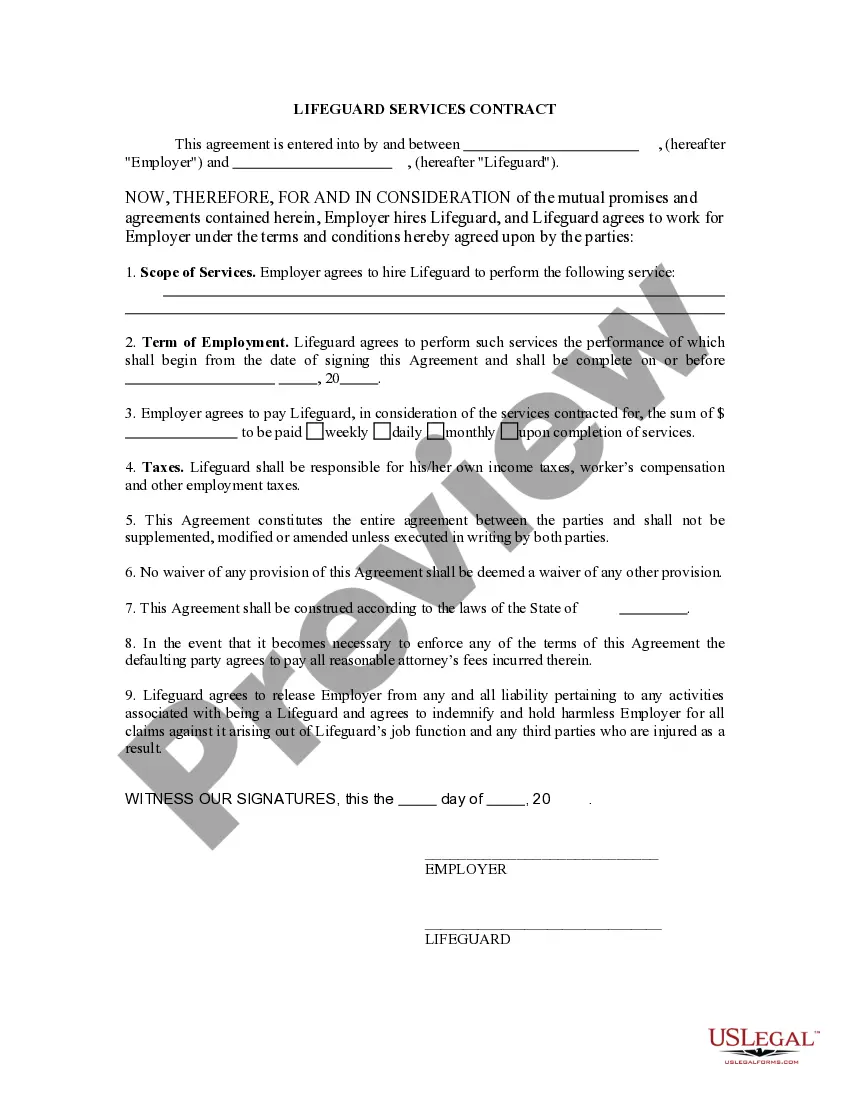
The Self-Employed Commercial Fisherman Services Contract is a legal document that outlines the terms and conditions under which an employer hires a commercial fisherman as an independent contractor. This form establishes the roles and responsibilities of both parties, ensuring clarity and transparency in the arrangement. Unlike employee agreements, this contract highlights the independent nature of the relationship, allowing the fisherman to operate autonomously while completing fishing services as agreed.
Key components of this form
- Term of Agreement: Specifies the duration of the services to be performed.
- Scope of Work: Details the specific fishing services that the fisherman is to provide.
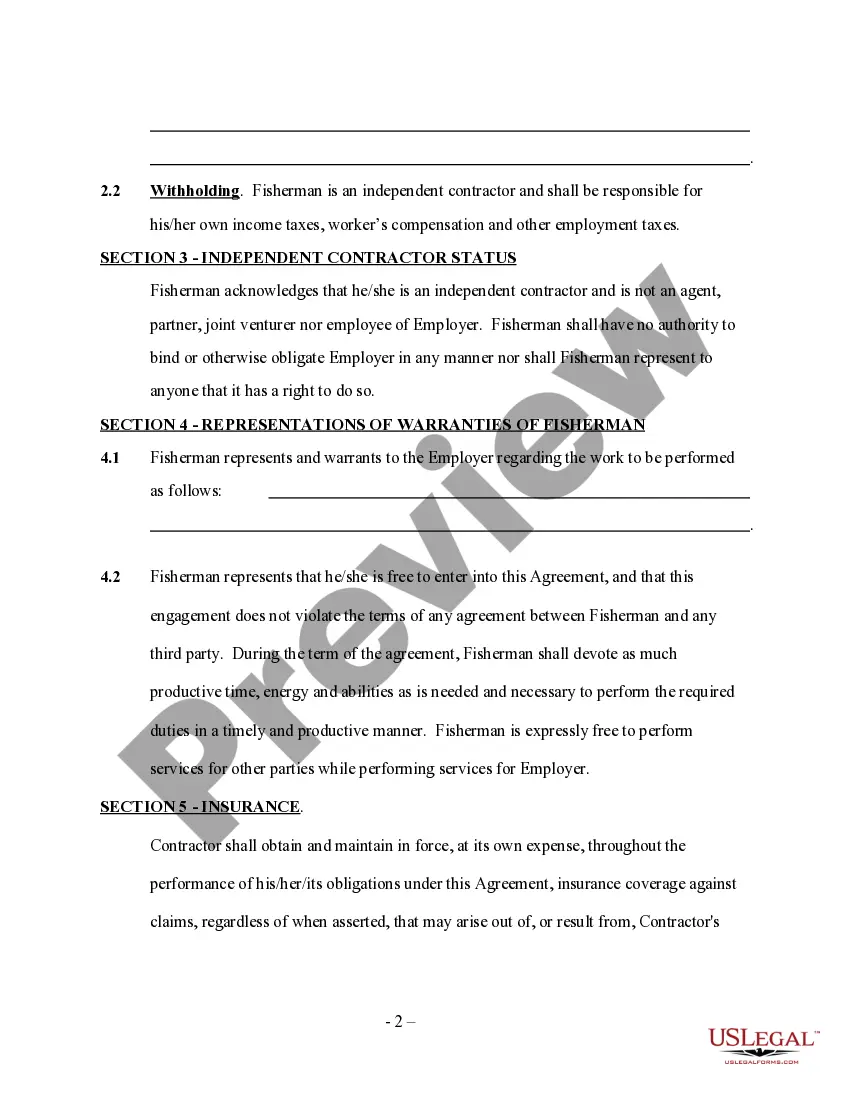
- Independent Contractor Status: Confirms that the fisherman is an independent contractor, not an employee of the employer.
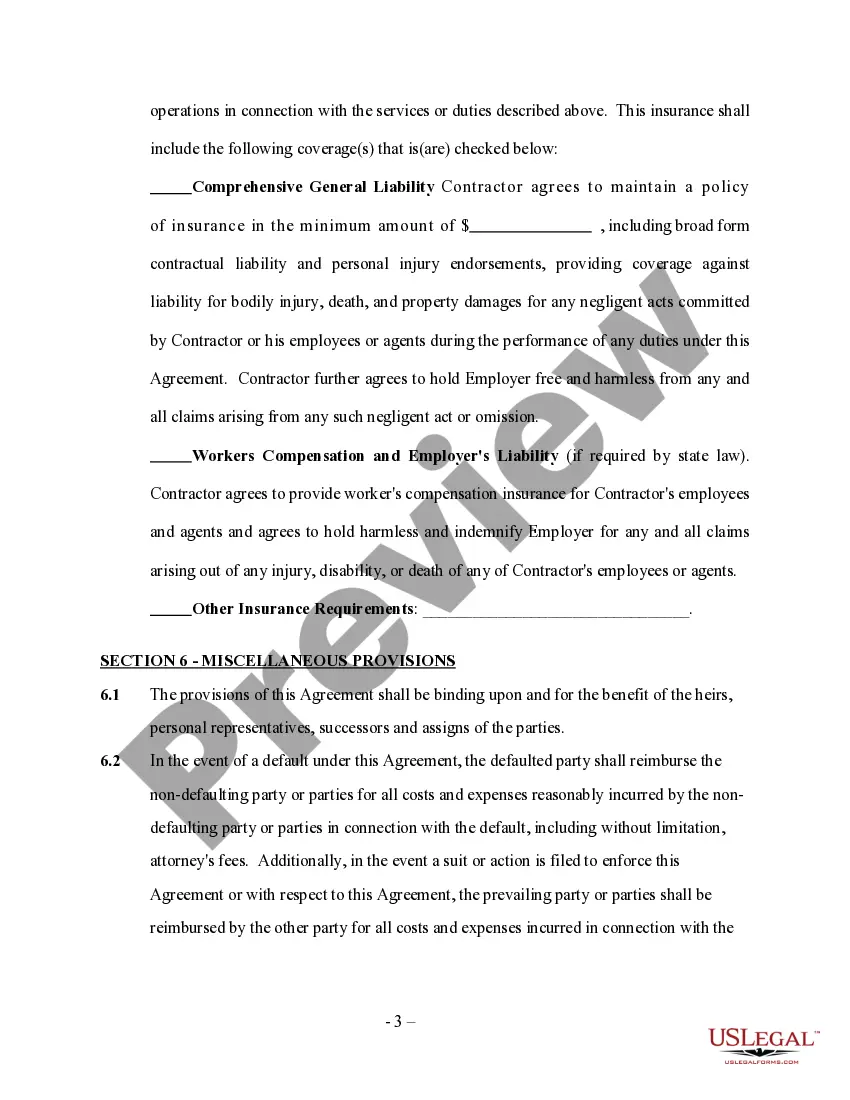
- Insurance Requirements: Outlines the insurance coverage the fisherman must maintain for the duration of the contract.
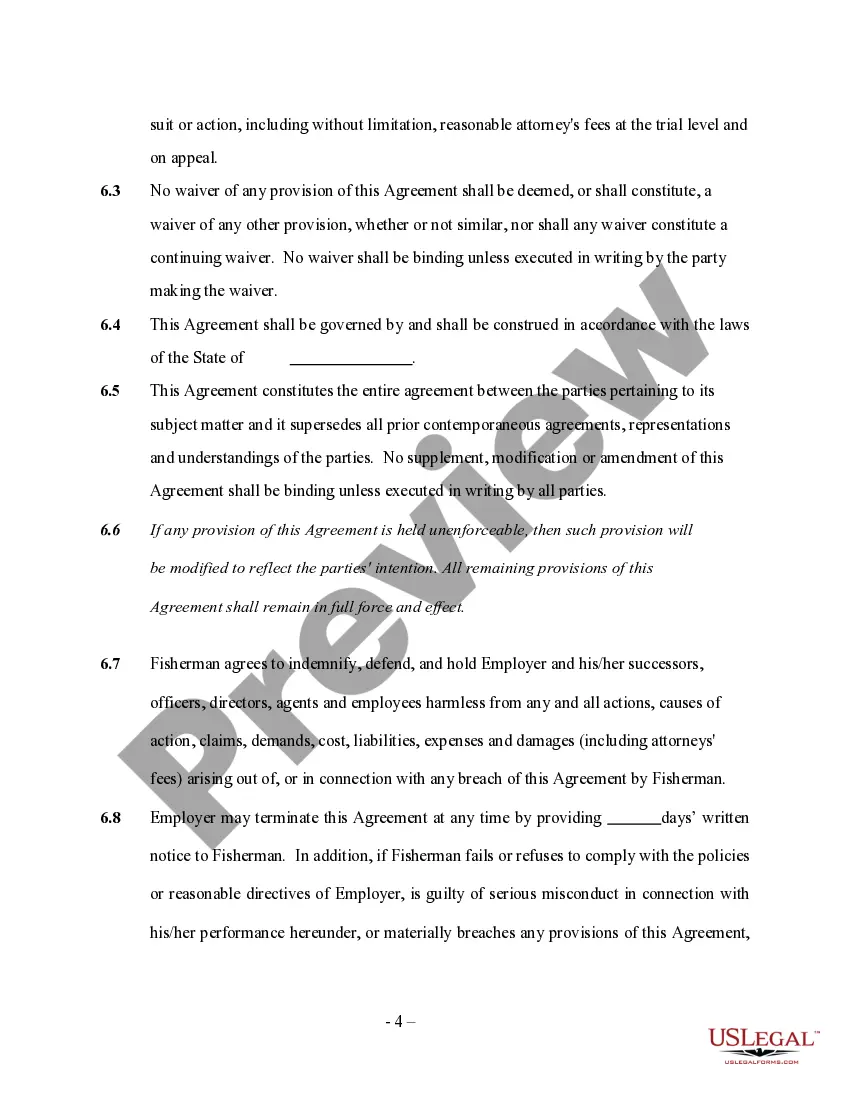
- Termination Clause: Describes the conditions under which either party may terminate the contract.
Situations where this form applies
This contract is essential for employers who wish to hire a commercial fisherman on an independent contractor basis. You should use this form when:
- You are a business or individual needing fishing services from a self-employed fisherman.
- There is a need to clearly define the responsibilities and expectations of both parties in the fishing arrangement.
- You want to ensure legal protection for both the employer and the contractor against potential disputes.
Who needs this form
- Employers: Individuals or businesses hiring fishermen to provide fishing services.
- Self-Employed Fishermen: Independent contractors who offer fishing services and need to formalize their agreements.
- Legal Professionals: Attorneys advising clients on independent contractor agreements in the fishing industry.
How to complete this form
Follow these steps to properly complete the Self-Employed Commercial Fisherman Services Contract:
- Identify the parties involved by entering the names and addresses of the employer and the fisherman.
- Specify the term of the agreement and the work to be performed, detailing the fishing services required.
- Clarify the independent contractor status, ensuring both parties understand their relationship.
- Outline the insurance requirements, indicating the types of coverage the fisherman must obtain.
- Include any additional clauses necessary for termination or amendments to the agreement.
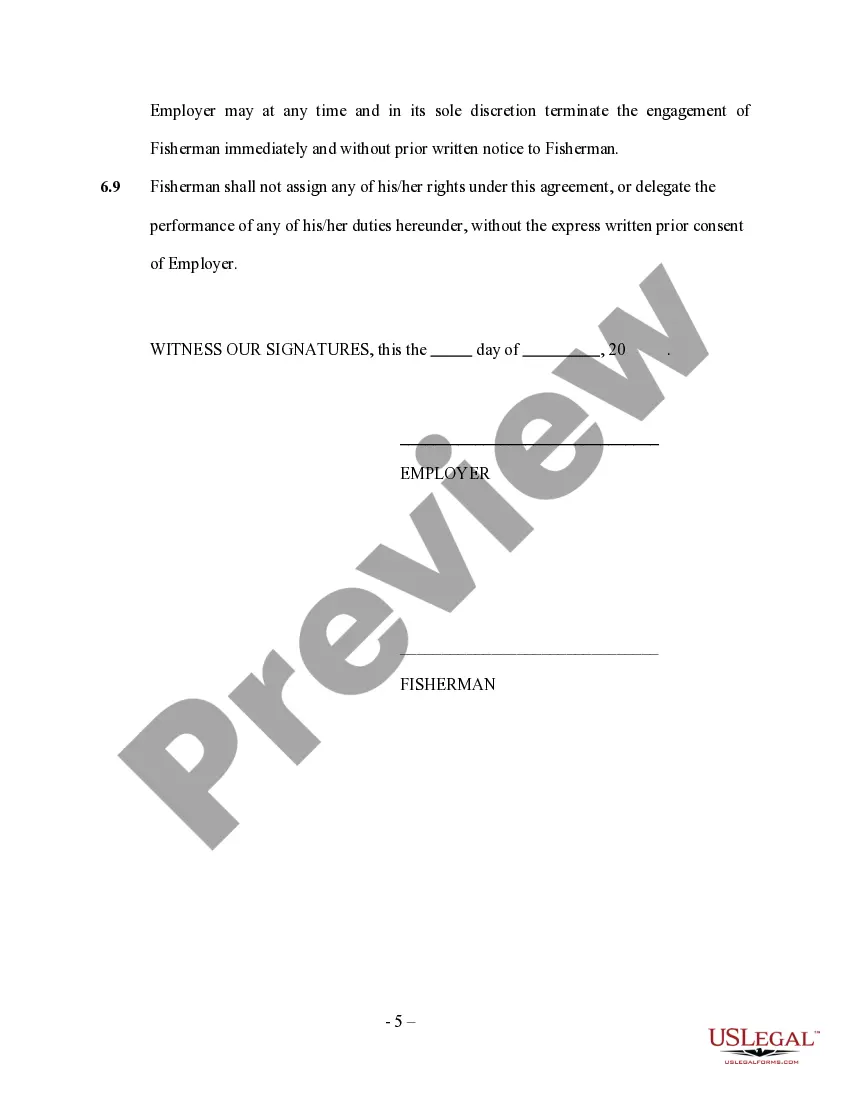
- Have both parties sign and date the document to validate the contract.
Is notarization required?
This form does not typically require notarization unless specified by local law. However, having a notarized document can strengthen its enforceability in the event of a dispute.
Get your form ready online
Our built-in tools help you complete, sign, share, and store your documents in one place.
Make edits, fill in missing information, and update formatting in US Legal Forms—just like you would in MS Word.
Download a copy, print it, send it by email, or mail it via USPS—whatever works best for your next step.
Sign and collect signatures with our SignNow integration. Send to multiple recipients, set reminders, and more. Go Premium to unlock E-Sign.
If this form requires notarization, complete it online through a secure video call—no need to meet a notary in person or wait for an appointment.
We protect your documents and personal data by following strict security and privacy standards.

Make edits, fill in missing information, and update formatting in US Legal Forms—just like you would in MS Word.

Download a copy, print it, send it by email, or mail it via USPS—whatever works best for your next step.

Sign and collect signatures with our SignNow integration. Send to multiple recipients, set reminders, and more. Go Premium to unlock E-Sign.

If this form requires notarization, complete it online through a secure video call—no need to meet a notary in person or wait for an appointment.

We protect your documents and personal data by following strict security and privacy standards.
Mistakes to watch out for
- Failing to clearly define the scope of work, leading to potential misunderstandings.
- Not including specific insurance requirements, which can expose both parties to liability.
- Neglecting to specify the duration of the contract, causing ambiguity in the agreement.
- Confusing the independent contractor relationship with employment, risking legal repercussions.
Advantages of online completion
- Convenience of instant downloading and printing, allowing for immediate use.
- Editability allows you to customize the contract according to your specific needs.
- Reliable formats ensure legal accuracy and adherence to typical contractual standards.
Legal use & context
- This contract is legally binding once signed by both parties.
- It provides protection against claims by clearly stating the nature of the contractor relationship.
- While enforceable in court, it is crucial that both parties adhere to the terms outlined to avoid legal complications.
Summary of main points
- The Self-Employed Commercial Fisherman Services Contract is essential for defining the relationship between an employer and a fisherman.
- Clear, concise terms can prevent misunderstandings and legal disputes.
- Proper completion of the contract ensures both parties are protected and aware of their rights and responsibilities.
Glossary of terms used in this form
- Independent contractor: A person or business that provides services to another entity under terms agreed upon in a contract, without being considered an employee.
- Scope of work: A detailed description of the services to be provided under the contract.
- Liabilities: Legal responsibilities for any actions that can result in a financial obligation.
Looking for another form?









Form popularity
FAQ
Simply put, being an independent contractor is one way to be self-employed. Being self-employed means that you earn money but don't work as an employee for someone else.An independent contractor is someone who provides a service on a contractual basis.
If you received a 1099 form instead of a W-2 , then the payer of your income did not consider you an employee and did not withhold federal income tax or Social Security and Medicare tax. A 1099-MISC or NEC means that you are classified as an independent contractor and independent contractors are self-employed.
The IRS says that someone is self-employed if they meet one of these conditions: Someone who carries on a trade or business as a sole proprietor or independent contractor, A member of a partnership that carries on a trade or business, or. Someone who is otherwise in business for themselves, including part-time business
The earnings of a person who is working as an independent contractor are subject to Self-Employment Tax. If you are an independent contractor, you are self-employed.You are not an independent contractor if you perform services that can be controlled by an employer (what will be done and how it will be done).
Yes, if you have 1099 income you are considered to be self-employed, and you will need to pay self-employment taxes (Social Security and Medicare taxes) on this income.
Make sure you really qualify as an independent contractor. Choose a business name (and register it, if necessary). Get a tax registration certificate (and a vocational license, if required for your profession). Pay estimated taxes (advance payments of your income and self-employment taxes).
Contracted workers are not technically employees since they provide services on a short-term or individual project basis. Also, unlike full-time employees, contract workers do not have to be offered employment benefits by the businesses that hire them.
The earnings of a person who is working as an independent contractor are subject to Self-Employment Tax. If you are an independent contractor, you are self-employed. To find out what your tax obligations are, visit the Self-Employed Tax Center.
Simply put, being an independent contractor is one way to be self-employed. Being self-employed means that you earn money but don't work as an employee for someone else.An independent contractor is someone who provides a service on a contractual basis.